
















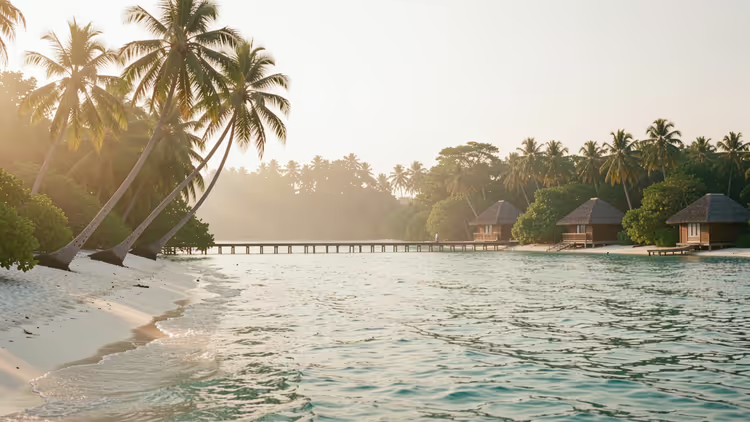
 AIIllustrative image: AI-generated
Maldives cheaper than it seems: breaking down 6 main myths
Maldives seems like unattainable luxury from a commercial. Six common myths convince you that such a trip is not for the average tourist. Half of these fears were born many years ago.
The season here is divided into dry and wet, and both the weather and accommodation prices depend on it.
Ad: this article contains affiliate links, we earn a commission if you book through them, at no extra cost to you.
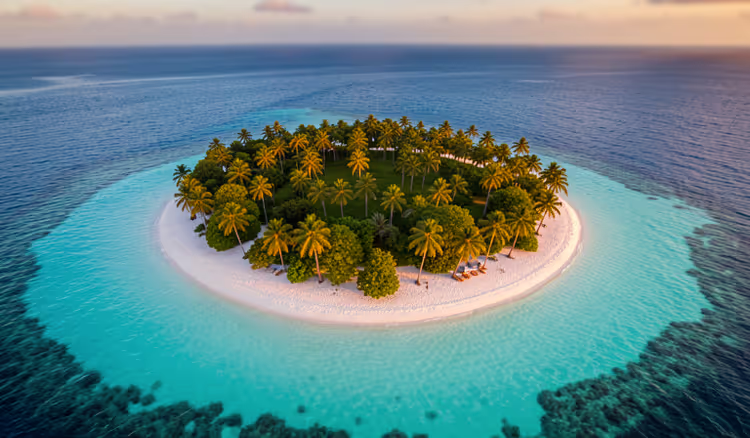 AIIllustrative image: AI-generated
What to know about the Maldives
💡 In short:
- The Maldives archipelago has about 1,200 coral islands, but only a small part is inhabited (according to Visit Maldives, 09/2026).
- Budget travel is realistic on local islands, where guesthouses operate.
1. Myth: the Maldives are only for the rich
A decade ago, a vacation in the archipelago was the domain of wealthy travelers. Resorts kept prices high, and there were almost no other options. Today the picture has changed.
In addition to resorts, local islands where Maldivians themselves live have opened up. An affordable segment has formed there: guesthouses and small boutique hotels. It is not a villa with a personal butler, but it is not a tent on the sand either.
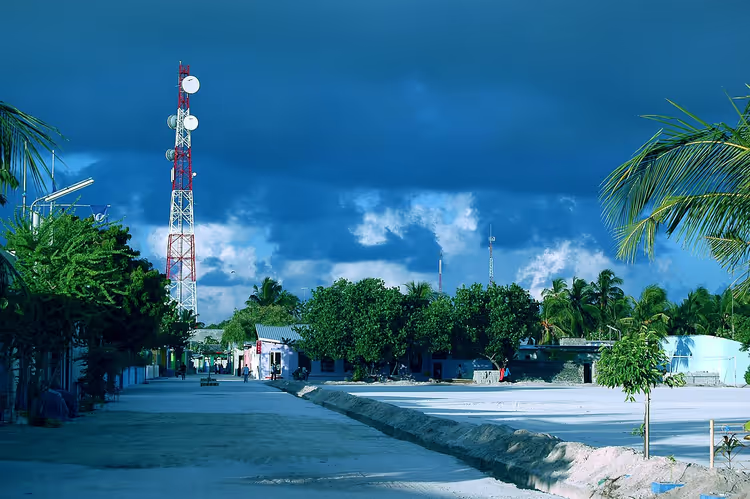 © Nattu from Male', Maldives · CC BYPhoto: Nattu from Male', Maldives, CC BY (https://creativecommons.org/licenses/by/2.0), Wikimedia Commons
A typical guesthouse has air conditioning, hot water, breakfast, and often its own restaurant. On Maafushi and Guraidhoo there are especially many such houses, so the nightly rate is several times lower than at a resort. You pay less for service, not for the sea itself.
Want to try a resort without booking a full week? Some islands sell day passes, and you can spend the day at a villa with a pool. Comparing both formats is easy through hotel prices on Trip.com.
2. Myth: the Maldives are terribly boring
When people hear "Maldives," many imagine a lounger and a book for two weeks. As if there is nothing here besides the beach and the sea. That is only true for those who chose that pace themselves.
The archipelago offers surfing, snorkeling, yachting, sea fishing, and seaplane flights. The reefs near the shore feed turtles, rays, and small sharks. You can also visit the capital Malé for local flavor.
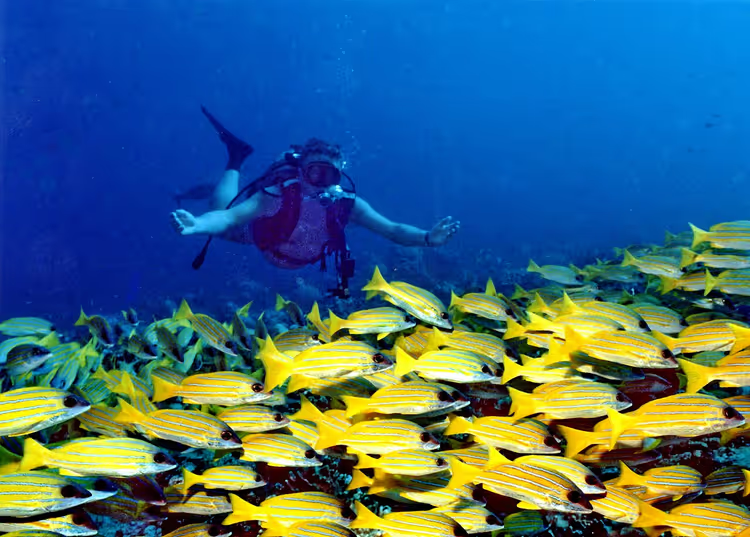
Some resorts deliberately turn off televisions and internet in the rooms. This format suits you if you want a complete reset. If you want experiences, do not book one hotel for the entire vacation.
Moving between islands opens up new beaches and activities. You will not have to be bored on one reef. Excursions and snorkeling are easy to find on GetYourGuide.
3. Myth: you should only choose water villas
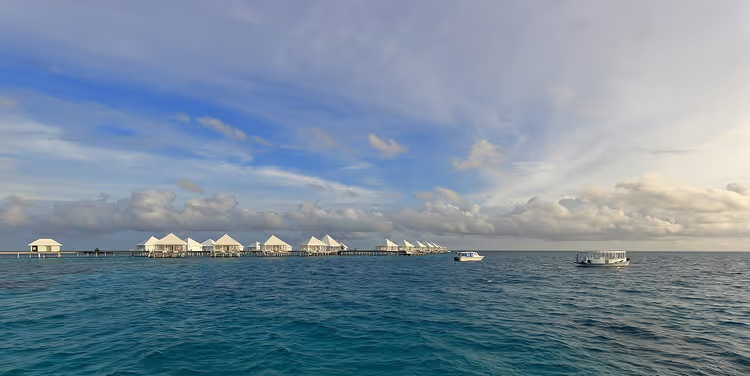
Overwater bungalows have become the symbol of the archipelago. You wake up and step from the terrace straight into the lagoon. But this type of accommodation has its own price and specifics.
A water villa is almost always more expensive than a beach villa. There is no greenery nearby, only water and the horizon. But the ocean view is open around the clock.
 © Martin Falbisoner · CC BY-SAPhoto: Martin Falbisoner, CC BY-SA (https://creativecommons.org/licenses/by-sa/4.0), Wikimedia Commons
A beach room gives you palm trees, shade, and the island's paths. Often it is only a few steps from the terrace to the water. The best option for you: combine staying overwater and by the beach.
4. Myth: dangerous sharks swim near the Maldives' shores
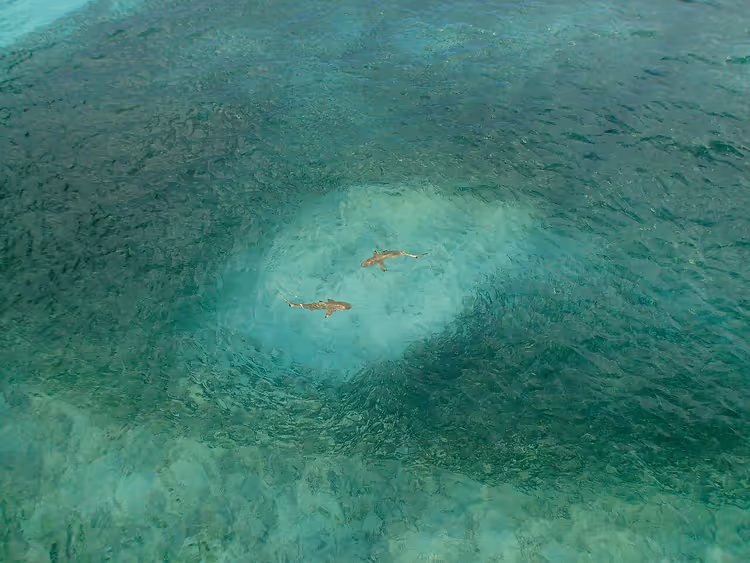
Photos of sharks in a transparent lagoon scare many people. It seems risky to enter the water. In practice, things are calmer.
Dangerous species, tiger sharks and hammerhead sharks, stay far from the shore. They do not approach people. Near the shore, reef sharks and nurse sharks swim, as well as guitar rays.
 © Ed Ralph from UK · CC BYPhoto: Ed Ralph from UK, CC BY (https://creativecommons.org/licenses/by/2.0), Wikimedia Commons
They do not attack if you do not touch or feed them. Your peace of mind depends on your behavior, not on the proximity itself. Do not corner a shark, and swimming will go without surprises.
5. Myth: swimsuits are banned in the Maldives
The Maldives lives under Islamic law, so tourists have many fears. Some restrictions do exist. But they do not apply to everything you imagine.
According to the Constitution, only Muslims can be citizens of the country, and locals honor traditions. At the same time, no one forces tourists to pray. The main restrictions relate to alcohol, pork, and clothing outside the beach.
 © Buiobuione · CC BY-SAPhoto: Buiobuione, CC BY-SA (https://creativecommons.org/licenses/by-sa/4.0), Wikimedia Commons
Alcohol is sold at resorts and on licensed vessels. On a local island you will not find it in a restaurant, a store, or your luggage. Pork is banned everywhere, and the menu offers chicken, beef, and fish.
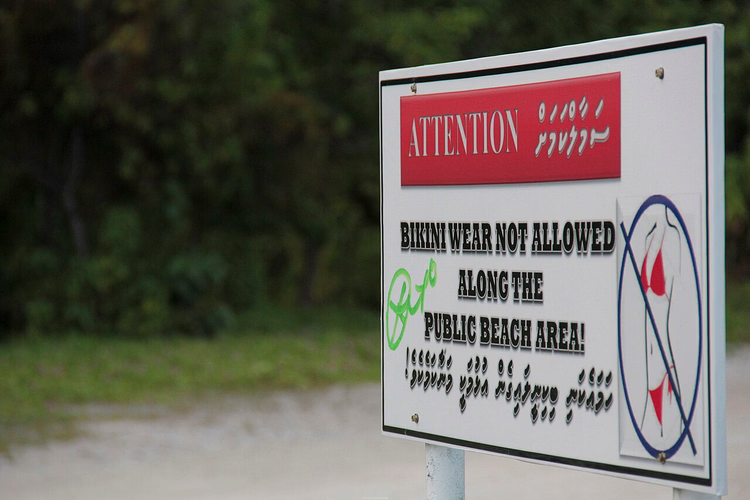
Swimsuits are simpler than people fear. At a resort, a bikini is appropriate, and on local islands there are designated areas for sunbathing. You cannot walk around the village in a swimsuit, but that will not stop you from swimming.
You can bring a cross or a Bible, but discussing religion in public is not advisable. Locals are friendly to guests and relaxed about tourists. It is enough to respect their rules.
6. Myth: the weather in the Maldives is always good
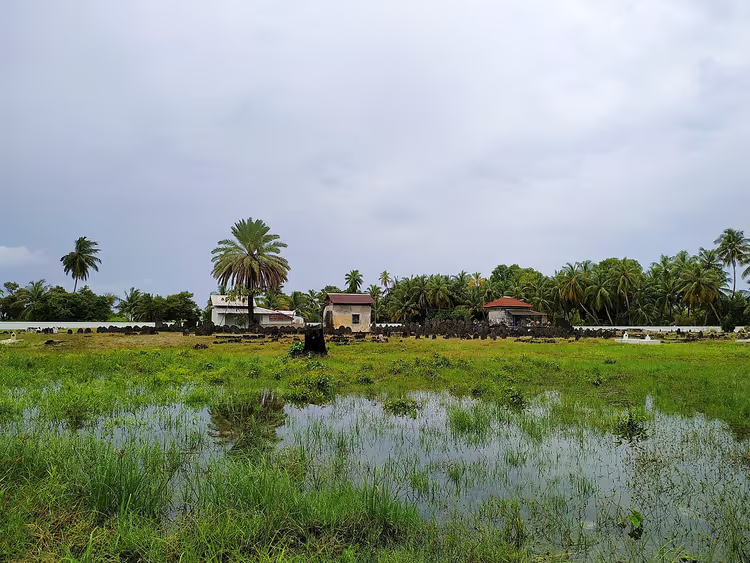
Videos are shot in the dry season, so there is a feeling of eternal sunshine. In reality, the year is divided by two monsoons. The dry one brings clear skies and a calm ocean, the wet one brings rain and wind.
Downpours more often come at night and rarely last a whole day. Daytime temperatures stay around 30 degrees Celsius all year round (according to the season overview on Maldives.com, 09/2026). You definitely will not freeze on the beach.
 © RAAISn · CC BY-SAPhoto: RAAISn, CC BY-SA (https://creativecommons.org/licenses/by-sa/4.0), Wikimedia Commons
The wet season has another plus: accommodation prices drop. You trade the risk of rain for significant savings. For a budget trip, this is a reasonable compromise.
⁉️🤔 Frequently asked questions
How much does a vacation in the Maldives cost for an average tourist?
The final amount depends on the format. A resort on a private island is expensive, while a guesthouse on a local island costs several times less. Calculate accommodation, food, and transfer, which you book separately.
When is the best time to go to avoid rain?
The dry northeast monsoon lasts from December to April, the wet one runs from May to November (according to the monthly guide on Maldives.com, 09/2026). For the beach and snorkeling, choose the dry season window. The wet season is cheaper but brings more rain and wind.
Are sharks dangerous near the Maldives' shores?
Large dangerous species stay in the open ocean, while small reef sharks swim near the shore. They do not attack people if you do not touch or feed them. Swimming and snorkeling here are considered safe.
Can you drink alcohol in the Maldives?
On resort islands, alcohol is sold freely. On local islands, alcohol is banned: it is not in stores or restaurants, and you cannot bring your own.
What should you wear on local beaches?
At resorts, sunbathing in a bikini is fine and expected. On local islands, designated areas are set aside for this. You cannot walk around the village and public places in a swimsuit, so bring light clothing for walks.
Is the Maldives boring in the rainy season?
No, if you choose an active format. Downpours more often come at night and rarely last a whole day. During the day you still have surfing, snorkeling, yachting, and fishing. Moving between islands will add new beaches and activities.
In short: what to book
The Maldives are realistic for different budgets. It all depends on the vacation format you choose.
- If you want a celebration and privacy, book a resort with a water villa.
- If budget matters, book a guesthouse on Maafushi or Guraidhoo.
- If you are going for snorkeling, choose an island with a house reef.
- You can try a resort without a weekly booking through a day pass.
Plan your trip for the dry season, but allow for some rain. Transfer from Malé airport is convenient to book in advance through Kiwitaxi.

A small editorial team writing guides for independent travel. We travel ourselves, but we haven’t been everywhere, so we check prices, opening hours and how to get there against official sources.