
















12 Best beaches in Crete: where to swim and how to get there
The beaches of Crete are scattered across the island: from the western lagoons to the eastern coast. In one vacation you'll cover two or three, no more. Between them are mountain switchbacks and hours behind the wheel. Below are 12 beaches with different personalities: pink sand, palm groves, quiet lagoons, and city promenades.
Balos is easier to reach by sea; overland, only a steep descent on foot remains. The ferry departs from the port of Kissamos. Elafonisi, by contrast, is connected to the shore by a narrow sandbar, and you can walk there from the parking lot. The choice is simple: a wild lagoon in the west or a shallow pool with knee-deep water.
1. Balos
💡 In short:
- The lagoon is reached only by sea: a ferry from Kissamos with a stop at Gramvousa Island.
- The cruise ticket costs €40 for adults (as of 09/2026, Cretan Daily Cruises prices).
- Take the morning departure, because after midday there is little shade and a lot of people by the water.
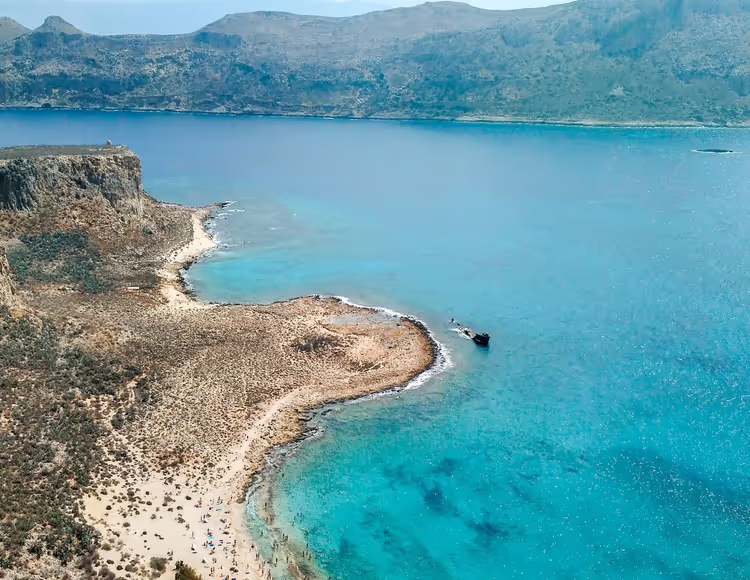
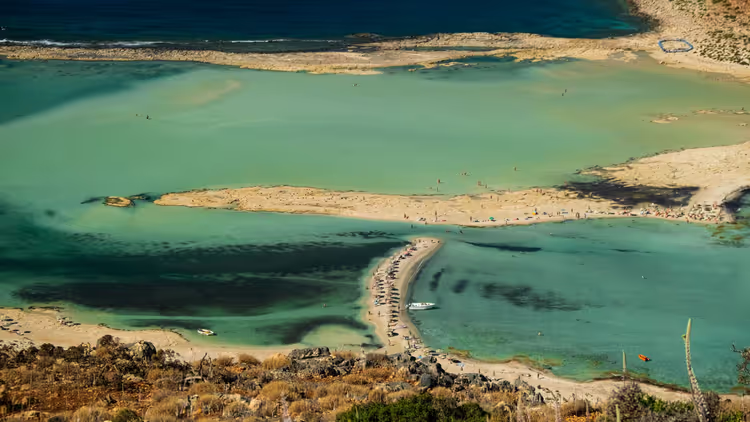
Balos Lagoon lies in the northwest of the island, on the Gramvousa Peninsula. A narrow strip of white sand separates the shallows from the open sea. Depths change abruptly, so the water holds colors from pale turquoise to deep blue, and in the shallows it becomes almost transparent (according to the Visit Greece guide to Balos).
The beach is part of the Natura 2000 zone, and there is no development on the shore. Overland you can only drive to the viewpoint; after that a steep descent on foot begins. It's easier to arrive by ferry: along the way it stops at Gramvousa Island, where the ruins of a Venetian fortress stand on the summit. The climb takes about twenty minutes, but from the top you can see the entire lagoon.
 © Sergio Alvarez · CC BY-SAPhoto: Sergio Alvarez, CC BY-SA (https://creativecommons.org/licenses/by-sa/2.0), Wikimedia Commons
2. Elafonisi
Elafonisi occupies the southwest of Crete. It is a small island connected to the shore by a narrow sandbar (the Elafonisi page on the tourist office website). The water here is knee-deep, so you can swim even in windy weather, when waves pick up on other beaches. Reefs break the waves, and the bottom stays even far from the shore.
The pink tint of the sand comes from crushed shells and corals. The shore is protected as part of the Natura 2000 network, so no hotels are built on it. Parking, loungers, and umbrellas are available, but infrastructure is limited. Arrive at opening time or after 5:00 PM: during the day in July there is a crowd at the water's edge.
 © dronepicr · CC BYPhoto: dronepicr, CC BY (https://creativecommons.org/licenses/by/2.0), Wikimedia Commons
3. Vai
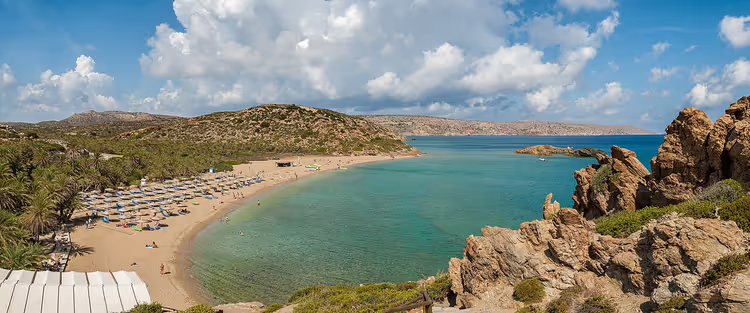
Vai is in the east of the island, near the town of Sitia and ancient Itanos. The beach is known for its palm grove: it is the only natural forest of Phoenix theophrasti date palms in Europe (Visit Greece). The palms grow along the shore and provide shade in the heat.
The beach operates as a day-visit destination; there are no hotels on it, and you'll find loungers, showers, and a cafe right at the entrance. Arrive in the morning, because by lunchtime excursion buses fill the entire parking lot. The water entry is easy, but there are rocks right at the edge, so walk a bit farther from the access point.
- The catch: there is nowhere to stay overnight nearby, only day trips.
 © Mihael Grmek · CC BY-SAPhoto: Mihael Grmek, CC BY-SA (https://creativecommons.org/licenses/by-sa/4.0), Wikimedia Commons
4. Preveli
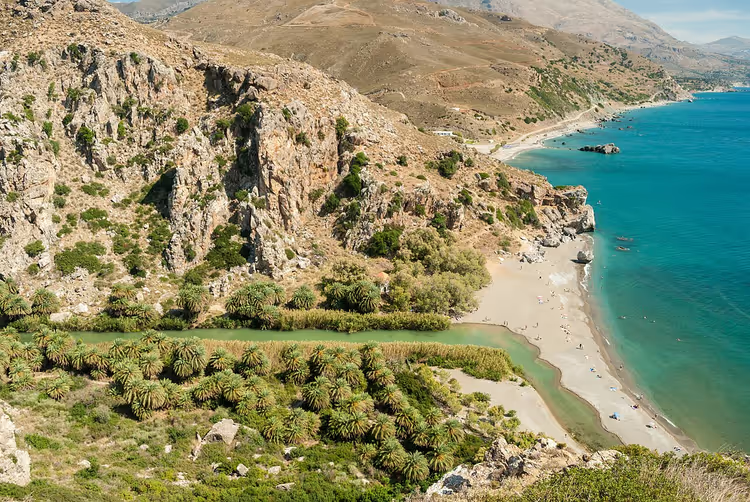
Preveli (Finikas) lies in the south of the island, a couple of kilometers from Preveli Monastery. The shore here is sandy and pebbly. On one side it is sheltered by cliffs, on the other a palm forest stretches along the Kourtaliotiko River. The cliffs block the wind, so the beach is quieter than neighboring shores.
The descent to the water goes down steps; there are no loungers or changing rooms. After the forest fire, the palms recovered and once again shelter the shore. Excursion boats come here, and some tourists arrive by car along the mountain road.
Who it's for: for those willing to walk down the stairs for calm water.
The catch: there is no infrastructure; bring water and an umbrella with you.
 © Mihael Grmek · CC BY-SAPhoto: Mihael Grmek, CC BY-SA (https://creativecommons.org/licenses/by-sa/4.0), Wikimedia Commons
5. Georgioupolis
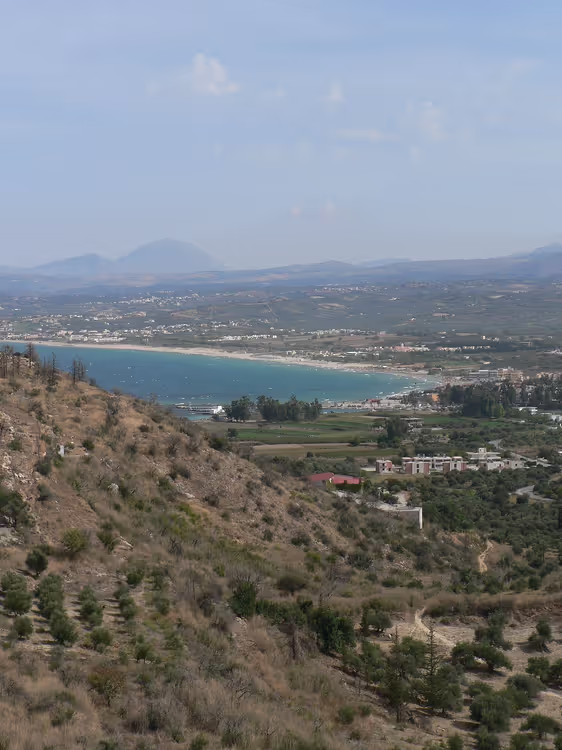
Georgioupolis sits in the north of Crete, between Chania and Rethymno. Next to the fishing town stretches one of the longest sandy beaches on the island. The bottom is even, and there are almost no waves because a sandbar encloses the bay. Behind the eucalyptus trees the air feels fresher, and this is especially noticeable in the heat.
It's convenient for families with children and for water sports. Tavernas and hotels line the shore, so you don't need a car. In the evening people stroll along the water, as in any resort town.
 © James Preston · CC BYPhoto: James Preston, CC BY (https://creativecommons.org/licenses/by/2.0), Wikimedia Commons
6. Red Beach
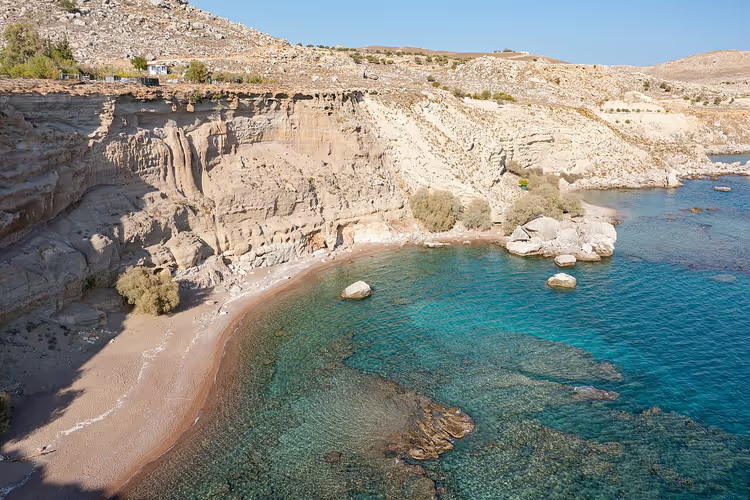
Red Beach (Kokkini Ammos) lies half a kilometer from Matala. The red sand and terracotta cliffs gave the shore its name. In the sixties this place was discovered by hippies, and today it appears in every island guidebook.
The path goes along a narrow trail through the cliffs; closed-toe shoes are needed. The beach is equipped: there are loungers, umbrellas, a changing room, and a snack bar. Some guests sunbathe without swimsuits, which is normal for this place.
- The catch: the trail is slippery after rain and is not suitable for strollers.
 © dronepicr · CC BYPhoto: dronepicr, CC BY (https://creativecommons.org/licenses/by/2.0), Wikimedia Commons
7. Matala
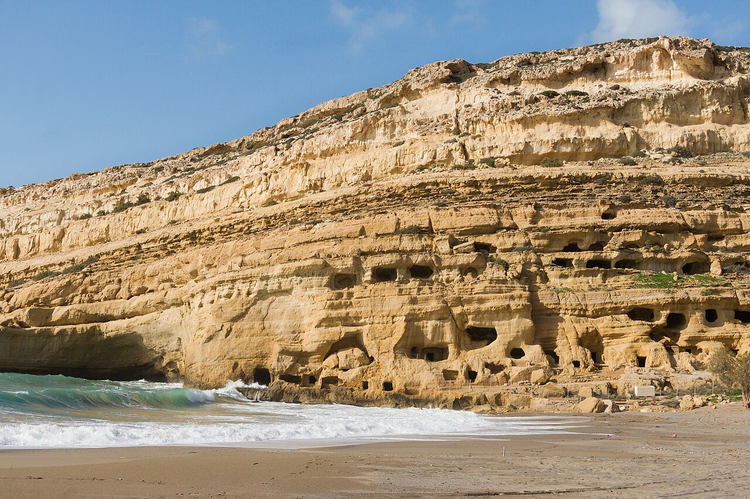
Matala is located south of Heraklion. Rocky headlands close off the bay on both sides, so there are no big waves except on days with a western wind. The beach strip of fine gravel runs along the base of the cliffs, and the water stays clear almost always.
Caves are carved into the cliffs, where hippies lived in the seventies. Today it is a protected monument, with a staircase leading up to it. The beach has loungers, showers, volleyball courts, and boat rental points.
Bars and tavernas operate nearby, so you will find accommodation and dinner without searching. In the evening, climb the stairs to the caves: from there you get a sunset over the bay that every guest of the resort photographs.
8. Plakias
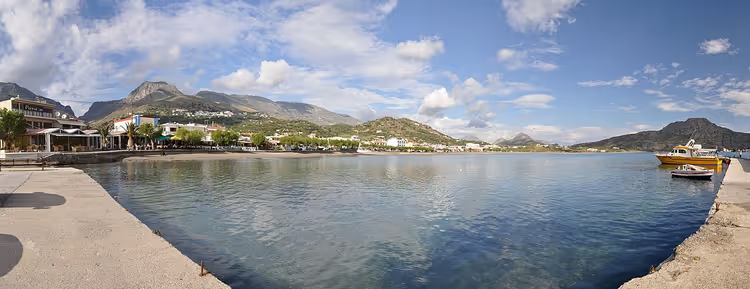
Plakias is on the south coast, in the Rethymno region. It is a small village right by the water, surrounded by low mountains. The shores of the bay are pebbly, so wooden walkways make it easy to get into the water.
It is quiet here, and families and older couples appreciate that. When the wind blows, waves pick up near the shore and swimming becomes more invigorating. A promenade runs along the beaches, and cafes set their tables right at the water's edge.
 © Moonik · CC BY-SAPhoto: Moonik, CC BY-SA (https://creativecommons.org/licenses/by-sa/3.0), Wikimedia Commons
9. Frangokastello
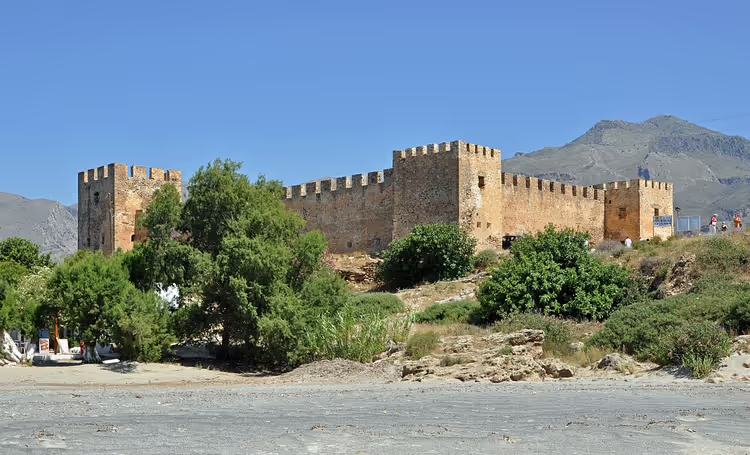
Frangokastello sits on the south of Crete, by the Libyan Sea. The beach is named after the Venetian fortress that rises near the shore. The sand here is golden, turning gray in places, and the bottom is even.
There are almost no waves, except for a few windy days in August. The beach has showers, loungers, and umbrellas. Hotels, tavernas, and shops operate in the village, so you can stay right here.
 © Marc Ryckaert ( MJJR ) · CC BYPhoto: Marc Ryckaert ( MJJR ), CC BY (https://creativecommons.org/licenses/by/3.0), Wikimedia Commons
10. Platanias
Platanias lies 10 kilometers from Chania, on the north coast. The beach is long and wide, with sand and fine pebbles. Opposite the shore you can see the island of Agios Theodoros, where wild kri-kri goats live.
The infrastructure is well developed: rentals for water sports, sightseeing boats, and speedboats that depart right from the shore. This is a lively place with many hotels and bars, which means it can be noisy in season even at night. On the other hand, there are more options for water activities here than on the southern beaches, where the infrastructure is more modest.
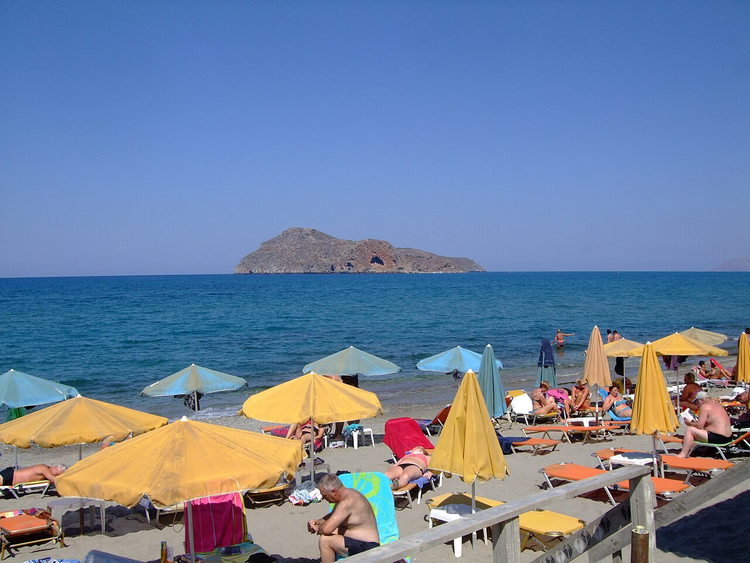 © Beemwej · CC BY-SAPhoto: Beemwej, CC BY-SA (https://creativecommons.org/licenses/by-sa/3.0), Wikimedia Commons
11. Stavros
Stavros sits on the Akrotiri peninsula, east of Chania. In 1964, the final scene of the film "Zorba the Greek" was shot here (according to Movie-Locations). A mountain encloses the lagoon, so the water in it is warm and calm.
The shallow water makes this place convenient for children. The second beach beyond the headland is exposed to the winds, and people swim there when the sea is calm. Buses run from Chania, and there are tavernas and accommodation along the shore.
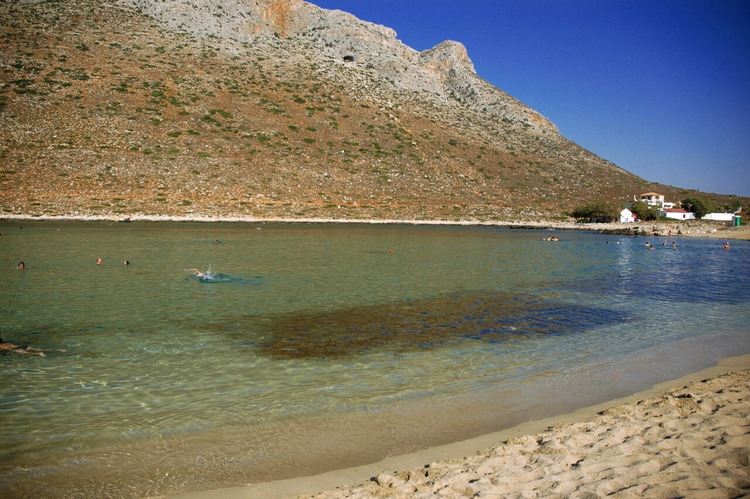 © G Da · CC BY-SAPhoto: G Da, CC BY-SA (https://creativecommons.org/licenses/by-sa/3.0), Wikimedia Commons
12. Anissaras
Anissaras is located near Hersonissos, on the north coast. It is a quiet resort with hotels, tavernas, and a long beach. There is almost no nightlife, so people come here for peace and a calm sea.
The shore combines sand and pebbles, and the bottom is rocky in places but without sharp edges. The conditions are suitable for diving and water skiing. A strip of greenery runs between the beach and the road, muffling traffic noise.
 © Алексей Шулик · CC BYPhoto: Алексей Шулик, CC BY (https://creativecommons.org/licenses/by/3.0), Wikimedia Commons
Crete beaches for families with kids
If you're traveling with small children, pick a shore where the sea stays shallow right at the water's edge. In the Gournes bay, between Kokkini Hani and Gouves, there's a sandy strip with no rocks and a gentle entry into the water. A mini oceanarium operates nearby.
In Hersonissos, Star Beach works well: three equipped beaches and a water park right next to them. For older kids, Balos bay is a good fit if you're up for a ferry ride. Anissaras beach is convenient for those staying at a hotel nearby.
- The catch: in summer, loungers at family beaches get taken early, so arrive at opening time or bring your own.
When to go to Crete beaches
The swimming season in Crete opens in late May, when the water warms up. July and August are the hottest months, with the sun beating down almost all day. In August, strong winds sometimes blow along the southern coast and kick up waves.
The most comfortable period for the beach runs from the second half of September through October. The sun no longer burns as hard, while the sea stays warm. Accommodation prices drop during this time. These are also the months when fruit, grapes, and figs ripen.
Comparing Crete beaches by type of vacation
Beach | Shore | Water and waves | Who it's for |
|---|---|---|---|
Balos | white sand, lagoon | calm in the lagoon | those ready to take a ferry |
Elafonisi | pink sand, sandbar | shallow, reefs break the waves | families with kids |
Vai | sand under palm trees | calm | shade and scenery seekers |
Preveli | sand and pebbles | cooler because of the river | nature lovers |
Georgioupolis | long sandy stretch | even bottom | those staying nearby |
Red Beach | red sand | open sea | nudists and photographers |
Matala | fine gravel | waves with a western wind | romantics and divers |
Plakias | pebbles | sometimes calm, sometimes wavy | those seeking peace |
Frangokastello | golden sand | almost no waves | families and history lovers |
Platanias | sand and pebbles | developed infrastructure | active vacations |
Stavros | sand in a lagoon | shallow and warm | families and movie fans |
Anissaras | pebbles and sand | rocky bottom | quiet relaxation |
Crete beaches on the map
The map below shows all 12 beaches from this selection. Open it on your phone and build a route between the points to estimate driving time.
Best beaches of Crete
Places on the map
- 1Balos A lagoon in the northwest of the island, accessible only by sea
- 2Elafonisi Pink sand, the islet connected to the shore by a sandbar
- 3Vai The only natural date-palm forest in Europe
- 4Preveli A sand-and-pebble shore by a monastery, a palm forest along the river
- 5Georgioupoli One of the longest sandy beaches on the island
- 6Red Beach Red sand and terracotta cliffs near Matala
- 7Matala A cove with hippie caves in the cliffs, fine gravel
- 8Plakias A pebble bay on the south coast, a quiet village
- 9Frangokastello Golden sand near a Venetian fortress
- 10Platanias Well-developed water-sports facilities near Chania
- 11Stavros A lagoon from the film "Zorba the Greek," warm and calm water
- 12Anissaras A quiet resort near Hersonissos, sand and pebbles
⁉️🤔 Frequently asked questions
Where is the pink sand in Crete?
Pink sand is found at Elafonisi, in the southwestern part of the island. The color comes from crushed shells and coral mixed in with the sand. The tint is more visible in sunlight and right at the water's edge. If you want to see it without the crowds, come early in the morning or after 5:00 PM. At Balos the sand is white, but the lagoon water gives turquoise and blue shimmering shades.
Which Crete beach should I go to with kids?
Choose shores with shallow water and a gentle entry. At Elafonisi the water is knee-deep and protected from waves. At Stavros the lagoon is enclosed by a mountain, so the water is warm and calm. Georgioupolis has a long sandy strip and an even bottom. Balos and Red Beach are best avoided with small children: the descent is steep, and Red Beach has no easy entry into the water.
Can you get to Balos by car?
No. There is asphalt up to the viewpoint above the lagoon, but after that a steep downhill walk of about a kilometer follows. Most people arrive by ferry from Kissamos. Along the way it stops at Gramvousa island, where a Venetian fortress stands. The morning departure leaves more time for swimming and exploring the island.
When is the best time to swim in Crete?
The comfortable season starts in late May, when the water warms up, and lasts through October. The velvet season, meaning September and October, offers a warm sea without exhausting heat.
Which Crete beaches are good for snorkeling and diving?
Rocky bottoms and clear water are found at Anissaras and in the bay of Matala. In Matala, equipment and boat rental points operate nearby. Platanias and Plakias have rentals for water sports. For calm snorkeling, choose the morning, while the wind is light and the water is clear. In the afternoon, waves stir up sediment.
In short: what to book
The choice depends on how you like to vacation. The matrix below helps you pick a beach, and with it a base area for your stay.
- If you're traveling with kids: Georgioupolis, Stavros, or Anissaras.
- If you want wild nature: Balos, Preveli, or Elafonisi.
- If you need snorkeling and sports: Matala, Platanias, or Plakias.
- If you don't have a car: Georgioupolis, Platanias, or Stavros, all reachable by bus from Chania.
Hotels near family beaches sell out earliest, and for August the available rooms are gone months in advance. For Balos and Elafonisi, take the morning departure or leave early: by midday both the water and the road get crowded.

A small editorial team writing guides for independent travel. We travel ourselves, but we haven’t been everywhere, so we check prices, opening hours and how to get there against official sources.