
















Resorts of Montenegro: 13 towns with sandy beaches and ski slopes
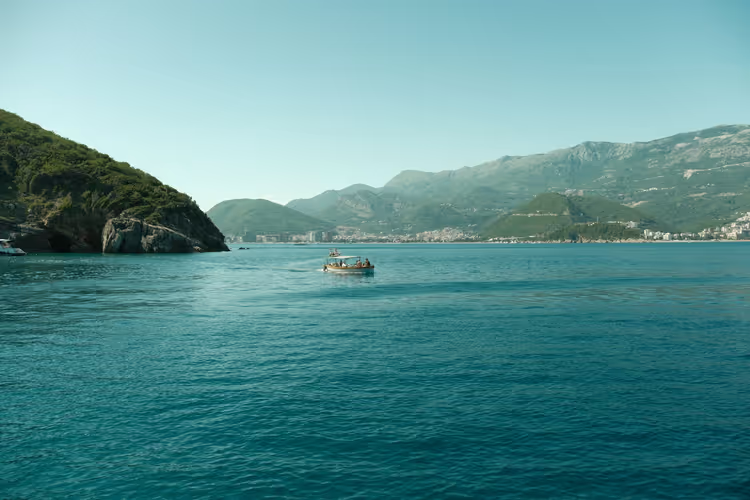
Montenegro packs more than a dozen resorts onto a short stretch of the Adriatic coast.
On a single trip you can swap the sandy beach of Ulcinj for the Venetian streets of Kotor. In winter you head off to ski in Durmitor. A country the size of a small region delivers both sea and mountains. The longest sandy beach on the Adriatic, Velika plaža, stretches 13 km from Bojana to Port Milena (as of 09/2026, Montenegro's official tourism portal). Below we break down 13 resorts: 11 on the coast and 2 in the mountains, with honest catches and tips on where to book.
Ad: this article contains affiliate links, we earn a commission if you book through them, at no extra cost to you.
How to choose a resort in Montenegro
The coast splits into two parts. The Budva Riviera runs from Bečići to Petrovac: sand, pebbles and dense hotel development. The Bay of Kotor is deeper and quieter, home to Kotor, Perast, Tivat and Herceg Novi. In the center of the country, in the mountains, there are two ski resorts, Žabljak and Kolašin.
💡 In short:
- Beach and kids: sand and shallow water at Ulcinj and in Bečići.
- Architecture and views: Budva, Kotor and Perast.
- Quiet, rocks and diving: Tivat, Petrovac and Herceg Novi.
- Snow from November to March: Žabljak and Kolašin.
1. Budva
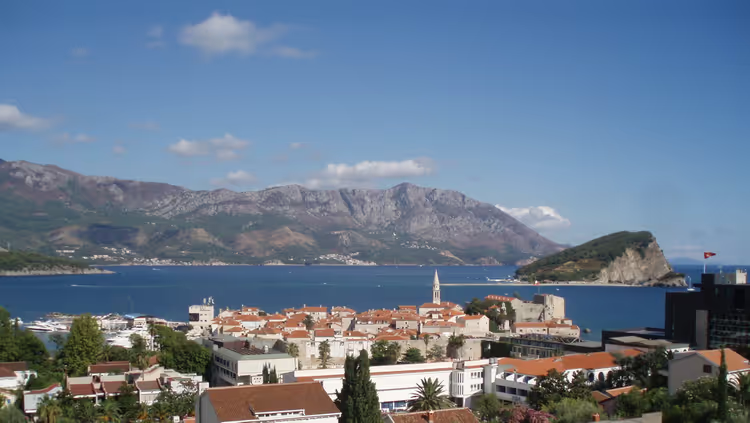
The Old Town of Budva sits on a headland surrounded by water on three sides. It was built by the Venetians, and the stone quarters have kept their look: narrow cobbled streets, tiled roofs, an unbroken fortress wall. The main defensive stronghold, the Citadel, protected the town from Turkish raids, and from its upper level you can see the whole bay.
Swimming here starts in May and ends in October. The beaches alternate: near the Old Town there are pebbles, further north the sand begins. For water sports, rental shops operate along the promenade.
 © Bratislav Tabaš · CC BY-SAPhoto: Bratislav Tabaš, CC BY-SA (https://creativecommons.org/licenses/by-sa/3.0), Wikimedia Commons
- Who it's for: if you want to combine the beach with a town, restaurants and nightlife.
- How to get there: from Tivat airport along the Adriatic Highway, the drive takes under half an hour.
- The catch: in July and August the beaches and the Old Town are crowded.
- Where to stay: hotels in Budva on Trip.com
2. Bečići
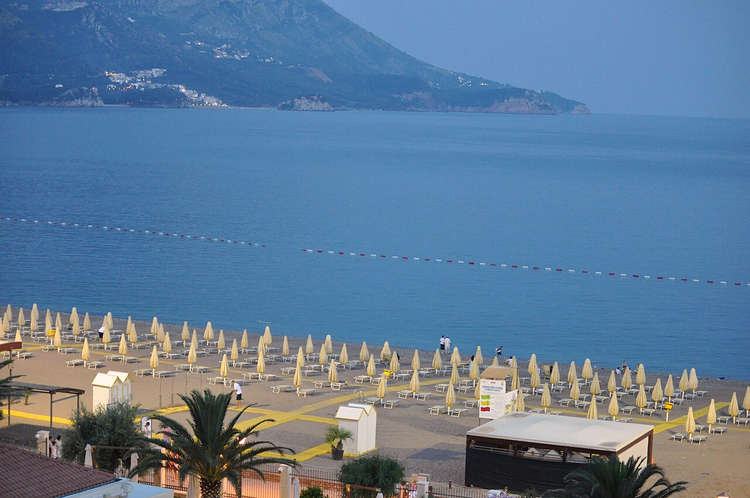
Bečići sits right next to Budva, and the two resorts are connected by an underground tunnel: you walk from one town to the other in a few minutes. The main draw here is a wide sand-and-pebble beach with a gentle entry into the water. The shallows extend far from the shore, so swimming with kids is easy.
The resort consists of two villages with white houses under tiled roofs, covered in oleanders and bougainvillea. For active visitors there are equipment rentals, catamarans and scooters. Families with kids will like the local water park with attractions for different ages.
 © Андрей Бобровский · CC BYPhoto: Андрей Бобровский, CC BY (https://creativecommons.org/licenses/by/3.0), Wikimedia Commons
- Who it's for: families with kids and anyone who wants a beach without the Old Town crowds.
- Not for: if you want museums and old quarters within easy reach.
- The catch: in peak season the beach fills up, so look for a free spot by the water in the morning.
- Where to stay: hotels in Bečići on Trip.com
3. Petrovac
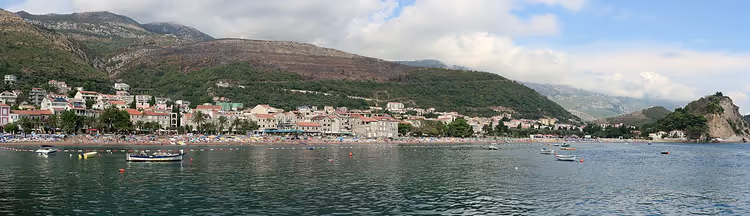
Petrovac is considered one of the most expensive resorts on the coast. It has a spacious promenade, wide beaches and plenty of walking routes, but hotels and restaurants cost above the national average. There is no crush like in Budva, precisely because of the prices.
The Lučice and Buljarica beaches are good for relaxed swimming. Above the town stands the Castello fortress, whose viewing platform looks out over the sea and tiled roofs. A walk along the Upper Promenade, Šetalište, takes you through authentic tunnels, rocks and pine groves.
 © Victor Gleim · CC BY-SAPhoto: Victor Gleim, CC BY-SA (https://creativecommons.org/licenses/by-sa/3.0), Wikimedia Commons
- Who it's for: couples and anyone willing to pay for peace and quiet.
- The catch: prices are higher than in nearby Becici and Sutomore.
- Where to stay: hotels in Petrovac on Trip.com
4. Herceg Novi
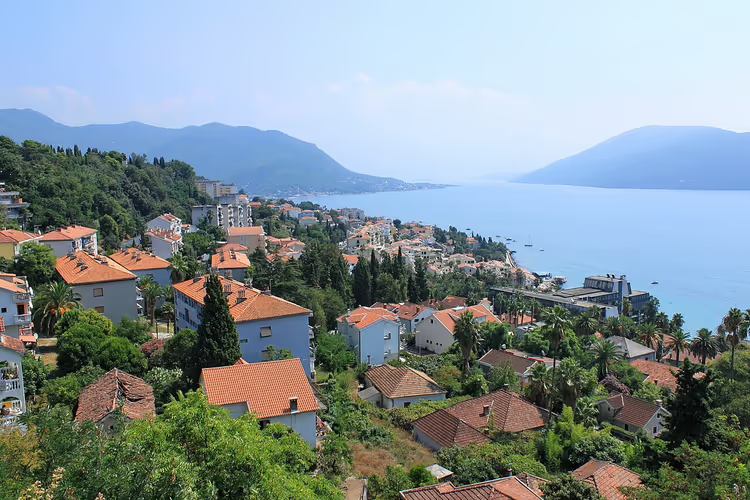
Herceg Novi is called the garden of Montenegro: the town is lush with greenery, and in spring citrus and ornamental trees bloom here. The beaches are only pebble and rocky, with no sand. In return, the clear water and underwater rocks attract divers, and water skiers ride the waves.
The town center is Bellavista Square with the Cathedral of St. Michael the Archangel. From the age of knights, the fortress wall towers remain, the Bloody Tower and the Clock Tower. The promenade stretches along the sea, with stone tunnels cut through it, a legacy of the former railway.
 © Marcin Konsek · CC BY-SAPhoto: Marcin Konsek, CC BY-SA (https://creativecommons.org/licenses/by-sa/4.0), Wikimedia Commons
- Who it's for: diving, long walks, and shady streets.
- Not for: anyone who needs a sandy beach and water entry without rocks.
- The catch: water shoes here are not a luxury but a necessity.
- Where to stay: hotels in Herceg Novi on Trip.com
5. Ulcinj
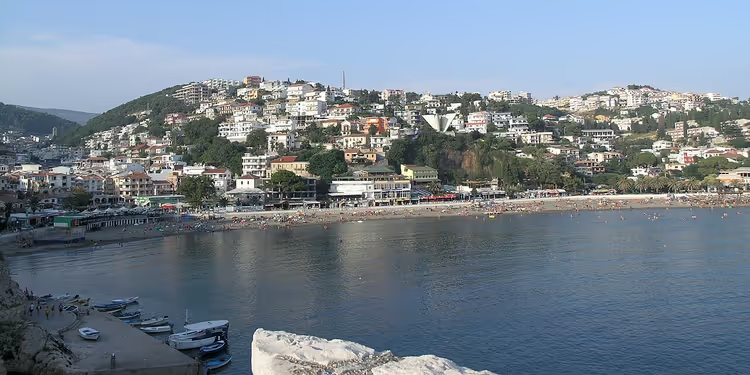
Ulcinj is the southernmost and warmest town in the country, with Albania just beyond it. This is where Velika Plaza lies, the longest sandy stretch on the Adriatic at 13 km (as of 09/2026, Velika Plaza guide). The Bojana River flows nearby, its banks overgrown with Mediterranean greenery.
The season opens in April and lasts until November. In April the daytime air is already warm, but the water remains cool. September is the velvet season: the heat eases, the sea holds its warmth, and hotel prices drop. In October and November citrus fruits ripen, and you can both sunbathe and go on excursions.
 © Matěj Baťha · CC BY-SAPhoto: Matěj Baťha, CC BY-SA (https://creativecommons.org/licenses/by-sa/3.0), Wikimedia Commons
- Who it's for: long sandy beaches and a warm autumn.
- How to get there: from Tivat or Podgorica airport along the Adriatic Highway.
- Where to stay: hotels in Ulcinj on Trip.com
6. Kotor
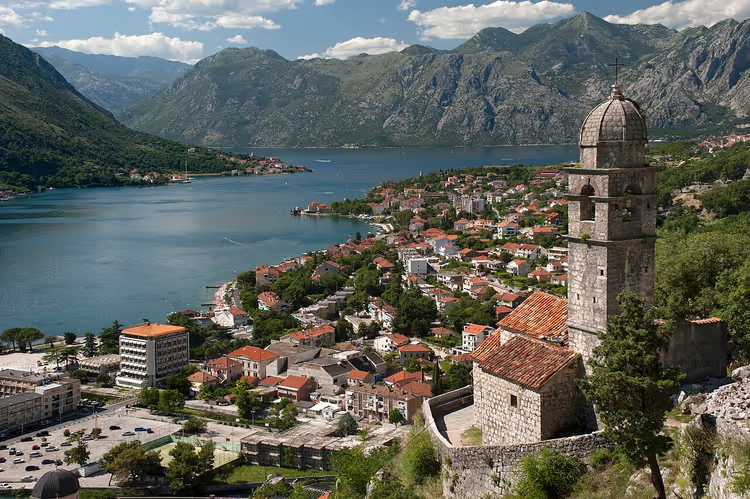
Kotor has kept its Venetian appearance for four centuries. The town stood on trade and sea routes, and its history remembers Roman legionaries, Byzantine merchants, and Serbian rulers. The bay protects the town from winds, so winters here are mild, and the water in the bay is the warmest on the entire coast.
The Old Town is surrounded by a fortress wall 4.5 km long and 2 to 16 meters thick (as of 09/2026, Love Kotor). About 1,350 stone steps lead up to the Fortress of St. John, and the climb takes roughly an hour. Inside the walls stand Arms Square, the Clock Tower, the Pillar of Shame, and the Arsenal, with Orthodox churches and Catholic cathedrals nearby.
 © User:Ggia · CC BY-SAPhoto: User:Ggia, CC BY-SA (https://creativecommons.org/licenses/by-sa/3.0), Wikimedia Commons
- Who it's for: anyone who wants history, the wall above the bay, and cruise ships at the dock.
- The catch: in summer the Old Town is crowded with groups from cruise ships, come in the morning.
- Where to stay: hotels in Kotor on Trip.com
7. Perast
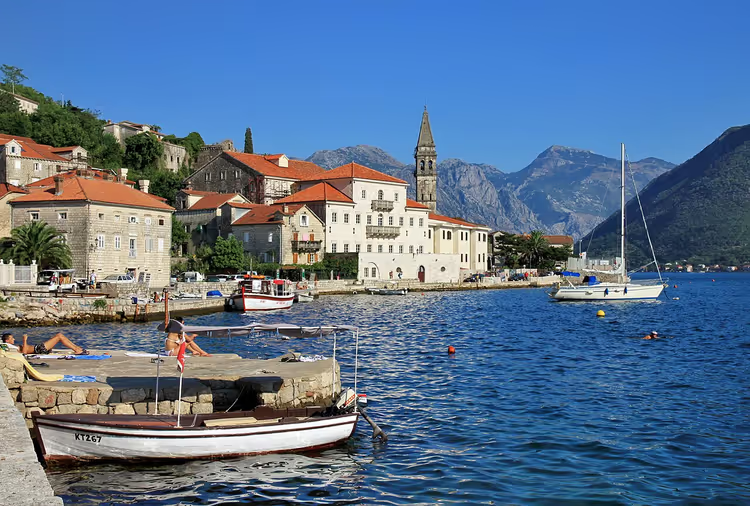
Perast grew on maritime trade. In the 17th and 18th centuries its fleet numbered more than a hundred ships, and with that money the town built palaces, cathedrals, and monasteries. The town's jewel is the 17th-century bell tower of St. Nicholas Church, standing right by the waterfront.
Perast has no beaches with infrastructure, so everyone swims by the pier. The town has a monument to Admiral M. Zmajevic on Admirals Square. Boats run from Perast to two islands: St. George Island is home to a working Benedictine abbey, and on Our Lady of the Rocks island stands the Church of Our Lady.
 © Marcin Konsek · CC BY-SAPhoto: Marcin Konsek, CC BY-SA (https://creativecommons.org/licenses/by-sa/4.0), Wikimedia Commons
- Who it's for: for a quiet day without beach noise and for a trip to the islands.
- Not for: vacationing with kids and loungers by the water.
- The catch: no beach of its own, water access only from the pier.
- Where to stay: hotels in Perast on Trip.com
8. Tivat
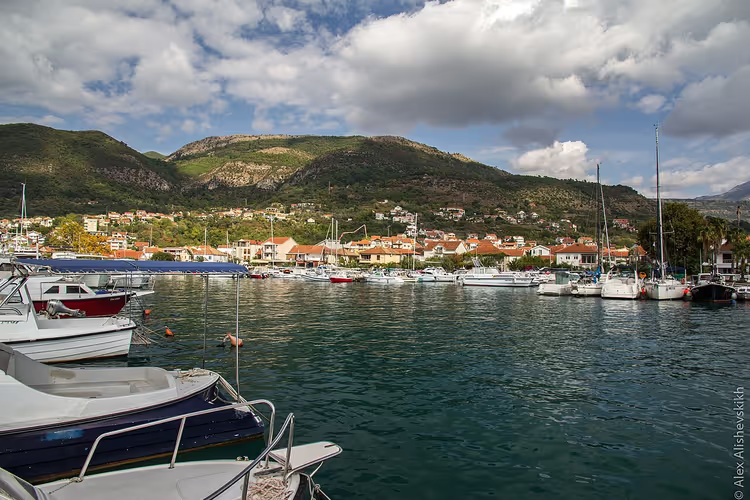
Tivat sits on the shore of the Bay of Tivat, and legend says the town is named after the Illyrian queen Teuta. Every era has left its mark here, from the Illyrians to the Venetians and Austrians. A short isthmus connects the town to the Island of Flowers, where the medieval Prevlaka monastery stands.
Tivat is home to a 16th-century palace complex, the summer residence of the rulers, and a botanical garden laid out under the Austrians. The airport is within the city limits, so Tivat works well as a base for trips around the bay and to the island of Otok with its Jesuit monastery.
 © Alex Alishevskikh · CC BY-SAPhoto: Alex Alishevskikh, CC BY-SA (https://creativecommons.org/licenses/by-sa/2.0), Wikimedia Commons
- Who it's for: for a quiet stay by the bay and early flights.
- How to get there: Tivat Airport is right next to the town.
- Where to stay: hotels in Tivat on Trip.com
9. Sutomore
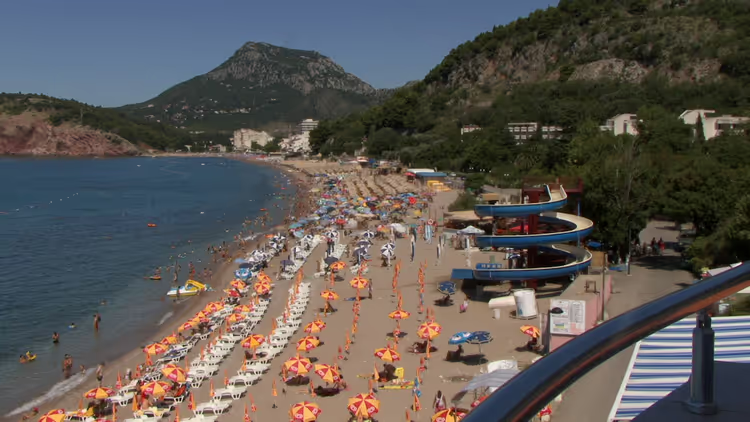
Sutomore sits in the middle of the coast, not far from two airports, and is connected to them by road and rail. In summer, from June 1 to September 15, private cars are not allowed into the town, so the air here is noticeably cleaner.
The beach is covered with a mix of sand and fine pebbles. Accommodation consists of private villas and family-run hotels with moderate prices, which is why Sutomore attracts people who come to the sea for a long stay. The town has preserved the 12th-century Church of St. Thecla and the ruins of the 15th-century Haj-Nehaj Fortress, while trips to Cetinje, Petrovac, and Bar broaden your acquaintance with the country.
 © Piergiorgio Mariniello · CC BY-SAPhoto: Piergiorgio Mariniello, CC BY-SA (https://creativecommons.org/licenses/by-sa/3.0), Wikimedia Commons
- Who it's for: budget beach holidays and long trips around the surrounding area.
- The catch: the summer car ban is inconvenient if you are traveling by car.
- Where to stay: hotels in Sutomore on Trip.com
10. Sveti Stefan
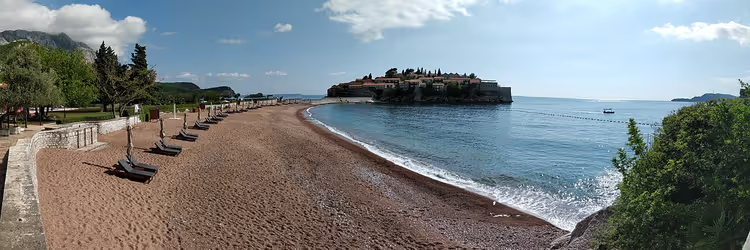
Sveti Stefan is an island of stone houses connected to the shore by a natural isthmus: the current washed up gravel and created a causeway. At first it was a fishing village, then hotels appeared, and until the early 21st century the island operated as an exclusive resort.
Today the island is occupied by Aman Sveti Stefan. Villa Miločer welcomes guests from May 22, 2026, and the island itself opens on July 1, 2026 (as of 09/2026, CPP-Luxury). Some beaches are now accessible to locals, while Queen's Beach remains reserved for hotel guests (as of 09/2026, Haus Travel). Nearby there is a free public beach that anyone can visit.
 © Jaakko Luttinen · CC BY-SAPhoto: Jaakko Luttinen, CC BY-SA (https://creativecommons.org/licenses/by-sa/4.0), Wikimedia Commons
- Who it's for: those who want to see the island and swim at the free beach nearby.
- Not for: those looking for budget accommodation right on the island.
- The catch: Villa Miločer prices are aimed at the premium segment, with nightly rates in season running into four figures.
- Where to stay: hotels near Sveti Stefan on Trip.com
11. Bar
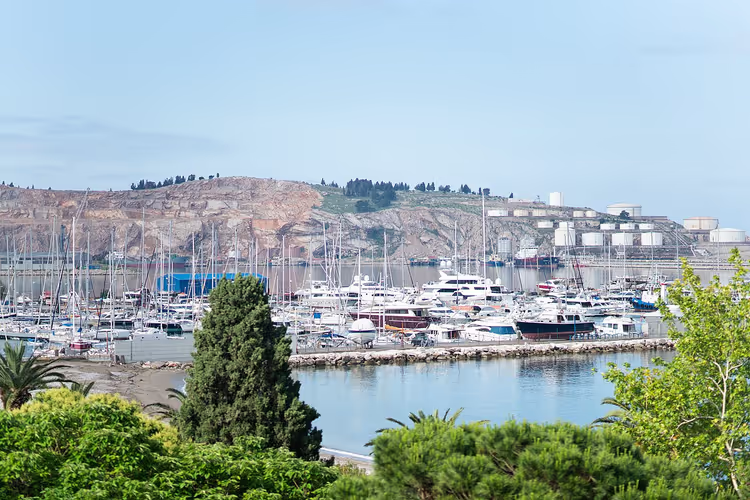
Bar is known for its large seaport. After liberation from Ottoman rule in the late 19th century, the town was rebuilt closer to the sea, and the old site became an open-air museum, the Old Town. Excavations on its territory are ongoing, and the place is called the Montenegrin Pompeii.
Olive groves grow around Bar, and the oldest trees here are considered among the most ancient in Europe. The resort attracts independent travelers: they book excursions to neighboring towns through local agencies or explore the surroundings by car.
 © Московская духовная академия · CC BY-SAPhoto: Московская духовная академия, CC BY-SA (https://creativecommons.org/licenses/by-sa/2.0), Wikimedia Commons
- Who it's for: those traveling without a package tour who want to explore the country on their own.
- The catch: beaches within the city limits are inferior to those on the riviera; you'll need to drive out for sand.
- Where to stay: hotels in Bar on Trip.com
12. Žabljak
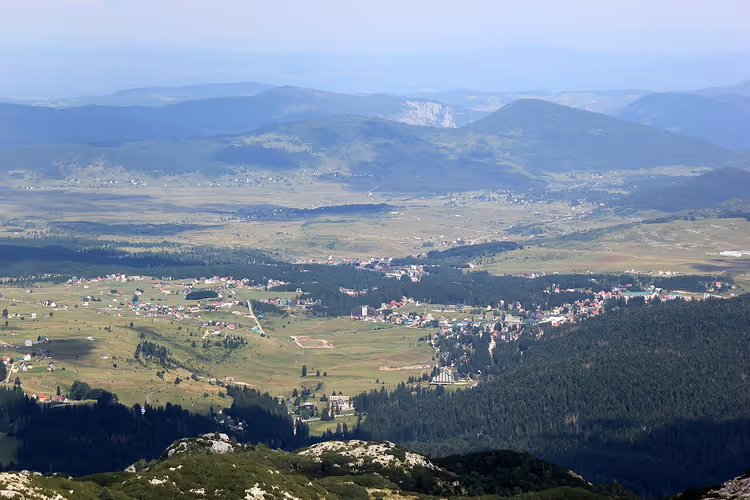
Žabljak sits in Durmitor and serves as the country's main ski center. The infrastructure is basic, but people come here for the slopes of Savin Kuk: all around are pristine alpine meadows, coniferous forests, and snow-capped peaks. The season starts in late November and lasts until late March.
The highest run climbs to 2,010 meters, with a vertical drop of up to 800 meters (as of 09/2026, Ski Resort). The other descents lie lower and branch out across the slope. Visitors ski downhill and cross-country, snowboard, and sled.
 © Julian Nyča · CC BY-SAPhoto: Julian Nyča, CC BY-SA (https://creativecommons.org/licenses/by-sa/3.0), Wikimedia Commons
- Who it's for: skiers and snowboarders of any level.
- The catch: there is no developed resort infrastructure, book accommodation in advance.
- Where to stay: hotels in Žabljak on Trip.com
13. Kolašin
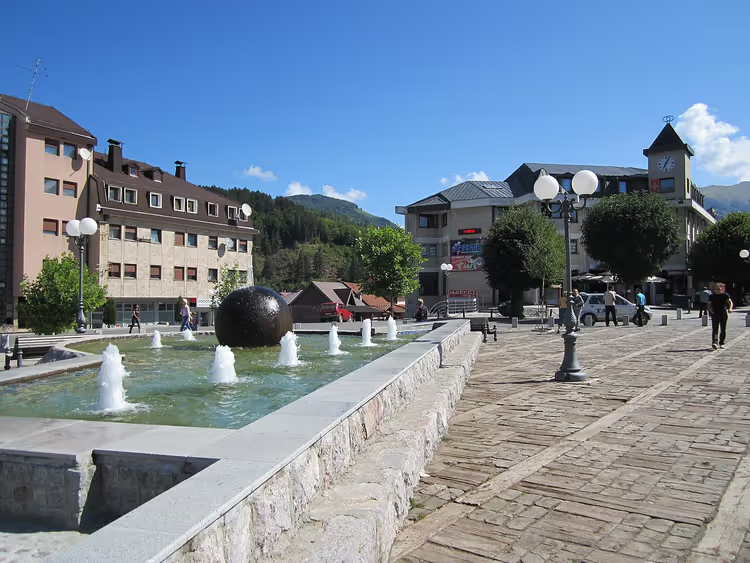
Kolašin is surrounded by mountains on all sides, which means almost windless weather and convenient slopes. In winter, skiers and snowboarders come here; in summer, climbers and kayakers head to the mountain lakes. The winter sports hub is Bjelasica, where you can learn all types of skiing.
The surrounding area has historical landmarks: the ruins of the Church of the Dormition of the Mother of God, the Morača monastery, and the Local History Museum (as of 09/2026, Kolašin 1450). Hiking trails lead to six mountain lakes, five of them glacial, and the sixth, Biogradsko, lies in a biosphere reserve with rich flora and fauna.
 © Pythonax · CC BY-SAPhoto: Pythonax, CC BY-SA (https://creativecommons.org/licenses/by-sa/3.0), Wikimedia Commons
- Who it's for: winter skiing and summer hikes to the lakes.
- The catch: getting between the lakes and monasteries without a car is difficult.
- Where to stay: hotels in Kolašin on Trip.com
Sandy beaches for family vacations
Montenegro's coastline is mostly pebbles, so soft sand is worth looking for in the south and on the Budva Riviera. South of Ulcinj lies Velika Plaža, up to 60 meters wide; its fine white sand is valued as therapeutic (as of 09/2026, Montenegro tourism portal).
Queen's Beach in Miločer near Sveti Stefan is surrounded by mountains and can only be reached from the sea. Sandy sections can be found near Bar, on the shore of Lake Skadar, and on the riviera: Mogren, Bečići, and Kamenovo. For families with children, Bar and Tivat are convenient bases, with more family hotels and private villas.
When to go: swimming season by month
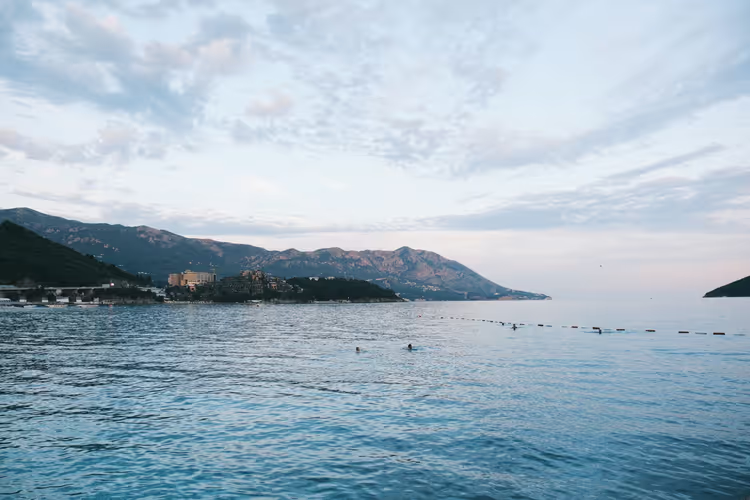
On the Montenegrin coast, the swimming season opens in May and closes in October. The exception is Kotor: in the Bay of Kotor, the water stays warm from late April to late November, and the mountains protect the city from the north wind (as of 09/2026, National Tourism Organisation of Montenegro).
In May, daytime air temperatures reach comfortable levels, but the sea is still cool. June brings steady warmth and water around +22-23 °C. July and August mean heat, a warm sea, and higher accommodation prices. September is considered the velvet season: the heat subsides, the water stays warm, and fruit appears at the markets. In October you can still swim, but the weather changes more often, so bring a light jacket.
⁉️🤔 Frequently asked questions
Which Montenegro resort should I choose for a first trip?
Start with Budva or Bečići. From there you can reach Kotor, Perast, and Tivat within an hour, and the sea is right there. If you want something quieter and cheaper, go for Sutomore. For a long sandy beach, book Ulcinj; for greenery and diving, Herceg Novi works well.
Where are the sandy beaches in Montenegro?
Look for soft sand in the south, near Ulcinj and Bar, and on the Budva Riviera: Mogren, Bečići, Kamenovo. Velika Plaža near Ulcinj stretches for 13 km. Queen's Beach lies in Miločer near Sveti Stefan. On the Bay of Kotor, the beaches are pebbly and rocky, with almost no sand.
Where should I go in Montenegro in winter?
Žabljak or Kolašin. Žabljak is in Durmitor, with slopes at Savin Kuk and a season from late November to late March. Kolašin is more convenient for families; the skiing hub is Bjelasica. Rent skis locally and book accommodation in advance, as there are not many rooms in the mountains.
Can you swim in Montenegro in May?
In May the sea is already warming up, but it remains cool, and not everyone finds it comfortable to get in the water. On the plus side, the daytime air is warm and the beaches are empty. The season opens earliest in Kotor, where the bay water is the warmest. If swimming every day matters to you, plan for June or September.
How much time do you need for a coastal trip?
A week is enough to see the main sights. In three days you can cover Budva, Bečići, and Petrovac; in two more days you can reach Kotor, Perast, and Tivat. Herceg Novi and Ulcinj sit at opposite ends of the coast, so allow a separate day for each. Buses run between the towns.
In short: what to book
Your choice depends on why you are going.
- You want sand and shallow water: base yourself in Ulcinj or Bečići.
- You want architecture and strolls: Budva, Kotor, or Perast.
- You are looking for quiet, cliffs, and diving: Tivat, Petrovac, Herceg Novi.
- You are going in winter for snow: Žabljak or Kolašin.
Hotels on the Riviera sell out fast in July and August, so book ahead. Compare hotel prices on Trip.com, find flights on Kiwi.com and a car for driving along the coast.

A small editorial team writing guides for independent travel. We travel ourselves, but we haven’t been everywhere, so we check prices, opening hours and how to get there against official sources.