
















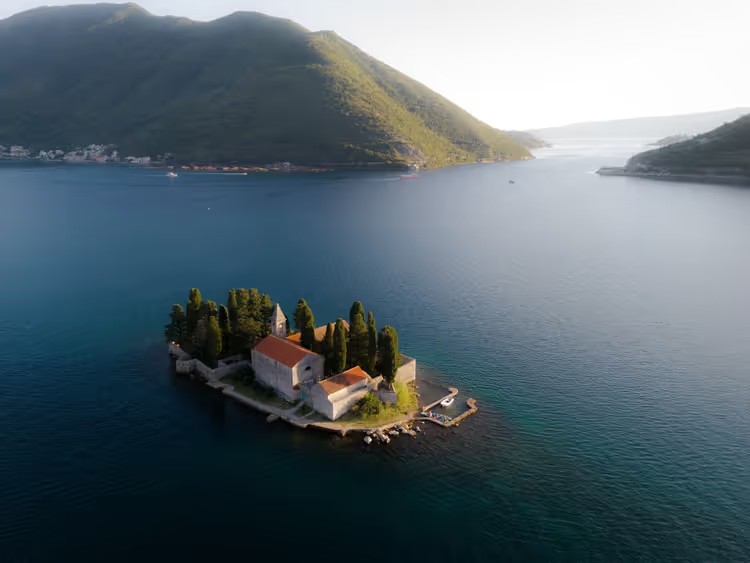
20 Main churches and monasteries of Montenegro: what to see and how to get there
Twenty main churches and monasteries of Montenegro are scattered across the country. Some stand by the sea in Kotor and Perast, others hide in cliffs and mountain canyons. You can reach them on your own or with an organized tour.
Most active monasteries are open to visitors free of charge, and access to the churches is coordinated with the service schedule. The dress code is simple: covered shoulders and knees, and women are often given a headscarf at the entrance. We selected twenty sites from Ostrog to Savina and added a photo, history, and practical details for each.
We checked the opening hours and visiting rules in September 2026 on the Visit Montenegro portal. Check the hours before your trip: on major holidays, monasteries close to tourists.
1. Ostrog Monastery
💡 In short:
- Ostrog is divided into lower and upper parts, with a path up the slope between them.
- The upper part houses the relics of Saint Basil of Ostrog.
- Arrive at opening time: by midday, buses with pilgrims pile up at the lower monastery.
- Check the opening hours before your trip on the Visit Montenegro website.
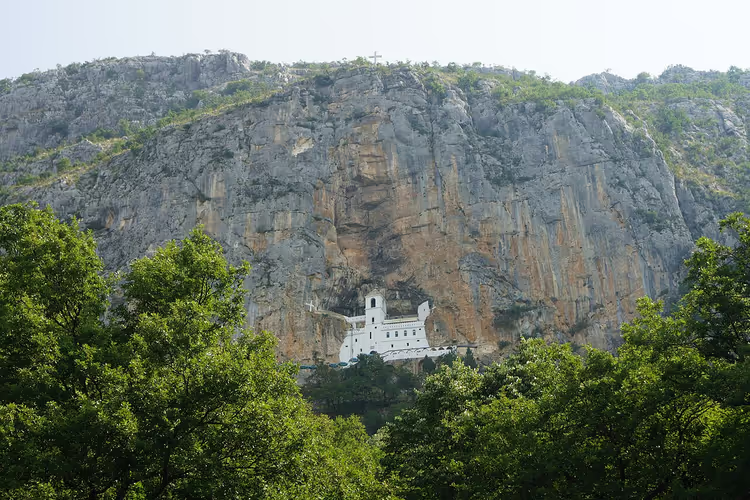 © Dragan Jankovic Faza… · CC BY-SAPhoto: Dragan Jankovic Faza…, CC BY-SA (https://creativecommons.org/licenses/by-sa/3.0), Wikimedia Commons
Ostrog is carved into the rock at an altitude of about 900 m above the Bjelopavlići valley (as of 09/2026, Visit Montenegro). The upper monastery with the relics of Basil of Ostrog has welcomed pilgrims since the 17th century. The lower part was built later, in the 19th century, and houses the Church of the Holy Trinity.
A path with an ascent leads to the upper part. The walk takes about half an hour. It is quiet here in the morning, but by lunchtime tour groups gather. Dress modestly: shoulders and knees covered, and women are given a headscarf at the entrance.
The monastery has a water spring and a small guesthouse for pilgrims. If you arrive at opening time, two hours will be enough without rushing. Stay until evening, when the flow of buses subsides and the view over the valley opens up.
2. Cetinje Monastery
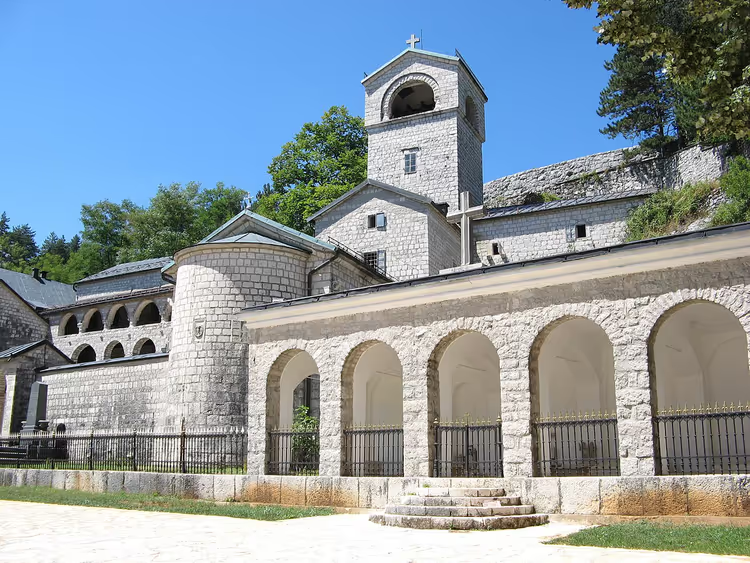 © Koroner · CC BY-SAPhoto: Koroner, CC BY-SA (https://creativecommons.org/licenses/by-sa/3.0), Wikimedia Commons
The monastery in Cetinje is considered the spiritual and cultural center of the country. The first monastery on this site was founded in 1484 (as of 09/2026, Visit Montenegro). The Turks destroyed it in the late 17th century, and the building received its current appearance later.
The rebuilt monastery is linked to Bishop Danilo Petrović, who ruled in the early 18th century (as of 09/2026, Cetinje tourist office). Within its walls are the relics of King Nikola and his wife Milena, as well as a rich collection of old books and church vessels. The country's first printing house and first secondary school are also connected with this monastery.
Nearby stand the King Nikola Palace Museum and the Church of the Nativity of the Virgin. You should take a look at the treasury: it ranks among the richest collections of the Orthodox Church in the Balkans. Admission is free, but you cannot enter during services.
3. Morača Monastery
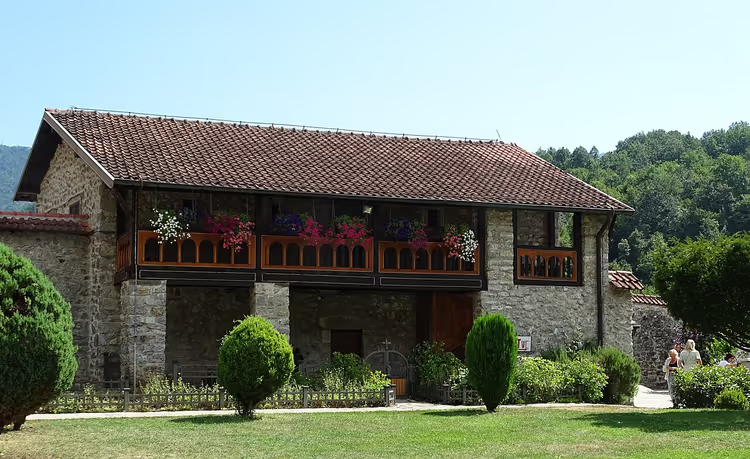 © Ad Meskens You are free to use this picture for any purpose as long as you credit its author, Ad Meskens . Example: © Ad · CC BY-SAPhoto: Ad Meskens You are free to use this picture for any purpose as long as you credit its author, Ad Meskens . Example: © Ad, CC BY-SA (https://creativecommons.org/licenses/by-sa/4.0), Wikimedia Commons
Morača Monastery stands on the right bank of the river in a canyon, between Kolašin and Podgorica. The monastery was founded in 1252 and is one of the main medieval monuments in the Balkans (as of 09/2026, Visit Montenegro).
The frescoes of the Church of the Dormition date back to the 13th century, and some of the paintings were renewed by masters in the 18th century. The complex includes the Cathedral of the Dormition of the Mother of God, the small Church of St. Nicholas, and the monks' residential buildings. The walls are built of soft tuff, which is easy to work with.
If you are driving, park right at the entrance. Arrive early in the morning: by midday, tour buses heading to the coast pass by. An hour is enough to see the churches and take a walk along the canyon.
4. Piva Monastery
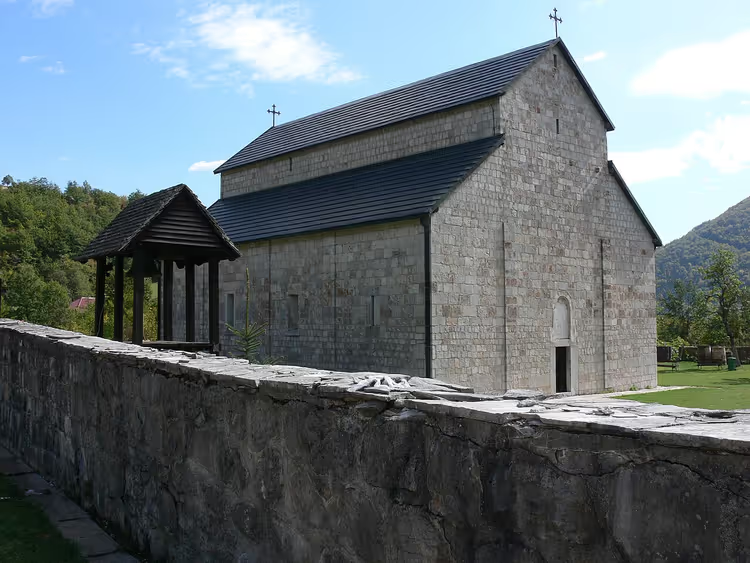
Piva Monastery stands by Piva Lake in the north of the country, near Plužine. The monastery appeared in the 16th century, and after the construction of a hydroelectric power plant on the Piva River it was moved two kilometers higher (as of 09/2026, Visit Montenegro). The konak, bakery, and cemetery remain at the original site.
Inside, ancient frescoes and a gilded iconostasis with a large cross await you. The sacristy holds manuscripts, books, and church valuables. One monk lives here permanently; he keeps order and rings the bells that hang under the roof of the annex.
You will need a boat or a car: the monastery is easiest to reach across Piva Lake or along the mountain road to Plužine. Admission is free, but respect the silence, this is an active monastery of the Serbian diocese. Bring cash for candles and souvenirs.
5. Cathedral of the resurrection of Christ in Podgorica
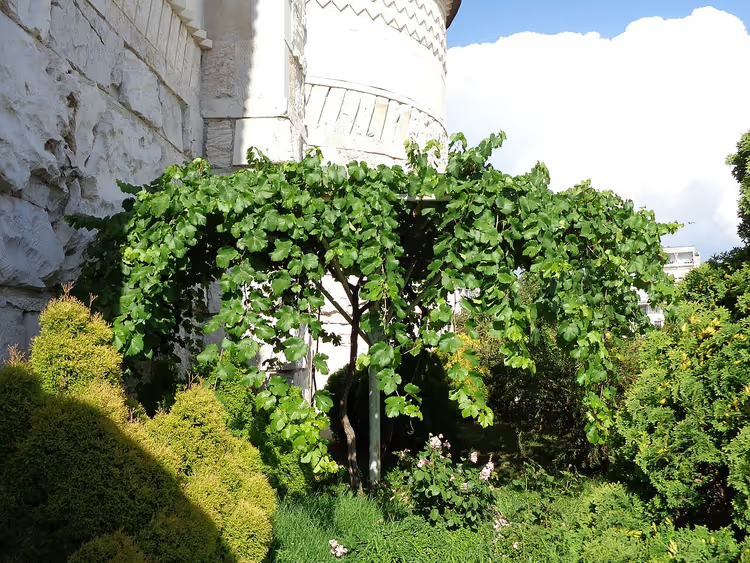 © Andrija12345678 · CC BY-SAPhoto: Andrija12345678, CC BY-SA (https://creativecommons.org/licenses/by-sa/4.0), Wikimedia Commons
The country's main Orthodox cathedral was built in the neo-Byzantine style starting in the 1990s. The bell tower was assembled from two dozen bells, two of which were brought from Voronezh. Inside, the mosaics and the abundance of stonework are striking.
The building was constructed from large stone blocks decorated to look antique. The cathedral can hold up to five thousand worshippers at once, making it one of the largest Orthodox churches in Europe. A mosaic of Noah's Ark was placed above the entrance, and the fresco above the entrance is considered one of the largest paintings in the Balkans.
The cathedral stands in the center of Podgorica on George Washington Street. A bright hall with granite and marble mosaics opens before you. Admission is free, and services are held daily. Stop by in the evening, when the dome lighting is switched on.
6. Dajbabe Monastery in Podgorica
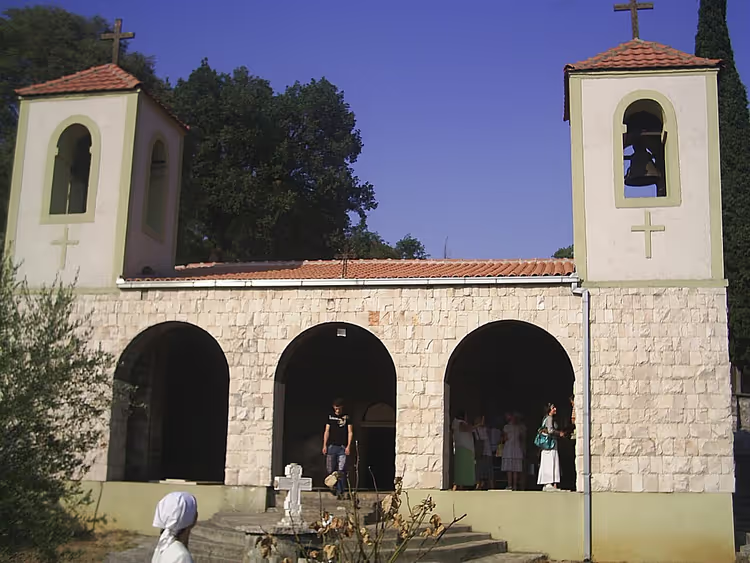 © Танович · CC BY-SAPhoto: Танович, CC BY-SA (https://creativecommons.org/licenses/by-sa/3.0), Wikimedia Commons
Dajbabe Monastery is hidden in rock caves four kilometers from the center of Podgorica. The main rooms are carved underground, in cross-shaped caves. Local legends link these catacombs to the first Christians.
The monastery was founded in the late 19th century, and the first liturgy was held in the cave church. Simeon of Dajbabe became the abbot, and his relics are kept here. Simeon himself painted the walls and ceiling with his followers, and the frescoes have survived to this day and are valued by connoisseurs.
Getting here is easy: a short road leads from Podgorica, and it is a very short walk from the gate to the church. Admission is free. The silence of the underground church awaits you; pilgrims come for peace and prayer.
7. Cathedral of saint Tryphon in Kotor
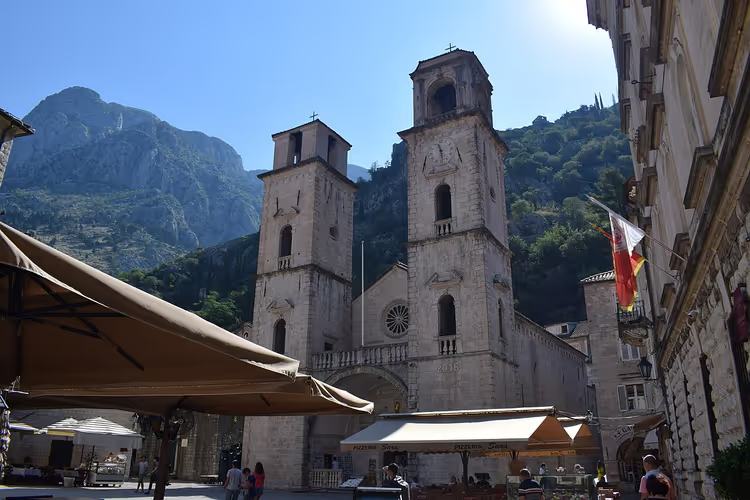 © Geotiger18 · CC BY-SAPhoto: Geotiger18, CC BY-SA (https://creativecommons.org/licenses/by-sa/3.0), Wikimedia Commons
The Cathedral of Saint Tryphon is depicted on Kotor's coat of arms. It was founded in 1166 on the site of an older 9th-century church (as of 09/2026, Visit Montenegro). After the devastating earthquake of the 17th century, the bell towers were rebuilt, and they rise to almost 35 m.
Inside, fragments of Byzantine paintings survive, and Andrija Saracenis rests in a sarcophagus by the entrance. The sacristy holds reliquaries and ancient church utensils. The ancient frescoes of the interior have survived poorly, but scenes can be discerned under layers of plaster.
Kotor's Old Town, together with the cathedral, is listed as a UNESCO World Heritage Site. You will need a ticket: admission is paid and gives access to the sacristy. Come in the morning; by midday, large groups from cruise ships fill the square in front of the cathedral.
8. Church of St. Luke in Kotor
 © Milica Buha · CC BY-SAPhoto: Milica Buha, CC BY-SA (https://creativecommons.org/licenses/by-sa/4.0), Wikimedia Commons
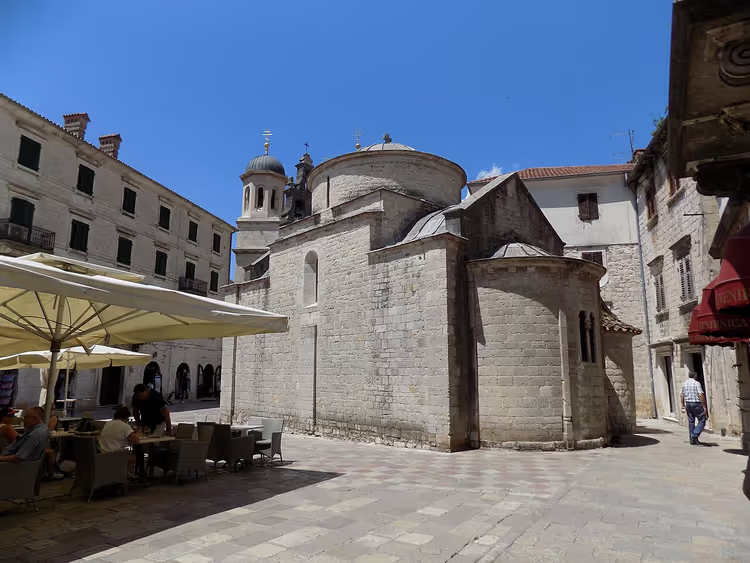
The Church of St. Luke is considered one of the oldest churches in Kotor. It was built in the late 12th century with funds from the feudal lord Kazafraga. Catholic and Orthodox altars stand side by side here, which is a great rarity in the Christian world. The church holds particles of the relics of St. Luke and the martyrs Orestes, Mardarius, and Auxentius.
The church floor is paved with tombstones of townspeople who were buried inside the building. Fragments of frescoes by Italian and Cretan masters date back to the 17th and 18th centuries. The church survived the strong earthquake at the end of the 20th century without destruction, unlike neighboring buildings.
The church is opened on feast days and before tours, so the door is often closed. Check the time on the sign at the entrance and come back at the right hour. Take a look at the small chapel with an iconostasis where Christ is depicted as a King.
9. Church of St. Nicholas in Kotor
 © I would appreciate being notified if you use my work outside Wikimedia. More of my work can be found in my personal gall · CC BY-SAPhoto: I would appreciate being notified if you use my work outside Wikimedia. More of my work can be found in my personal gall, CC BY-SA (https://creativecommons.org/licenses/by-sa/4.0), Wikimedia Commons
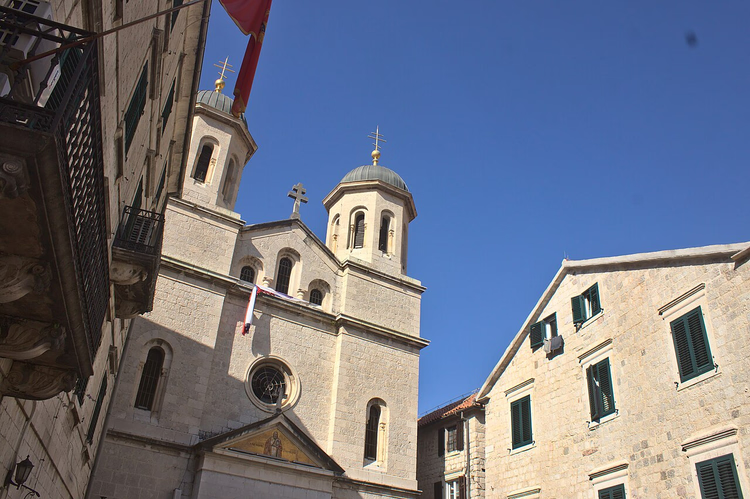
The Church of St. Nicholas stands on Greca Square in Kotor's old town. It was built in honor of the patron saint of sailors and travelers. The site is historic: a Dominican monastery once stood here, later converted into barracks for Napoleon's army.
The current building was constructed in the early 20th century on the foundation of a church damaged by fire in the late 19th century. The facade is done in a pseudo-Byzantine style, with two tall bell towers rising at the entrance. Inside, the iconostasis stands about three meters high, created by the Czech master Ziegler.
The sacristy houses icons, old documents, and church vestments. A spring with water flows in the courtyard, and services are held daily. It is worth stopping by on your way to Kotor's fortress wall; admission is free.
10. Church on our lady of the rocks
 © Miomir Magdevski · CC BY-SAPhoto: Miomir Magdevski, CC BY-SA (https://creativecommons.org/licenses/by-sa/4.0), Wikimedia Commons
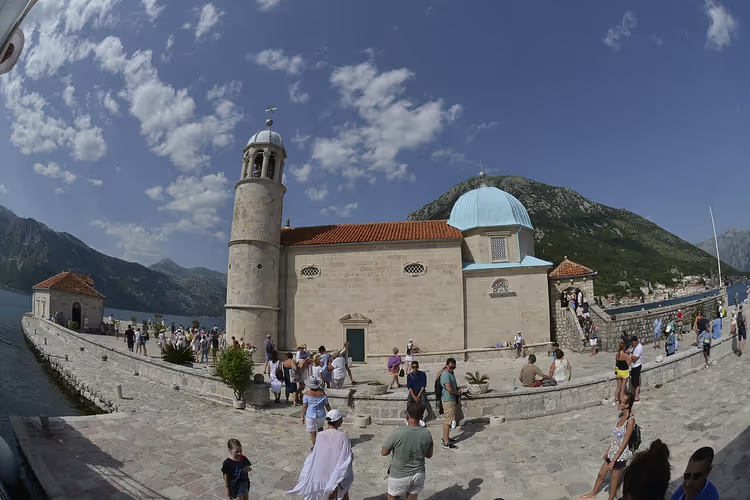
The Church on Our Lady of the Rocks near Perast stands on a man-made platform in the middle of the bay. For nearly two centuries, local sailors collected stones from sunken ships and reefs until the underwater rock became an island.
The ground floor houses icons and paintings by 17th-century masters, and a roughly three-hundred-year-old organ still sounds. The altar is made of four types of white marble, and the room is lit by a Murano glass chandelier. The museum holds ship lanterns, amphorae, and thousands of silver and bronze plaques donated by sailors. A separate relic of the church is an icon of the Virgin Mary embroidered by a local woman. She waited for her sailor husband for twenty-five years. The second floor is occupied by a collection of paintings of ships and the olive-wood stela of Diva, which adorned a ship's bow in the Middle Ages.
Every July, locals hold the fashinada: in decorated boats, they sail around the island and throw stones into the water. You can get there by boat from Perast; the crossing takes just a few minutes. Bring a hat, as it gets hot in the open sun by the water.
11. Cathedral Church in Bar
The Cathedral Church in Bar was consecrated in honor of Jovan Vladimir, the first ruler of Montenegro. The majestic building was erected on the site of a 16th-century structure, and the most recent restoration was carried out in our time.
The white-walled building is crowned with three gilded domes, and the facade is decorated with a rose window. The cathedral's height approaches forty meters, and its area exceeds one thousand square meters. Inside, frescoes depicting saints have been preserved.
Services are held daily, and admission is free. Nearby there is an amphitheater where cultural and spiritual gatherings take place. You will be struck by the contrast of the snow-white building against the seascape; the church is visible from the old part of the city.
12. Gradište Monastery
 © Саша Шљукић · CC BYPhoto: Саша Шљукић, CC BY (https://creativecommons.org/licenses/by/3.0), Wikimedia Commons
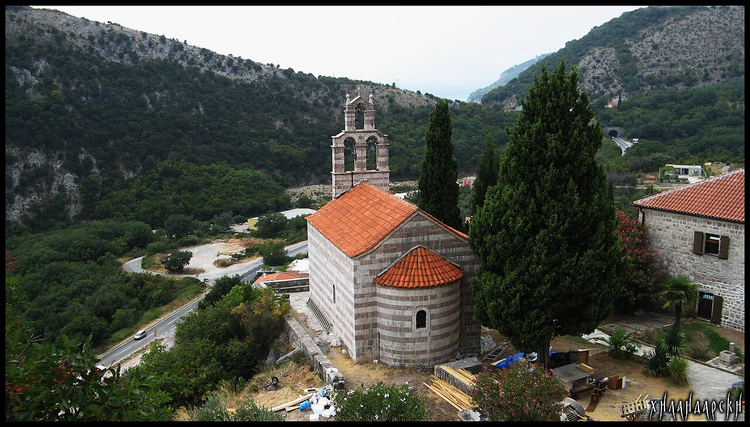
Gradište Monastery was founded in the early 12th century on the site of ancient structures and an old Greco-Roman cemetery. It is considered a monument of medieval fresco painting. The complex includes a monastic residence building, ruins of a defensive wall, a cemetery, and the buildings of three churches.
The Church of St. Sava is built of alternating rows of white and red stone, with a bell tower with three bells standing nearby. The Church of St. Nicholas was painted by a master from Budimlje; it houses the fresco "The Nursing Madonna," the patroness of young mothers. The third church is dedicated to the Dormition of the Virgin Mary.
The buildings have repeatedly suffered from invasions, wars, and earthquakes, but the monastery lives on. Come in the morning: you will hardly meet any tourists here. From here you can see the sea and the road along the coast.
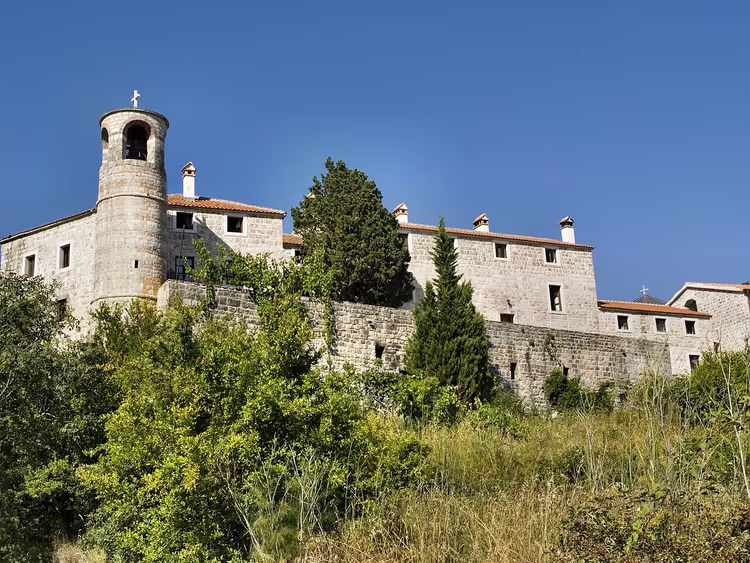
13. Podmaine Monastery in Budva
 © Островский Александр, Киев · CC BY-SAPhoto: Островский Александр, Киев, CC BY-SA (https://creativecommons.org/licenses/by-sa/3.0), Wikimedia Commons
Podmaine Monastery stands at the foot of a mountain above Budva. A Christian structure appeared here as early as the time of the Nemanjić dynasty, and later it served as the residence of metropolitans. Within these walls, Njegoš wrote "The Mountain Wreath," which became a literary monument of Montenegro.
The monastery was given new life through restoration and the opening of the complex in the late 20th century. The complex includes two churches dedicated to the Dormition of the Virgin Mary. In the lower catacomb church, scenes of the Last Judgment have been preserved, where the Yugoslav leader Tito is depicted among the sinners. The small church is carved into the rock and recalls the early Christians.
It is easy to reach: from Budva's old town the drive takes just a few minutes. Admission is free, but this is an active monastery, so keep quiet. From here you get a good view of the Budva Riviera.
14. Dulevo Monastery
Dulevo Monastery was founded in the mid-16th century in honor of the warriors of Tsar Dušan. Novices from Dečani came here after taking their vows. The building was repeatedly destroyed by wars and natural forces; today it is fully restored.
Inside, fragments of two layers of ancient painting have been preserved; scenes of the Presentation, the Nativity, and the Crucifixion are visible on the vault. Two cells are located in the upper part. Traces of cells with narrow loophole windows are visible on the walls.
A spring known as Sava's water flows on the grounds. Local legends link it to the healing of warriors from illness. You can walk there: the monastery stands on a plateau above Sveti Stefan, with a view of the entire coast. Admission is free.
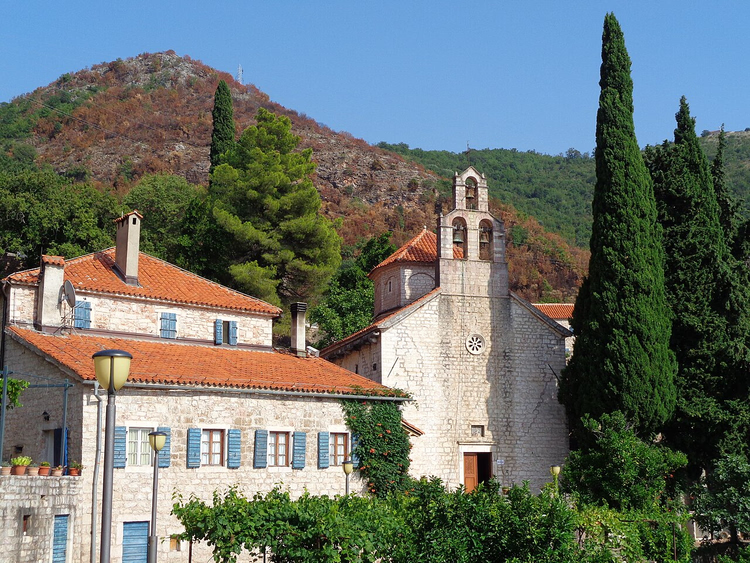
15. Praskvica Monastery
 © Andrija12345678 · CC BY-SAPhoto: Andrija12345678, CC BY-SA (https://creativecommons.org/licenses/by-sa/4.0), Wikimedia Commons
Praskvica Monastery is tucked high in the mountains near Pržno and Sveti Stefan, by a stream. Locals link the monastery's name to the scent of peach that came from the water. The first shrine appeared here in the 11th century, and a new stage of life began in the 19th century.
The complex includes the Church of St. Nicholas, the Church of the Holy Trinity, and monastic cells. The museum and sacristy hold icons, old weapons, handwritten books, and a 16th-century Gospel. The library numbers over five thousand books, including documents from the Paštrovići era.
On a guided tour, you can sit at the stone table where the council of elders made decisions in the Middle Ages. The road to the monastery winds in switchbacks, so it is better to drive or go with a group. Bring water and comfortable shoes.
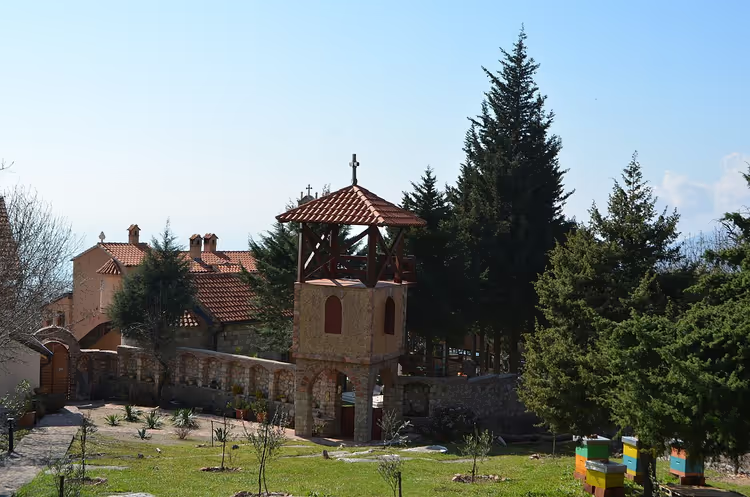
16. Rustovo Monastery
 © BoskoM · CC BY-SAPhoto: BoskoM, CC BY-SA (https://creativecommons.org/licenses/by-sa/4.0), Wikimedia Commons
Rustovo Monastery is located near Čelobrodo Hill above the Adriatic. Eight sisters live in this active monastery, maintaining the churches and the household. Today the complex includes the buildings of three churches.
The monastery was founded in the early 21st century on the site of an ancient Church of the Dormition of the Virgin Mary, built back in the 14th century and destroyed by fires and an earthquake. The foundation of the old structure is still visible. During construction, the remains of Paštrović martyrs were found and buried in the foundation of the new church.
The third chapel is arranged within the monastic residence building. From the hill you can see a panorama of the most beautiful part of Montenegro's coast. Admission is free, but respect the nuns' way of life. The road goes uphill, so drive carefully.
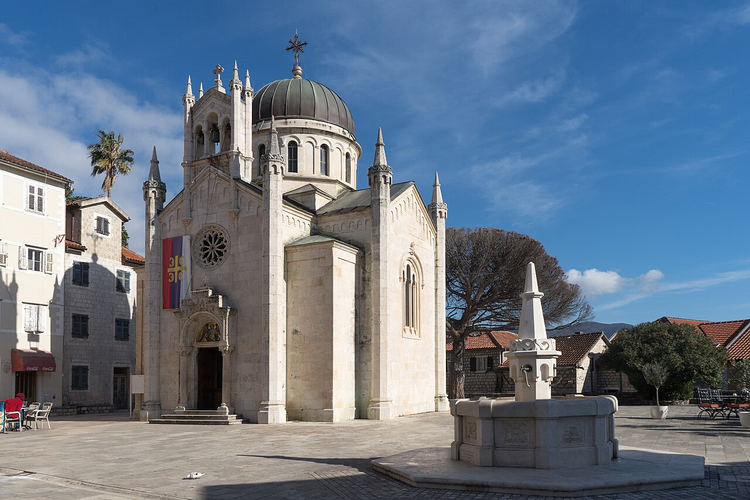
17. Church of the Archangel Michael in Herceg Novi
 © Alexkom000 · CC BYPhoto: Alexkom000, CC BY (https://creativecommons.org/licenses/by/4.0), Wikimedia Commons
The Church of the Archangel Michael stands in the center of Herceg Novi's old quarter, on Stefan Vukčić Square. The church is just over a hundred years old, but it is already considered a gem of the city. Several architects worked on its appearance, so the building combines Romanesque, Byzantine, Gothic, and Baroque features.
Inside, the altar and iconostasis made of rare marble are striking, crafted by master Bilinić. Many of the icons were painted by the Czech artist Ziegler. The local library holds many church books, some of them brought from Russia.
The building is surrounded by tall palm trees, and the square has many cafes and places to relax. You will enjoy the evening view when the lighting comes on. Admission is free, but Sunday mornings draw many parishioners.
18. Church of the savior in Herceg Novi
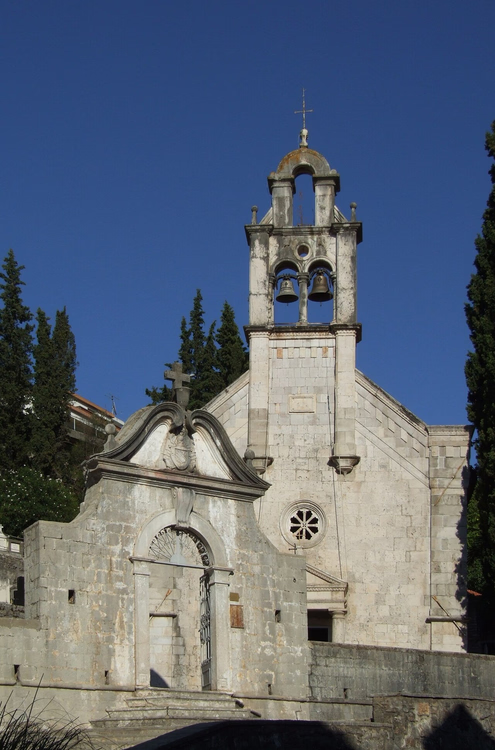
The Church of the Savior stands behind a tall stone fence on Herceg Novi's main street. The complex consists of two churches: the Savior and St. George. The first church was built in the early 18th century from stone blocks brought from one of Croatia's islands.
 © Pudelek (Marcin Szala) · CC BY-SAPhoto: Pudelek (Marcin Szala), CC BY-SA (https://creativecommons.org/licenses/by-sa/3.0), Wikimedia Commons
The church received its final appearance in the second half of the 19th century after a complete reconstruction. Inside, among the decorations, there are several Russian icons. The Church of St. George stands on the site of a former Turkish mosque; its main relic is a round icon depicting Peter and Paul.
Behind the fence, an old cemetery, the bishops' residence, and the school where the future poet Njegoš studied have been preserved. You can take your time viewing the interior; it is never crowded here. Admission is free.
19. Savina Monastery
 © Misa.stefanovic.07 · CC BY-SAPhoto: Misa.stefanovic.07, CC BY-SA (https://creativecommons.org/licenses/by-sa/4.0), Wikimedia Commons
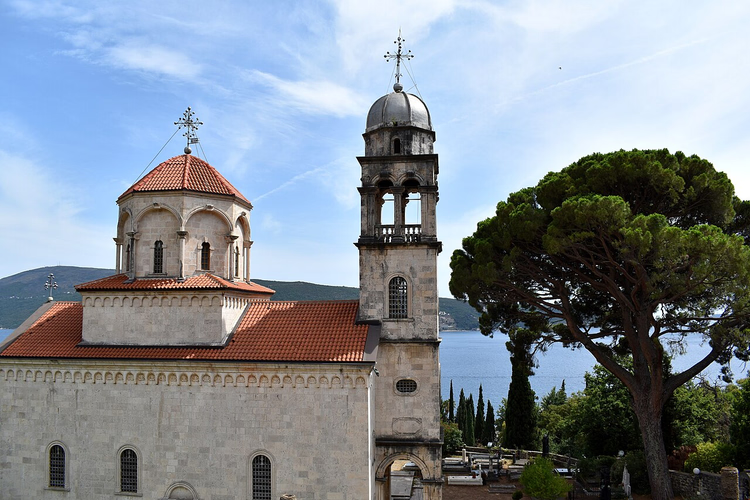
Savina Monastery stands in a green garden by the Bay of Kotor. It is an active complex where ten monks live, a spiritual center of Orthodoxy along the coast. The monastery is named after the first archbishop of Serbia, Saint Sava.
The Small Church of the Dormition dates back to the 11th century. At the end of the 18th century, a Venetian architect oversaw the construction of the large Baroque church. It preserves an 18th-century iconostasis and old frescoes in Byzantine and Gothic styles.
Among the relics are the crystal cross of Sava with rubies and the relics of Empress Helena. The library holds over five thousand rare manuscripts and books. It is worth arriving in the morning, when the garden is empty and all you hear are the bells. Admission is free, but dress code rules apply.
20. Banja Monastery in Risan
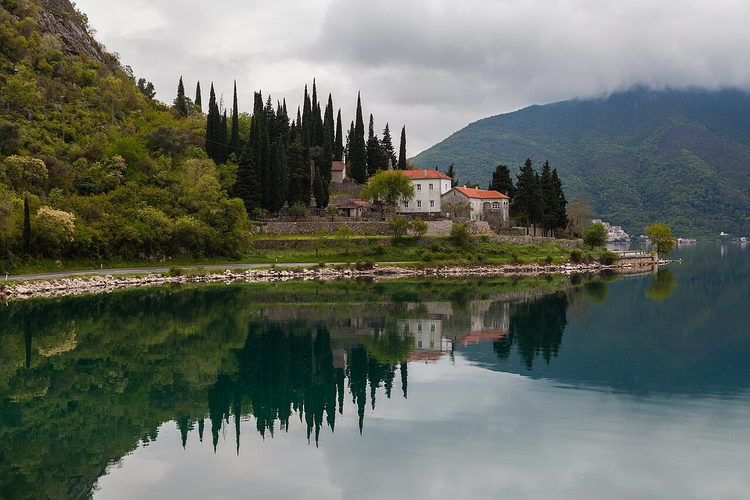
Banja Monastery was founded in the 15th century on the shore of the Bay of Risan. In ancient times there were Roman baths here, which is where the name comes from. In the 17th century, a church dedicated to Saint George the Victorious was built on the foundation of a medieval fortress.
 © Diego Delso · CC BY-SAPhoto: Diego Delso, CC BY-SA (https://creativecommons.org/licenses/by-sa/4.0), Wikimedia Commons
The monastery's main shrine is particles of the relics of the great martyr. The building got its current appearance during a restoration in the early 18th century, funded by wealthy local sailors. It houses old icons and gold-embroidered church vestments, with some of the faces done in traditional embroidery.
This is an active women's monastery. You can enter with a tour or a pilgrim group, provided you follow the dress code. Admission is free. Risan sits right by the bay, and a short climb leads from the road up to the monastery.
How to get there and when to go
Along the coast, the churches are close to one another. Between Kotor, Budva and Herceg Novi you can easily get around by local bus or car. Inside old Kotor, most churches can be covered on foot in half a day.
The mountain monasteries, Ostrog and Moraca, are reached by winding roads. If you are not driving, take a tour with transfer or a taxi: buses do not reach every gate. In the north, the road to Piva Monastery is long, so it is best to set aside a full day for it.
Plan your trip for May, June or September.
Monasteries and churches of Montenegro on the map
Mark the sites on the map in advance. Many monasteries stand away from the main road, and you need a navigator to avoid circling along switchbacks. Below is an interactive map of all the sites in this selection.
Monasteries and churches of Montenegro
Places on the map
- 1Ostrog Monastery Carved into the rock at 900 m, relics of St Basil of Ostrog
- 2Cetinje Monastery Spiritual centre of the country, relics of King Nikola
- 3Morača Monastery Founded in 1252, frescoes of the 13th-century Dormition church
- 4Piva Monastery By Lake Piva, moved due to construction of a hydroelectric dam
- 5Church of the Resurrection of Christ in Podgorica One of the largest Orthodox churches in Europe
- 6Dajbabe Monastery in Podgorica Carved into rock caves, founded in the late 19th century
- 7Cathedral of Saint Tryphon in Kotor Founded in 1166, featured on Kotor's coat of arms
- 8Church of St Luke in Kotor Late 12th century, Catholic and Orthodox altars side by side
- 9Church of St Nicholas in Kotor Greca Square, iconostasis by the Czech master Ziegler
- 10Our Lady of the Rocks island church Man-made island near Perast, a 17th-century organ
- 11Cathedral in Bar Consecrated in honour of Jovan Vladimir, three gilded domes
- 12Gradište Monastery Founded in the early 12th century, the Mlekopitateljica fresco
- 13Podmaine Monastery in Budva Here Njegoš wrote "The Mountain Wreath"
- 14Duljevo Monastery Founded in the mid-16th century, the Savina Voda spring
- 15Praskvica Monastery Near Sveti Stefan, a library of over five thousand books
- 16Rustovo Monastery A women's monastery near Čelobrdo hill, eight nuns
- 17Church of the Archangel Michael in Herceg Novi A blend of Romanesque, Byzantine and Baroque features
- 18Savina Monastery An active complex by the Bay of Kotor, ten monks
- 19Banja Monastery in Risan Founded in the 15th century on the site of Roman baths
It makes sense to split the trip into two routes: a coastal one around the Bay of Kotor and a mountain one through Cetinje to Ostrog and Moraca. In one day you can realistically cover two or three sites without rushing. Leave the rest for later outings.
Ad: this article contains affiliate links, we earn a commission if you book through them, at no extra cost to you.
Tours and tickets
Guided tours, skip-the-line tickets and activities — most offers can be cancelled free of charge.
See offers on GetYourGuideThe widget loads once you give your consent.
⁉️🤔 Frequently asked questions
Can you visit monasteries in Montenegro in shorts?
Most monasteries ask for covered shoulders and knees, so it is better to leave shorts at home or bring long clothing with you. At the entrance to women's monasteries, a headscarf and skirt are often provided. In active churches, do not enter during services, and ask the clergy about photography.
How much time do you need for Ostrog?
Allow about two hours to see Ostrog. The drive there from Kotor or Podgorica takes about two more hours, and the walk up the path from the lower part to the upper part takes half an hour. If you want to avoid crowds, arrive at opening time.
Do you need tickets for churches and monasteries?
Admission to most monasteries is free; you pay only for individual services: candles, souvenirs, a tour of the treasury. At Saint Tryphon Cathedral in Kotor there is a paid ticket for the treasury. Check opening hours on site, as they change on holidays.
How do you get to the monasteries without a car?
Buses run between towns, but not every monastery has a direct connection. Ostrog and Moraca are easier to reach with an organized tour or by taxi. Sites near Kotor, Budva and Herceg Novi are easy to reach by local bus, followed by a short walk.
When is the best time to visit churches and monasteries?
The most comfortable months are May, June and September, when there is no exhausting heat. In summer, arrive at opening time or closer to evening. On major feast days the monasteries are packed with pilgrims, and some tourist services do not operate.
In short: what is worth booking
Every site on the list is worth seeing, but you cannot cover all twenty in one trip. This matrix will help you pick your first targets.
If you have two or three days: start with Ostrog, Kotor and Perast.
If you are traveling with children: choose the coastal monasteries near Kotor, Budva and Herceg Novi, as the drive to them is short.
If you love history and frescoes: plan for Moraca, Piva Monastery and Cetinje Monastery in the north and center.
If you have a car: combine Cetinje, Ostrog and Moraca into one mountain route.
For a coastal trip, look at tours with transfer in advance and pick a day that fits your route.

A small editorial team writing guides for independent travel. We travel ourselves, but we haven’t been everywhere, so we check prices, opening hours and how to get there against official sources.