
















15 Best museums in Naples: tickets, hours and what to see
You've arrived in Naples for two or three days and want to see the highlights. The center is packed with dozens of museums, and each one has its own closing days, time slots, and lines. Without a plan, you'll waste time at the ticket office and miss the most interesting things.
We've rounded up fifteen museums in Naples and checked tickets, hours, and admission on the official websites. The list includes world-class collections and small private holdings. For each place, you'll find a short description, practical details, and a tip on when to go.
Ad: this article contains affiliate links, we earn a commission if you book through them, at no extra cost to you.
How to choose a museum and buy tickets
💡 In short:
- Buy tickets online: Cappella Sansevero, the National Archaeological Museum, and Museo Madre admit visitors by time slots.
- Plan two museums per day and leave an hour between them for getting around.
- Check the closing day in advance: for some museums it falls on Monday or Wednesday.
- Prices and hours: 09/2026, verified on the official museum websites.
Museums in Naples operate on different schedules, and the closing day often falls midweek. We checked prices and hours on the official websites (verified 09/15/2026).
If you have two days, start with the major collections. Explore the historic center on foot. That way you'll fit in both the main collections and a walk around the city.
1. National Archaeological Museum
 © Mister No · CC BYPhoto: Mister No, CC BY (https://creativecommons.org/licenses/by/3.0), Wikimedia Commons
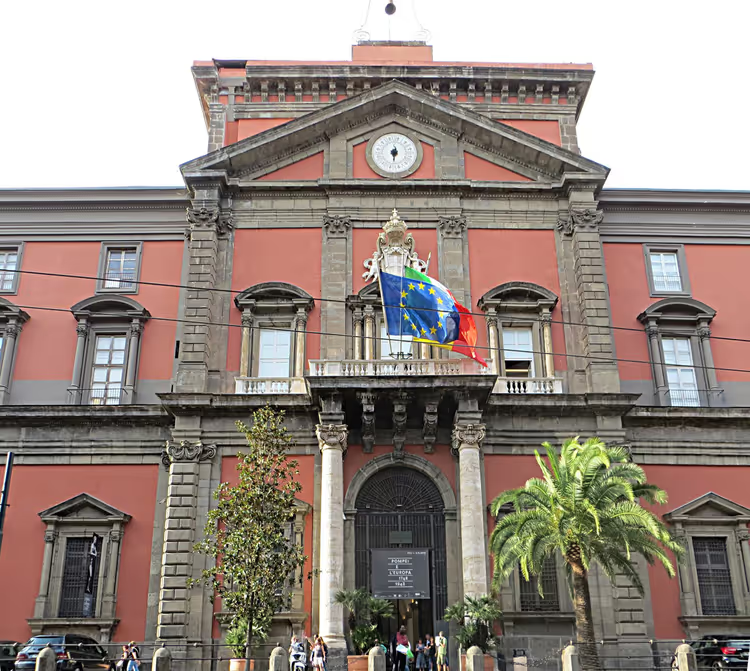
The building on Piazza Museo was erected in the 16th century. Later it housed a university, and in the second half of the 18th century the palace was converted into the Bourbon Museum (as of 09/2026, official website). The name "National Museum" became attached to the building in the 19th century.
The collection grew out of finds from Pompeii, Herculaneum, and Stabiae. Cardinal Alessandro Farnese added ancient sculpture: the Farnese Bull, the Farnese Hercules, busts of Vespasian, Socrates, and Hippocrates. The Egyptian collection of Stefano Borgia is on the ground floor. The second floor is devoted to mosaics, frescoes, and finds from the Villa of the Papyri.
- Tickets and hours: a full ticket costs 20 €, the schedule changes by season (as of 09/2026, official website).
- Tip: arrive at opening time and book your entry in advance: Naples museum tickets.
2. Museo e real bosco di Capodimonte
 © Mentnafunangann · CC BY-SAPhoto: Mentnafunangann, CC BY-SA (https://creativecommons.org/licenses/by-sa/4.0), Wikimedia Commons
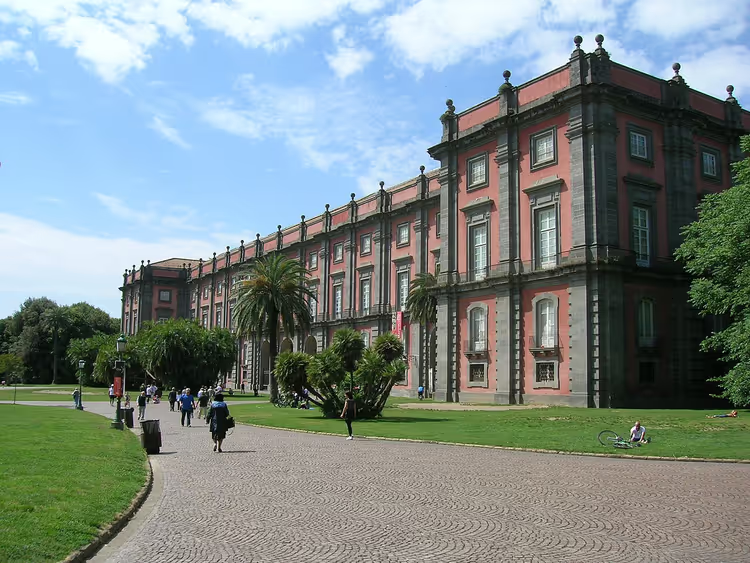
This is a royal palace in a large park on a hill above the city. Charles VII began construction in the mid-18th century to house the Farnese collection he inherited from his mother. You can get here from the center by bus, and on foot the route goes uphill.
Inside you'll find a gallery of rarities, 16th-century tapestries, and paintings by Raphael and Titian. A separate part of the palace is occupied by the Royal Apartments of the Bourbons. Contemporary art has been shown here since the 1970s.
- Tickets and hours: the ticket is a single pass and includes temporary exhibitions; the museum is closed on Wednesdays, check the exact gallery schedule on the museum's official website.
- Tip: combine your visit with a walk in the park; the palace offers a view over the city.
3. Cappella Sansevero
 © David Sivyer from United Kingdom · CC BY-SAPhoto: David Sivyer from United Kingdom, CC BY-SA (https://creativecommons.org/licenses/by-sa/2.0), Wikimedia Commons
The chapel stands in the center of Naples next to the Church of San Domenico Maggiore. It was built as a burial chapel for the princes of Sansevero in the Baroque style. Cesare d'Engenio Caracciolo's book describes a miracle involving the statue of the Virgin Mary "Pietella" (as of 09/2026, museum website).
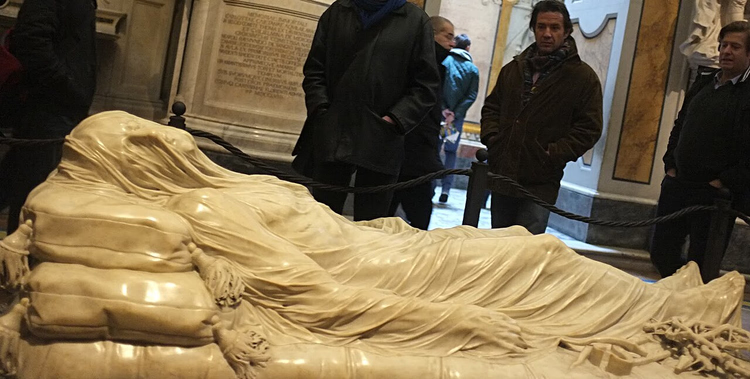
Here you'll see the sculptures "Veiled Christ," "Chastity," "Release from Deception," and the group "Do Not Touch Me." The floor is inlaid with marble, the vault is covered by the fresco "Heavenly Glory," and light comes in through six large windows.
- Tickets: entry is by timed slots only, buy them online in advance (as of 09/2026, official website).
4. Museo Madre (Donnaregina)
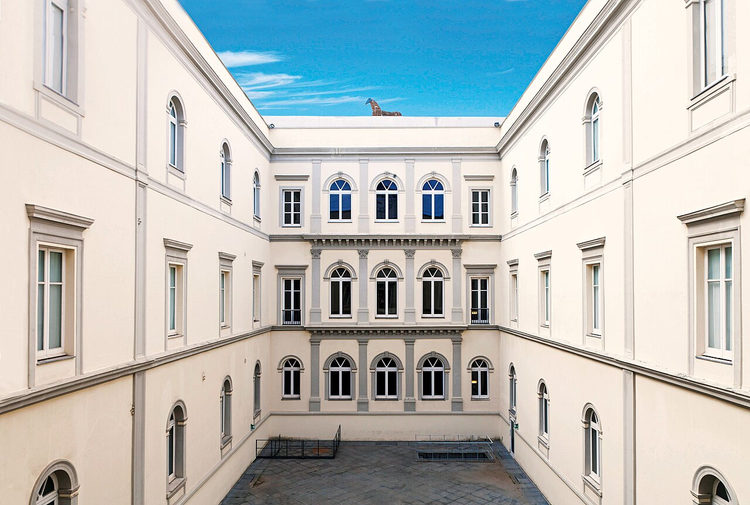
The museum occupies the Donnaregina palace, built back in the 13th century. A bank bought the building, and then Portuguese architect Álvaro Siza Vieira renovated it and turned the palace into an art venue (as of 09/2026, official website). Part of a wall from the 4th-5th centuries BC was left preserved under glass.
 © Amedeo Benestante · CC BYPhoto: Amedeo Benestante, CC BY (https://creativecommons.org/licenses/by/4.0), Wikimedia Commons
In the galleries you'll find Italian art from the 1960s-1970s and Arte Povera works: Giuseppe Penone, Giulio Paolini, Mario Merz, Jannis Kounellis. There are also international artists, including Jeff Koons and Richard Serra. The third floor is dedicated to temporary exhibitions (museum website, as of 09/2026).
5. Napoli Sotterranea
 © Bruno Gentile · CC BY-SAPhoto: Bruno Gentile, CC BY-SA (https://creativecommons.org/licenses/by-sa/4.0), Wikimedia Commons
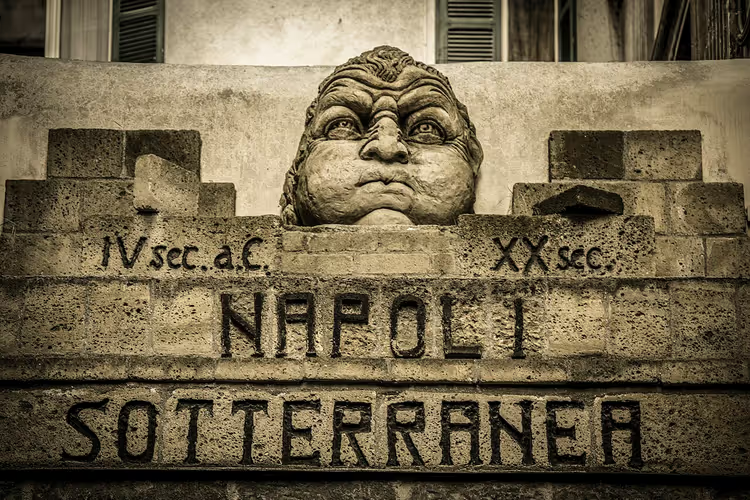
This is underground Naples, showing the city from a different side. The entrance is on Piazza San Gaetano. The labyrinth is carved into volcanic tuff, with more than seven hundred caves and corridors (as of 09/2026, Napoli Sotterranea website).
Down below you'll see the aqueduct of Emperor Augustus. The descent goes to a depth of about forty meters.
- Tickets: guided tours only, by timed sessions, check the schedule in advance (website).
- The catch: it's cool and damp down below, and you can't go down without a guide.
6. Cathedral of Saint Januarius
 © Paolo Villa · CC BY-SAPhoto: Paolo Villa, CC BY-SA (https://creativecommons.org/licenses/by-sa/4.0), Wikimedia Commons
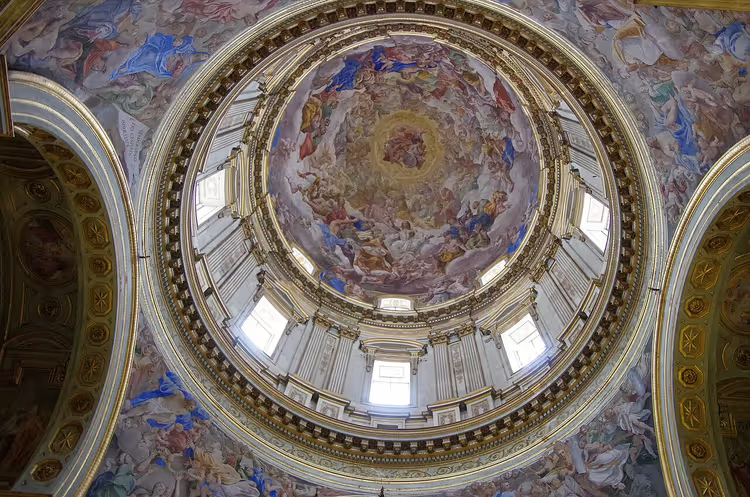
The Cathedral of the Assumption of Saint Mary stands in the very center of the city. It was founded in the second half of the 13th century on the foundations of two ancient basilicas and completed in the early 14th century. The 15th-century portal preserves an earlier sculpture by Tino da Camaino.
Inside, the Chapel of Saint Januarius, the patron saint of Naples, awaits you. Its walls were painted by Lanfranco, Domenichino, and Jusepe de Ribera. The chapel houses a gold and silver bust of the saint, as well as a relic, a vial containing the saint's blood. It is shown to the public only a few times a year.
- Admission: entry to the cathedral is free; check the opening hours on the parish's official page.
7. Pio Monte della Misericordia
 © IlSistemone · CC BY-SAPhoto: IlSistemone, CC BY-SA (https://creativecommons.org/licenses/by-sa/3.0), Wikimedia Commons
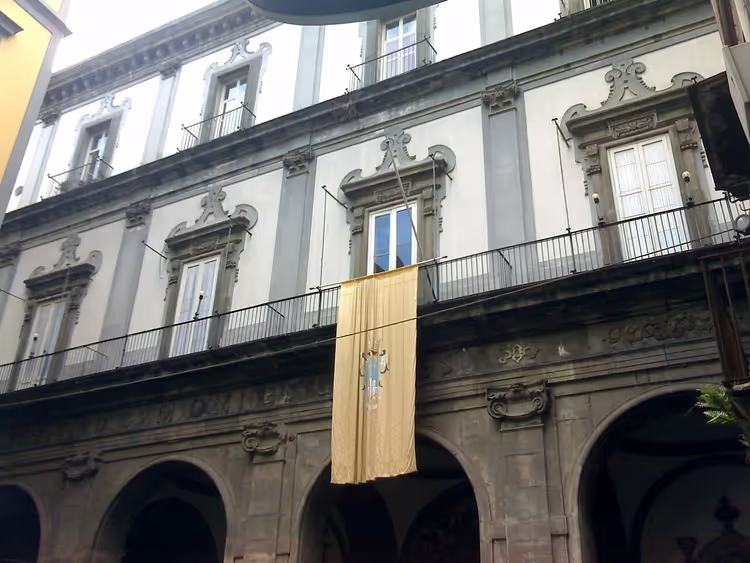
The palazzo stands next to Naples Cathedral. Its story began in 1601, when seven young noblemen founded a brotherhood to help the sick and the poor (as of 09/2026, official website). Over time, the foundation bought up neighboring houses and combined them into a single complex.
The main treasure remains Caravaggio's painting "The Seven Works of Mercy." It hangs directly above the altar and has never left the church's walls, even during the war. In the galleries you'll see sculptures and paintings by masters of Neapolitan Baroque.
8. Città della Scienza
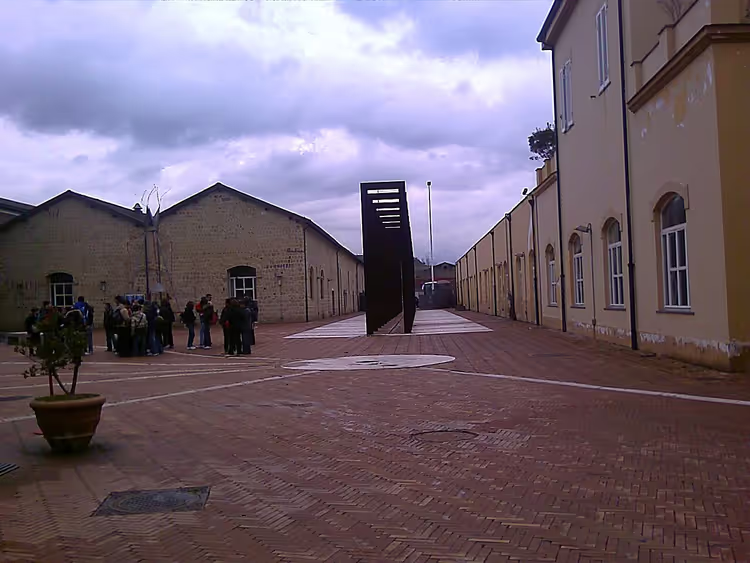
This is a science center in the Bagnoli district where you can touch the exhibits. Visitors explore inventions, physics, and the natural sciences, and the theater shows the connection between science and society (as of 09/2026, official website). The complex is divided into several sectors, so it's easy to spend half a day here.
The museum is one of the most visited attractions in Naples and received the Micheletti Award as the best science museum in Europe.
- Who it's for: great for families with children and anyone who finds a classic museum boring.
9. Royal palace (Palazzo Reale)
 © Sordelli · CC BY-SAPhoto: Sordelli, CC BY-SA (https://creativecommons.org/licenses/by-sa/3.0), Wikimedia Commons
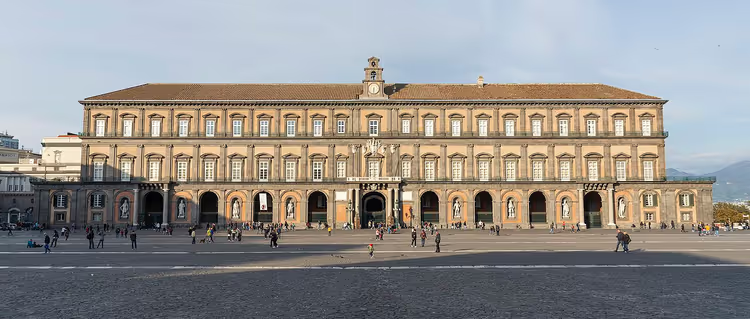
The palace on Piazza del Plebiscito was built in the 17th century by order of the viceroy. The Bourbons, Maria of Austria, and King Ferdinand I lived here (as of 09/2026, Palazzo Reale). Today the building houses the Museum of the Historical Apartments and the National Library of Naples.
The facade stretches along the square for almost one hundred seventy meters. Inside, you'll walk through the Hall of Hercules, the Throne Room, and the Central Hall, and see the palace chapel and the court theater. The painting collection includes works by Titian and Guercino.
- Tickets: tickets are sold online and at the ticket office, booking is not required (as of 09/2026, Palazzo Reale page).
10. Villa Pignatelli
 © Armando Mancini · CC BY-SAPhoto: Armando Mancini, CC BY-SA (https://creativecommons.org/licenses/by-sa/2.0), Wikimedia Commons
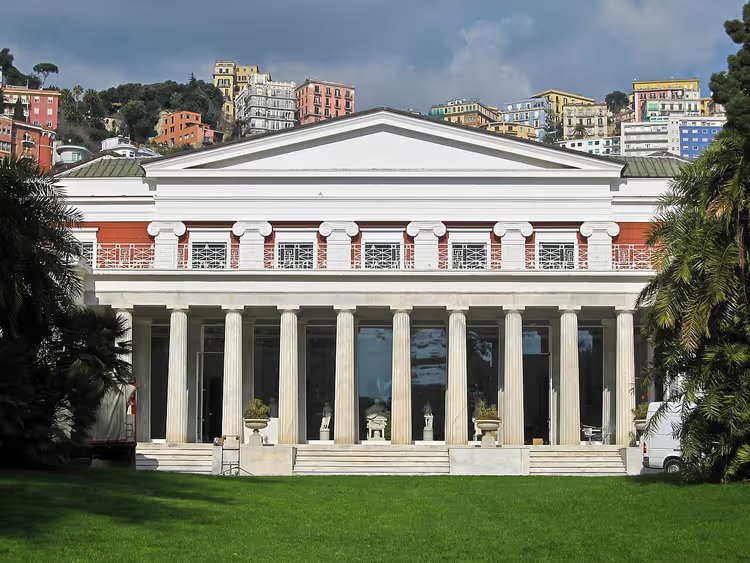
Villa Pignatelli is considered a prime example of a historic residence on the Chiaia waterfront. The building and grounds changed owners several times, and each owner added to the interior in their own way. The villa got its name from its last owners, the Pignatelli family. It was handed over to the state on the condition that no item would go to other collections.
The facade is decorated with columns, and at the entrance stand two statues of the "dogs of Alcibiades," copies of a famous Roman sculpture. Inside, you'll see the Red Hall, Ballroom, Blue Hall, and Green Hall with antique tapestries and ceiling paintings. Porcelain collected by Rosina Pignatelli is kept separately.
- Tickets and hours: the villa can be visited with a combined ticket that includes the Royal Palace; check the official page for the exact schedule.
11. Certosa di San Martino
 © Hervé Simon · CC BY-SAPhoto: Hervé Simon, CC BY-SA (https://creativecommons.org/licenses/by-sa/2.0), Wikimedia Commons
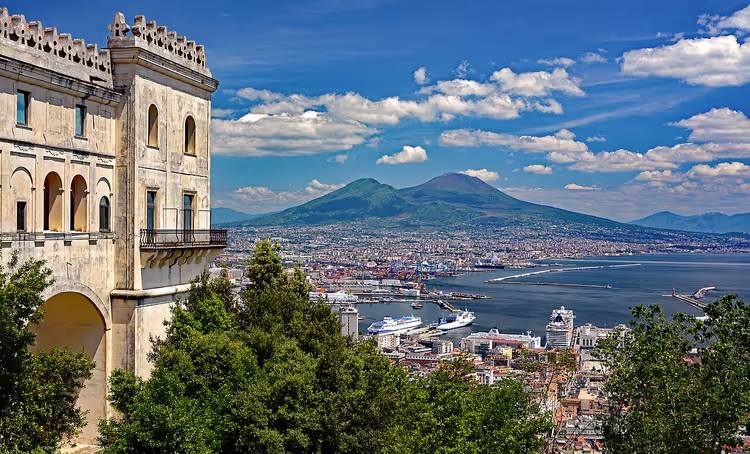
The monastery sits on the Vomero hill, and from its walls you can see the Gulf of Naples and Mount Vesuvius. Construction was completed in the second half of the 14th century under Joanna I. Since then, the building has been rebuilt many times, and today it is one of the finest examples of Neapolitan Baroque. Inside the monastery walls, a museum with dozens of rooms is open to visitors.
Here you will see collections by local artists, aristocratic belongings, and wall paintings. The courtyard with its garden, sculptures, and fountains deserves special attention. The carved railings are decorated with stone skulls, and the sculptor Cosimo Fanzago is among the artists represented.
12. Museo nazionale ferroviario di Pietrarsa
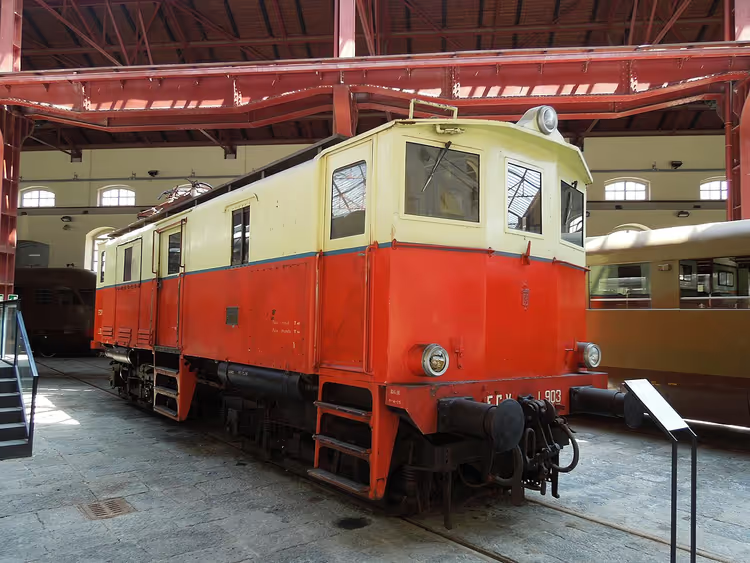 © B.Zsolt · CC BY-SAPhoto: B.Zsolt, CC BY-SA (https://creativecommons.org/licenses/by-sa/3.0), Wikimedia Commons
The museum occupies the historic Pietrarsa workshops in the San Giovanni a Teduccio district on the outskirts of the city. This is where the first Italian steam locomotives were produced. Today, the workshops house steam locomotives, electric locomotives, diesel locomotives, passenger and mail cars, as well as assembly machinery. The exhibits are spread across several pavilions and cover a huge area.
The permanent exhibition opened at the end of the last century to mark the anniversary of the Italian railways. You will learn how rail transport developed and gain an appreciation for the labor of workers of that era.
13. Museo del Corallo (Ascione)
Large-scale coral processing in Italy began in the 19th century. In the middle of that century, the Ascione family opened a workshop near Naples for collecting and processing coral. The workshop quickly became popular, and they began working with semi-precious stones, shells, and mother-of-pearl. The business proved so profitable that the jeweler founded his own company.
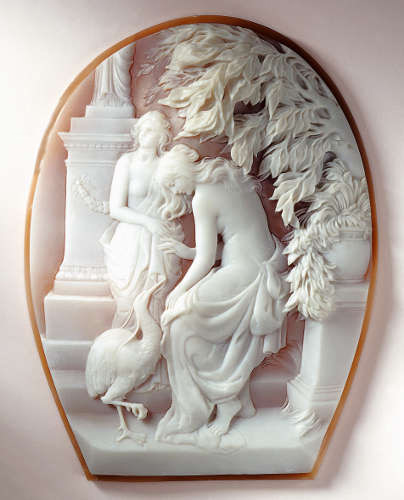 © Bellezzedinapoli · CC BY-SAPhoto: Bellezzedinapoli, CC BY-SA (https://creativecommons.org/licenses/by-sa/3.0), Wikimedia Commons
Today, the workshop houses a museum with two rooms. In the first, you will see antique tools and learn how materials were processed. The second displays jewelry made by the Ascione company and high-quality replicas: bowls, malachite boxes, coral interior decoration, and ladies' handbags. The pride of the collection remains a gold pectoral cross with cameos.
14. Galleria Borbonica
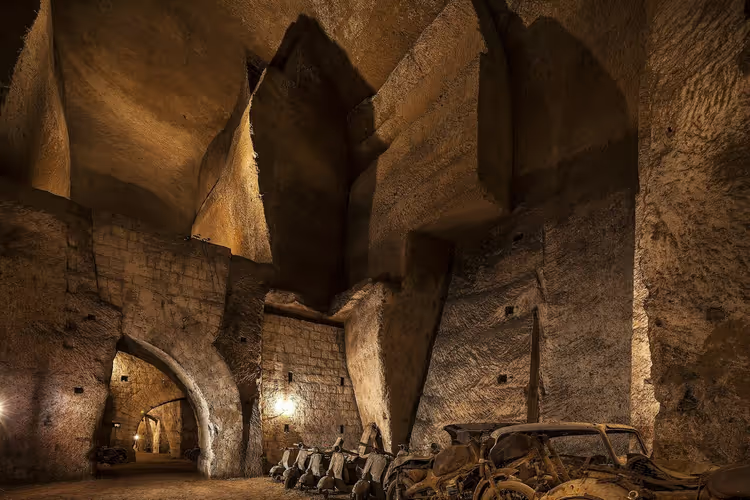 © Associazione Culturale Borbonica Sotterranea · CC BY-SAPhoto: Associazione Culturale Borbonica Sotterranea, CC BY-SA (https://creativecommons.org/licenses/by-sa/4.0), Wikimedia Commons
This is a system of tunnels built by order of Ferdinand II. The Bourbon family used the catacombs as secret passageways, and they lie about thirty meters underground (as of 09/2026, official website). During the war, the tunnels served as an air-raid shelter, and inscriptions left by Italians remain on the walls.
Later, confiscated cars and motorcycles were stored here, and they have now become exhibits in the gallery. Visitors can choose from three routes of varying difficulty, including an adventure option.
- Tickets: by guided tour sessions only; schedule and prices on the gallery website.
- The catch: the tunnels are cool and damp, so you will be uncomfortable without a jacket.
15. Museo Gaetano Filangieri
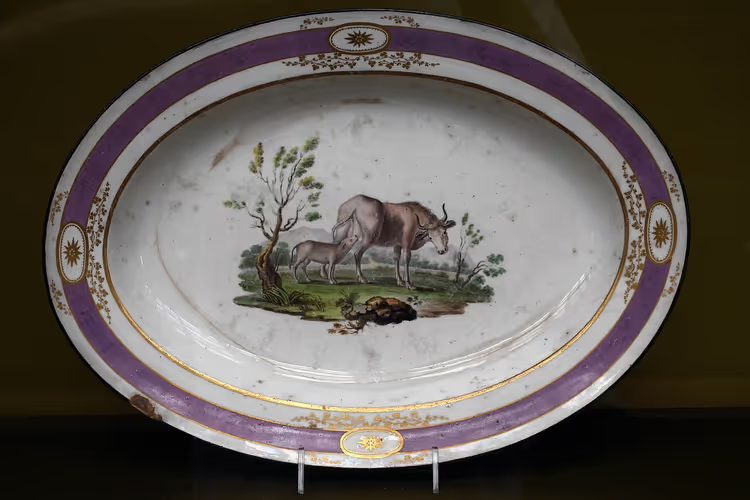 © Phyrexian · CC BY-SAPhoto: Phyrexian, CC BY-SA (https://creativecommons.org/licenses/by-sa/4.0), Wikimedia Commons
The palace was presumably built to a design by Giuliano da Maiano in the 15th century, commissioned by the merchant Angelo Como. In the late 19th century, during street redevelopment, the building was dismantled and reassembled twenty meters from its original location. The museum opened here at the end of the same century, founded by Prince Gaetano Filangieri.
The palace stands in the historic center, next to the Carmelite church of Santa Maria and the University of Naples Federico II. Inside are marble, terracotta, and bronze busts, antique armor, coins, and Neapolitan Baroque paintings. You will see manuscripts from the 13th and 14th centuries and a historical archive.
- Tickets and hours: the museum is small and operates on a reduced schedule; check the official page for opening times.
Museums of Naples on the map
You can conveniently open all the museums from this selection on a single map and plan a day's route. The markers show both the center and the outskirts, so you will immediately see which ones are worth combining into a single outing.
Museums of Naples
Places on the map
- 1National Archaeological Museum Ancient sculpture and finds from Pompeii, Herculaneum and Stabiae
- 2Museo e Real Bosco di Capodimonte Royal palace on a hill with the Farnese collection and paintings by Raphael and Titian
- 3Sansevero Chapel The sculptures "Veiled Christ" and "Modesty" in a baroque burial chapel
- 4Museo Madre (Donnaregina) Italian art of the 1960s-1970s and Arte Povera works in a 13th-century palazzo
- 5Napoli Sotterranea Underground Naples: catacombs, an aqueduct and caves in volcanic tuff
- 6Cathedral of Saint Januarius Chapel of Saint Januarius with the relic of Naples' patron saint's blood
- 7Pio Monte della Misericordia Caravaggio's painting "The Seven Works of Mercy" above the altar
- 8Royal Palace (Palazzo Reale) Apartments and the Throne Room of the viceroy's palace on Piazza del Plebiscito
- 9Villa Pignatelli Historic residence on the Chiaia waterfront with tapestries and porcelain
- 10Certosa di San Martino Monastery on the Vomero hill with a bay view and a museum of dozens of rooms
- 11Museo Nazionale Ferroviario di Pietrarsa Steam locomotives and carriages in an old railway workshop
- 12Museo del Corallo (Ascione) Jewellery and tools from the Ascione coral workshop
- 13Galleria Borbonica Bourbon tunnels thirty metres deep, a former bomb shelter
- 14Museo Gaetano Filangieri Busts, armour and 13th-14th-century manuscripts in a 15th-century palace
⁉️🤔 Frequently asked questions
Which museums in Naples should you see first?
Start with the National Archaeological Museum and Capodimonte: these are the city's two strongest collections. In the center, be sure to visit the Sansevero Chapel, and if you have time left, add underground Naples.
How much does it cost to enter museums in Naples?
Admission is paid almost everywhere. A full ticket to the National Archaeological Museum costs 20 € (as of 09/2026, museum price list). Check the ticket price for the Sansevero Chapel on the museum's website. Entry to the Cathedral of San Gennaro is free.
Do you need to buy tickets in advance?
Yes, if you're traveling from April through October. The Sansevero Chapel admits visitors by time slot, and convenient slots sell out several days ahead. The National Archaeological Museum and Museo Madre also recommend buying tickets online. That way you skip the ticket office and don't waste time in line.
What days are museums in Naples closed?
There's no single rule. Museo e Real Bosco di Capodimonte is closed on Wednesdays, while other museums often have their day off at the start of the week. Before your trip, open the official website and check the schedule. In summer, opening hours are longer; in winter, museums close earlier.
How much time do you need for one museum?
At the National Archaeological Museum and Capodimonte, allow two to three hours each, while at the Sansevero Chapel forty minutes is enough. Underground Naples and the Bourbon Gallery operate only with a guide, and the tour takes about an hour. Don't plan more than two museums in a day.
If you want to buy tickets in advance, below are cards with prices and time slots for museums in Naples.
Tours and tickets in Naples
Guided tours, skip-the-line tickets and activities — most offers can be cancelled free of charge.
See offers on TiqetsThe widget loads once you give your consent.
In short: what's worth booking
If you have one day: take the National Archaeological Museum and the Sansevero Chapel, and have lunch in the historic center in between. If you have two days: add Museo e Real Bosco di Capodimonte with its park and Napoli Sotterranea. If you're traveling with kids: you'll enjoy Città della Scienza and Museo Madre with its temporary exhibitions. Tickets with time slots are easier to book in advance: tours and tickets in Naples. Arrive at opening time and the line will be short.

A small editorial team writing guides for independent travel. We travel ourselves, but we haven’t been everywhere, so we check prices, opening hours and how to get there against official sources.