

















Naples: 18 main attractions and how to visit them
Naples scares and attracts at the same time. Vesuvius rises over the bay, the streets smell of coffee and the sea, and a ticket to Pompeii costs from 20 € (as of 09/2026, park ticket operator).
Planning a trip here is harder than it seems. The sights are scattered across the historic center, the waterfront, and the Vomero hill, and some museums are closed on Tuesdays. Without a plan, you'll spend a whole day on transit and lines.
We put Naples' main sights into one route and checked prices, hours, and how to get to each one. You'll see what's worth your time and what you can safely skip.
Ad: this article contains affiliate links, we earn a commission if you book through them, at no extra cost to you.
What to see in Naples
💡 In short:
- The city is divided into three zones: the historic center, the waterfront, and the Vomero hill. See them one at a time, not mixed together.
- Buy tickets to Pompeii and the main museums online. In high season, time slots sell out a day or two in advance.
- Prices and hours: 09/2026, verified on the Pompeii ticket operator's website.
Plan your route by city zones. Leave Pompeii and Vesuvius for a separate day. On the other days, see the center, museums, and waterfront. That way you'll spend less time in transit and won't get worn out.
1. Mount Vesuvius
Vesuvius is an active volcano that destroyed Pompeii, Herculaneum, and Stabiae in 79 AD (according to Wikipedia). It remains one of the most dangerous in Europe, and yet hundreds of thousands of people live at its foot.
A hiking trail leads to the crater from a parking lot at about 1,000 m. The climb takes 20-30 minutes over volcanic ash, solidified lava, and pumice.
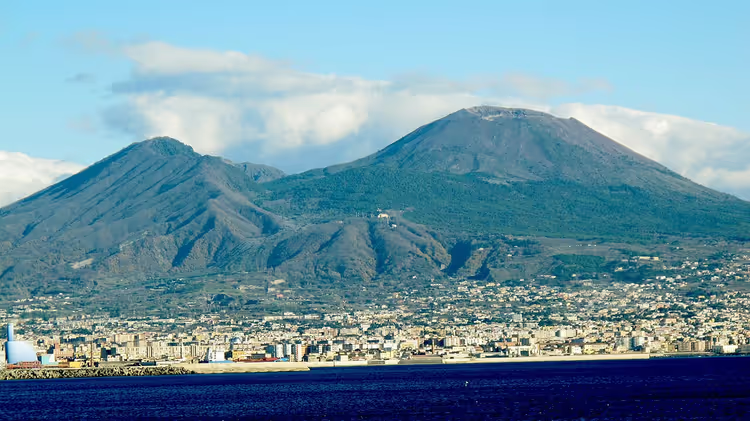 © pietro scerrato · CC BYPhoto: pietro scerrato, CC BY (https://creativecommons.org/licenses/by/3.0), Wikimedia Commons
The funicular that once carried tourists to the top was destroyed by the 1979 earthquake. So the route is now hiking only, but there are benches along the trail for resting.
From the crater, you get a panorama of the bay and Naples itself. The crater itself looks gray and lifeless, so many people come here for the view below. Wear closed-toe shoes and bring water, it's windy at the top.
- How to get there: buses run from Ercolano Scavi station (Circumvesuviana line) to the base, then you walk up.
- Cost: access to the crater is paid, check the price on site.
- The catch: clouds and strong wind are common at the top, which can block the panorama.
2. Royal Palace
The Royal Palace stands on Piazza del Plebiscito and was once the residence of the Neapolitan Bourbons. Construction took half a century, from 1600 to 1650, and the building got its current look after an 18th-century reconstruction led by architect Vanvitelli.
 © Sordelli · CC BY-SAPhoto: Sordelli, CC BY-SA (https://creativecommons.org/licenses/by-sa/3.0), Wikimedia Commons
The facade is decorated with arched niches containing statues of rulers, and a small clock tower sits on the attic. A garden is laid out behind the palace, and at its gates you'll see the equestrian statues "Horse Tamers."
Today the building houses the National Library and a museum of historic apartments. The state rooms display paintings by Titian and other Italian masters, and the library holds ancient papyri from Herculaneum.
The palace sits at the center of tourist routes, so it's easy to combine with Piazza del Plebiscito and Teatro di San Carlo. Visit the apartments in the morning before tour groups arrive. The visit takes about an hour.
- Location: right on Piazza del Plebiscito, a stone's throw from Teatro di San Carlo.
- Cost: entry to the apartments is paid, individual library halls are open on a schedule.
- The catch: part of the building is occupied by institutions, so you won't get into some rooms.
3. Pompeii
Pompeii is an ancient city that was buried under a layer of ash and pumice within hours after the eruption of Vesuvius in 79 AD. Excavations have been ongoing here since the 18th century, and today it's one of the most visited archaeological sites in the world.
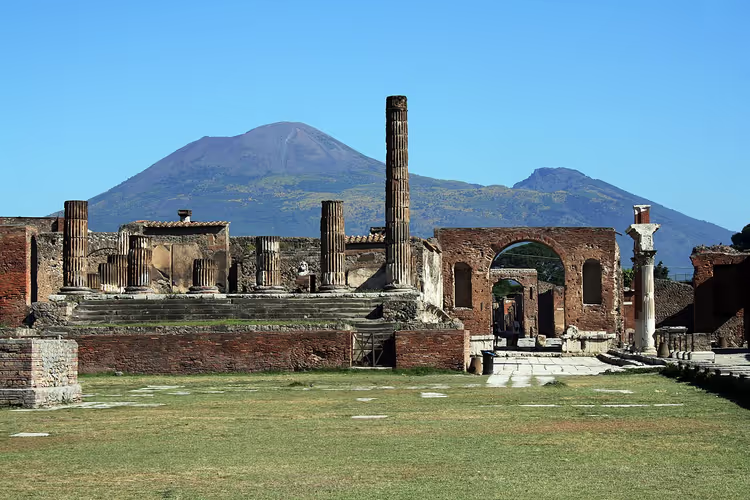 © Glen Scarborough from The Central Coast, Australia · CC BYPhoto: Glen Scarborough from The Central Coast, Australia, CC BY (https://creativecommons.org/licenses/by/2.0), Wikimedia Commons
A ticket for one Pompeii zone costs €20, a ticket with the suburban villas costs €25, and the three-day Pompeii Plus with Oplontis and Stabiae costs €30 (as of 09/2026, park tickets and rates). From March 16 to October 14, the complex is open from 9:00 to 19:00, with last entry at 17:30.
It's best to explore Pompeii in the morning, because during the day the stones get hot and there is almost no shade. Bring water and wear comfortable shoes, the pavement here is uneven. Tickets are issued to a specific name, so keep your ID handy. Book a guided tour of Pompeii on GetYourGuide in advance.
- How to get there: Circumvesuviana train from Napoli Centrale to Pompei Scavi station.
- Cost: €20-30 depending on the zone (as of 09/2026, official operator).
- The catch: in the heat there is little shade and water on the site, bring your own.
4. Cathedral of San Gennaro
The Cathedral of San Gennaro is the main church of Naples, on Via Duomo. The first churches appeared here as early as the beginning of the Common Era, and the current cathedral was founded by King Charles I in honor of the city's patron saint, Januarius.
 © Giuseppe Guida · CC BY-SAPhoto: Giuseppe Guida, CC BY-SA (https://creativecommons.org/licenses/by-sa/4.0), Wikimedia Commons
The cathedral's exterior combines different styles, with Gothic predominating: sharp tower spires and narrow windows. Inside are an ancient baptistery with mosaics and works by Renaissance masters. A separate treasure of the cathedral is the chapel with the "Treasures of San Gennaro."
The cathedral's main relic is a vessel with the saint's blood, which according to tradition liquefies three times a year. Believers come here for the feasts on September 19 and December 16. Scientists explain this phenomenon in different ways, but for the city's residents it remains an important symbol.
The cathedral stands in the very center, next to Via dei Tribunali. Stop by here on your way to the Sansevero Chapel. A visit takes about half an hour.
- How to get there: Via Duomo in the historic center, on foot from Duomo metro station.
- Cost: entry to the cathedral is free, the treasury is paid.
- The catch: during services, tourists are asked not to disturb worshippers.
5. National Archaeological Museum
The National Archaeological Museum (MANN) is the largest collection of finds from Pompeii, Herculaneum, and Stabiae. It occupies a former university building and houses mosaics, frescoes, sculptures, and the famous "Secret Cabinet" with ancient erotic art.
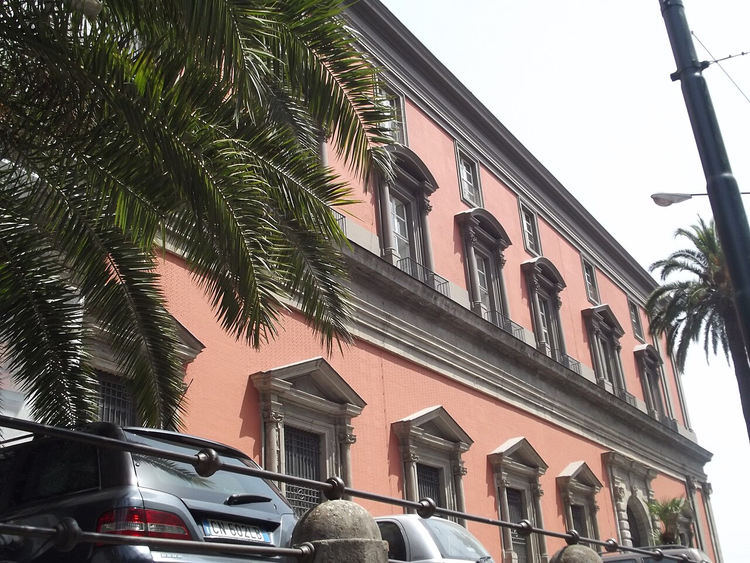 © Elliott Brown from Birmingham, United Kingdom · CC BYPhoto: Elliott Brown from Birmingham, United Kingdom, CC BY (https://creativecommons.org/licenses/by/2.0), Wikimedia Commons
The exhibition is arranged by floor. On the first floor are ancient sculptures from the Farnese collection and the Egyptian hall, on the second are numismatics and mosaics, and on the third you'll see objects from the buried cities and a 1:100 scale model of Pompeii.
A full-day ticket costs about €20 (as of 09/2026, official ticket operator CoopCulture), and on Sundays there are sometimes extended evening hours. Plan for at least three hours, there are many rooms and you'll tire quickly without a break.
- How to get there: Museo metro station on line 1, the exit leads directly to the museum.
- Cost: about €20 (as of 09/2026, CoopCulture); free entry for those under 18.
- The catch: in summer the rooms are stuffy, and air conditioning doesn't work everywhere.
6. Galleria Umberto I
Galleria Umberto I is an octagonal shopping arcade built in the late 19th century. It connects Via Toledo with the San Carlo Theater and serves as shelter from rain and summer heat.
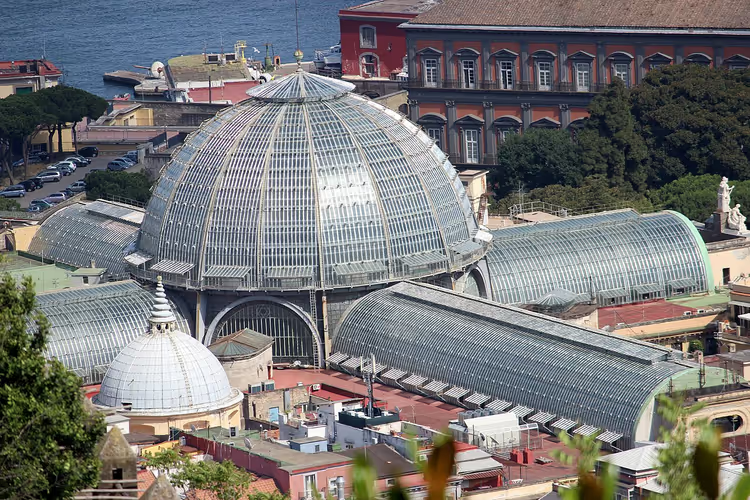 © Miguel Hermoso Cuesta · CC BY-SAPhoto: Miguel Hermoso Cuesta, CC BY-SA (https://creativecommons.org/licenses/by-sa/4.0), Wikimedia Commons
Under the high glass dome are boutiques, cafes, and salons. The mosaic floor features the signs of the zodiac, and locals believe that if you step on your sign, your wish will come true. It can get crowded inside on weekends.
- How to get there: between Via Toledo and Piazza Trieste, next to the San Carlo Theater.
- Who it's for: for those looking for shelter from bad weather and wanting to browse boutiques.
- The catch: in season it's noisy and cramped inside, and sitting quietly in a cafe is difficult.
7. Castel dell'Ovo
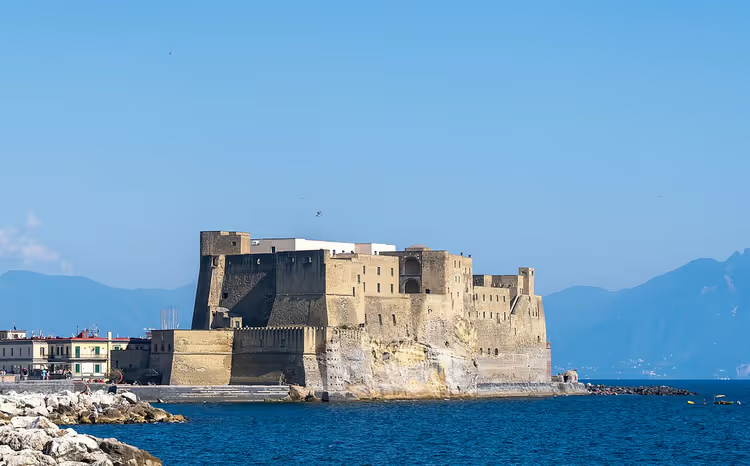
Castel dell'Ovo, or the "egg castle," stands on the islet of Megaride and is connected to the city by a causeway. From the outside, the fortress resembles a man-made cliff looming over the sea.
 © PaestumPaestum · CC BY-SAPhoto: PaestumPaestum, CC BY-SA (https://creativecommons.org/licenses/by-sa/4.0), Wikimedia Commons
Historians believe this is where Greek colonists first began building the city, and later the Roman general Lucullus built a villa on the island. The fortress with its thick walls and moat was constructed as a defense against attacks from the sea. According to legend, a magic egg is hidden within the walls, and the castle's fate depends on it.
Climb to the viewing platforms for the panorama of the bay and Vesuvius. The view opens onto all of Naples, which is why the castle often appears in travelers' photos. Come at sunset, when the light is softer and there are fewer tourists.
- How to get there: Via Partenope waterfront, on foot from Piazza del Plebiscito.
- Cost: entry to the castle is available during opening hours, check details on site.
- The catch: the interior halls are often closed for restoration, mostly the walls and views are open.
8. Castel Sant'Elmo
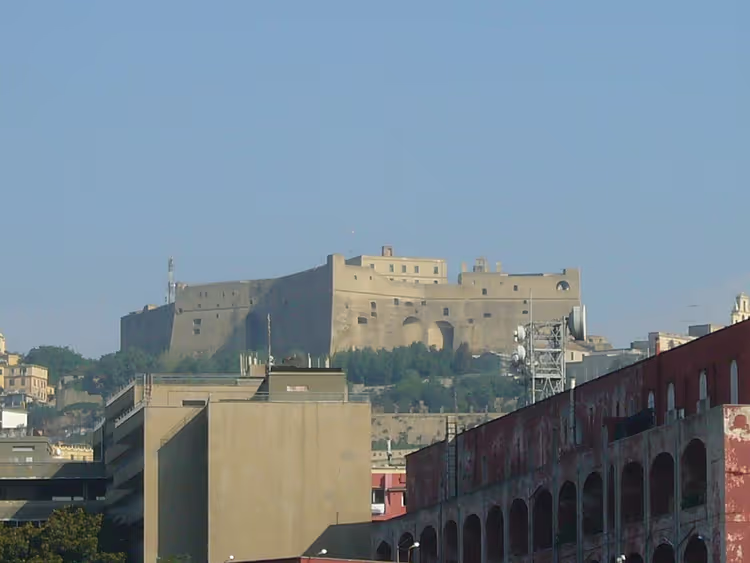
Castel Sant'Elmo stands on the Vomero hill and once defended the city from the landward side. The fortress got its name from a destroyed temple of Saint Erasmus, whose name over the years turned into "Elmo."
 © Lalupa · CC BYPhoto: Lalupa, CC BY (https://creativecommons.org/licenses/by/3.0), Wikimedia Commons
The star-shaped castle with six points was destroyed several times and rebuilt by the Spanish viceroy Pedro de Toledo. Inside, the Museum of 20th Century Art and the Art History Library are open, and the viceroy himself is buried behind the altar of the Church of Saint Erasmus.
The castle's platforms offer a panorama of the city and the bay. During the day there are many tourists here, so it's calmer to come at opening time. The climb up the hill is easy to combine with a walk through Vomero.
- How to get there: funicular to Morghen, then walk uphill to the castle.
- Cost: paid entry, a combined ticket is valid with the Certosa di San Martino museum.
- The catch: the uphill walk is tiring, and the platforms are often very windy.
9. Napoli Sotterranea
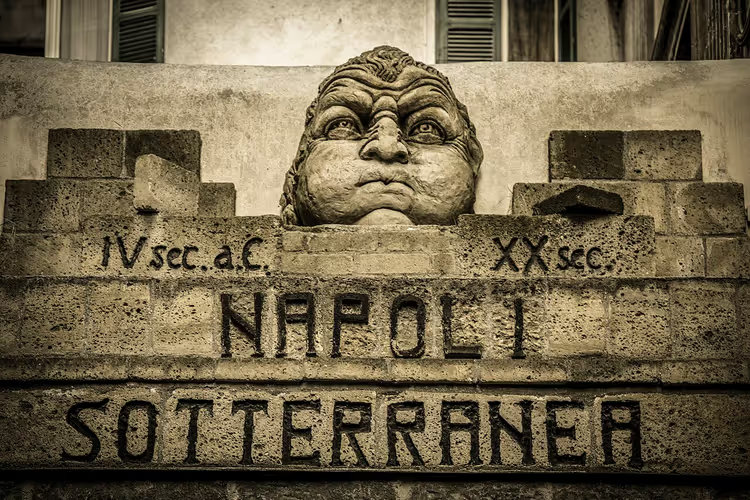
Napoli Sotterranea is an underground city beneath the historic center. It consists of Greco-Roman cisterns and passageways, not catacombs.
 © Bruno Gentile · CC BY-SAPhoto: Bruno Gentile, CC BY-SA (https://creativecommons.org/licenses/by-sa/4.0), Wikimedia Commons
Underground, you'll walk through old cisterns and narrow passages. The total length of the tunnels under the city is measured in tens of kilometers.
It's best to go down with a guide through the entrance under the Church of Santa Maria. It's cool inside all year round, so bring a jacket. The tour takes about an hour.
- How to get there: entrances are in different parts of the center, the closest is near Museo station.
- Cost: visits are usually only with a tour, tickets are sold at the ticket office on site.
- The catch: damp air and narrow passages, people with claustrophobia will find it difficult.
10. Capodimonte Museum
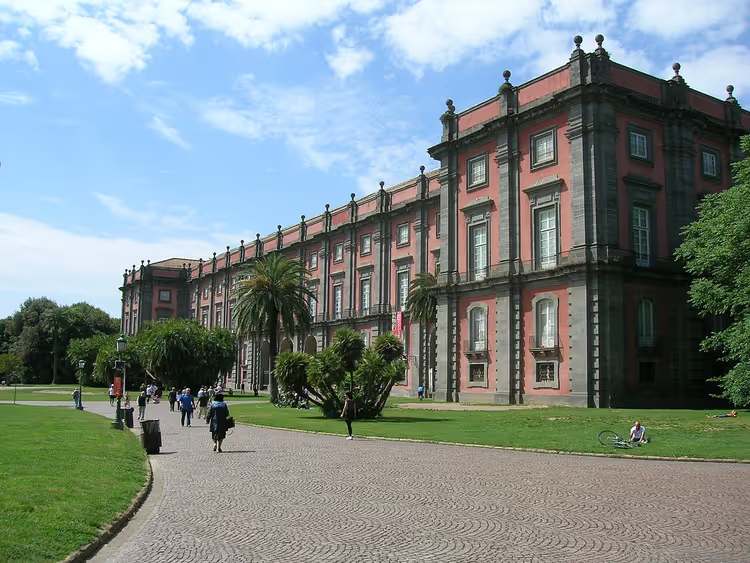
The Capodimonte Museum occupies the Bourbon summer palace on a hill above the city. Today it is one of the main art galleries in Italy with collections from the Farnese, Borgia, and Maria of Saxony families.
 © Mentnafunangann · CC BY-SAPhoto: Mentnafunangann, CC BY-SA (https://creativecommons.org/licenses/by-sa/4.0), Wikimedia Commons
The halls display Botticelli's "Madonna and Child," Titian's "Danaë," and other Renaissance paintings. A particular pride of the museum is the porcelain cabinet with delicate pieces by Maria of Saxony. Capodimonte Museum tickets on Tiqets are convenient to buy online to avoid standing in line.
Tickets and opening hours are worth checking on the museum's page. You can reach the palace by bus or by metro with a transfer. Set aside half a day to also explore the surrounding park.
- How to get there: bus from Piazza del Plebiscito or metro to the Capodimonte hill.
- Cost: paid entry, tickets and opening hours on the Capodimonte Museum website.
- The catch: getting there is inconvenient, and the park has few signs pointing to the museum.
11. Piazza del Plebiscito
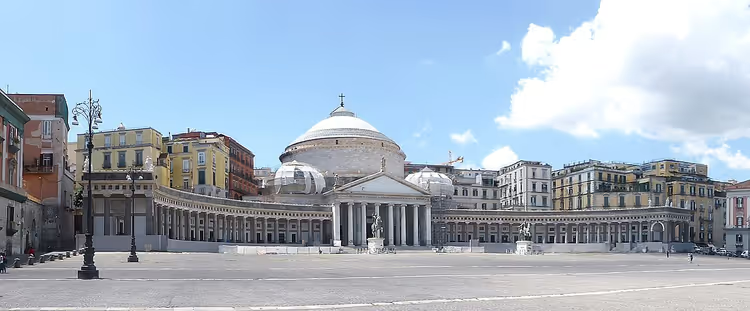
Piazza del Plebiscito is the largest square in Naples, with the Royal Palace and the Basilica of San Francesco di Paola. Almost all city routes start here.
 © Wolfgang Pehlemann · CC BY-SAPhoto: Wolfgang Pehlemann, CC BY-SA (https://creativecommons.org/licenses/by-sa/3.0/de/deed.en), Wikimedia Commons
The square features equestrian statues of Kings Charles III and Ferdinand I. The pedestal is decorated with an image of the siren Parthenope, the symbol of the city. On the sea side, the square opens toward the waterfront.
The square is always full of people: tourists, musicians, and audiences from the San Carlo Theater. It's especially lively here in the evening. It's nice to sit in a cafe and simply watch the city.
- How to get there: terminus of many buses, Municipio metro station nearby.
- Who it's for: for everyone starting to explore the city.
- The catch: during the day there is little shade in the open space.
12. San Carlo Theater
The San Carlo Theater is one of the oldest operating opera houses in Europe. It opened in the 18th century to replace the old San Bartolomeo theater by order of King Charles of Bourbon.
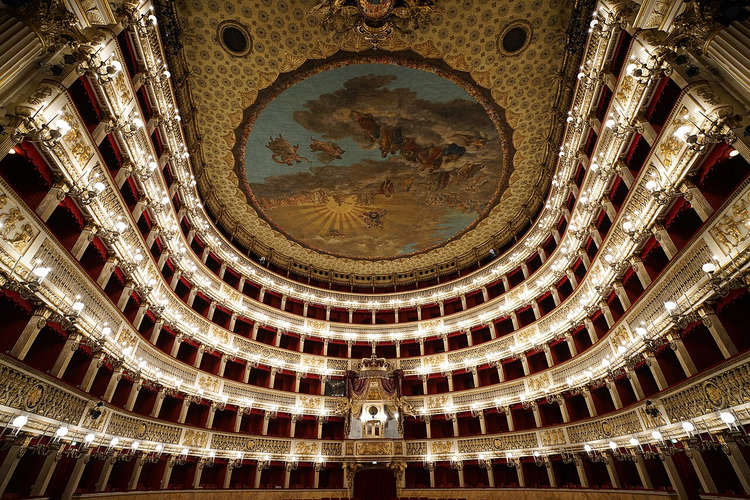
Almost all the world's famous operas have been performed on this stage, renowned singers have performed here, and ballet companies have shone. The interiors of the halls rival the productions themselves in luxury. Even if you're not attending a performance, take a look at the foyer.
You can check the program and tickets on the theater's official website. During the season, good seats sell out quickly, so plan ahead. The dress code is mostly casual, although the audience dresses up more for evening performances.
- How to get there: next to Piazza del Plebiscito and the Galleria Umberto I.
- Cost: the price depends on the performance and the seat.
- The catch: tickets for popular operas are expensive and disappear quickly.
13. Herculaneum
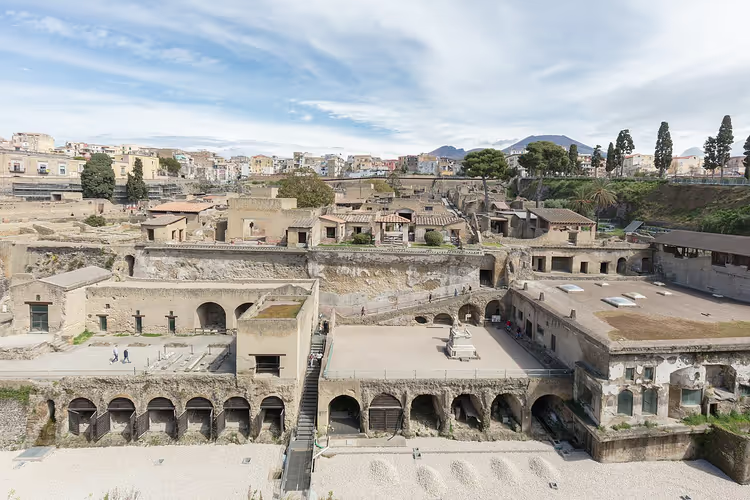
Herculaneum is an ancient city buried under Vesuvius lava and listed as a UNESCO World Heritage site. It is smaller than Pompeii but better preserved, because it was covered by a mudflow rather than ash.
 © Diego Delso · CC BY-SAPhoto: Diego Delso, CC BY-SA (https://creativecommons.org/licenses/by-sa/4.0), Wikimedia Commons
Here you'll see entire houses with wooden floors, frescoes, and thermal baths. A scenic road with 18th-century villas leads from the town of Torre del Greco to the ruins. The remains lie very close to the sea.
Herculaneum is closed on May 1, December 25, and January 1. Check tickets and opening hours on the park's official website. A visit takes two to three hours, and it's calmer here than in Pompeii.
- How to get there: Circumvesuviana train to Ercolano Scavi station.
- Cost: see the official website for tickets and combined options with Pompeii.
- The catch: some areas are closed for restoration, and not all houses are accessible.
14. Basilica of San Francesco di Paola
The Basilica of San Francesco di Paola stands on Piazza del Plebiscito and resembles the Roman Pantheon. It was built in the 19th century by order of King Ferdinand I.
 © Diego Delso · CC BY-SAPhoto: Diego Delso, CC BY-SA (https://creativecommons.org/licenses/by-sa/4.0), Wikimedia Commons
The building is surrounded by a colonnade, and a huge dome rises above it. Inside are sculptures of saints and kings, along with frescoes and paintings. The main highlight is the 17th-century altar adorned with precious stones. Entry to the church is free.
The basilica is open all week, seven days a week. It sits on the route between the Royal Palace and the waterfront, so you can stop in along the way. Go in the morning when there are fewer tour groups.
- How to get there: right on Piazza del Plebiscito, next to the Royal Palace.
- Cost: free entry.
- The catch: at peak tourist hours it's crowded and noisy inside from tours.
15. Sansevero Chapel
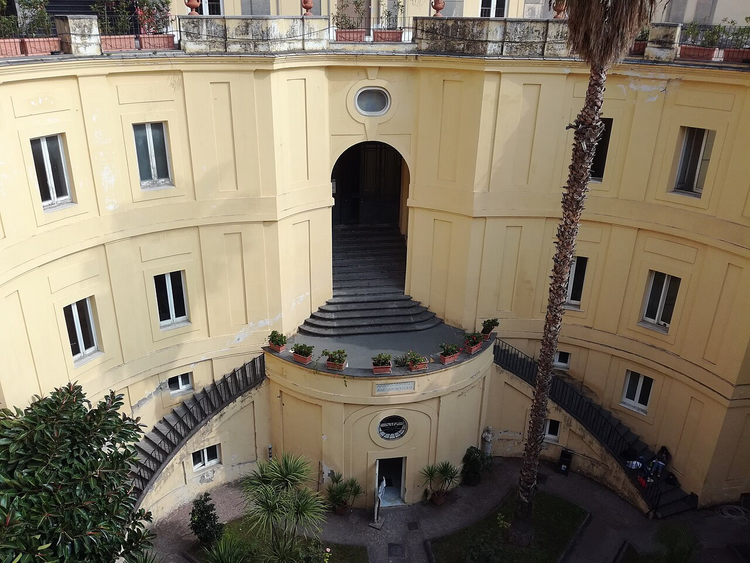
The Sansevero Chapel is a former private burial chapel of the Sansevero family, now a sculpture museum. It was founded in honor of an apparition of the Virgin Mary at the site of a collapsed wall.
 © Baku · CC BY-SAPhoto: Baku, CC BY-SA (http://creativecommons.org/licenses/by-sa/3.0/), Wikimedia Commons
The chapel's main treasure is the statue "Veiled Christ" by Giuseppe Sanmartino. The fine workmanship is striking in how the marble conveys the folds of fabric. The famous group "Modesty" and other allegorical figures also stand here.
Tickets cost €12, for children aged 10-17 tickets cost €6, children up to 9 years old enter free (as of 09/2026, museum's official website). The chapel is open from 9:00 to 19:00, closed on Tuesdays. Visits are strictly by time slot, so book in advance.
- How to get there: a 10-minute walk from Duomo metro station along Via dei Tribunali.
- Cost: €12 (as of 09/2026, official website).
- The catch: slots for popular times sell out 60 days in advance.
16. Santa Chiara
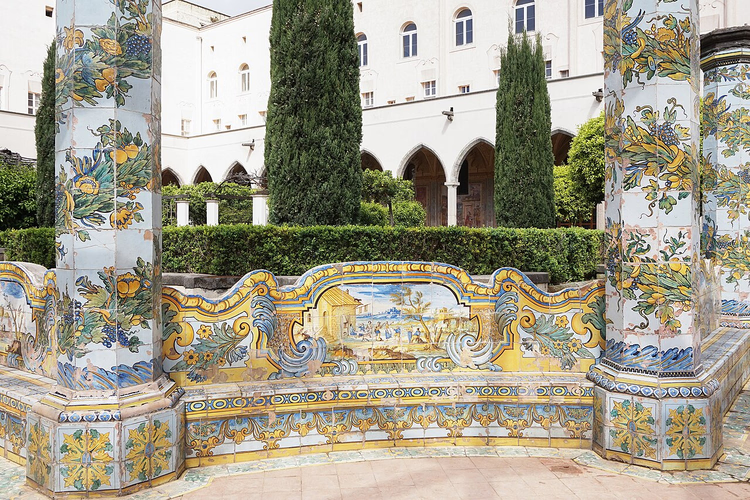
The Santa Chiara complex brings together a church, a monastery, and an archaeology museum. It was built in the 14th century in Provençal Gothic style, later rebuilt in Baroque, and then destroyed by bombing during World War II.
 © Bernard Gagnon · CC BYPhoto: Bernard Gagnon, CC BY (https://creativecommons.org/licenses/by/4.0), Wikimedia Commons
In the last century, craftsmen restored the monument piece by piece. You'll love the majolica columns of the cloister, the mosaic benches, and the frescoes depicting scenes from Neapolitan life. The garden with citrus trees hides the noise of the street.
Entry to the church is free, and there's a small fee to visit the garden. Hours change by season, so check the exact times on site. Mornings are quieter here than afternoons.
- Getting there: Via Santa Chiara, on foot from Duomo metro station.
- Cost: church free, garden for a small fee.
- The catch: part of the complex is an active monastery, and visitors aren't allowed in.
17. Fontanelle Cemetery
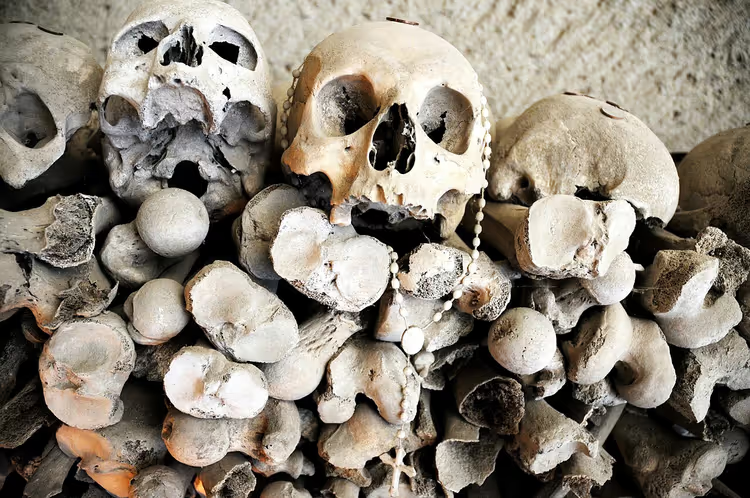
Fontanelle Cemetery is an old necropolis in a cave beneath the city. The poor and victims of epidemics were buried here, which is why it's called the "city of the dead."
 © Marcel Haring from Tirol, Austria · CC BY-SAPhoto: Marcel Haring from Tirol, Austria, CC BY-SA (https://creativecommons.org/licenses/by-sa/2.0), Wikimedia Commons
The space is divided into three galleries called naves: on the left the nave of priests, on the right the nave of the poor, and in the center the nave of the plague. Neapolitans come here with offerings and ask the deceased for help. It's believed that the souls of unidentified people cannot leave purgatory and are willing to help in exchange for eternal peace.
It's best to explore the cemetery with a guide, so you'll understand the local "skull cult." The atmosphere here is mystical rather than frightening. Allow enough time to walk through all the naves at a relaxed pace.
- Getting there: Sanità district, on foot uphill from Museo metro station.
- Cost: paid entry, tickets sold on site.
- The catch: it's an active and sacred site, so loud tours are inappropriate here.
18. Catacombs of San Gaudioso
The Catacombs of San Gaudioso are located in the Sanità quarter beneath the church of Santa Maria della Sanità. These are early Christian underground burials with loculi and arcosolia.
In the branching corridors you'll see burial niches and frescoes with scenes from the lives of saints. The tombs of Saint Gaudiosus and Saint Nostrianus are decorated with mosaics and paintings. The remains of the great martyr Sosius are also kept here.
Tours run on a schedule, usually once an hour. Tickets are sold at the entrance, and you can pay by card or cash. It's cool underground, so bring a light jacket. Carry cash in case the card terminal isn't working.
- Getting there: Sanità quarter, next to Fontanelle Cemetery.
- Cost: tour tickets sold at the entrance.
- The catch: you can only enter with a group at set times.
Naples attractions on the map
We've marked the main sights of Naples on one map to make it easier for you to plan your route. Save it and check off the places you visit as you go.
Sights of Naples
Places on the map
- 1Mount Vesuvius A 20-30 minute hike to the crater from the parking lot, panorama of the bay and the city
- 2Royal Palace Bourbon residence on Piazza del Plebiscito, National Library and royal apartments
- 3Pompeii Ticket from €20, March 16 to October 14 from 9am to 7pm, free on the first Sunday
- 4Naples Cathedral The city's main cathedral on Via Duomo, chapel with the treasures of San Gennaro
- 5National Archaeological Museum Finds from Pompeii and Herculaneum, the Secret Cabinet, ticket around €20
- 6Galleria Umberto I Late-19th-century arcade under a glass dome, zodiac signs on the mosaic floor
- 7Castel dell'Ovo Egg Castle on the little island of Santa Lucia, viewpoints overlooking the bay and Vesuvius
- 8Castel Sant'Elmo Star-shaped fortress on Vomero Hill, 20th-century art museum, combined ticket with Certosa
- 9Napoli Sotterranea Underground city with catacombs and frescoes, descent only with a guide, tour about an hour
- 10Capodimonte Museum Summer palace of the Bourbons with Botticelli and Titian, porcelain room, park around it
- 11Piazza del Plebiscito The city's largest square, equestrian statue of Victor Emmanuel II
- 12Teatro San Carlo One of Europe's oldest working opera houses, 18th century
- 13Herculaneum The city buried under lava is better preserved than Pompeii, two to three hours to visit, quieter here
- 14Basilica of San Francesco di Paola Resembles the Roman Pantheon, colonnade and a huge dome, free entry
- 15Cappella Sansevero Christ under the veil by Sanmartino, ticket €12, closed on Tuesdays
- 16Fontanelle Cemetery A cave necropolis in the Sanità district, three naves and a local skull cult
Group sights by neighborhood, and you'll spend less time in transit. The historic center, the waterfront, and the hills are best explored on different days.
Tours and tickets in Naples
Guided tours, skip-the-line tickets and activities — most offers can be cancelled free of charge.
See offers on TiqetsThe widget loads once you give your consent.
⁉️🤔 Frequently asked questions
Do I need to buy Pompeii tickets in advance?
Yes, in high season slots sell out quickly. You can buy tickets online from the official operator, where prices and opening hours are also listed.
How many days do I need for Naples?
Two or three days are enough for the city itself if you're seeing the center and museums. Add another day for Pompeii and Vesuvius, and set aside a separate day for Herculaneum and Capri. That way you won't rush and will have time to rest.
Can I visit Pompeii and Herculaneum with one ticket?
There's no single ticket for both sites, but there are combined offers and three-day passes for the park zones. Check the details and price on official websites before your trip so you don't overpay.
When is the best time to visit Naples?
The calmest months are April, May, and October. It's warm then, but without the summer heat and crowds. In summer the excavation sites are very hot, and the museums are stuffy. In winter the city is quieter, but some gardens are closed.
Which Naples attractions are free?
You can see Piazza del Plebiscito, the waterfront, and the facades of the Cathedral of San Gennaro for free. On the first Sunday of the month, free entry applies at Pompeii (as of 09/2026, ticket operator) and some museums.
In short: what's worth booking
If you're short on time, start with Pompeii and the National Archaeological Museum, those are Naples' two main sights. For families with children, Herculaneum is a better fit, it's more compact and calmer. Art lovers should set aside a day for Capodimonte.
Buy Pompeii and museum tickets on Tiqets in just a couple of minutes, and city tours on GetYourGuide will help you see more in a day.
Plan your route first and check opening hours, then book. That way you won't show up to closed doors and will have time for everything.

A small editorial team writing guides for independent travel. We travel ourselves, but we haven’t been everywhere, so we check prices, opening hours and how to get there against official sources.