

















How to choose a tour in Naples: 20 routes with honest drawbacks
Naples does not reveal itself right away. The city is loud, it haggles and lives at an accelerated pace, and beneath all that bustle it holds four castles, ancient Pompeii just around the corner, and a volcano over the bay. Pompeii is not far, but without a plan you will spend half a day on travel and lines.
We put together twenty tours of Naples and its surroundings. Among them are short walks through the historic center, trips to Pompeii, Herculaneum and Caserta, a day on the Amalfi Coast, sea routes to the islands of the bay, and food tours. Each one has its duration, key stops, and an honest catch, so you can choose based on your time rather than guessing.
Ad: this article contains affiliate links, we earn a commission if you book through them, at no extra cost to you.
How tours in Naples work
💡 In short:
- City walks take three to four hours; day trips to Pompeii and the Amalfi Coast run from two hours to a full day.
- The price of a private tour is fixed for your whole group, so with a larger group the per-person cost is lower.
- Get tickets to Pompeii and Herculaneum in advance: Pompeii has a daily limit of twenty thousand visitors and timed entry.
- Prices and opening hours: as of 09/2026, verified on the official Pompeii website.
Most routes start in the historic center, at Piazza del Plebiscito or at the port. From Napoli Centrale station you can reach the center by metro in a few stops. The private format is more convenient in Pompeii and on the Amalfi Coast, because you set the pace yourself. Group tours are cheaper per person, but they follow a shared schedule.
The best time for the city: April, May, September and October. In summer the open sun is tough, and in winter some sea routes do not operate. Below are twenty tours: first city tours, then day trips, sea routes and food tours.
1. From Castel dell'Ovo to Castel Sant'Elmo
 © Bernard Gagnon · CC BYPhoto: Bernard Gagnon, CC BY (https://creativecommons.org/licenses/by/4.0), Wikimedia Commons
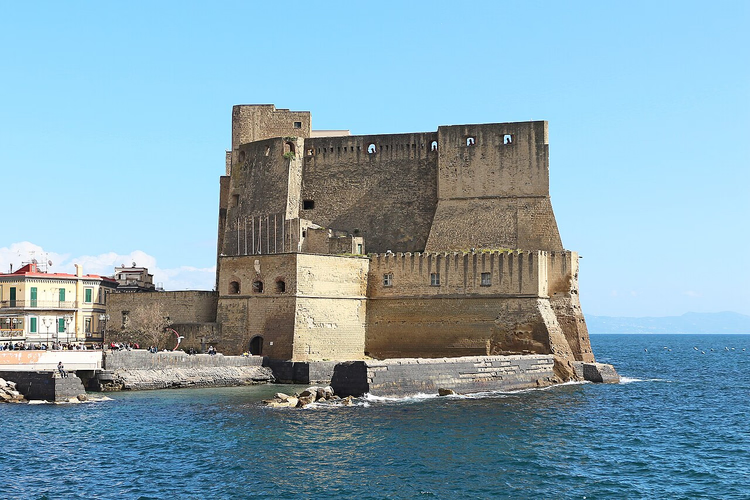
A private route through the city's four castles takes about four hours. You start with Castel dell'Ovo on the islet of Megaride, founded in the 12th century. From the fortress viewpoint you can see the entire bay and Vesuvius, and the legend of an egg hidden in the foundation explains its name.
Next come Castel Capuano and Maschio Angioino. These fortresses show how Naples' military architecture changed from the Normans to the Angevin dynasty. Entry is by schedule, so the guide adjusts the route to the day of the week.
From Piazza del Plebiscito you take the funicular up to the Vomero hill. There stands Castel Sant'Elmo, shaped like a six-pointed star. Its walls offer the best panorama of the city, and it is worth coming here for sunset.
If you wish, the route continues in the Floridiana park, and you can return to the center by metro.
- Format: private, for your group.
- Duration: about four hours.
- The catch: the route includes a climb up the hill and a lot of walking on cobblestones, so wear comfortable shoes.
2. Naples, love at first sight
 © Dominik Matus · CC BY-SAPhoto: Dominik Matus, CC BY-SA (https://creativecommons.org/licenses/by-sa/4.0), Wikimedia Commons
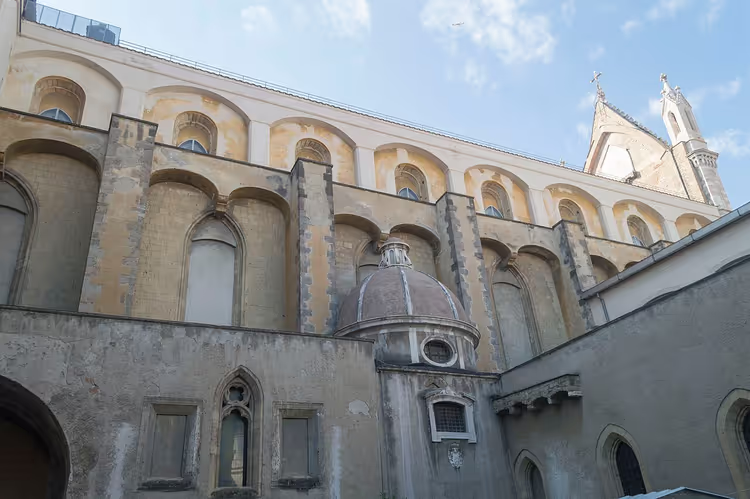
This tour of churches lasts about four hours and covers six churches. Giotto, Caravaggio and Giordano worked on their interiors, and each church has its own story. You start with the Cathedral of San Gennaro: it houses the baptistery of the first Christians and the Treasury with reliquaries.
Next you enter the church of San Giovanni a Carbonara. From the outside it looks modest, but inside await the mausoleum of a king from the Durazzo dynasty and late medieval frescoes. Then comes San Lorenzo Maggiore, a monument of French Gothic with the tomb of Catherine of Austria by Tino di Camaino.
The route ends at the monastery of San Gregorio Armeno, at the church of Santa Chiara with royal tombs, and at Santa Maria la Nova, where Vlad III, known as Dracula, is buried. Along the way the guide explains the difference between Neapolitan Baroque and Gothic.
- Format: private, up to four people.
- Duration: about four hours.
- The catch: in one walk you cover six churches, so take coffee breaks.
3. Daily city walk
 © Wolfgang Pehlemann · CC BY-SAPhoto: Wolfgang Pehlemann, CC BY-SA (https://creativecommons.org/licenses/by-sa/3.0/de/deed.en), Wikimedia Commons
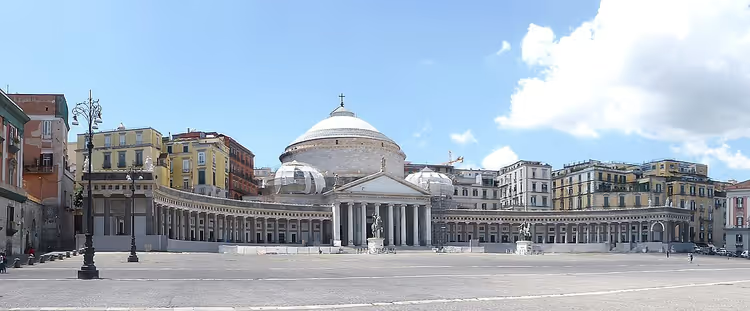
A group walk through different districts of the city takes about four hours. You go along narrow cobblestone streets with authentic houses and gradually build a full picture of Naples. At Piazza del Plebiscito you pass the Royal Palace, the Galleria Umberto I and the Teatro di San Carlo.
Then the route heads to the sea. From the viewpoint at Castel dell'Ovo you get a panorama of the bay.
You can return to your hotel by metro, checking out the painted stations along the way.
- Format: group of up to twenty people.
- Duration: about four hours.
- The catch: in a large group, the pace is set by the slowest participant.
4. Pompeii, a look into the past
 © Glen Scarborough from The Central Coast, Australia · CC BYPhoto: Glen Scarborough from The Central Coast, Australia, CC BY (https://creativecommons.org/licenses/by/2.0), Wikimedia Commons
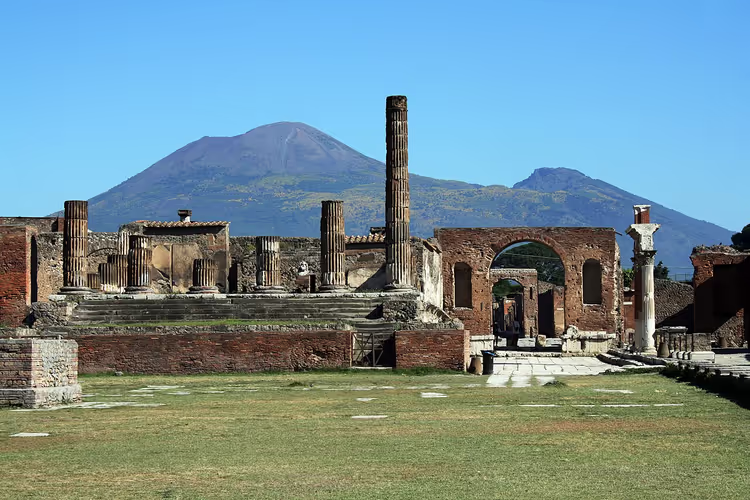
A short two-hour tour shows the highlights of Pompeii, the city that Vesuvius buried under ash in 79 AD. The excavated area covers dozens of hectares, so with a guide you can see the most important things without unnecessary detours.
You start with the Gladiator Barracks and its portico, where spectators waited for performances to begin. Next come the Large and Small Theaters: the acoustics of the halls survive to this day. Then the route enters the house of a wealthy Pompeian with wall paintings and the Roman baths.
At the end you visit the Lupanar with its frescoes, the Forum and the Temple of Apollo, built in the 6th century BC. If you wish, the route can be extended to the Villa of the Mysteries with its famous frescoes. If you want to visit Pompeii with a guide, compare group tour options on GetYourGuide.
- Format: group of one to ten people.
- Duration: about two hours.
- The catch: in summer there is little shade here under the open sun, so bring water and a hat.
5. First introduction to Naples
 © Aquioh · CC BY-SAPhoto: Aquioh, CC BY-SA (https://creativecommons.org/licenses/by-sa/4.0), Wikimedia Commons
The four-hour tour gives you a first impression of the city through its palaces, castles, and theaters. As you walk, you listen to legends and facts from the distant past tied to the name of Homer. You will take photos on the terrace of Sant'Antonio and approach the Castel Nuovo fortress.
Then you step out onto Piazza del Plebiscito. From here you can see the Opera House and the Royal Palace. The guide will explain how Greek culture shaped the city and how Naples became the capital of the Kingdom of Sicily.
On Spaccanapoli, the city's oldest street, you soak up the atmosphere of a city that never sleeps. Along the way you are shown the Palazzo Venezia, Palazzo Petrucci, and the Church of Santa Chiara. At the end, you stop at one of the local restaurants for a break.
- Format: private, from one to ten people.
- Duration: about four hours.
- The catch: the first introduction is not deep, you cover the city's history only in broad strokes.
6. See Naples to understand the city

The three-hour walk traces the city's history from antiquity to the present day. You walk along the Partenope waterfront and come out at the Castel dell'Ovo. In the Santa Lucia district, you will recall the song about this place.
Later the route moves into the Middle Ages. In the center of the old town stands Castel Nuovo, also known as the Angevin Castle. Further on, you pass the Royal Palace and Piazza del Plebiscito with its basilica.
A separate stop: the Galleria Umberto I, built in 1890. You explore the building from the outside and inside. At the end, a tasting of local wine or limoncello with a cup of coffee awaits you.
- Format: private, from one to ten people.
- Duration: about three hours.
- The catch: the route is packed, in three hours you move through several eras at once.
7. The tastiest Naples

This three-hour food walk combines eating and architecture. You step into old houses and establishments, try national dishes, and feel the rhythm of city life. A cup of strong coffee at a local bar is a must here.
Next, one of the best pastry shops awaits: you try the baked goods and learn the secret behind how they are made. At the fish shop, you see how the fish trade works and get tips on choosing. The dive into the world of cheeses and cured meats takes place at a distinctive Salumeria shop.
Then you enter the oldest pizzeria and hear the story of how pizza came to be. The route ends at a trattoria in the Spanish Quarters with traditional dishes. The cost of lunch and the guide's fee depend on the group size, so check the price when booking.
- Format: group or private, your choice.
- Duration: about three hours.
- The catch: this is a tasting route, so plan it on an empty stomach.
8. Pompeii, an ancient time machine
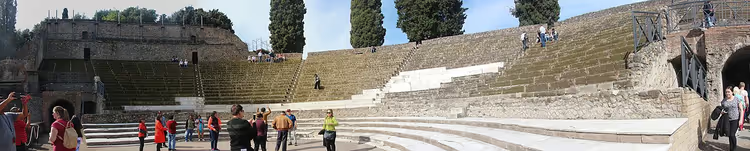 © Takver from Australia · CC BY-SAPhoto: Takver from Australia, CC BY-SA (https://creativecommons.org/licenses/by-sa/2.0), Wikimedia Commons
Two hours of walking through Pompeii reveal the city as a great time machine. You get a handle on the daily life and culture of people from the start of the Common Era and marvel at the level of their engineering solutions. Unlike a general sightseeing tour, the focus here is on the daily life of the city's residents.
Then you step into the homes of poor and wealthy citizens. The House of Poppaea, Nero's wife, shows the demands of the aristocracy. Along the way, you see Roman roads, public fast-food spots, and workshops.
Separate stops include Stefano's laundry, where fabric was processed, and the public baths. The guide explains what Romans used for washing and how they took care of hygiene.
In summer, the park is open until late evening; in winter, it closes earlier. Entry slots sell out quickly, so buy your ticket in advance.
- Format: group of one to ten people.
- Duration: about two hours.
- The catch: without water and a hat, it is tough here in summer.
9. One day on the Amalfi Coast
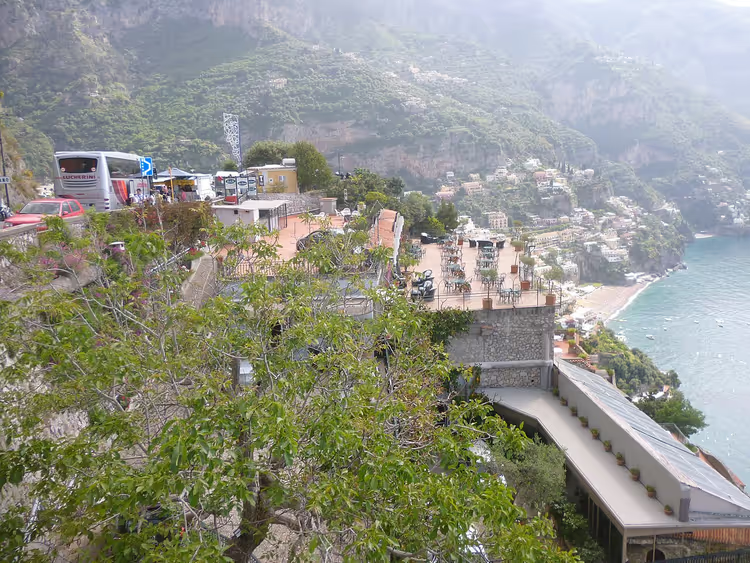 © Daniel Ventura · CC BY-SAPhoto: Daniel Ventura, CC BY-SA (https://creativecommons.org/licenses/by-sa/3.0), Wikimedia Commons
The trip along the Amalfi Coast takes a full day. The road winds along the rugged shore of the Tyrrhenian Sea, among mountain slopes, headlands, and terraces with olive groves and vineyards. Along the way, you hear stories and legends of these places, and at stops you photograph landscapes that are on the UNESCO list.
The main points of the route are Amalfi, Ravello, and Positano. In Amalfi, you walk through authentic lanes among old buildings surrounded by greenery and flowers. In Ravello, about three hundred and fifty meters above the sea, Villa Rufolo and Villa Cimbrone await you with their gardens and belvederes.
In Positano, you see the church of Santa Maria Assunta on the slope and the coastal panorama. Lunch at a restaurant with a sea view is planned along the way. If you want to go on your own, compare Amalfi Coast tours in advance.
- Format: private, from one to four people.
- Duration: a full day.
- The catch: the road has many switchbacks; if you get carsick, bring medication.
10. Neapolitan cuisine and a cooking class

The Neapolitan cooking class lasts about four hours. You start at the fish market, where you learn to choose fish and seafood and to haggle with the seller. The guide and the hostess show how local cuisine differs from the rest of Italian cooking.
With your purchases, you head to a house on a picturesque street. Here, under the guide's direction, you cook the region's signature dishes. In the process, you get into the daily life of the locals and understand why cooking here is almost a ritual.
The finale: a full lunch with wine at a shared table. You taste what you cooked yourself. The price is fixed for the whole group, so in a larger party it works out cheaper per person.
- Format: private, from one to several people.
- Duration: about four hours.
- The catch: part of the time goes to the market and the walk, not to the cooking itself.
11. Naples, the most interesting
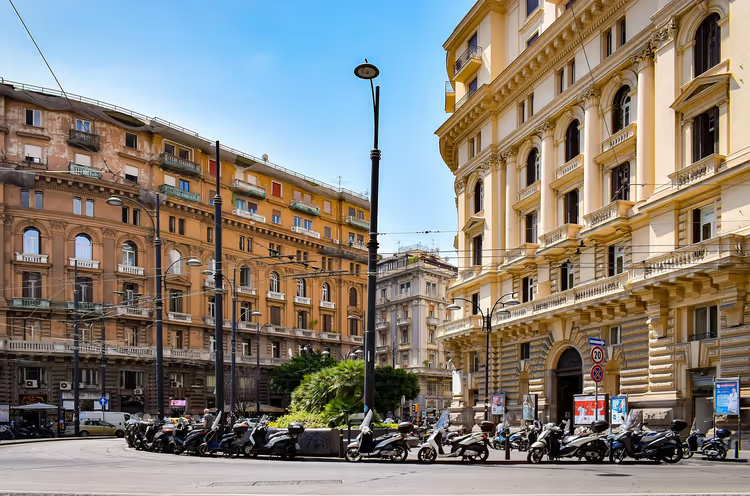
This three-hour guided walk tells the city's story from Greek colonists to the Spaniards and French who fought over these lands. You sort out how many peoples managed to live on the shores of the bay and why the city treasures the present so much.
A separate theme is the character of the locals. Their zest for life, temperament, and playfulness are immediately noticeable, especially near Vesuvius. You look at the city through local eyes and understand why they know how to enjoy simple things.
One of the main points is the Sansevero Chapel with its famous statues. From the viewpoints, you take photos and feel the city's atmosphere. The duration and route are adjusted to your group.
- Format: private, for small groups.
- Duration: about three hours.
- The catch: in intense heat, open viewpoints are hard to handle.
12. These magical islands of the bay
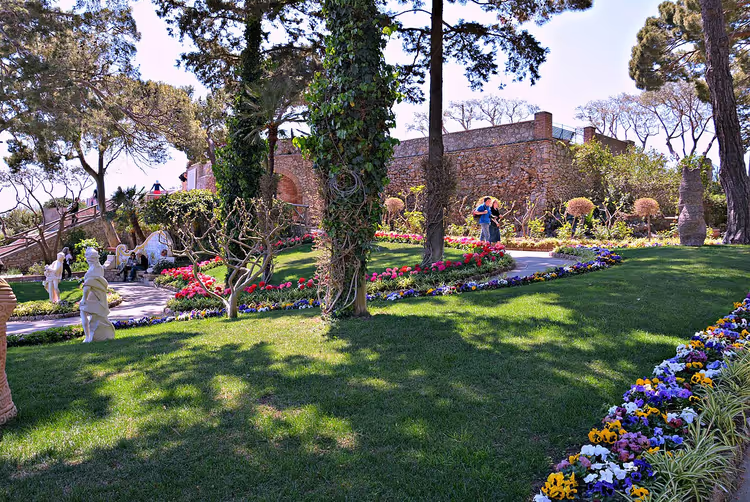 © Mentnafunangann · CC BY-SAPhoto: Mentnafunangann, CC BY-SA (https://creativecommons.org/licenses/by-sa/4.0), Wikimedia Commons
The boat trip goes to one of the bay's three islands: Capri, Ischia, or Procida. Each is beautiful in its own way, and each deserves a separate day. On Capri, you take the funicular up to the Piazzetta, walk to the Gardens of Augustus, and take in the bay panorama.
On Capri, it is worth stopping by the Natural Arch and the Matermania cave. By bus, you reach Anacapri and go up Mount Solaro or to Villa San Michele. From there, the entire Bay of Naples is visible.
On Ischia, green mountains, thermal springs, and the Aragonese Castle on a small separate island await you. On Procida, the colorful fishermen's houses, lush greenery, and boats at the docks remain intact. Book boat trips to the islands on GetYourGuide in advance; in summer, spots get taken.
- Format: private or in a group.
- Duration: one day.
- The catch: Capri is crowded with tourists in summer, so come for the first ferry.
13. The magic of the Neapolitan center

A three-hour walk through the historic center takes you past churches and palazzos. You learn about the Greek settlement and how Roman influence changed the city. Along the narrow decumani streets, you pass architecture from different eras.
A dedicated stop: the Sansevero Chapel and its mysterious history. Then on to Piazza San Domenico Maggiore with its church of the same name. You step inside the Church of Gesù Nuovo and find out who Giuseppe Moscati was and why he was canonized.
A nice moment: meeting Pulcinella, the sculpture of the main character from commedia dell'arte. You rub his shiny nose for good luck. After that, a pizzeria awaits with a Margherita pizza or a rum baba and a cup of coffee.
- Format: private, for small groups.
- Duration: about three hours.
- The catch: the center is busy, and it's easy to fall behind the group in the narrow streets.
14. Naples at a glance
 © Lalupa · CC BYPhoto: Lalupa, CC BY (https://creativecommons.org/licenses/by/3.0), Wikimedia Commons
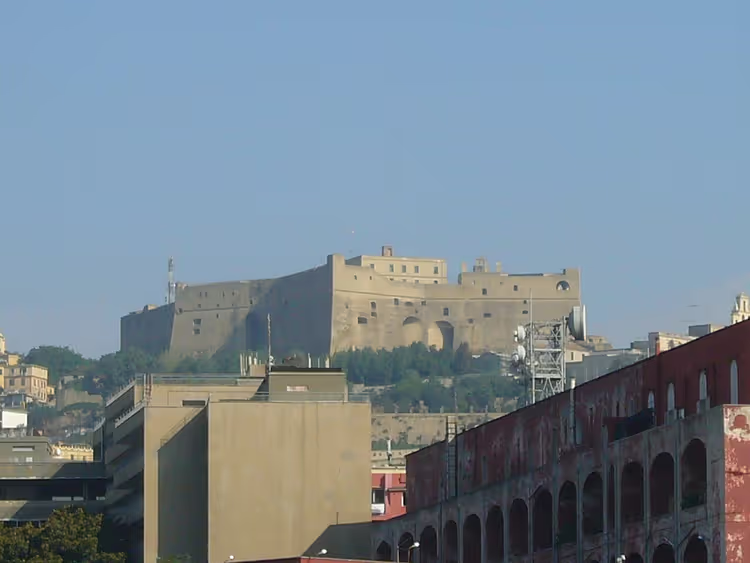
A four-hour route across viewpoints shows the city from above. You take the funicular up to the Vomero hill, the highest point of the metropolis. Within a few minutes of ascent, the panorama of the bay and the city unfolds before you.
The main stop: Castel Sant'Elmo and its history. You walk across the parade ground and climb to the upper level for the views. From above you can see the neighborhoods and the sea, while the guide tells you how the city lived around the fortress.
Nearby, in the former Certosa di San Martino monastery, there is now a museum. The halls display real royal barges, decorated carriages, paintings, and sculptures. This route suits those who want to see the city as a whole rather than piece by piece.
- Format: private, from one to four people.
- Duration: about four hours.
- The catch: the ascent and descent take time, so it's long for a quick overview.
15. Incredible street food
 © Yair Haklai · CC BY-SAPhoto: Yair Haklai, CC BY-SA (https://creativecommons.org/licenses/by-sa/4.0), Wikimedia Commons
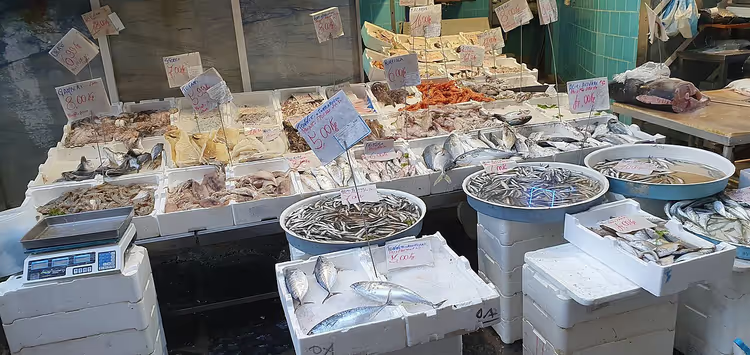
A food walk through Neapolitan street food starts at the Pignasecca market. The southern atmosphere is in the air here, and you immediately understand why locals love fried seafood and pizza a portafoglio. In a small pescheria, seafood is cooked right in front of you and served in a paper cone.
Then you step into a friggitoria and try mix fritto napoletano, a mix of vegetables, seafood, and mozzarella. Next come the best street food spots with local delicacies and that very pizza a portafoglio. In the Spanish Quarters, a tasting of buffalo mozzarella, salami, and prosciutto with a glass of wine awaits you.
The final touch: the Galleria Umberto I. Under its vaulted ceiling, you sample local sweets, and in one of the bars you take in the aroma of espresso. If you want a similar route, check out Naples food tours.
The walk takes about three hours, and the cost is fixed for a small group. Tastings are paid separately, so confirm the selection and price when booking. This is one of the best ways to understand the Neapolitan character through food.
- Format: private or in a group.
- Duration: about three hours.
- The catch: some dishes are fried and spicy, so people with a sensitive stomach should choose a different tour.
16. Naples for cruise ship passengers
 © Ad Meskens You are free to use this picture for any purpose as long as you credit its author, Ad Meskens . Example: © Ad · CC BY-SAPhoto: Ad Meskens You are free to use this picture for any purpose as long as you credit its author, Ad Meskens . Example: © Ad, CC BY-SA (https://creativecommons.org/licenses/by-sa/4.0), Wikimedia Commons
If you have a full day between port calls, this short tour shows you the city without rushing. It lasts about three and a half hours and starts right at the port. With a guide, you walk along the waterfront to Castel dell'Ovo and hear its history.
From the viewpoint you can see Vesuvius and the bay. Then at Piazza del Plebiscito you see the old church and the Royal Palace and get into the mystical stories surrounding it. You take the metro to Piazza Dante and look at architectural landmarks.
Next, the route leads to Piazza del Gesù Nuovo with its church of the same name. The building's facade surprises with its design, and inside you linger for the decor. Along Spaccanapoli you make your way to Via San Gregorio Armeno, where you see the art of the nativity scene.
The finale: Caffè Gambrinus with delicacies, including Neapolitan coffee, pizza a portafoglio, and seafood. The price is fixed for the whole group, so confirm it when booking. Leave yourself extra time to get back to the ship.
- Format: private or in a small group.
- Duration: about three and a half hours.
- The catch: the route is short, so you won't make it to Pompeii or the islands that day.
17. Shopaholic's secrets
A three-hour shopping trip suits those who follow fashion and look for items below retail. Naples is known for its factories producing branded shoes and clothing. Sample pieces often stay in the city and are sold at reduced prices.
With a guide who knows these spots, you visit several stores by car. You can add a dress, a suit, or a pair of shoes to your wardrobe at a price below store level. The savings on purchases usually more than cover the cost of the guided trip.
The guide gives tips on how to choose an item and avoid overpaying. You also learn how the local fashion scene works. This is an option for those who care about shopping, not sightseeing.
- Format: private, from one to four people.
- Duration: about three hours.
- The catch: without the guide's car, you can't get around the factories.
18. Shopping around the city and at the outlet
 © Giuseppe Guida · CC BY-SAPhoto: Giuseppe Guida, CC BY-SA (https://creativecommons.org/licenses/by-sa/4.0), Wikimedia Commons
If you still haven't bought gifts before leaving, this trip solves that. The guide knows where to find quality items from well-known manufacturers at a discount. You visit more than ten boutiques and pick what you need.
Among the finds are Marinella ties, Mariano Rubinacci scarves, fur pieces from the city's oldest fashion house, and jewelry by local artisans. These make great presents for loved ones. Some goods are sold directly from factories, so prices are lower.
A separate stop: La Reggia Designer Outlet, a complex of more than one hundred thirty stores. It's popular with locals and tourists because of constant discounts across different product categories. Guide services with transfer are priced per group.
- Format: private, from one to four people.
- Duration: half a day.
- The catch: the outlet is outside the city, so travel takes time.
19. Better than Versailles?
 © Carlo Pelagalli · CC BY-SAPhoto: Carlo Pelagalli, CC BY-SA (https://creativecommons.org/licenses/by-sa/3.0), Wikimedia Commons
A tour to Caserta shows Italy's answer to Versailles. The Royal Palace was built in the 18th century by order of Charles VII of the House of Bourbon. It was conceived as the largest palace complex in Europe and surpassed the French original in scale.
Museum admission costs €18, and a park-only ticket is cheaper (as of 09/2026, official website). In front of the palace lies a vast park with fountains, avenues, and landscape features. The English Garden stands apart with its rare trees, secluded corners, and artificial lakes.
Inside the palace, you see the state rooms and interiors. The guide tells the story of how this place was created and the different periods of its life. The tour suits those who have already seen central Naples and want more grandeur.
- Format: private, from one to ten people.
- Duration: half a day.
- The catch: the park and palace take time, you can't cover everything in a couple of hours.
20. Herculaneum, the city under ash
 © AAG1984 · CC BY-SAPhoto: AAG1984, CC BY-SA (https://creativecommons.org/licenses/by-sa/4.0), Wikimedia Commons
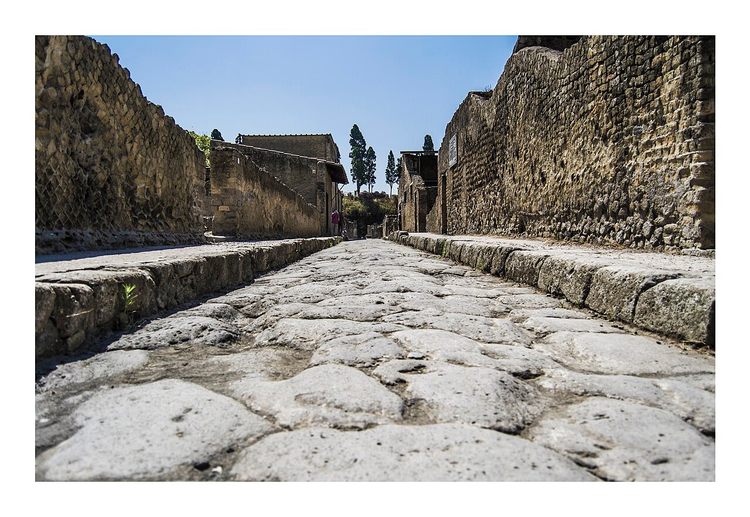
A two-hour trip takes you to a city buried by volcanic ash, just like Pompeii. Ercolano, also known as ancient Herculaneum, was named after Hercules, who, according to legend, admired the bay from a cliff at this spot. The excavated area is smaller than Pompeii, but it is better preserved.
Excavations, ongoing since the 18th century, have uncovered summer residences of noble Romans. They show how aristocrats vacationed and what villas they lived in. You see the ruins of shops, public baths, a market square, fountains, and palaestrae.
An emotional shock awaits you at the boat houses. They contain the skeletons of people who tried to escape by the water. Admission costs €16 per adult (as of 09/2026, official website). If you want to compare with other routes, check out Herculaneum tours on GetYourGuide.
- Format: private, from one to ten people.
- Duration: about two hours.
- The catch: some sites are closed for restoration, so check the list on site.
Tours and tickets in Naples
Guided tours, skip-the-line tickets and activities — most offers can be cancelled free of charge.
See offers on GetYourGuideThe widget loads once you give your consent.
⁉️🤔 Frequently asked questions
How much does it cost to enter Pompeii?
An adult ticket for just the ancient city costs €20, a ticket with the suburban villas costs more (as of 09/2026, archaeological park data). Since late 2024, there has been a daily limit of twenty thousand visitors and timed entry slots, so book your ticket in advance. It is valid for one entry only, you cannot leave and come back on the same ticket.
How many days do you need for Naples?
Two days are enough for the city itself: one for the historic center, the second for the museum and the views from the Vomero hill. Another day will go to Pompeii, a separate one to Herculaneum or Caserta, and a full day to the Amalfi Coast. In a week you can fit in the city, day trips, and a boat trip to the islands.
Can you visit Pompeii without a guide?
Yes, an audio guide and a map let you follow the route on your own. But without explanations it is easy to miss details and get lost across dozens of hectares of excavations. A guide shows the highlights in two hours and answers questions. If it is your first time in an ancient city, a tour saves time and gives you context.
Which tour is good with children?
Pompeii and Herculaneum work best for children: the ruins and stories about the volcano are clear even to school-age kids. Food tours are also engaging, with food and markets. It is better to skip the castle route with long walks in the heat. Ask the guide whether there is a family version of the tour.
When is the best time to visit Naples?
The most comfortable months are April, May, September, and October: warm but not hot, and the lines are shorter. In summer there is little shade at the open-air excavations, so bring water and a hat. In winter some sea routes to the islands do not operate, but the city is less crowded. Before your trip, check opening hours on the official websites of the sites.
In short: what to book
Naples can be explored in different ways, and the choice depends on how much time you have.
If you have one day: go for Pompeii and a short walk through the center.
If you have two days: add the Amalfi Coast or a boat trip to the islands.
If you have a week: include Herculaneum, Caserta, and the climb up to Castel Sant'Elmo.
If you're traveling with kids: choose Pompeii or a street food gastronomy tour.
Getting from the airport to your hotel is easy with a Kiwitaxi transfer.

A small editorial team writing guides for independent travel. We travel ourselves, but we haven’t been everywhere, so we check prices, opening hours and how to get there against official sources.