
















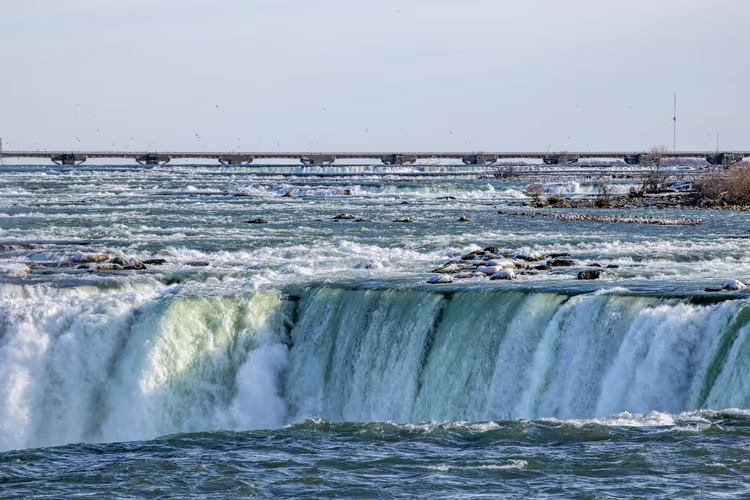
16 Attractions in Canada: from Notre-Dame Basilica to the glaciers of Banff
Canada stretches across six time zones. You cannot see the whole country in one trip: the east preserves the memory of French and British colonization, while the west is where the Rocky Mountains begin, with glaciers and turquoise lakes.
We put together 16 places that give you a sense of the country without rushing. The list includes Notre-Dame Basilica in Montreal, a suspension bridge over a canyon, the bay with the highest tides, and the icefields of Banff. We checked prices and opening hours against official websites.
In short: allow three to four days for the eastern part and another week for the west. A day pass to Banff National Park costs $12.25 for an adult (as of 09/2026, Parks Canada rates).
Ad: this article contains affiliate links, we earn a commission if you book through them, at no extra cost to you.
1. Notre-Dame Basilica in Montreal
💡 In short:
- The church stands in Montreal's historic quarter and is open to visitors with a ticket.
- Inside you will see a blue altar, a starry vault, and an organ with seven thousand pipes.
- Prices and opening hours: 09/2026, verified on the basilica's official website
Notre-Dame Basilica was completed in 1829, although the parish on this site appeared earlier. The design was prepared by James O'Donnell, a Protestant architect who later converted to Catholicism.
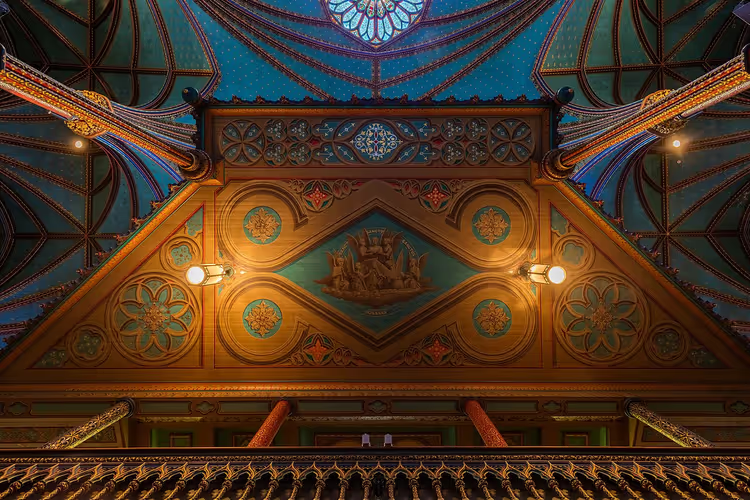 © Diego Delso · CC BY-SAPhoto: Diego Delso, CC BY-SA (https://creativecommons.org/licenses/by-sa/4.0), Wikimedia Commons
The facade is supported by twin towers, and each has its own name. One was called Temperance, the other Perseverance. The bell tower holds one of the heaviest bells in North America, and during services the Casavant organ with seven thousand pipes is played.
The main thing inside is in the altar: a deep blue color and a vault studded with golden stars. In the evening a light show is held here, and tickets for it sell out faster than for the daytime visit. The restoration of the basilica is planned to take years, and part of the work is funded by visitors.
2. Saint Joseph's Oratory
Admission to Saint Joseph's Oratory is free for all visitors (as of 09/2026, official website). The oratory stands on the slope of Mount Royal and is known for its dome, the third largest among churches in the world.
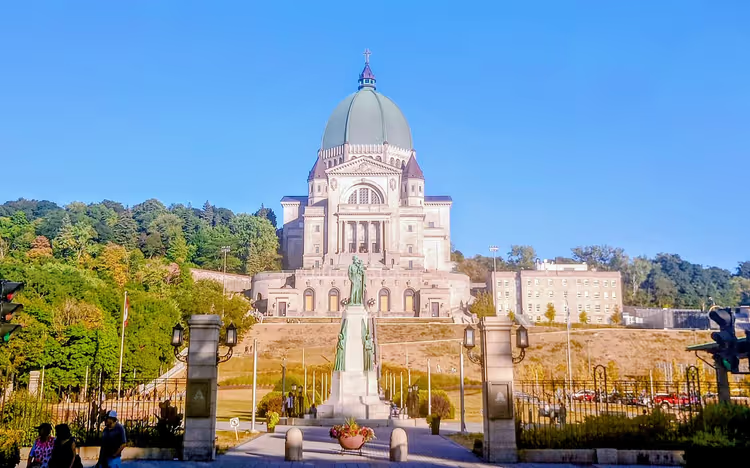 © Dpalma01 · CC BY-SAPhoto: Dpalma01, CC BY-SA (https://creativecommons.org/licenses/by-sa/4.0), Wikimedia Commons
The shrine was founded by Brother André Bessette, who served here and became known for accounts of healings. Thousands of crutches left by pilgrims hang in the basilica. The museum section holds the heart of Brother André, which is why believers still come here.
A wide staircase leads up to the church. Some pilgrims climb it on their knees, as those before them did. You can walk up normally and take in the terrace with a panoramic view of the city.
3. Upper Canada Village
Upper Canada Village was opened near Ottawa to show life in a mid-19th-century village. Houses, a mill, a blacksmith shop, and a bakery recreate daily life of that era, and staff work in period costumes (as of 09/2026, official website).
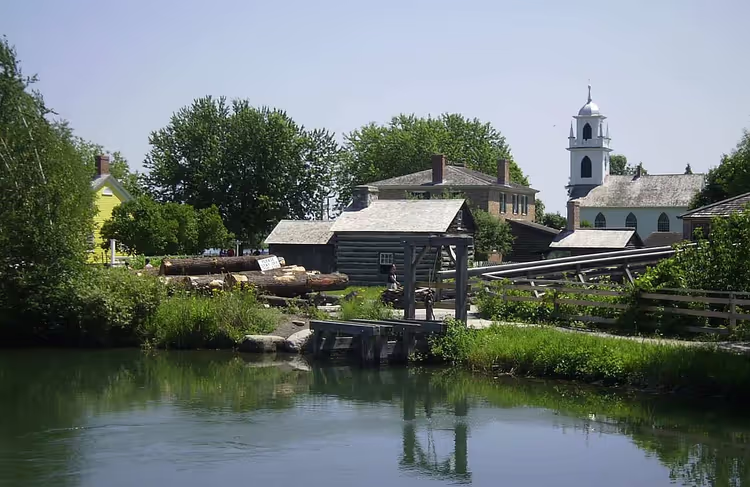 © Bodoklecksel · CC BY-SAPhoto: Bodoklecksel, CC BY-SA (http://creativecommons.org/licenses/by-sa/3.0/), Wikimedia Commons
You can take a horse-drawn carriage ride or stop by the photo studio. The village hotel serves treats, and the shop sells cheddar cheese from the local dairy and artisan goods. For families with children this is an easy format: the day is spent on the move, without long transfers.
If you want a guide, take a ready-made route through the valley: Ontario tours on GetYourGuide.
4. Capilano Suspension Bridge
The Capilano Suspension Bridge was first stretched across the river canyon back in the late 19th century, originally made of cedar planks and hemp ropes. In the middle of the last century the structure was completely rebuilt because the old one had deteriorated (as of 09/2026, tickets and opening hours).
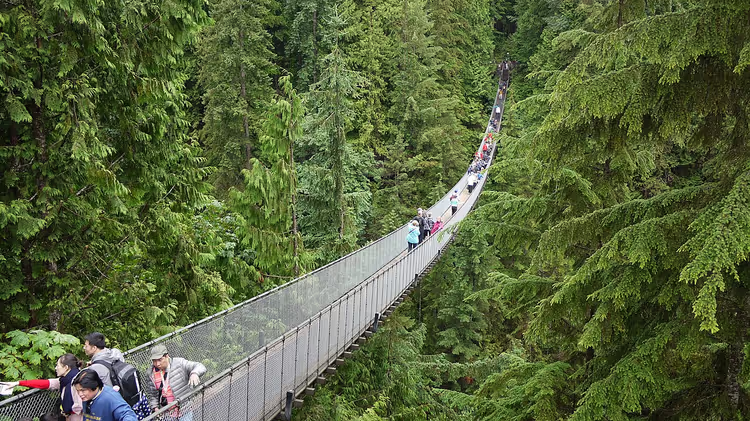 © Markus Säynevirta · CC BY-SAPhoto: Markus Säynevirta, CC BY-SA (https://creativecommons.org/licenses/by-sa/4.0), Wikimedia Commons
The bridge hangs about seventy meters above the water, and the span is more than one hundred thirty meters long. Locals cross the river by other routes, while tourists walk the bridge for the view and the gentle sway underfoot. A student ticket costs $65.95, and the adult rate is higher (as of 09/2026, admission cost).
Near the bridge there are tree-top rope courses and a trail along the cliff.
5. Bay of Fundy
Bay of Fundy is known for the highest tides on the planet. At low tide the water recedes for hundreds of meters, and you can walk across the bottom to places that were underwater just a few hours earlier. Kayakers and canoe enthusiasts from different countries come here.
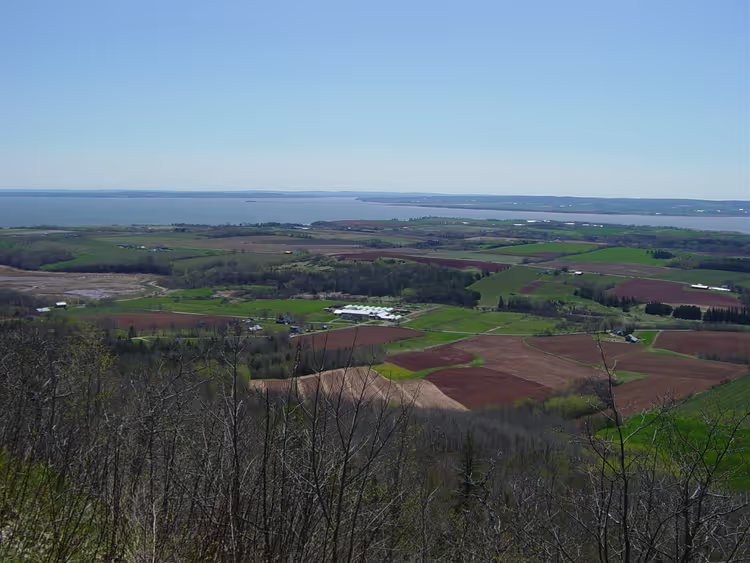
It is best to plan two visits in one day: at high water and at low tide. Between them, the landscape changes beyond recognition, exposing red cliffs and a muddy bottom. Check the exact tide times in the port schedule the day before your trip.
6. Wood buffalo national park
Canada treats nature with care, and a story about the country would be incomplete without its national parks. Wood Buffalo National Park is considered the country's largest reserve and a protected area for wood bison, listed as a World Heritage Site (as of 09/2026, Wood Buffalo National Park).
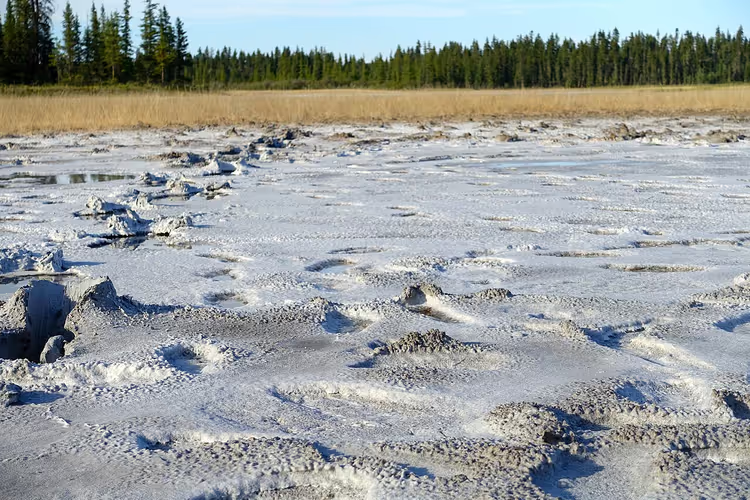 © Melinaguene · CC BY-SAPhoto: Melinaguene, CC BY-SA (https://creativecommons.org/licenses/by-sa/4.0), Wikimedia Commons
The park was created in the early 1920s specifically to preserve bison. Today it is home to the largest herd of wild bison, more than two thousand animals. Across an area of forty-four thousand square kilometers, coniferous and mixed forests grow, with shrubs and grasses alternating throughout.
Nearly fifty species of mammals live here, including caribou, muskrat, black bear, wolf, beaver, and muskrat. More than two hundred bird species have been recorded, from the whooping crane to the snowy owl. The park is open year-round, and each season transforms the landscape beyond recognition.
You need a car to explore: distances here are measured in tens of kilometers, and infrastructure is modest. In winter you will see tracks in the snow and experience near-total silence; in summer you get long, bright evenings. Bring a supply of water and do not count on cafes at every turn.
7. Notre-Dame-des-Neiges Cemetery
On the slope of Mount Royal lies the largest necropolis in North America. Its pathways stretch for almost sixty kilometers, and the area is about one and a half square kilometers (as of 09/2026, Notre-Dame-des-Neiges Cemetery).
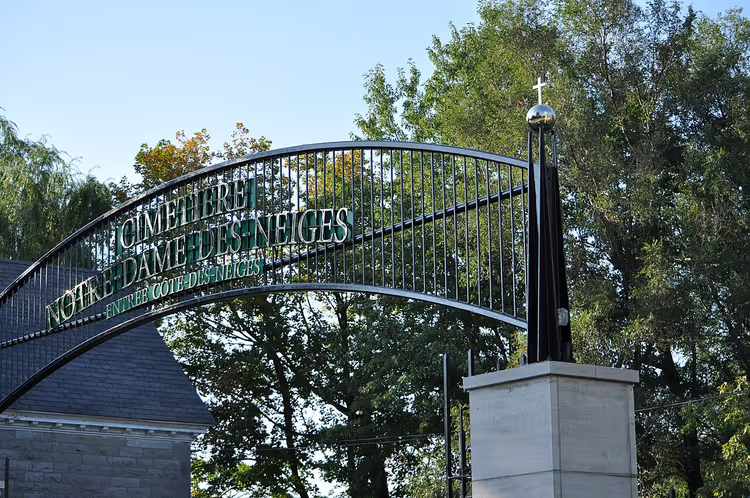 © Hélène Grenier · CC BY-SAPhoto: Hélène Grenier, CC BY-SA (https://creativecommons.org/licenses/by-sa/3.0), Wikimedia Commons
In terms of significance, this place is compared to Paris's Pere Lachaise. Famous Canadians are buried here: Calixa Lavallee, who wrote the country's national anthem, Confederation founder George Cartier, and poet Emile Nelligan. At first the cemetery served only Catholics, but other religions are now permitted here.
Notre-Dame-des-Neiges is on the list of Canada's national historic sites and is protected by the state. The grounds hold the ashes of hockey player Maurice Richard, who was called "The Rocket" in Canada. It is quiet and well kept here, with old trees growing among the monuments.
8. Montreal Botanical Garden
The Montreal Botanical Garden opened in the early 1930s as a response to the Great Depression. Mayor Camillien Houde led the project together with a group of botanists and architects (as of 09/2026, Montreal Botanical Garden).
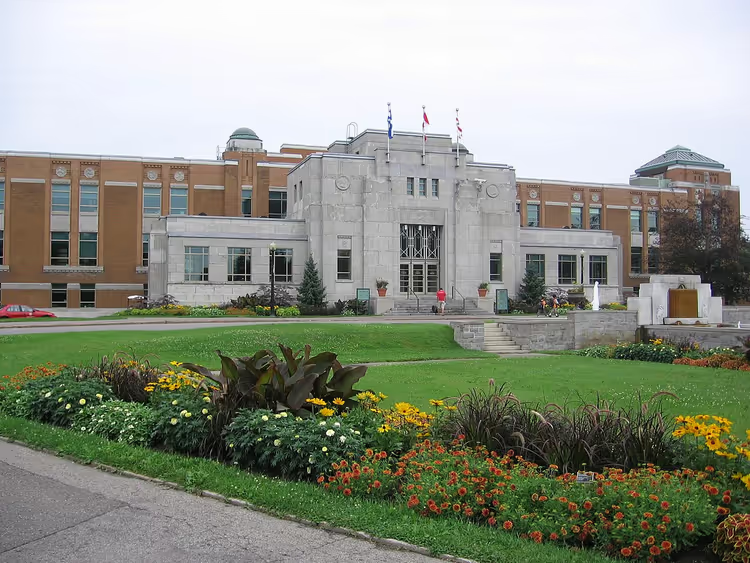 © GarrettRock at English Wikipedia · CC BY-SAPhoto: GarrettRock at English Wikipedia, CC BY-SA (http://creativecommons.org/licenses/by-sa/3.0/), Wikimedia Commons
Across seventy-five hectares, thirty themed gardens and ten greenhouses have been laid out. The flora of Japan, China, and the Alps are represented here, along with an English garden, an azalea garden, and a rhododendron garden. The First Nations Garden brings together plants that fed and healed the Indigenous population.
In spring and summer, the garden changes every week. Ducks and turtles live in the ponds, squirrels run along the paths, and orchids bloom in the greenhouses. Set aside a full day for a complete tour; three hours is enough for the main greenhouses.
Tickets are convenient to buy in advance: botanical garden tickets on Tiqets.
9. Yoho National Park
Anyone visiting Yoho for the first time and learning what its name means in the language of the Indigenous peoples agrees with it immediately. The words "wow" and "amazing" describe the glaciers, waterfalls, and emerald lakes here most accurately (as of 09/2026, Yoho Park).
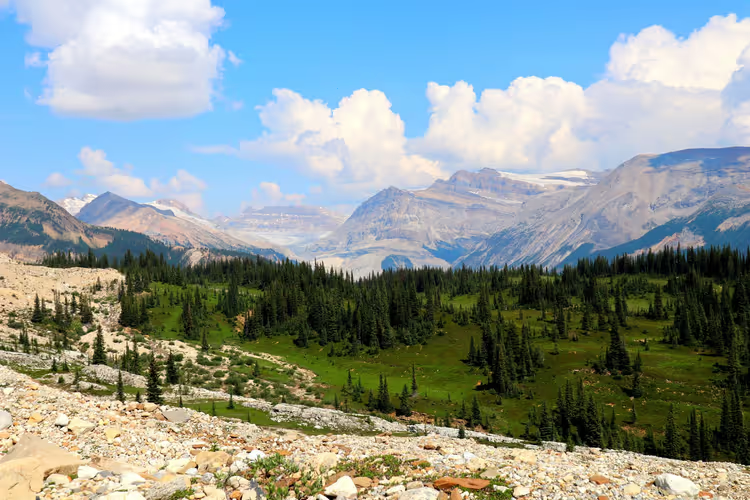
Many names here are tied to Indigenous peoples: that is how "Kicking Horse" came to be used for a dangerous mountain river and "Laughing" for a waterfall named after the sound of the water. The seasonal waterfall, over three hundred meters high, is formed by melting mountain ice. The park is home to deer, elk, bears, and badgers.
Tourists have wide roads and developed infrastructure, including hotels and campgrounds. One hundred and eighty bird species gather in colonies along the shores of the lakes and rivers. Bring warm clothing even in summer: the weather in the mountains changes quickly.
10. Thousand islands national park
Thousand Islands National Park lies in the middle of the Saint Lawrence River. The preserve starts at Lake Ontario and covers eighty kilometers of the riverbed, with islands scattered across the water's surface (as of 09/2026, Thousand Islands park).
An Indigenous legend explains the phenomenon simply: a deity grew angry with people, lifted the land, and dropped it, shattering it into pieces. Geologists offer a different explanation: the river flooded ancient rocks, and only their peaks remained above water. The islands vary in size, from a hundred square kilometers to a hundred square meters.
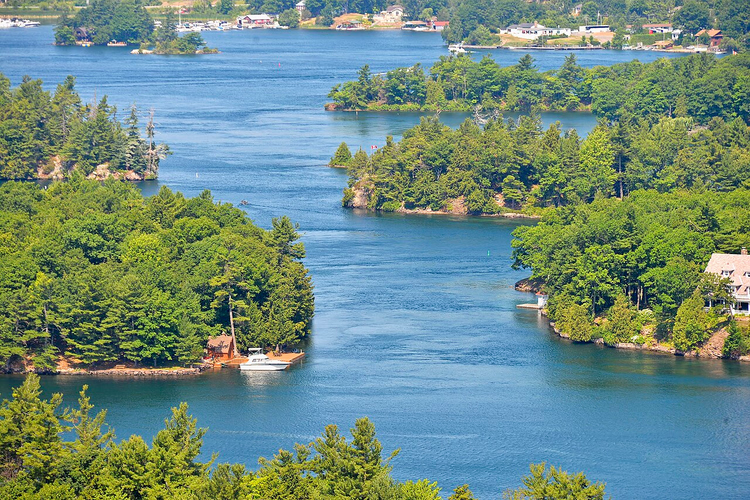 © Mykola Swarnyk · CC BY-SAPhoto: Mykola Swarnyk, CC BY-SA (https://creativecommons.org/licenses/by-sa/4.0), Wikimedia Commons
The archipelago was declared a national park before World War I. Soon the islands began to be sold, and houses appeared on many of them. The most developed island, Wolfe Island, has a well-established infrastructure and a large permanent population.
Nearby, on the American side of the river, stands Heart Island with Boldt Castle. According to legend, George Boldt was building it for his wife, who died before the work was completed. Later, a new owner who bought the island for one dollar finished the castle and opened a museum there (as of 09/2026, Boldt Castle).
Boating between the islands offers the best view of the archipelago. The water here is calm, so the route is suitable for families with children.
11. Peyto Lake
Peyto Lake was named after its discoverer. It lies in a rocky gorge in Banff National Park at an elevation of just under two kilometers above sea level (as of 09/2026, park fees).
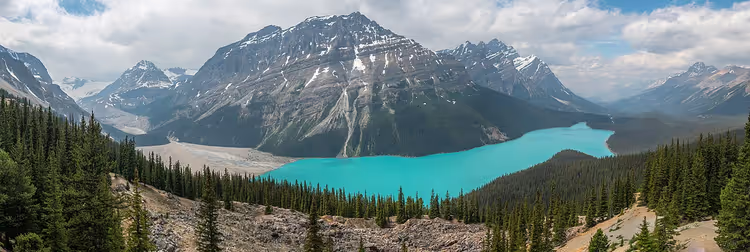 © Ethan Sahagun · CC BYPhoto: Ethan Sahagun, CC BY (https://creativecommons.org/licenses/by/4.0), Wikimedia Commons
The turquoise color comes from minerals washed down from the surrounding rocks along with glacial water. The water here is cold even in summer, and the lake is about two kilometers long. Steep shores are covered with dense coniferous forest.
Photographers shoot the lake from the surrounding peaks, where a panoramic view opens up. Fishing is allowed only with a rod and in limited quantities to preserve the balance. There is almost no lodging nearby: check mountain lodges well in advance or plan the lake as a day stop.
Putting together a route through the national parks is easier with a guide: Rocky Mountains tours on GetYourGuide.
12. Cité du Havre Park
Cité du Havre Park in Montreal grew up on a man-made peninsula that was built up in the late 19th century to protect the city from the eroding current of the Saint Lawrence River (as of 09/2026, Jean-Drapeau park).
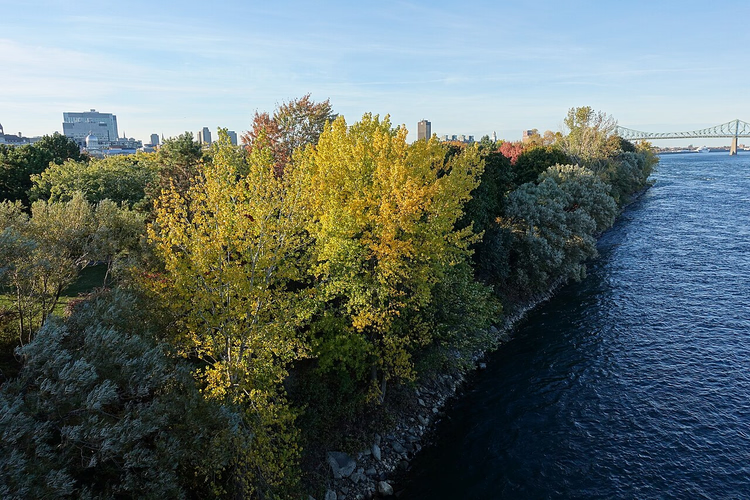 © Guilhem Vellut from Annecy, France · CC BYPhoto: Guilhem Vellut from Annecy, France, CC BY (https://creativecommons.org/licenses/by/2.0), Wikimedia Commons
The point was expanded with crushed stone excavated during metro construction and connected by a bridge to Saint Helen's Island. Today there are quiet walkways, bike paths, and almost no city noise. The park's main landmark is called Habitat 67: a residential complex built for the Expo 67 world's fair.
The complex was assembled from modules that form nearly one hundred and fifty apartments with terraces. The project by then little-known architect Moshe Safdie became a sensation at the fair and launched his career. Today the park is popular with locals, especially on warm weekends.
13. Mary, queen of the world cathedral
Mary, Queen of the World Cathedral was built as a scaled-down replica of St. Peter's Basilica in Rome. The initiative came from Bishop Ignace Bourget, who was struck by the original in Rome (as of 09/2026, Mary, Queen of the World Cathedral).
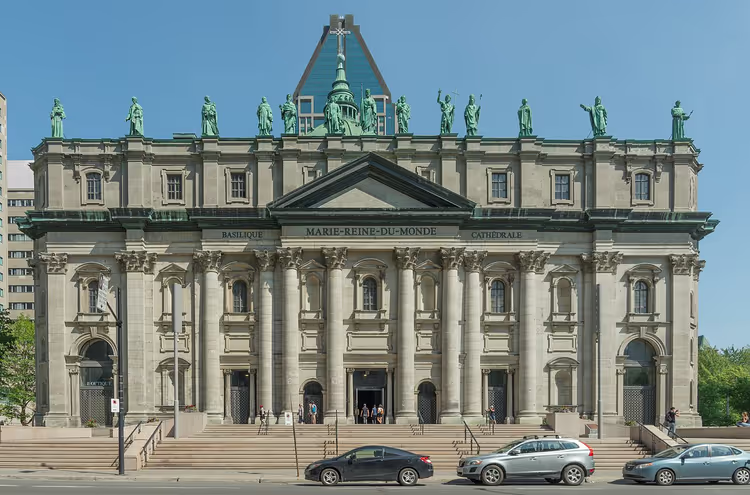 © Wilfredor · CC BY-SAPhoto: Wilfredor, CC BY-SA (https://creativecommons.org/licenses/by-sa/4.0), Wikimedia Commons
The architect commissioned for the project traveled to Rome and declined the job. The church was built anyway and consecrated in the late 19th century, named "Marie-Reine-du-Monde," meaning "Mary, Queen of the World." Today it is the third-largest church in the province of Quebec, and in the early 2000s it was designated a National Historic Site of Canada.
Inside, you will see nine paintings depicting the history of Montreal and a statue of the Virgin Mary. The altar is crowned by a baldachin made of gold and copper sheets, modeled after the Italian original. Note the marble baptismal font with a sculpted Crucifixion.
14. Banff National Park
Banff National Park was established in 1885 and is the oldest national park in Canada. It lies in the province of Alberta amid the Rocky Mountains, with glaciers, lakes, and alpine meadows (as of 09/2026, park day passes).
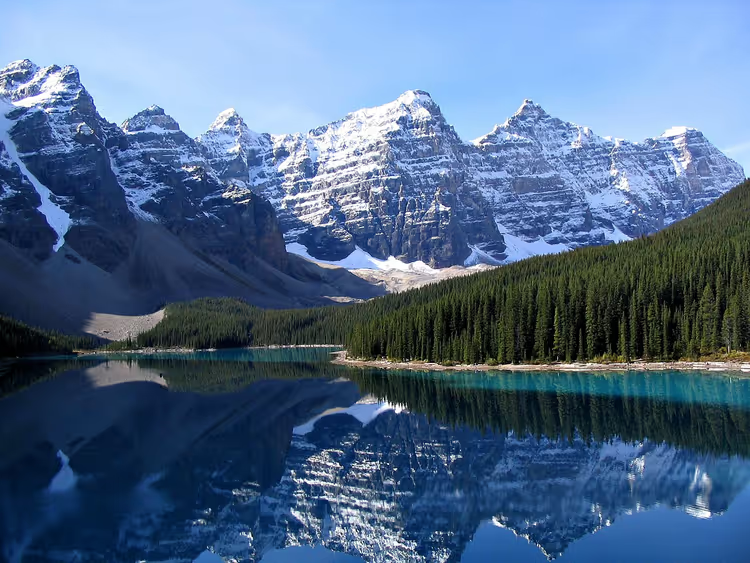
All prices here are in Canadian dollars (CAD). A day pass for an adult costs $12.25, for seniors $10.75, and for youth under 17 it is free (as of 09/2026, Parks Canada fees). A family pass per vehicle costs $24.50 (as of 09/2026, entry and pass fees). Soaking in the Banff Upper Hot Springs is paid separately, $19.75 for an adult (as of 09/2026, Banff Upper Hot Springs).
Moraine Lake, Lake Louise, and Crescent Lake are fed by glaciers and change color throughout the day. Access to some lakes is restricted, and a Parks Canada shuttle runs there: an adult ticket costs $12.75, and you should reserve your spot in advance (as of 09/2026, shuttle and fares). The Icefield Parkway connects Banff with Jasper National Park.
Sulfur hot springs operate year-round, and there is a Canadian bathhouse nearby. Take a car trip: that way you can cover two or three lakes in a day. If you don't want to drive yourself, choose tours of Canada's national parks on GetYourGuide.
15. Old Montreal
Old Montreal has preserved its buildings since the city's founding, when the settlement was called Ville-Marie. The city began with a fort under the leadership of Paul de Chomedey, built to convert the Indigenous population to Christianity (as of: 09/2026, Montreal tourism office).
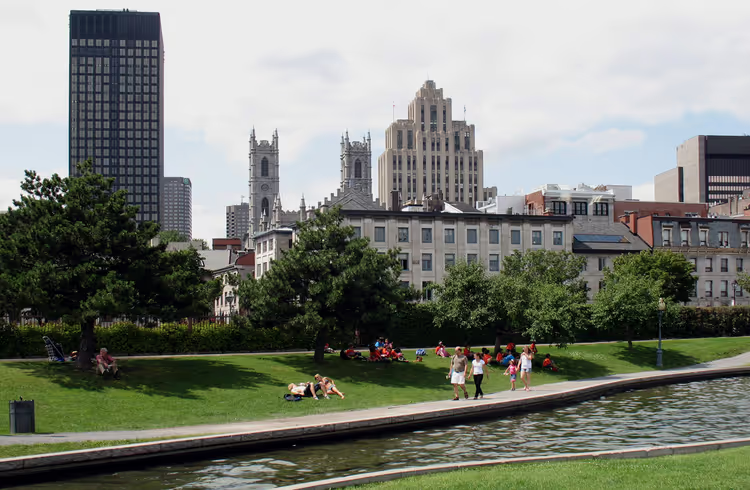
Wooden houses were gradually replaced with stone ones, streets and sidewalks were laid out, and after fires the city was rebuilt. The old Hôtel-Dieu de Montréal hospital and the Saint-Sulpice Seminary have survived, and the Notre-Dame Basilica is considered the main monument.
Nearby stands the British-era City Hall building and Nelson's Column, erected in the early 19th century. From City Hall to the Ville-Marie Expressway stretches the Champ de Mars, where the fort's stonework has been preserved. You can walk the district in a couple of hours if you don't stop at every museum.
It's convenient to book a downtown hotel in advance: find a hotel in Old Montreal on Trip.com.
16. Canadian Cordillera
The Canadian Cordillera stretches across the west of the country and includes Banff, Jasper, and Waterton Lakes parks. It is also home to the highest point in the Rocky Mountains, Mount Robson (as of: 09/2026, Parks Canada).
 © Viktor Birkus https://viktor-birkus.pixels.com [1] · CC BY-SAPhoto: Viktor Birkus https://viktor-birkus.pixels.com [1], CC BY-SA (https://creativecommons.org/licenses/by-sa/4.0), Wikimedia Commons
The Whistler area is known for its ski slopes, and the Columbia Icefield covers more than three hundred square kilometers. The deep Fraser and Johnston canyons are best viewed from trails, not from the road. The local waters are widely considered to offer the best fishing in the country.
The Athabasca and Lower waterfalls roar in the Cordillera. In Yoho National Park, scientists found the Burgess Shale with fossils from the Cambrian period, which contributed to the theory of evolution. Plan at least a week here: the drives between points are long.
Tours and tickets in Canada
Guided tours, skip-the-line tickets and activities — most offers can be cancelled free of charge.
See offers on GetYourGuideThe widget loads once you give your consent.
⁉️🤔 Frequently asked questions
How many days should I set aside for Canada?
For the eastern part with Montreal and Ottawa, three to four days is enough; for the western part with Banff and Yoho, you need another five to seven. Planes fly between the regions, while traveling by train or car takes several days. If you're short on time, pick one region and don't try to cover the whole country.
When is the best time to visit the Bay of Fundy?
Tides in the Bay of Fundy happen year-round, but summer and early fall are the most comfortable for walking on the exposed ocean floor. In winter, some viewing platforms are closed and the wind near the water is stronger. Plan two visits in one day so you can see both high tide and low tide.
What should I bring to the national parks?
Bring warm clothes, a rain jacket, and comfortable shoes: in the mountains, the weather can change within an hour. In Banff and Yoho, you'll need a card to pay for park entry and the shuttle. Bring your own water and food, as cafes are rare along the trails, and in Wood Buffalo there are almost none.
Do I need a car for the Cordillera?
Yes, it's difficult without a car: the distances between lakes and waterfalls are measured in tens of kilometers. Some lakes are closed to private vehicles, and a Parks Canada shuttle runs there by reservation. If you don't want to drive yourself, book a guided tour from Banff or Calgary.
How do I get to Banff?
Banff welcomes visitors year-round, and the nearest major airport is in Calgary. From there, a bus or car takes about an hour and a half to the town of Banff. Once in the park, get around by car: that way you can fit in several lakes in a day.
In short: what's worth booking
A quick guide to choosing a base for your travel style.
- If you have three days and one city: choose Montreal, where Notre-Dame Basilica, Saint Joseph's Oratory, and Old Montreal are all close together.
- If you have a week and a car: choose Banff, Yoho, and Peyto Lake, plus Lake Louise.
- If you want ocean and cliffs: choose the Bay of Fundy, Vancouver Island, and the Capilano Suspension Bridge.
- If you're traveling with kids: add Upper Canada Village and the Montreal Botanical Garden.
Montreal is easy to cover in three days; the Rockies need a full week of their own. Start with a downtown hotel and a rental car, otherwise transfers will eat up half your vacation.
find a hotel in Montreal on Trip.com and rent a car for your route on DiscoverCars.

A small editorial team writing guides for independent travel. We travel ourselves, but we haven’t been everywhere, so we check prices, opening hours and how to get there against official sources.