
















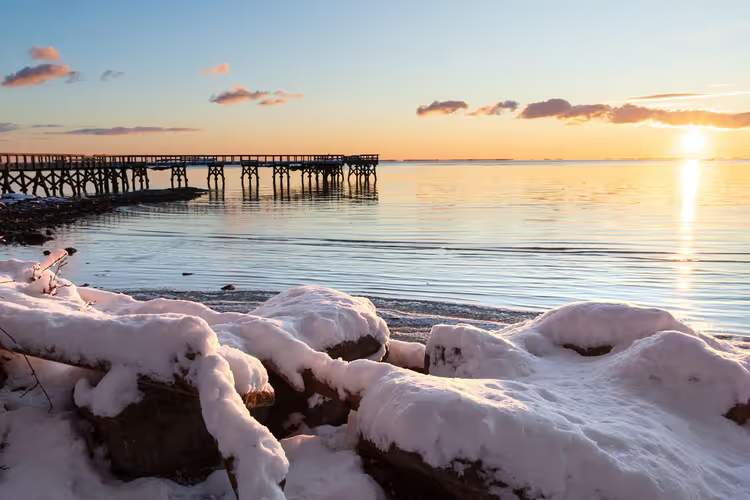
Bay of Fundy: 16-meter tides and minke whales off the coast of Canada
The Bay of Fundy completely changes shape twice a day. The water recedes for kilometers, exposing the ocean floor, and half a day later returns as a wall the height of a five-story building.
The tidal range here reaches 16 meters, a world record (as of 09/2026, NOAA).
Below, we break down how this mechanism works, where to watch the tide, and when to come for the whales. If you are planning your trip in advance, you will find verified data and practical guidance here.
Ad: this article contains affiliate links, we earn a commission if you book through them, at no extra cost to you.
How the world's highest tides work
💡 In short:
- The tidal range in the upper bay reaches 16 meters, a world record (as of 09/2026, NOAA tide forecast).
- Water flows in and out twice a day: about 100 billion tons pass through the bay in a single cycle (according to Bay of Fundy Tourism).
- The best season for minke whales runs from July through September (as of 09/2026, New Brunswick tourism office).
- Tide heights and whale season: 09/2026, verified on the official Bay of Fundy website.
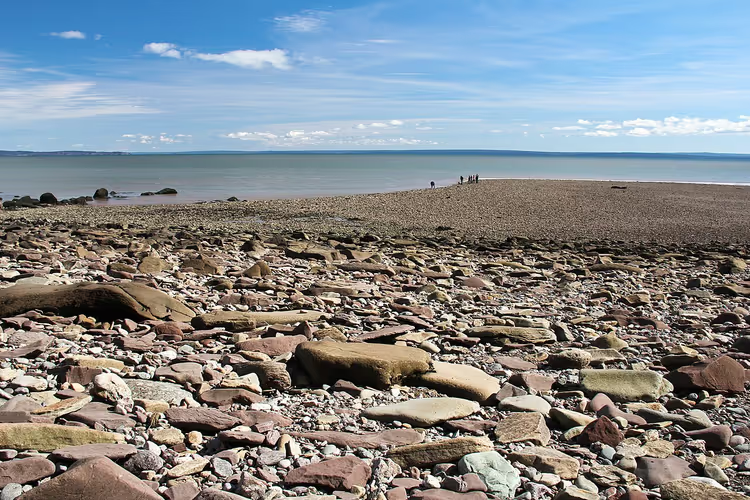
Finding the bay is easy: it lies between the Canadian provinces of New Brunswick and Nova Scotia, and its southern part touches the state of Maine. At first glance, there are only boulders, a narrow strip of beach, old yachts, and fishermen.
 © cjuneau · CC BYPhoto: cjuneau, CC BY (https://creativecommons.org/licenses/by/2.0), Wikimedia Commons
But come back to the same spot twelve hours later, and the landscape will be gone. Billions of tons of water will cover the lowlands and beaches, and the wave-polished rocks will turn into small islets.
The difference between high and low water in the upper bay reaches sixteen meters (as of 09/2026, data from the US NOAA service). For comparison, the average tidal range of the world ocean is about one meter.
The reason for the record lies in the shape of the shore. The bay narrows toward its head and works like a funnel: water from the Atlantic enters the narrow throat, and the oscillation amplifies itself.
You can compare the bay with other places in the country using the overview of Canada's attractions.
Where the water goes
The water does not vanish without a trace: the ocean takes it and brings it back along the same route twice a day. The scale is set by the size of the water body.
The bay's coastline stretches roughly 280 kilometers, and its depth exceeds 200 meters in places (according to the Bay of Fundy guide). About six hours pass between high and low water, so plan your walk on the seabed with time to spare.
 © Dennis G. Jarvis · CC BY-SAPhoto: Dennis G. Jarvis, CC BY-SA (https://creativecommons.org/licenses/by-sa/2.0), Wikimedia Commons
The highest tide ever recorded here was in 1869: the water rose 21.6 meters (as of 09/2026, FORCE). The average spring tide in the Minas Basin is around 14.5 meters.
Two major rivers flow into the bay. The St. Croix River forms the border between the state of Maine and the province of New Brunswick. The Saint John River forms part of the border between the US and Canada).
The upper part of the bay, the Minas Basin, widens to nearly forty kilometers, and this is where the tidal range is greatest (according to Britannica).
The patterns of the coastal cliffs and their coloring took hundreds of millions of years to form.
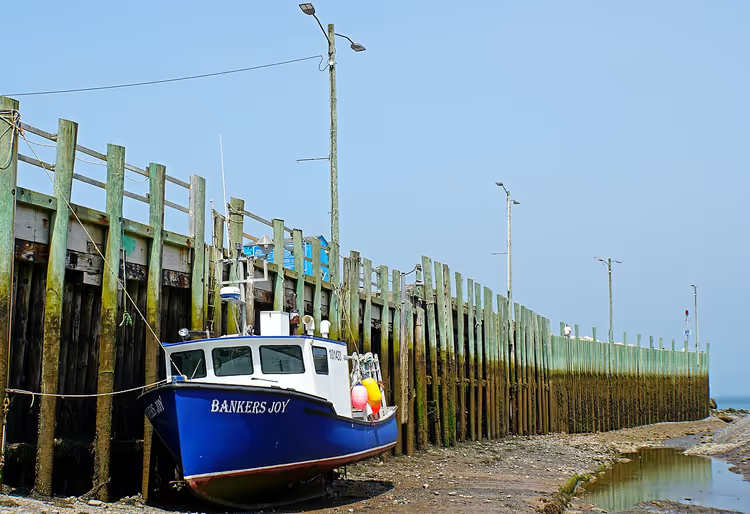
At low tide the seabed is exposed for several kilometers, and you can walk on it all the way to the waterline. You can't linger: the returning tide comes in fast and cuts off your way back.
Fishing and the region's major port
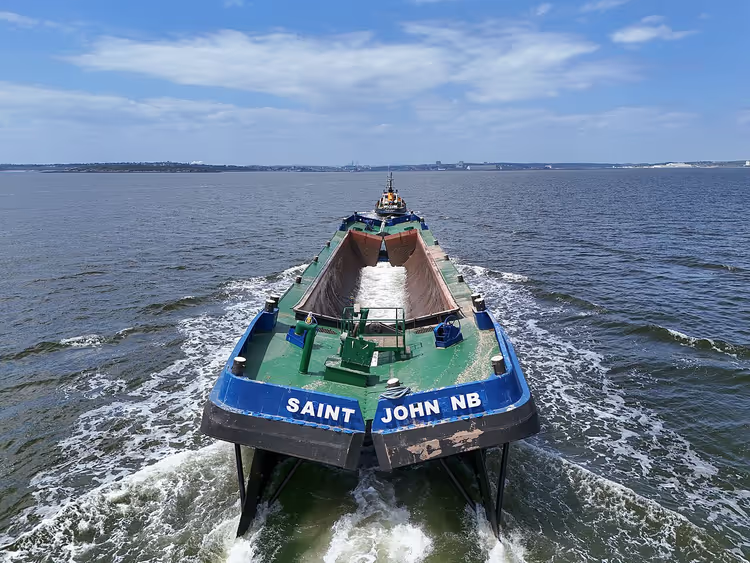
If you enjoy fishing, you'll love this bay. The region's largest port is in the city of Saint John, and a significant part of the local economy depends on it.
 © Quintin Soloviev · CC BYPhoto: Quintin Soloviev, CC BY (https://creativecommons.org/licenses/by/4.0), Wikimedia Commons
The sharp water movements lift nutrients from the bottom. Along with the waves, food for fish, whales, and birds rises to the surface, which keeps the bay's ecosystem rich.
Nutrients rise even from the deepest parts of the water, and fish stay near the shore year-round. Because of the constant tides, fishing and port operations are more developed here than in neighboring bays.
Taking a boat out to quiet spots turns an ordinary fishing trip into a real adventure. The catch depends on the tide, so it's best to check departure times locally.
Tidal energy in the bay
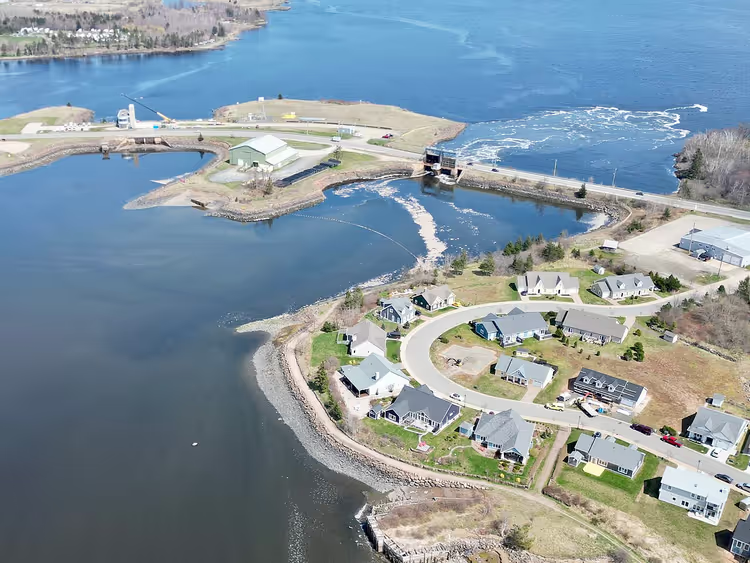
Tidal energy seems like an obvious use for the bay, but the story turned out to be more complicated. North America's first tidal power station, Annapolis Royal, was launched in 1984 with a capacity of 20 MW (as of 09/2026, CBC).
 © WayeMason & John Van Gurp · CC BY-SAPhoto: WayeMason & John Van Gurp, CC BY-SA (https://creativecommons.org/licenses/by-sa/4.0), Wikimedia Commons
The station operated for several decades and has now been decommissioned: the equipment wore out, and the return on investment proved low. In its place, the FORCE center now operates in the bay, testing next-generation underwater turbines (according to the FORCE center).
The region's tidal potential is estimated at tens of thousands of megawatts. However, salt water and powerful currents require special materials, and that is the main reason there are so few such stations in the world.
So for now the bay remains more of a testing ground than an energy source for the country.
Minke whales and whale watching
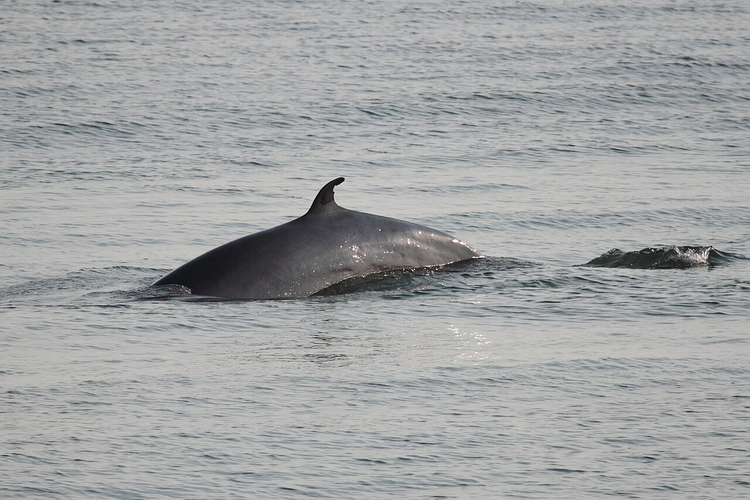
One of the bay's main attractions is the minke whale. These are small, friendly whales that often come close to boats.
 © Cephas · CC BY-SAPhoto: Cephas, CC BY-SA (https://creativecommons.org/licenses/by-sa/3.0), Wikimedia Commons
In total, up to twelve whale species are found in the bay's waters, including humpbacks, fin whales, and rare North Atlantic right whales (according to Bay of Fundy). Minke whales are not afraid of boats and come in close, so even a short trip usually gets you good photos.
The peak whale-watching season runs from July through September, and boat tours depart from St. Andrews, Digby, and Grand Manan (as of 09/2026, official provincial tourism office).
Early in the morning, thick fog hangs over the water, and the bay looks completely different. This is the best time for whale photography: the water is calmer and the light is softer.
Bay of Fundy on the map
The bay stretches along the Atlantic coast of Canada. The map below shows its boundaries and the nearest towns.
Use Saint John and Digby as your reference points: they are convenient bases for planning your route to the shore.
⁉️🤔 Frequently asked questions
Why are the tides in the Bay of Fundy the highest in the world?
Besides the shape of the shoreline, resonance plays a key role. It amplifies the movement of water entering the bay from the Atlantic.
When is the highest tide in the bay?
The greatest difference between high and low water occurs during spring tides, which coincide with the new moon and full moon. Check the tide table for your specific harbor for exact times.
Can you walk on the ocean floor at low tide?
Yes, but plan your walk so you return before the tide comes in. The floor is covered in sticky mud, so wear waterproof footwear and stay close to your group.
When is the best time to go whale watching?
Boat tours run outside the peak season too, but sightings are less likely then. Mornings are usually calmer in terms of wind.
What else is worth seeing near the bay besides the tides?
Besides the tides, take time to see the cliffs with exposed rock layers that are hundreds of millions of years old. The Minas Basin has wide mudflats, and from the water you can spot minke whales. If you are traveling with children, choose gently sloping sections of the shore and stay well back from the water's edge.
In short: what to book
A trip to the Bay of Fundy revolves around two things: the tides and the whales. If you want to see the bay from the water, book a boat tour in advance, as spots fill up quickly in summer.
The easiest way to see the bay from the water is on a boat tour: browse options on GetYourGuide. For walking on the ocean floor, bring rubber boots and check the tide table.
Tide times shift every day, so plan your day at the bay around the tide table. If whales are your goal, head out to sea early.

A small editorial team writing guides for independent travel. We travel ourselves, but we haven’t been everywhere, so we check prices, opening hours and how to get there against official sources.