
















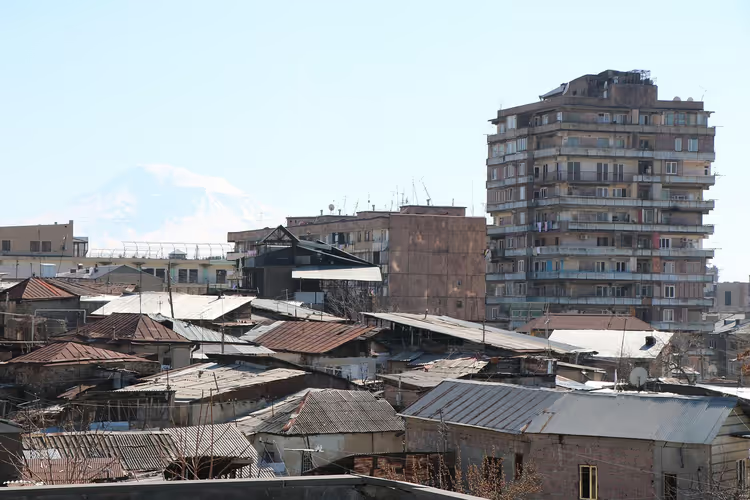
Excursions from Yerevan: twenty routes around the city and Armenia
One day in Yerevan can easily turn into a route across the whole country. The city lies in the Ararat Valley, and the main landmarks are within two to three hours' drive. We've put together twenty tours: from a short walk around the center to a long trip to Tatev.
In this selection you'll find the format, duration, and practical details of each route. That way you'll understand whether to take a group tour or a private trip with a guide at a time that suits you. Below, for each route, we've noted what's included in the program and who it's for.
Ad: this article contains affiliate links. We earn a commission if you book through them, at no extra cost to you.
How to choose a tour in Yerevan
💡 In short:
- Group tours are cheaper and run on a schedule; private tours adapt to your pace.
- Long-distance routes take a full day, so plan them at the start of your trip.
- Wear closed-toe shoes: monasteries have stone, steps, and dirt paths.
- Prices and opening hours: 09/2026, verified on the Wings of Tatev website and the Matenadaran website.
Choose the format based on your time and who you're traveling with. Below is a cheat sheet for the main options.
If you have | Take | How long it takes |
|---|---|---|
one free day | Garni, Geghard, and Sevan | eight to nine hours |
half a day | a sightseeing walk around the center | four to five hours |
a day for the mountains | Tatev and Khndzoresk | all day, from early morning to evening |
an interest in wine | Areni, Noravank, and Khor Virap | six to seven hours |
Below are twenty routes, including both short walks and long trips. Pay attention to duration and season: that determines how many sites you can fit into a day.
1. Lake Sevan, pagan Garni, and the cave monastery of Geghard
 © Beko · CC BY-SAPhoto: Beko, CC BY-SA (https://creativecommons.org/licenses/by-sa/4.0), Wikimedia Commons
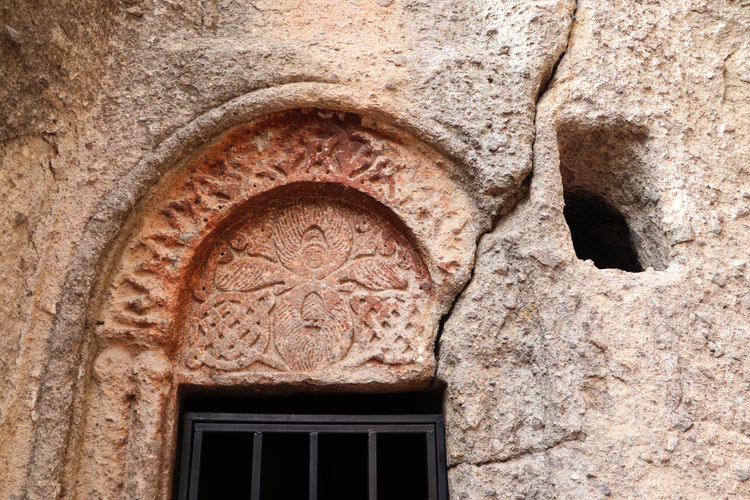
The first route introduces you to three symbols of the country at once. The road passes the village of Garni, where the only pagan temple in Armenia stands on a rocky outcrop.
Garni was built in the first century AD and dedicated to the sun god Mithra. A seventeenth-century earthquake destroyed the sanctuary, and in the twentieth century the colonnade was reassembled from the surviving blocks.
Next you descend to Geghard Monastery, carved into the cliffs of the gorge. The day ends at Sevan: fresh water, ridges along the shore, and a viewpoint at Sevanavank.
- Getting there: from Yerevan to Garni is about thirty kilometers, then up the gorge to Geghard.
- Who it's for: if you have only one free day, this route gives you the most impressions.
- The catch: the program is packed; by evening you'll have spent several hours in the car.
- tickets for tours in Armenia on GetYourGuide
2. The bright colors of Yerevan
The evening walk takes about three hours and doesn't require leaving the city. The guide leads you through the old quarters, where houses made of pink tuff have been preserved.
Main stops: the Cascade with its panorama, one of the old churches below it, and Republic Square with the Singing Fountains. The finale is dinner at a national cuisine restaurant, so come hungry.
- When to go: in the evening, when the Singing Fountains are turned on.
- Who it's for: a good fit if you're passing through Yerevan and want to see the city without rushing.
- The catch: climbing the Cascade is tough in the heat; bring water.
3. Tasting and history tour of Yerevan and its surroundings
 © Diego Delso · CC BY-SAPhoto: Diego Delso, CC BY-SA (https://creativecommons.org/licenses/by-sa/4.0), Wikimedia Commons
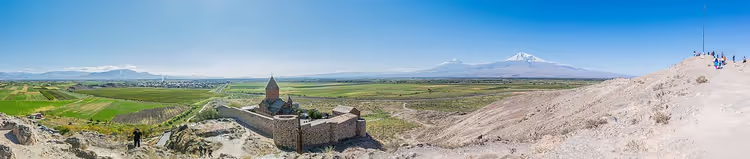
The eight-hour bus trip starts in the city and ends at a table in a country house. The first major stop: Khor Virap Monastery near the border with Turkey.
Here, according to tradition, Gregory the Illuminator spent thirteen years in a pit. From the monastery walls you can see Ararat, and in clear weather the peak is fully visible.
In the evening you'll have dinner with homemade wine, and if you like, you can stay overnight.
- Getting there: the route starts in Yerevan and heads south toward the border with Turkey.
- Who it's for: those who want not only to see but also to talk with locals.
- The catch: the day is long, and between stops you're in the car almost the whole time.
4. Trip to Khor Virap and Noravank monasteries
 © Soghomon Matevosyan · CC BY-SAPhoto: Soghomon Matevosyan, CC BY-SA (https://creativecommons.org/licenses/by-sa/4.0), Wikimedia Commons
A short six-hour trip introduces you to two monasteries and a wine village. At Khor Virap the road comes close to Ararat, and you'll see the biblical peak without a long climb.
Khor Virap stands on the site of a medieval prison. Its main point: a deep pit where Gregory the Illuminator was held, with cells and service buildings preserved around it.
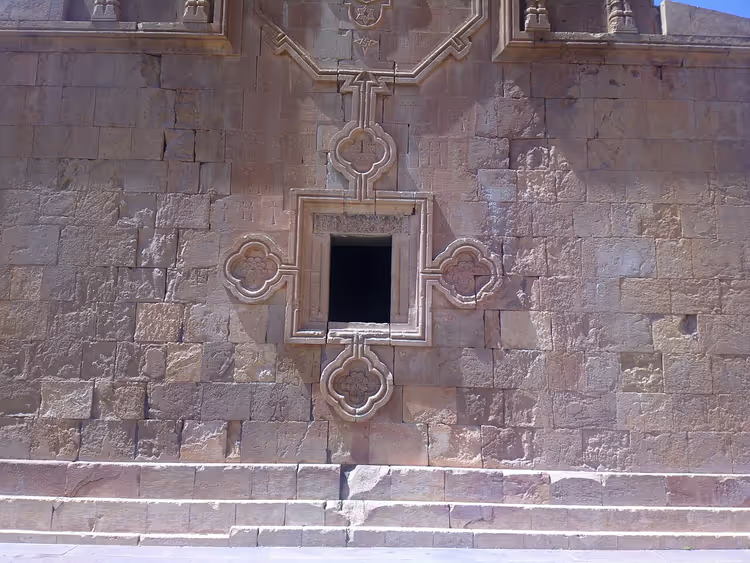
Next is Noravank, set against the red cliffs of the Arpa River gorge. The monastery was built in the thirteenth century, and the sculptor Momik worked on the carvings; a legend about the monastery's founding is tied to his name.
- Getting there: both monasteries lie south of Yerevan; the road runs through the Ararat Valley.
- Who it's for: if you have little time but want to see Ararat up close.
- The catch: over six hours, most of the time is spent on the road.
5. Discover the natural beauty of Armenia
The eight-hour trip heads north, into the gorges of Dzoraget and Debed. Along the way you cross the pass that Pushkin described in "A Journey to Arzrum."
The main stop: the Dzoraget canyon with sheer cliffs and a river at the bottom. Then the Lori gorge, Greek and Armenian villages, and the climb to two monasteries on the banks of the Debed.
Both monasteries date back to the tenth century, and nearby khachkars are carved into the rocks. The guide will explain how they differ and why they were erected. Lunch at a local spot is included in the program.
- Getting there: the route heads north from Yerevan; part of the road runs along switchbacks.
- Who it's for: nature lovers and fans of long walks among the rocks.
- The catch: the day is long, and the paths near the viewpoints are steep and slippery after rain.
6. Sightseeing tour of Yerevan
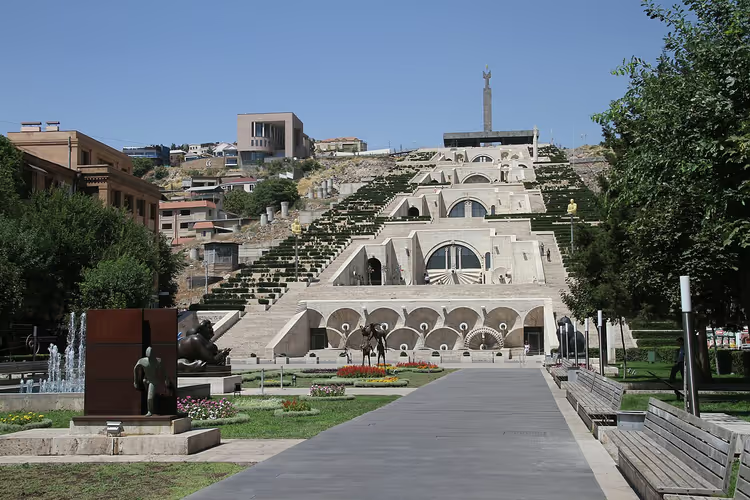 © Gerd Eichmann · CC BY-SAPhoto: Gerd Eichmann, CC BY-SA (https://creativecommons.org/licenses/by-sa/4.0), Wikimedia Commons
A leisurely walk takes about four and a half hours and covers the city's main sights. You'll see the Cascade, Matenadaran, Victory Park, and the Armenian Genocide memorial.
Matenadaran houses ancient manuscripts in Armenian, Greek, and Arabic. The museum is open Tuesday through Saturday, with Sunday and Monday as days off (as of 09/2026, verified on the museum's official website).
In the New City you'll walk along Northern Avenue and see buildings made of multicolored tuff. The Cafesjian Center for the Arts holds a collection of contemporary Armenian art.
- How to get there: most of the walk is on foot through the center; the Genocide memorial requires a short transfer.
- Who it's for: if you're in Yerevan for the first time and want to get a feel for the city in one day.
- The catch: the route is long, and your legs will be tired by evening.
7. Sevan and Dilijan: Armenia's stunning nature
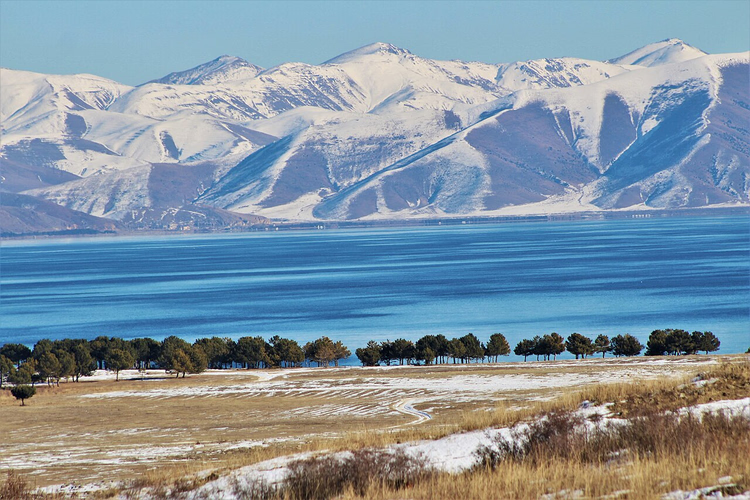 © ՎԱՍ · CC BY-SAPhoto: ՎԱՍ, CC BY-SA (https://creativecommons.org/licenses/by-sa/4.0), Wikimedia Commons
This five-hour tour suits those who want to see the lake and forest without a long journey. Sevan is the largest lake in the Caucasus, with more than twenty mountain rivers flowing into it.
On the shore stands a monastery built of black tuff, with mountain ridges rising all around. Then you head to Dilijan with its lakes and old center.
In the town you'll stroll along picturesque streets.
- How to get there: it's about an hour's drive from Yerevan to Sevan, then further east to Dilijan.
- Who it's for: those who want an easy route without long hikes.
- The catch: in five hours you'll see both the lake and the town only in overview, with no time left for the beach.
8. Lake Sevan, ancient monasteries, ethnic workshops
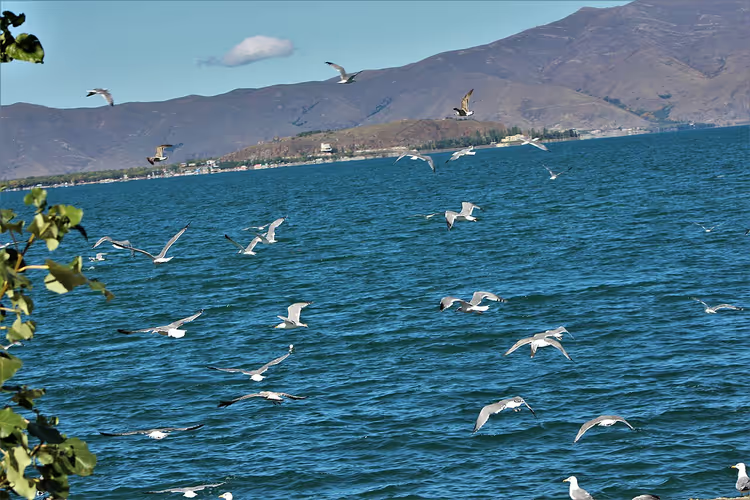 © ՎԱՍ · CC BY-SAPhoto: ՎԱՍ, CC BY-SA (https://creativecommons.org/licenses/by-sa/4.0), Wikimedia Commons
This ten-hour driving tour heads into the highlands. You climb up to Sevan, then descend into forested areas where old monasteries stand.
Part of the program is taken up by workshops run by local families. You'll learn a traditional craft, and the atmosphere here is calmer than in city museums. Views of water, pine forests, and stone temple walls are combined in a single route.
- How to get there: by car only; the road follows mountain switchbacks.
- Who it's for: if you're interested not just in scenery but also in crafts.
- The catch: ten hours on the road is tough with small children.
9. The main Christian sites of Armenia. Etchmiadzin and Zvartnots
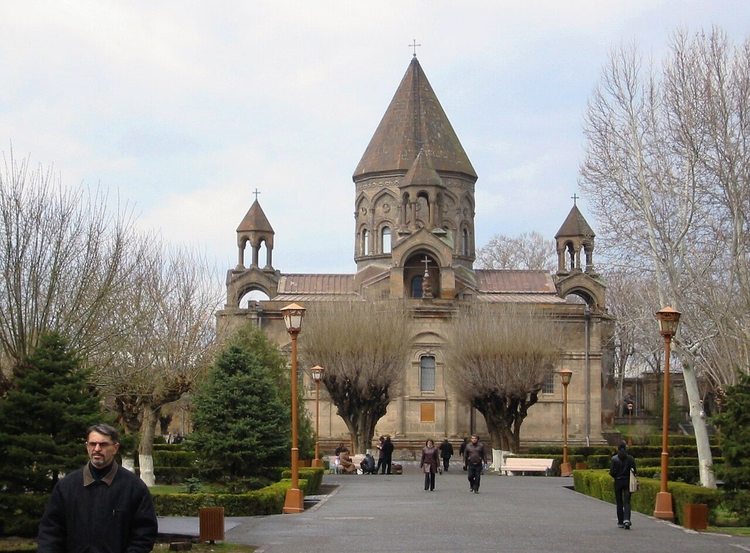 © Unknown author · CC BY-SAPhoto: Unknown author, CC BY-SA (https://creativecommons.org/licenses/by-sa/2.0/de/deed.en), Wikimedia Commons
A drive through the Ararat Valley leads to two UNESCO sites. Zvartnots, or the Temple of Vigilant Angels, was destroyed by an earthquake and is now a museum-reserve with partially restored tiers.
Etchmiadzin is home to the residence of the Catholicos of All Armenians and the cathedral. It is the spiritual center of the Armenian Apostolic Church, where pilgrims come from all over the world.
The cathedral has a museum with relics and church utensils, and a gallery is open nearby in the building of the former seminary.
- How to get there: both sites lie west of Yerevan, the drive takes under an hour.
- Who it's for: if the history of Christianity matters to you and you want to see the country's religious center.
- The catch: the program is short, with no time left for exploring the city on your own.
- Etchmiadzin tours on GetYourGuide
10. The best way to discover Armenian cuisine
 AIIllustrative image: AI-generated
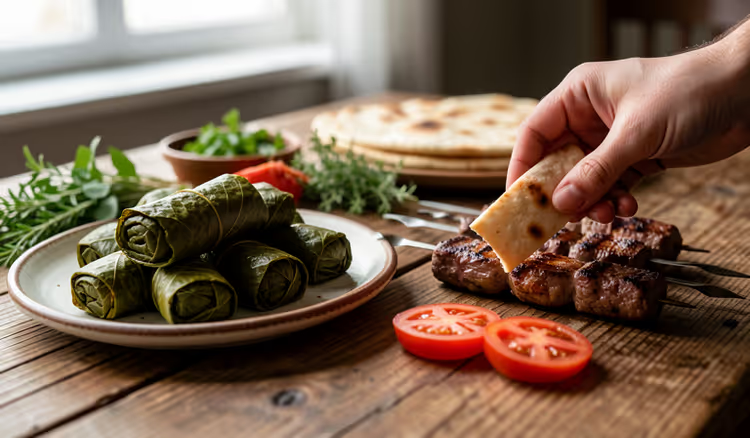
The food day starts at a market in Yerevan. You sample cheeses, pickles, and spices while the guide explains what locals cook with them at home.
Then it's on to a country house, where you cook dolma and khorovats barbecue together with the host. Along the way the guide stops at a winery with a tasting, so it's best not to be the driver that day.
It all ends with a shared table. Dishes like kyalagyosh and baskirtat are unlikely to turn up in an ordinary restaurant, and after the masterclass you'll be able to recreate them at home.
- Duration: about ten hours, plan for the whole day.
- Who it's for: people who love cooking and are willing to try unfamiliar things.
- The catch: you spend several hours in the car between the market, the winery, and the house.
11. Khor Virap, Noravank, and Areni: the best of southern Armenia
 © Soghomon Matevosyan · CC BY-SAPhoto: Soghomon Matevosyan, CC BY-SA (https://creativecommons.org/licenses/by-sa/4.0), Wikimedia Commons
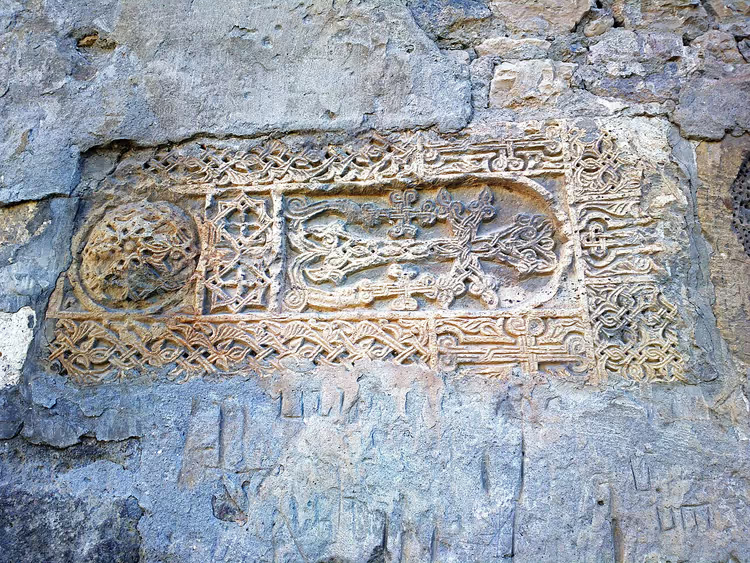
Southern Armenia is known for its vineyards and red cliffs. In the village of Areni there's a winery where you'll taste several local wine varieties.
Nearby is the entrance to the Birds' Cave, with finds over four thousand years old. Khor Virap stands by the Araks River right on the border, and a narrow road leads to Noravank.
Along the way you see plantations and grottoes, and the guide explains how southern grape varieties differ from northern ones.
- How to get there: the route heads south through the Ararat Valley, then into the mountains to Noravank.
- Who it's for: if you want to combine wine, history, and scenery in one day.
- The catch: the drive back takes several hours, so you'll get home late.
12. The pagan temple of Garni and Geghard Monastery
 © Diego Delso · CC BY-SAPhoto: Diego Delso, CC BY-SA (https://creativecommons.org/licenses/by-sa/4.0), Wikimedia Commons
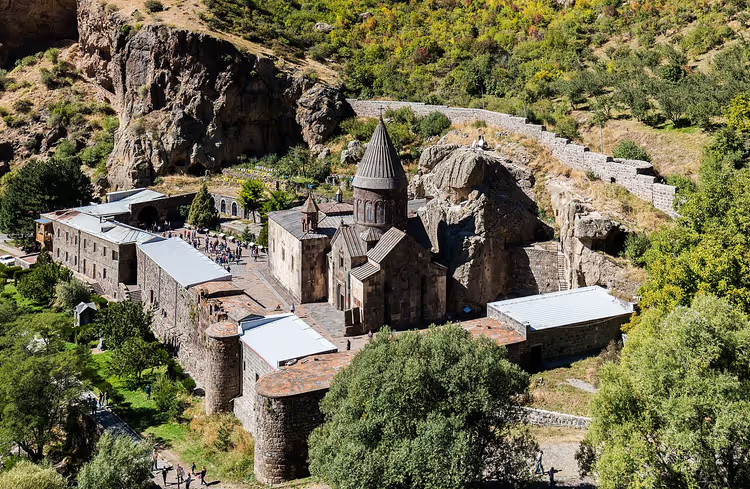
This trip is dedicated to two shrines: the pagan Garni and the Christian Geghard. The temple is built from basalt blocks without mortar, and its colonnade follows Hellenistic models.
A staircase leads up to the temple from the road, and the plateau opens onto the Azat River gorge with basalt walls. The guide will tell you who started the construction and how the monument was restored after the earthquake.
Geghard Monastery is carved directly into the rock. According to tradition, the spear of Longinus was kept here, which is why the site is named "monastery of the spear." The complex is a UNESCO World Heritage Site and remains active.
- Cost: a ticket is needed only for Garni, check the price at the ticket office; entry to Geghard is free.
- Who it's for: those who want to see both major monuments in one day.
- The catch: you're in the car the whole time between sites, with almost no time to explore on your own.
- Garni and Geghard tours on GetYourGuide
13. Culture and heritage of Yerevan
An eight-hour journey through the city focused on history, daily life, and traditions. The guide builds the narrative around specific buildings rather than dry dates.
The evening part takes place at Republic Square and the Singing Fountains. You'll see the main structures of the center and hear how the city has changed over the past century.
The walk suits those who have already seen the Cascade and want more context.
- How to get there: the route runs through the center, with part of it on foot.
- Who it's for: if you're interested in city stories and architecture, not just panoramas.
- The catch: eight hours on your feet, so wear comfortable shoes.
14. The road to the temple: on Christianity and art
This educational program connects religion, history, and art. You'll visit old churches and the city's modern cultural centers.
The list includes the Blue Mosque, the Cascade, the cathedral, a thirteenth-century chapel, and the Church of the Holy Mother of God Zoravor. A separate stop: the Matenadaran with its manuscript collection.
If you choose the Museum of Modern Art, you'll see works by renowned twentieth-century sculptors and painters.
- How to get there: all the stops are in the center, and you move on foot with short transfers.
- Who it's for: those who enjoy unhurried storytelling and museum halls.
- The catch: there are many sites, so little time is left for each one.
15. A journey to the cave city and Tatev Monastery
 © Alexander Naumov · CC BYPhoto: Alexander Naumov, CC BY (https://creativecommons.org/licenses/by/3.0), Wikimedia Commons
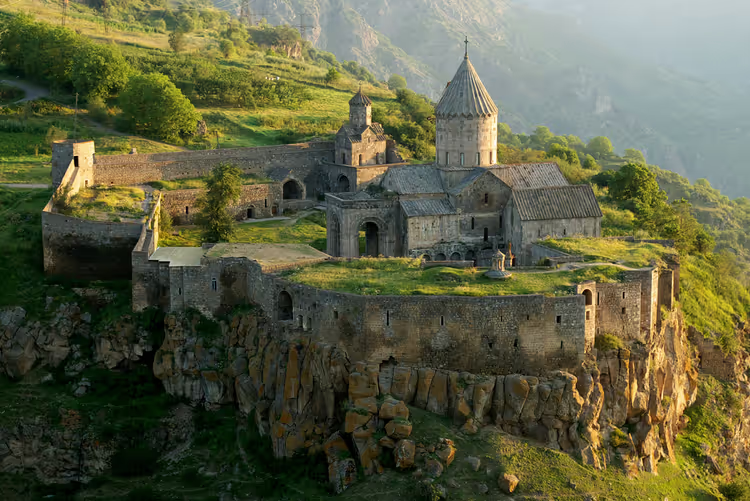
The farthest route in this selection heads to the south of the country. First stop: Khndzoresk, a cave city on a mountainside where dwelling entrances hang in tiers.
A suspension bridge crosses the gorge. Next comes the Wings of Tatev cable car: almost six kilometers, about twelve minutes in transit, and the maximum height above the gorge. The cable car operates year-round: in summer from 9:00 to 20:00, in October and April from 10:00 to 18:00, in May and September from 10:00 to 19:00 (as of 09/2026, tatever.am). Outside the high season, Monday is a day off.
Tatev Monastery was founded in the ninth century and is considered the spiritual center of the region. The day ends at mineral springs and a natural bridge over the Vorotan.
- How to get there: the drive from Yerevan takes several hours, with part of the route on winding mountain roads.
- Who it's for: those willing to put in a long day for the mountains and the cable car.
- The catch: the day starts early in the morning and ends late in the evening.
- Tatev tours on GetYourGuide
16. A photo walk through the Pink City
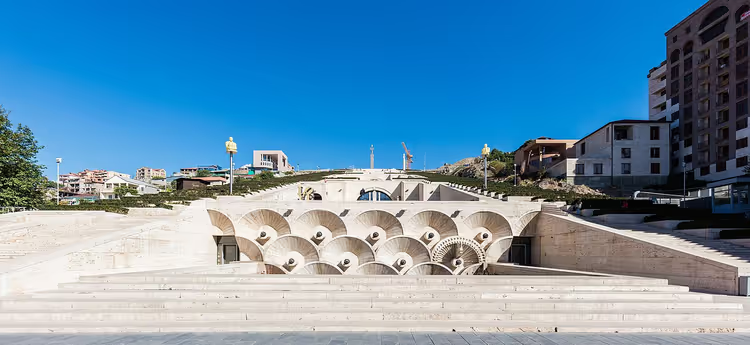 © Diego Delso · CC BY-SAPhoto: Diego Delso, CC BY-SA (https://creativecommons.org/licenses/by-sa/4.0), Wikimedia Commons
The three-and-a-half-hour walk is designed for those who want to come back with great shots. The route runs along pink tuff facades, through courtyards from different eras, and up to viewpoints.
You'll visit Vernissage, Republic Square, and the Cascade. The itinerary also includes less obvious spots: an old apartment building entrance, a carpet shop, and an artist's studio.
This will help you understand why the city is called pink.
- Getting there: the walk takes place entirely in the center, no transport needed.
- Who it's for: if you love urban photography and want to see Yerevan through a local's eyes.
- The catch: the best light is in the morning and at sunset; midday shots come out harsher.
17. Wine tour: Khor Virap, Areni, and Noravank

The day is dedicated to wine and monasteries.
In the village of Areni, a family of winemakers welcomes you. The hostess demonstrates their home technique and offers several varieties to taste, telling you about each one individually.
The road along the valley runs through mountain scenery, so you won't be bored looking out the window.
- Getting there: the route heads south from Yerevan, then up into the mountains to Noravank.
- Who it's for: those who want not only to taste wine but also to see how it's made.
- The catch: the tasting starts in the afternoon, so it's best not to be driving that day.
- wine tastings in Areni on GetYourGuide
18. Armenian dessert cooking class
 AIIllustrative image: AI-generated
This short three-hour class takes place in the city. You'll learn how pakhlava, gata, and nazook are made, and you'll try making one dessert yourself.
The guide acts as a pastry chef and explains the proportions and the sequence of steps. At the end, you'll enjoy coffee with what you've made.
This way you'll take home a skill rather than a souvenir.
- Getting there: the class is held in the center, you get there on your own.
- Who it's for: works well for families with children, since the class is indoors and involves no long transfers.
- The catch: there are no views or walks in the program; this is an activity for a rainy day.
19. Little Switzerland in Armenia
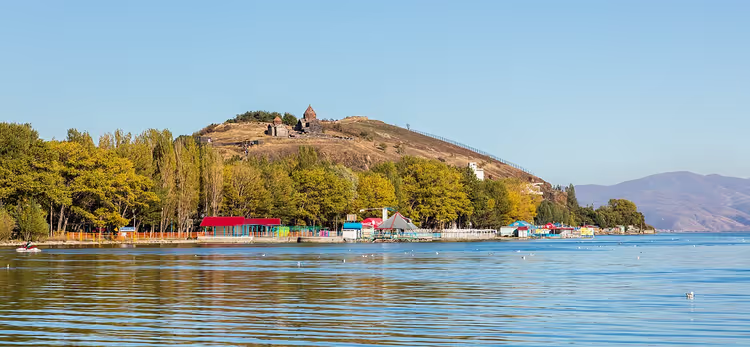 © Diego Delso · CC BY-SAPhoto: Diego Delso, CC BY-SA (https://creativecommons.org/licenses/by-sa/4.0), Wikimedia Commons
The eight-hour trip covers Lake Sevan and Dilijan National Park. At Sevan you stop at Sevanavank Monastery, where you can see almost the entire surface of the lake.
In Dilijan, the wooded slopes and gorges really do resemble Switzerland. Near the town stand Haghartsin and Goshavank monasteries, each with its own story recorded in chronicles and legends.
The road crosses a mountain pass, so the scenery changes every half hour.
- How to get there: the route heads east from Yerevan, with part of the journey crossing a pass.
- Who it's for: those who want to see green Armenia, not just rocks and mountains.
- The catch: the day is long, and little time is left for lunch and walks.
20. Six types of Armenian churches and their secrets
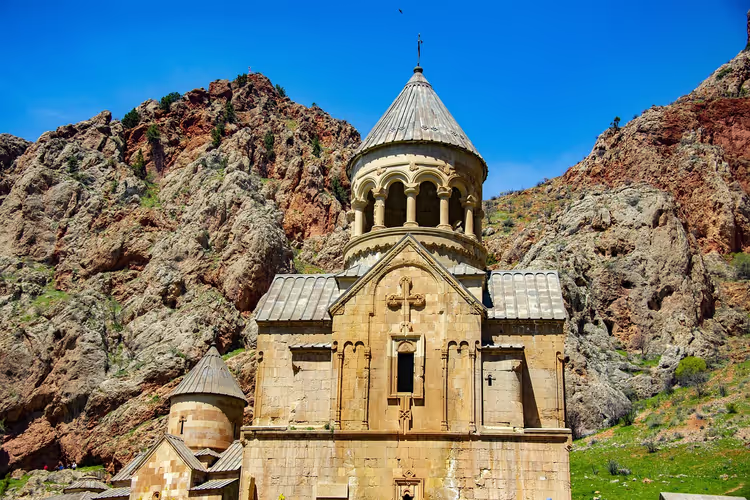
The final route in this selection takes you to six monasteries from different eras. The guide shows how basilicas, domed halls, and cross-domed churches differ.
Along the way you pass mountain villages and see the ruins of a princely palace. Seventh-century churches stand on the slopes of the extinct volcano Aragats.
The trip ends in a local resident's garden, where you can try fruit straight from the trees.
- How to get there: the route heads west and north from Yerevan, with mountain roads in places.
- Who it's for: those who want to actually understand Armenian architecture, not just photograph facades.
- The catch: there are many churches, and little time is left for each one.
If you'd rather pick a ready-made route with reviews and available dates, check out the cards below.
Tours and tickets in Yerevan
Guided tours, skip-the-line tickets and activities — most offers can be cancelled free of charge.
See offers on GetYourGuideThe widget loads once you give your consent.
⁉️🤔 Frequently asked questions
How many days do you need to see Armenia's main landmarks?
Three to four days. In one day you can realistically cover Garni, Geghard, and Sevan, or take a trip to Khor Virap and Noravank. Set aside a separate day for Tatev and Khndzoresk, and one more for Dilijan with an overnight stay. That way you won't spend your entire vacation in the car.
Is one trip enough to see Sevan and Dilijan?
Yes, there are five- and eight-hour routes that combine the lake and Dilijan. Keep in mind that in one day you'll see the main spots, but there won't be time for swimming or long walks. For a relaxed stay by the lake, it's better to set aside a separate day.
What should I bring on a monastery trip?
Comfortable shoes with non-slip soles, water, and a hat. Monasteries have stone floors and uneven paths; in summer it's hot on the plateau and cool in the gorges. Active churches ask visitors to cover their shoulders and knees, so bring a light wrap.
When is the best time to go to Tatev and Sevan?
The cable car runs year-round, but outside high season it's closed on Mondays. At Sevan the water stays cool even in hot weather; people mostly swim in July and August. For a Tatev trip, pick clear days, otherwise clouds will block the gorge panorama.
Do I need a guide or can I go on my own?
Garni, Geghard, and Khor Virap are easy to reach by taxi or rental car. Tatev and the mountain monasteries are trickier: there are long stretches and confusing roads. A guide saves time, explains the context, and handles the logistics, so for longer routes a guide is more useful.
In short: what's worth booking
If you have one day, go for Garni, Geghard, and Sevan. If wine is more your thing, choose Khor Virap, Areni, and Noravank. For great photos, an evening walk through the center is enough, and for the mountains set aside a separate day for Tatev.
Longer routes take a full day, so schedule them at the start of your trip while you're still full of energy. Tours with transfer from Yerevan on GetYourGuide solve the transportation and guide question in one go.

A small editorial team writing guides for independent travel. We travel ourselves, but we haven’t been everywhere, so we check prices, opening hours and how to get there against official sources.