
















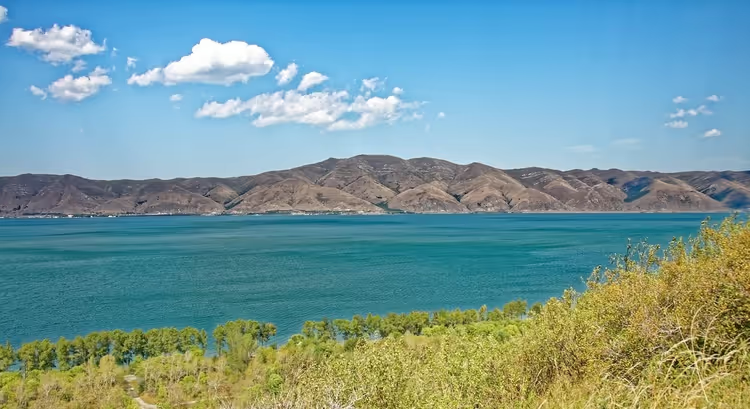
Sevan along the shores: monasteries, whitefish and the road to Dilijan
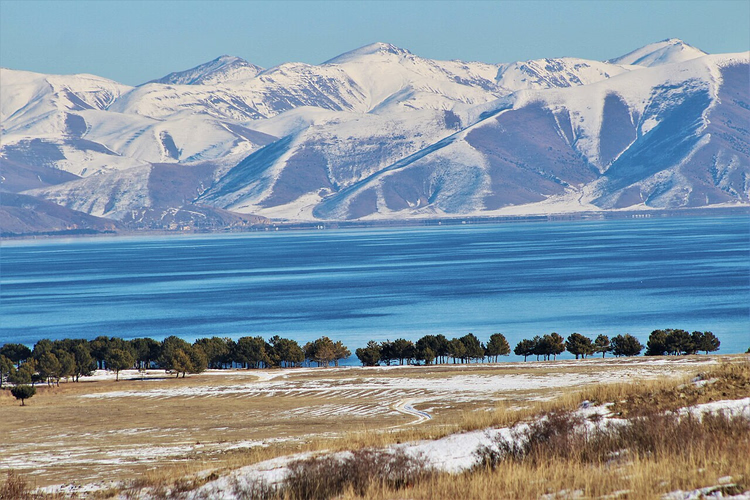
Sevan is visible from the road long before you reach the shore. A blue strip of water lies at 1,900 meters above sea level (as of 09/2026, Wikipedia). Sevan is called the largest lake in the Caucasus and one of the largest high-altitude lakes in Eurasia. The reservoir covers about 1,240 square kilometers, and its basin spans roughly one sixth of the country's territory (as of 09/2026, the official Sevan National Park website).
From Yerevan to the shore is about 65 kilometers on the map. The drive takes between one and two hours. A minibus costs pennies, but it goes to the town of Sevan, not to the peninsula. A taxi will take you straight to the monastery and will ask for several times more money.
Below is a practical route along the shores: how to get there, where to eat Sevan whitefish, what to see at Sevanavank and Hayravank, and whether it's worth going to Dilijan.
Ad: this article contains affiliate links. We earn a commission if you book through them, at no extra cost to you.
How to get to Sevan from Yerevan
💡 In short:
- A minibus from the Northern Bus Station goes to the town of Sevan; from there it's still several kilometers to the water.
- A taxi from Yerevan takes about an hour and costs several times more than the bus.
- Buses to Dilijan pass along the lake; ask the driver to stop at the shore.
The lake lies in the center of Armenia, in Gegharkunik Province. The most convenient way is from Yerevan; the nearest shore is about 65 kilometers on the map. Below are three options, from the cheapest to the most comfortable.
Bus and minibus
The cheapest way is to take a bus or minibus from Yerevan's Northern Bus Station. The ticket costs within a few hundred drams, paid in cash to the driver.
From there you have two routes. The first goes to the town of Sevan, and here it's important not to confuse things: the town and the lake are not the same, with six kilometers on the map between them. You'll have to walk that or take a local taxi. The second route, the bus to Dilijan, runs along the shore, and you can ask the driver to drop you off at the water.
The catch with public transport is that it depends on how full the bus is, not on a schedule. The buses here are old, and the ride in summer offers few pleasant sensations.
Taxi from Yerevan
A taxi from Yerevan to Sevan takes about an hour and costs several times more than a minibus. The price is fixed in advance, in an app or verbally. For a small group, the cost splits and becomes almost unnoticeable.
Be more careful with private drivers without an app. Tourists are their main source of income, and double rates happen often. Agree on the exact amount before getting in, or order a car through an app.
Organized tour
A one-day tour covers both shores at once. Someone plans the route for you, picks you up from your hotel and brings you back, shows you the monasteries, and leaves time for lunch. For a group, this option is often cheaper than a private taxi.
Tours are sold at Republic Square in Yerevan and at hotels. On the spot, the price is often quoted lower than at an agency, but check the group size and itinerary in advance.
If you're driving your own car, head toward Sevan on the main highway from Yerevan. The asphalt is good, but leaving the city on a Friday evening can mean traffic. On the way back, it's better to return before dark, because part of the road has no lighting. There are enough gas stations along the way, but near popular parking areas in high season they fill up.
 © ՎԱՍ · CC BY-SAPhoto: ՎԱՍ, CC BY-SA (https://creativecommons.org/licenses/by-sa/4.0), Wikimedia Commons
Legends of Lake Sevan
Many stories have been woven around Sevan, and locals are happy to tell them. You'll almost certainly hear at least one on the way.
According to one legend, a girl drew water from a spring and forgot to close it. The water burst out and began flooding the houses. The curse came true, the girl turned to stone, and the stone sometimes appears from the water. It's called Arsnakar, which means "daughter-in-law's stone."
Another legend explains the dark color of the water. A dragon supposedly lived at the bottom, and when it grew old, angels lifted it up to the sun. Ash fell from the sky, and the land was covered in fog for a long time. Historians see this as a memory of an ancient volcanic eruption.
The name is also disputed. It was previously thought that "Sevan" translates as "black monastery," in honor of Sevanavank. Now linguists lean toward a Urartian root, where "Sevan" simply means "lake."
What to see at Lake Sevan
At Sevan, the first thing you look at is the water and the mountains. The lake seems endless, and from a boat it's easy to forget you're not at sea. The water is cold even in summer, but you still feel drawn to swim.
Take a boat trip separately from your visit to the monasteries. Boats and launches wait at the piers right at the exit from Sevanavank. On a short trip you'll see the shore from the water and get your best shots.
Swimming at Sevan is allowed, but the shores here are mostly rocky. Developed beaches stretch along the northern and eastern shores, closer to the town of Sevan and the peninsula. The water only warms up by July, so sunbathing in summer is easier than swimming. Bring shoes for the rocks and a towel; there are almost no loungers anywhere.
Ready-made lake excursions can be booked in advance on GetYourGuide.
What to try: whitefish and ishkhan
Along the shore there are dozens of cafes with water views. For lunch, Gagari Mot and GreenBay Sevan are good choices. At both, fish is the main thing on the menu, not shashlik.
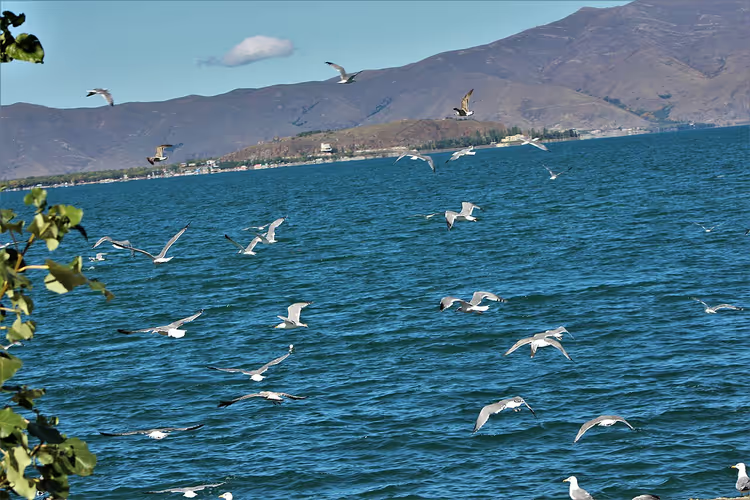
Sevan whitefish is a white fish. It was introduced to the lake in the 1920s from northern Russia and took hold. Today whitefish is fried and smoked in almost every restaurant by the water (as of 09/2026, Sevan guide).
Ishkhan, or Sevan trout, is known as the most delicious freshwater fish in the Caucasus. The name translates from Armenian as "prince." In the wild, this endemic species disappeared due to introduced competitors, and today it is farmed artificially (as of 09/2026, description of Sevan trout).
 © ՎԱՍ · CC BY-SAPhoto: ՎԱՍ, CC BY-SA (https://creativecommons.org/licenses/by-sa/4.0), Wikimedia Commons
Chefs prepare dozens of dishes from whitefish and trout. Grilled fish, smoked fish, fish in salads, meatballs and dumplings, and also lake crayfish. Portions are large, so order a couple of dishes for two and try a little of everything.
Besides fish, menus by the water often feature local cheeses and fresh herbs. Armenian cuisine is generous with mint and cilantro, so the flavors feel brighter than what you may be used to. Order grilled Sevan whitefish and take vegetables as a side, that is when the dish really opens up.
Fishing here is regulated by the state. Commercial whitefish fishing was allowed in 2020 after a long ban, while the Sevan trout remains protected (as of 09/2026, environmental outlet CivilNet). Do not be surprised if the waiter clarifies where the fish came from.
Sevanavank: a monastery on the peninsula
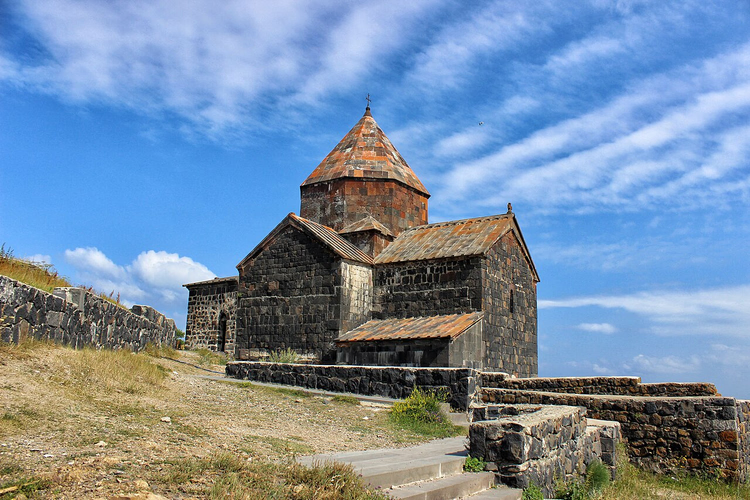
The monastery is reached by 200 steps under the open sun. Sevanavank looks black not from age, but because of volcanic tuff. The complex was founded by Princess Mariam in 874 (as of 09/2026, Wikipedia).
 © Beko · CC BY-SAPhoto: Beko, CC BY-SA (https://creativecommons.org/licenses/by-sa/4.0), Wikimedia Commons
The Sevan peninsula used to be an island in the middle of the lake. The water itself protected the monks from uninvited guests. In the 10th century the monastery had to be defended in a battle against the Arabs, and the victory was declared an act of Providence.
The first monks settled here long before the monastery was founded. Over time a town grew around it, and Sevanavank became an important spiritual center of the region. The observation deck offers the best view of the lake: at the horizon the water merges with the sky, while the shore reads as a thin strip.
There are no monks here anymore, the last one left in 1930 (as of 09/2026, history of Sevanavank). Two 9th-century churches remain, Surb Arakelots and Surb Astvatsatsin. Inside they are modest, which is typical of Armenian religious architecture. Entry is free during daylight hours (as of 09/2026, guide to Sevanavank).
Climb up to the walls closer to sunset. That is when the light falls on the lake from the side and the steps are no longer scorching. Boats wait at the piers below, and this is also where a boat tour starts.
The visit takes about an hour. You will have time to see both churches, walk down to the water, and get back to your car.
Tours and tickets in Lake Sevan
Guided tours, skip-the-line tickets and activities — most offers can be cancelled free of charge.
See offers on GetYourGuideThe widget loads once you give your consent.
Hayravank (Mardakhavnyats): a monastery on the western shore
Hayravank sits about 30 kilometers from Sevanavank on the map. It is also a lakeside monastery from the 9th century, founded around the same years (as of 09/2026, Wikipedia). The western shore is quieter here, and there are noticeably fewer tourists.
A separate road leads to Hayravank from the highway. There are signs, but they are modest, so check the map. Villages with almost no tourist infrastructure surround the area. That is exactly why it is worth coming here if you want to see an ancient monastery without crowds and lines.
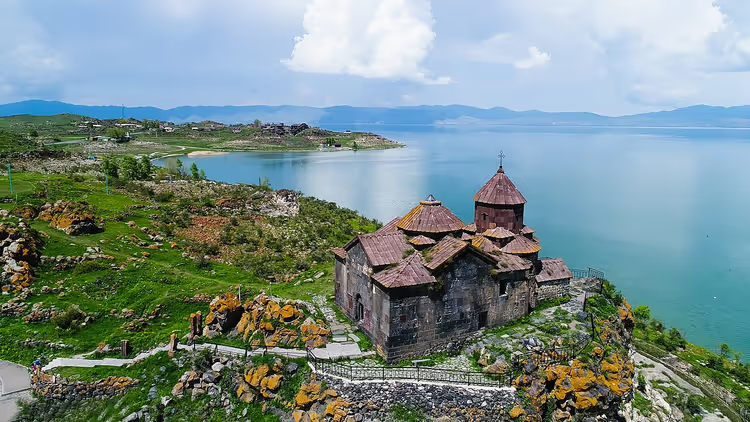 © Vahag851 · CC BY-SAPhoto: Vahag851, CC BY-SA (https://creativecommons.org/licenses/by-sa/4.0), Wikimedia Commons
The building has almost no windows. The rooms are lit only by narrow strips of light, a typical feature of Armenian religious architecture. Old khachkars and the remains of a Bronze Age fortress lie nearby.
The complex has a second name, Mardakhavnyats, which means "man-dove." According to legend, in 1381 thousands of residents took shelter in the church from Tamerlane's troops, and the priest's prayer turned the people into doves (as of 09/2026, Hayravank monastery page). Whether they remained birds, the legend does not say.
The road to Dilijan
Dilijan sits about 30 kilometers from Sevan on the map (as of 09/2026, Rome2rio). The town deserves its own guide, but even the road there is worth the trip.
The highway winds through the hills. Through a tunnel you go from dry steppe into dense forest, and the contrast hits you hard. Snowy peaks flash past the window, then steep slopes covered in green, and that is already Dilijan National Park.
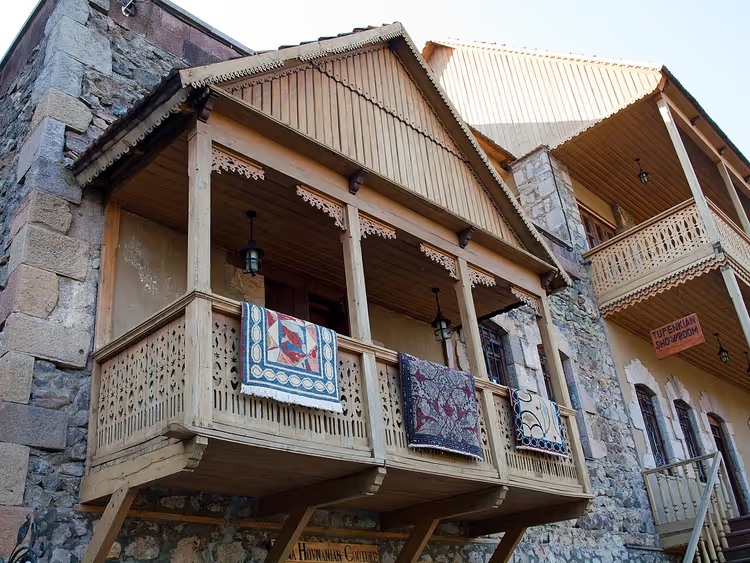 © Shaun Dunphy from Lindfield, United Kingdom · CC BY-SAPhoto: Shaun Dunphy from Lindfield, United Kingdom, CC BY-SA (https://creativecommons.org/licenses/by-sa/2.0), Wikimedia Commons
The road is narrow, and in places cars barely squeeze past each other. If you are short on time, at least drive this stretch and return to the lake. On the map, the drive takes less than an hour one way.
Along the way, it is worth slowing down at the turns with a view of the lake. From there you can see almost the entire bay and the distant ridges beyond it. There are few cafes and gas stations on this stretch, so bring water in advance.
⁉️🤔 Frequently asked questions
How do I get to Sevan without a car?
The easiest way is to take a marshrutka or bus from the Northern Bus Station in Yerevan. They go to the town of Sevan, from where it is still a few kilometers to the water on foot or by taxi. Some buses to Dilijan pass right along the shore, and you can ask the driver to drop you off at the lake.
How much does it cost to enter Sevanavank?
Entry to the monastery grounds and the churches is free. Only the parking lot at the foot of the hill may be paid. Boat rides at the piers are paid separately (as of 09/2026, practical guide to the monastery).
Can you swim in Sevan?
You can swim, but the water stays cold even in the height of summer because the lake lies high in the mountains. There are few developed beaches, and the shores are mostly rocky. The swimming season is short and falls in July and August, when the water warms up a little.
What are sig and ishkhan?
Sig is a whitefish introduced to the lake in the 1920s, and today it is legally fished (as of 09/2026, Wikipedia). Ishkhan, or Sevan trout, no longer occurs in the wild and is farmed artificially. Both are served in restaurants by the water.
Is it worth going to Dilijan on the same day?
Yes, if you have a car or a tour with a driver. Dilijan is about 30 kilometers away on the map, and the drive takes less than an hour through the tunnel. Beyond it opens up a national park with forests and gorges. For the town itself, it is better to set aside a separate day.
In short: what to book
If you are short on time, take a marshrutka and go only to Sevanavank and a boat ride. If you are with a group, split a taxi or book a one-day guided tour, which covers both shores in one go. If you want good food, plan lunch at Gagari Mot or GreenBay Sevan.
Comparing tours along the shores of Sevan is easy on GetYourGuide. The lake is large, and with a guide you will see more in the same day.

A small editorial team writing guides for independent travel. We travel ourselves, but we haven’t been everywhere, so we check prices, opening hours and how to get there against official sources.