
















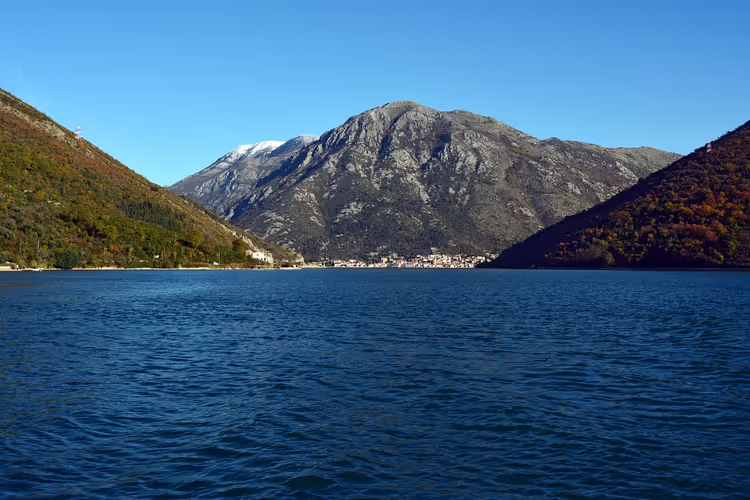
Bay of Kotor: two paths to the fortress of San Giovanni and what to see nearby
The Bay of Kotor looks like a fjord: the slopes of the Dinaric Alps drop straight into the water, and stone towns sit right at the water's edge.
Geologists call bays like this submerged river canyons, but that doesn't make the scale any less impressive. The inner part of the bay, with the towns of Kotor, Perast, and Risan, is listed as a UNESCO World Heritage Site.
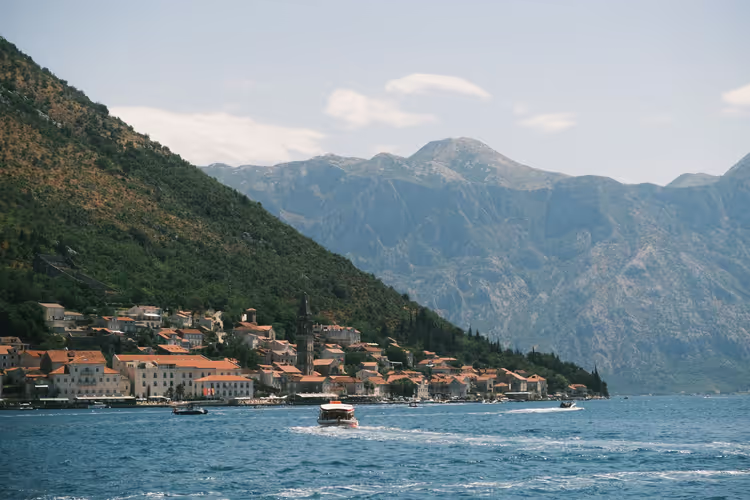
There's just one challenge here: the bay is compact, but there's a lot to see. By midday, cruise ships have dropped thousands of people into the old town, and the narrow streets become impassable. So below, we'll help you avoid the crowds and the heat: Kotor's old town, the climb to San Giovanni Fortress, Lovćen National Park, Perast, beaches, and restaurants. Prices and opening hours have been checked against official sources, and the verification date is listed next to each figure.
Ad: this article contains affiliate links, we earn a commission if you book through them, at no extra cost to you.
The Bay of Kotor: overview and first tips
💡 In short:
- You can walk through Kotor's old town in about two hours, no entrance ticket needed.
- The climb to San Giovanni Fortress takes about an hour going up; bring water and shoes with good tread.
- Visit the island of Our Lady of the Rocks in the morning before tour groups arrive, and save the Perast waterfront for the evening.
- Prices and opening hours: 09/2026, verified on the official website of the National Museum of Montenegro.
The bay cuts into the mainland in the southwest of Montenegro, between two massifs of the Dinaric Alps. The road along the water is called Jadranska magistrala and runs right at the water's edge almost the whole way, which is why the shore here is concrete and stone, and there are almost no sandy beaches.
The bay has two levels. The outer part is home to Herceg Novi and Tivat, while the inner part belongs to Kotor, Perast, and Risan, connected by the narrow Verige Strait. The inner bays are the real destination: they're under UNESCO protection, so development here is restrained, and only mountains block the view of the water.
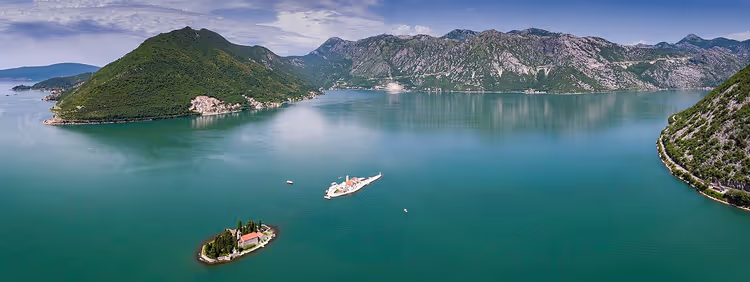 © Chensiyuan · CC BY-SAPhoto: Chensiyuan, CC BY-SA (https://creativecommons.org/licenses/by-sa/4.0), Wikimedia Commons
One more detail not everyone knows: some of the water in the bay comes from underground springs and small rivers. That's why the water here is cooler in places than in the open Adriatic. You can swim from May through October, though. Bring a swimsuit even if you have no beach plans.
How many cruise ships come to Kotor
To the question of whether Kotor is really overcrowded with tourists, the short answer is: yes. The long answer depends on the season and time of day.
The Port of Kotor receives almost all cruises sailing the southern Adriatic. In high season, three or four ships dock per day, and all passengers disembark in the old town. Imagine thousands of people at once in a space the size of a football field. That's exactly why people here were seriously talking about overtourism even before the pandemic.
The advice is simple: avoid the tour groups. It's better to head to the old town early in the morning or after five in the evening, when the cruise ships are already weighing anchor. Check the arrival schedule for a specific date on cruisetimetables.com. If your day happens to coincide with three cruise ships, move Kotor to the morning and head to Lovćen or Perast after lunch. And be sure to bring a hat.
Where to stay in the Bay of Kotor
The bay is long, and one hotel can't cover it all. We recommend splitting your stay into two parts.
Perast is good for a quiet start: a car-free waterfront, water right under your windows, dinner with a view of the island. Two nights here give you easy access to Gospa od Škrpjela and the viewpoints above the bay.
Kotor is for something else: the old town, the walls, the fortress, and an early departure to Lovćen. From Kotor to Perast you can drive in about twenty minutes, and a taxi back is inexpensive in the off-season.
A third option: Tivat, with its airport, marina, and affordable overnight stays in the off-season. The catch with Tivat is that you get to the old towns by bus or car, not on foot.
Kotor's old town
Behind the walls, right at the water's edge, hides a self-contained little town: narrow alleys, small squares, and paved courtyards. There are no cars inside, and you can walk to everything interesting in a couple of hours.
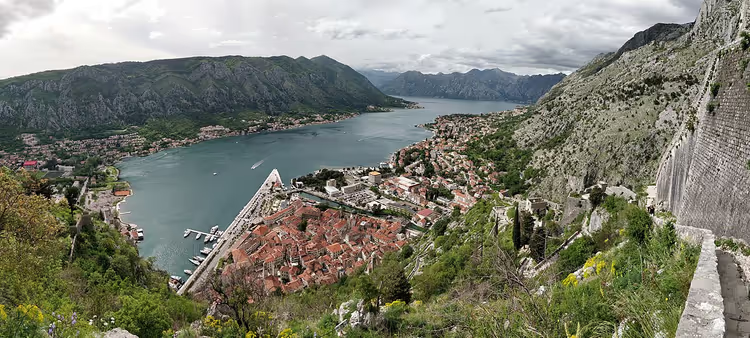 © Jaakko Luttinen · CC BY-SAPhoto: Jaakko Luttinen, CC BY-SA (https://creativecommons.org/licenses/by-sa/4.0), Wikimedia Commons
The entrance to the old town is through the main Sea Gate. Just past it you come out onto Trg od Oružja with its three-story Renaissance clock tower. Cafes and bars line the square, so it's crowded almost any time of day.
Next, find Trg od Drva. It's tucked away from the tour group routes, and in the heat a drinking fountain saves you here. In the southern part of the square, under the shade of the trees, local cats usually settle in, and Kotor has a lot of them.
The walking plan is simple: enter through the Sea Gate, head deeper in, and come back by a different street. Go in the morning, because by eleven it's already scorching and there's little shade in the alleys.
St. Tryphon's Cathedral
St. Tryphon's Cathedral is considered Kotor's main church and one of its most recognizable landmarks. You can see its towers from the sea.
You can go inside, but there's a small entrance fee, and tickets are sold at the door. Pay attention to the stone carvings and the traces of rebuilding after earthquakes. If you arrive during service hours, you'll have to postpone your visit.
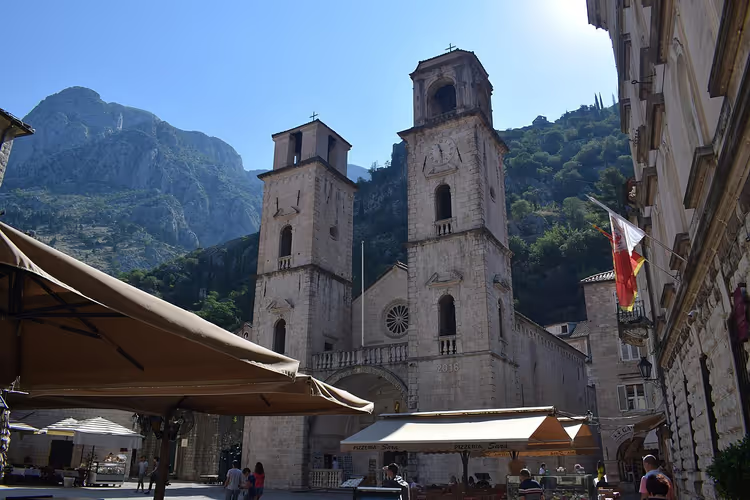 © Geotiger18 · CC BY-SAPhoto: Geotiger18, CC BY-SA (https://creativecommons.org/licenses/by-sa/3.0), Wikimedia Commons
Some buildings in the old town aren't signed at all, and that's normal: in Kotor, the overall pattern of the streets matters more than any individual facade. Walk along the cathedral's eastern wall, and you'll find a quiet courtyard and fewer people.
The city walls and the Kampana tower
Kotor's city walls climb up the slope from the water, and you can walk part of the way along them. One of the main towers on this stretch is called Kampana.
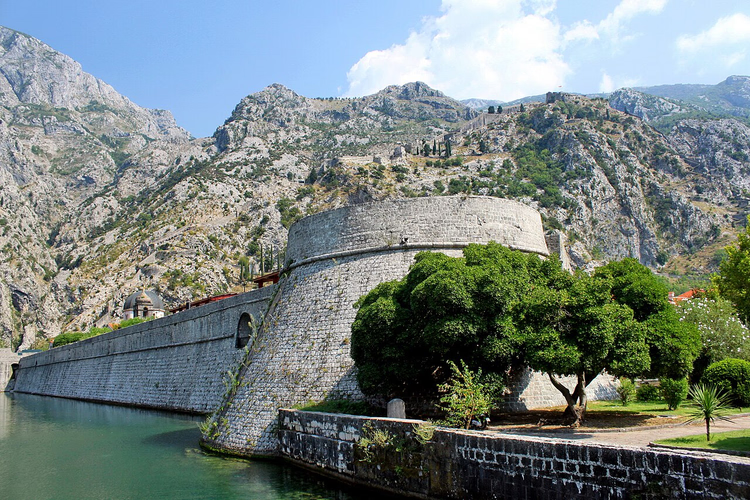 © Marcin Konsek · CC BY-SAPhoto: Marcin Konsek, CC BY-SA (https://creativecommons.org/licenses/by-sa/4.0), Wikimedia Commons
The entrance to the wall is hidden: look for a narrow staircase in the northern part of the old town. Once you climb up, you'll walk along the north side and see the city from above, but beyond that the ridge rises and ends at the fortress.
If you only need a view of the city, this section is enough, and the climb takes about twenty minutes. For the full route, bring water and don't count on railings: in places the steps are broken.
St. John's Fortress: two ways up
St. John's Fortress stands high above the old town, and from below its outline looks like a movie set. The first question that comes up in the heat is: how can you even get up there. People do, and not just you.
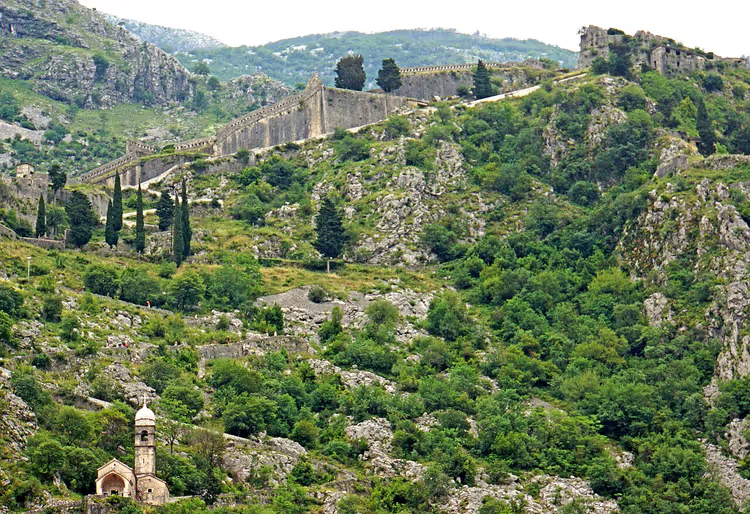 © Dennis G. Jarvis · CC BY-SAPhoto: Dennis G. Jarvis, CC BY-SA (https://creativecommons.org/licenses/by-sa/2.0), Wikimedia Commons
Two routes lead to the fortress, and both go on foot, in switchbacks.
The standard route starts behind the Church of Santa Maria Collegiata. There's a ticket booth at the start, where you buy your ticket. After that comes a climb up a narrow switchback path with steps, quite steep in places. Tickets are checked at the bottom, at the exit, so if you came up the trail and want to descend here, be ready to show your ticket.
The second route is more like a mountain trail. It goes around the back of the mountain along a gravel road. Along the way you pass a small cheese farm with goats grazing freely, and you can rest there with a cold drink. Technically this route is free, but at the end you have to squeeze onto the fortress grounds through a narrow stone window.
The main difficulty is this window. It gets closed and reopened from time to time, and then you won't reach the panorama. Before heading out, check recent Google reviews from the last few days, otherwise you risk coming back empty-handed.
As for the fortress itself, it makes a strange impression: the ruins look neglected. But people come here for the panorama, not for the stone walls. From above, the bay looks like a mountain lake ringed by ridges.
- Who it's for: those willing to climb steps for an hour and wanting to see Kotor's main view.
- Not for: those who don't handle heat and long climbs well.
- The catch: the fortress itself is neglected, and the climb is tough at midday.
- How to get there: on foot from the old town, ticket booth at the start of the standard route behind the Church of Santa Maria Collegiata.
Swimming and beaches in the Bay of Kotor
People swim everywhere in the bay where there is access to the water. Don't expect the sandy beaches you're used to in other parts of the Adriatic: the shore here is mostly concreted and lined with stone.
Many hotels keep their own small waterfront areas, some with loungers and umbrellas. Stone platforms often extend from the shore into the sea, making it easy to dive in. The most relaxed day by the water happens at a hotel with its own beach area.
There are also public beaches, usually pebbly and rocky, where you pay for loungers and umbrellas:
- Bajova Kula Beach sits next to Perast, a small pebble beach with a bar; in high season it's best to reserve loungers in advance.
- Morinjska Plaža is a half-hour drive from Kotor and is known for cooler water because a spring flows into the sea here; there's a cafe nearby.
Keep traffic in mind. The coastal road runs right along the shore, and parking in high season is hard to find, especially near popular spots. Arrive early or leave your car off to the side and walk.
Trip to Lovćen national park
The Njegoš Mausoleum in Lovćen National Park is considered one of the most famous sites near Kotor. What impresses is not so much the tomb itself as its position in the Dinaric highlands.
A winding road leads from Kotor to the park, and the drive takes about an hour. During that time you climb nearly one and a half kilometers vertically. Stop at the switchbacks: the view of the bay from above opens up from every one of them.
At the top, a staircase awaits: 461 steps lead to the mausoleum through a tunnel. It brings you to the tomb of Petar II Petrović-Njegoš at an altitude of 1,660 meters (as of 09/2026, National Museum of Montenegro).
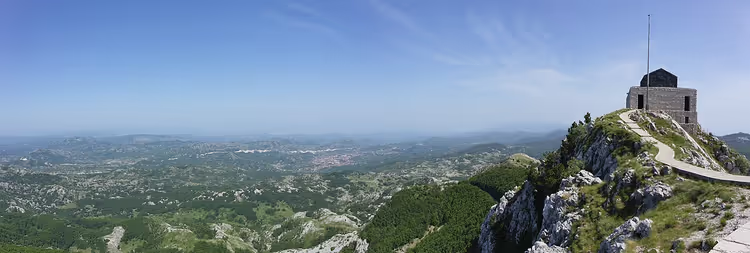 © Ingo Mehling · CC BY-SAPhoto: Ingo Mehling, CC BY-SA (https://creativecommons.org/licenses/by-sa/4.0), Wikimedia Commons
The main event lies behind the mausoleum: a stone viewing platform on the cliff and one of Montenegro's most famous photo scenes. The mausoleum is open from April 11 to November 15, daily from 9 am to 6 pm, and closed from November 16 to April 10 (as of 09/2026, official museum website). Tickets cost €8 for adults and €4 for students (as of 09/2026, same source).
Entry to the national park is paid separately, and you buy the ticket at the entrance. Check the weather before you go: fog and strong wind are common up top, and then you won't see any panorama at all.
Timing tip: go up in the afternoon and make it to the mausoleum before 6 pm. Closer to closing time there are fewer groups, and you may well have the platform to yourselves.
Perast and the island of Gospa od Škrpjela
Perast is considered the calmest place in the bay. The waterfront runs right along the water, and there are almost no cars: the coastal road passes above the town, which is a big plus for evening strolls.
The drive from Kotor takes about twenty minutes, but if you can, spend a night in Perast. In the evening the town empties out, and dinner on the waterfront feels completely different.
 © Dennis G. Jarvis · CC BY-SAPhoto: Dennis G. Jarvis, CC BY-SA (https://creativecommons.org/licenses/by-sa/2.0), Wikimedia Commons
The area's main attraction: the man-made island of Gospa od Škrpjela. Fishermen built it up from stones, and boats go to it from the Perast waterfront. The crossing takes a few minutes, and you pay separately for the boat and for entry to the church and museum.
Go to the island in the morning while boats are running and tour groups haven't arrived yet. Save the Perast waterfront itself for the evening, when the light turns soft. Many local-cuisine restaurants line the waterfront, and a table by the water is the whole point of the evening here.
Restaurants and cafes in Kotor
There are dozens of places to grab a bite in and around Kotor. Here are four notable spots worth knowing about in advance.
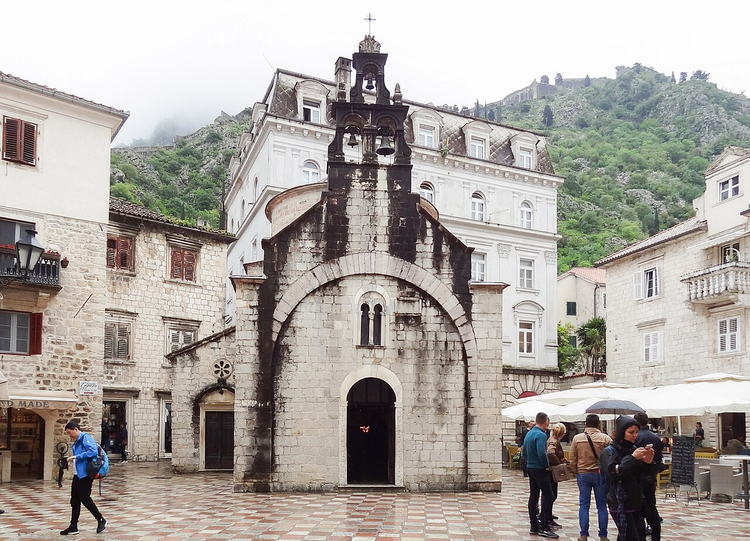 © Bernard Gagnon · CC BY-SAPhoto: Bernard Gagnon, CC BY-SA (https://creativecommons.org/licenses/by-sa/4.0), Wikimedia Commons
Pizzeria Pronto: a modest pizzeria in the old town's alleys, popular with locals. It's easy to get pizza to go and eat it by the port while watching the boats.
Konoba Boka Bay: located a few kilometers from Kotor, with a terrace right on the water. The menu is built around meat and fish, but they also prepare vegetarian dishes on request.
Ladovina Kitchen and Wine Bar: a modern spot near the old town with Mediterranean cuisine: pizza, pasta, fish, meat, and salads. In the evening it's best to book a table in advance.
Marshall's Gelato: probably the most expensive and most popular ice cream in the old town. There are many flavors, they rotate, and a two-scoop serving will cost you more than a coffee in the neighboring alley.
For budgeting, keep it simple: lunch at a family konoba is cheaper than dinner on the Perast waterfront, and prices in Kotor's old town are the highest of all. It's worth reserving a table in season and only for dinner; at lunchtime there are usually seats available.
Hotel in Kotor: Palazzo Sbutega
Palazzo Sbutega sits a few kilometers from Kotor's old town, in a historic house with updated interiors. Its main selling point: a quiet green courtyard with a pool set against the mountains.
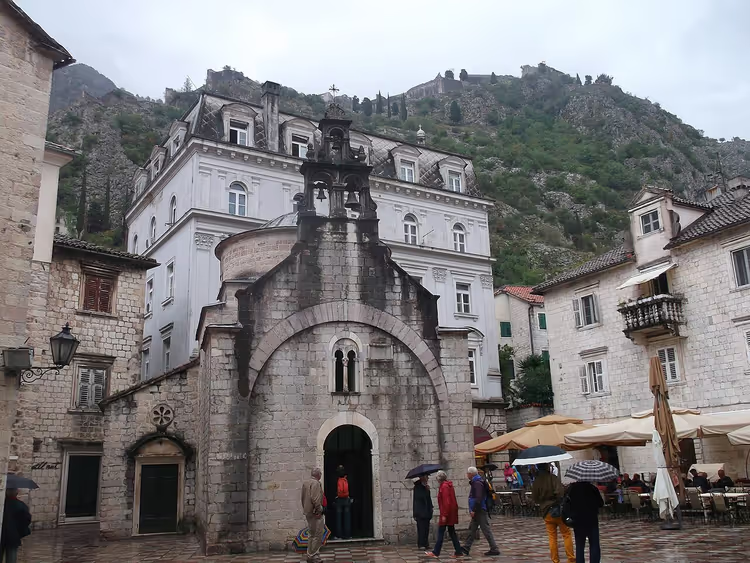 © Сергей Наруков · CC BYPhoto: Сергей Наруков, CC BY (https://creativecommons.org/licenses/by/3.0), Wikimedia Commons
You can reach the old town by taxi in a few minutes. There are cafes and restaurants around, and Konoba Boka Bay is literally around the corner.
The hotel has its own stretch of shore with mountain views. It's concrete, like most shores in the bay, and the coastal road runs between the beach and the hotel.
Breakfast is served on the courtyard terrace: house-made muesli and local cheese. Prices here are above average, but outside high season a night costs noticeably less, and then you get a very reasonable price-to-quality ratio.
- Who it's for: those who want quiet, a pool, and swimming from their own water access.
- Not for: those who want to live inside the city walls and walk to the old town.
- Location: a few kilometers from the old town, taxi to the center takes minutes.
- The catch: the coastal road runs between the beach and the hotel, and prices peak in high season.
- Price: Palazzo Sbutega rates on Trip.com
Tickets and opening hours: summary
Below is a table of the main sites so you don't have to piece together prices and hours from the paragraphs.
Site | Entry | Hours and closures |
|---|---|---|
Njegoš Mausoleum, Lovćen | €8 adult, €4 student (as of 09/2026, museum price list) | 11.04-15.11 daily 9-6, closed from 16.11 to 10.04 |
San Giovanni Fortress | ticket purchased at the lower gate | daylight hours, ticket office open in season |
St. Tryphon's Cathedral | paid entry, ticket at the door | open during the day, services may close access |
Lovćen National Park | paid entry, ticket at the entrance | year-round, road may be snow-covered in winter |
Boat tours around the bay and to the island are best taken in the morning: Bay of Kotor tours on GetYourGuide.
Tours and tickets in Kotor
Guided tours, skip-the-line tickets and activities — most offers can be cancelled free of charge.
See offers on GetYourGuideThe widget loads once you give your consent.
Map and landmarks
It’s convenient to open the places from this article on the map: Kotor Old Town, San Giovanni Fortress, Njegoš Mausoleum, Perast, and Bajova Kula Beach. Distances in the article are based on the map.
⁉️🤔 Frequently asked questions
How much time do you need for Kotor's old town?
Two hours of easy walking if you don't climb the wall. Add an hour for the cathedral and coffee at Trg od Oružja. At midday in July, time stretches: the lanes are scorching, and you'll want breaks. A Tuesday morning beats any plan because the town is nearly empty and there's more shade.
Is it worth climbing to St. John's Fortress in the heat?
The climb is doable, but in the heat it turns into a real effort. Start before nine in the morning or after five in the evening, and it'll be easier. Bring more water than you think you need and shoes with grip: the steps are worn smooth. If you're not sure about your stamina, go halfway, there are views there too.
When is Kotor least crowded?
Early morning and evening, after the cruise ships leave. The best months are May, June, and the second half of September, when the water is warm but the crowds are thinner. In July and August, cruise passengers add to the mix, and the old town lives in a constant flow. Check the port schedule for your dates and plan Kotor for a day with no ships.
Where can you swim if your hotel has no beach?
Head to the public pebble beaches: Bajova Kula near Perast or Morinjska Plaža toward Risan. Both have loungers and umbrellas for rent, and the entry is rocky, so water shoes will come in handy. People do swim off the concrete platforms, but there's no shade or services there.
Can you combine Perast and Lovćen in one day?
Technically yes, but it makes for a long day. Lovćen takes half a day: about an hour up, time at the summit, and the drive back. Perast is nicer in the evening, when the heat fades and restaurants come alive. Our pick: Lovćen during the day, Perast at sunset, and dinner in Perast.
In short: what to book
If you have two nights and a car, book a hotel in Kotor or Perast and set aside one day for Lovćen. If you're here for the panoramas, stay higher up, closer to the switchbacks, and head down to the old town in the morning before the tour groups arrive.
If you want | Go with |
|---|---|
Quiet and a view of the water | Perast, a night by the waterfront |
Walls, the fortress, and restaurants | Kotor, a hotel within walking distance of the old town |
One day for the surroundings | Lovćen during the day, Perast at sunset |
Traveling with kids | Bajova Kula beach and a walk through the old town |
Book your hotel early in summer, prices climb fast: rates at Palazzo Sbutega. And for trips around the bay, it's easy to plan through bay tours on GetYourGuide.

A small editorial team writing guides for independent travel. We travel ourselves, but we haven’t been everywhere, so we check prices, opening hours and how to get there against official sources.