
















25 Mallorca beaches: where to swim with kids and where to find quiet
On the 550 kilometers of coastline of Mallorca there are more than a hundred beaches and coves (as of 09/2026, official island beach catalog). In one vacation you will see five or six of them.
The island's coastlines differ far more than the map suggests. The south is occupied by resorts with loungers, lifeguards, and jet skis. The north and east hide coves in the rocks, reached on foot down over stones. The western beaches are squeezed by mountains, and some of them are accessible only from the water.
Below are 25 beaches across the island: cove sizes, water entry, infrastructure, and transport. If this is your first trip, start with the "Our picks" table right after the brief overview.
How to choose a beach on Mallorca
💡 In short:
- The south and east offer warm sea and developed infrastructure; the north and west require a car and patience.
- The bottom and water entry matter more than the view: pebbles in the north hurt your feet, while the shallow water in the east is convenient with children.
- Wild coves almost always have no rentals, toilets, or water, so bring supplies with you.
- Beach access and infrastructure: 09/2026, according to the official Mallorca tourism portal.
The choice here is determined by three things. Wind matters more than temperature: the north and northeast are open to the breeze, so waves are more common there. Water entry differs from beach to beach even in neighboring coves, and with children this matters more than the width of the sand. Transport is also a constraint: half of the wild beaches sit far from bus routes, and you can only reach them by car or boat.
Our picks: five beaches for different needs
Need | Beach | What's nearby |
|---|---|---|
First trip | Playa de Palma | Promenade, aquarium, zoo |
Vacation with children | Cala Millor | Shallow water and lifeguards |
Without a car | Can Pere Antoni | 2 km from Palma, bike path |
Wild nature | Cala Varques | Cliffs and a hiking trail |
Mountains and photos | Sa Calobra | Gorge at the foot of Puig Major |
The five beaches above cover the main scenarios. Below are all 25 entries in order, with photos and details for each.
1. Magaluf
 © This media file was made by Michiel1972 You may use it using a redistributable license ( cc-by-sa ), see below Please cr · CC BY-SAPhoto: This media file was made by Michiel1972 You may use it using a redistributable license ( cc-by-sa ), see below Please cr, CC BY-SA (https://creativecommons.org/licenses/by-sa/3.0), Wikimedia Commons
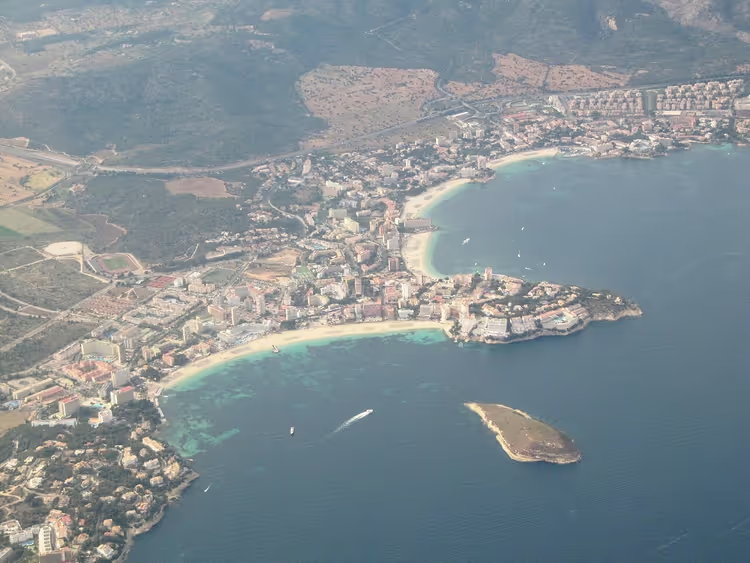
Magaluf lies in the south of the island and is known for nightlife rather than quiet. The beaches here are well maintained: all three stretches are public, with fine white sand and a gentle entry into the sea.
Playa de Magaluf runs for about 500 meters and is separated from Playa de Son Maties by a small headland (as of 09/2026, beach card on the Consell de Mallorca website). A pedestrian promenade with cafes runs through the center. Beyond the headland to the north begins Playa Son Maties, and farther on, Playa Palma Nova hides in the bay. All three have lounger and umbrella rentals, lifeguards, and water sports stations.
- How to get there: Buses run from Palma every 15-20 minutes (schedule on the TIB website), about half an hour each way.
- Who it's for: For those coming for bars, clubs, and water attractions.
- The catch: In summer the promenade is noisy until dawn.
2. Playa de Muro
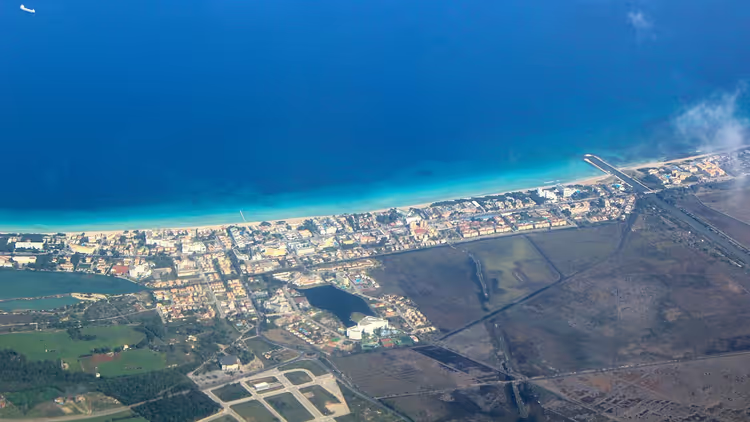
Not everyone finds Playa de Muro on the map, although it lies between Alcudia and Can Picafort. It is a young resort with a long stretch of white sand and sections shaded by pine trees.
The water entry is gentle and extends for almost 200 meters, so it is convenient for swimming with children (as of 09/2026, beach description from the island tourism authority). In the morning the sea is calm, but by midday the wind sometimes raises waves. On the shore there are lounger, umbrella, and safe rentals, with shops and cafes nearby.
- How to get there: Buses run from Alcudia and Can Picafort, about a quarter of an hour each way (per the map).
- Who it's for: For families who need a soft water entry and cafes nearby.
- The catch: In the afternoon, when the wind picks up, the sea becomes choppy.
3. Playa de Palma
 © Foto Fitti · CC BY-SAPhoto: Foto Fitti, CC BY-SA (https://creativecommons.org/licenses/by-sa/3.0), Wikimedia Commons
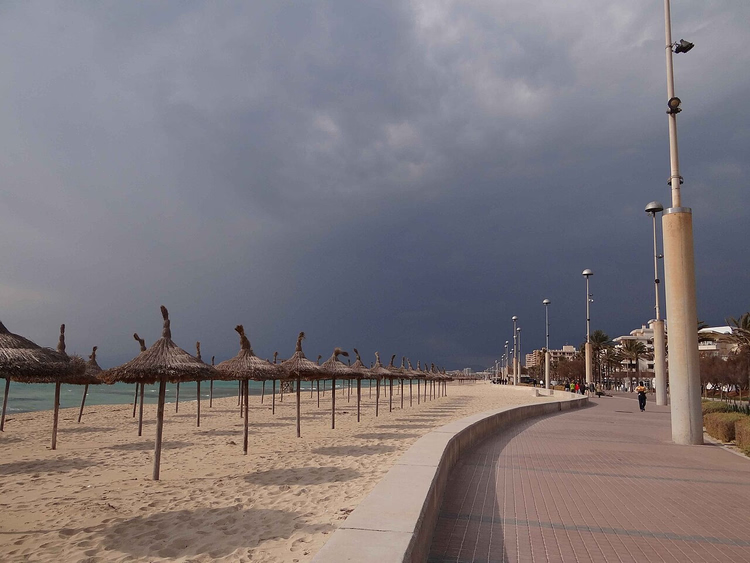
Playa de Palma stretches east of the capital and brings together three beach zones on one line. This is the most urban option in the entire selection: the promenade, hotels, and transport start right behind the sand.
The public section runs from Can Pastilla to El Arenal. It is about 4.5 kilometers long and up to 50 meters wide (as of 09/2026, information from the Mallorca tourism portal). There are showers, toilets, changing rooms, lounger rentals, and convenient access for people with disabilities. Lifeguards watch over safety.
- How to get there: About 10 kilometers from central Palma, easiest by city bus (per the map).
- Who it's for: For those staying in Palma who want the sea without a long trip.
- The catch: In high season the beach is densely packed with visitors.
4. Can Picafort
 © Marc Ryckaert ( MJJR ) · CC BYPhoto: Marc Ryckaert ( MJJR ), CC BY (https://creativecommons.org/licenses/by/3.0), Wikimedia Commons
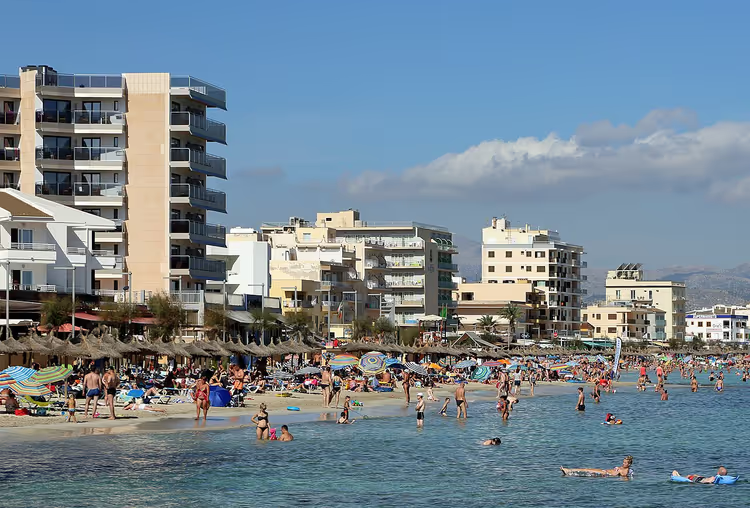
Can Picafort sits on the shore of the Bay of Alcudia and is considered a family resort. There are about thirty hotels and just as many restaurants here, and two beaches are separated by a scenic headland.
Playa Llarga curves around the bay and reaches the outskirts of Alcudia. Most of the surface is soft white sand, while the southern end becomes rocky (as of 09/2026, beach profile on the Consell de Mallorca website). Showers, toilets, and rentals are available. In high season, medics and lifeguards are on duty.
- How to get there: About a ten-minute drive from Alcudia, buses run frequently (per the map).
- Who it's for: Families and anyone who wants restaurants and live music in the evening.
- The catch: The promenade gets noisy in the evening.
5. Can Pere Antoni
 © Andrés Nieto Porras from Palma de Mallorca, España · CC BY-SAPhoto: Andrés Nieto Porras from Palma de Mallorca, España, CC BY-SA (https://creativecommons.org/licenses/by-sa/2.0), Wikimedia Commons
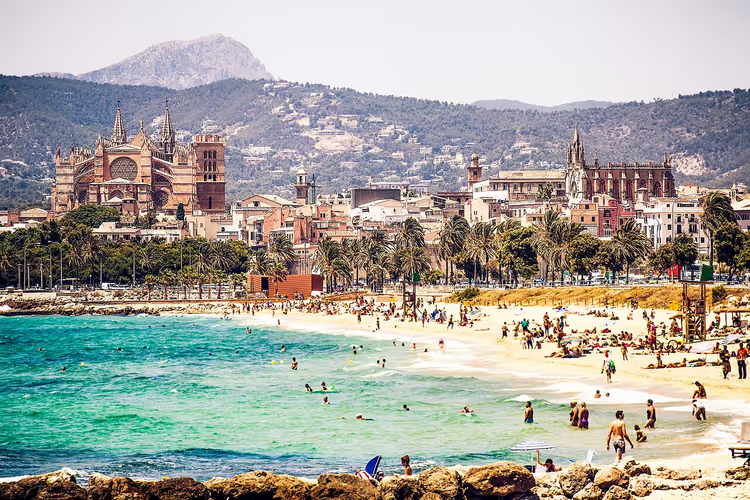
Can Pere Antoni starts right behind Palma Cathedral and suits those who don't rent a car. The strip is narrow but well maintained, with golden sand and turquoise water.
The beach is about 750 meters long, with a moderate entry and a sandy bottom (as of 09/2026, data from the Island Council of Mallorca). There is accessible swimming for people with disabilities, and lifeguards are on duty. A promenade with cocktail bars and a bike path runs along the water.
- How to get there: About 2 kilometers from central Palma, easy to reach on foot or by bike (per the map).
- Who it's for: City walks and swimming without leaving Palma.
- The catch: You can't rent a lounger on the beach itself; rentals are only available at Nassau Beach Club.
6. Cala Millor
 © Olaf Tausch · CC BY-SAPhoto: Olaf Tausch, CC BY-SA (http://creativecommons.org/licenses/by-sa/3.0/), Wikimedia Commons
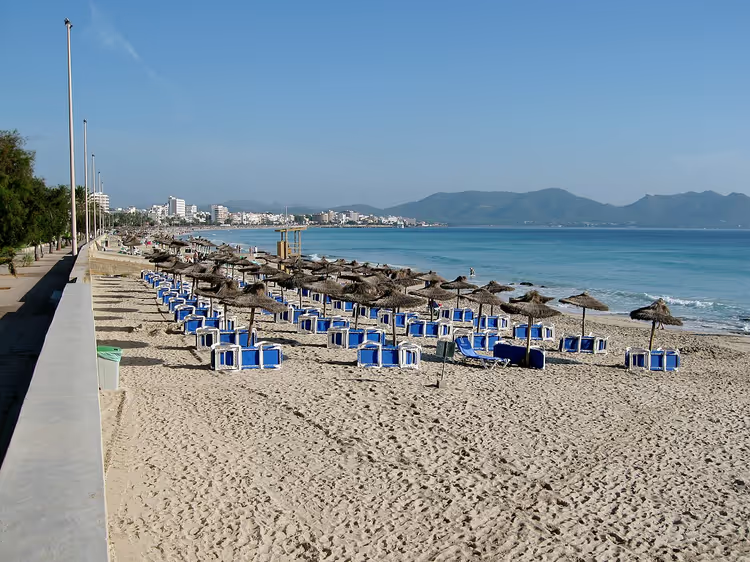
Cala Millor is one of the busiest resorts on the east coast. The beach occupies the town's entire shoreline and is protected from the south by a rocky headland.
The strip stretches for more than a kilometer and is up to 36 meters wide (as of 09/2026, official Balearic beach registry). There are almost no waves, the surface is white sand, and the shallow water is suitable for families with children. Entry is free; you only pay for an umbrella, lounger, and diving gear.
- How to get there: A promenade runs behind the beach to Cala Bona, with a city bus stop (per the map).
- Who it's for: Families who value calm water and lifeguards.
- The catch: In August, front-row loungers are taken by morning.
7. Cala Major
 © Nikolai Bakhmarov · CC BYPhoto: Nikolai Bakhmarov, CC BY (https://creativecommons.org/licenses/by/3.0), Wikimedia Commons
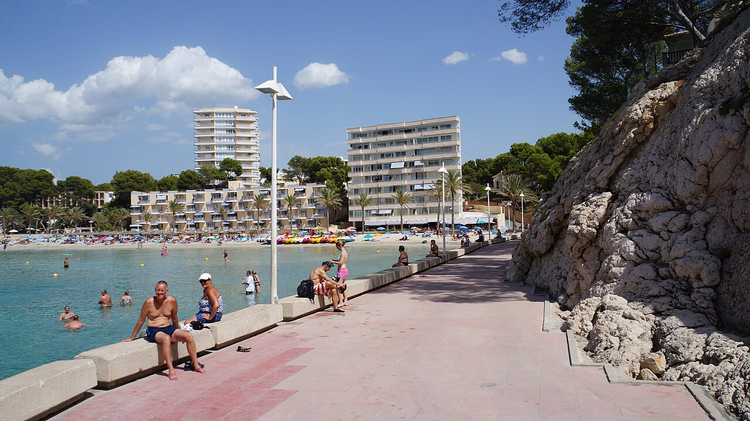
Cala Major is four kilometers west of Palma and is squeezed between cliffs on both sides. On a windless day, the water here is so clear you can see the bottom.
The city beach stretches for about 200 meters and is 80 meters wide (as of 09/2026, beach profile from the tourism authority). The Nixe Palace hotel stands opposite. Showers, toilets, ramps, and a lifeguard tower are provided, and rentals include loungers, umbrellas, pedal boats, and windsurfing gear.
- How to get there: City buses run from Palma, about fifteen minutes (per the map).
- Who it's for: Couples and anyone who wants the sea close to the capital.
- The catch: On weekends, the beach is packed with locals.
8. Cala Figuera
Cala Figuera lies in the north of the island on the way to Cap de Formentor. The cove is horseshoe-shaped and surrounded by cliffs covered with pine trees.
The bay is about 100 meters wide and 300 meters long (as of 09/2026, tourist portal information). Behind it rises the 300-meter Es Fumat mountain. The bay splits into two arms with the Caló d'en Busques and Caló d'en Boira beaches, and a descent of about 1,400 meters leads from the parking area down to the water.
- How to get there: The trail starts from the highway and goes across a rocky area, then steps (follow the map).
- Who it's for: For those willing to walk for the sake of quiet.
- The catch: There is no infrastructure, and the surface consists of pebbles and stones.
9. Cala Varques
 © Olaf Tausch · CC BYPhoto: Olaf Tausch, CC BY (https://creativecommons.org/licenses/by/3.0), Wikimedia Commons
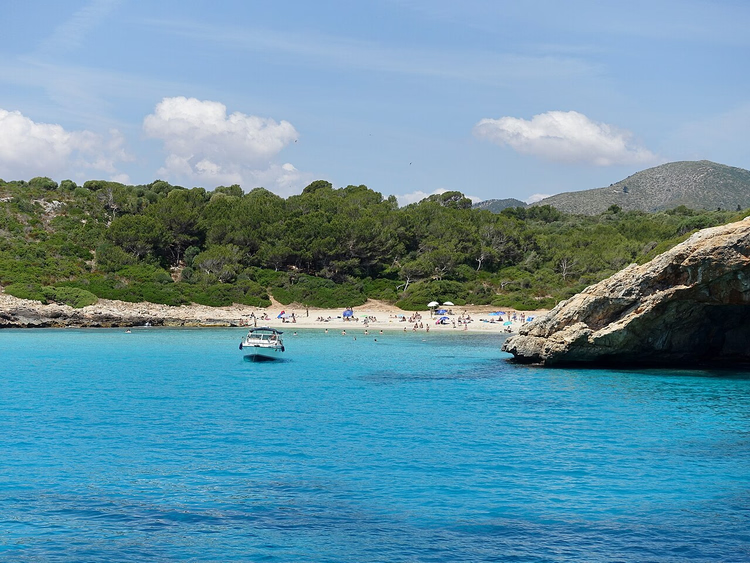
Cala Varques is twelve kilometers from Porto Cristo and remains wild. Golden sand here meets white-capped surf, and the shore is untouched by development.
The beach stretches about 90 meters along the shore and extends 60 meters inland (as of 09/2026, beach description on the Consell de Mallorca website). The entry is even, the bottom is sandy. Rocky outcrops rise from the south, and behind them hides a small beach favored by nudists.
- How to get there: There are no villages or hotels nearby; a walking trail leads to the beach (see map).
- Who it's for: For rock climbers and those seeking solitude.
- The catch: No rentals, no toilets, no water, you'll have to bring everything with you.
10. Cala Pi
 © King Otto · CC BY-SAPhoto: King Otto, CC BY-SA (https://creativecommons.org/licenses/by-sa/3.0), Wikimedia Commons
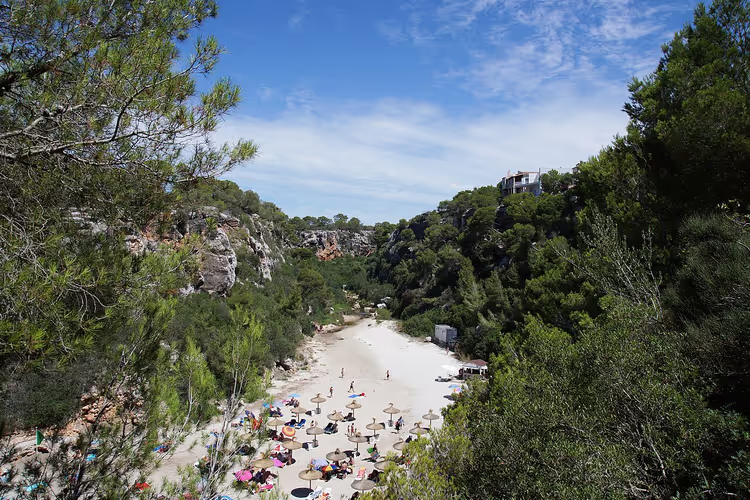
Cala Pi lies in the south, in the Llucmajor area, tucked among pine trees. The cove is quite small, but it's sheltered from the wind on two sides.
The beach is only 50 meters wide and extends 100 meters inland (as of 09/2026, island council data). Cliffs about 30 meters high protect it from the wind, so the water and shore stay calm. Atop the cliff stands a 16th-century tower that once served to defend the area.
- How to get there: 147 stone steps lead down to the water, and there's a parking lot at the top of the descent (see map).
- Who it's for: For those who appreciate a compact cove and a short descent.
- The catch: There are few spots for loungers, and the climb down the steps is tiring in the heat.
11. Cala d'Or
 © dronepicr · CC BYPhoto: dronepicr, CC BY (https://creativecommons.org/licenses/by/2.0), Wikimedia Commons
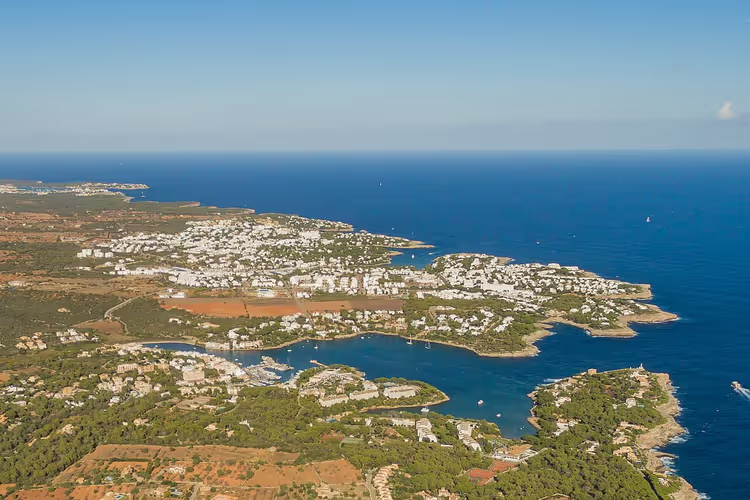
Cala d'Or on the east coast is recognizable by its whitewashed houses. The resort and its surroundings boast five picturesque beaches, all of them set in small coves.
The largest beach in the area is Cala Gran, known as the golden cove, covered in more detail in item 24 (as of 09/2026, Balearic Islands beach registry). The sand is soft and white, the entry is gentle, and the services allow you to go diving, surfing, fishing, and sailing.
- How to get there: Buses connect the town with Palma and neighboring resorts; the trip takes about an hour (see map).
- Who it's for: For those who want to switch between coves without leaving one town.
- The catch: In season, the tiny coves fill up quickly.
12. Cala Torta
 © Olaf Tausch · CC BY-SAPhoto: Olaf Tausch, CC BY-SA (http://creativecommons.org/licenses/by-sa/3.0/), Wikimedia Commons
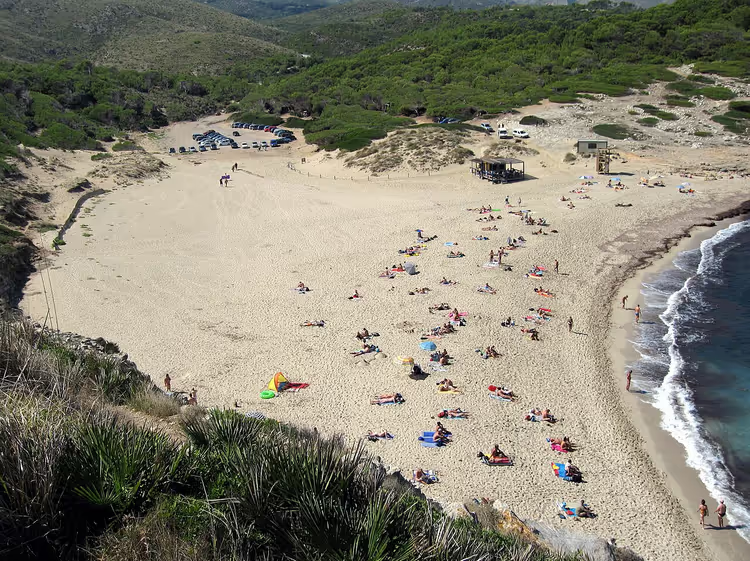
Cala Torta lies ten kilometers from the town of Artà and remains wild. The sandy shore is surrounded by low cliffs with shrubs and pine trees.
The beach measures about 150 meters in length and 100 meters in width (as of 09/2026, beach profile from the tourism authority). A light breeze and a small number of visitors make for comfortable swimming and sunbathing. The steep slope and the cove open to all winds attract divers and boat owners.
- How to get there: You can reach it by car or regular bus, or sail in from Cala Mesquida (see map).
- Who it's for: For those willing to give up amenities for an open shore.
- The catch: Seaweed washes up on the shore, and there's no infrastructure here.
13. Caló des Moro
 © Tommie Hansen from Stockholm, Sweden · CC BYPhoto: Tommie Hansen from Stockholm, Sweden, CC BY (https://creativecommons.org/licenses/by/2.0), Wikimedia Commons
Caló des Moro lies 55 kilometers from the capital and outranks the Formentor resort beach in many rankings. The cove is surrounded by tall, striking cliffs, and the water here is emerald.
From the nearest hotel, Cala Llombards, it's a one-and-a-half-kilometer walk to the shore (see map). The cliffs shelter the cove from the wind, so the sea is almost always calm. Cliff-jumping enthusiasts pick the rocks along the edges of the cove.
- How to get there: There's almost no public transport; it's easiest to drive and walk the rest of the way (see map).
- Who it's for: For those who want to swim in a narrow cove with high walls.
- The catch: No umbrella or lounger rentals, and the shore gets crowded in season.
14. Sa Coma
Sa Coma is five kilometers from Porto Cristo and has long been a favorite with Europeans. There are plenty of affordable three-star hotels and restaurants here, and the town beach runs along the shore.
The strip is over two kilometers long, the sand is soft and white, and the entry is gentle (as of 09/2026, Mallorca tourism authority data). During the day the beach is calm, and at dusk the resort's nightlife comes alive. Sometimes pods of dolphins swim into the waters.
- How to get there: Buses run from Porto Cristo; the trip takes about fifteen minutes (see map).
- Who it's for: For families with children and those who want playgrounds.
- The catch: In the evening it's noisy near the hotels if you take a room on the first line.
15. Portals Nous
 © Liilia Moroz · CC BY-SAPhoto: Liilia Moroz, CC BY-SA (https://creativecommons.org/licenses/by-sa/4.0), Wikimedia Commons
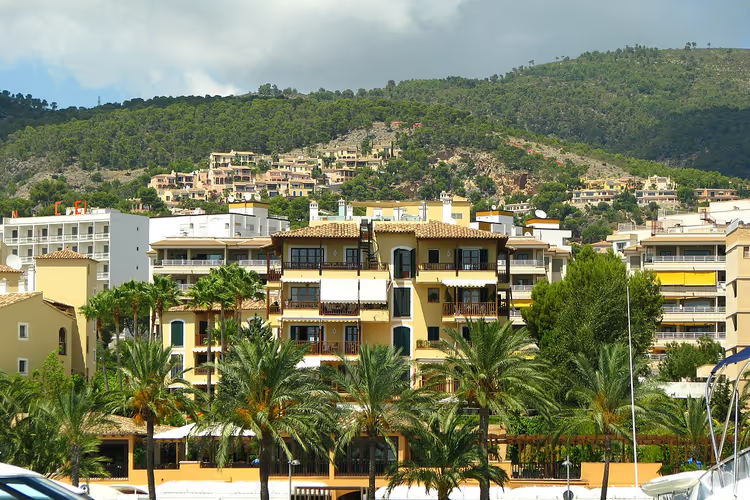
Portals Nous is an upscale resort near Palma and one of the island's signature destinations. It is home to Mallorca's largest marina, and the waterfront is lined with restaurants and boutiques.
The beach at this luxury resort remains public and is covered with golden sand (as of 09/2026, Portals Nous beach description). The entry into the sea is gentle, and there are rental points for umbrellas, loungers, and water sports equipment. Even in high season, the shore near the marina never gets overcrowded.
- How to get there: From Palma, the drive takes about fifteen minutes; buses run along the coast (see map).
- Who it's for: For those who value a well-kept shore and restaurants nearby.
- The catch: Prices at local cafes are above the island average.
16. Cala Barca
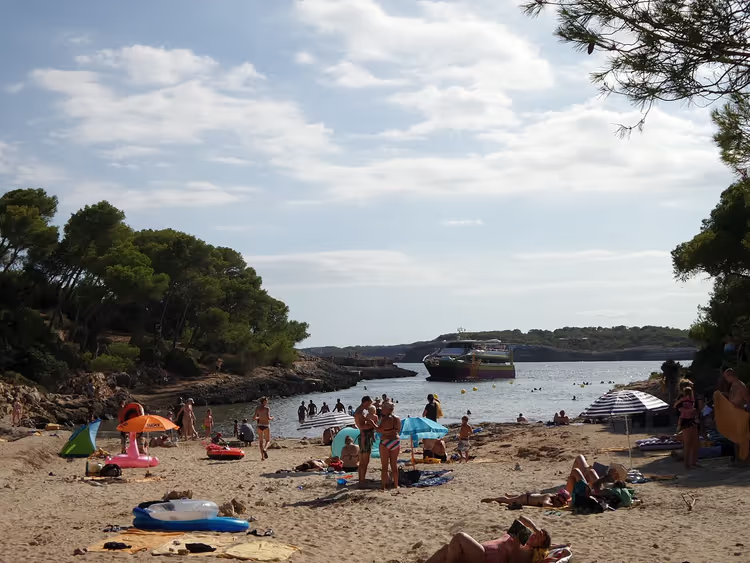
Cala Barca lies in the southeast, in a scenic cove next to Mondragó Natural Park. Behind the beach stands the Iberostar Club Cala Barca hotel, and the shore is surrounded by oaks and pines.
 © Xxlstier · CC BY-SAPhoto: Xxlstier, CC BY-SA (https://creativecommons.org/licenses/by-sa/4.0), Wikimedia Commons
The cove is narrow: about 25 meters wide, with the bay extending roughly 35 meters inland (as of 09/2026, Cala Barca beach card). Cliffs shelter it from the wind, so the sea stays calm. Fine sand and a gentle entry into the water over a sandy bottom.
- How to get there: From Portopetro, a walking path of about one kilometer leads to the beach (see map).
- Who it's for: For snorkeling and calm swimming near the hotel.
- The catch: There are no lifeguard towers here, only showers and toilets.
17. Es Trenc
Es Trenc occupies the south of the island and is known as Mallorca's own Caribbean. The golden sand strip stretches for two kilometers, while the beach extends only twenty meters inland.
The crowding in high season is explained by exactly this: there is little space on the sand (as of 09/2026, Es Trenc beach profile). The water is remarkably clear, and services include umbrella and lounger rentals, lifeguards, toilets, and ramps. Behind the beach lie sand dunes and wetlands where migratory birds stop over.
- How to get there: Buses run from the resort of Colònia de Sant Jordi; the trip takes about twenty minutes (see map).
- Who it's for: For windsurfing and for those who enjoy long walks on the sand.
- The catch: In July and August, it is hard to find a free spot on the narrow strip.
18. Santa Ponsa
 © HerrAdams · CC BY-SAPhoto: HerrAdams, CC BY-SA (https://creativecommons.org/licenses/by-sa/4.0), Wikimedia Commons
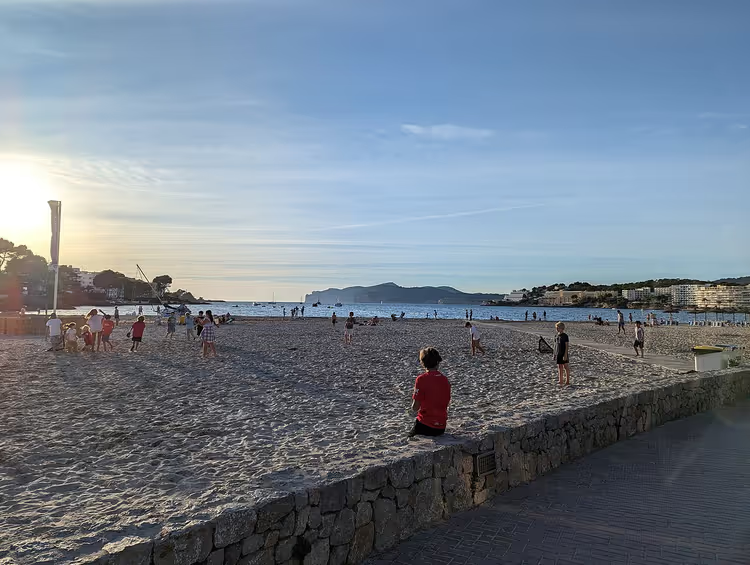
Santa Ponsa is located in the southwest, 23 kilometers from the capital. The town has three beaches: Playa de Santa Ponsa, Pellicer Beach, and Castellot Beach, and nearby are some of the best golf courses on the island.
The main beach holds a Blue Flag for cleanliness and high service standards (as of 09/2026, Santa Ponsa beach registry). All three have a gentle slope into the sea over a sandy bottom, plus showers, changing cabins, and umbrella and lounger rentals.
- How to get there: Buses run from Palma; the trip takes about half an hour (see map).
- Who it's for: For active water sports and for golf.
- The catch: The resort is large, so in season the shore is densely packed.
19. Sa Calobra
 © AnatolyPm · CC BY-SAPhoto: AnatolyPm, CC BY-SA (https://creativecommons.org/licenses/by-sa/4.0), Wikimedia Commons
Sa Calobra hides at the end of a gorge at the foot of Puig Major. Nature has split it into two parts, and the first thing tourists see is a rocky shore in front of the restaurant building.
The main beach opens up beyond a narrow tunnel on the right. It is small: about 30 meters along the shoreline and 15 meters inland (as of 09/2026, Sa Calobra cove description). The surface consists of pebbles and sand, and the water is remarkably clear. Apart from restaurants, bars, toilets, and a medical station, there are no other facilities here.
- How to get there: You can get there by car along a winding mountain road or by boat from Port de Sóller (see map).
- Who it's for: For those who come for the scenery, not for the services.
- The catch: Space on the small beach is limited; people bring everything they need with them.
20. Cala Mesquida
 © dronepicr · CC BYPhoto: dronepicr, CC BY (https://creativecommons.org/licenses/by/2.0), Wikimedia Commons
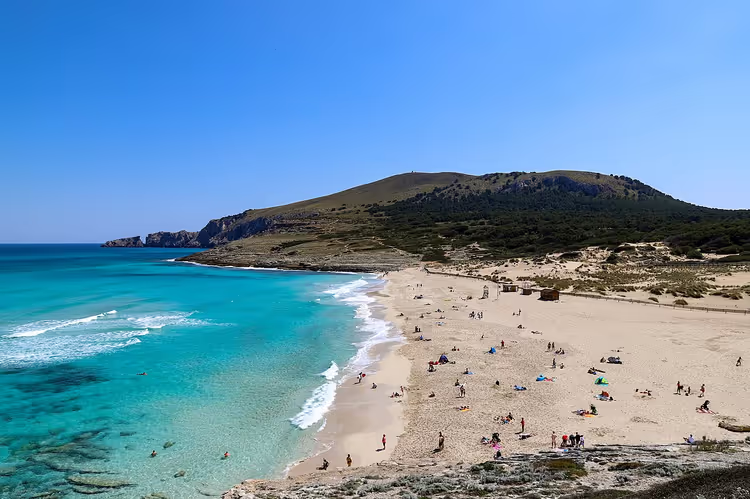
Cala Mesquida lies in the northeast, separated from the rest of the island by a mountain range. The bay is surrounded by cliffs with thickets of mastic trees and pines.
The beach stretches as a white strip for about 300 meters along the shore, with a width of 130 meters (as of 09/2026, Cala Mesquida beach data). The dunes here restore themselves and fill with sand. In windy weather, waves pick up and surfers head out on them.
- How to get there: Buses run from the villages of Cala Ratjada and Capdepera, the trip takes about twenty minutes (per the map).
- Who it's for: For those who want to combine swimming with a walk through the dunes.
- The catch: Swimming is uncomfortable in strong wind; it's better to splash in the waves in the south.
21. Cala S'Almunia
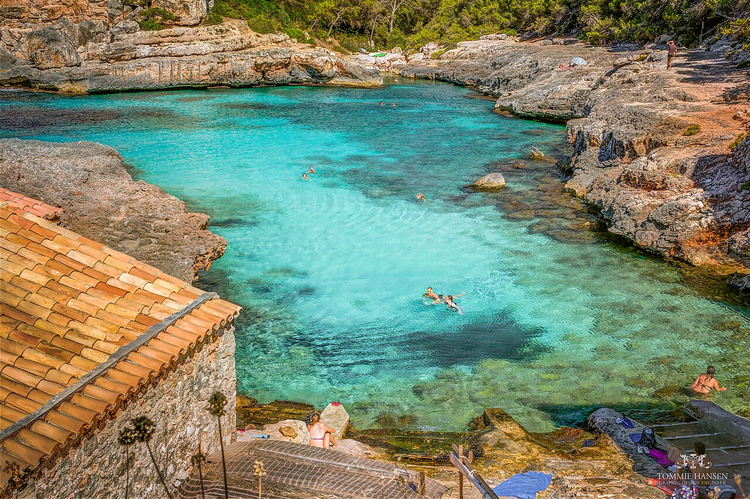
Cala S'Almunia is nine kilometers from Santanyí in a quiet bay carved out by winds and currents. The descent to the water begins behind the fishermen's houses.
 © Tommie Hansen · CC BYPhoto: Tommie Hansen, CC BY (https://creativecommons.org/licenses/by/3.0), Wikimedia Commons
The bay is small: about 30 meters long and 10 meters wide (as of 09/2026, Cala S'Almunia bay card). People enter the sea from an improvised pier, and the depth near the rocks reaches five meters. The silence is broken only by the sound of the surf.
- How to get there: Steep stone steps or a descent from low cliffs lead to the water (per the map).
- Who it's for: For snorkeling and jumping into the water from a natural arch.
- The catch: Waves and wind prevent boats from anchoring, so you'll have to go on foot.
22. Formentor
 © Рустам Абдрахимов · CC BYPhoto: Рустам Абдрахимов, CC BY (https://creativecommons.org/licenses/by/3.0), Wikimedia Commons
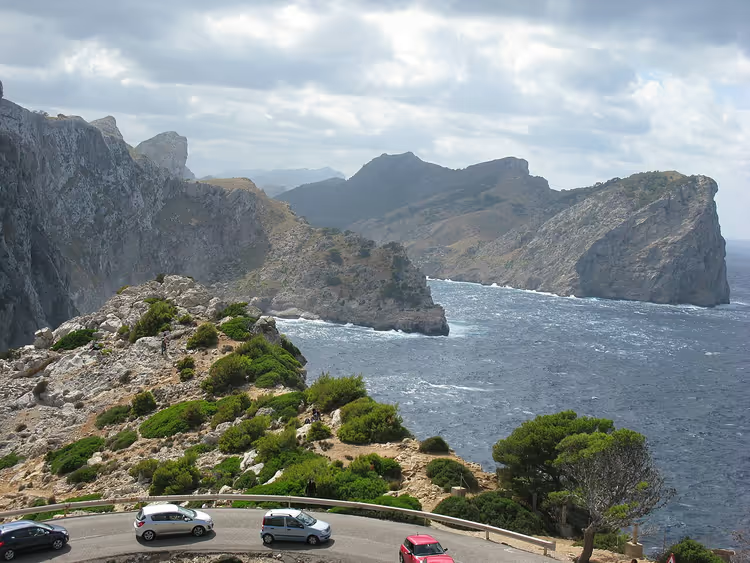
Formentor occupies the north of the island and is considered one of the most beautiful places in Mallorca. The cape greets you with pine forests, an emerald sea, and fine white sand.
The beach is narrow: about 850 meters along the shore, with only 8 meters left from the water's edge to the foot of the mountains (as of 09/2026, Formentor beach data). The trees create a natural canopy and shelter from the sun. There are showers, changing cabins, toilets, and rentals of jet skis, loungers, and umbrellas.
- How to get there: From Port de Pollença, drive about seven kilometers northwest (per the map).
- Who it's for: For those ready to trade resort bustle for pines and mountains.
- The catch: The strip is narrow, and in season there is little space on the sand.
23. Alcúdia
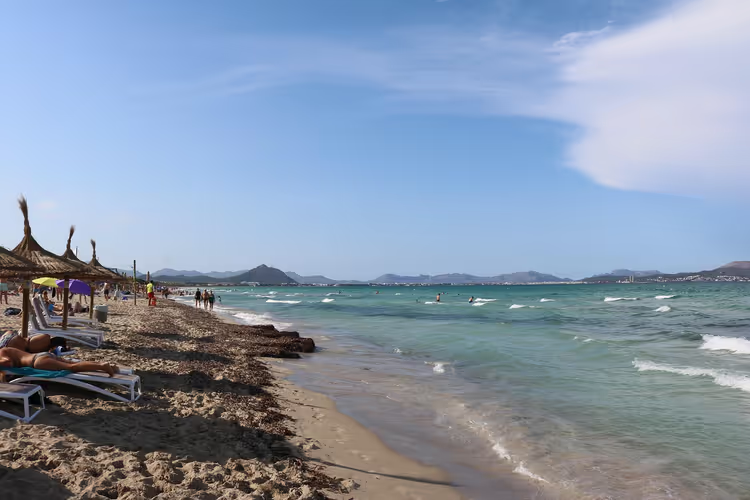
Alcúdia occupies a bay with a coastline of up to eight kilometers and is considered one of the best family resorts in Spain. The sand here is white, and the sea is warm and shallow.
At Platja d'Alcúdia, squeezed between headlands, comfort comes from a light breeze and calm water (as of 09/2026, description of Alcúdia beaches). Cap de Pinar is a wild beach in a narrow bay sheltered from the winds. Platja de Muro sits on an open sandy spit with a gentle entry into the water.
- How to get there: Buses run from Palma, the trip takes just over an hour (per the map).
- Who it's for: For families with children and for those who want to choose between beaches.
- The catch: The port and the "Golden Mile" are very crowded in the evening.
24. Cala Gran
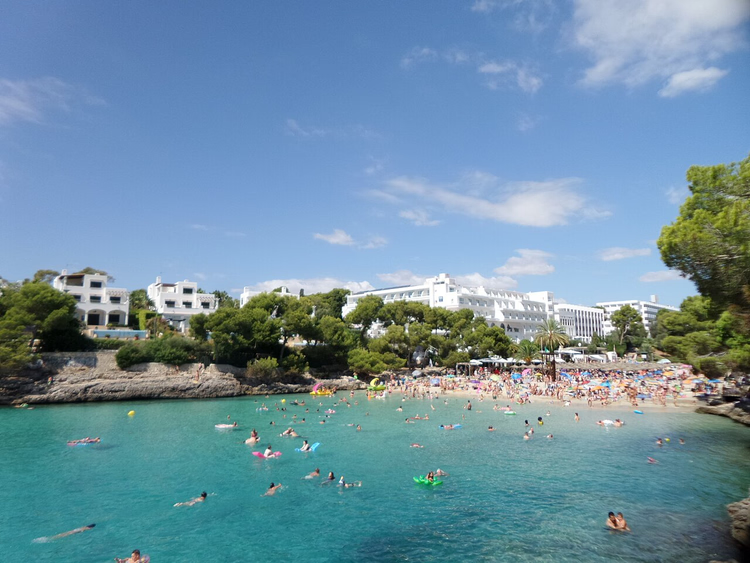 © Xxlstier · CC BY-SAPhoto: Xxlstier, CC BY-SA (https://creativecommons.org/licenses/by-sa/4.0), Wikimedia Commons
Cala Gran is located in the resort of Cala d'Or in a cozy bay surrounded by sheer cliffs and pines. The strip of beach is narrow, but the water here calms down early.
The beach is no more than 40 meters long and extends 100 meters inland (as of 09/2026, Cala Gran beach registry). The sea is calm, and the depth increases gradually. Several houses and hotels fit into the landscape, so there are plenty of places to stay.
- How to get there: Buses connect Cala d'Or with Palma, and the trip takes about an hour (according to the map).
- Who it's for: For those looking for a quiet cove near a hotel.
- The catch: Because of the large number of hotels, the shore gets crowded in high season.
25. Cala Mondragó
Cala Mondragó lies in the southeast inside a national park. Two beaches, Cala Mondragó and Cala de sa Font de n'Alis, are connected by a 200-meter path.
Sand dunes and a pine forest create a colorful landscape, and the cove stretches along the sea for about 75 meters with a beach depth of 60 meters (as of 09/2026, Cala Mondragó beach data). The entry into the clear water is gradual and stays shallow for a long time.
- How to get there: Most often people come here by car or arrive by boat (according to the map).
- Who it's for: For snorkeling and birdwatching in the reserve.
- The catch: For visitors with disabilities, only the ramps at one beach are convenient.
⁉️🤔 Frequently asked questions
When is the best time to visit the beaches of Mallorca?
The swimming season runs from May to October, and the warmest water is in August and September. In midsummer the southern resorts are overcrowded, but the wild coves of the north stay open. If you are not tied to school holidays, choose late May or September: fewer lines and the water is still comfortable.
Where on Mallorca are beaches with shallow water for children?
Look to the east and south of the island. Cala Millor and Playa de Muro offer a long gentle entry, and Cala Mondragó hides in a cove without waves. At all of these beaches the water near the shore is shallow, and you can walk out to depth without a sudden drop.
Can you reach the wild beaches without a car?
Partly. Buses run to Cala Mesquida and Cala Torta, but there is almost no public transport to Cala Varques and Caló des Moro. Renting a car simplifies logistics, but on the narrow roads of the north, parking lots fill up by morning.
Which beaches are good for snorkeling and diving?
Clear water and a rocky bottom can be found at Cala S'Almunia, Cala Barques, and Cala Mondragó. In the southeast around Mondragó Park you can see fish and rocky ridges, and at Cala S'Almunia the depth drops in steps. Bring a mask with you: equipment rental is far from available everywhere.
Are the beaches on Mallorca paid?
Entry to the beaches is free almost everywhere; you only pay for an umbrella, a lounger, and equipment. On the city beaches of Palma and Alcúdia, equipment is available at rental points, and in the wild coves there simply is none. If you are driving, factor in parking fees at popular coves.
Beaches of Mallorca on the map
All the beaches from this selection are collected on one map. Mark the points in advance if you are planning a route around the island for several days: distances between the south and the north eat up an hour or more each way.
Beaches of Mallorca
Places on the map
- 1Magaluf Nightlife of the south, three public strips of fine sand
- 2Playa de Muro Gentle entry almost 200 metres, convenient with children
- 3Playa de Palma Three zones over 4.5 km, promenade and hotels near the capital
- 4Can Picafort Family resort on Alcúdia bay, two beaches by the cape
- 5Ca'n Pere Antoni 750 metres by Palma cathedral, promenade with bars
- 6Cala Millor Over a kilometre, shallows for children, almost no waves
- 7Cala Major Clear water 4 km west of Palma, opposite the Nixe Palace hotel
- 8Cala Figuera A horseshoe bay by Cape Formentor, reached on foot down steps
- 9Cala Varques A wild beach 12 km from Porto Cristo, access only by sea
- 10Cala Pi A bay sheltered from the wind near Llucmajor, 147 steps to the water
- 11Cala d'Or Resort with whitewashed houses, five bays around
- 12Cala Torta A wild beach 10 km from Artà, attracts divers
- 13Caló des Moro Emerald water 55 km from the capital, shallows for children
- 14Sa Coma Over two kilometres of gentle beach by Porto Cristo
- 15Portals Nous Upscale resort with the island's largest marina
- 16Cala Barca A narrow bay by the Mondragó park, next to the Iberostar Club Cala Barca hotel
- 17Es Trenc The local Caribbean, two kilometres of golden sand
- 18Santa Ponsa Three Blue Flag beaches in the southwest, next to golf courses
- 19Sa Calobra A gorge at the foot of Puig Major, reached by winding road or boat
- 20Cala Mesquida 300 metres in the northeast, dunes and surfers in windy weather
- 21Cala S'Almunia A quiet bay near Santanyí, entry from an improvised pier
- 22Formentor A cape with pine cover and emerald sea in the north
- 23Alcúdia A bay up to 8 km long, the best resort for families
- 24Cala Gran A cosy bay by Porto Colom, calm water
- 25Cala Mondragó Two beaches inside the national park, dunes and pine forest
In short: what to book
If you are visiting for the first time, start with Playa de Palma and Can Picafort. With children, choose Cala Millor and Playa de Muro. For quiet, head north to Cala Mesquida and Formentor. Leave the mountains and gorges for Sa Calobra, and plan the wild coves of the southeast for September.
The selection matrix is simple. If you are traveling without a car, the beaches of Palma and Alcúdia remain. If you want photos and cliffs, plan for the north and west. If you need sand and shallow water, look east. Book accommodation near your chosen beach in advance, because in August available rooms run out quickly.

A small editorial team writing guides for independent travel. We travel ourselves, but we haven’t been everywhere, so we check prices, opening hours and how to get there against official sources.