













Quiet coves of Mallorca: where to go instead of crowded beaches
Mallorca has long stopped being the island of three beaches from a guidebook. On the map, it takes over an hour to drive from Palma to the northeastern tip of the island, and you won't be able to cover everything in one trip.
We've put together the places worth visiting first: quiet coves without loungers and umbrellas, two mountain villages, and the city of Palma. Some locations are already protected from the influx of visitors, and you'll learn about these restrictions below.
You can swim here from May to October, and the best balance of warmth and available space falls in June: the heat hasn't yet scorched the island, and the lines at the main spots are shorter.
Ad: this article contains affiliate links, we earn a commission if you book through them, at no extra cost to you.
What to definitely see in Mallorca
💡 In short:
- Divide the island into three parts: the mountains of the west, the coves of the east, and Palma.
- Without a car or bus, you won't reach most coves; there are no walking connections between them.
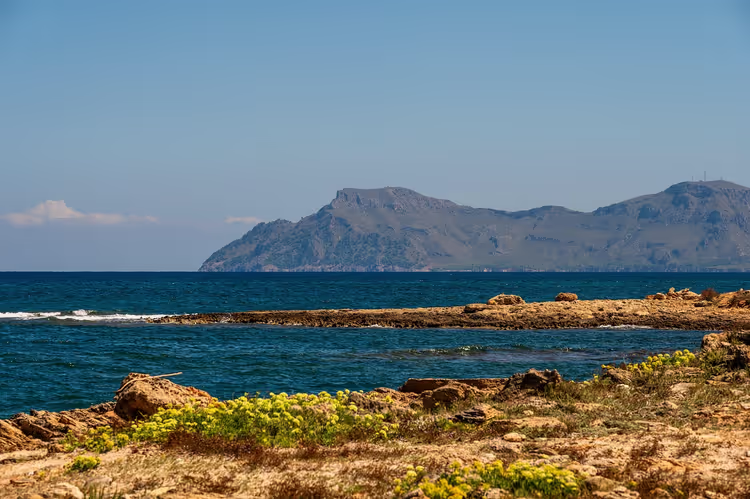
The strongest impressions come not from the beaches, but from the island's extreme points. Cap Formentor in the north rises above the sea with cliff walls, and from there you get one of the best views in Mallorca of the entire bay at once. In the center of the island, head for Sineu: a farmers' market operates here, considered the oldest on the island.
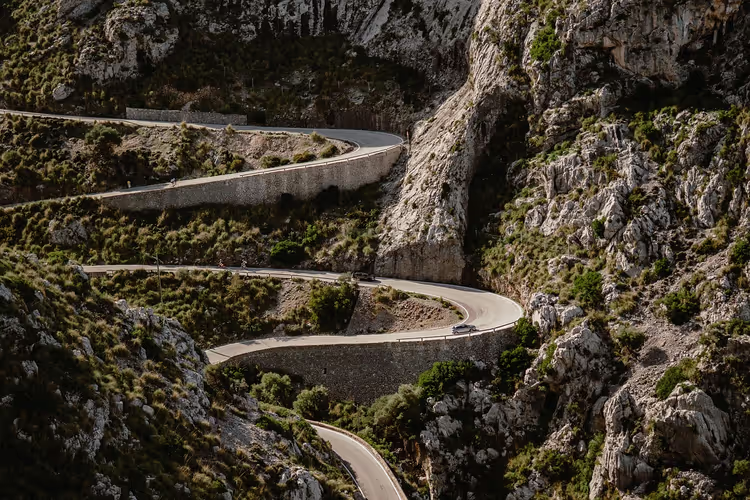
In the northwest, the road winds down to the Sa Calobra cove, and nearby the sea cuts into the land through the Torrent de Pareis gorge. Getting here on your own takes a long time, so many people book a boat trip to Sa Calobra on GetYourGuide and see the gorge right from the water.
Hidden coves and the island's best beaches
The island's best sand lies in the north and southeast. Playa de Muro between Alcudia and Can Picafort has repeatedly received high marks for cleanliness and a gentle entry into the water, so it's the most convenient with children. Es Trenc looks different: white sand, dunes and pine trees behind them, and the area itself is part of the natural park Es Trenc-Salobrar de Campos.
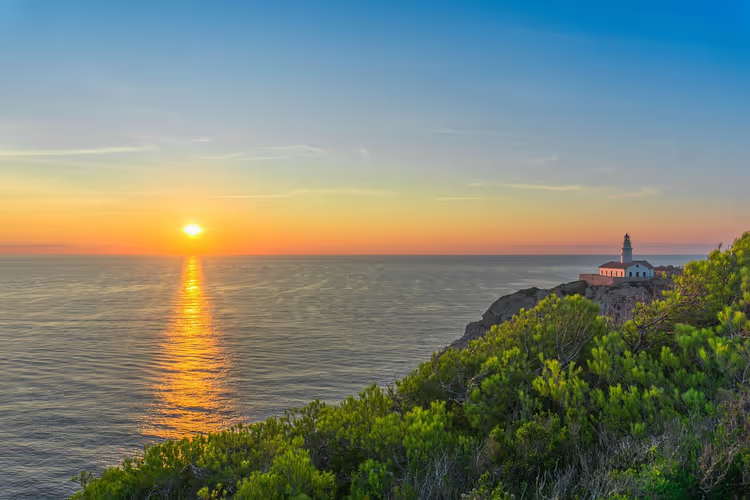
You'll have to pay to enter by car. Parking at Es Trenc costs about 7-10 € per day depending on the season (as of 04/2025, Chronicabalear). Bus A51 connects the beach with Palma; check the current schedule at tib.org. In the height of summer, both beaches are packed, so we keep the calas of the eastern shore in reserve.
The dunes behind the beach are best crossed on wooden boardwalks: the vegetation here takes years to restore, and any step off the path leaves a mark on the sand. Come by eight in the morning, and you'll get both parking and an empty strip by the water.
Cala s'Almunia and Caló des Moro
Just a few years ago, these two coves near Santanyi were kept secret. Now there's no secret, and in July there's a crowd here. A short rocky path leads to Caló des Moro, and you'll walk it with a full beach bag on your shoulders, with almost no shade along the way.
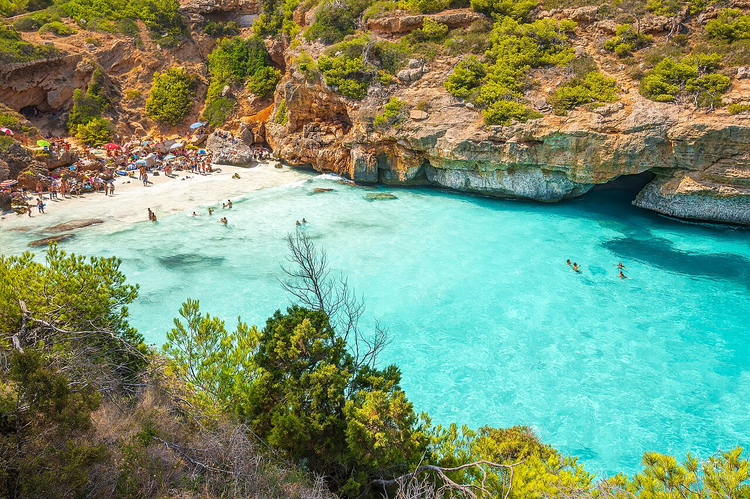 © Tommie Hansen from Stockholm, Sweden · CC BYPhoto: Tommie Hansen from Stockholm, Sweden, CC BY (https://creativecommons.org/licenses/by/2.0), Wikimedia Commons
The municipality of Santanyi already regulates parking and access through the residential streets of Es Llombards to relieve the approaches to the cove (as of 05/2026, Mallorca Magic). The problem isn't just cars: the landowners around Caló des Moro and Cala s'Almunia have asked for permission to close access and limit the flow of people (as of 02/2026, Diario de Mallorca).
In practice, this means one thing: arrive early in the morning or after 6:00 PM, when the main wave has already left. Then you'll have a chance to find a spot on the rocks and get into the water without a line.
 © Tommie Hansen from Stockholm, Sweden · CC BYPhoto: Tommie Hansen from Stockholm, Sweden, CC BY (https://creativecommons.org/licenses/by/2.0), Wikimedia Commons
Cala s'Almunia is no longer a secret spot, but it hasn't lost its turquoise water or the pine trees around it. The descent here is a bit easier than to the neighboring Caló des Moro, but shoes with non-slip soles will come in handy either way.
Cala Morlanda: a bay with two faces
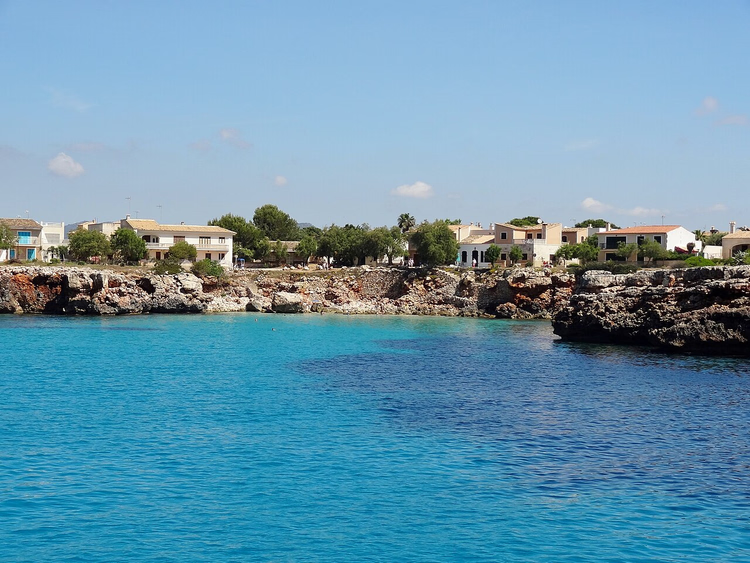
Cala Morlanda lies outside the center of S'Illot, south of Cala Millor (on the map). The bay is split in two, and each half follows its own rules. There is no sandy entry on either side, which keeps away some of the lounger crowd.
On one side, a small inlet called Calò d'en Rafalino cuts into the cliffs: a drop-off, dark water, and rocks instead of sand. It's a good spot for jumping into the sea if you're a confident swimmer. Walk a few minutes along the shore and you'll reach the second part of the bay, where stairs lead down to the water. Trees grow above the shoreline, and the shade lets you wait out the hottest hour of the day.
The water here is turquoise, and the scatter of rocks makes Cala Morlanda a good spot for snorkeling. It's mostly residents from the nearby houses who relax here, so finding a free spot is realistic even in high season.
 © Olaf Tausch · CC BYPhoto: Olaf Tausch, CC BY (https://creativecommons.org/licenses/by/3.0), Wikimedia Commons
Es Carregador: a secluded beach in the northeast
The northeast of the island looks completely different: pine forests come right down to the water, and on the beach you sit in the shade, breathe in the scent of pine needles, and listen to cicadas instead of bar music. Near the busy Cala Ratjada hides the quiet Sa Font de Sa Cala, and there are bays there that few people know about.
Our pick here: the small Es Carregador at the end of a dead-end street. Hardly anyone makes it here except vacationers from the nearby houses, so the quiet lasts all day. Come in the morning to claim a spot under the pines, and bring water with you.
The beach is small, and in high season it can easily fill up completely. If there are no free spots left, take a walk along the shore: around the bend, a couple more quiet access points to the water await you.
The most beautiful village in Mallorca
The island isn't just about beaches. Drive through the villages inland and you'll see a different Mallorca: stone facades, shutters, orange groves, and squares where locals gather in the evenings. In July and August, many villages are decorated for festivals, and you'll find yourself on a living street rather than a stage set.
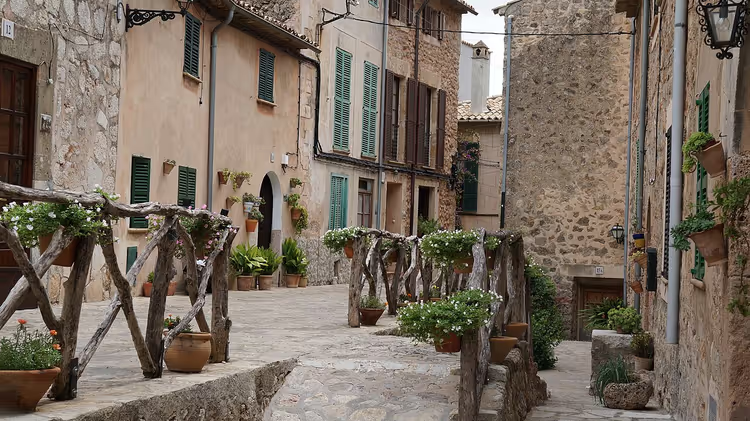 © Nikolai Bakhmarov · CC BYPhoto: Nikolai Bakhmarov, CC BY (https://creativecommons.org/licenses/by/3.0), Wikimedia Commons
An important planning detail: visit the villages before noon or after five, because during the day the squares have almost no shade, and the water at cafes runs out faster than you can sit down.
Fornalutx: stone stairways and mountain views
Fornalutx sits where the Serra de Tramuntana mountains rise almost directly above the houses. The rough stone steps between the old facades have long become a photo spot, and the upper streets open up a view of the entire mountain range. That's why the village makes the list of the most beautiful places in Spain and has held its place for years.
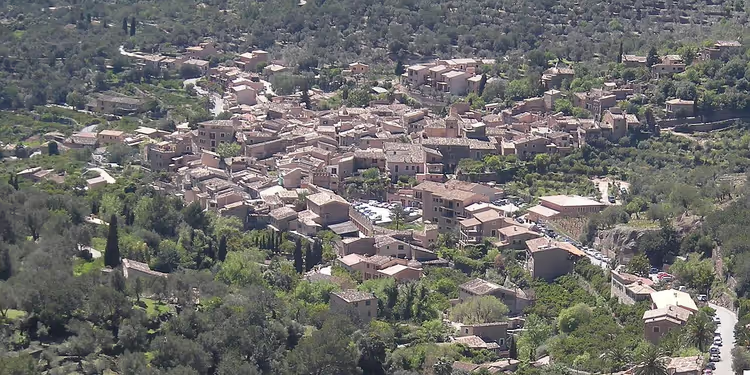 © Paucabot · CC BY-SAPhoto: Paucabot, CC BY-SA (https://creativecommons.org/licenses/by-sa/3.0), Wikimedia Commons
In summer, Fornalutx gets crowded, so keep in mind an alternative half an hour away, which we cover below. Morning is the best time to explore the village: the narrow stairways are in shade, the cafes are open, and there are still few photographers on the steps.
Lloseta: stairways, a palace, and dessert
Lloseta lies about 20 minutes by car from Palma (on the map), and tour groups are rare here. The streets of Carrerons de Lloseta connect the lower part of the town with the upper quarter, and around the Iglesia Parroquial church stand old houses, including the partly empty Palau d'Aimans palace. The stone stairways here are no worse than in Fornalutx, except nobody will be photographing you.
If you get hungry, ask for Cardenal de Lloseta: a dessert of meringue, sponge cake, and a very large amount of cream made at the old Forn de Baix pastry shop. The recipe has been kept here for decades, and it's an honest reason to stop along the way.
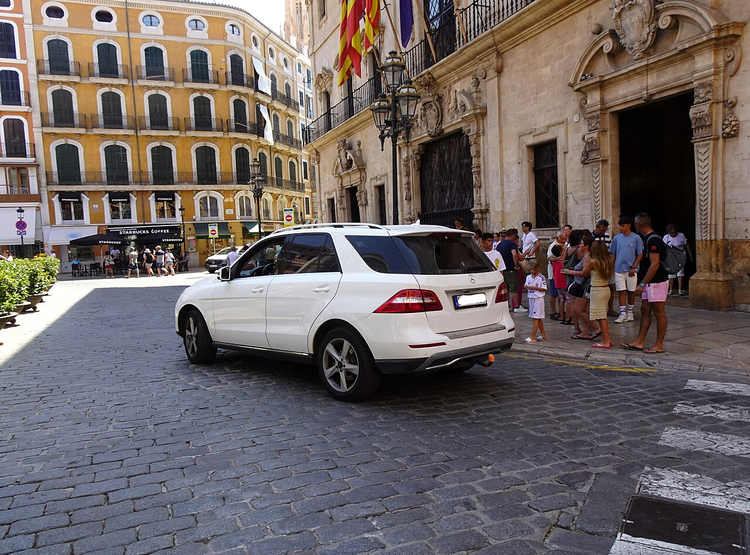 © Charles from Port Chester, New York · CC BYPhoto: Charles from Port Chester, New York, CC BY (https://creativecommons.org/licenses/by/2.0), Wikimedia Commons
Palma: the cathedral, rooftops, and shopping streets
You can see the La Seu cathedral even on final approach: it stands above the bay and serves as the city's main landmark. Opening hours and visitor tickets change by season; current details are kept on the cathedral's official website. Palma's center is compact, and you can realistically walk it in half a day.
Start at the cathedral and head inland: the shopping streets Passeig del Born and Avenida Jaime III will lead you through the old town to the Santa Catalina quarter. If you want to see Palma from above, stop by the terrace of the Es Princep hotel in the evening: the bar is open to outside guests, and the sunset over the Serra de Tramuntana mountains is visible right from the counter.
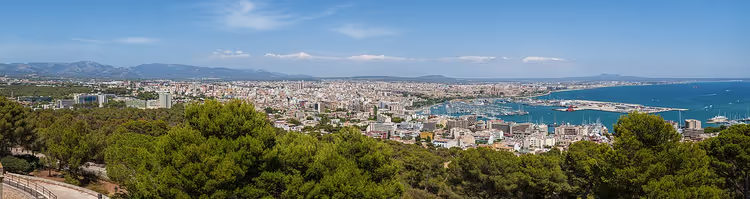 © Thomas Wolf , www.foto-tw.de · CC BY-SAPhoto: Thomas Wolf , www.foto-tw.de, CC BY-SA (https://creativecommons.org/licenses/by-sa/3.0/de/deed.en), Wikimedia Commons
For those who want to cover the city's main sights in one day, guided routes help: you'll be taken through the old town's alleys and shown things you can't see from the square in front of the cathedral.
Tours and tickets in Palma
Guided tours, skip-the-line tickets and activities — most offers can be cancelled free of charge.
See offers on GetYourGuideThe widget loads once you give your consent.
Useful tips for a trip to Mallorca
Where to shop and find books in Palma
On Passeig del Born you'll find Zara, Zara Home, and H&M: the selection is the same as back home, but all three stores occupy historic buildings, which alone makes them worth a visit. The Biblioteca del Babel bookstore hides on a side street off the pedestrian Calle San Miguel: here you'll find books in Spanish, Catalan, and English, a small cafe with a terrace, and evening readings or concerts (open on map). For Mediterranean-inspired fragrances and cosmetics, look for Arquinesia.
Where to eat and drink in Palma
The Santa Catalina neighborhood pulls in the city's food scene: cafes, boutiques, and concept stores occupy nearly every building here. Come in the evening, when the area comes alive, and don't linger on the streets around the cathedral: there you're paying for the view, not the food.
Which part of the island is the most beautiful
There's no single answer, because the island is made up of different landscapes. To the west you enter the Serra de Tramuntana mountains, which UNESCO added to the World Heritage List on June 29, 2011 (as of: whc.unesco.org). The north is defined by long, gently sloping beaches and wind, which is why it attracts many families with children and windsurfers. The east is known for its calas, the southeast around Santanyi offers white sand and clear water, and the southwest near Port d'Andratx is considered a quiet and expensive area.
The island's interior deserves special mention: Arta, Sineu, and Inca will suit you if you're looking for quiet and are willing to stay at a finca. Resorts like Cala Millor or Can Picafort with their uniform development are ones we'd skip. Palma is in a league of its own: the cathedral, food scene, shopping, and cultural offerings are all packed into one city for several days.
For hiking and nature, the western part is the best fit: here the mountain range keeps things cool even on hot days, and the views from the trails stretch for dozens of kilometers. Check the wind forecast before heading out; at higher elevations it's stronger than on the coast.
Palma works well as a base: from the city you can just as easily head to the mountains or the southern beaches and still be back in time for dinner. That's why a short trip to the island makes sense to build around the capital.
When is the best time to visit Mallorca
The island welcomes visitors year-round, and the month you choose depends on your plans. Swimming is generally possible from May through October: in May the water is still cool, but the beaches are empty and parking is easy to find. For hiking and cycling, April, September, and October are better, while July and August bring almost guaranteed heat and maximum hotel occupancy.
We recommend June for those who want to combine beach time and sightseeing: the warmth has arrived, there's plenty of greenery, and the most popular spots aren't yet packed to the brim. The island also works in winter, but you'll need a warm jacket and more time to get between places.
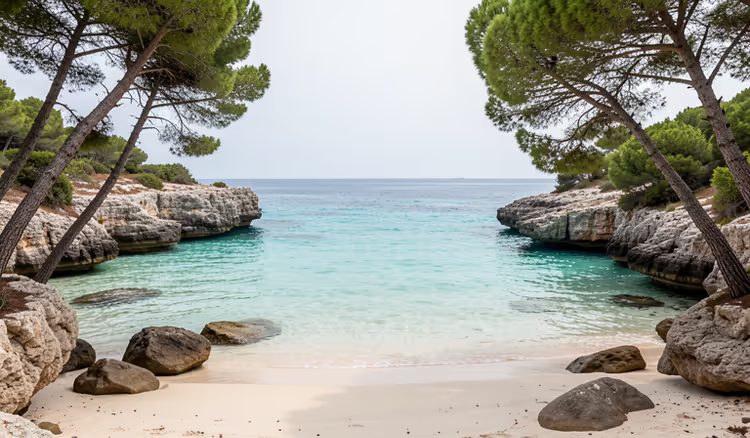 AIIllustrative image: AI-generated
Where to party if you want nightlife
For German-style nightlife, people head to Playa de Palma and Ballermann, but we'd consider Cala Ratjada instead: the resort in the northeast looks more pleasant and offers more good beaches than the overbuilt Playa de Palma. The second option, Magaluf, suits those who want to dance in British company and not run into anyone they know. Just keep in mind that after a sleepless night, the trail to a quiet cove will feel longer.
More articles about Mallorca and Spain
If the island wins you over, we have more: routes, neighborhoods, and towns that are a stone's throw from Palma.
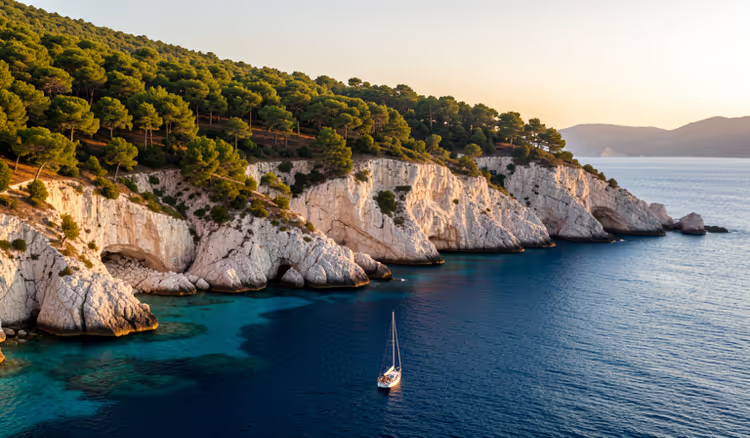 AIIllustrative image: AI-generated
Villages and roads into the island's interior
A separate editorial piece is dedicated to a village route: hairpin turns, old squares, and places where tour buses don't go.
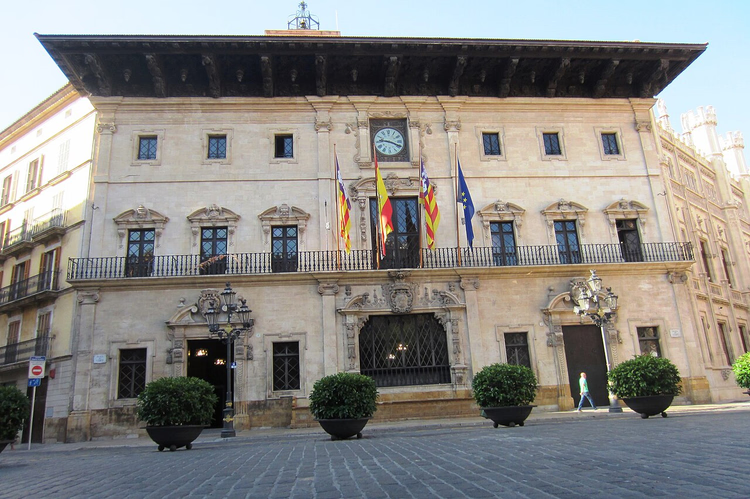 © Martin Furtschegger · CC BYPhoto: Martin Furtschegger, CC BY (https://creativecommons.org/licenses/by/3.0), Wikimedia Commons
What Mallorca looks like without the cliches
Village life, winding mountain roads, and the scent of orange groves: this piece brings together the island's most beautiful villages and quiet spots you're unlikely to read about in a short guidebook.
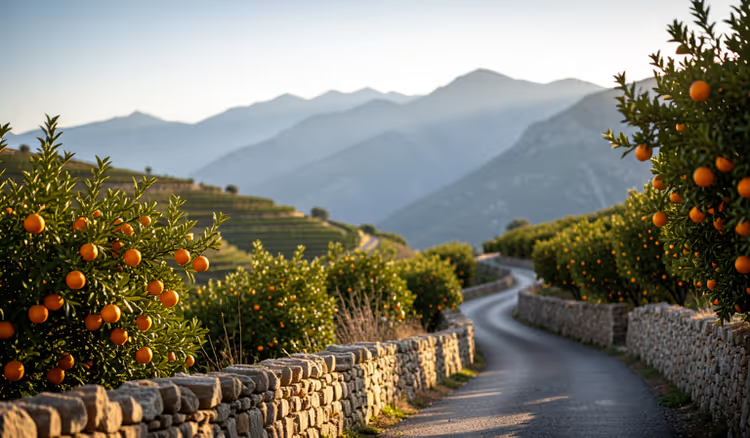 AIIllustrative image: AI-generated
Santa Catalina: a walk through a Palma neighborhood
We have a separate walk dedicated to the Santa Catalina neighborhood: cafes, boutiques, and concept stores in the alleys, a relaxed pace, and none of the bustle of the central streets.
Barcelona: new and lesser-known places
Planning a trip to Barcelona? Check out our notes on neighborhoods from Eixample to Gràcia: they feature spots you've most likely never heard of.
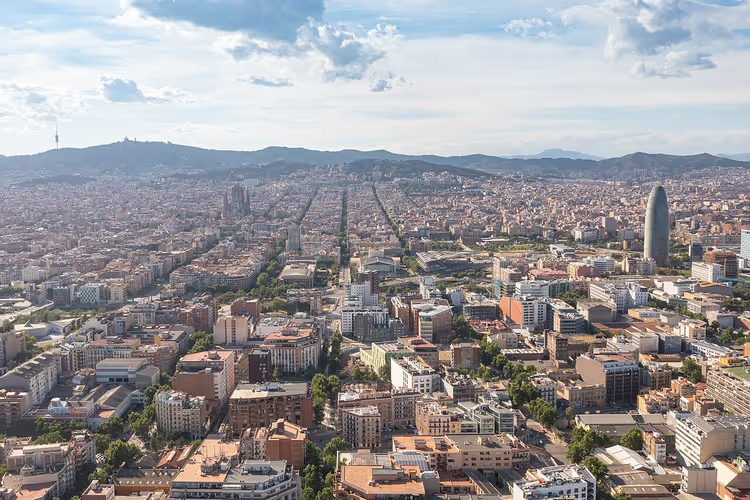 © dronepicr · CC BYPhoto: dronepicr, CC BY (https://creativecommons.org/licenses/by/2.0), Wikimedia Commons
Costa Brava and Girona: tips for your trip
Want to combine beach, nature, and culture? Then grab our piece on the Costa Brava and the city of Girona: it includes a selection of places along Catalonia's wild coast.
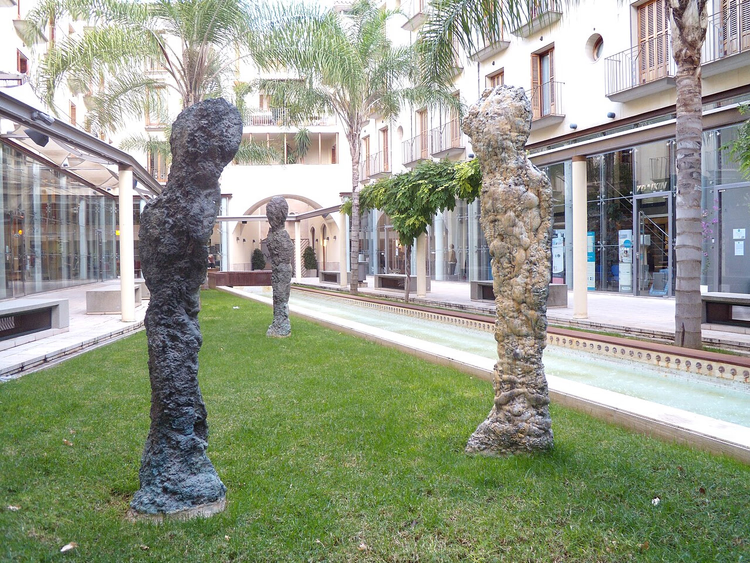 © Fernando2787 · CC BY-SAPhoto: Fernando2787, CC BY-SA (https://creativecommons.org/licenses/by-sa/3.0), Wikimedia Commons
⁉️🤔 Frequently asked questions
Do I need a car in Mallorca?
For coves and villages, a car makes the trip noticeably easier: there are almost no walking connections between points, and buses run on schedules that aren't always convenient. It's also doable without a car: line A51 from Palma goes to Es Trenc, and trains and buses connect the towns. If you rent a car, book it in advance and check parking conditions at the beaches.
Is parking at the beaches expensive?
At popular beaches, access is regulated and parking is paid. We listed the parking price at Es Trenc in the beaches section. At small coves, parking spots are scarce. At Caló des Moro, parking is already managed by the municipality. Arrive by eight in the morning, and finding a spot will be easier.
Where are the fewest tourists?
On the east coast and in villages inland. Es Carregador at the end of a dead-end street and Cala Morlanda absorb some of the flow from the heavily promoted coves. Lloseta near Palma sees almost no tour groups. Caló des Moro, on the other hand, draws people from all over the island, so expect crowds and parking restrictions there.
How is Cala Morlanda different from Cala s'Almunia?
Cala Morlanda has no sandy entry, but it does have two personalities: the wild Calò d'en Rafalino inlet and a calmer section with stairs and shade. Cala s'Almunia is easier to descend to, but it gets crowded in season. Both coves are great for snorkeling, and both require non-slip footwear.
What to do in Palma without a car?
The center can be covered on foot in half a day: La Seu cathedral, the shopping streets Passeig del Born and Avenida Jaime III, the Santa Catalina neighborhood, and the old alleys. Check the cathedral's opening hours and ticket prices on the official website, as they change by season. In the evening, head up to the terrace of the Es Princep hotel for a sunset over the mountains.
When is the best time to visit Mallorca with kids?
May and June offer warm weather without peak heat, and the water is already suitable for swimming. For families, the north of the island is more convenient: long, gently sloping beaches like Playa de Muro and fewer waves. July and August are also possible, but keep the heat and crowds in mind, so book a hotel with a pool and head to the sea in the morning.
In short: what's worth booking
If you're traveling with kids, aim for Playa de Muro: gentle entry and sand. If you want quiet in the water, choose Es Carregador and Cala Morlanda, and get to Caló des Moro early in the morning. You can cover central Palma in half a day. With food and shopping, set aside a full day for the city.
It’s best to book your hotel in Palma in advance: check out hotels in Palma on Trip.com and compare neighborhoods before your trip.

A small editorial team writing guides for independent travel. We travel ourselves, but we haven’t been everywhere, so we check prices, opening hours and how to get there against official sources.