
















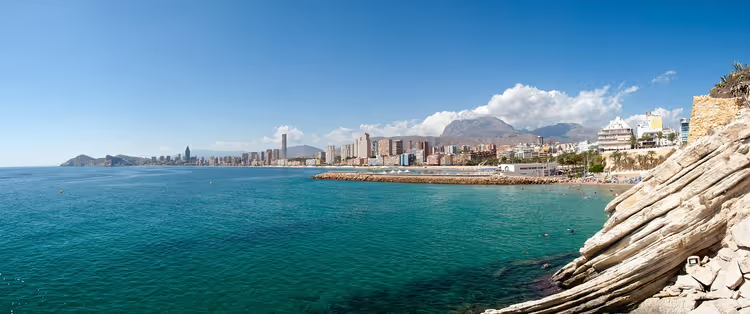
Beaches of Spain: 30 shores for families, surfers and snorkeling
The beaches of Spain stretch for thousands of kilometers, and picking just one is nearly impossible. In 2026, the Blue Flag was awarded to 677 Spanish beaches (as of 05/2026, El Mundo), putting the country among the world leaders. Behind this award are clean water, lifeguards, and easy access to the sea.
But the Blue Flag won't tell you where the wind gets annoying or where the snorkeling is best. We selected 30 beaches from different regions: Costa Brava, Barcelona, the Balearics, the Canaries, Galicia, and Valencia. For each one, we noted who it suits and what to plan for in advance.
Further down the list you'll find quiet coves for kids, wild shores for surfers, and urban beaches with showers and rentals. Water entry, seasonality, and infrastructure were checked against data from tourist offices (as of 09/2026).
How to choose a beach in Spain
💡 In short:
- Look for a gentle entry and lifeguards: Aiguablava, La Pineda, Albufereta.
- Want waves and wind: Bolonia, Benijo, Martiánez.
- Love wild nature: Galicia, Menorca, Formentera.
Spanish beaches differ in shoreline character, wind, and water temperature. To avoid disappointment, first decide what you want more: calm, waves, or a city close by. Below is a comparison by region.
Region | Shoreline type | Who it suits |
|---|---|---|
Costa Brava and Costa Dorada | Rocky coves, fine sand | Families, a quiet vacation |
Barcelona | Urban beaches | A short trip without a car |
Balearic Islands | Coves with clear water | Snorkeling and swimming |
Canary Islands | Volcanic sand, ocean | Surfing, waves |
Galicia | Atlantic, cliffs, dunes | Wild nature |
Valencia and Alicante | Wide sandy beaches | Families, city vacations |
1. Aiguablava beach
 © Miquel Àngel Patiño · CC BY-SAPhoto: Miquel Àngel Patiño, CC BY-SA (https://creativecommons.org/licenses/by-sa/4.0), Wikimedia Commons
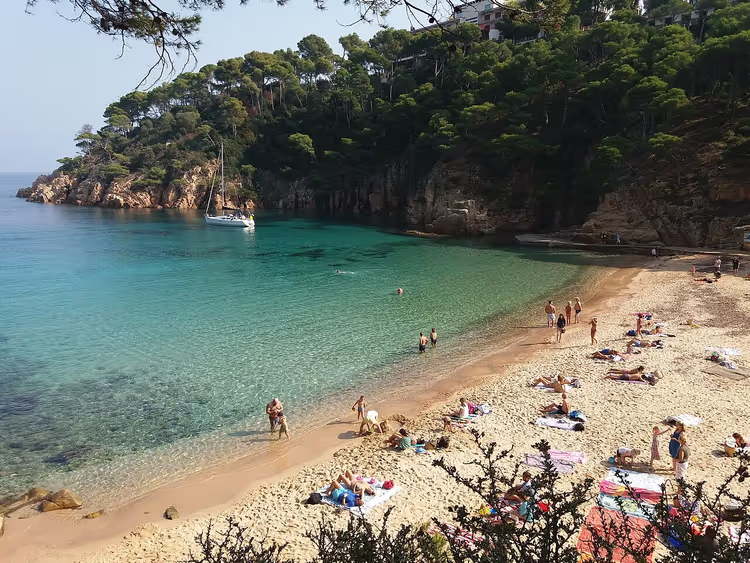
Aiguablava lies in a cove near Begur on the Costa Brava. Cliffs shelter it on two sides, so there are almost no waves here, and the water near the shore stays warm for a long time. The official Costa Brava guide calls this cove one of the most beautiful on the coast (visitacostabrava).
The beach is small: about 80 m long and 40 m wide (as of 09/2026, Begur tourist office). Thanks to the gentle entry and shallow depth, families with children choose it. In season there is little space on the sand, so come in the morning on a weekday.
Diving enthusiasts find sea cucumbers and small fish here. You can rent a boat or a small craft and head out of the cove into open water with clear visibility.
- How to get there: by car from central Begur, paid parking near the beach.
- Who it's for: families with children, calm swimming.
- Not for: those looking for waves and open space.
- The catch: in July and August the beach is packed by midday.
2. Granadella beach
 © Diego Delso · CC BY-SAPhoto: Diego Delso, CC BY-SA (https://creativecommons.org/licenses/by-sa/4.0), Wikimedia Commons
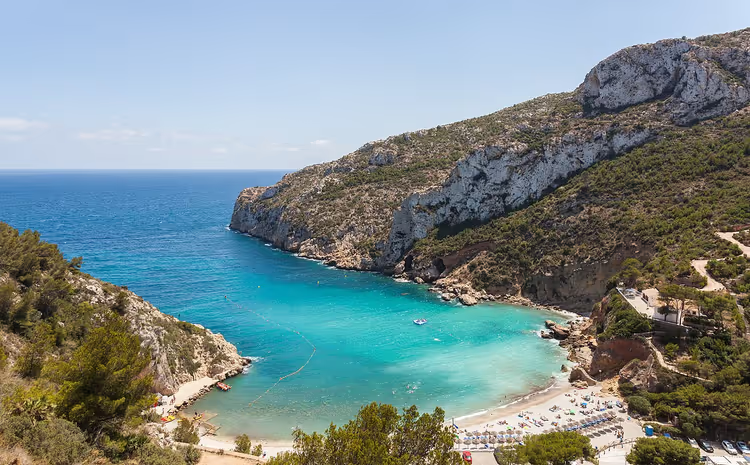
Granadella hides in a cove below Jávea on the Costa Blanca. The cove is narrow, about 20 m wide (as of 09/2026, official tourism portal), but the water is so clear that you can see the bottom from the cliffs. This is not sand: the shore is covered with fine pebbles, so bring water shoes. In return, the snorkeling here is among the best on the coast.
Nearby restaurants serve rice dishes and fresh fish, so food lovers should stay for lunch. History buffs will enjoy the climb to the old fortress on the cliff above the cove.
- How to get there: by car via a winding road from Jávea, parking at the entrance.
- Who it's for: snorkeling, calm swimming, views.
- Not for: those who want to lie on soft sand.
- The catch: pebbles instead of sand, water shoes needed.
3. Macarella beach
 © Paul Stephenson · CC BYPhoto: Paul Stephenson, CC BY (https://creativecommons.org/licenses/by/2.0), Wikimedia Commons
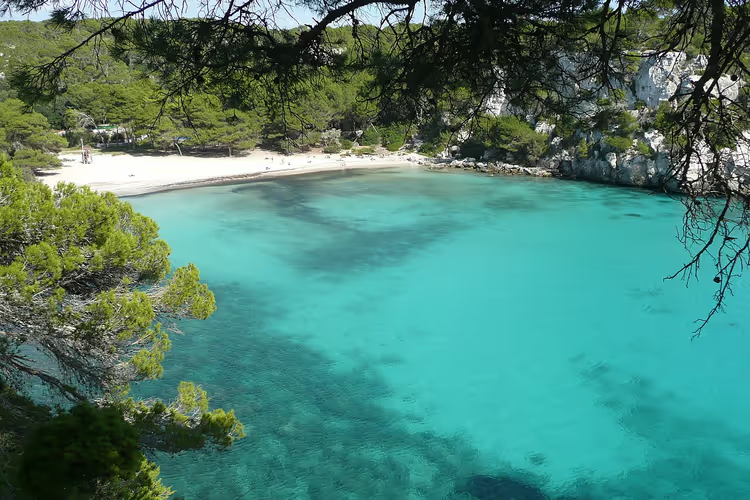
Macarella is a small cove in the southwest of Menorca. The water here is a bright turquoise, often compared to blue tourmaline, and the pine-covered cliffs around make the spot recognizable. The cove is sheltered from the wind, so the sea is usually calm and clear.
The spot is popular with naturists and divers. In high season, those who arrive early in the morning find a free spot. Come at the start of the day or in June: there are noticeably fewer people then.
- How to get there: on foot from the parking lot along a pine trail.
- Who it's for: lovers of seclusion and the underwater world.
- Not for: those not willing to walk.
- The catch: by midday in July the beach is full, and there is little shade.
4. Bolonia beach
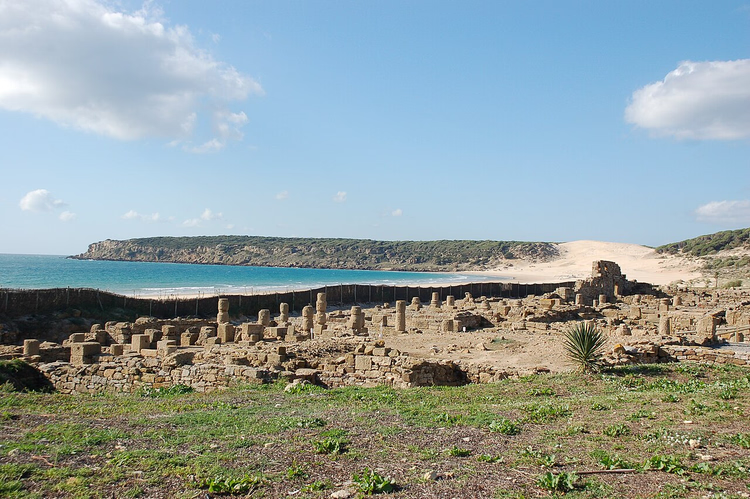
Bolonia is located in Andalusia near Tarifa. It is one of the few beaches in Spain that has kept its unspoiled look: a wide strip of fine sand, clear water, and dunes with no development. Right by the beach stand the ruins of the Roman city of Baelo Claudia.
The beach is open to the winds, so surfers and kitesurfers come here. You can grab a bite at the beachfront restaurants and stay overnight in hostels favored by travelers going light. Boats leave from here for whale and dolphin watching.
- How to get there: by car from Tarifa, by bus from Algeciras.
- Who it's for: surfing, nature, Roman ruins.
- Not for: those who can't stand the wind.
- The catch: windy, waves often pick up.
5. Maspalomas Beach
 © www.elbpresse.de · CC BY-SAPhoto: www.elbpresse.de, CC BY-SA (https://creativecommons.org/licenses/by-sa/4.0), Wikimedia Commons
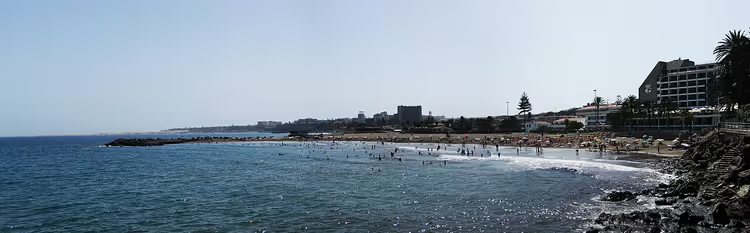
Maspalomas lies in the south of Gran Canaria and is known for its white sand dunes that stretch along the shore. It is one of the sunniest places in Europe: the sun shines here almost year-round (as of 09/2026, Spanish beach database). That is why the air and water in the south of the island are warmer than at neighboring resorts.
There is plenty of infrastructure around: restaurants, cafes, shops, and attractions. In the evening people come here for the sunset over the Atlantic. Bring a camera: the light on the dunes changes every hour.
- How to get there: by bus from Maspalomas, on foot from the hotels.
- Who it's for: year-round sun, evening walks.
- Not for: those looking for a quiet cove without people.
- The catch: the wind kicks up sand, and it gets into your things.
6. Ses Illetes Beach
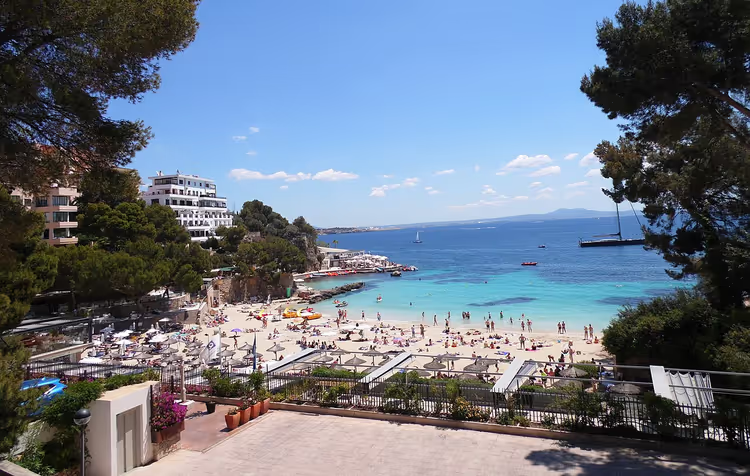
Ses Illetes is a resort area in the west of Mallorca near Palma. The beach is small: about 120 m long and 25 m wide (as of 09/2026, beach travel guide), with white sand and a gentle entry into the water. Some loungers sit on concrete platforms, and terraces for sunbathing are built on the rocks above the water.
A dive center and rental points for loungers, umbrellas, and gear operate here. Boats leave from the beach for the islets of Sa Torre, Sa Caleta, and Des Pas. Because of the calm water, families with children choose this area.
- How to get there: by bus from Palma, by car on the Ma-1 highway.
- Who it's for: families, diving, a short trip from Palma.
- Not for: those who want a wild shore without hotels.
- The catch: the beach is small, and in season there is little shade.
7. Benijo Beach
 © trolvag · CC BY-SAPhoto: trolvag, CC BY-SA (https://creativecommons.org/licenses/by-sa/3.0), Wikimedia Commons
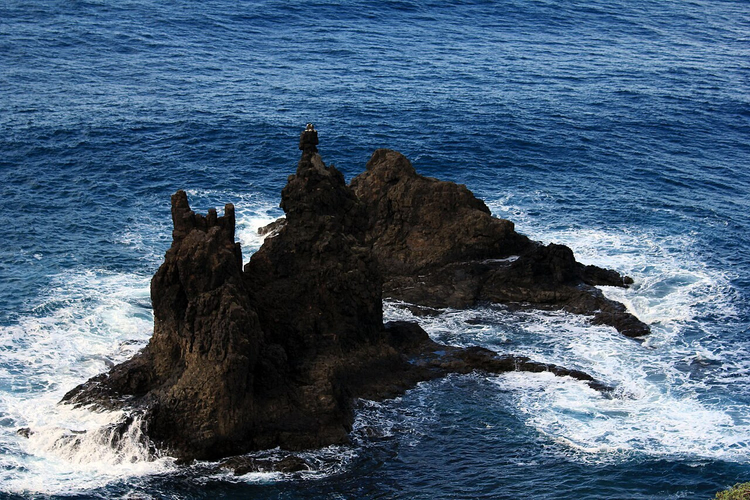
Benijo is a wild beach in the northeast of Tenerife near the village of Benijo. A winding road leads to it through the Anaga mountain range with evergreen forests and the scent of laurel. The shore is covered with black sand and fine pebbles, and locals call the surrounding rocks "crocodile teeth."
You go down to the water by a stone staircase. Not everyone dares to swim: there is a strong current and high surf here, which windsurfers love. Before you go, check the tide times, otherwise the beach may disappear under water.
- How to get there: by car through Anaga, the road is narrow and winding.
- Who it's for: surfing, photography, solitude.
- Not for: families with children, inexperienced swimmers.
- The catch: strong current and big waves.
8. Barceloneta Beach
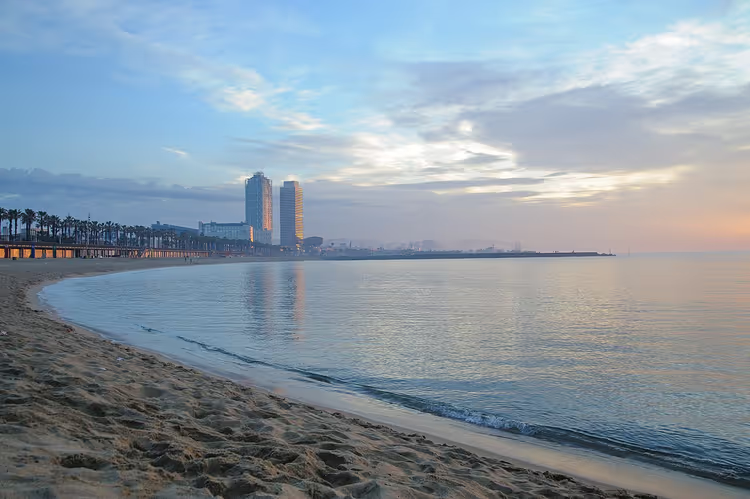 © Kuba Bożanowski from Warsaw, Poland · CC BYPhoto: Kuba Bożanowski from Warsaw, Poland, CC BY (https://creativecommons.org/licenses/by/2.0), Wikimedia Commons
Barceloneta is the most famous urban beach in Barcelona. It has received the Blue Flag for clean water and sand and stretches for about a kilometer along the neighborhood of the same name (as of 09/2026, Spanish beach guide). The entry into the sea is convenient, and there are free freshwater showers, toilets, and umbrella and lounger rentals.
The beach is free of nudists, so there are many families with children here: in summer, playgrounds are set up for them. Adults play volleyball and soccer, and bars and cafes are open along the shore. You can get there on foot from the metro, no car needed.
- How to get there: on foot from Barceloneta metro station, no car.
- Who it's for: a short city trip, families, sports.
- Not for: those looking for quiet and few people.
- The catch: crowded and noisy, busy until late at night.
9. Sant Sebastia Beach
 © MarcusObal · CC BY-SAPhoto: MarcusObal, CC BY-SA (https://creativecommons.org/licenses/by-sa/3.0), Wikimedia Commons
Sant Sebastia lies in a bay in Barcelona's old town, next to Barceloneta. It is noticeably longer than its neighbor: about 1,100 m of shoreline and 80 m wide (as of 09/2026, beach guide). The sand here is velvety, the water is clear, and the beach has earned a Blue Flag for cleanliness. Even in season it is calmer here than at Barceloneta.
For those who sunbathe topless, there is a separate area on the right side. There are shower cabins, changing rooms, composting toilets, trash containers, and sea access ramps for people with disabilities. Lifeguards watch over swimmers, and swimming and surfing schools operate here.
- How to get there: walk from Barceloneta metro station.
- Who it's for: families, sports, a quiet city beach.
- Not for: those who want unspoiled nature.
- The catch: lots of locals on weekends.
10. Lloret Beach
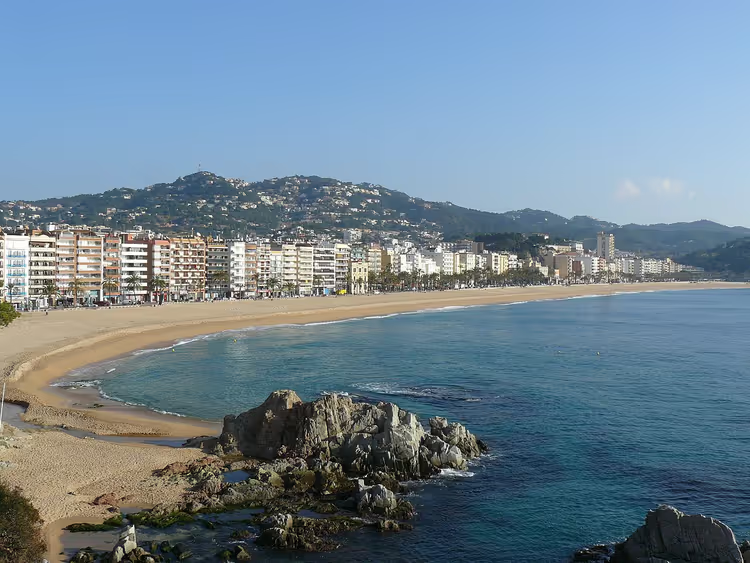 © Xavigivax · CC BY-SAPhoto: Xavigivax, CC BY-SA (https://creativecommons.org/licenses/by-sa/3.0), Wikimedia Commons
Lloret is the main beach of the town of Lloret de Mar on the Costa Brava. The golden strip stretches out in a wide ribbon, and wooden walkways lead from the promenade down to the water. The sand is fine and does not stick to your feet, and the water is pleasingly clean.
The entry into the sea is easy, but the depth starts not far from the shore, so the entire swimming area is kept under lifeguard supervision. Free showers and changing rooms are available, and there are lounger and umbrella rentals. You can rent a catamaran, ride a banana boat, or take a boat trip along the rocky coves. Cafes, restaurants, and nightclubs line the beach.
- How to get there: walk from the center of Lloret de Mar.
- Who it's for: active recreation, families, nightlife.
- Not for: those seeking quiet.
- The catch: in season it is very crowded and noisy until morning.
11. La Pineda Beach
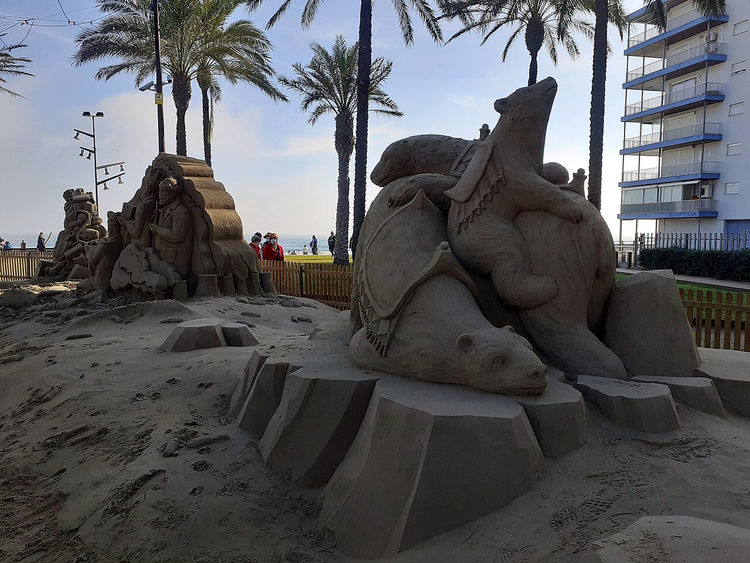 © Jordi Gili · CC BY-SAPhoto: Jordi Gili, CC BY-SA (https://creativecommons.org/licenses/by-sa/4.0), Wikimedia Commons
La Pineda is part of the Salou resort on the Costa Dorada. The name translates as "pine town," and here the pines come right up to the water, filling the air with a resinous scent. The beach is free and municipal, and it has been awarded a Blue Flag for cleanliness (as of 09/2026, coast guide).
The sand strip is wide, the bottom is shallow, and there are almost no waves. That is why La Pineda is often chosen by parents with small children. There are changing rooms, showers, and toilets, and the beach is cleaned of trash every morning.
- How to get there: walk from the hotels of Salou and La Pineda.
- Who it's for: family vacations with kids, shallow sea.
- Not for: surfers, there are almost no waves here.
- The catch: in season the shore is densely packed with loungers.
12. Cathedral Beach
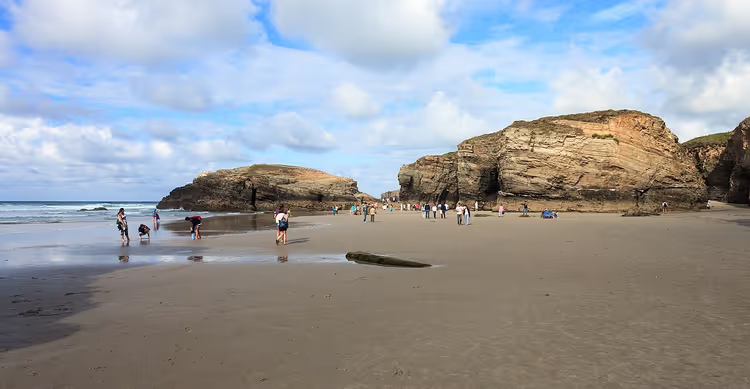 © Luis Miguel Bugallo Sánchez (Lmbuga) · CC BY-SAPhoto: Luis Miguel Bugallo Sánchez (Lmbuga), CC BY-SA (https://creativecommons.org/licenses/by-sa/3.0), Wikimedia Commons
Cathedral Beach (Praia das Catedrais) is in Galicia, on the Cantabrian Sea near Ribadeo. The cliffs rise 30 m out of the water and at low tide resemble Gothic cathedrals, which is why the site has been declared a national natural monument (turismo.gal).
At low tide three stone arches, caves, and labyrinths are exposed, and the shore turns into a long sandy strip. At high tide the water returns and covers the beach, leaving open space for divers. It is convenient to watch this from the viewing trail behind the parapet. In high season entry is free, but by advance reservation only (Xunta de Galicia).
- How to get there: by car from Ribadeo along the coast.
- Who it's for: photography, geology, nature.
- Not for: those who came only to swim.
- The catch: at high tide there is no beach underfoot, you need low tide.
13. La Rodas Beach
 © Jules Verne Times Two · CC BY-SAPhoto: Jules Verne Times Two, CC BY-SA (https://creativecommons.org/licenses/by-sa/4.0), Wikimedia Commons
La Rodas is a white-sand spit that connects the islands of Monteagudo and Faro in the Cies archipelago in Galicia. The beach is spacious, with natural dunes and wooden walkways across the sand (as of 09/2026, beaches of Galicia). A campsite with a restaurant, toilets, and drinking water operates in the shade of the trees.
From May to October it gets crowded here, although few people actually swim. The beach is sheltered from the open ocean, so there are fewer waves. The water, however, is Atlantic and cool even in summer. La Rodas has earned a Blue Flag for cleanliness, and lifeguards keep things in order.
- How to get there: by ferry from the mainland, then on foot.
- Who it's for: nature, calm sea, camping.
- Not for: those who came for the day and are in a hurry.
- The catch: in summer, the number of visitors to the islands is limited.
14. Cala Crancs
Cala Crancs is a quiet cove in eastern Salou, on the border with La Pineda. The beach is small, surrounded by distinctive cliffs with pine forest that shelter it from strong winds. Usually only a light breeze blows here, so swimming is comfortable even in the heat.
The sea is clean and calm, the entry is gradual, and the bottom is firm and sandy, which suits families with children. The beach is cleaned, and lifeguards are on duty. Rentals offer everything you need for a day out plus catamarans, and there are showers, toilets, sun shades, and a beach bar. Nearby, in Salou, is the PortAventura amusement park.
- How to get there: by car or bus from Salou.
- Who it's for: families with children, calm swimming.
- Not for: those who want wide open space.
- The catch: the cove is small, so it gets crowded in season.
15. Cala Mandia
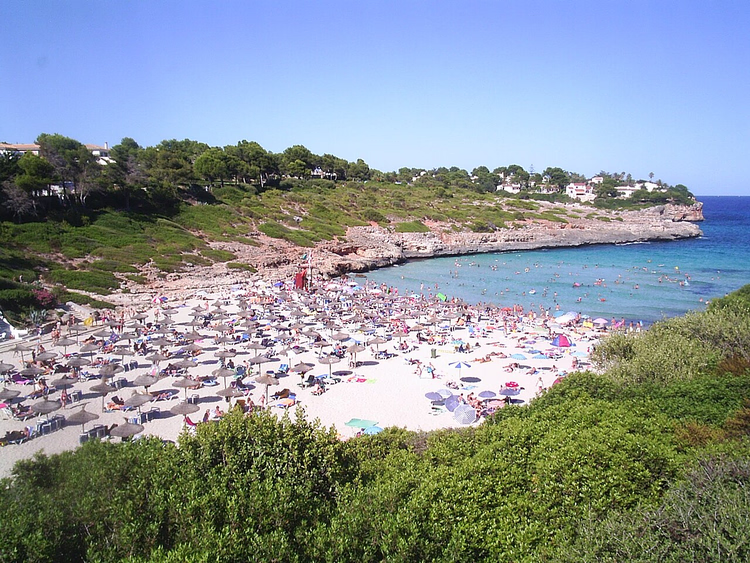
Cala Mandia is on the east coast of Mallorca and draws visitors with its quiet, beautiful cove. The season here starts in May and runs through September, when beach life is in full swing. It is a spacious sandy beach with fixed mushroom-style shades nestled into the Mediterranean greenery.
You can rent a lounger and umbrella and quench your thirst at the beach bar. The entry into the sea is gradual, it is shallow near the shore, and the water is clean. Sometimes seaweed washes up at the waterline, but it is constantly cleared away. Swimming zones are separated from areas for pedal boats and boat trips along the steep coastline. Lifeguards keep an eye on safety.
- How to get there: by car from the nearest resorts on the east coast.
- Who it's for: families, calm swimming, boat trips.
- Not for: those seeking seclusion.
- The catch: seaweed sometimes washes up near the shore.
16. Cala Mesquida
 © dronepicr · CC BYPhoto: dronepicr, CC BY (https://creativecommons.org/licenses/by/2.0), Wikimedia Commons
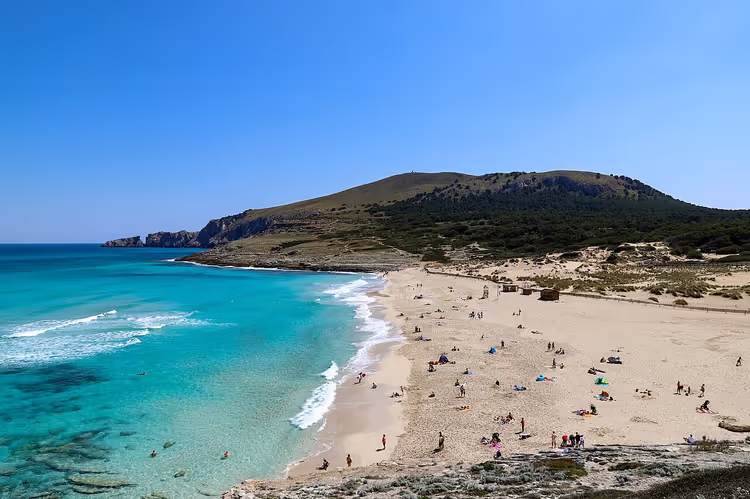
Cala Mesquida is a secluded beach in northern Mallorca near Capdepera, within an untouched nature reserve. The beach area is about 300 m long and 100 m wide, surrounded by natural dunes and pines (as of 09/2026, mallorca.com). A wooden walkway leads through the dunes to the water.
White sand sets off the turquoise water, and the waves are usually moderate, so families with children relax here. During the windy season, the swell picks up and windsurfers take to the water. Rentals include loungers, umbrellas, pedal boats, and windsurfing gear. Lifeguards watch over the water, and cormorants and gulls nest on the cliffs.
- How to get there: by car from Capdepera, then on foot along a path.
- Who it's for: nature, windsurfing, families.
- Not for: those who need urban infrastructure nearby.
- The catch: windy in certain seasons, little shade.
17. Playa de la Arena
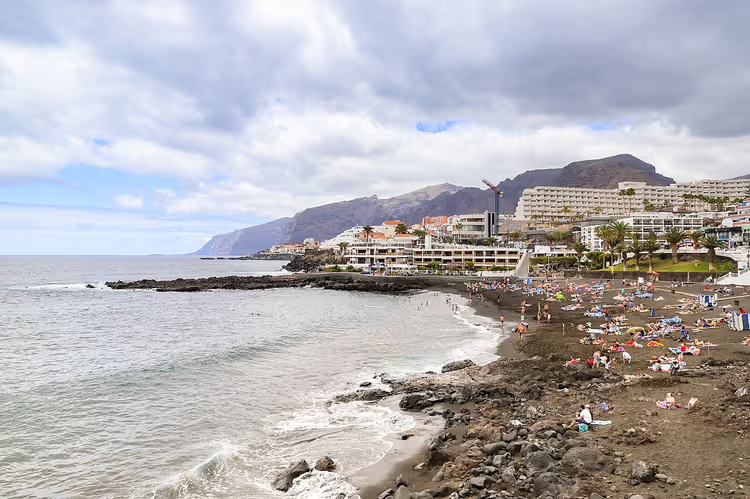
Playa de la Arena is in northern Tenerife, in the center of the resort of the same name. The beach has earned a Blue Flag as a mark of quality. It stretches behind the coastal road Avenida Maritima, from which ramps lead down to the water. The water here is calm and clear, but the bottom is rocky, and in rough conditions the rocks are hidden.
 © dronepicr · CC BYPhoto: dronepicr, CC BY (https://creativecommons.org/licenses/by/2.0), Wikimedia Commons
Swimming requires caution: near the shore the bottom drops off sharply, and lifeguards warn of the risk with a red flag. Services include umbrella and lounger rentals, watercraft, fresh-water showers, facilities for people with disabilities, a sports area, and a rest room.
- How to get there: on foot from the resort, along Avenida Maritima.
- Who it's for: calm swimming in clear water.
- Not for: families with small children because of the depth.
- The catch: sharp drop-off near the shore, rocky bottom.
18. Albufeireta beach
Albufeireta is a cozy beach on the northeastern edge of Alicante, in a bay between two cliffs. The stretch is about 500 m long and 30 m wide (as of 09/2026, official beach guide). Soft golden sand, clear calm water, a gentle entry and palm trees along the shore make it comfortable for families and locals.
Cleanliness is maintained here, with waste collected in bright bins. There are rentals for umbrellas, loungers, pedal boats and sports equipment, and playgrounds for children. The high quality is confirmed by the Blue Flag.
- How to get there: by tram or bus from central Alicante.
- Who it's for: families with children, shallow sea.
- Not for: those who want a spacious wild shore.
- The catch: the bay is small, crowded in season.
19. Es Fort beach
 © Daria · CC BYPhoto: Daria, CC BY (https://creativecommons.org/licenses/by/3.0), Wikimedia Commons
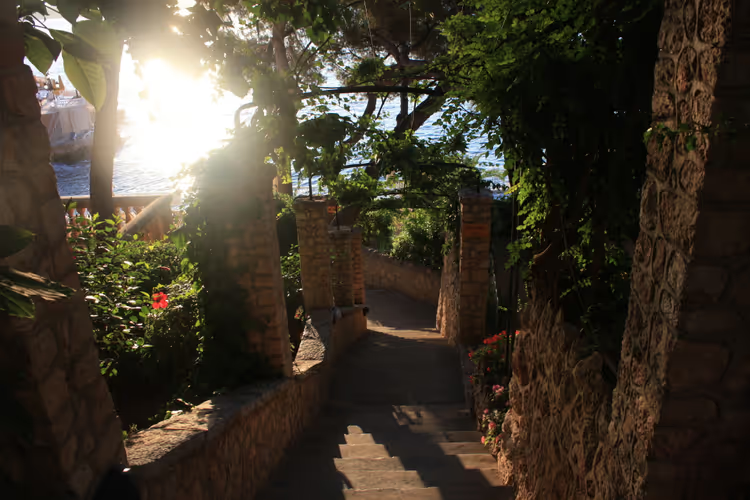
Es Fort is a free municipal beach in the resort area of Ses Illetes on Mallorca. Playa Es Fort occupies about 180 m of Mediterranean shoreline and stands out for its natural covering of fine white sand (as of 09/2026, Spain beach catalog). Convenient stone stairs lead from the beachfront hotels to the water.
The beach attracts with its well-kept condition and fixed mushroom-shaped shades that protect from the scorching sun. Swimming in the warm azure sea with a gentle entry is a pleasure. A lounger with an umbrella can be rented inexpensively. The shore offers a view of the islets of Des Pas, Sa Caleta and Sa Torre.
- How to get there: on foot from the hotels of Ses Illetes.
- Who it's for: families, calm swimming, views of the islets.
- Not for: those looking for a wild shore.
- The catch: the beach is small, little space in season.
20. Cala Saona beach
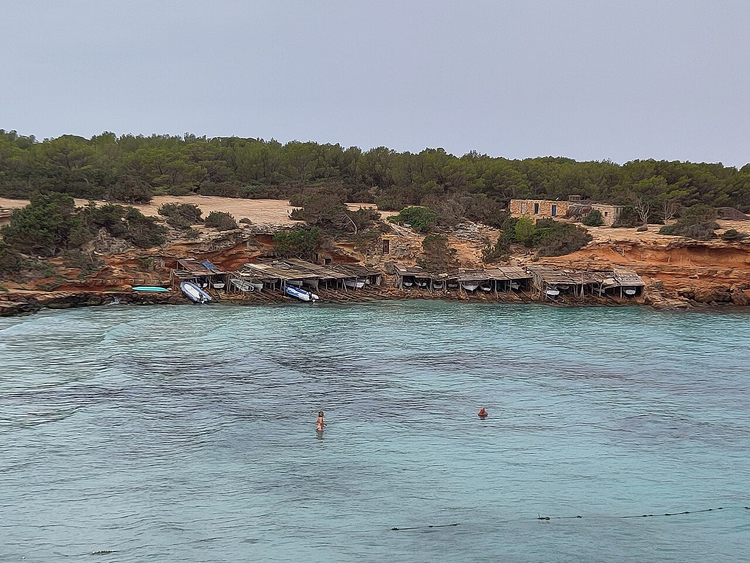
Cala Saona lies on the island of Formentera, next to Ibiza. A small snow-white beach about 140 m long and 120 m wide is surrounded by steep overgrown shores and reddish rocks at the water's edge (spain.info). The entry into the sea has a slight slope, the water is blue and transparent, the bottom is sandy.
The bottom drops gradually: 40 m from the shore the depth is about 2 m. Boats anchor in the bay and people scuba dive. The bay is open to winds, but there is no heavy swell in season. You can stay at a hotel in the tourist center, and it is easy to reach by bus, car or sea.
- How to get there: by bus, car or sea from the port.
- Who it's for: diving, swimming, sunsets.
- Not for: those looking for a large urban beach.
- The catch: little parking near the bay in season.
21. Bogatell beach
 © dronepicr · CC BYPhoto: dronepicr, CC BY (https://creativecommons.org/licenses/by/2.0), Wikimedia Commons
Bogatell is a free municipal beach in Barcelona near the Olympic Port, awarded the Blue Flag. The area of golden sand, about 640 m long and 40 m wide, is known for its developed infrastructure (as of 09/2026, national beach catalog).
It has freshwater showers, changing rooms, drinking fountains, bars, Wi-Fi and lockers for belongings, as well as toilets and trash bins. You can rent an umbrella and a lounger, play volleyball, soccer and table tennis. A distinctive feature of Bogatell is an interactive board showing air temperature, water temperature and time. The water is clear, the entry is gentle, and lifeguards watch over the beach.
- How to get there: on foot from Poblenou and Ciutadella metro stations.
- Who it's for: sports, families, quiet urban relaxation.
- Not for: those who want wild nature.
- The catch: little shade, an umbrella is needed in summer.
22. Cala Bassa beach
 © Daria · CC BYPhoto: Daria, CC BY (https://creativecommons.org/licenses/by/3.0), Wikimedia Commons
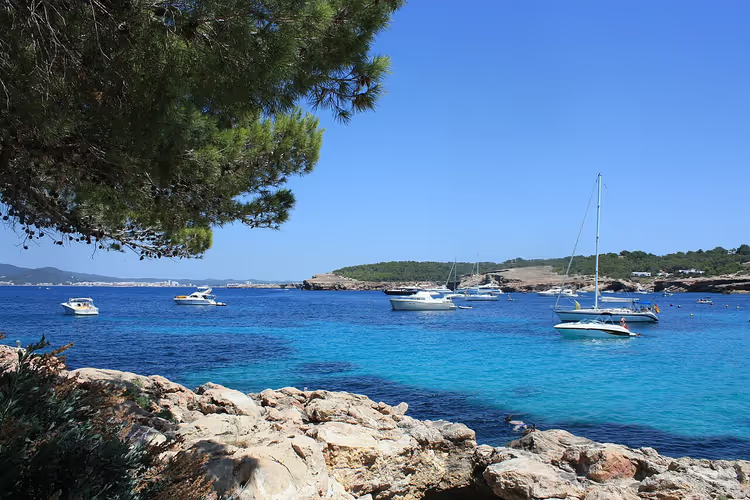
Cala Bassa is located 9 km from the resort of Sant Antoni de Portmany on Ibiza. A compact beach about 300 m long with fine golden sand is decorated with original sculptures (as of 09/2026, Balearic Islands beaches). The bay is sheltered from sea winds, so it is almost always calm here, and the water is crystal clear.
Divers have two designated diving zones in the western and eastern parts of the bay. The rest of the water area is shallow, and near the shore you can stand on the bottom. Wooden walkways run along the beach, and you can sunbathe under an umbrella on a lounger.
- How to get there: by car or bus from Sant Antoni.
- Who it's for: diving, calm swimming, families.
- Not for: surfers, it is almost always calm here.
- The catch: loungers get taken quickly in season.
23. Fenals beach
 © tiger rus · CC BYPhoto: tiger rus, CC BY (https://creativecommons.org/licenses/by/3.0), Wikimedia Commons
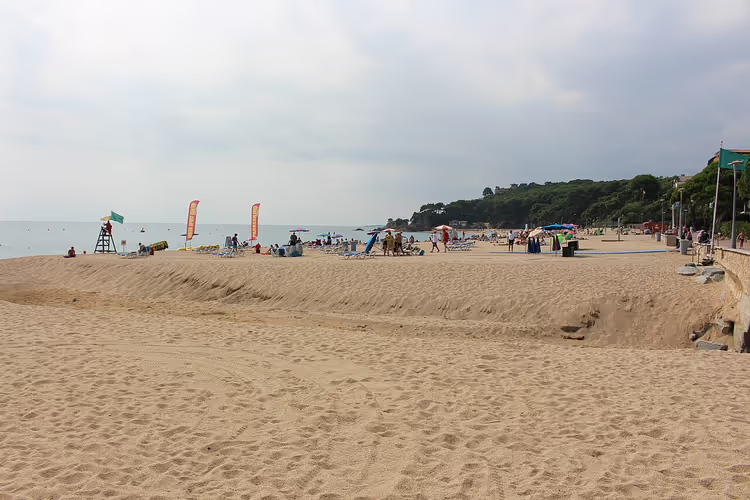
Fenal's sits comfortably in a bay separated from the beaches of central Lloret de Mar by a green headland. It's a quiet, upscale spot, removed from the crowded hotels. Surrounded by pine trees, it stretches as a strip of golden sand for almost 700 m (as of 09/2026, beach guide).
The sea in this area is clean, but open to the winds, so there can be waves. The water entry is easy, but the depth starts after just two or three meters. There are showers, toilets, water attractions, and rental points. A playground is set up for children.
- How to get there: on foot from the center of Lloret de Mar along the promenade.
- Who it's for: water skiing, catamaran, relaxed rest.
- Not for: families with small children because of the quick drop-off.
- The catch: open to the winds, the entry gets deep quickly.
24. Martianez Beach
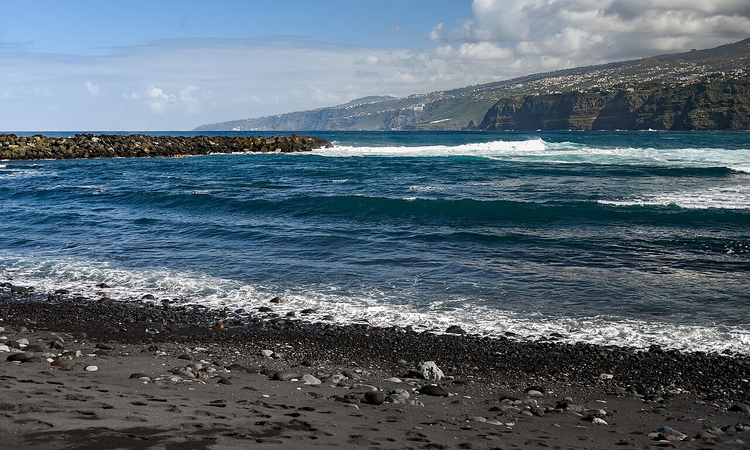
Martianez is located in the resort town of Puerto de la Cruz on Tenerife. The beach attracts those who love water sports and windsurfing: from lessons to equipment rental, there's a wide range of services here. A big swell dominates the water, and even the breakwater built to protect against the open ocean doesn't stop it.
 © Jorge Franganillo · CC BYPhoto: Jorge Franganillo, CC BY (https://creativecommons.org/licenses/by/2.0), Wikimedia Commons
The water is refreshingly cool, so few people swim. The shore is covered with black volcanic sand that gets very hot in the sun: it's easier to move around the beach in flip-flops. Paved paths lead to the water along palm trees, and above them runs a promenade with cafes and souvenir shops.
- How to get there: on foot from the center of Puerto de la Cruz.
- Who it's for: windsurfing, water sports, walks.
- Not for: those who want warm water and calm seas.
- The catch: cool water, hot black sand.
25. Cala Comte Beach
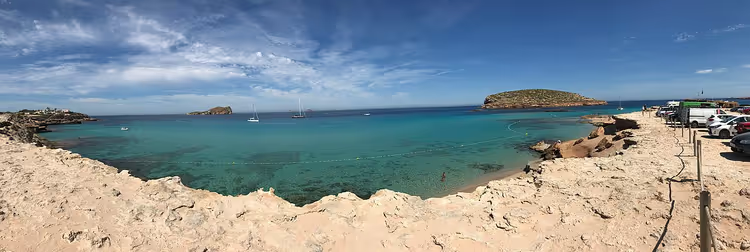 © Matze2305 · CC BY-SAPhoto: Matze2305, CC BY-SA (https://creativecommons.org/licenses/by-sa/4.0), Wikimedia Commons
Cala Comte is located on Ibiza among scenic hills and a bay fringed by low cliffs. Nature has divided the beach into three zones with crystal-clear turquoise sea. The first is pearly sand with a gentle slope into the water, chosen by tourists with children.
The second zone is rocky, with a less comfortable surface, and attracts those who love seclusion and views of the islands. The third is a miniature sandy beach reached by steps carved into the rock; nudists have made it their own. Beach services include restaurants, showers, lockers, rental of loungers, umbrellas, boats, and pedal boats. Lifeguards keep an eye on safety.
- How to get there: by car or bus from San Antonio.
- Who it's for: snorkeling, views, calm swimming.
- Not for: those who want one long sandy shore.
- The catch: rocky zones, water shoes needed.
26. Nova Icaria Beach
Nova Icaria is located in the center of Barcelona, near the port and the park of the same name. The beach stretches 400 m long and 60 m wide (Barcelona city council). The water is mostly clean, except for the section near the pier, and the entry into the sea is long and easy. In terms of facilities, the beach is on par with the best urban shores.
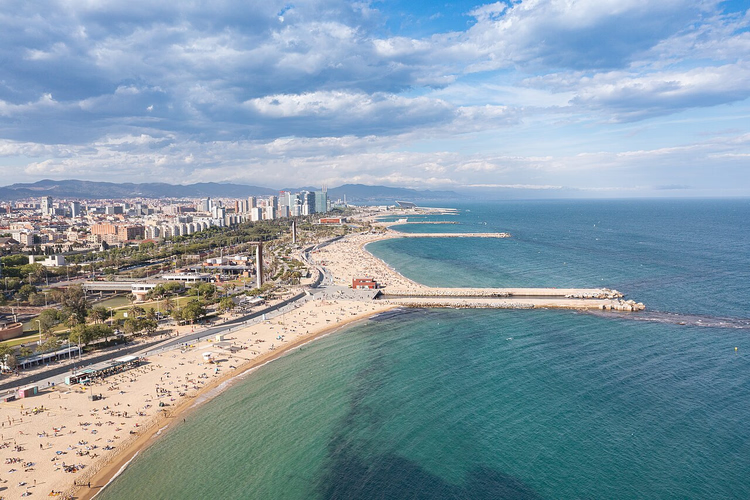 © dronepicr · CC BYPhoto: dronepicr, CC BY (https://creativecommons.org/licenses/by/2.0), Wikimedia Commons
There are benches, showers, toilets, lockers, and Wi-Fi. Animators work at the children's playground, and sports areas are equipped for tennis and volleyball. You can rent loungers with umbrellas, a boat, and surfing and diving gear. Along the beach area there are many small restaurants and cafes, lifeguards watch over swimmers, and services for people with disabilities are available. The atmosphere is calm, except that vendors sometimes disturb the peace.
- How to get there: on foot from the Ciutadella Vila Olímpica metro station.
- Who it's for: families, sports, a calm urban beach.
- Not for: those who want an uncrowded shore.
- The catch: the water near the pier is dirtier, vendors sometimes approach you.
27. Las Arenas Beach
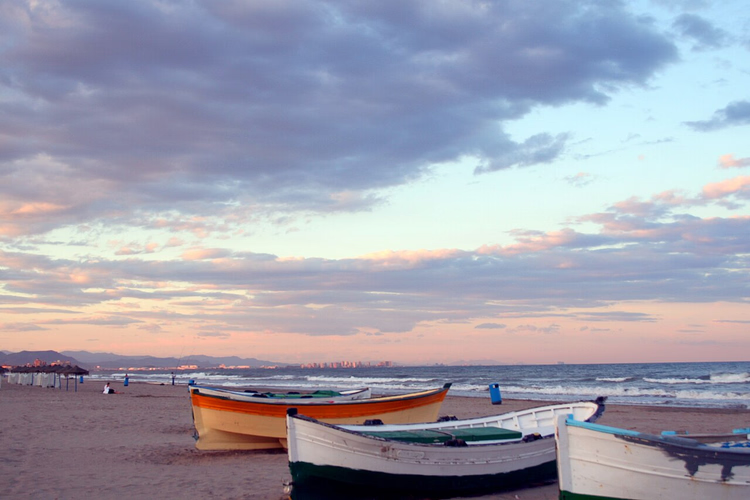 © Manuel M. Vicente from Spain · CC BYPhoto: Manuel M. Vicente from Spain, CC BY (https://creativecommons.org/licenses/by/2.0), Wikimedia Commons
Las Arenas is located at the Las Arenas resort in Valencia. Officially the beach is called Levante, and its popular name comes from the luxury hotel nearby that looks like an ancient Greek temple. It's an urban beach with free entry and yellow sand that shines with cleanliness. A gentle slope into the sea with small waves makes it suitable for a relaxed stay.
The beach has children's and volleyball areas, showers and toilets, and rental points for umbrellas and loungers. Don't expect quiet here: life is in full swing around the clock. During the day people swim and play beach tournaments, and at sunset the fun moves to the restaurants, bars, and clubs along the palm-lined promenade.
- How to get there: by tram or bus from central Valencia.
- Who it's for: urban beach days, nightlife, families during the day.
- Not for: those looking for peace and quiet.
- The catch: noisy around the clock, especially in summer.
28. Las Vistas Beach
Las Vistas is the longest and liveliest beach on the southern coast of Tenerife, next to the town of Los Cristianos. It sits in a bay surrounded by a mountain ridge, so strong winds are rare here. The beach is known for its fine golden sand and easy entry into the ocean water, and its service quality has been confirmed by the Blue Flag for years (Tenerife Tourism).
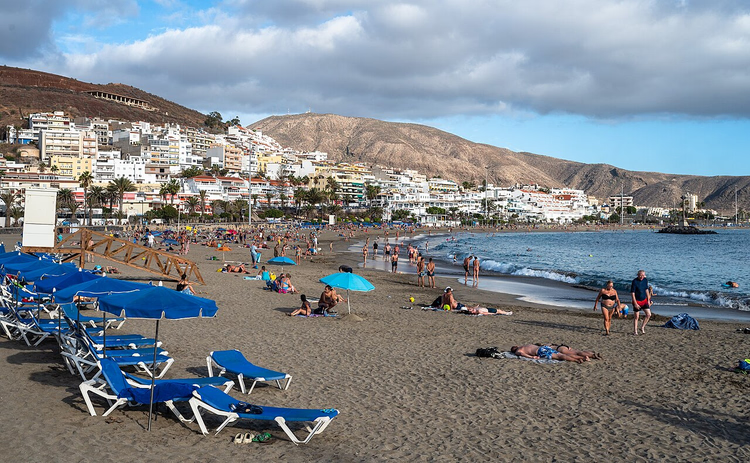 © Tuxyso · CC BY-SAPhoto: Tuxyso, CC BY-SA (https://creativecommons.org/licenses/by-sa/4.0), Wikimedia Commons
The sea waves by the breakwater shimmer with all the colors of the rainbow, and a fountain decorates the center of the beach. There are showers, changing rooms, toilets, and rentals for loungers, umbrellas, and water sports equipment. Active visitors play on the volleyball and soccer courts. As dusk falls, the beach lights up with bars, clubs, and discos.
- How to get there: on foot from Los Cristianos and Costa Adeje.
- Who it's for: swimming, sports, evening entertainment.
- Not for: those who want a quiet, uncrowded shore.
- The catch: very crowded, noisy in the evenings.
29. Las Salinas Beach

Las Salinas got its name from the salt lakes and lies at the southernmost point of Ibiza, in a bay between the resorts of Es Cavallet and Cap des Falco. The white sandy shore stretches for about 1.5 km (as of 09/2026, Balearic beach guide). The beach is surrounded by a strip of pine forest, and the center is filled with rows of loungers and umbrellas.
The sea water here contains rare salts and minerals that locals believe are good for beauty and health. Services include a row of showers, lockers, massage salons, restaurants, and shops. Under security supervision, parties go on almost around the clock. You can learn diving here, go yachting, or ride catamarans. At the ends of the bay the crowd is more laid-back: families with children on one side, hippies and nudists on the other.
- How to get there: by car or bus from Ibiza Town.
- Who it's for: parties, diving, people-watching.
- Not for: those looking for peace and quiet.
- The catch: loud and crowded almost around the clock.
30. Las Teresitas Beach
 © trolvag · CC BY-SAPhoto: trolvag, CC BY-SA (https://creativecommons.org/licenses/by-sa/3.0), Wikimedia Commons
Las Teresitas stretches for 1.5 km in the north of Tenerife near the village of San Andres. It stands out among the island's black volcanic beaches with its white sand, which was brought in from the Sahara Desert (official beach website). Palm trees and calm water complete the scenery.
Not everyone dares to swim here: the water is cool because of the cold current near the island. The beach is also exposed to winds that whip up strong waves. The wind softens the harsh sun, but you should sunbathe carefully so you don't burn without noticing. The beach is kept in perfect cleanliness, with showers, changing rooms, toilets, and rentals for loungers and windsurfing equipment.
- How to get there: by bus from Santa Cruz de Tenerife.
- Who it's for: sunbathing, windsurfing, long walks.
- Not for: those who want warm, calm water.
- The catch: cool water, strong waves and wind.
Beaches of Spain on the map
All thirty beaches from this selection are marked on an interactive map. Open it to sketch out a route along the coast and see the distances between points.
Beaches of Spain
Places on the map
- 1Aiguablava Cove near Begur on the Costa Brava, almost no waves, water stays warm long
- 2Cala Granadella Narrow cove near Xàbia, pebbles, one of the best snorkelling spots
- 3Cala Macarella Small cove in southwestern Menorca, turquoise water
- 4Bolonia Andalusia near Tarifa, undeveloped dunes, ruins of Baelo Claudia
- 5Maspalomas South of Gran Canaria, white sand dunes, sunshine nearly year-round
- 6Illetes Resort area near Palma on Mallorca, white sand, gentle entry
- 7Benijo Wild beach on north-eastern Tenerife, black sand, strong current
- 8Barceloneta Barcelona's main city beach, about a kilometre, Blue Flag
- 9Sant Sebastià Old Barcelona cove next to Barceloneta, about 1,100 m
- 10Lloret Main beach of Lloret de Mar, golden sand, nightlife nearby
- 11La Pineda Part of the Salou resort, pines by the water, shallow and calm for children
- 12As Catedrais Beach Galicia near Ribadeo, rock arches visible at low tide, booking needed in summer
- 13Rodas Sandbar in the Cíes archipelago, dunes and camping, water warms to 26°C
- 14Cala Crancs Quiet cove on the east side of Salou, pines shelter from the wind
- 15Cala Mandia East Mallorca, spacious sandy beach with fixed sunshades
- 16Cala Mesquida North Mallorca near Capdepera, dunes and pines, a nature reserve
- 17Playa de la Arena North Tenerife, Blue Flag, rocky bottom and a sharp drop in depth
- 18Albufereta North-east Alicante, cove between rocks, golden sand
- 19Es Forti Municipal beach near Ses Illetes on Mallorca, white sand
- 20Cala Saona Formentera, snow-white beach, depth off the shore increases quickly
- 21Bogatell Barcelona near the Olympic Port, interactive board with the water temperature
- 22Cala Bassa 9 km from Sant Antoni on Ibiza, calm, two diving zones
- 23Fenals Cove near Lloret de Mar, a strip of golden sand almost 700 m long
- 24Martiánez Puerto de la Cruz on Tenerife, large waves, black volcanic sand
- 25Cala Conta Ibiza, three zones — sandy, rocky and nudist
- 26Nova Icària Central Barcelona by the port, 400 m, playground with entertainers
- 27Las Arenas Levante beach in Valencia, round-the-clock life along the promenade
- 28Las Vistas South Tenerife near Los Cristianos, a cove sheltered from strong winds
- 29Las Salinas South Ibiza, 1.5 km of sand, parties almost around the clock
- 30Las Teresitas North Tenerife, white sand brought from the Sahara, cold current
The map shows that most beaches are concentrated along the Mediterranean Sea, while the Canaries and Galicia stand apart. Plan your route with some buffer: the water is cooler in the north, and there's more sun in the south.
⁉️🤔 Frequently asked questions
Which beach in Spain should I choose for a family vacation with kids?
For families, bays with a gentle entry and lifeguards work best: Aiguablava, La Pineda, Albufereta, and Es Forti. In Barcelona, that's Sant Sebastia and Bogatell. Avoid Benijo and Las Teresitas: they have strong currents, wind, and high waves that are dangerous for small children.
Where are the best waves for surfing in Spain?
For waves, people head to Bolonia near Tarifa, Benijo, and Martianez. The beaches of the Canary Islands are open to the ocean, so the waves there are more consistent than in the Mediterranean. Check the flags: a red flag at the shore means swimming is prohibited due to currents and waves.
When should I go to the beaches of Spain to avoid crowds?
The peak is in July and August, especially in the south and the Balearics. In June and September the water is still warm, and there's more space on the sand. On the Costa Brava and in Barcelona, weekdays are calmer than weekends, when many locals head to the shore.
Do I need a reservation for the Beach of the Cathedrals?
Yes, in high season. Entry to Praia das Catedrais is free, but in summer and during Easter week you need to book in advance on the official Xunta de Galicia website. The rock arches are only visible at low tide: check tide times in advance, otherwise the beach will be underwater.
Which beaches in Spain have a Blue Flag?
Hundreds of beaches have the Blue Flag, including Barceloneta, Sant Sebastia, Bogatell, La Pineda, La Rodas, Albufereta, and Las Vistas. This award means clean water, lifeguards, and good infrastructure. It doesn't guarantee warm water or no wind, so check conditions by season.
Can you swim at the beaches of Spain in the off-season?
On the Mediterranean, people swim from May to October, and in the south the warmth lasts longer. In the Canaries the water is cooler because of the current, but people swim here year-round. Keep wind and waves in mind: in winter many beaches are open to the ocean, and swimming may be restricted by a red flag.
In short: what's worth booking
Choosing a beach depends on the season, who you're traveling with, and how far you're willing to go from your hotel. Below is a quick matrix that helps you decide in a minute.
- If you want an urban beach without a car: Barceloneta, Sant Sebastia, and Nova Icaria fit the bill.
- If you're after clear water for snorkeling: take a look at Cala Bassa, Cala Conte, and Cala Saona.
Before your trip, check the hours, entry rules, and regulations on the official beach websites: they change by season. Pick a shore that matches your vacation style, not the most hyped one, and your beach holiday in Spain will go smoothly.

A small editorial team writing guides for independent travel. We travel ourselves, but we haven’t been everywhere, so we check prices, opening hours and how to get there against official sources.