





35 Krakow attractions: a two-day route and tickets in advance
Krakow holds dozens of churches, a royal castle, and an entire underground city. Two days is enough for the main sights; to see everything at once you need at least a week. We have put together 35 Krakow attractions with addresses and honest details so you don't waste time on empty stops.
Ad: this article contains affiliate links, we earn a commission if you book through them, at no extra cost to you.
What to see in Krakow: how to plan your route
The Old Town is compact, but the sights are spread across four districts. Wawel and the Market Square are close to each other, Kazimierz and Podgórze are connected by a single tram line, and the mounds and the abbey are outside the center. This way you can pace yourself without rushing around and unnecessary transfers.
💡 In short:
- Give day 1 to the Old Town and Wawel, day 2 to Kazimierz, Podgórze, and Skałka.
- Book tickets for Wawel and the Rynek Underground online in advance; in summer the lines are longer.
- Prices and opening hours: 09/2026, verified on the official website of the Museum of Krakow and mariacki.com.
Sight | District | Admission |
|---|---|---|
Wawel Castle | Wawel | ticket for routes, some halls closed in winter |
St. Mary's Basilica | Old Town | ticket admission during tourist hours |
Rynek Underground | Old Town | ticket online through the Museum of Krakow |
Kościuszko Mound | Zwierzyniec | ticket for the viewing platform |
Czartoryski Museum | Old Town | National Museum ticket |
Krakow Zoo | Wolski Forest | ticket, paid parking |
The list below goes by importance: Old Town, Kazimierz and Podgórze, viewpoints, and the outskirts.
1. St. Mary's Basilica
 © Ввласенко · CC BY-SAPhoto: Ввласенко, CC BY-SA (https://creativecommons.org/licenses/by-sa/3.0), Wikimedia Commons
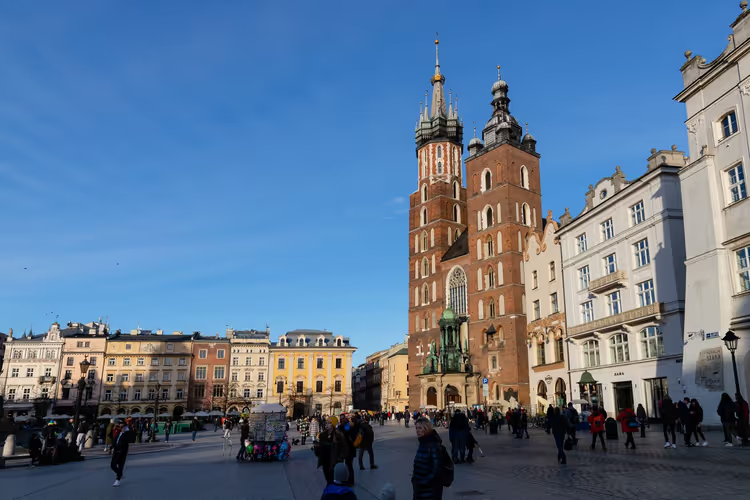
St. Mary's Basilica has defined the silhouette of the Market Square for more than six centuries. Two towers of different heights face the square. The taller one serves as a watchtower: every hour the hejnał is played from it. The shorter one serves as the bell tower; behind its window a bell rings for the dead.
Inside you will see the main altarpiece by Veit Stoss, the largest Gothic carved altarpiece in Europe. It was carved from gilded wood, and the biblical scenes are easy to read without a guide. Above the nave is a blue vault with gold stars, and along the walls stand Baroque and Renaissance chapels. Three styles meet in a single space.
Tourists are admitted daily from 11:30 to 18:00 (as of 09/2026, basilica schedule), and admission is limited during services. Go on a weekday morning: the line to the altarpiece is shorter, and the light from the stained glass falls directly on the carving. A separate ticket is sold for the hejnał tower; there is no elevator, only stairs.
- How to get there: go to Rynek Główny; the basilica stands in the northeast corner of the square.
2. Wawel Castle
 © Stanislau 93 · CC BY-SAPhoto: Stanislau 93, CC BY-SA (https://creativecommons.org/licenses/by-sa/3.0/pl/deed.en), Wikimedia Commons
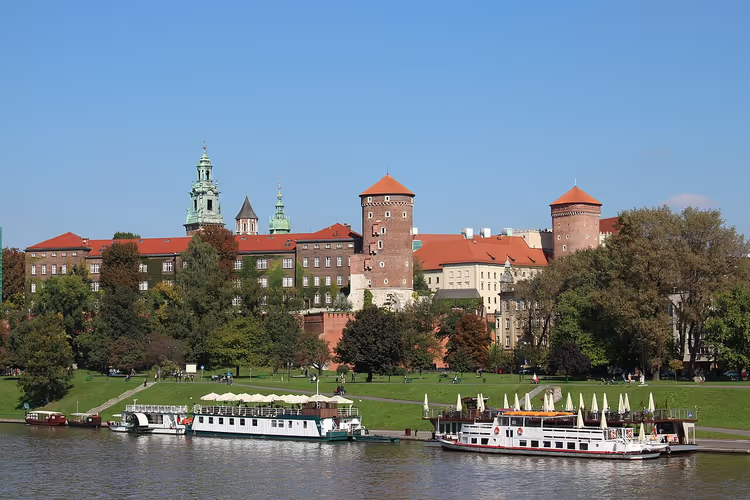
Wawel is the country's main castle and the heart of Polish history. The royal castle, the cathedral, and the defensive walls stand on a hill above the Vistula. Until the capital was moved to Warsaw, the fate of the state was decided here.
At the entrance you are greeted by a monument to Tadeusz Kościuszko on horseback. The Coat of Arms Gate leads into the main courtyard; to the right of it stands the cathedral with mammoth bones hanging above the door, and to the left is the Cathedral Museum. Thematic exhibitions operate in the courtyard: the royal chambers, Eastern art, the Armory, and the treasury. Through the courtyard you can descend to the Dragon's Den.
Set aside half a day for the castle, the cathedral, and the underground areas. Book tickets for the individual routes in advance; in summer they sell out by morning: Wawel routes on Tiqets.
3. Bishops' Palace
 © Ludvig14 · CC BY-SAPhoto: Ludvig14, CC BY-SA (https://creativecommons.org/licenses/by-sa/3.0), Wikimedia Commons
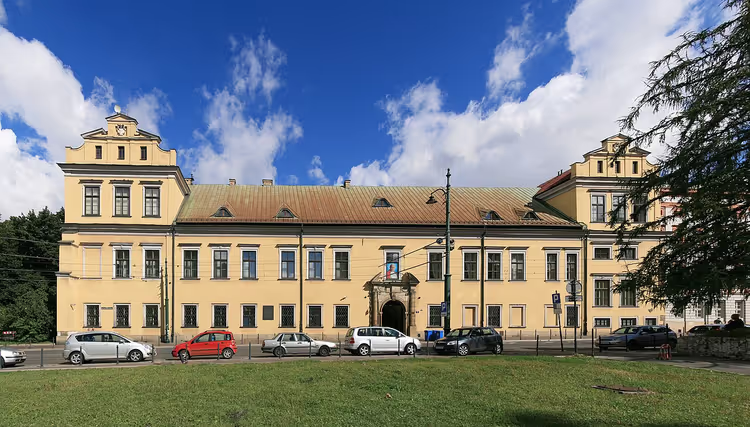
The light yellow palace on Franciscan Street is tied to John Paul II. Karol Wojtyła moved in here in 1944 as a seminary student and left as archbishop in 1978, when he was elected Pope.
Poles treasure this building as a memory of their countryman. After his death, the square in front of the palace was covered with flowers and candles for more than a month. Above the entrance door you will see the window from which the pontiff greeted young people.
Today the building houses a museum of the Pope's legacy: gifts from heads of state, old paintings, and sculpture. In front of the facade stands a monument to John Paul II with his hands raised in blessing. During the day the palace is rarely empty; both tourists and pilgrims come here. The palace is open to visitors during daytime hours, and you can easily combine a visit with a walk along Franciscan Street.
4. Market square
 © Ingo Mehling · CC BY-SAPhoto: Ingo Mehling, CC BY-SA (https://creativecommons.org/licenses/by-sa/4.0), Wikimedia Commons
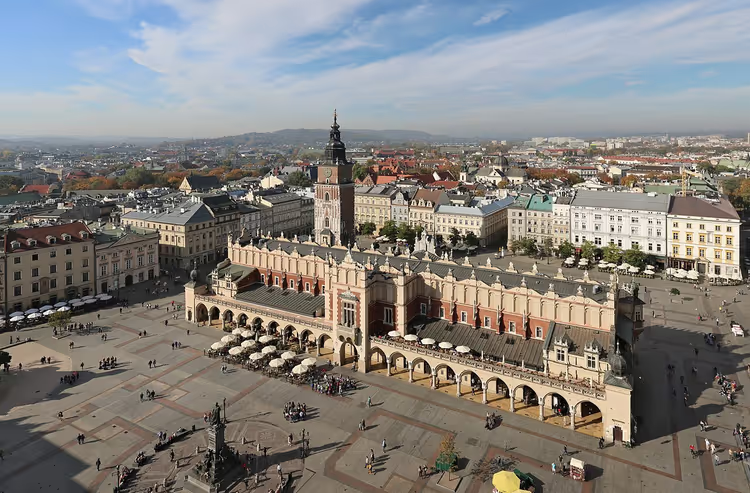
The market square grew as the trading heart of the city back in the 13th century. It is considered one of the largest medieval markets in Europe. Deals were struck here, prices were argued over, and royal decrees were announced.
Around it stand houses from the Renaissance era, austere in form and ornate in detail. On the square itself you will find the town hall tower, the Church of St. Adalbert, and the monument to the poet Adam Mickiewicz. While you are there, look for handmade souvenirs in the Cloth Hall.
Admission is free, and the square is open around the clock. Come during the day, when the museums and churches are open. The address is Stare Miasto, Rynek Główny; you can get there by tram, bus, or on foot from anywhere in the center.
5. Rynek Underground
 © Robin · CC BYPhoto: Robin, CC BY (https://creativecommons.org/licenses/by/2.0), Wikimedia Commons
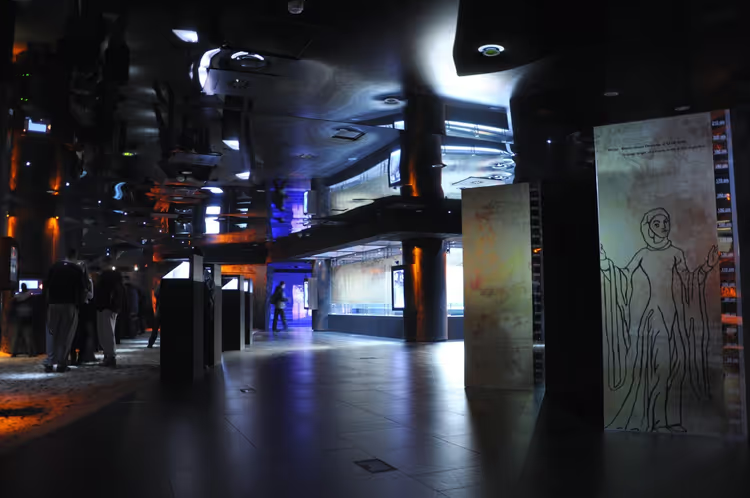
Beneath the market square hides a local history museum about the medieval city. It opened in 2010 after six years of archaeological excavations. Researchers found fragments of houses, pavements, trade scales, coins, and vases.
The museum lies four meters underground and looks like a labyrinth of an old street. You walk between ancient walls and trade carts, with multimedia screens and holograms alongside. Modern technology brings back the atmosphere of a settlement that vanished long ago.
The exhibition is compact and easy to understand without a guide. The route leads past the foundations of craft workshops where copper coins and pottery shards were found. Tickets are sold through the Museum of Krakow website; weekend slots sell out faster (as of 09/2026). The descent starts from the Cloth Hall, and a sign on the square side points to the entrance.
6. Kazimierz
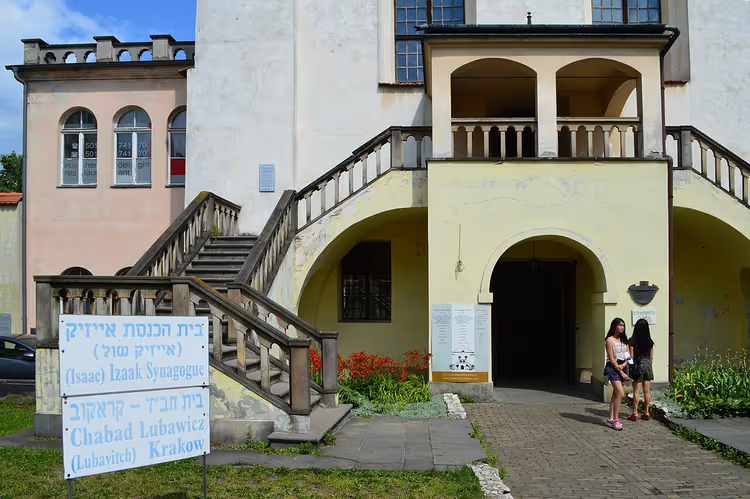 © Scotch Mist · CC BY-SAPhoto: Scotch Mist, CC BY-SA (https://creativecommons.org/licenses/by-sa/4.0), Wikimedia Commons
Kazimierz is a city within a city. Historically it was occupied by the Jewish community, so synagogues outnumber Catholic churches here. The district is packed with cemeteries, cultural sites, and prayer houses.
See the two main points in the center. The Church of St. Catherine charms visitors with the sound of its enormous organ, which is hard to match. The Basilica of the Body of Christ houses the painting "Adoration of the Magi." Kazimierz is exactly what Spielberg chose as the setting for "Schindler's List."
The heart of the district is Szeroka Street, where the Old Synagogue and several prayer houses stand. Admission to the Jewish cultural center is free, and the tram runs along Starowiślna Street. Set aside half a day for the walk: the streets are short, but there are many of them, and the interesting things hide in courtyards.
7. Water park
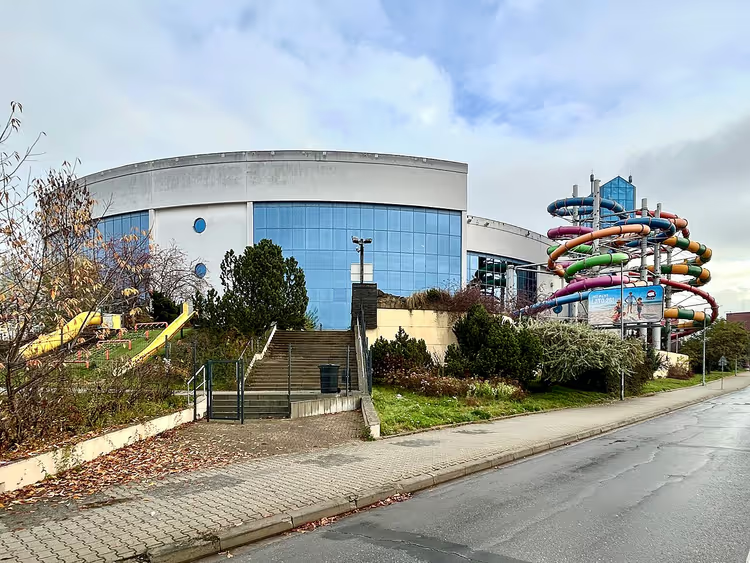 © Emptywords · CC BY-SAPhoto: Emptywords, CC BY-SA (https://creativecommons.org/licenses/by-sa/4.0), Wikimedia Commons
The water park in Krakow is one of the largest in Eastern Europe. The slides are divided into four color-coded groups: some get you screaming with speed, others add special effects, and others are designed for children. The complex's main pride is a long slide with a three-minute descent through twists and turns.
You can swim in the pools, relax in the jacuzzi, and the kids will never want to leave the shallow pool with its pirate island. The park operates year-round, daily from 8:00 to 22:00, with the water kept at 29-32 °C (as of 09/2026, parkwodny.pl). The slides are always crowded: Poles come here from all over the country.
The address is ul. Dobrego Pasterza 126. You can get there by bus to the "Park Wodny" stop; there is parking at the nearby hotel. Buy a day pass online, as there can be a line at the ticket office. If you are going with children, plan for at least half a day, otherwise you will not have time for everything.
8. Planty Park
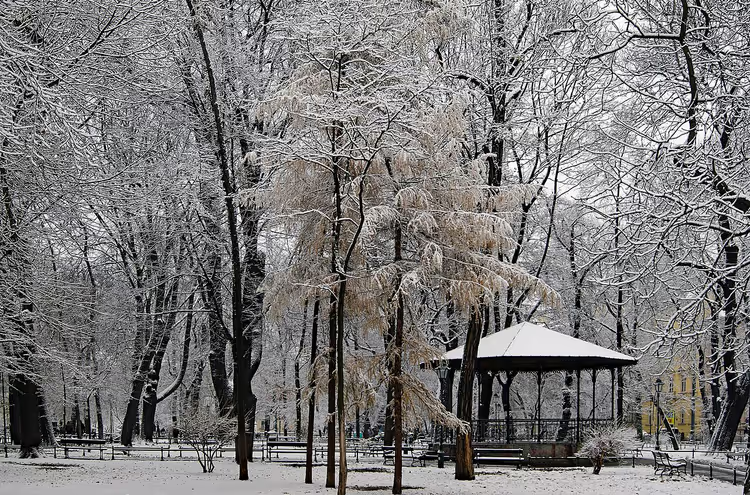 © Zygmunt Put Zetpe0202 · CC BY-SAPhoto: Zygmunt Put Zetpe0202, CC BY-SA (https://creativecommons.org/licenses/by-sa/4.0), Wikimedia Commons
Planty is a green ring around the Old Town. Locals relax here: young people hide away in the greenery, older people play chess and get some fresh air, and tourists take photos against the flower beds. If you are tired of museums, this is the place for you.
At every step you come across landmarks again: sculptures, monuments, historic buildings, and the archaeological museum. Its collection includes finds from Ancient Egypt and the Middle Ages, and the park itself stretches around the entire historic part of the city.
Planty surrounds the whole Old Town, so you can step into the park from any point in the center. Fortress walls once stood on this spot, protecting the townspeople from uprisings and wars. Later the ramparts were dismantled, and walkways were laid out in their place. Admission is free, and you can walk here at any time of day.
9. Florian Gate and the Barbican
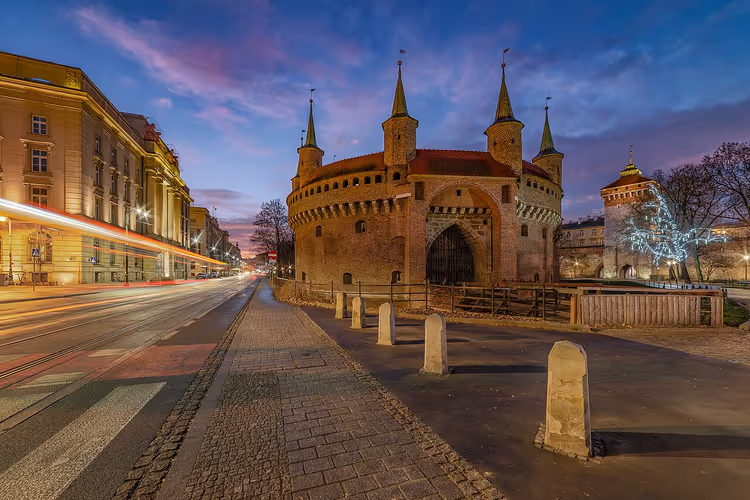 © Gswito · CC BY-SAPhoto: Gswito, CC BY-SA (https://creativecommons.org/licenses/by-sa/4.0), Wikimedia Commons
Florian Gate and the Barbican are best seen together on one route. The gate was built in 1307 and named after Krakow's patron saint. Inside there is a chapel of Our Lady, and the facade is decorated with a coat of arms featuring an eagle and a relief of Saint Florian.
Next to it stands the Barbican, a massive defensive tower. It once protected the approaches to the city; today it houses a history museum and hosts knight tournaments on holidays. Address: ul. Basztowa, tickets are sold by the Museum of Krakow (as of 09/2026, schedule and prices).
You can get there by tram or bus, with routes running through this area. The visit takes about an hour, and along the fortress wall you can walk to fragments of the old fortifications. Guided tours of the Old Town on GetYourGuide.
10. Cathedral of Saints Stanislaus and Wenceslaus
 © Jakub Hałun · CC BY-SAPhoto: Jakub Hałun, CC BY-SA (https://creativecommons.org/licenses/by-sa/3.0), Wikimedia Commons
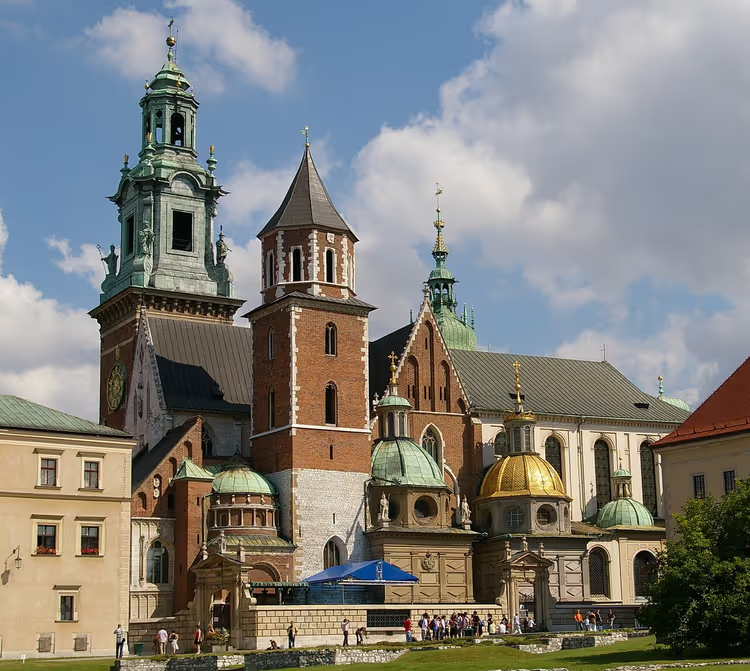
The cathedral on Wawel Hill is one of the most revered churches in Poland. Monarchs of the Polish-Lithuanian Commonwealth were crowned here and buried here. For centuries the basilica served as the burial place of rulers, bishops, politicians, and military commanders.
The first church was built at the turn of the 11th and 12th centuries from white limestone. In the 14th century the building was rebuilt, with naves, chapels, and towers added. Today you will see a jumble of styles from Romanesque to Art Nouveau, and on the north side rises the Sigismund Tower with its enormous cathedral bell.
Around the perimeter of the brick basilica with its tall windows stand chapels, treasuries, and a church. The facade is adorned with three towers, a triangular pediment, relief ornaments, and sculptures of Saints Stanislaus and Wenceslaus. In the halls divided by high arches, you will find lavish altars and royal sarcophagi.
In a silver tomb rest the relics of Bishop Stanislaus, the patron saint of Poland: it is decorated with twelve reliefs depicting scenes from the saint's life. The main altar was installed in 1650; its centerpiece is a large painting of the crucified Christ in a gilded frame.
11. Town Hall Tower
 © Fred Romero from Paris, France · CC BYPhoto: Fred Romero from Paris, France, CC BY (https://creativecommons.org/licenses/by/2.0), Wikimedia Commons
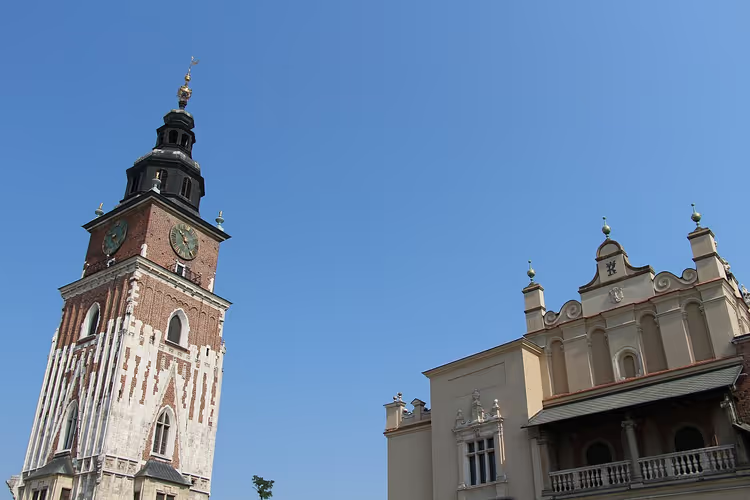
The Gothic tower of red brick has risen above the Market Square since the early 14th century. It was once part of the town hall, which was dismantled in the 19th century due to deterioration. The facade features pointed windows, a mechanical clock, and vertical ribs.
The structure survived several fires caused by lightning strikes and for a long time leaned to one side. A narrow spiral staircase leads you to an observation deck with a panorama of the city. Inside, exhibits on the history of the city council are on display.
Take a look at the basement too: first it was used to store beer and wine, then it housed dungeons with torture chambers, and today a cafe operates there. For tickets and opening hours, check the Museum of Krakow (as of 09/2026, tower page).
12. Collegium Maius
 © Zygmunt Put · CC BY-SAPhoto: Zygmunt Put, CC BY-SA (https://creativecommons.org/licenses/by-sa/4.0), Wikimedia Commons
More than one hundred thousand students live in Krakow. Most study at Jagiellonian University, one of the oldest in Europe. Its alumnus was the astronomer Nicolaus Copernicus, and the main historic building is called Collegium Maius.
The three-story Gothic building was constructed from red brick in the 15th century. The walls form a quadrangular courtyard with an arched gallery, a vaulted ceiling, and white stone columns, with a well in the center.
Since the early 20th century the college has been a museum. You will see the private quarters of professors, lecture halls, and a dining room with original wooden furniture. There are also scientific instruments, astronomical tools, and a collection of globes, while the walls of the great hall are lined with portraits of faculty spanning six centuries. The courtyard is open without a ticket, so you can stop by between two other Old Town sights.
13. Ghetto Heroes Square
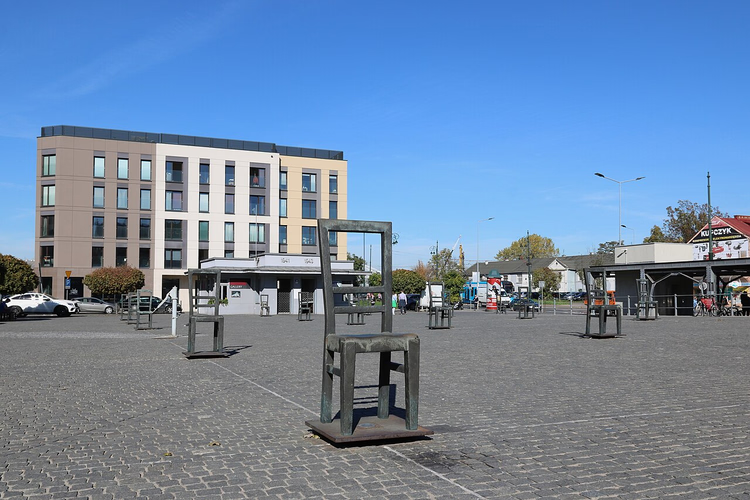
Ghetto Heroes Square in Podgorze commemorates the tragedy of Polish Jews. Cast-iron and bronze chairs stand on the cobblestones, symbolizing people thrown out of their homes. The location was not chosen by chance: in 1941 the city's Jews were herded behind a fence here.
 © Ingo Mehling · CC BY-SAPhoto: Ingo Mehling, CC BY-SA (https://creativecommons.org/licenses/by-sa/4.0), Wikimedia Commons
More than twenty thousand people lived in this small area with all their belongings and furniture, in inhuman conditions. From here people were sent to Auschwitz. Today it is a quiet square for remembrance, not for selfies.
Come here in the morning or evening, when there are fewer tour groups. From Kazimierz the square is within walking distance across the bridge, about twenty minutes on foot. Nearby stands the Eagle Pharmacy, a former part of the ghetto, which is also worth seeing.
14. Museum of Contemporary Art
 © Mocak · CC BY-SAPhoto: Mocak, CC BY-SA (https://creativecommons.org/licenses/by-sa/3.0), Wikimedia Commons
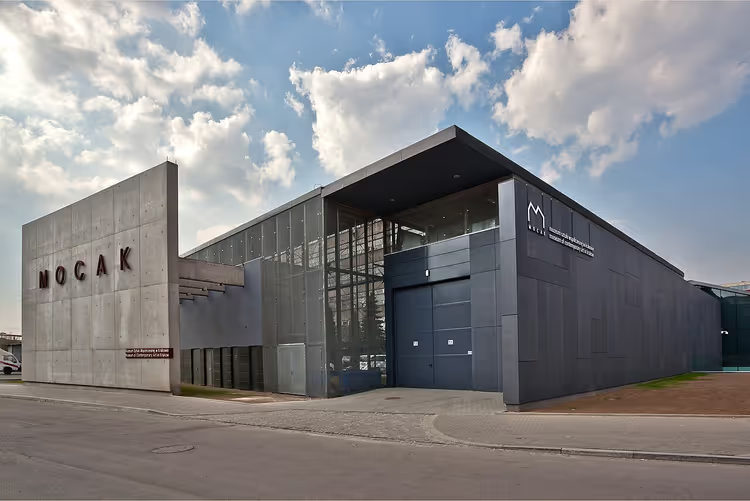
In 2004 the city purchased the building of the former Schindler factory for a museum of contemporary art. After reconstruction, the factory pavilions became an avant-garde complex with a glass facade and pointed roofs.
The space is divided into thematic zones. In the halls you will find conceptual projects, paintings by contemporary artists, sculptures, photographs, and performances with audiovisual accompaniment. Several screening rooms show short films about social issues.
MOCAK is located in Zablocie, next to the Schindler factory. Allow a couple of hours; the exhibition is easy to cover without rushing. If you arrive at opening time, the halls are nearly empty, and you can calmly go through the entire exhibition in one visit. Nearby, the factory buildings and chimney remain, and they make for a pleasant stroll after the museum.
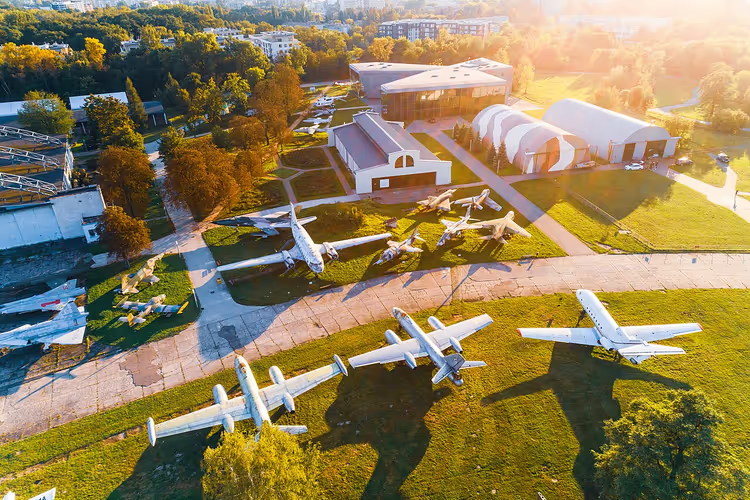
15. Polish Aviation Museum
 © Pawelsuder · CC BY-SAPhoto: Pawelsuder, CC BY-SA (https://creativecommons.org/licenses/by-sa/4.0), Wikimedia Commons
The Polish Aviation Museum occupies one of the oldest military airfields in Europe. It houses real aircraft, helicopters, gliders, and engines from different eras. Some of the equipment stands right on the former runway.
The exhibits are spread across four buildings shaped like a rotating propeller. Inside, there is a cinema, a library, and a flight simulator that replicates a pilot's cockpit. The avenue of Soviet MiG fighters is especially impressive.
The museum is located in a Krakow suburb and requires a separate trip. Allow at least two hours to explore the aircraft display area and the halls. It is a good option for those traveling with children and tired of churches.
16. Juliusz Słowacki Theatre
 © Jeremiah Z. Cockroach · CC BY-SAPhoto: Jeremiah Z. Cockroach, CC BY-SA (https://creativecommons.org/licenses/by-sa/4.0), Wikimedia Commons
A theater built in 1893 dominates Holy Spirit Square. It was named after the poet and playwright Juliusz Słowacki. The building is considered an example of eclecticism, where different styles are mixed.
The sand-colored facade is decorated with bas-reliefs, a portico with pilasters, balustrades, and sculptures. Baroque domes crown the structure. The interior is no less impressive than the facade: the halls are painted with frescoes by Austrian artists.
Four stages host contemporary and classical dramas, operas, musicals, and comedies. Even without a performance, it is worth approaching the facade in the evening, when the lighting is switched on. Holy Spirit Square lies on the way from the Main Market Square to the train station, so you will come across the theater without a map.
17. Saints Peter and Paul Church
 © Jeremiah Z. Cockroach · CC BY-SAPhoto: Jeremiah Z. Cockroach, CC BY-SA (https://creativecommons.org/licenses/by-sa/4.0), Wikimedia Commons
The Basilica of Saints Peter and Paul was consecrated in 1635 and is the first Baroque church in Poland. It was built of dolomite and brick and enclosed by a wrought-iron fence. Twelve statues of the apostles stand on pedestals in front of the entrance.
The three-tier facade is decorated with pilasters, pediments, bas-reliefs, and niches with statues. The building has a single nave, with chapels and a semicircular apse, and is crowned by a large dome. The interior is modest and monumental at the same time.
Carved pews are arranged in the main hall, and the apse vault is decorated with scenes from the lives of the apostles. The main altar deserves attention, with its gilded sculptures and the painting "The Handing of the Keys to Saint Peter." The chapels contain a large collection of paintings and sculptures following the canons of the Roman Catholic Church.
18. Holy Trinity Basilica
 © Zygmunt Put · CC BY-SAPhoto: Zygmunt Put, CC BY-SA (https://creativecommons.org/licenses/by-sa/4.0), Wikimedia Commons
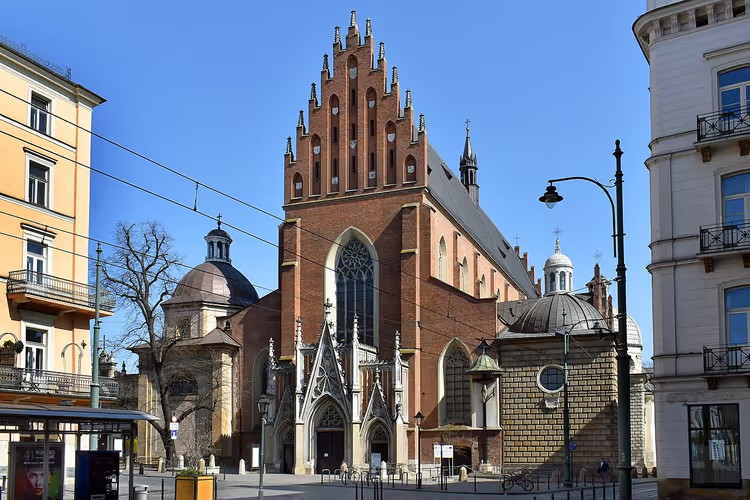
The Holy Trinity Basilica, an example of Gothic architecture, rises not far from the Main Market Square. The church was built in the mid-13th century under the missionary Jacek Odrowąż. The church became a stronghold for monks who devoted their lives to serving God.
The basilica consists of three naves with ten chapels. The brick facade is pierced by pointed-arch windows with ornate grilles and crowned by a large stepped pediment with small towers. The entrance leads through an annex with three arches.
The interior is strikingly rich. Along the main nave, arches stretch on tall columns, the walls are painted with floral ornamentation, and the ceiling features a cross-ribbed vault. In the halls you will see wooden sculptures, frescoes, and beautiful stained glass windows. The entrance is not always open due to services, so come closer to midday and check the schedule on the door.
19. Sanctuary of Divine Mercy
 © marek7400 · CC BYPhoto: marek7400, CC BY (https://creativecommons.org/licenses/by/3.0), Wikimedia Commons
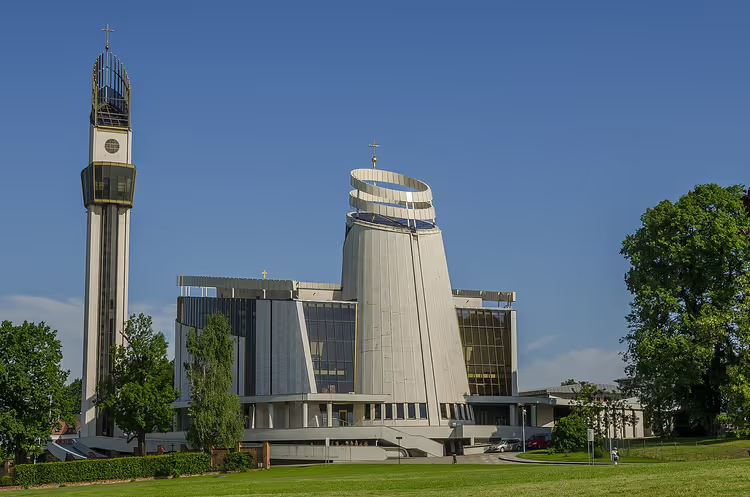
The Sanctuary of Divine Mercy stands in the Łagiewniki district. It is a modern basilica built in 2002, and it does not look like a traditional church. On the well-kept grounds rises a building shaped like an elongated ellipse, reminiscent of an ark.
The facade is made of glazed aluminum panels of varying widths. Inside, a light color palette prevails: walls and columns of raw concrete, with a ceiling decorated with radial beams. In front of the church stands a 77-meter oval tower with an observation deck under a glass roof.
Pilgrims come here from all over the world. The complex includes several chapels and spacious halls for worship. The main altar is made of white marble, and next to it hangs the painting "Jesus, I Trust in You." The trip from the center takes about half an hour by tram, and it is worth combining with a walk through the quiet Łagiewniki neighborhood.
20. Kościuszko Mound
 © Pawelsuder · CC BY-SAPhoto: Pawelsuder, CC BY-SA (https://creativecommons.org/licenses/by-sa/4.0), Wikimedia Commons
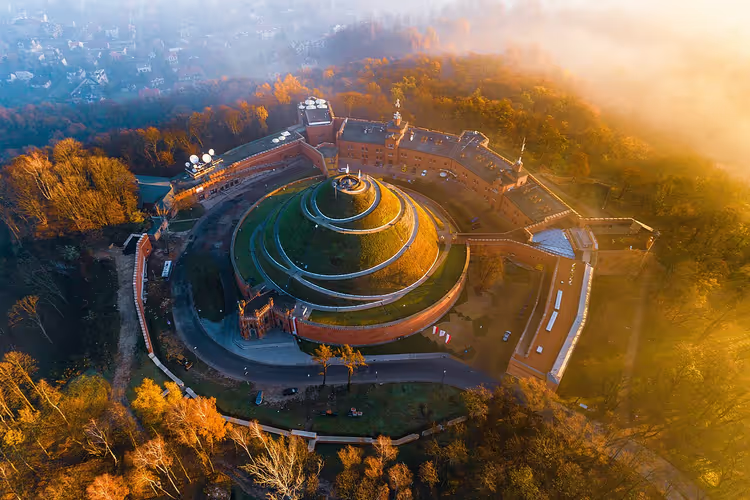
Kościuszko Mound was built in 1823 in honor of Poland's national hero. The 34-meter hill was made from earth brought from Polish and American fields where Tadeusz Kościuszko fought. From the top, a panorama of all of Kraków opens up.
The mound is framed by a brick fort built by the Austrians in the mid-19th century. For the fortress, the hill was a strategically important site. The fort grounds house a wax museum and an exhibition of items related to Kościuszko.
The climb is gentle but takes time, so wear comfortable shoes. Tickets for the observation deck and the fort are sold on site, but in high season it is better to book ahead: tickets for Kraków observation decks. Nearby stands the Church of Blessed Bolesława, which is also worth seeing.
21. Cloth Hall
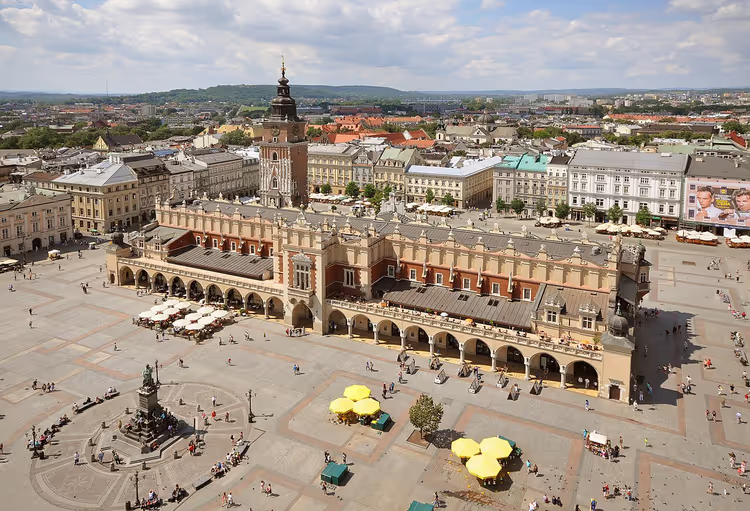 © Jorge Lascar · CC BYPhoto: Jorge Lascar, CC BY (https://creativecommons.org/licenses/by/2.0), Wikimedia Commons
The Cloth Hall stands right on the Main Market Square and is considered one of the most beautiful buildings in Kraków. It was once a place where cloth and imported fabrics were traded, hence the Polish name Sukiennice. In the Middle Ages, it was one of the busiest trading places in Europe.
After a fire, the building was rebuilt by order of King Bolesław V the Chaste. The city received the right to govern itself under Magdeburg Law in 1257, and that is when the market square began to be developed. Later, the artist Jan Matejko worked on its design.
Today the ground floor is occupied by shops selling handmade souvenirs, and the facade is protected as a UNESCO World Heritage Site. The upper floor is given over to a gallery of 19th-century Polish art, reached by a separate staircase at the back of the hall. If you are looking for a souvenir, compare prices at different stalls: the spread is noticeable even for identical items.
22. Sandomierz Tower
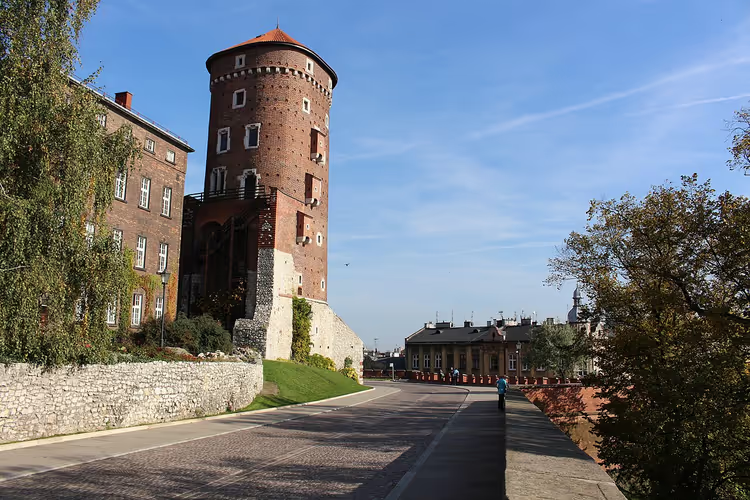 © tiger rus · CC BYPhoto: tiger rus, CC BY (https://creativecommons.org/licenses/by/3.0), Wikimedia Commons
The Sandomierz Tower is part of the Wawel fortification complex. Its second name is the Fire Tower. The spot is picturesque: locals come here to relax on weekends, and from the height there is a view of the Vistula.
The tower used to be called the New Tower, until the name became outdated. Prisoners from Sandomierz were held here, among them fighters for Polish independence. Riots and popular unrest also occurred in these parts.
The first mention of the fortress appears in chronicles from 1462. It was here that rebels accused of murdering the influential nobleman Andrzej Tęczyński were beheaded. Later a whole fortress complex grew up here, and in the 16th and 17th centuries the tower was extended and repurposed for various needs. The visit is open to everyone, but the ascent involves a long staircase, and not everyone is ready to tackle it.
23. Ethnographic Museum
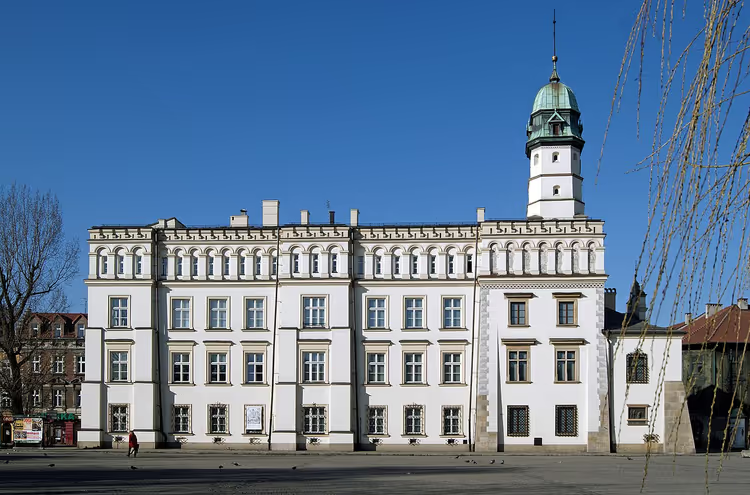 © Zygmunt Put Zetpe0202 · CC BY-SAPhoto: Zygmunt Put Zetpe0202, CC BY-SA (https://creativecommons.org/licenses/by-sa/4.0), Wikimedia Commons
The Ethnographic Museum occupies the building of the former Kazimierz town hall, built in 1414. It stands on Wolnica Square and holds one of Poland's richest collections of folk culture.
In 1910, the Ethnographic Museum Society was founded. The exhibits came from the holdings of the National Museum, and the collection grew quickly. After World War II, the collection was moved to the town hall building.
Today you will see a permanent exhibition about the life of the Polish countryside, costumes, crafts, and rituals, while the third floor is reserved for temporary exhibitions. It is a good option if you want a break from churches and kings.
24. Stained Glass Museum
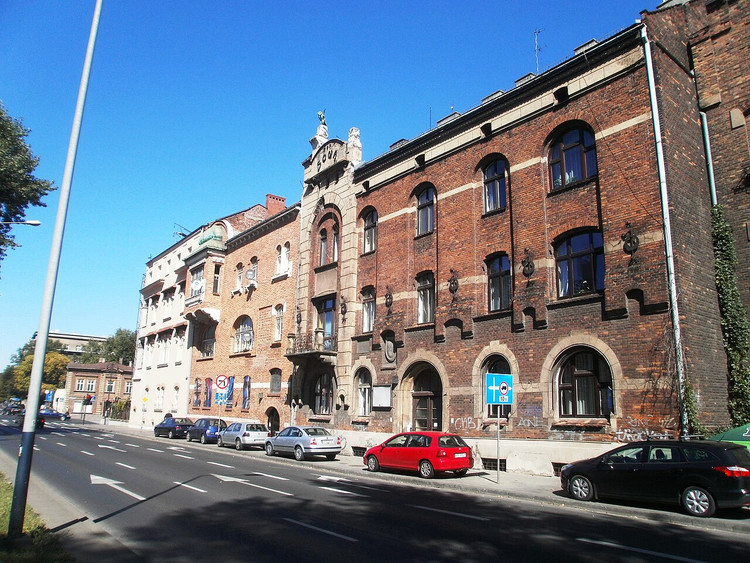 © Lollencja · CC BY-SAPhoto: Lollencja, CC BY-SA (https://creativecommons.org/licenses/by-sa/3.0/pl/deed.en), Wikimedia Commons
The Stained Glass Museum showcases glasswork in a modernist building designed by Ludwik Wojtyczko in 1907. It hosts a "living exhibition": you see up close how contemporary stained glass is made using classical techniques. Few such workshops remain in Europe.
Nearby, the Gallery of Modern Glass operates, featuring the best works by artists faithful to tradition. The collection once consisted of a few pieces brought from different corners of Poland and neighboring countries.
The workshop opened back in 1902 and has produced thousands of stained glass works. It realized designs by Stanisław Wyspiański, Henryk Uziembło, and Józef Mehoffer. In 2000, the workshop passed into private hands, while the building remained city property.
25. Zoo
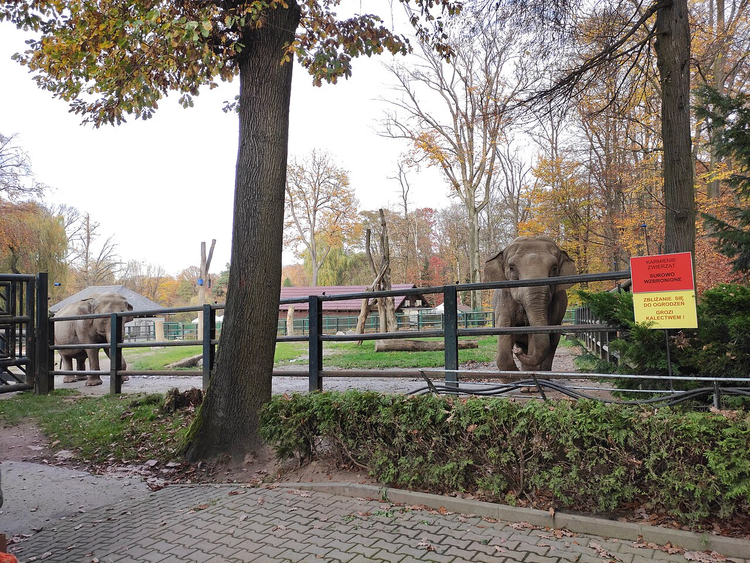 © Fry72, Karel Frydrýšek · CC BY-SAPhoto: Fry72, Karel Frydrýšek, CC BY-SA (https://creativecommons.org/licenses/by-sa/4.0), Wikimedia Commons
The Kraków Zoo is located in the protected Wolski Forest, and the journey there is already a retreat into nature. All around are woods and hills, and several hectares of developed land are set aside for the zoo.
The collection does not compete with the Vienna Zoo in number of species, but it delights with rare animals. Red pandas, okapi, and birds of prey that are rarely seen in other European zoos live here. On weekdays there are few visitors, which is the best time for a quiet stroll.
You can get there by city bus, and there is a large parking lot at the entrance for those arriving by car. On weekends parking can be a problem, so arrive at opening time. Choose footwear according to the weather: part of the route goes along slopes, and the walks between enclosures are long.
26. Corpus Christi Basilica
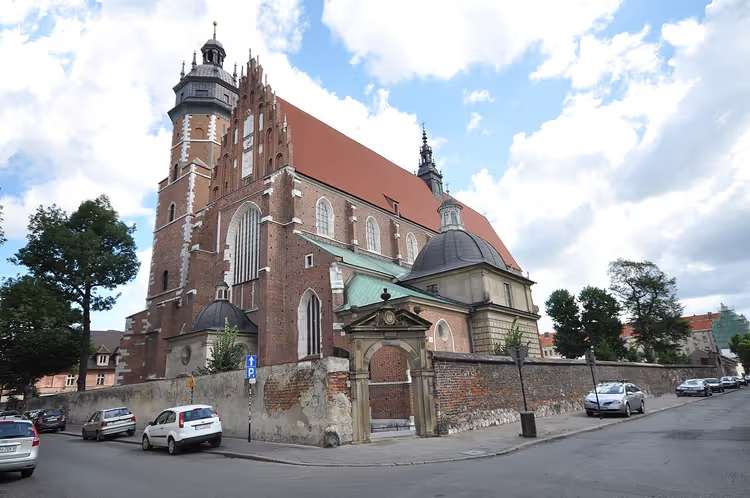 © Jorge Láscar · CC BYPhoto: Jorge Láscar, CC BY (https://creativecommons.org/licenses/by/2.0), Wikimedia Commons
Construction of Corpus Christi Basilica began in 1385 on the site of a wooden church. The work took about twenty years. The design called for two towers, as was customary in Gothic architecture, but the initially completed building was crowned by a single spire on the north side.
Long construction periods are not unusual in church practice: such expenses are within the means of large communities and patrons. That is why the basilica changed over time, with different construction supervisors making revisions. The second tower was completed much later, in the 17th century.
Today the ensemble displays a mix of styles, and the eclecticism works in its favor: features of Gothic, Baroque, and late Renaissance stand side by side. Services have been held since 1405 by order of King Władysław II Jagiełło. The basilica stands in Kazimierz, admission is free, but during services tourists are asked to wait outside.
27. Church of St. Andrew
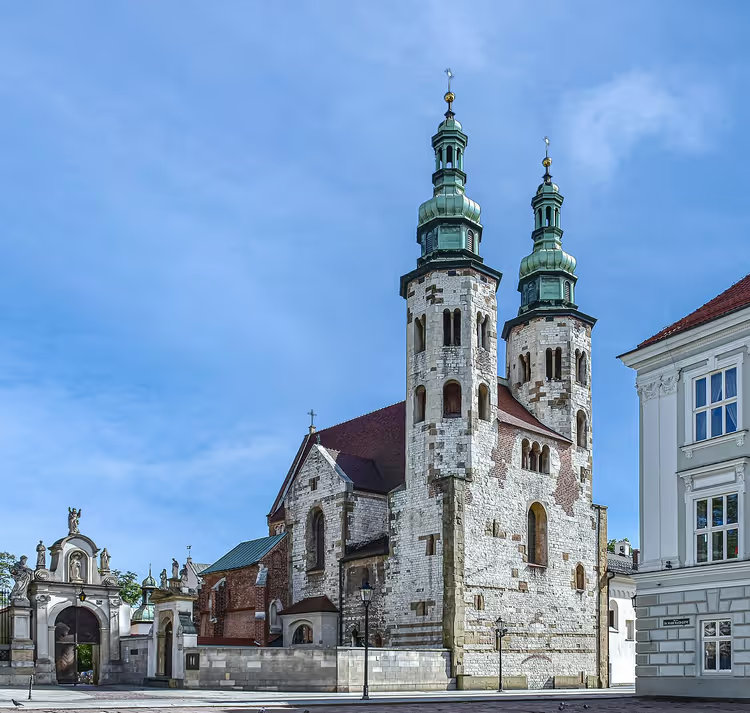 © Jeremiah Z. Cockroach · CC BY-SAPhoto: Jeremiah Z. Cockroach, CC BY-SA (https://creativecommons.org/licenses/by-sa/4.0), Wikimedia Commons
The Church of St. Andrew is one of the three oldest religious buildings in Kraków. A typical Romanesque structure, it has stood since 1079 and is well preserved. It was built not only for services: first and foremost it was a fortress where townspeople took shelter from invaders.
Thanks to its thick walls, the city survived two Tatar raids and the claims of neighbors. The construction of the church-fortress was ordered by Voivode Sieciech under Prince Władysław I Herman. The walls, one and a half meters thick, were built of white limestone, and the corners were reinforced with large slabs.
On the street side rise two towers with octagonal domes, and the bifora windows reveal the Romanesque era. Later a convent for women was established here, and the library held ancient folios, including the "Gradual." After fires, the basilica was restored with donations from townspeople, preserving its Romanesque appearance.
28. Czartoryski Museum
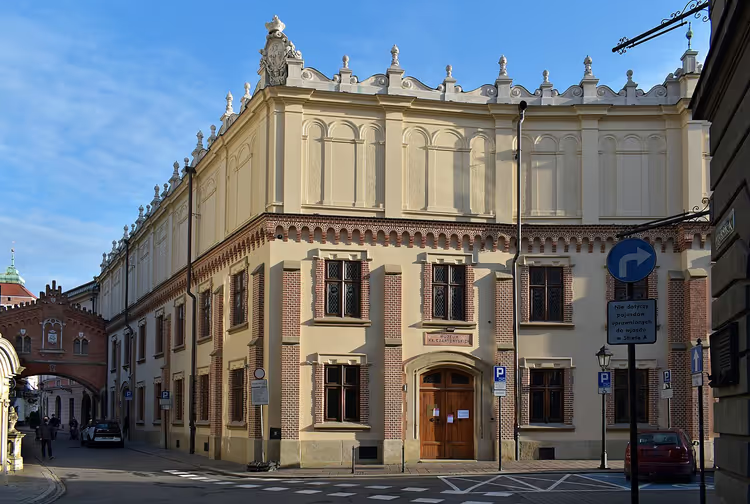 © Zygmunt Put · CC BY-SAPhoto: Zygmunt Put, CC BY-SA (https://creativecommons.org/licenses/by-sa/4.0), Wikimedia Commons
The Czartoryski Museum is one of Poland's most remarkable art galleries. The collection is part of the National Museum in Krakow. It began with paintings owned by Princess Izabela Czartoryska, and her heirs turned the collection into a museum in 1796.
For a long time the masterpieces moved from one building to another, and some of the paintings disappeared. Today the main exhibition is housed in the Krakow Arsenal building. In 1945 the collection suffered heavy losses: the paintings were stolen by retreating Nazi troops.
In addition to paintings, the museum holds ancient manuscripts, Egyptian artifacts, knight's armor, and antiquities. The collection's centerpiece is "Lady with an Ermine" by Leonardo da Vinci, although the attribution is still disputed. Krakow museum tickets on Tiqets.
29. St. Francis of Assisi Church
 © Igor123121 · CC BYPhoto: Igor123121, CC BY (https://creativecommons.org/licenses/by/4.0), Wikimedia Commons
St. Francis of Assisi Church was built in the 13th century on All Saints Square. Historians debate who started the construction, but spiritual life here flourished under Duke Henry II the Pious and his son. The church was built from soft sandstone.
The building was ravaged by the Mongols in 1241, and the greatest damage was done by the Swedes: in 1655 the church almost completely burned down. It burned again later, in 1850. Restoration was carried out by Karol Kremer, then Karol Knaus and Władysław Ekielski.
Today it is a single-nave Gothic church with neo-Gothic features. Its main treasures are the stained glass windows, especially "God the Father, the Creation of the World" and the image of Our Lady of Sorrows, the Benefactress, from the early 16th century. Go inside during the day, when light passes through the glass.
30. Galicia Jewish Museum
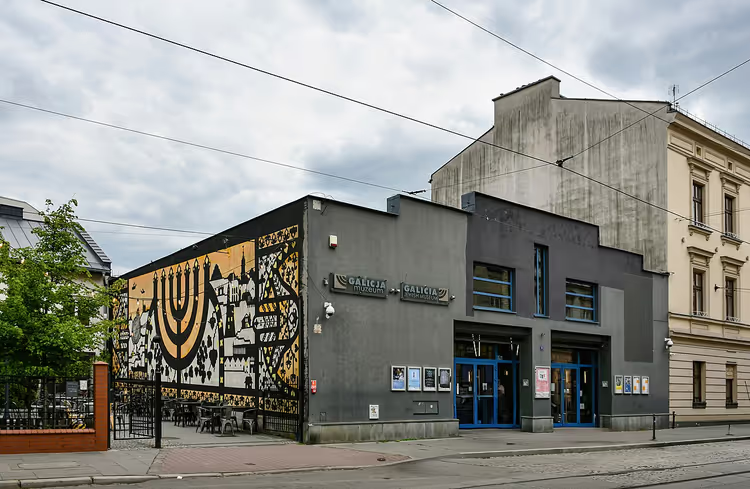 © Jeremiah Z. Cockroach · CC BY-SAPhoto: Jeremiah Z. Cockroach, CC BY-SA (https://creativecommons.org/licenses/by-sa/4.0), Wikimedia Commons
The Galicia Jewish Museum operates in the Kazimierz district. Its exhibits tell the story of Galician culture before the Holocaust. The museum opened in 2004 on the initiative of photojournalist Chris Schwarz and Professor Jonathan Webber from Birmingham.
Tens of thousands of visitors from different countries come here every year. The materials are presented in Polish and English, with five sections in total, including testimonies about the Holocaust and Auschwitz. The central exhibition, "Traces of Memory," is dedicated to the flourishing of Jewish culture in southern Poland.
You will see photographs of synagogues, cemeteries, and monuments, as well as a narrative about the daily life of local Jews. The museum is small, but the materials are powerful, so allow at least an hour for your visit. Photographs of pre-war shtetls and eyewitness accounts explain the history of the district better than any guidebook.
31. Benedictine Abbey
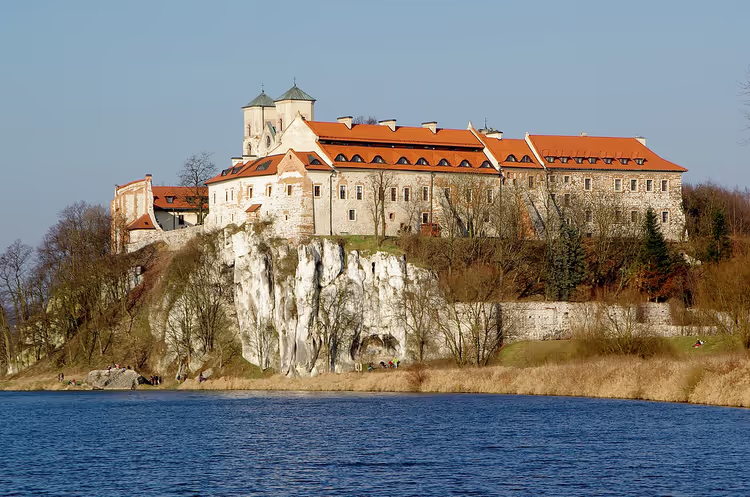 © Jakub Hałun · CC BY-SAPhoto: Jakub Hałun, CC BY-SA (https://creativecommons.org/licenses/by-sa/3.0), Wikimedia Commons
The Benedictine Abbey stands in Tyniec, a suburb of Krakow. It is one of the oldest Christian centers in Europe and a scenic part of the Bielany-Tyniec Landscape Park. The building is mentioned in documents from 1044 and was built by order of King Casimir I.
Later the property was surrounded by fortifications: walls, a rampart, a moat, and bastions. The fortifications did not save the monks from Swedish, Austrian, and Czech invaders. In 1260 the territory was plundered by the Mongol-Tatars, after which it remained abandoned for a long time.
Later the church was enhanced with an altar and a pulpit made of rare marble. The restoration was entrusted to Italian masters. Today you can walk through the halls, peek into the library of rare folios, and view the frescoes and stained glass of the basilica perched on limestone cliffs above the Vistula.
32. Church on the Rock
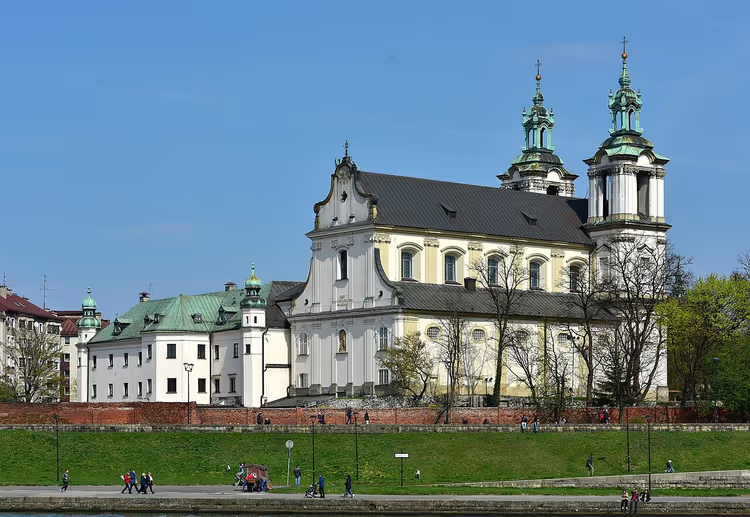 © Adrian Grycuk · CC BY-SAPhoto: Adrian Grycuk, CC BY-SA (https://creativecommons.org/licenses/by-sa/3.0/pl/deed.en), Wikimedia Commons
The Church on the Rock is a Catholic "church on a small stone." The site is also known as the Church of Saints Michael the Archangel and Stanislaus. Its backstory is tragic: a pagan shrine once stood on the hill, and in 1079 Bishop Stanislaus was executed here by order of King Bolesław II the Bold.
In the second half of the 15th century, the building belonged to the Pauline community. In the 17th century it was destroyed by the Swedes, then the church was rebuilt according to a design by architect Antoni Muntzer, continued by the Italian Antonio Solari. The interior stucco work was added by Jan Rojowski, and architect Julian Niedzielski completed the transformation.
The war did not pass it by: silver relics from the 16th century were stolen, and the decor and facade were damaged. They were later restored, and in 2005 the church received the status of a minor basilica. An old Rococo organ is still in use here, and on May 8 a walking procession goes from Wawel to Skałka.
33. Józef Piłsudski Bridge
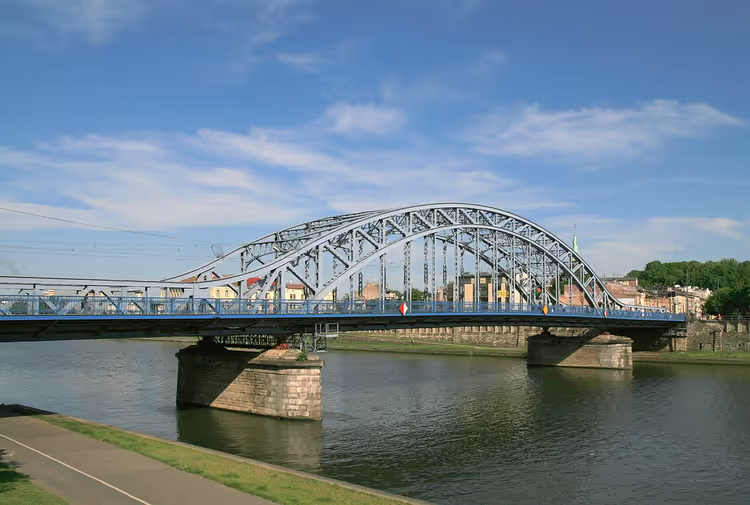 © ImreKiss · CC BYPhoto: ImreKiss, CC BY (https://creativecommons.org/licenses/by/3.0), Wikimedia Commons
The Józef Piłsudski Bridge is the oldest in Krakow. It was built for cars and narrow-gauge transport. The decision to build it was made after the closure of the unsafe Podgórze Bridge, which was beyond repair.
The new project by a group of engineers led by A. Pszenicki was intended to connect Kazimierz and Podgórze. Construction was completed in 1933, with metal supplied by local factories. It cost the city millions of zlotys, and the bridge was even called "golden," with a toll charged for crossing.
During the war the bridge was heavily damaged: retreating German troops mined the structures. After World War II it was quickly restored to reconnect the old town with the suburb. Trams and cyclists began using the bridge only after reconstruction. In the evening the illuminated Wawel is clearly visible from the bridge, so come at sunset. From the pedestrian zone you can descend to the embankment and walk along the Vistula all the way to the castle.
34. Jan Matejko House
 © Igor123121 · CC BYPhoto: Igor123121, CC BY (https://creativecommons.org/licenses/by/4.0), Wikimedia Commons
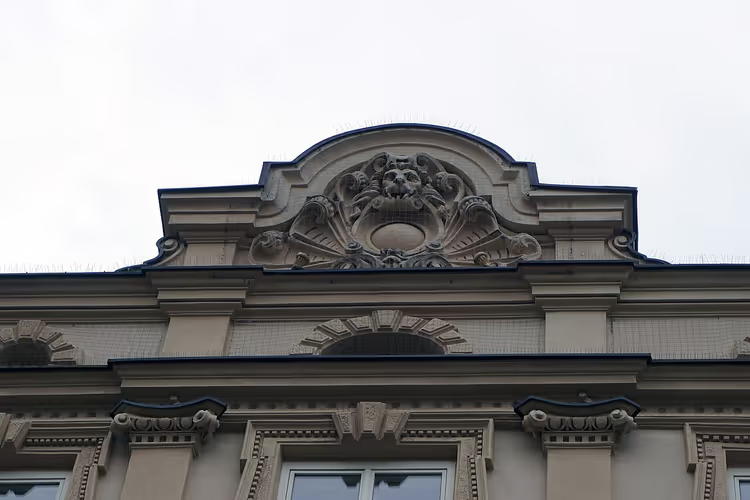
The Jan Matejko House is a four-story 16th-century mansion on Floriańska Street. The great Polish painter was born, lived, and worked here. After his death in 1893, a local newspaper published an appeal to create a museum.
The Jan Matejko Society collected relics of the old Polish family. Some paintings were purchased with donations from relatives and fellow citizens from other exhibitions. The painter's bedroom and living room were set aside for the paintings while the building was being prepared as a museum.
In the exhibition you will see not only paintings but also the master's personal library. It houses an Eastern collection of weapons that he admired, items from medieval Poland, tableware, costumes, and even instruments of torture used by inquisitors. Separately displayed are 19th-century interiors and works by lesser-known artists of that time.
35. Krakus Mound
 © Mach240390 · CC BYPhoto: Mach240390, CC BY (https://creativecommons.org/licenses/by/3.0), Wikimedia Commons
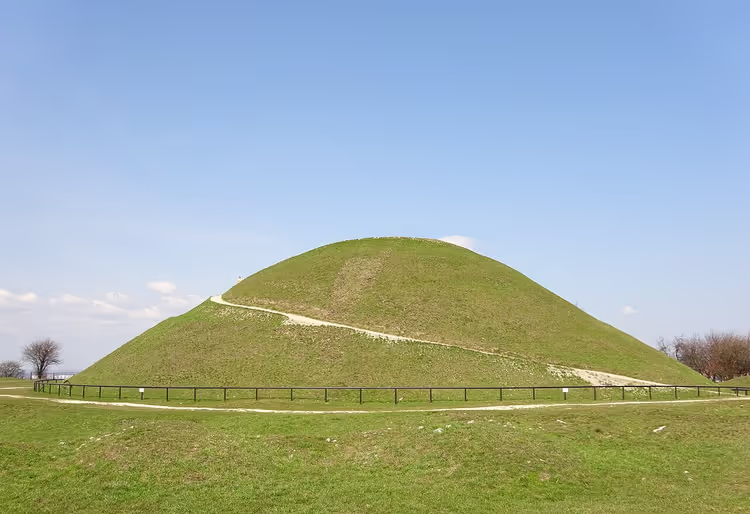
Krakus Mound is an earthwork on the bank of the Vistula, on the same site as Lasota Hill. The mound is about twenty-three meters high. The mysterious earthwork is named after Prince Krak, the founder of the city, who according to legend killed the dragon. Steven Spielberg filmed "Schindler's List" in this area.
During excavations, archaeologists found artifacts from different periods: silver, bronze, and coins from the 7th and 8th centuries. The purpose of the mounds is still debated in academic circles, including the Krakus and Wanda mounds, as well as the mounds honoring Kościuszko and Piłsudski.
Today locals and tourists come here to climb to the top and look out over the city. The climb is short, and the view opens onto the Vistula and Zwierzyniec. Bring water with you: the top is exposed and hot in summer.
Tours and tickets in Krakow
Guided tours, skip-the-line tickets and activities — most offers can be cancelled free of charge.
See offers on GetYourGuideThe widget loads once you give your consent.
Guided tours of Krakow fill in the gaps if you want to hear stories on the spot rather than read about them later.
Krakow attractions on the map
All 35 points can be conveniently divided into two routes. Below is a map that will help you plot your path between the sites and avoid wasting time on transfers.
Landmarks of Kraków
Places on the map
- 1St. Mary's Basilica Veit Stoss altarpiece, Europe's carved Gothic altar, the hejnał bugle call from the tower
- 2Wawel Castle Royal castle on a hill, cathedral and the Dragon's Den
- 3Bishops' Palace Residence of John Paul II, a museum of his papal legacy
- 4Main Market Square Europe's largest medieval market square, the town hall tower and the Cloth Hall
- 5Rynek Underground Archaeological museum beneath the square, opened in 2010
- 6Kazimierz The Jewish quarter, synagogues and Szeroka Street
- 7Aquapark Kraków One of the largest in Eastern Europe, slides and pools
- 8Planty Park A green ring around the Old Town on the site of the former city walls
- 9St. Florian's Gate and the Barbican The 1307 gate and a defensive tower with a museum
- 10Wawel Cathedral Burial place of Polish kings on Wawel Hill
- 11Town Hall Tower 14th-century Gothic tower with an observation deck
- 12Collegium Maius The oldest building of the Jagiellonian University, a Copernicus museum
- 13Ghetto Heroes Square Memorial to the victims of the Kraków Ghetto, cast-iron chairs
- 14MOCAK Museum of Contemporary Art MOCAK in the former Schindler's Factory building, contemporary art
- 15Polish Aviation Museum Airplanes and helicopters at a former airfield
- 16Juliusz Słowacki Theatre Eclectic 1893 building with frescoes
- 17Church of Saints Peter and Paul Poland's first Baroque church, statues of the apostles
- 18Basilica of the Holy Trinity 13th-century Gothic church with ten chapels
- 19Divine Mercy Sanctuary Modern basilica from 2002, a tower 77 m tall
- 20Kościuszko Mound 1823 mound honouring Poland's hero, panoramic city views
- 21Cloth Hall Market hall on the square, souvenirs and a gallery of Polish art
- 22Sandomierz Tower Part of Wawel's fortifications, views of the Vistula
- 23Ethnographic Museum Life in a Polish village, in a former town hall building
- 24Stained Glass Museum Working stained-glass workshop, operating since 1902
- 25Kraków Zoo Zoo in the Wolski Forest, red panda and okapi
- 26Corpus Christi Basilica Church from 1385 in Kazimierz, a mix of architectural styles
- 27St. Andrew's Church Romanesque fortress-church from 1079
- 28Czartoryski Museum Leonardo da Vinci's 'Lady with an Ermine'
- 29Basilica of St. Francis of Assisi 13th-century Gothic church with stained glass by Wyspiański
- 30Galicia Jewish Museum History of Galician Jewish culture before the Holocaust
- 31Benedictine Abbey One of Europe's oldest Christian centres, in Tyniec
- 32Church on the Rock (Skałka) Site of the 1079 execution of Archbishop Stanislaus
- 33Józef Piłsudski Bridge The city's oldest bridge, view of illuminated Wawel
- 34Jan Matejko House The artist's house-museum with his personal weapons collection
- 35Krakus Mound Mound honouring the legendary founder of the city
⁉️🤔 Frequently asked questions
How many days should I allow for Krakow?
Two full days are enough for the Old Town, Wawel, Kazimierz, and Podgórze. Add another day for the mounds, the zoo, and the abbey in Tyniec. If you want to cover the entire list of 35 points without rushing, plan four to five days and leave an evening for the Main Market Square.
What should I book in advance?
Tickets for Wawel, the Rynek Underground, and the towers are best purchased online a few days ahead. In summer, Wawel time slots are gone by morning, and entry to the town hall tower is limited by capacity. Relaxed spots like Planty, Kazimierz, and the Main Market Square do not require reservations.
When is the best time to go?
The mild seasons are May, June, and September: fewer tour groups and comfortable weather for climbing. In July and August the Main Market Square is crowded, and museum lines are longer. In winter some Wawel routes are closed, but the square and churches are empty.
Is Krakow suitable for a trip with children?
Yes. Kids will enjoy the water park with slides, the zoo in Wolski Forest, and the Polish Aviation Museum with open-air aircraft. For a calm day, Planty and a walk to the Dragon's Den at Wawel work well. Painting museums are best left for the second day.
Where to stay in Krakow?
The Old Town is the most convenient: you can walk to the Market Square, Wawel, and the Florian Gate. Kazimierz is cheaper and livelier in the evenings, but you will walk a bit longer to the main sights. A hotel by the Vistula gives you a view of Wawel, but you will need to take a tram to Kazimierz. Find a hotel in Krakow on Trip.com.
In short: what to book
Krakow opens up when you are not standing in lines. You have already seen the main set of tickets and routes, now it is time to choose based on your pace.
- If you have two days: book the Wawel routes and the Rynek Underground.
- If you are traveling with kids: set aside a day for the water park and the zoo.
- If you love views: go up the Town Hall Tower and Kosciuszko Mound.
- If you want history without a guide: get "Lady with an Ermine" and Veit Stoss altarpiece tickets.
Most questions come up around Wawel, so those tickets should be locked in first: compare Krakow tours and tickets on GetYourGuide.

A small editorial team writing guides for independent travel. We travel ourselves, but we haven’t been everywhere, so we check prices, opening hours and how to get there against official sources.