











Where to go in Warsaw: 32 places with prices and opening hours
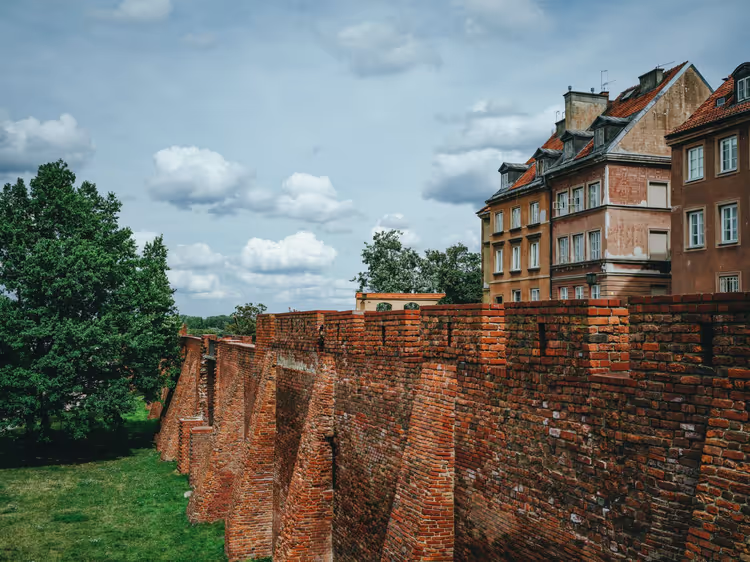
Warsaw is easy to explore on foot. The historic center is compact, but there are more than three dozen points of interest here. Without a plan, you'll get lost among palaces, museums, and monuments and spend the whole day on just a couple of places.
This guide brings together 35 attractions in a logical order: from Castle Square along the Royal Route to Lazienki. Addresses are provided for many of the points. Book tickets for popular museums in advance (as of 09/2026, official website of the Warsaw Uprising Museum).
Ad: this article contains affiliate links, we earn a commission if you book through them, at no extra cost to you.
What to see in Warsaw: the highlights
💡 In short:
- Start with Castle Square, the Royal Castle, and the Old Town Market Square.
- Set aside a separate day for Lazienki and Wilanow, because you can't cover them in a couple of hours.
- Prices and opening hours: 09/2026, verified on the official website of the Royal Castle.
The table below helps you choose if you have little time in Warsaw.
Place | What's interesting | How much time |
|---|---|---|
Royal Castle | reconstructed halls, original Rembrandts | half a day |
Lazienki | palace on the water, peacocks, Chopin concerts | half a day |
Warsaw Uprising Museum | four floors of exhibits and a 3D film about the city's destruction | a couple of hours |
Market Square | cafes, souvenirs, street musicians | a couple of hours |
Wilanow Palace | baroque residence with a formal garden | a couple of hours |
1. Sigismund's Column
 © Jorge Láscar from Australia · CC BYPhoto: Jorge Láscar from Australia, CC BY (https://creativecommons.org/licenses/by/2.0), Wikimedia Commons
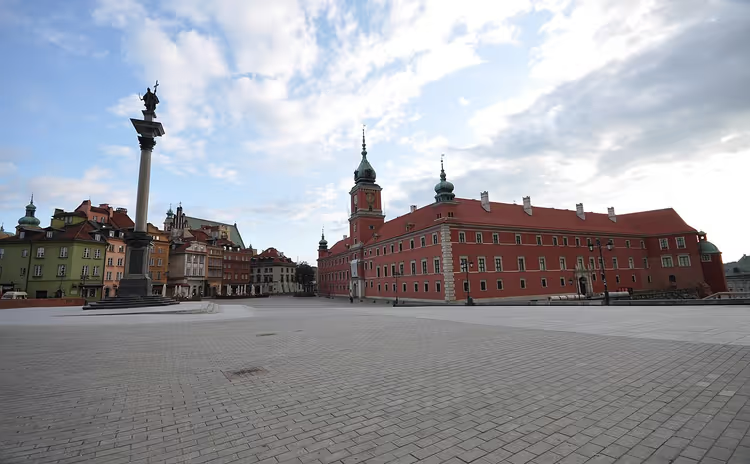
Sigismund's Column stands in the center of Castle Square and opens the route through the city. The bronze statue of the king was cast in 1644, modeled on the Marian Column in Rome. The granite shaft was destroyed during World War II and rebuilt in 1949 from a Silesian monolith. You'll see the monument as soon as you step onto the square from the narrow lanes of the Old Town. From here it's convenient to head to the Royal Castle and continue along the Royal Route.
- Address: plac Zamkowy.
- Who it's for: those starting their tour from the historic center.
2. Royal Castle
 © Marcin Białek · CC BY-SAPhoto: Marcin Białek, CC BY-SA (https://creativecommons.org/licenses/by-sa/3.0), Wikimedia Commons
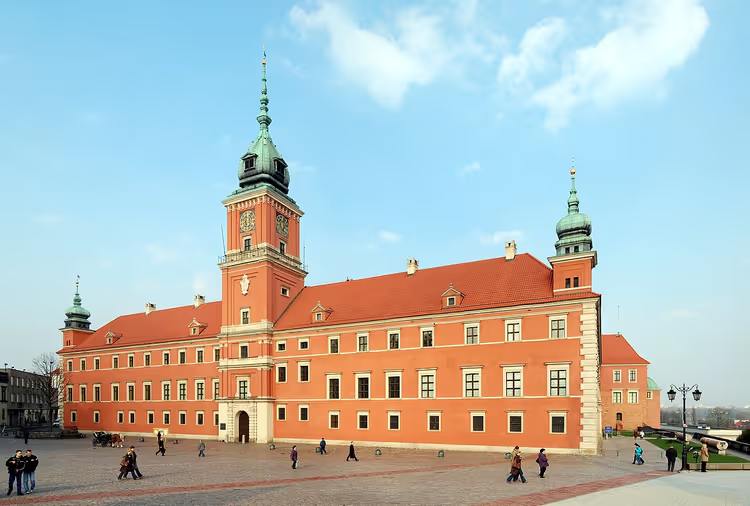
The Royal Castle is built along Castle Square. The first building appeared for King Sigismund III in the late 16th century, was mined and blown up in 1944, and reconstruction only began in 1971. Today it's a museum: the throne room, the Marble Room, the assembly hall with gilded stucco, and paintings, including original Rembrandts. A separate relic of the museum, the "Stockholm Roll," is a canvas over fifteen meters long depicting a wedding procession from 1605. From the castle tower, a trumpet signal sounds daily at 11:15 to announce the time.
Inside are collections of tapestries, carpets, and furniture from the era of Stanislaw August, as well as a collection of clocks, porcelain, ceramics, bronze, and crystal. Documents from the king's personal archive are displayed separately. Painting lovers come here for the original Rembrandts, but the reconstructed halls impress no less than the paintings. If you're short on time, go through the throne room, the Marble Room, and the assembly hall; that's enough for a first introduction.
- Who it's for: those who love painting, interiors, and royal court history.
- Tickets: timed-entry tickets to the Royal Castle on Tiqets, schedule and prices on the official website (as of 09/2026).
3. St. John's Cathedral
 © Adrian Grycuk · CC BY-SAPhoto: Adrian Grycuk, CC BY-SA (https://creativecommons.org/licenses/by-sa/3.0/pl/deed.en), Wikimedia Commons
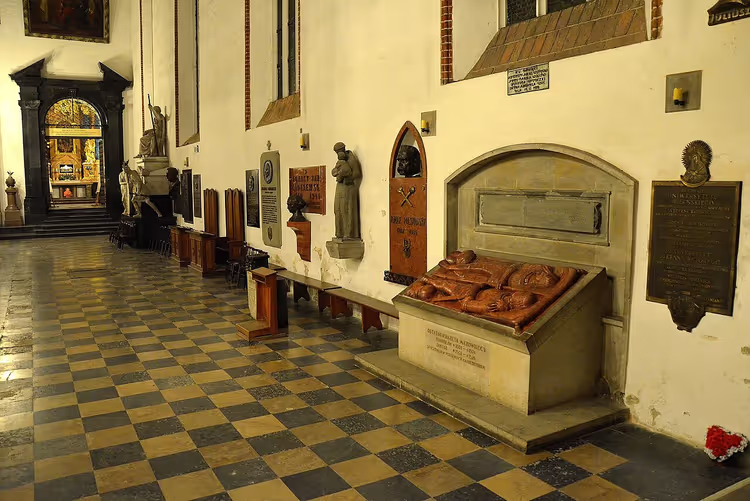
Next to the castle rises St. John's Cathedral, the main church of the Old Town. The Gothic appearance of the city's oldest church was recreated after the war based on surviving evidence. Inside is the most honored burial place in Poland: Polish monarchs were crowned within these medieval walls, including the last king, Stanislaw August Poniatowski. From the outside the cathedral looks Gothic, but the interior decoration is baroque: gilded ceiling frescoes, painted altars, and the Boryczko Chapel. Admission is free, masses are held daily, so go in between services.
The church was conceived in the late 14th century as a burial place for noble Polish princes, and in the 17th century it became a coronation site: a special corridor was built between the Royal Palace and the church for this purpose. It only received cathedral status in the late 18th century, although it looks like a true Gothic building from the outside. Take a close look at the Boryczko Chapel and the gilded ceiling frescoes; they create a completely different mood than the austere facade.
- Address: ulica Kanonia, 6.
4. Mermaid Fountain and Sculpture
 © Adrian Grycuk · CC BY-SAPhoto: Adrian Grycuk, CC BY-SA (https://creativecommons.org/licenses/by-sa/3.0/pl/deed.en), Wikimedia Commons
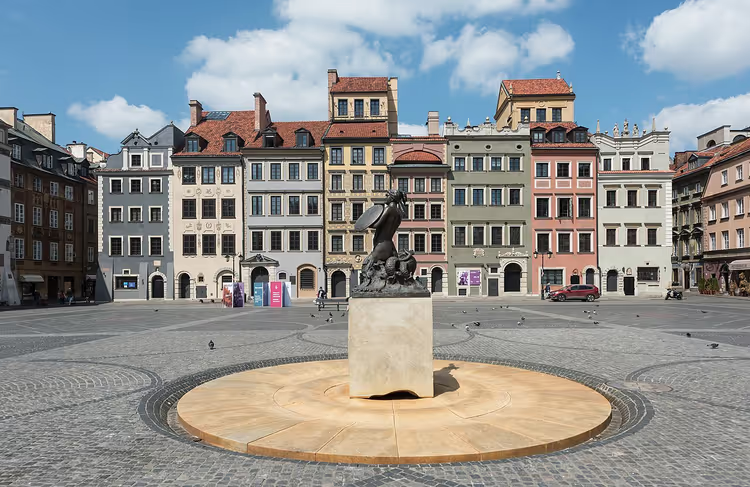
In the center of the Old Town Market Square stands a fountain, and in it a bronze Mermaid with a sword and shield. She made it onto Warsaw's coat of arms and is considered the city's patroness. Each side of the square is named after a famous citizen: Jan Dekert, Franciszek Barss, Hugo Kollataj, Ignacy Zakrzewski. According to legend, the Mermaid swam from the Baltic, sang to fishermen on the shore, and stayed to guard the settlement. In winter, an ice rink is set up on the square, and in the evening festive lights are switched on.
Local cafes serve Polish cuisine, and it's worth trying at least once. Here, "pierogi" means dumplings with various fillings, and soup is served not in a bowl but in a hollowed-out loaf of bread. Market stalls sell everything from antiques to clothing and food, so finding a souvenir won't be a problem.
- Address: Rynek Starego Miasta.
5. Medieval cellars
 © Adrian Grycuk · CC BY-SAPhoto: Adrian Grycuk, CC BY-SA (https://creativecommons.org/licenses/by-sa/3.0/pl/deed.en), Wikimedia Commons
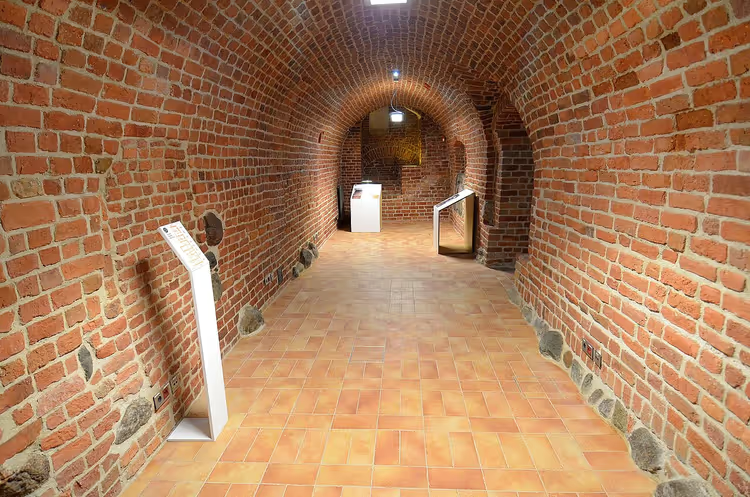
The cellars of the Old Town survived the war better than the buildings above ground. During restoration, a treasure trove of 17th-century coins was found in one of them. Today, five cellars are open to visitors, hosting exhibitions and cultural events. You can pick one or two cellars or cover the entire route if you have the time and energy. Going underground gives you a sense of what the city looked like before the war.
- Who it's for: anyone interested in archaeology and the city beneath the city.
6. The Royal Route
 © Bodhisattwa · CC BY-SAPhoto: Bodhisattwa, CC BY-SA (https://creativecommons.org/licenses/by-sa/4.0), Wikimedia Commons
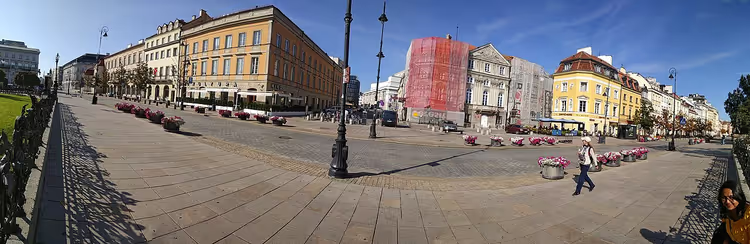
The Royal Route connects three former royal residences and remains Warsaw's main walking axis. In summer, the street is decorated with flower baskets, and the building facades along the way look like a stage set. The pedestrian section is wide, the roadway is narrow, there are few cars, and on weekends traffic is closed off entirely. Walk the full route at least once, because that's how you'll see the city without rushing or crowds.
- How to get there: on foot from Castle Square, about 4 km to Lazienki (see map).
7. Royal Lazienki
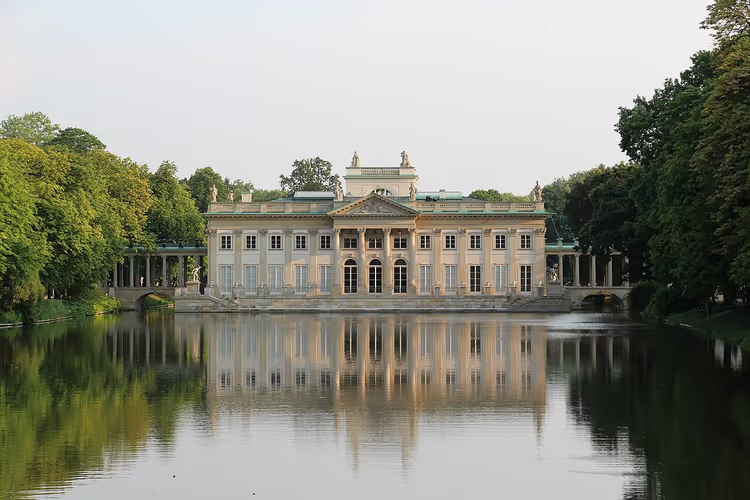 © Fred Romero from Paris, France · CC BYPhoto: Fred Romero from Paris, France, CC BY (https://creativecommons.org/licenses/by/2.0), Wikimedia Commons
The Royal Route turns into Ujazdow Avenue and leads to Lazienki, a baroque palace and park complex. The complex was established in the 17th century for Hetman Stanislaw Herakliusz Lubomirski. Later, King Stanislaw August Poniatowski bought it and made it his summer residence. The palace is surrounded by lakes, which is why it's called the palace on the water. Peacocks roam freely across the lawns around the buildings, and park admission is free year-round.
- Who it's for: anyone who wants to combine palace architecture with a long walk.
8. Old Town
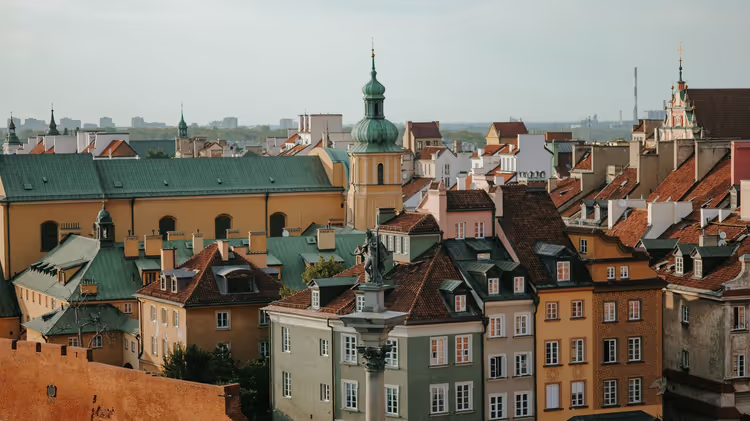
The Old Town was founded at the turn of the 13th and 14th centuries and remains the center of the capital's cultural life. Almost everything built here over the centuries was destroyed in the fighting of 1944. No fully original old buildings remain, but the Poles rebuilt the district from ruins and turned it into Warsaw's calling card. The historic city center has been a UNESCO World Heritage Site since 1980. Walk around here in the morning, before tour groups fill the narrow streets.
9. Wilanow Palace
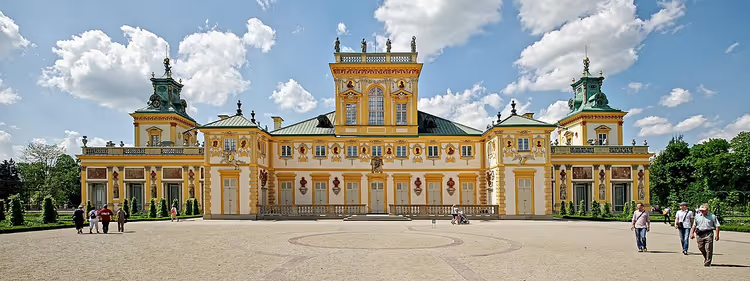
Wilanow Palace was built in the late 17th century for the family of Jan Sobieski, and it's one of the best-preserved royal residences in the country. A formal garden surrounds the grand enfilade, and in front of the palace lies a green lawn where ceremonies are held. In 1805, on the initiative of Stanislaw Potocki, the first Polish museum opened here. Valuable exhibits looted by occupying forces were returned, and the exhibitions were restored. Wilanow is now heavily visited by tourists, so get a ticket for the morning.
- Address: ulica Stanislawa Kostki Potockiego, 10/16.
10. Krakowskie Przedmieście
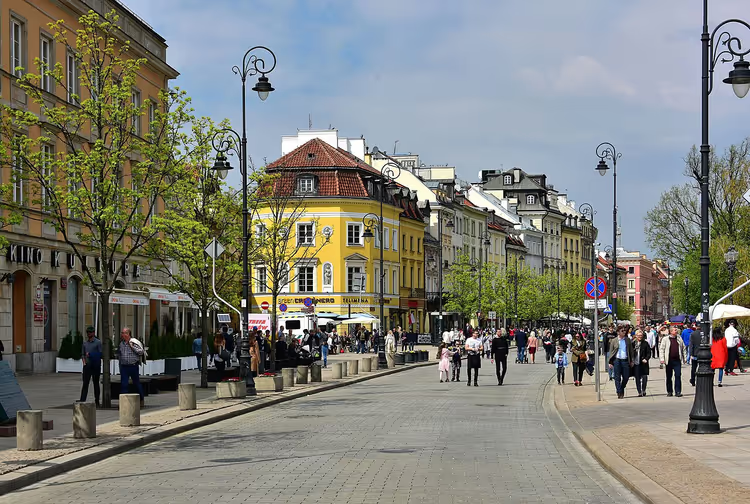 © Adrian Grycuk · CC BY-SAPhoto: Adrian Grycuk, CC BY-SA (https://creativecommons.org/licenses/by-sa/3.0/pl/deed.en), Wikimedia Commons
Krakowskie Przedmieście stretches from Castle Square toward Kraków and serves as the city's main promenade. Only public transport and taxis are allowed on the avenue. Palaces, churches, and monuments line both sides: the university building, the Academy of Fine Arts, the Bristol and Europejski hotels. The Church of the Visitationists deserves special attention, a Rococo church dedicated to the Care of Saint Joseph, built on the site of a burned-down wooden church. Walk the avenue in the evening, when the lights come on, and you'll see it at its best.
- Address: Krakowskie Przedmieście.
11. Historical Museum
 © Rhododendrites · CC BY-SAPhoto: Rhododendrites, CC BY-SA (https://creativecommons.org/licenses/by-sa/4.0), Wikimedia Commons
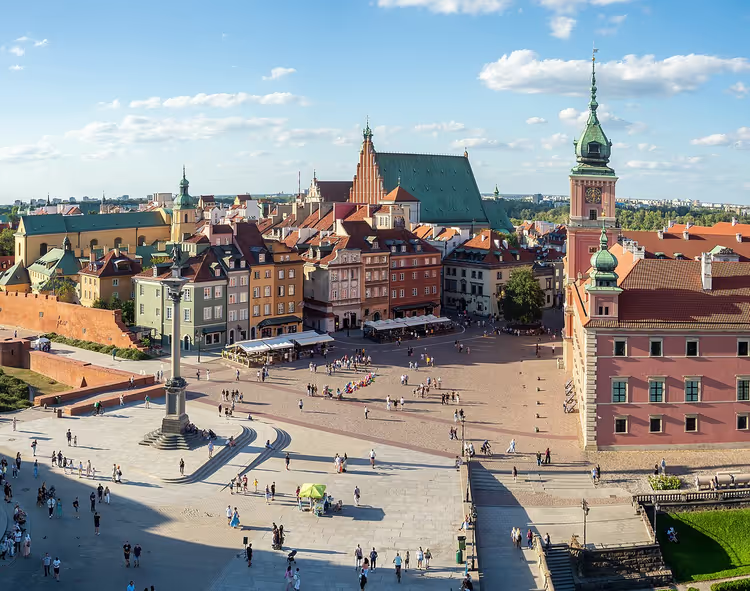
The Historical Museum of Warsaw opened in 1936 and occupies a row of historic houses at numbers 28-42 on the Market Square. The buildings have narrow windows, arched entrances, turrets, and domes on the roofs. The exhibitions show seven centuries of the city's history through everyday objects, relics, and belongings of notable residents. Three houses are dedicated to the Middle Ages with archaeological finds, while the rest cover the 17th through 21st centuries, wars, and the struggle for independence. The museum has its own cinema showing documentaries in European languages.
The museum is divided into departments, each essentially operating as a small independent museum: the Leśniewska Museum, the Palmiry Memorial, the Warsaw Printing Department, and the Field Ordinariate. This range of exhibitions gives a complete picture of the Polish capital's history. If you want to understand the city rather than just look at facades, start your visit here.
- Address: Rynek Starego Miasta 28-42.
12. Fryderyk Chopin Museum
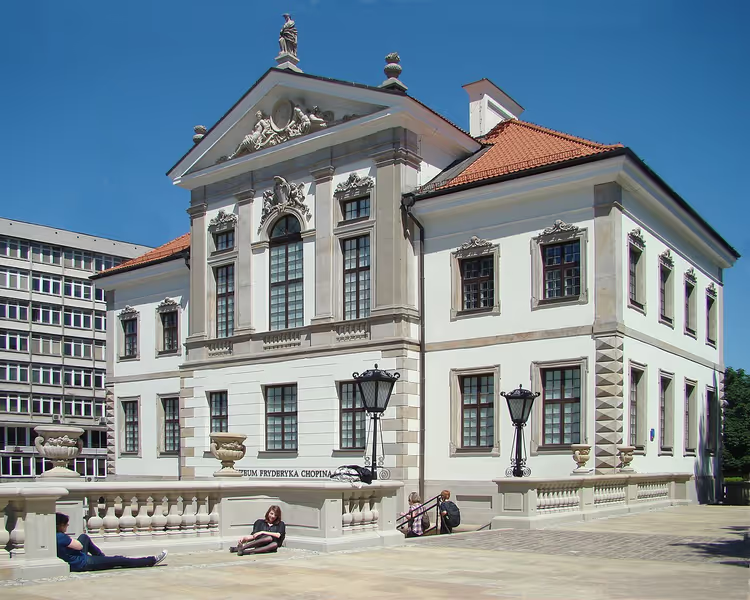
The Fryderyk Chopin Museum occupies a bright Baroque building, the former palace of the Ostrogski princes. The collection was assembled by staff of the Chopin Institute, and the composer's relatives donated manuscripts, letters, and autographed postcards. The exhibition includes a piano whose keys Chopin touched, personal belongings, and death masks. Fifteen rooms tell the story of the composer's life, his circle, and the era in which he worked. The ticket gives access to multimedia stations with tactile screens where you can listen to any piece and commentary on it in many languages.
- Address: ulica Okólnik, 1.
- Who it's for: those who love classical music and want to see the composer's personal belongings.
13. National Museum in Warsaw
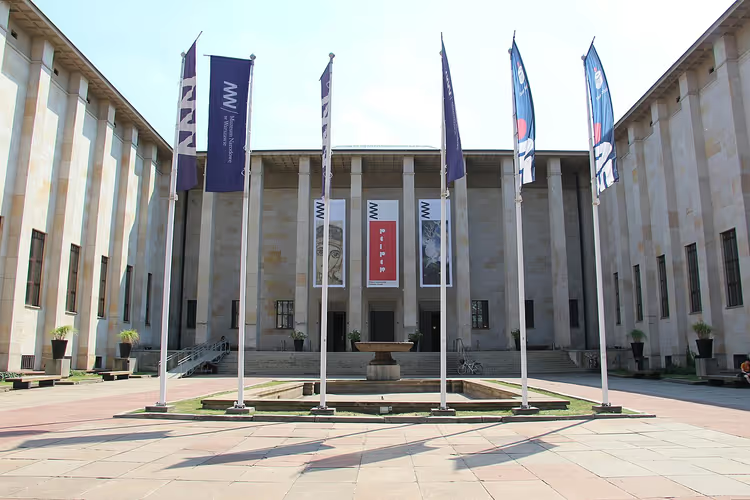
The National Museum in Warsaw brings together a complex of collections under one roof in an Art Nouveau building. It stands in the busiest part of the capital, near Poniatowski Bridge and Charles de Gaulle Roundabout. The museum grew out of the Museum of Fine Arts, founded in 1862, and gained national status as the collection expanded. The halls hold hundreds of thousands of items: painting, sculpture, jewelry and applied arts, photography, numismatics, wood and bone carving. Among the rarities are paintings by Polish artists that returned home from Germany after the war. You can take a break from the galleries in the Lorentz courtyard among the fountains.
 © Fred Romero from Paris, France · CC BYPhoto: Fred Romero from Paris, France, CC BY (https://creativecommons.org/licenses/by/2.0), Wikimedia Commons
The exhibits are lit with modern LED lamps, so every painting is visible in the finest detail. A visit takes several hours, so choose two or three areas in advance: painting, numismatics, or applied arts.
- Address: Aleje Jerozolimskie, 3.
14. Old town market square
 © Adrian Grycuk · CC BY-SAPhoto: Adrian Grycuk, CC BY-SA (https://creativecommons.org/licenses/by-sa/3.0/pl/deed.en), Wikimedia Commons
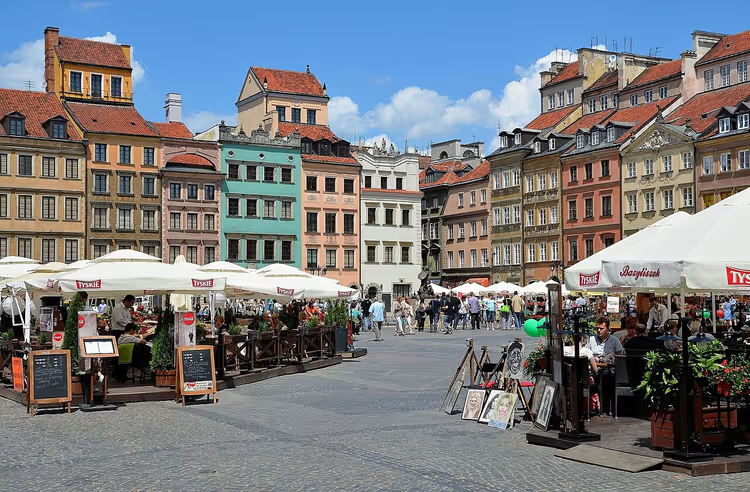
The Old Town Market Square was once the center of the Polish capital, and life here still hasn't quieted down. The square is surrounded by historic houses with ornate facades, and the cobblestones are always crowded. Artists draw portraits of passersby, young musicians play instruments, carriage drivers wait for passengers, and tourists look for the perfect shot. There are plenty of cafes, restaurants, brand stores, and souvenir shops, so it's hard to leave without buying something. Bring cash and take your time: the square reveals itself if you sit at a table for at least half an hour.
- Who it's for: those who want to feel the city's rhythm and have lunch in the historic center.
15. Castle Square
Castle Square is considered one of the most beautiful places in Europe and serves as the entrance to the historic center. The eastern side is occupied by the Royal Castle, and before that a wooden fortress stood on the site. You should start exploring the Old Town here. Another landmark on the square is the Noble Gate with its clock tower, and nearby stands the city's oldest church, St. John's Archcathedral. After the grand restoration of 1971, the center once again became a point of attraction, and since 1980 it has been a UNESCO World Heritage Site.
- Getting there: on foot from Ratusz Arsenał metro station, about 15 minutes (see map).
16. Belweder Palace
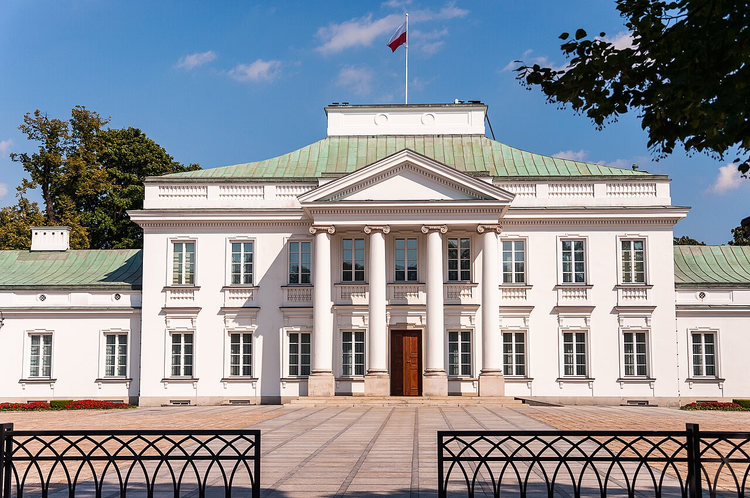 © Mkos · CC BY-SAPhoto: Mkos, CC BY-SA (https://creativecommons.org/licenses/by-sa/3.0/pl/deed.en), Wikimedia Commons
Belweder Palace stands on Belwederska Avenue, on a hill overlooking an artificial lake. The first palace on this site appeared back in 1662, and the current building was constructed in 1822 to a design by architect Jakub Kubicki. The structure was built for the wife of Lithuanian Chancellor Krzysztof Zygmunt Pac. Later the palace was owned by Stanisław August Poniatowski, who set up a faience factory in the building, then the property passed to Onufry Kicki and his daughter Teresa. Today Belweder serves as the residence of the President of Poland, so you won't get inside.
- Who it's for: those strolling through Łazienki Park who want to see the presidential residence from the outside.
17. Fryderyk Chopin Monument
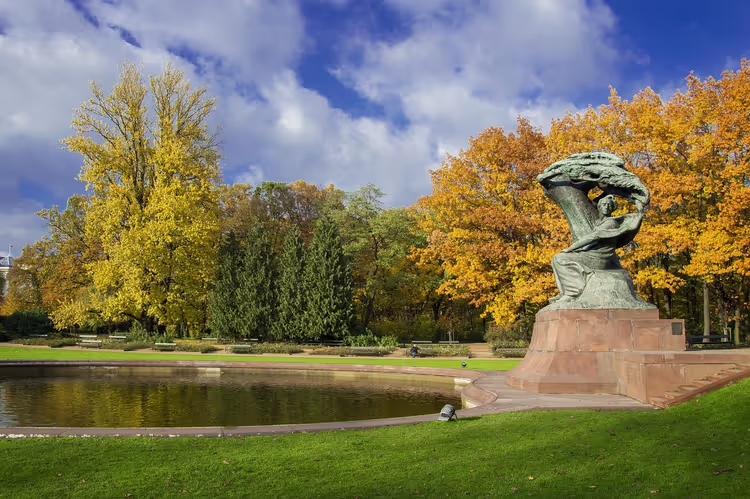
The Fryderyk Chopin Monument in Łazienki Park draws tourists from around the world. The monument was erected in 1926, nothing remained of it during World War II, and the copy was only restored in 1958. The composer is buried in Paris at Père Lachaise Cemetery, but his heart was brought to Warsaw according to his will and sealed into a column of the Holy Cross Church. In summer, people listen to classical music by the monument, a tradition that has lived on for more than sixty years. Come at the end of the day on warm weekends, when listeners gather around the monument.
18. Nicolaus Copernicus Monument
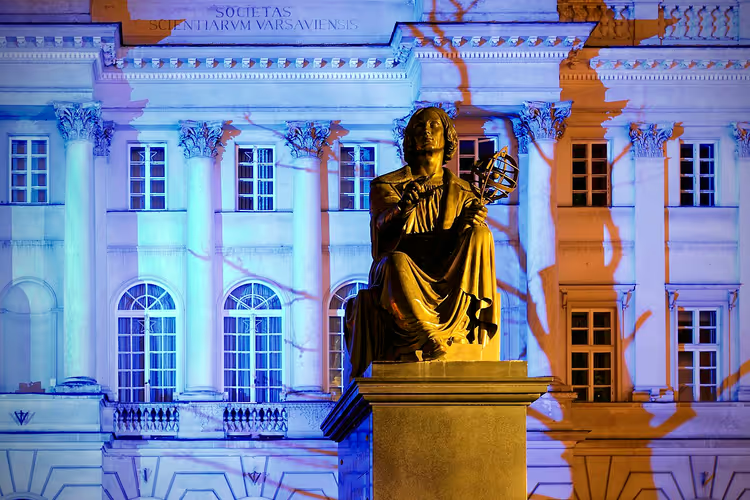 © McBartosz · CC BYPhoto: McBartosz, CC BY (https://creativecommons.org/licenses/by/3.0), Wikimedia Commons
The Nicolaus Copernicus Monument was cast in bronze in 1822 and installed on Krakowskie Przedmieście in 1830. The sculpture was created by Danish master Bertel Thorvaldsen, and the funds were provided by Catholic priest Stanisław Staszic. The astronomer holds an armillary sphere in his left hand and a compass in his right. The pedestal bears inscriptions in Latin addressed to his compatriots. During the war, the occupiers replaced them with others, Polish soldiers tore down the new plaques, and the bronze itself was nearly taken away for smelting. The restored monument was unveiled in 1949. Copies of the monument stand in Chicago and Montreal.
- Who it's for: those walking along Krakowskie Przedmieście who want to see one of the city's most recognizable sculptures.
19. Monument to the Ghetto Heroes
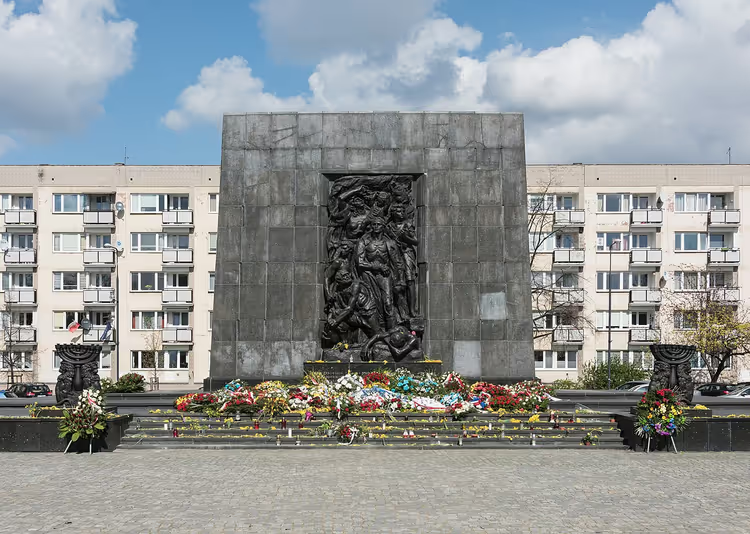 © Adrian Grycuk · CC BY-SAPhoto: Adrian Grycuk, CC BY-SA (https://creativecommons.org/licenses/by-sa/3.0/pl/deed.en), Wikimedia Commons
The Monument to the Ghetto Heroes stands on the square between Lewartowskiego, Anielewicza, Karmelicka, and Zamenhofa streets. The location was not chosen by chance: this is where the first armed clash took place during the 1943 uprising. The eleven-meter-tall sculpture was unveiled in 1948. In 1940, immediately after the occupation began, several districts of the city were declared a special zone for Jews, and in October the Warsaw Ghetto was established, where hundreds of thousands of people were forced. In 1942, people began to be transported to the Treblinka death camp, and a year later the German occupiers razed the district to the ground after the uprising. Today this is a place of remembrance and one of the main stops on the city's military history route.
20. Little Insurgent Monument
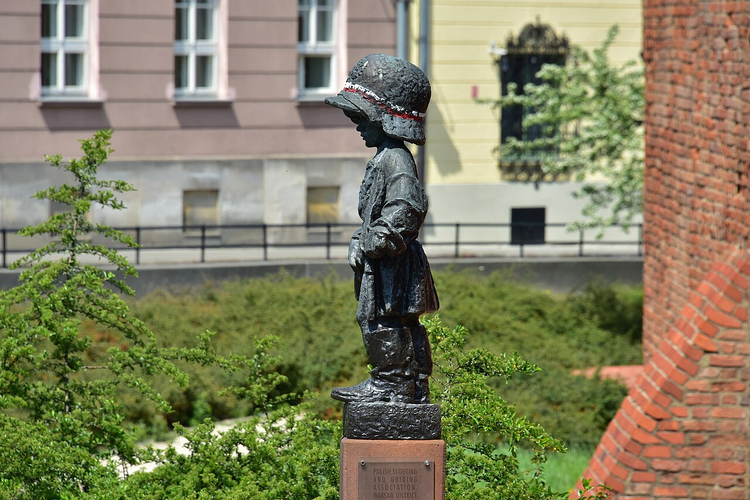 © Adrian Grycuk · CC BY-SAPhoto: Adrian Grycuk, CC BY-SA (https://creativecommons.org/licenses/by-sa/3.0/pl/deed.en), Wikimedia Commons
The Little Insurgent Monument stands in the Old Town on Podwale Street, which was almost completely destroyed during World War II. The small figure of a child in a helmet among the ruins commemorates the children who fought for the city. The composition was created by Jerzy Jarnuszkiewicz, inspired by teenagers who fought German soldiers during the Warsaw Uprising. The sculpture has a real-life prototype, the son of a nurse who served as a messenger and died, like many resistance participants. The ruins of one of the citadel's towers became the backdrop for the memorial, which is why photographs here turn out especially powerful.
21. Copper-Roof Palace
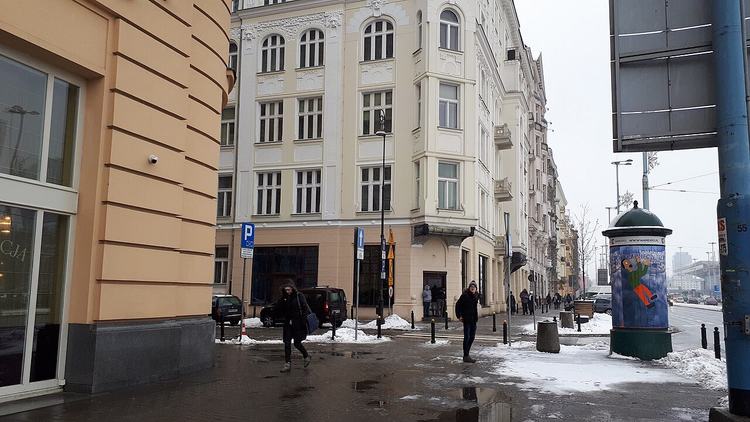
The Copper-Roof Palace was built in 1720-1730 near the Royal Castle, designed by architect Jakub Fontana. The name stuck because of its copper roof. Originally, the site was home to the court blacksmith who served Jan Kazimierz, then the property passed to Jerzy Lubomirski and Stanisław Poniatowski. After World War II, the main building retained its original appearance, and after 1989 it became part of the Royal Castle complex. In 2008, the palace underwent a major renovation. Today it houses a museum with artworks and historical exhibits, and it's easy to stop by on your way to the castle.
22. Multimedia Fountain Park
The Multimedia Fountain Park operates on the Vistula embankment during the warm season and opened in May 2011. The park is located near the Old Town. Several hundred nozzles shoot tens of thousands of liters of water per minute, with lighting provided by hundreds of LED floodlights. At scheduled times, water and light combine into animations, all accompanied by music from various genres. Shows run from May through September on Fridays and Saturdays; at other times the fountains operate without music or lights. Arrive early to grab a spot by the parapet.
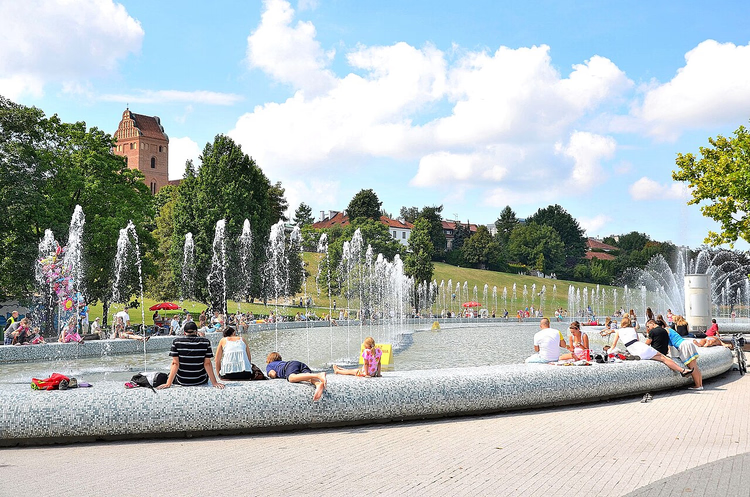 © Adrian Grycuk · CC BY-SAPhoto: Adrian Grycuk, CC BY-SA (https://creativecommons.org/licenses/by-sa/3.0/pl/deed.en), Wikimedia Commons
- Who it's for: those strolling along the embankment after dinner who want a free show.
23. Zoo
The Warsaw Zoo spreads across a large area and has been operating for over a century, so it has a rich history. Lions, rhinos, elephants, lynxes, camels, and bears live here, and squirrels run freely along the paths. If you're with kids, grab a cart at the entrance, otherwise your little one will tire out before you're halfway through the route. Tickets are sold from 9:00 AM to 4:00 PM, even when the zoo is open until 5:00 PM, because one hour isn't enough to see everything. Children under twelve won't be admitted without an adult. As of April 1, 2026, a full-price ticket costs 45 zloty (as of 09/2026, zoo.waw.pl).
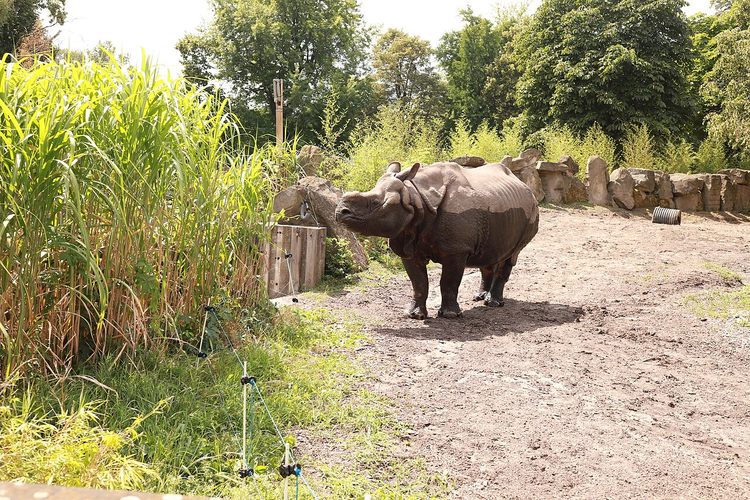
- The catch: tickets stop being sold an hour before closing, so you can't be late.
24. Łazienki Park
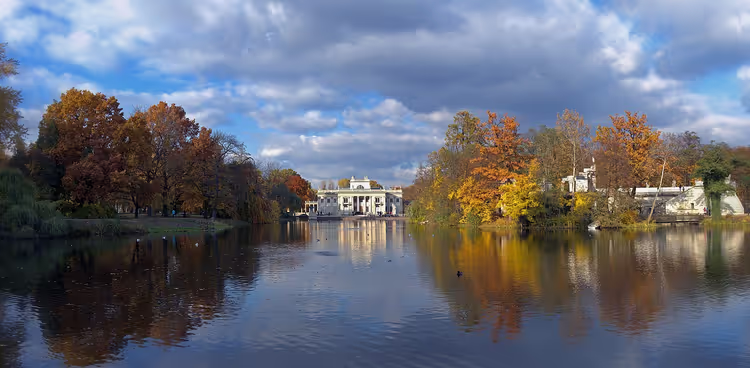
Łazienki Park is worth visiting if you have spare time after the main attractions. Have your camera ready right away: unusual monuments and vivid scenery greet you from the very first steps. To the left of the main entrance stands the monument to Marshal Piłsudski, to the right is Belweder Palace, and a little further on a retro car is on display. Walk to the Chopin monument; behind it begins the entrance to the Royal Theatre and the old orangery, which require a separate ticket. The park's main highlight is the Palace on the Water, made especially atmospheric by peacocks roaming freely. Nearby is the Roman Theatre, and tucked deeper inside is the Chinese Garden.
- Admission: the park is free; museums, the orangery, and the theatre are paid (as of 09/2026, Łazienki Królewskie).
25. Keret House
 © Adrian Grycuk · CC BY-SAPhoto: Adrian Grycuk, CC BY-SA (https://creativecommons.org/licenses/by-sa/3.0/pl/deed.en), Wikimedia Commons
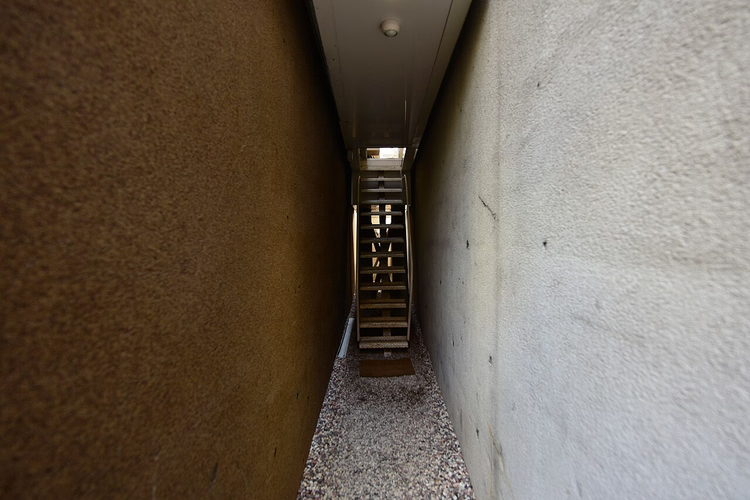
Keret House is considered the narrowest residential building in the world; at its narrowest point it's less than a meter wide. The building is squeezed between two neighboring houses and isn't designed for a large family. The entire house has a floor area of about 14 square meters spread across two floors. There's no room for a large kitchen or bedroom set, no space for a spacious bathtub or living room. It was originally an art project, but the house caught the eye of Israeli writer and filmmaker Etgar Keret, who comes to Warsaw for work. You won't miss this landmark, but getting inside is usually not possible.
26. Łazienki Palace
Łazienki Palace was the residence of King Stanisław August Poniatowski, and back then the "Palace on the Water" stood far outside the city. Today the park, covering nearly eighty hectares, spreads out near the historic center. The elegant 17th-century bathhouse was rebuilt by Italian architect Domenico Merlini. Besides the palace, the White House, orangeries, paths, and canals are worth noting; together they form a harmonious composition of Baroque architecture and landscape design. Inside the palace, be sure to see Solomon Hall, the ballroom, and the art gallery with thousands of works of art. Book Łazienki tickets on Tiqets in advance to avoid waiting at the ticket office.
- Hours: museum facilities are open Tuesday through Sunday, with last entry thirty minutes before closing (as of 09/2026, Warsaw museum portal).
27. Warsaw Citadel
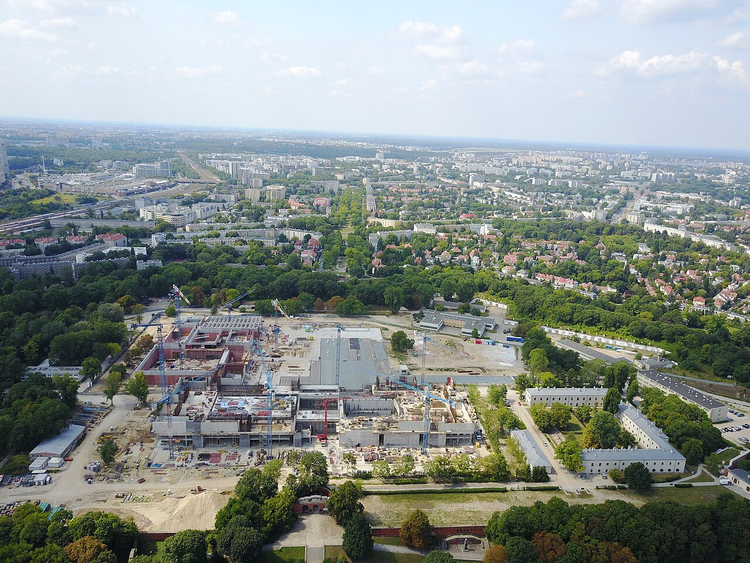
The Warsaw Citadel, a 19th-century fortress, was built by order of Nicholas I immediately after the 1830 uprising. The gates facing the river are called the "Gates of Death" because death sentences were carried out here. Today it's a museum covering a large part of Polish state history. Foreign tourists are advised to see "Block No. 10," where political prisoners' cells and a cart used to transport exiles have been preserved. At one point, German occupiers set up in the citadel, preventing insurgents from linking up with another part of the Polish forces. The Military History Museum opened here in 1963.
 © Fallaner · CC BY-SAPhoto: Fallaner, CC BY-SA (https://creativecommons.org/licenses/by-sa/4.0), Wikimedia Commons
28. St. John the Baptist Church
 © Tadeusz Rudzki · CC BYPhoto: Tadeusz Rudzki, CC BY (https://creativecommons.org/licenses/by/3.0), Wikimedia Commons
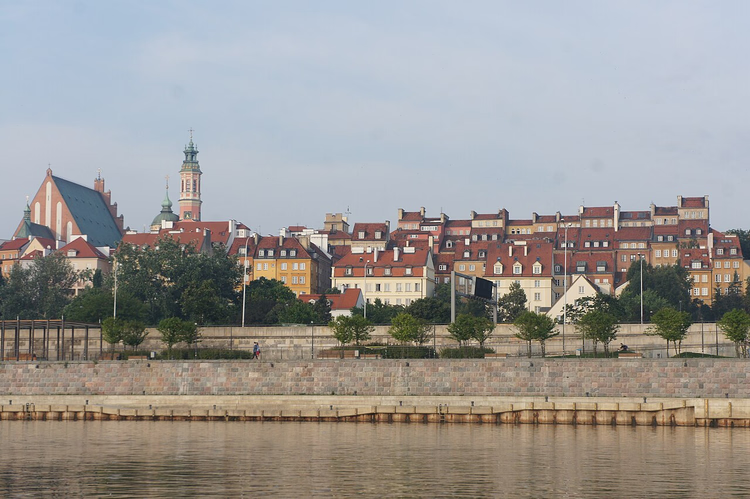
The Church of St. John the Baptist, the same building as St. John's Archcathedral from point three, deserves a separate visit. This oldest Catholic church in the city has witnessed key events in Polish history. A dispute between the king and the Teutonic Knights took place here, Stanisław Leszczyński and Stanisław August Poniatowski were crowned here, and a member of parliament took his oath here. Inside are buried people who contributed to Polish culture and statehood: Ignacy Jan Paderewski, Henryk Sienkiewicz, and the first president of Poland, Gabriel Narutowicz. The church's main attraction is a huge wooden crucifix brought from Nuremberg in the early 16th century. Every summer, organ music concerts are held here.
29. Church of the Holy Cross
 © Adrian Grycuk · CC BY-SAPhoto: Adrian Grycuk, CC BY-SA (https://creativecommons.org/licenses/by-sa/3.0/pl/deed.en), Wikimedia Commons
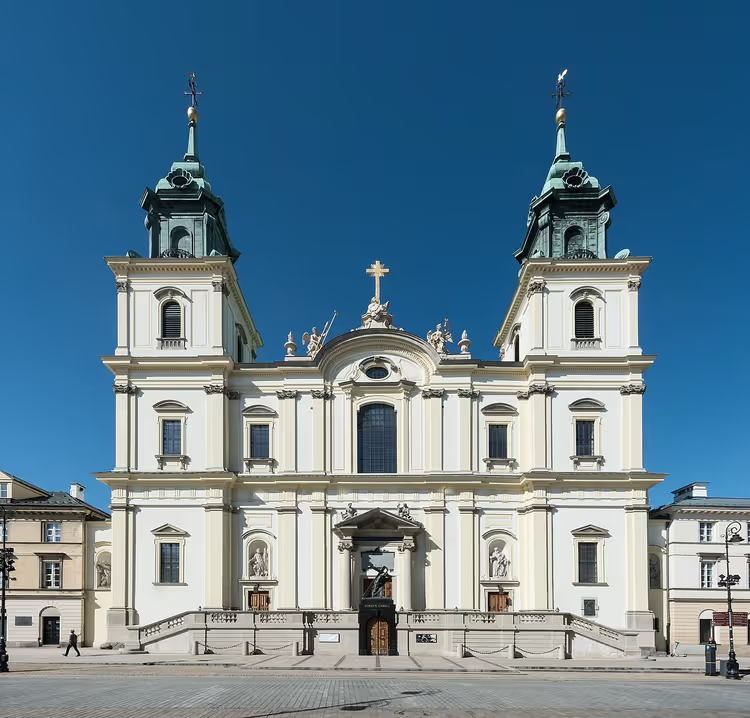
The Church of the Holy Cross on Krakowskie Przedmieście is one of the oldest Catholic churches in Poland. It originally belonged to the Lazarists, an ancient Catholic order, and renowned architects took part in its construction. The design was developed by Józef Szymon Bellotto. The heart of Frédéric Chopin is immured in one of the church's columns, and the ashes of other great Poles rest within its walls. At the entrance stands a statue of Christ bending under the weight of the cross. During the war, the Germans nearly took the statue away but abandoned it along the road, while the altars and paintings were destroyed. The church was fully restored only in 2004, which is why the interior looks renewed.
- Address: Krakowskie Przedmieście.
30. Church of St. Casimir
 © PiotrMig · CC BYPhoto: PiotrMig, CC BY (https://creativecommons.org/licenses/by/4.0), Wikimedia Commons
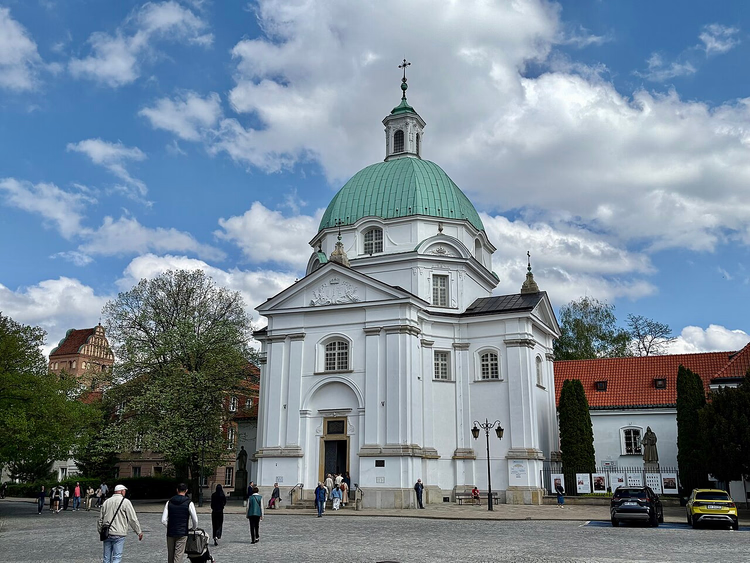
The Church of St. Casimir was built in 1688 by order of Jan Sobieski to commemorate the victory at Vienna. The architect was Tylman van Gameren, and the building was constructed in the early classical style with strict symmetry. The church proudly rises above the city's historic center. During the war, a hospital operated here: the monks did not immediately agree to take in wounded insurgents, but in August 1944 they relented, and the building was bombed for it. Restoration of the church began in 1948, and the new building took four years to complete. The ashes of Jan Sobieski's daughter, Maria Karolina, rest within the church walls.
31. Church of St. Anne
 © Adrian Grycuk · CC BY-SAPhoto: Adrian Grycuk, CC BY-SA (https://creativecommons.org/licenses/by-sa/3.0/pl/deed.en), Wikimedia Commons
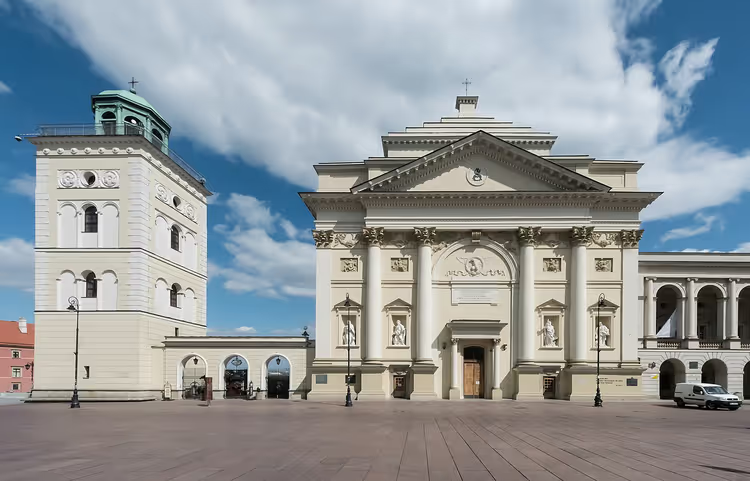
The Church of St. Anne was built in the 15th century and stands at the intersection of Krakowskie Przedmieście and Castle Square. The observation deck offers a wide view of central Warsaw. The church's history began when a new church rose on the site of a burned-down Franciscan monastery at the initiative of Princess Anna Radziwiłł. It was rebuilt and restyled several times, but the princess's tombstone remains inside to this day. During World War II, the church partially survived. Tourists come here for services and for the view from the observation deck, which is worth visiting on a clear day.
- The catch: in bad weather, the observation deck is closed.
32. Ujazdów Castle
 © Adrian Grycuk · CC BY-SAPhoto: Adrian Grycuk, CC BY-SA (https://creativecommons.org/licenses/by-sa/3.0/pl/deed.en), Wikimedia Commons
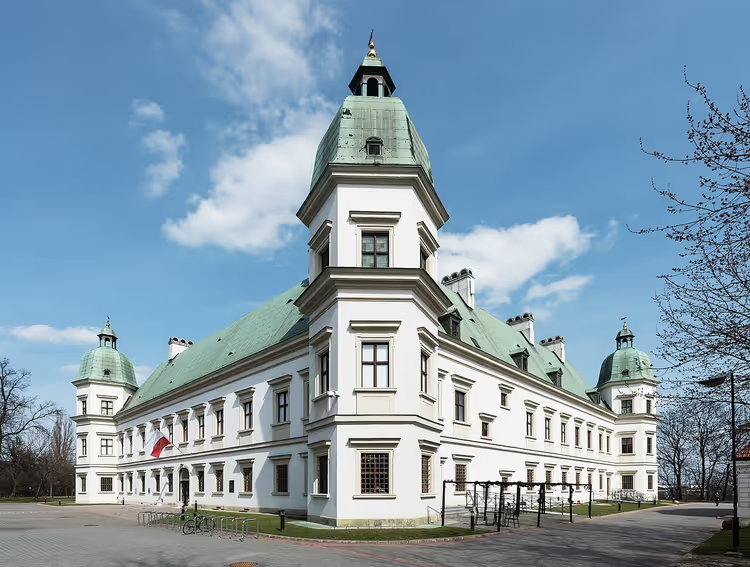
Ujazdów Castle was built by Sigismund III Vasa as a residence for the future king. Later the building belonged to King Augustus II. The palace was owned by Stanisław August Poniatowski, during whose time significant works of art were kept within its walls. During World War II the building was severely damaged, and the ruins were later demolished. Historians, together with architect Piotr Biegański, secured the castle's reconstruction. Today it houses the Centre for Contemporary Art with exhibitions, concerts and seminars. Nearby there are places to relax, cafes, restaurants and a dance floor, but you cannot drive up to the castle by car.
33. Warsaw Uprising Museum
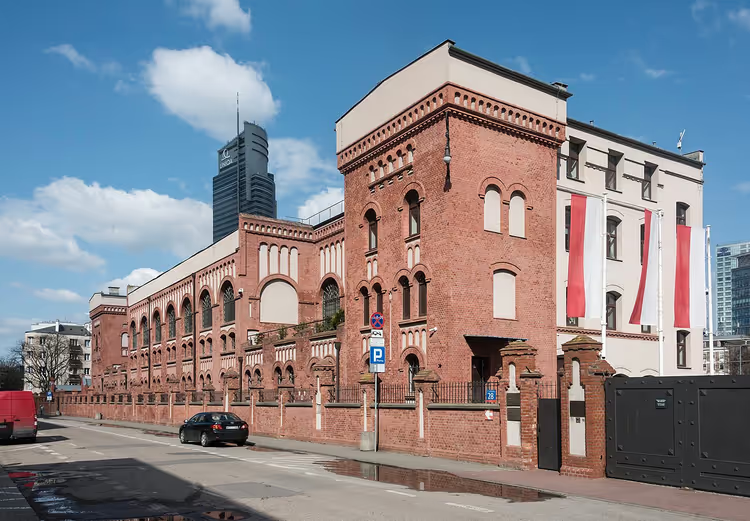 © Adrian Grycuk · CC BYPhoto: Adrian Grycuk, CC BY (https://creativecommons.org/licenses/by/3.0/pl/deed.en), Wikimedia Commons
The Warsaw Uprising Museum is dedicated to the events of 1944, when the city's residents tried to liberate the capital from German occupiers. For sixty-three days the insurgents fought for freedom, but they were defeated and the city was almost completely destroyed. The exhibitions occupy four floors, with around seven hundred and fifty exhibits in total. A separate highlight of the program is a 3D film about Warsaw, assembled from hundreds of wartime photographs: in a few minutes you will see how the city was wiped off the face of the earth. A ticket costs 35 złoty, and on Thursdays individual admission is free (as of 09/2026, official website).
- The catch: on weekends the entrance line is long, so get skip-the-line tickets on Tiqets or arrive at opening time.
34. Copernicus Science Centre
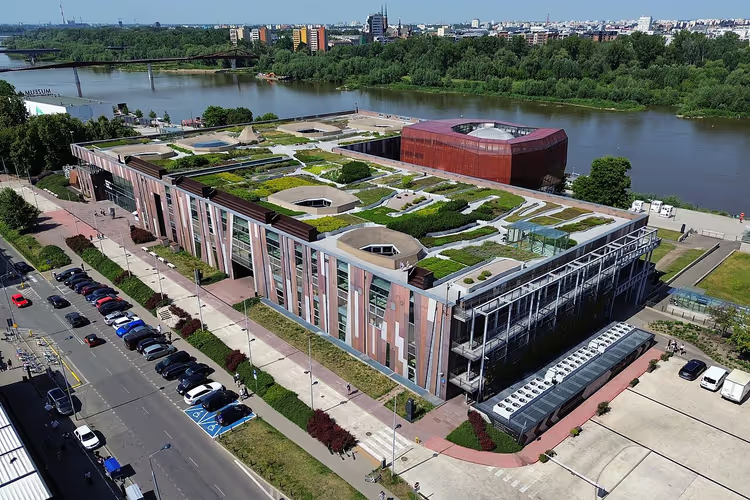 © Kapitel · CC BY-SAPhoto: Kapitel, CC BY-SA (https://creativecommons.org/licenses/by-sa/4.0), Wikimedia Commons
The Copernicus Science Centre occupies a large building on the banks of the Vistula and operates as an interactive museum. It opened in 2010 and quickly became one of the top destinations for families. It has permanent exhibitions, its own laboratories with science experiments, a high-voltage theatre, a robot theatre and a planetarium with films about science. For the youngest visitors there is the "Bzzz" exhibition, and the "Regeneration" gallery tells about the mysteries of the origin of the world. Before your trip, check the date: according to the official website (09/2026), visitors will be welcomed again starting October 12, 2026.
- Who it's for: families with children and anyone who likes to touch exhibits with their hands.
35. Eryk Lipiński museum of caricature
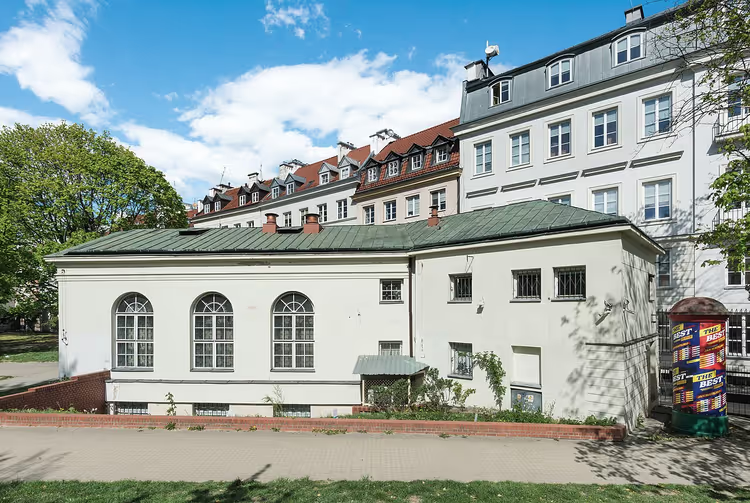 © Adrian Grycuk · CC BYPhoto: Adrian Grycuk, CC BY (https://creativecommons.org/licenses/by/3.0/pl/deed.en), Wikimedia Commons
The Museum of Caricature is named after Eryk Lipiński, a Polish artist and public figure. He was a virtuoso with brush and pen: he painted pictures and caricatures, wrote essays, designed theatre sets and edited a satirical publication. During the war Lipiński forged documents for Jewish families, saving children and adults, survived two prisons and Auschwitz, and later received the title of "Righteous Among the Nations". He organized the museum in the 1970s in a building that is part of the Primate's Palace complex. The building was constructed around the 18th century; previously it housed an orangery and the gardener's rooms. The collection holds tens of thousands of works by Polish and foreign artists.
⁉️🤔 Frequently asked questions
How many days do you need for Warsaw?
Two full days are enough for the main sights on this list. On the first day, walk through Castle Square, the Royal Castle, the Old Town and Krakowskie Przedmieście. Set aside the second day for Łazienki, Wilanów and one major museum, such as the Warsaw Uprising Museum.
When is the best time to visit Warsaw?
The most comfortable time is from May to September. That's when the fountains on the embankment are running, Chopin concerts are held in Łazienki Park, and the Royal Route is pleasant to stroll along all evening. In winter, an ice rink is set up on the Market Square, but daylight hours are short and some observation decks are closed.
How much do tickets to Warsaw museums cost?
A ticket to the Warsaw Uprising Museum costs 35 złoty, and on Thursdays individual admission is free (as of 09/2026, official website). The Warsaw Zoo has charged 45 złoty for a full ticket since April 1, 2026 (as of 09/2026, zoo.waw.pl). Palaces and museums in Łazienki are paid separately; check current prices on official websites.
Is it worth buying tickets in advance?
Yes, if you are traveling in summer or on weekends. For the Royal Castle, Łazienki and the Warsaw Uprising Museum, it's better to book a morning slot: ticket office lines grow quickly, and with an online ticket you enter at your scheduled time. For the Copernicus Science Centre, check the opening date first.
What to see in Warsaw with kids?
Kids usually enjoy the Warsaw Zoo, the interactive Copernicus Science Centre, and Lazienki Park with its peacocks. In the evening, head to the multimedia fountain park on the Vistula embankment; the show runs on Fridays and Saturdays. If you're visiting museums with little ones, it's better to go in the morning when the halls are still quiet.
Can you cover all 35 places in one day?
No, in a day you'll manage five or six spots at most if you want to go inside. Castle Square, the Royal Castle, the Old Town, and Krakowskie Przedmiescie take a full day at a relaxed pace. Spread the rest across days two and three, or pick based on your interests so the trip doesn't turn into a race across the city.
Where to eat in central Warsaw?
Cafes and restaurants are right on the Old Town Market Square and along Krakowskie Przedmiescie. On the square they serve Polish cuisine, and locals recommend trying pierogi and soup in a bread bowl. If you want a quieter meal, step onto a side street: the options are the same, but there's less bustle.
What can you see in Warsaw for free?
Lazienki Park, St. John's Archcathedral, and the Church of the Holy Cross are free to enter, and a walk along the Royal Route costs nothing. Monuments, squares, and the Vistula embankment are also free. You'll mainly pay for museums and palaces, so part of your itinerary can be done on no budget at all.
Warsaw attractions on the map
All the places from the list are gathered on one map so you can plan your route in advance and avoid wasting time on transfers. The points run south from Castle Square, so it makes sense to split your sightseeing into two days: the center and Old Town on day one, Lazienki and Wilanow on day two. Mark the places you want in advance and estimate how long it will take to get between them.
Landmarks of Warsaw: 35 places
Places on the map
- 1Sigismund's Column Bronze statue of the king from 1644 in the centre of Castle Square
- 2Royal Castle Reconstructed halls and original Rembrandts
- 3St. John's Archcathedral The main Gothic church of the Old Town, free admission
- 4Warsaw Mermaid Fountain and Statue Bronze mermaid with a sword and shield, the symbol of Warsaw
- 5Medieval Cellars Five open cellars of the Old Town with exhibitions
- 6Royal Route The city's main promenade linking three royal residences
- 7Royal Łazienki Palace-and-park ensemble with the Palace on the Isle and peacocks
- 8Old Town Centre rebuilt from ruins, a UNESCO heritage site since 1980
- 9Wilanów Palace Baroque residence of Jan Sobieski with a formal garden
- 10Krakowskie Przedmieście The main promenade lined with palaces, churches and monuments
- 11Historical Museum of Warsaw Seven centuries of city history in houses 28-42 on the Market Square
- 12Fryderyk Chopin Museum Fifteen rooms in the Ostrogski Palace, the composer's grand piano
- 13National Museum in Warsaw Painting, sculpture and numismatics in an Art Nouveau building
- 14Old Town Market Square Historic facades, cafés, artists and street musicians
- 15Castle Square Gateway to the historic centre, the Szlachecka Gate with its clock tower
- 16Belweder Palace Residence of the President of Poland, viewable from the outside only
- 17Fryderyk Chopin Monument Monument in Łazienki Park, concerts are held here in summer
- 18Nicolaus Copernicus Monument Bronze sculpture by Thorvaldsen on Krakowskie Przedmieście
- 19Ghetto Heroes Monument Eleven-metre monument on the site of the 1943 uprising's battles
- 20Little Insurgent Monument Figure of a child in a helmet on Podwale Street in the Old Town
- 21Palace Under the Tin Roof Palace from 1720-1730 with a copper roof, now a museum
- 22Multimedia Fountain Park Water, light and music show on the Vistula embankment from May to September
- 23Warsaw Zoo Lions, rhinos and elephants, full ticket 45 złoty
- 24Łazienki Park Free park with monuments, an orangery and a Chinese garden
- 25Keret House The world's narrowest residential house, under a metre wide at its narrowest point
- 26Palace on the Isle Stanisław August's palace on the water, the Solomon Hall and a gallery
- 27Warsaw Citadel 19th-century fortress with the Gate of Death and Pavilion X
- 28Holy Cross Church Fryderyk Chopin's heart is sealed inside a column of the church
- 29St. Casimir's Church 1688 church commemorating the victory at Vienna, early Classicism
- 30St. Anne's Church 15th-century church with an observation deck over central Warsaw
- 31Ujazdów Castle Rebuilt castle housing the Centre for Contemporary Art
- 32Warsaw Rising Museum Four floors of exhibits and a 3D film, ticket 35 złoty
- 33Copernicus Science Centre Interactive museum with laboratories and a planetarium on the banks of the Vistula
In short: what's worth booking
Build your route around your interests. If you have one day, go for Castle Square, the Royal Castle, the Old Town, and Krakowskie Przedmiescie. If you have two days, add Lazienki with the Palace on the Isle and Wilanow Palace. If you're traveling with kids, plan for the zoo, the Copernicus Science Centre, and the fountain park. If you're into military history, start with the Warsaw Uprising Museum, the Citadel, and the ghetto memorials.
Tours and tickets in Warsaw
Guided tours, skip-the-line tickets and activities — most offers can be cancelled free of charge.
See offers on GetYourGuideThe widget loads once you give your consent.
For accommodation, compare hotels in Warsaw on Trip.com, check out tours on GetYourGuide, or look for museum tickets.

A small editorial team writing guides for independent travel. We travel ourselves, but we haven’t been everywhere, so we check prices, opening hours and how to get there against official sources.