

















Christmas in England: why gifts are hidden in a stocking
Christmas in England begins long before December 25. By November, streets are already lit up with garlands, shops are putting out crackers, and choirs are rehearsing carols. For a visitor, some of the customs look unusual. Gifts sit in a stocking, and the main dinner starts at three in the afternoon.
We have gathered five traditions that best explain an English Christmas. You will learn where they came from, how they play out today, and what is worth seeing with your own eyes. We checked dates and details against official sources, with links right in the text.
1. Gifts in a stocking from Father Christmas
💡 In short:
- Gifts here are found not only under the tree, but also in a stocking above the fireplace.
- On the night of December 24 to 25, children leave whiskey and a mince pie for Father Christmas.
- Dates and traditions: 09/2026, verified on the official V&A Museum website and the Royal Family website.
On the morning of December 25, children can hardly wait. They find gifts from family and from Father Christmas under the tree and in a stocking. This stocking is hung above the fireplace or tied to the foot of the bed. Inside are small additions to the main gift: sweets, chocolate bars, and a Terry's Chocolate Orange.
Before eating, the chocolate orange is smashed against the table, after which it breaks into segments. The main gifts are unwrapped on the morning of December 25. On the night of the 24th, children leave whiskey and a sweet mince pie for Father Christmas. Some families, influenced by American culture, also put out a glass of milk.
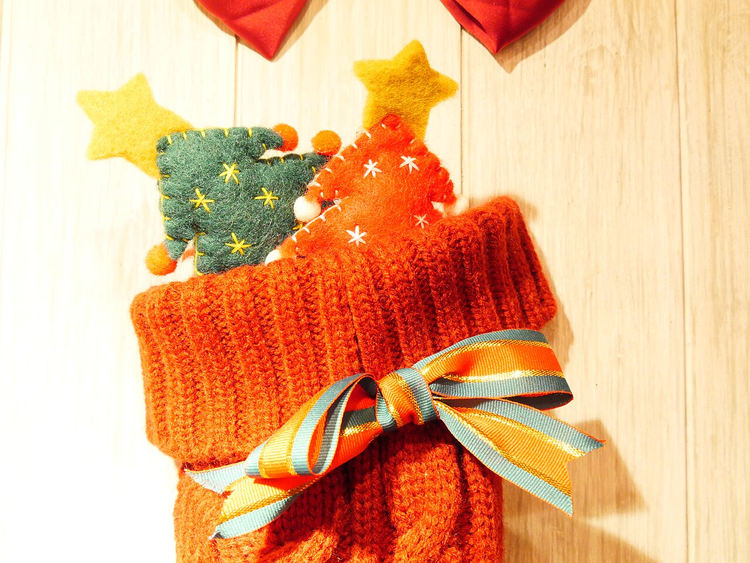 © Peachyeung316 · CC BY-SAPhoto: Peachyeung316, CC BY-SA (https://creativecommons.org/licenses/by-sa/4.0), Wikimedia Commons
2. Carols and Christmas concerts
The era of christmas caroling, going door to door singing Christmas songs for donations, is coming to an end. Neighbors are no longer surprised by such singing. Instead, groups of enthusiasts and choirs give concerts in the run-up to Christmas in city centers: on main squares, near shopping centers, and at train stations.
 © John Cummings · CC BY-SAPhoto: John Cummings, CC BY-SA (https://creativecommons.org/licenses/by-sa/3.0), Wikimedia Commons
You will hear them in large supermarkets and on the streets of historic towns. Some groups also perform in care homes and hospitals. The repertoire is familiar: Hark! The Herald Angels Sing, The First Noel, God Rest Ye Merry Gentlemen. If you want to catch a large choral concert, look for programs in mid-December; closer to the holiday, venues are booked up.
3. Cards and charity
The custom of sending cards in this season came from Victorian England. The Royal Family supported the fashion: Prince Albert brought various Christmas customs from Germany, including the decorated tree. The first Christmas card was sent by Henry Cole in 1843.
The artist John Callcott Horsley drew a scene for it with a family at the festive table in the center and images of charity along the edges. Cole ordered a thousand copies from a printer and sold them for a shilling each. For that time, it was expensive, and the venture barely broke even. The real fashion came later, by the 1870s.
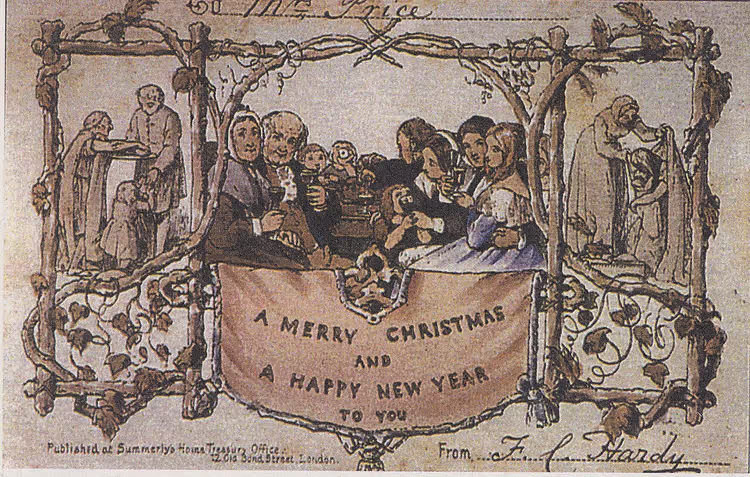
Today, cards by post are mostly sent by the older generation. Britons buy around one billion Christmas cards a year (as of 09/2026, V&A Museum article). One of Cole's first cards sold at auction in 2013 for 22,000 pounds (same source).
The younger generation increasingly replaces cards with charity: they transfer money to funds that help those in need. The logic here is the same as on the first card, where scenes of charity stood alongside the festive toast.
4. Pantomime instead of opera and ballet
In many European countries, it is customary to go to the ballet, opera, or a fairy tale over the holidays. In England, the main holiday genre is different. London stages run as usual, and across the country pantomimes begin: cheerful shows with songs and dances set to well-known hits.
 © Mat Fascione · CC BY-SAPhoto: Mat Fascione, CC BY-SA (https://creativecommons.org/licenses/by-sa/2.0), Wikimedia Commons
Pantomime is not only a children's show. It is based on familiar fairy tales, but the actors add unconventional characters. The main male role is played by a young woman in disguise, and the comic older woman is portrayed by a man. In Cinderella, the Ugly Sisters and the servant Buttons appear alongside the heroine.
The actors wear heavy makeup and costumes so that you immediately understand who is who. They get the funniest lines. The young audience takes part in the show: they boo the villains and shout "he's behind you!", helping the heroes. At the end, children are invited onto the stage and given sweets. In essence, it is a loud musical for the whole family.
Pantomimes are performed by both professionals and amateur troupes. If you want to see the classic of the genre, choose a big stage in London or a provincial theater. Tickets for December performances sell out from autumn.
5. The festive dinner on December 25
The main day falls on December 25, and everything revolves around dinner. The table is set early, around three in the afternoon. A whole book could be written about the British dinner, so we will stick to the basics.
On the table there is usually a Yorkshire pudding (in practice a small bun), gravy, roast turkey, and potatoes. Then come pigs in blankets, that is, sausages wrapped in bacon, and vegetables. Cauliflower and broccoli are often served with a cheese sauce. For dessert, mince pies and a Christmas cake with nuts and dried fruit, soaked in rum, brandy, or whiskey, are brought out.
 © Kolforn ( Kolforn ) I'd appreciate if you could mail me (Kolforn@gmail.com) if you want to use this picture out of the W · CC BY-SAPhoto: Kolforn ( Kolforn ) I'd appreciate if you could mail me (Kolforn@gmail.com) if you want to use this picture out of the W, CC BY-SA (https://creativecommons.org/licenses/by-sa/4.0), Wikimedia Commons
Crackers deserve their own paragraph. Two guests pull a cracker by opposite ends; the winner is the one left holding the wrapper. Inside are a paper crown, a gift, and a slip of paper with a joke or riddle. The crown is put on the head, and the winner reads the joke aloud. The cracker was invented back in the Victorian era (as of 09/2026, V&A Museum).
At 3:00 pm, the country listens to the monarch's address. The King gives the speech. Since 2022, this has been Charles III; before him, Elizabeth II delivered the address (as of 09/2026, Royal Household). After the speech, television shows the classics: The Great Escape, Love Actually, Home Alone, Die Hard, Mary Poppins, The Holiday.
⁉️🤔 Frequently asked questions
When are Christmas gifts opened in England?
Gifts are unwrapped on the morning of December 25. Some families take them from under the tree, others look in the stocking above the fireplace or at the foot of the bed. The night before, children leave whiskey and a mince pie for Father Christmas. Some families also put out a glass of milk.
What is a pantomime and how does it differ from a regular play?
Pantomime in England replaces the holiday ballet and opera. It is a musical show based on familiar fairy tales, where the main male role is played by a young woman, and the comic older woman is portrayed by a man. The young audience shouts "he's behind you!" and boos the villains. At the end, children are invited onto the stage for sweets.
How does Britain celebrate Christmas and New Year?
The monarch's address is broadcast on December 25. Dinner, crackers, and gifts are also tied to Christmas. New Year is celebrated more modestly by the English, usually with friends and fireworks. For a tourist, this means that on December 25 almost everything is closed, and transport runs on a special schedule.
What is shown on television at Christmas?
TV channels broadcast classic films from the list above. Screenings run all day, with the royal address in between. Many families watch the same films every year, and that is also part of the tradition. For the exact schedule for your year, check the TV guide.
In short: what is worth booking
An English Christmas is best planned in advance, otherwise pantomime tickets and restaurant tables will sell out without you.
- If you want pantomimes: buy tickets at London theaters as early as autumn.
- If you want atmosphere: come in mid-December, when cities are decorated and choral concerts are underway.
- If you want quiet: on December 25, most shops and restaurants are closed, so plan dinner in advance.
The monarch's address and the family dinner happen only once a year, on December 25. Put that date in your calendar and book your trip no later than autumn.

A small editorial team writing guides for independent travel. We travel ourselves, but we haven’t been everywhere, so we check prices, opening hours and how to get there against official sources.