
















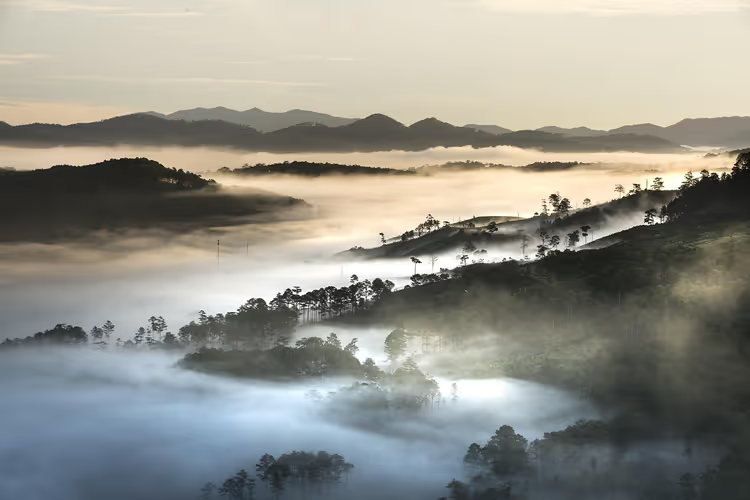
Silent retreat in Portugal: how a day in silence goes
Far from the city, with no signal and no extra words, a silent retreat takes place. We put together a diary of one such retreat in the mountain village of Fujaco in northern Portugal and broke it down day by day.
Signal here only comes in at higher elevations, and lower down the phone stays silent, so the quiet reshapes the entire daily rhythm. A retreat like this needs only three things: a place without the noise, a supply of food, and a clear intention for each day.
Below we show how it works in practice: day by day, with mistakes, small everyday details, and takeaways you can use too.
Ad: this article contains affiliate links, we earn a commission if you book through them, at no extra cost to you.
Place for the retreat: the village of Fujaco
💡 In short:
- Fujaco: a schist village in the municipality of São Pedro do Sul, Viseu district.
- Houses and roofs are clad in schist, surrounded by chestnut, olive, and cork oak trees.
- Mobile signal and internet only work at higher elevations.
- Location and logistics: 09/2026, verified on the official Aldeias de Portugal website
Fujaco is a quiet village in the municipality of São Pedro do Sul, in the Viseu district of northern Portugal. It sits on the slope of Serra da Lousada mountain. The houses here are entirely clad in schist, so the streets look like continuous stonework. According to local legend, the village was named after a deserter who hid in the rocks, and the word itself is linked to the Portuguese "fugir," meaning to flee (as of 09/2026, according to Aldeias de Portugal).
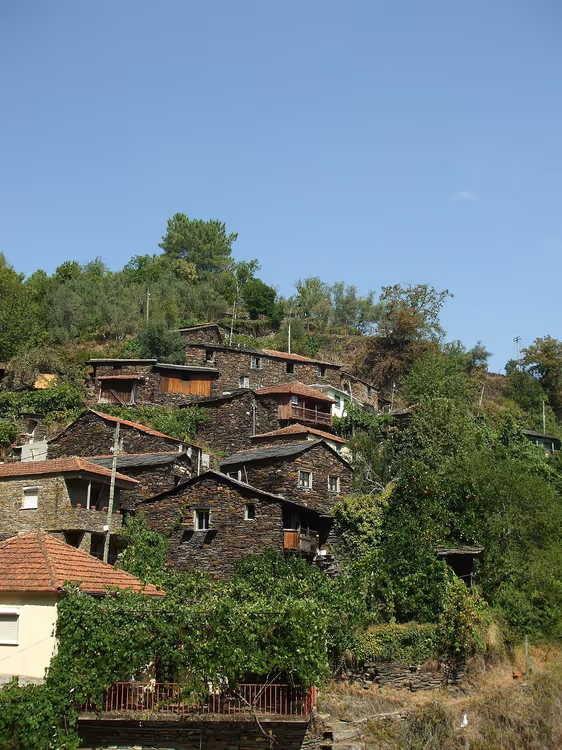
According to Aldeias de Portugal (as of 09/2026), the surrounding area is home to chestnut, olive, pine, and cork oak trees. Wild boars and foxes live in the forests, and birds of prey circle overhead. This is exactly the kind of nature that makes the place well suited for a retreat.
A stream runs through the village, and its sound is audible around the clock. At night, the stars are visible over Fujaco because there is almost no street lighting. You cannot buy this kind of quiet at a spa: only a remote location provides it.
It is best to bring food with you. The nearest village shop is far away, and the supermarket is only in town, which requires a car. The village itself has a restaurant, but you need to let the owners know in advance about lunch or dinner.
A small chapel stands above the restaurant. If you walk up the steep dirt road, you will find a pool: it is filled from a natural spring and serves as a water reserve in case of drought or fire. In hot weather, it is a pleasant place for a swim.
What to consider before the trip
A retreat does not like rushing, so it is better to prepare in advance. First, decide how many days you are willing to stay silent and what you will do. Without a plan, silence quickly turns into boredom.
Bring food for the entire stay, a supply of water, a first aid kit, and warm clothes. In the mountains, the weather can change literally within an hour.
Keep some cash on hand: in small villages, card terminals are not available everywhere, and there is no ATM nearby. A small amount will come in handy at the restaurant.
Be sure to let your loved ones know. While you are off the grid, family may worry. Agree on a time when you will check in, and keep your word.
In practice, this also means one more thing: a yoga mat and comfortable shoes should always be within reach. The weather decides where you will do your morning practice. If it is dry, go to the slope; if it rains, stay indoors.
Intentions before the silence
Before a retreat, it helps to formulate intentions. These are not business goals, but an answer to the question of why you are going into solitude and what you will fill the empty hours with. In the case described here, there were five intentions, and each one set the tone for all six days.
The first concerned practices: the participant combined yoga, bodywork, and breathwork. The second was related to work, as she wanted to put together a trip program for a small group. The third concerned the book she was writing during the long evenings.
The last two intentions were the simplest. She decided to stay silent and to lighten her diet by removing meat and baked goods and keeping fish, vegetables, and fruit. This kind of routine helps the body handle the silence more easily and think less about food.
We recommend writing your intentions as a list and keeping it somewhere visible. Then, at the end of the retreat, you can honestly check what worked and what did not. A list like this disciplines you more than any schedule and protects you from empty days.
Day 1: the first hours of silence
The first day is almost always blurry. In the case described here, it started with food poisoning: eating was impossible, and there was almost no energy left. The participant simply lay there, looked out the window, and listened to the wind and the birds.
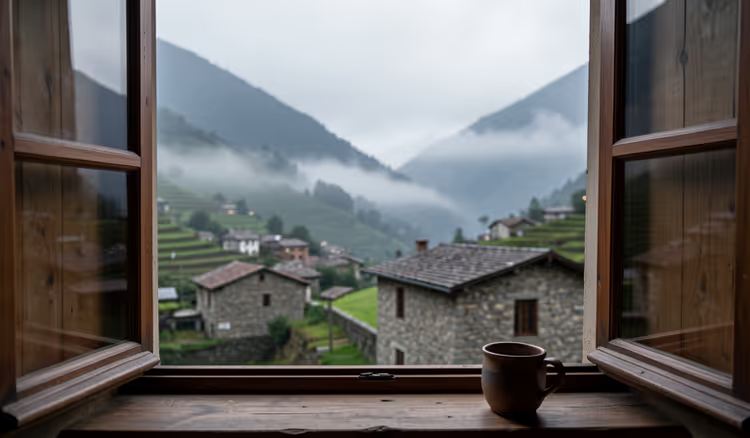 AIIllustrative image: AI-generated
By evening, she felt better. She did some gentle yoga and read a book about spiritual practices. Even then, she noticed the habit of commenting on her own actions and kept cutting herself off mid-sentence.
The takeaway for you is simple: do not plan any heavy activity for the first day. Let your body and mind get used to the silence and the new rhythm, otherwise you will burn out by the evening of the second day.
Day 2: eucalyptus forest and the spring
The second day started early: she was woken by cats fighting on the roof. After exercise and coffee, she headed into the eucalyptus forest to find where the village's water comes from.
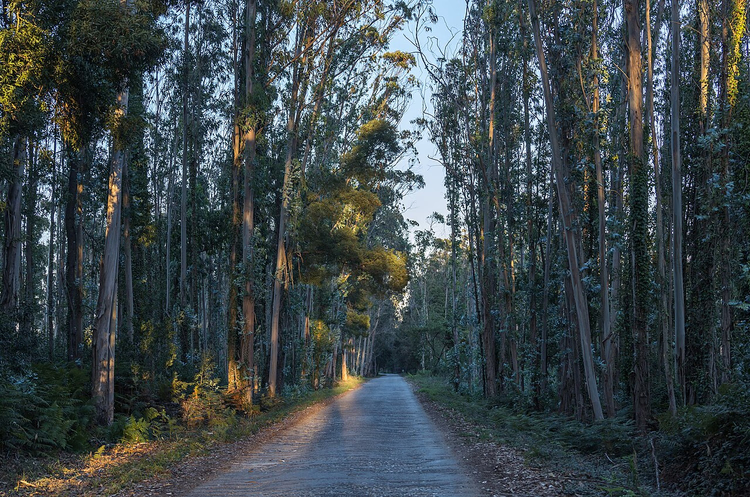 © Alexkom000 · CC BYPhoto: Alexkom000, CC BY (https://creativecommons.org/licenses/by/4.0), Wikimedia Commons
There is a spring in Fujaco, but the path to it is slippery. On the wet grass, she slipped right near the edge and decided to turn back. On the plus side, the view of the valley opened up from above, and she meditated right there.
In the evening, she wrote a little and went to bed earlier than usual, even though at home she usually stays up late reading. In the mountains, sleep came naturally, and her appetite gradually returned, so the simple routine was already noticeably changing how she felt by midweek.
Day 3: yoga above the valley
On the third day, the participant felt energized. With a mat in her backpack, she walked up the road to her favorite viewpoint. It was foggy and drizzling, but doing yoga in that weather turned out to be pleasant.
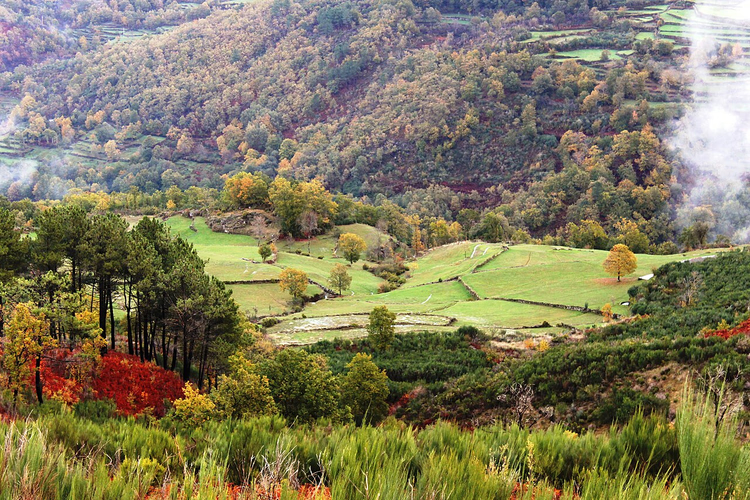 © C.felix · CC BY-SAPhoto: C.felix, CC BY-SA (https://creativecommons.org/licenses/by-sa/3.0), Wikimedia Commons
Signal was available at that elevation. She texted her husband that everything was fine and got a sleepy selfie with the cat in return. After breakfast, she moved on to bodywork, and old exercises opened up in a new way.
That was when the idea for a future group trip emerged. She spent the second half of the day on the book. While writing, an insight came about unprocessed emotions that the body holds for years. She wrote it down in her notebook.
Day 4: rain, the body, and old pain
The fourth day started with rain again. The participant opened the windows wide and sat down to meditate. During bodywork, she felt strong pain in her chest and, through tears and deep breathing, released an old trauma.

When the rain let up, she went to the stream. There was yoga, water, and a couple of notes about how time flows. On the way back, she filled up on drinking water at the spring.
The spring was busy: locals, social workers, and tourists. People asked her questions, and she stayed silent and shook her head. In the end, they took her for mute and apologized. Silence in a village does not always go unnoticed.
In the evening, she sat down with the book and stayed up late, but sleep would not come. The takeaway is simple: it is better to move writing to the morning, otherwise you lose both sleep and the next day.
Day 5: sun, empty pool, hiking
On the fifth day, she got up early and meditated again. The sun came out from behind the mountains and lit up the living room. It turned out that in the morning the light enters the house, and by the usual wake-up time it has already risen above the roof.
That was when the concept for the group tour came together. The program lacked fire, and the answer came on its own: the sun is the fire. She wrote down a new practice and did "surya namaskar," a warm-up facing the sun.
The clear weather pulled her uphill. She climbed to the pool, but it turned out to be empty: the water had been drained. Disappointing, but the walk was still worth it.
Then came hiking with views of the rolling valleys. The São Pedro do Sul region has several routes of varying lengths. Choose the one that starts near the village so you do not spend the whole day getting there.
Day 6: how to return to people
The sixth day passed calmly. She slept soundly and in the morning finished the course topics she had planned for the trip. Then she went down to the oldest part of the village and did yoga among the schist walls.
The return day is always a little sad. She packed her things, tidied the house, and prepared to go back. After several days in the mountains, an ordinary city will seem loud, and that is normal.
Tip: do not break your silence abruptly. Give yourself an evening to transition, otherwise fatigue will catch up with you on your first day back at work.
⁉️🤔 Frequently asked questions
How many days do you need for a first silent retreat?
Start with three days. A shorter period does not produce the effect, and going straight into a week is hard. Three days is enough to understand how you handle silence and solitude. After that, you can gradually increase the length.
Where to stay overnight in Fujaco?
The village has mini-hotels set up in old schist houses. It is better to book them in advance, especially in summer. If there are no rooms, look for accommodation in São Pedro do Sul and come to the village for the day. Staying overnight in the village itself changes the experience significantly.
Does Fujaco have mobile signal?
The mobile network only works at higher elevations; in the village itself, the phone stays silent. For a retreat, this is a plus; for work, it is a problem. Plan your calls in advance and check in where the signal is stable. Test this on the very first day.
Is it dangerous to stay silent for several days?
For a healthy person, it is safe. Difficulties arise if you suddenly drop all activity or eat too little. Then weakness and irritability set in. Drink water, eat regularly, and do not start a retreat while you are ill.
What should I bring?
Food for the entire stay, water, a first aid kit, and warm clothing. Add a mat for practices, a notebook, and comfortable shoes for mountain trails. Bring fewer things than you think you need. The simpler your daily life, the fewer reasons you have to break the silence.

In short: what is worth booking
If you need complete silence, choose a village like Fujaco and book a house in advance. If group practices matter to you, look at retreat center programs. If you want a short pause, three days in nature is enough.
The matrix is simple. Beginner: three days in solitude. Experienced: a week in the mountains. Couple: a shared house with quiet zones. Parent without time off: three days close to home.
To combine a retreat with traveling around the country, tours and excursions in Portugal on GetYourGuide will help. The main rule is simple: silence first, plans later.

A small editorial team writing guides for independent travel. We travel ourselves, but we haven’t been everywhere, so we check prices, opening hours and how to get there against official sources.