






7 Flower festivals in Europe: where to see blooms and when to go
Europe’s flower festivals start in March and run through August. The cherry orchard in Hasselt blooms first, and the season closes last in Odense.
We picked seven festivals and listed the 2026 season window for each. The season opened on March 14: in the Japanese Garden (Japanse Tuin) in Hasselt, 225 cherry trees bloomed in Europe’s largest Japanese garden (as of 09/2026, garden’s official website).
Dates shift every year: they are tied to the weather and the church calendar. Note the season window, and check the exact day on the festival website a couple of weeks before your trip. That way you won’t miss the bloom.
Ad: this article contains affiliate links, we earn a commission if you book through them, at no extra cost to you.
When Europe’s flower festivals take place
💡 In short:
- The list covers seven countries: Belgium, the Netherlands, Portugal, Spain, Bulgaria, Italy, and Denmark.
- Season windows are tied to blooming and the church calendar, so they shift from year to year.
- Some festivals take place right on the streets, while others require a ticket to a garden, museum, or tour.
- Dates and addresses: verified on 09/12/2026 on official festival and tourism office websites (Hasselt, Madeira, Girona).
Festival | City | 2026 season | What to see |
|---|---|---|---|
Hasselt, Belgium | March 14 - April 19 | cherry blossoms in the Japanese garden, tea ceremonies | |
Amsterdam, Netherlands | March 19 - May 10 | tulips at roughly 85 locations around the city | |
Funchal, Madeira | from April 30 | allegorical processions of fresh flowers | |
Girona, Spain | May 9 - 17 | flower installations in courtyards and churches | |
Kazanlak, Bulgaria | June 6 - 7 | rose picking, a parade, and the Rose Queen | |
Spello, Italy | June 6 - 7 | petal carpets laid overnight | |
Odense, Denmark | August 13 - 16 | florist installations and workshops |
1. Hanami in Hasselt
 © Jiří Komárek · CC BY-SAPhoto: Jiří Komárek, CC BY-SA (https://creativecommons.org/licenses/by-sa/4.0), Wikimedia Commons
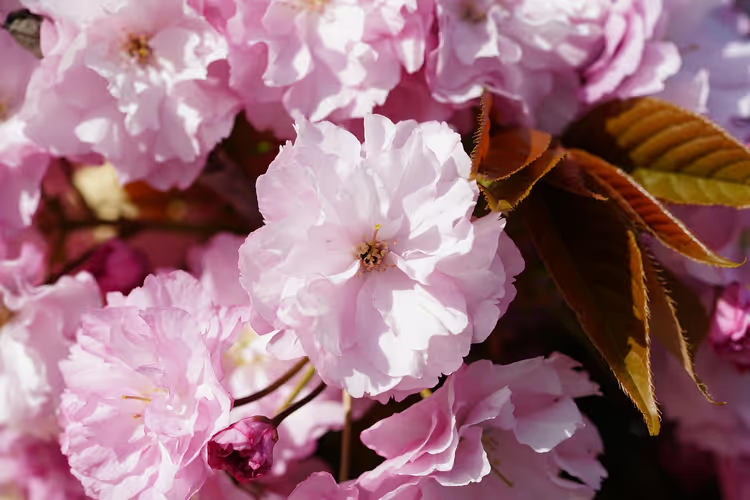
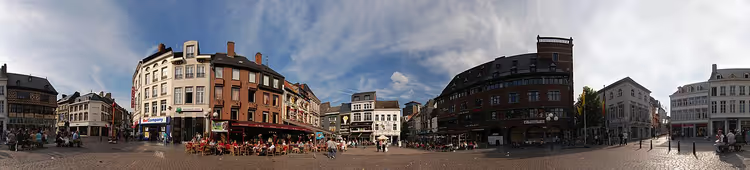
The Japanese garden in Hasselt stays open longer than the festival itself. In 2026 it was open from March 1 to October 31 (as of 09/2026, official website). As soon as the 225 cherry trees come into bloom, the paths above the ponds and wooden bridges turn pink.
The festival follows the Japanese tradition of hanami. There are no big shows here: you walk along the winding paths, sit under the trees with a picnic, and listen to a tea ceremony taking place. Food stalls appear on weekends; on weekdays the garden is noticeably quieter.
Hasselt itself deserves an extra day. The city in Limburg province is underrated: it has small boutiques, cafes, and a lively center, plus local jenever and good regional cuisine.
- When: March 14 - April 19, 2026 (as of 09/2026, program).
- Hours: Tuesday - Sunday 10:00-17:00, last entry at 16:00, closed Monday (as of 09/2026, garden schedule).
- The catch: blooming depends on the weather, and the bridges get crowded on weekends. Come at opening time or on a weekday.
- Where to stay: see hotels in Hasselt on Trip.com
2. Tulp Festival in Amsterdam
 © Nan Palmero from San Antonio, TX, USA · CC BYPhoto: Nan Palmero from San Antonio, TX, USA, CC BY (https://creativecommons.org/licenses/by/2.0), Wikimedia Commons
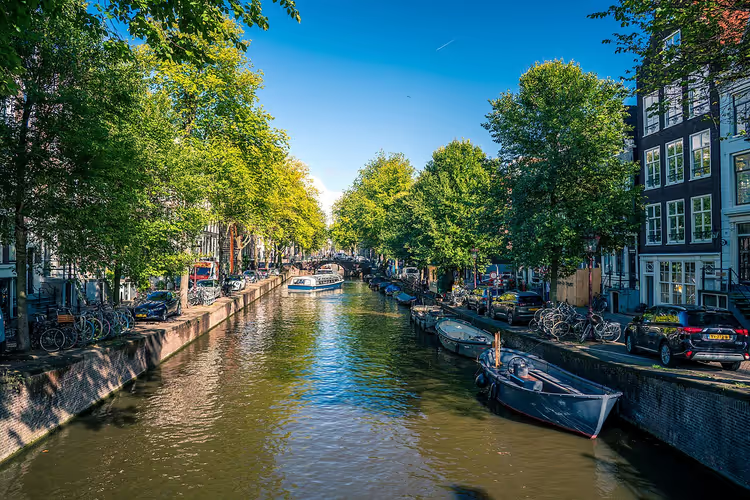
Tulp Festival takes place without a single venue. Tulips are planted all over the city center: near museums, along canals, in parks and squares, around 85 locations in total (as of 09/2026, official website). The route can be covered on foot or by bike.
The densest flower beds are around the museum quarter (Museumplein), in Vondelpark and around Bloemenmarkt. Tulips here connect history and modernity: the city lived through "tulip mania," and the Tulip Experience Amsterdam museum tells that story. You can get a sense of the scale of the fields nearby, at Keukenhof in Lisse or at the Die Tulperij farm.
- When: March 19 - May 10, 2026 (as of 09/2026, bloom forecast).
- How to see it: rent a bike, that way you can cover more locations in a day.
- The catch: the flower beds are scattered across the city, you can't see them all, and the real fields require a separate trip out of town.
- Where to stay: hotel prices in Amsterdam on Trip.com
3. Festa da Flor in Madeira
 © Paulo SP/ Wikimedia · CC BY-SAPhoto: Paulo SP/ Wikimedia, CC BY-SA (https://creativecommons.org/licenses/by-sa/4.0), Wikimedia Commons
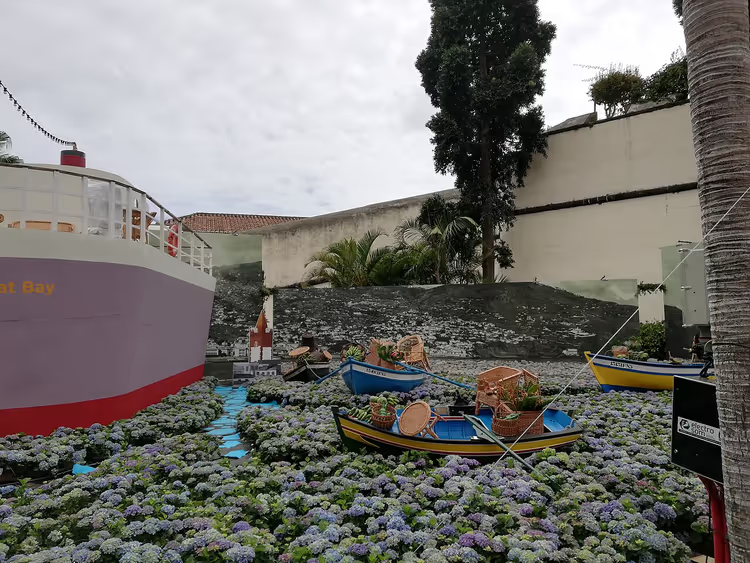
On Madeira, the festival runs for weeks. Starting April 30, Funchal and its surroundings switch entirely to bloom mode (as of 09/2026, Visit Madeira). Streets, squares, and shop windows are decorated with arrangements, flower carpets stretch through the old town, and the air is thick with the scent of flowers.
The main events are two allegorical processions, Cortejo Alegórico. They take place at the beginning and in the middle of the month. Participants wear costumes made of fresh flowers, and you'll see a carnival, except instead of glitter there are petals. The tradition dates back to 1979. The processions are joined by the Wall of Hope, where children lay out flowers, concerts, and a vintage car parade.
In spring, Madeira's endemic plant, the pride of Madeira (Echium candicans), blooms with blue and purple flower spikes. It blooms exactly during these weeks.
- When: from April 30, main processions in May (as of 09/2026, Madeira agenda).
- How to get there: fly to Funchal Airport, then take a bus or drive to the city.
- The catch: on procession days, central Funchal is packed, so book nearby accommodation in advance.
- Where to stay: hotels in Madeira on Trip.com
4. Temps de Flors in Girona
 © Alberto-g-rovi · CC BY-SAPhoto: Alberto-g-rovi, CC BY-SA (https://creativecommons.org/licenses/by-sa/3.0), Wikimedia Commons
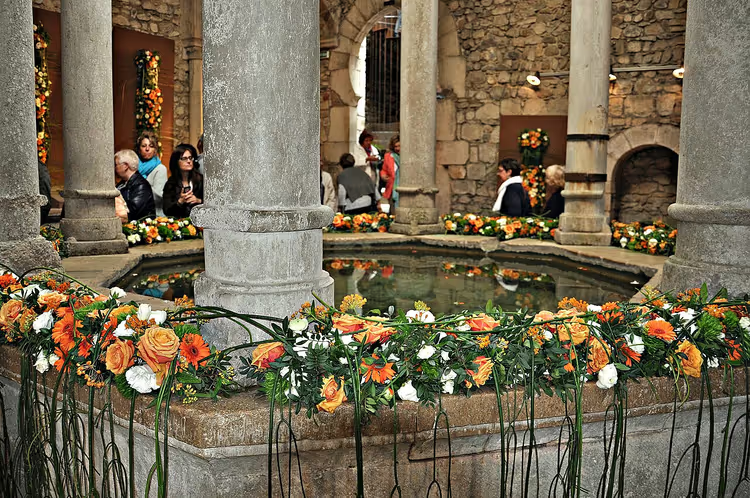
The name Temps de Flors translates as "time of flowers." For nine days, Girona's old town turns into a network of flower installations (as of 09/2026, official website). They are placed where you least expect them: in inner courtyards, on hidden staircases, in churches, and behind heavy oak doors that are usually closed.
The most striking display is the cathedral's monumental staircase, which is redesigned every year. Many sites combine flowers with architecture, light, and contemporary art, and some courtyards are open only during these days.
The festival in Girona has been running for more than seventy years. In 2026, the 71st edition took place and drew more than 400,000 visitors (as of 09/2026, Girona city council). The crowds are heaviest on weekends and Thursdays.
- When: May 9 - 17, 2026 (as of 09/2026, exhibition spaces).
- Cost: a group tour of the old town costs €12 (as of 09/2026, Gironès tourist office).
- The catch: on weekends the old town gets crowded, so book a morning tour.
- Where to stay: hotel prices in Girona on Trip.com
5. Rose Festival in Kazanlak
 © stealman · CC BY-SAPhoto: stealman, CC BY-SA (https://creativecommons.org/licenses/by-sa/3.0), Wikimedia Commons
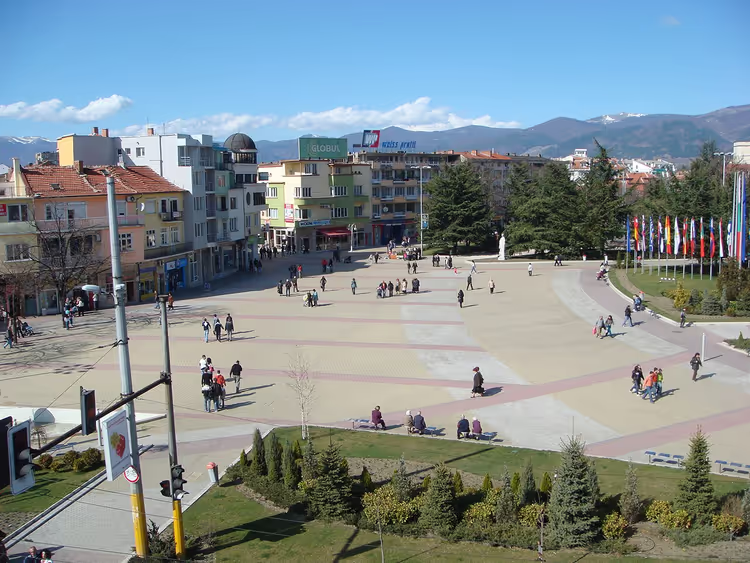
In late May and early June, Bulgaria's Rose Valley harvests Damask roses. Their petals are used to make one of the most expensive essential oils in the world, and on the first weekend of June visitors are allowed to join the harvest (as of 09/2026, festival program). Women in traditional costumes often work nearby, picking petals by hand.
On Sunday, the center of events moves to Kazanlak: folklore, music, the selection of the Rose Queen, and the country's largest parade. The harvest takes place not in the city but in surrounding villages such as Koprinka and Yasenovo, so you will need transportation.
Kazanlak sits in the heart of the valley at the foot of the Balkan Mountains. It is not a classic tourist town but rather a base for trips to the surrounding fields and distilleries. For context, visit the Rose Museum: it explains why the region has lived with this culture for over a century.
- When: main events on June 6 and 7, 2026 (as of 09/2026, Rose Valley dates).
- Getting there: from Sofia to Kazanlak by bus or car.
- The catch: tourist infrastructure is modest, and the rose harvest takes place outside the city.
- Where to stay: there are few hotels in the city, so book in advance.
6. Infiorate di Spello in Umbria
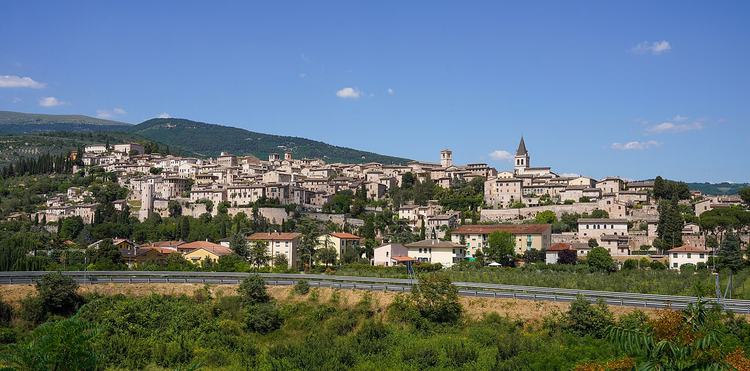
Infiorate di Spello is hard to capture on camera: their value lies in their fleeting nature. On the night before the Sunday of Corpus Christi, residents of this Umbrian town turn the streets into a mosaic of millions of petals (as of 09/2026, how the festival works).
 © WikiRomaWiki · CC BY-SAPhoto: WikiRomaWiki, CC BY-SA (https://creativecommons.org/licenses/by-sa/4.0), Wikimedia Commons
Preparation begins months in advance. At night, petals are plucked, sorted, and arranged for hours until they form delicate carpets with religious, ornamental, and thoroughly contemporary designs. By morning, Spello looks like one vast open-air painting.
And that moment is brief: a few hours later, a procession walks over the carpets, and the pictures are deliberately trampled. Spello itself resembles a film set, with its winding streets, Roman walls, and flower-covered facades. The town is on the Borghi più belli d'Italia list.
- When: June 6 and 7, 2026, with the main work happening on the night before Sunday (as of 09/2026, official website).
- How to get there: from Perugia to Spello by train or bus.
- The catch: the carpets last only a few hours, so you need to see them in the morning, before the procession passes.
- Where to stay: see hotels in Umbria on Trip.com
7. Odense Blomsterfestival in Denmark
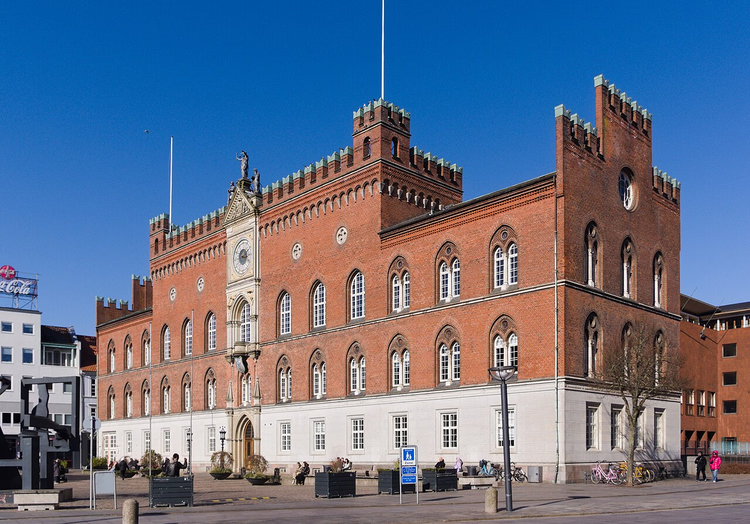
Odense proves that flower festivals don't have to be a spring thing. In August, Denmark's third-largest city becomes an open-air stage for floral design: instead of flower beds, large-scale installations appear, along with a program of workshops (as of 09/2026, H.C. Andersen Festivals).
 © Emelie Graven · CC BY-SAPhoto: Emelie Graven, CC BY-SA (https://creativecommons.org/licenses/by-sa/4.0), Wikimedia Commons
The festival takes place within H.C. Andersen Festivals, so its themes are tied to the legacy of writer Hans Christian Andersen. Each year has its own concept, reflected in the work of international florists and designers. In 2026, the theme was "Natur, ro og fantasi," meaning nature, calm, and imagination.
Admission to the festival is free: installations are set up on streets, squares, and in parks (as of 09/2026, festival calendar). The next edition is scheduled for August 19 - 22, 2027.
- When: August 13 - 16, 2026, next edition August 19 - 22, 2027 (as of 09/2026, festival website).
- The catch: the festival is short, just four days, and the dates overlap with the city's general program. Book your hotel early.
- Where to stay: hotel prices in Odense on Trip.com
⁉️🤔 Frequently asked questions
When is flower festival season in Europe?
The season opens in March and closes in August. In between, you'll find Hanami in Hasselt, Belgium, the Amsterdam tulips, the Madeira processions, the Girona exhibition, the Rose Festival in Kazanlak, the Spello carpets, and Odense Blomsterfestival in Denmark.
How much does it cost to attend flower festivals?
The price depends on the format. City festivals often take place right on the streets: in Odense admission is free, and in Amsterdam the flower displays are set up in open locations. Separate tickets are needed for gardens and museums, and in Girona a guided group tour costs €12 (as of 09/2026, Gironès tourist office). Check the festival website to see which spaces are open only during the event.
Which festival should I choose for a short trip?
If you only have two or three days, go with Amsterdam: it's easy to fly to, and the flower displays are in the city center. For a quieter experience, Hasselt with its Japanese garden is a good fit. Madeira suits those who love the sea and processions, and if you want to see rare petal carpets, aim for June and Spello.
What happens if the bloom shifts?
It happens every year. For Hanami in Hasselt, the season window is March 14 - April 19, but the peak depends on temperature: in a warm spring, the trees bloom earlier. So plan for a range rather than a specific day, and leave a couple of days of buffer. Weather also affects the tulips and the roses in the Rose Valley.
Where should I stay during the festival?
Book accommodation in the host city, because rooms fill up quickly on festival dates. In Hasselt and Odense, a hotel in the center is enough; on Madeira, it makes sense to base yourself in Funchal; and for Spello and Kazanlak, consider staying in nearby towns. Compare options in advance.
In short: what to book
Choosing a festival is easy.
- If you want tulips and a big city: Amsterdam.
- If peace and a small, intimate garden matter more: Hasselt.
- If you want the sea and processions: Madeira.
- If Gothic architecture and flower-filled courtyards are more your style: Girona.
- If you're interested in production: Kazanlak.
- If you're hunting for rare petal carpets: Spello.
- If you're planning for late summer and Andersen: Odense.
Dates shift, so check the season window on the official website first and leave booking for later. See hotel prices on Trip.com

A small editorial team writing guides for independent travel. We travel ourselves, but we haven’t been everywhere, so we check prices, opening hours and how to get there against official sources.