
















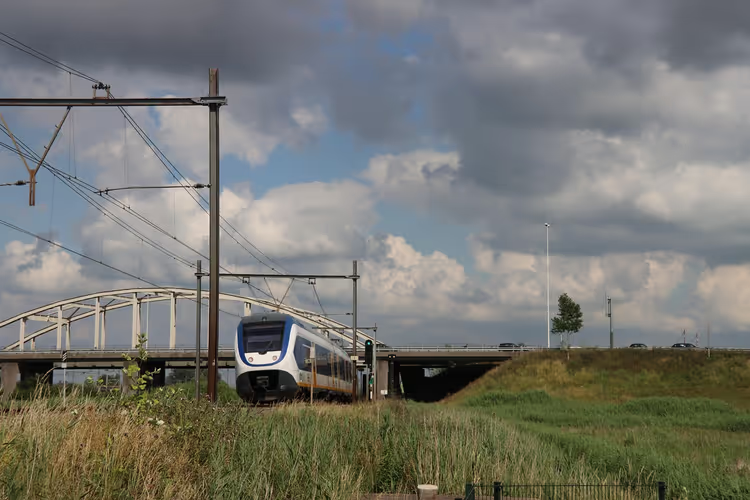
Netherlands without a car: OVpay, night trains and tickets from 20 €
The train from Cologne to Amsterdam takes less than three hours, and a Sparpreis Europa ticket costs less than you think (as of 09/2026, Deutsche Bahn). It is also faster than driving.
Old guidebooks still advise buying an OV-chipkaart and taking the Thalys. Both are outdated: anonymous chip cards have not been sold since July 1, 2026, and Thalys is now called Eurostar.
We have put together the current picture: which trains run across the country, where tickets are cheaper, how to get from Amsterdam to Utrecht, Rotterdam, and Maastricht, and what you can see in a day.
Ad: this article contains affiliate links, we earn a commission if you book through them, at no extra cost to you.
Taking the train to the Netherlands: what you need to know
💡 In short:
- The fastest route from Germany: ICE International from Frankfurt via Cologne to Amsterdam.
- The cheapest ticket from Germany: Sparpreis Europa Niederlande.
- Within the country, a day ticket or OVpay contactless payment is enough.
- Prices and schedules: 09/2026, verified on the official NS and Deutsche Bahn websites.
The Netherlands is small, but it is connected by a dense rail network. Between Amsterdam, Utrecht, Rotterdam, and The Hague, trains run every few minutes, and the trip itself takes less than half an hour (as of 09/2026, NS train schedule). You can easily cover two or three cities in one day, and a day ticket makes such trips cheaper.
Two convenient routes run from Germany to the country. ICE International connects Frankfurt with Amsterdam in less than four hours and stops in Cologne, Dusseldorf, Duisburg, and Utrecht. The Intercity from Berlin reaches the capital in about 6.5 hours via Hanover and Osnabruck. From Brussels, the train arrives in Amsterdam in less than two hours.
The Sparpreis Europa ticket is also a good deal because it requires no supplement for the international ICE within the country. With a chip card or OVpay on the high-speed train, a supplement is required. Below we break down the trains, tickets, and routes in order so your trip costs less.
 AIIllustrative image: AI-generated
Which trains run in the Netherlands
The state-owned company NS divides services into two main categories: Intercity and Sprinter. Added to these are international ICE and Eurostar trains, as well as private lines. So the car and its equipment depend on which train you are on: some have Wi-Fi and power outlets, others only window benches.
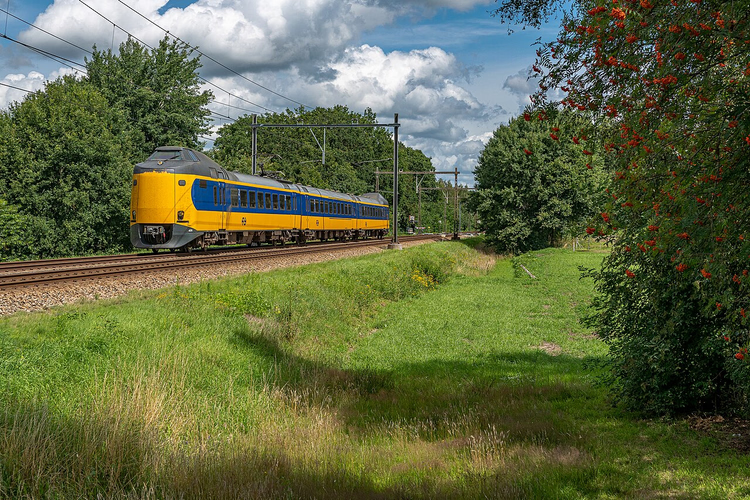 © Rob Dammers · CC BYPhoto: Rob Dammers, CC BY (https://creativecommons.org/licenses/by/2.0), Wikimedia Commons
There is no dining car on NS trains. Instead, vendors walk through the train with drinks, sandwiches, and snacks. The international ICE has a full bistro.
Here is how these trains differ in speed, routes, and supplements.
Train | What it is | Typical route | Supplement |
|---|---|---|---|
Intercity (NS) | up to 12 times per hour, major cities only, free Wi-Fi | between large cities | none |
Intercity Direct | nonstop, faster than a regular Intercity | Amsterdam, Schiphol, Breda, Rotterdam | small supplement, bicycles not allowed |
Sprinter | the equivalent of a German S-Bahn, frequent stops, no Wi-Fi | suburbs and small towns | none |
ICE International | Deutsche Bahn train, bistro on board | Frankfurt, Cologne, Dusseldorf, Utrecht | supplement required in the Netherlands |
Eurostar | former Thalys, high-speed line | Amsterdam, Brussels, Paris, London | reservation and supplement |
Intercity: the fast train between major cities
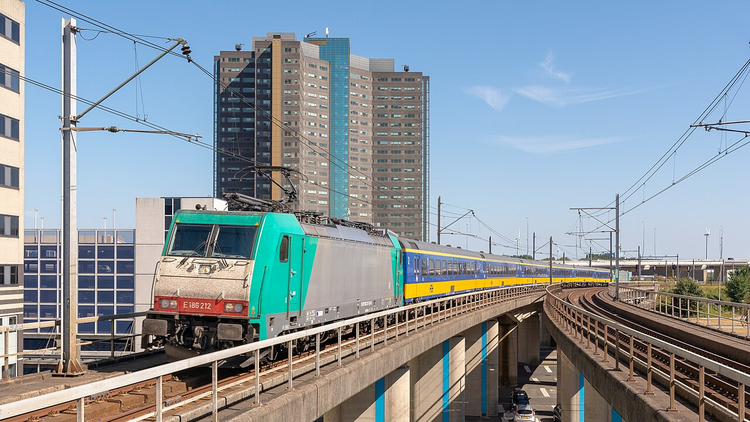
Intercity is the most convenient train in the country. It stops only in major cities and runs between them up to twelve times per hour. The car has two classes: first class has three seats per row, second class has four, just like on Deutsche Bahn trains. Almost all Dutch Intercity trains have free Wi-Fi, with the access point called "Wifi on the train". There is no data limit, so you can work comfortably on the way.
Intercity Direct: a supplement for speed
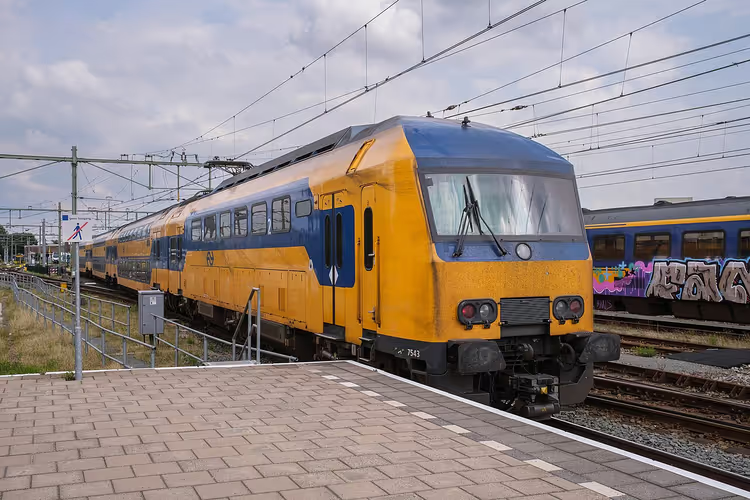
Besides regular Intercity trains, there is Intercity Direct. It connects Amsterdam, Schiphol Airport, Breda, and Rotterdam, usually runs without intermediate stops, and is noticeably faster than a regular train. The Amsterdam-Rotterdam trip takes about 30 minutes. You will pay a small supplement on top of the regular ticket, and bicycles are not allowed on Intercity Direct.
 © Rob Dammers · CC BYPhoto: Rob Dammers, CC BY (https://creativecommons.org/licenses/by/2.0), Wikimedia Commons
Sprinter: the Dutch local train
The name "Sprinter" is misleading: these trains run slower than Intercity. They stop more often and connect small towns to the main network, working like an S-Bahn in Germany. During rush hour they are more crowded, and the equipment is simpler: no Wi-Fi. Older trains also lack toilets, but new Sprinter trains now have them. Bicycles are allowed with a supplement.
 © Henk Monster · CC BYPhoto: Henk Monster, CC BY (https://creativecommons.org/licenses/by/3.0), Wikimedia Commons
ICE and Eurostar: international lines
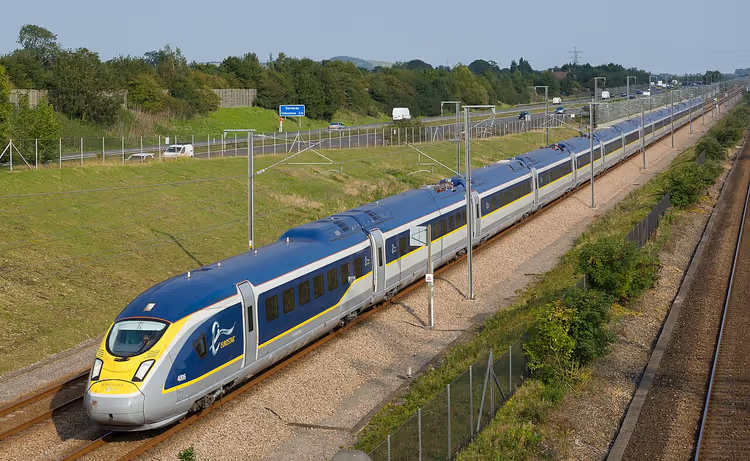
Between Amsterdam and Brussels there are also regular Intercity trains, but high-speed trains get you there fastest. Thalys has operated under the Eurostar brand since 2023 and connects the Netherlands with Brussels, Paris, Cologne and Frankfurt (as of 09/2026, Eurostar).
For both ICE International and Eurostar, a supplement is required within the Netherlands. Eurostar also requires a seat reservation. When traveling with OVpay or a chip card, you tap the card at the gate when leaving the country.
 © Kabelleger / David Gubler · CC BY-SAPhoto: Kabelleger / David Gubler, CC BY-SA (https://creativecommons.org/licenses/by-sa/4.0), Wikimedia Commons
Three zones in the carriage
Dutch trains often have three zones: Quiet Zone, Work & Rest Zone and Meet & Greet Zone. In the Quiet Zone, conversations, phone calls and loud music are not allowed, and it really is quiet there. In the Work & Rest Zone you can work and rest, but you should speak in a low voice and avoid long phone calls. In the Meet & Greet Zone, seats face each other, there is a lounge area, and people talk and use the phone without restrictions.
Bicycle and dog on the train
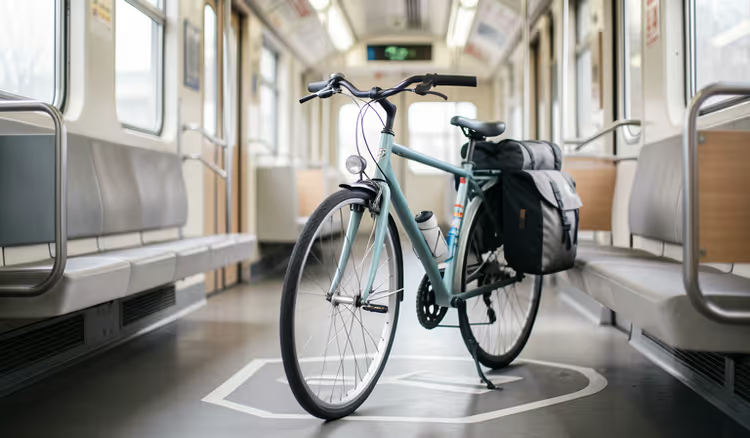
On most trains you can bring a bicycle outside peak hours if the doors have the corresponding symbol. There are few bicycle spaces, so at busy times there may not be any available. For a full day you need a separate bicycle ticket; check the current price on NS fares (as of 09/2026). A folding bicycle counts as hand luggage and travels free of charge.
Small animals in a carrier travel free of charge, as hand luggage. For a large dog you need an additional ticket, and with an annual pass the dog travels free. On Intercity Direct, dogs are not allowed at all.
 AIIllustrative image: AI-generated
Tickets: Sparpreis Europa, Interrail, and OVpay
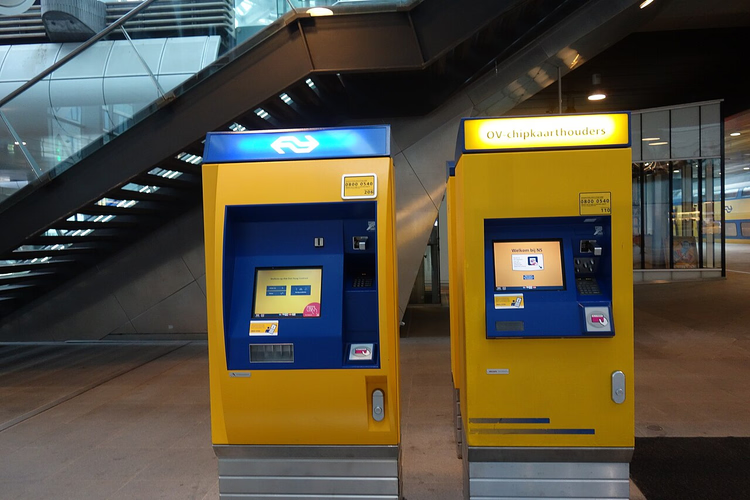
There are several ways to pay for your trip, and each one works best in a different situation. The German Sparpreis Europa gets you into the country, Interrail is good for a longer route through Europe, and within the Netherlands contactless OVpay is the most convenient option. Below you'll find prices and where to buy each one (as of 09/2026, NS operator and Deutsche Bahn: train network).
 © Vysotsky · CC BY-SAPhoto: Vysotsky, CC BY-SA (https://creativecommons.org/licenses/by-sa/4.0), Wikimedia Commons
Ticket | What it's for | Price | Where to buy |
|---|---|---|---|
Sparpreis Europa Niederlande | from Germany to any destination in the Netherlands | from €24.99 | bahn.de, DB Navigator, ticket machine |
Super Sparpreis Europa | the cheapest trip, train and class are fixed | from €19.99 | bahn.de |
Holland Travel Ticket | one day of unlimited travel within the country | price on the NS website | NS ticket machines and counters |
OVpay | short trips within the country | per-kilometer fare | bank card or phone |
Interrail Global Pass | a longer route through several countries | from €283 | interrail.com |
Station gates: how entry and exit work
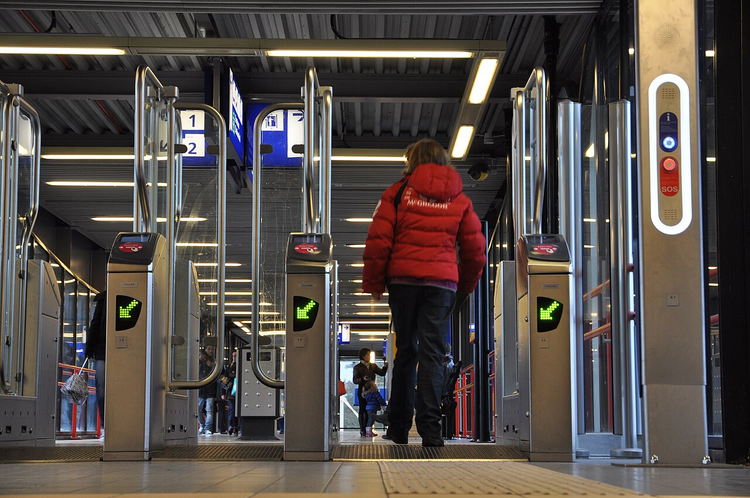
Since 2014, major Dutch stations have been equipped with ticket gates. To get to the platform or exit into the city, you tap your ticket or card on the reader and walk through. The gates are mostly located at station entrances and exits, so when transferring within a station you move freely and without waiting in line (as of 09/2026, Dutch carrier).
Entry and exit work not only with a chip card, but also with contactless payment and with the QR code printed on a Deutsche Bahn online ticket. Bought a paper ticket from a machine? Ask the conductor or at the ticket counter for a single-use card to exit. Without tapping out, the system will charge you for the trip to the end of the line, and you'll pay more than you planned.
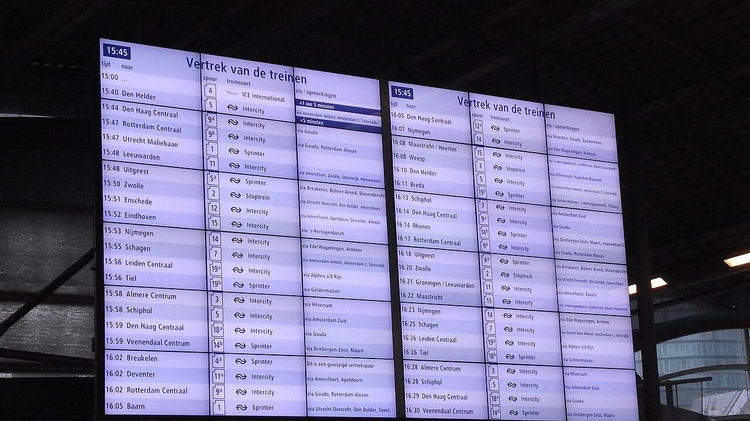
If you're traveling with a transfer, check the departure board: at the major stations in Amsterdam, Utrecht, and Rotterdam, moving between platforms takes a couple of minutes, while at small stations you'll have to exit into the city and re-enter. Allow at least ten minutes for that kind of transfer.
 © Onderwijsgek · CC BY-SAPhoto: Onderwijsgek, CC BY-SA (https://creativecommons.org/licenses/by-sa/3.0), Wikimedia Commons
Sparpreis Europa Niederlande: from €24.99
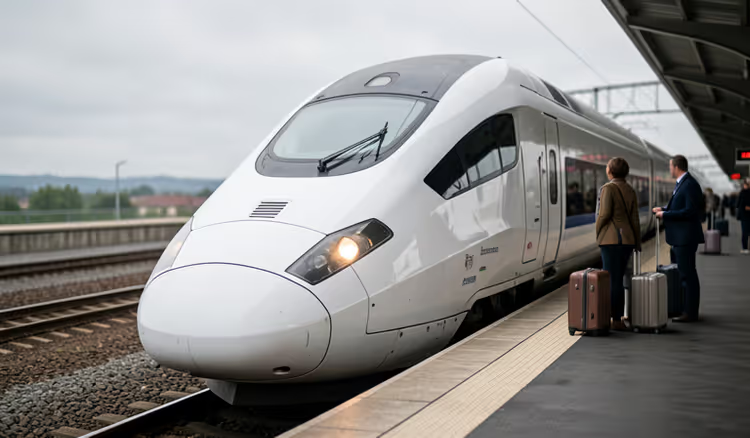
The simplest way to get to the Netherlands from Germany is the Sparpreis Europa Niederlande. Tickets start at €24.99 in second class, and Super Sparpreis Europa starts at €19.99 (as of 09/2026, Sparpreis Europa Niederlande fares). The number of these tickets per train is limited, so it's better to buy in advance, one to two months before your trip. The cheapest seats sell out first.
The ticket is valid from any station in Germany to any station in the Netherlands. Within the country it isn't tied to a specific train: you can stop in Utrecht or Arnhem and continue on the next Intercity. It's valid for four days from the first day of travel, so a single trip can easily become a short route.
You can buy the ticket online at bahn.de, in the DB Navigator app, at a ticket machine, or at a DB Reisezentrum. With a BahnCard 25 you get a discount on the German portion of the route, while BahnCard 50 does not give a discount on international trips. You earn BahnBonus points equal to the ticket price on your purchase. Online sales only work for major cities; for small stations, tickets are issued by phone or at the ticket counter.
Schedules and prices for trains to the Netherlands are easy to check on Trip.com.
 AIIllustrative image: AI-generated
How to save on tickets
The cheapest tickets go first, so if you know your date for sure, buy one to two months ahead. The Sparpreis allocation is limited, and on popular routes cheap seats run out quickly. On peak days before holidays, options are already minimal two weeks out.
Super Sparpreis Europa costs less than the regular Sparpreis. In return, you are tied to a specific train and class: you cannot move this trip to another day, so choose this fare only if your plans definitely will not change (as of 09/2026, Super Sparpreis Europa).
Intermediate stops in the Netherlands are free. You get off in Utrecht, Arnhem, or Rotterdam, walk around for a few hours, and continue your journey on the same ticket. This turns one trip into a two-city route at no extra charge, and you save on a separate ticket.
There are also ways to save within the country. The Holland Travel Ticket on weekdays after 9:00 costs noticeably less than on a weekend day, and short trips are cheaper to pay for contactlessly via OVpay. For one day in one city, a day ticket is often more expensive than two single rides, but for three cities it already pays off.
Finally, count the surcharges. Eurostar is about an hour faster than the regular Intercity, but it requires a seat reservation. On the short Amsterdam-Brussels section, the price difference is sometimes greater than the time saved, so check both options on the same day.
Interrail: more than the Netherlands
With an Interrail ticket, you can travel not only in the Netherlands but across all of Europe. There are two options: the Interrail Global Pass and the Interrail Benelux Pass. The Global Pass is valid in 33 countries and in 2026 costs from 283 € (as of 09/2026, Interrail). Young travelers under 27 get a discount on the ticket.
The Benelux Pass is valid in the Netherlands, Belgium, and Luxembourg, meaning three countries for the price of one. With it, a route through Amsterdam, Rotterdam, Brussels, Ghent, and Luxembourg fits into one ticket. The Global Pass suits those going further: from Amsterdam via Brussels and Paris you can travel on to Barcelona, Madrid, and Lisbon.
With Interrail you can use all trains in the Netherlands, but the high-speed Eurostar requires a paid seat reservation. The carrier reviews the amount for the Amsterdam-Brussels section every season, so check it directly when booking. Do not want to pay? Take the regular Intercity: it takes about an hour longer, but with no surcharges. Deutsche Bahn ICE trains in the Netherlands are covered by Interrail without reservation or surcharge, so on this line you travel freely.
OVpay instead of OV-chipkaart: what changed in 2026
For many years, tourists in the Netherlands bought an anonymous OV-chipkaart. Since July 1, 2026, it is no longer sold: sales were stopped as part of the complete phase-out of the chip card, which is planned to be completed by the end of 2027 (as of 09/2026, OV-chipkaart and OVpay). Already have a card? You can use it until the end of the transition period.
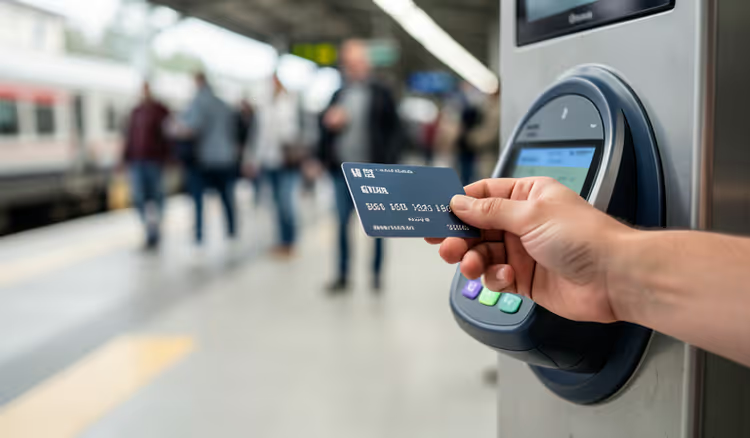
The OVpay system has replaced it. You pay with the same bank card or phone you use in stores. When boarding a train, metro, tram, or bus, you tap your card on the validator, tap again when exiting, and the fare is charged automatically. A separate card and a deposit for it are no longer needed, and trips automatically appear in your bank's app.
The system works across the whole country: you pay the same way on intercity trains and on city trams in Amsterdam or Rotterdam. Check in advance that contactless payment without a PIN is enabled on your card: not all banks allow contactless payments abroad by default.
If you do not have a bank card on hand, single tickets remain an option. They cost slightly more than a contactless ride, but they work for one specific trip. For several days in the country, a day ticket is a better deal, more on that below.
 AIIllustrative image: AI-generated
Holland Travel Ticket: one day without limits
The Holland Travel Ticket is a day ticket for tourists. For one day, it gives you unlimited travel across the whole country by train, metro, tram, and bus (as of 09/2026, Holland Travel Ticket description). The ticket is valid until 4:00 the next morning, so a late train home will not be a problem.
You buy it at NS machines and ticket offices, as well as at Schiphol station. You choose the travel date when you pick it up, usually with a lead time of up to a week, so buying in advance online is not necessary. On such a day, you can easily go from The Hague to Amsterdam, then to Maastricht, and finish at the Wadden Sea in Groningen, and every transfer happens without a separate ticket.
Check the exact price on the NS website: for weekdays after 9:00 there is usually a cheaper option. If you are planning a packed day with three cities, this ticket almost always pays for itself. For one short trip it is unnecessary; contactless payment is enough there.
Routes: how to travel around the country
Below we break down the main routes: how to get to Amsterdam, how to travel between cities, and how to continue on to Belgium or London. The full schedule for a specific day is available on the carrier's website or in the Deutsche Bahn app, and here we have gathered rough travel time estimates.
 © Smiley.toerist · CC BY-SAPhoto: Smiley.toerist, CC BY-SA (https://creativecommons.org/licenses/by-sa/3.0), Wikimedia Commons
Route | Train | Travel time |
|---|---|---|
Frankfurt-Amsterdam | ICE International | under 4 hrs |
Berlin-Amsterdam | Intercity | about 6.5 hrs |
Berlin-Amsterdam overnight | European Sleeper | about 7.5 hrs |
Amsterdam-Utrecht | Intercity | about 30 min |
Amsterdam-Rotterdam | Intercity Direct | about 30 min |
Amsterdam-The Hague | Intercity | about 30 min |
Amsterdam-Brussels | Eurostar | 1 hr 52 min |
Brussels-London | Eurostar | about 2 hrs |
(As of 09/2026, Deutsche Bahn train schedules and Eurostar routes)
How to get to Amsterdam
For many people, Amsterdam is the first city they visit in the Netherlands, and it has the best connections to the network. From Germany you can get here either on an ICE or an Intercity, and Eurostar is the fastest way to Belgium. With one transfer in Brussels, you can also reach London.
Amsterdam Centraal station is not in the very center but slightly to the north. A few minutes on foot from the station brings you to Dam Square, Muntplein, and Rembrandtplein. The red light district starts right at the station, and pedestrians and cyclists cross to the northern part of the city on a free ferry. Ferries run frequently both day and evening, so a hotel on the other side of the water won't leave you cut off.
Want to stay near the station? Check out hotels in Amsterdam near Centraal on Trip.com.
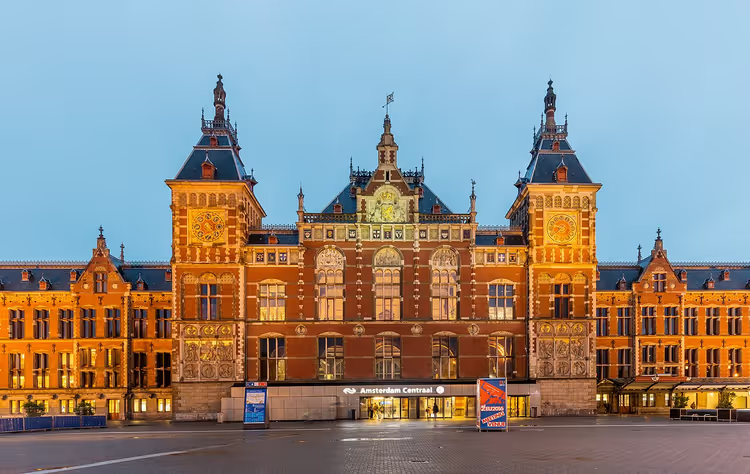 © Diego Delso · CC BY-SAPhoto: Diego Delso, CC BY-SA (https://creativecommons.org/licenses/by-sa/4.0), Wikimedia Commons
ICE International: from Frankfurt to Amsterdam
Deutsche Bahn's ICE International connects Frankfurt with Amsterdam several times a day. The trip takes under four hours, and along the way the train stops in Cologne, Dusseldorf, Duisburg, Oberhausen, Arnhem, and Utrecht. Announcements are made in three languages: German, Dutch, and English (As of 09/2026, Deutsche Bahn: ICE International).
This train is also convenient because you board it in the center of a German city and get off in the center of Amsterdam, with no transfers and no trip to the airport. With OVpay or a chip card within the Netherlands, you need a supplement on top of the ICE ticket, but this rule does not apply to Sparpreis Europa. That makes this ticket the most cost-effective option for a quick trip to Amsterdam.
Intercity from Berlin to Amsterdam
Besides the ICE, there is a direct Intercity from Berlin. It runs several times a day, takes about 6.5 hours, and stops in Hanover, Osnabruck, Hengelo, Apeldoorn, and Amersfoort. This train is convenient if you need cities in the north of the Netherlands or if you have time and want to see the country from the window.
In summer this route has a weak spot: the air conditioning overheats, and trains are sometimes canceled. If the forecast is hot, it's better to choose the ICE: it goes via Cologne and runs more reliably. You'll lose a little time on the transfer, but you'll arrive without surprises.
Night trains are running again
Old guidebooks say that night trains to Amsterdam no longer exist. That is no longer true. Since 2024, the European Sleeper has been running on this route: it leaves Berlin in the evening and arrives in Amsterdam in the morning, the whole trip takes about 7.5 hours, and tickets start at 49.99 EUR (As of 09/2026, European Sleeper). The route passes through Brussels, Antwerp, Rotterdam, The Hague, and Amersfoort.
Night trains operated by Austrian Railways OBB Nightjet also run along this same corridor from Vienna and Innsbruck. The night is spent in transit, and in the morning the train arrives in the city center: this saves a whole day and the cost of a night in a hotel. Places in sleeping cars sell out quickly, so book in advance.
Traveling within the country
The Netherlands has a dense domestic schedule. Trains run to all parts of the country, often every five minutes, and from Amsterdam to Rotterdam, The Hague, or Utrecht the trip takes under half an hour (as of 09/2026, carrier NS). To Maastricht in the south, the journey takes about 2.5 hours, so it is worth setting aside half a day for that trip.
Besides daytime trains, NS also runs night trains. They connect, for example, Rotterdam, The Hague, Leiden, Amsterdam, and Utrecht. More than 90% of trains arrive on schedule, so connections with short transfers usually work out (as of 09/2026, NS train punctuality).
When planning your day, keep in mind: intercity trains run frequently, but at small stations the intervals are longer. If you want to visit Eindhoven, Groningen, and Amsterdam in one day, it is better to pick two cities and not chase the third. A single countrywide ticket lets you change your route as you go, so a rigid plan is not necessary.
From the netherlands to belgium and london
To get to Belgium, you have two options. The fastest way from Amsterdam to Brussels is Eurostar (as of 09/2026, Eurostar schedule). The regular Intercity takes about an hour longer, but it requires no reservation and no surcharges. For a short route, Intercity is often the better deal; for a longer one, Eurostar is the better choice.
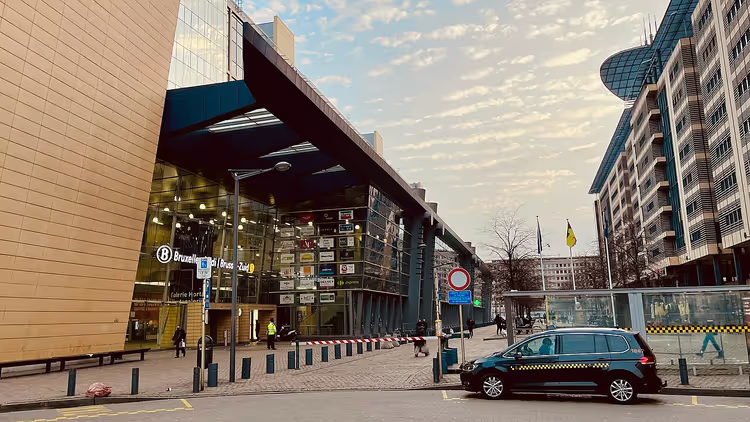 © Japplemedia · CC BY-SAPhoto: Japplemedia, CC BY-SA (https://creativecommons.org/licenses/by-sa/4.0), Wikimedia Commons
To continue to London, you change in Brussels to Eurostar. The whole London-Amsterdam trip takes about 4.5 hours. Some services run direct, but return trains more often require a change in Brussels, so extra time will not hurt. In Brussels, keep in mind the difference between stations: not all trains arrive at the same one, so allow at least an hour for the transfer.
Eurostar tickets to Belgium and the UK are best bought in advance: the earlier you book, the cheaper the seat. On popular dates, prices rise quickly, and a couple of days before departure the choice is minimal. If you are already traveling, check tickets right in the app: sometimes cheap seats free up after other passengers cancel.
How many days to allow for the trip
The Netherlands is compact, but the country is not just Amsterdam. For a first short visit, two or three days are usually enough: one day for the capital, a second for Utrecht and The Hague, a third for Rotterdam or Eindhoven. That pace lets you see different cities without rushing and without constant travel.
If you want to add Belgium, plan for at least four days. One day goes to travel and Amsterdam, the second to Utrecht and The Hague, the third to Rotterdam and Delft, the fourth to Brussels. With the Interrail Benelux Pass, a route through the Netherlands, Belgium, and Luxembourg fits into one ticket, so the cross-border surcharge does not grow.
A bike trip is worth planning separately. Groningen and the Wadden Sea area open up on a bicycle, and in the city you can rent one right at the station. On the train, bicycles are carried outside peak hours with a separate ticket, so it is better to schedule the trip for the morning or midday, when the cars are less crowded.
For families and large groups, it helps to keep one evening free: trains run until late at night, but intercity intervals grow in the evening. Check the last train in advance so you do not get stuck in another city, and keep a contactless payment backup on hand in case you need to change trains.
Cities and what to see
The main cities of the Netherlands are easy to connect by train: distances are short, stations are in the center, and a day ticket covers both the train and local transit. Below we have put together seven cities worth including in your route, with notes on where the station is and what you can cover in a day.
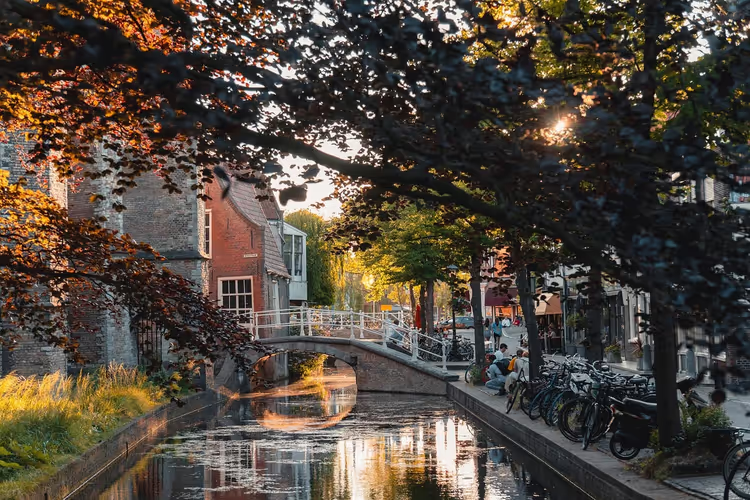
Amsterdam: the capital on the canals
Amsterdam has long attracted people from all over Europe, and its streets reflect that: Indonesian, African, and Italian restaurants sit side by side, and nearby you can get Dutch pancakes. The best way to feel the city is to walk. From Dam Square the route leads to Muntplein, then on to the Rijksmuseum and the Van Gogh Museum on Museumplein, and you can relax in Vondelpark.
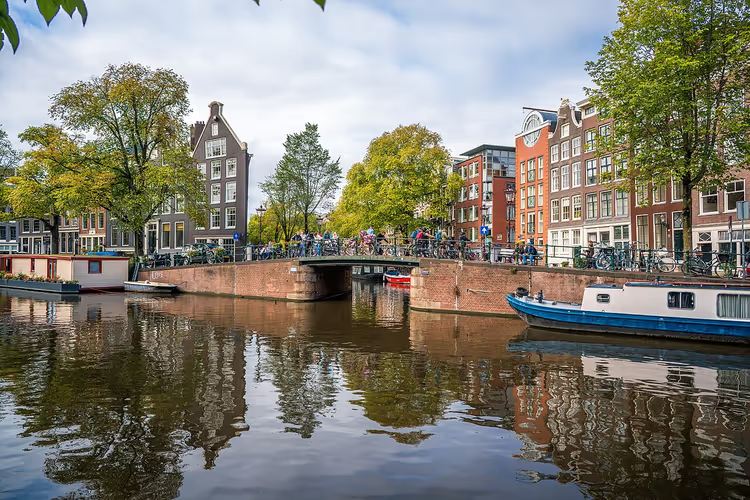 © Nan Palmero from San Antonio, TX, USA · CC BYPhoto: Nan Palmero from San Antonio, TX, USA, CC BY (https://creativecommons.org/licenses/by/2.0), Wikimedia Commons
The Anne Frank House at Prinsengracht 263 deserves a day of its own. Here the Frank family, together with four other people, hid from the Nazis until 1944, when they were betrayed. Of the whole family, only the father, Otto Frank, survived. Traces of Jewish history can also be found in the eastern part of the city: there stands the Portuguese Synagogue and, across the street, the Jewish Museum, while at the Hollandse Schouwburg the names of 6,500 murdered Jews are inscribed in the floor.
Book guided city tours in advance on GetYourGuide if you want to cover more in a single day.
Utrecht: the main railway hub
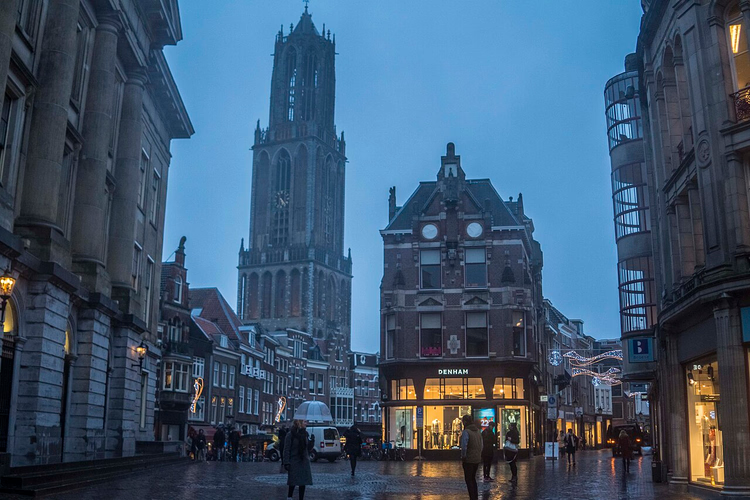
Thanks to its location, Utrecht is one of the country's most important hubs. From here you can reach Groningen and Eindhoven just as quickly as Amsterdam. The medieval center is almost fully preserved, so the city is good for a short stop along the way, and shops are concentrated right by the station.
 © Jwslubbock · CC BY-SAPhoto: Jwslubbock, CC BY-SA (https://creativecommons.org/licenses/by-sa/4.0), Wikimedia Commons
Worth seeing are the Domkerk and the Centraal Museum Utrecht. The Museum Speelklok houses one of the world's largest collections of clocks and barrel organs. Utrecht is home to the country's second-oldest university, so there are plenty of students here. And one more museum deserves your time: the Railway Museum, Spoorwegmuseum, near Utrecht Maliebaan station.
Groningen: bicycles by the Wadden Sea
In the northeast of the country lies Groningen. The city's character is shaped by students: they make up roughly a third of the population. So in the evening there are places to go, with plenty of clubs and bars. Life buzzes around the town hall on the Grote Markt, which is a short walk from the station.
 © Henk Monster · CC BYPhoto: Henk Monster, CC BY (https://creativecommons.org/licenses/by/3.0), Wikimedia Commons
The Martinitoren, built in 1482, is one of the tallest church towers in the country. And from here it is worth heading out to the Wadden Sea: the coast stretches for almost 35 kilometers, and the easiest way to reach it is by bicycle, which is everywhere in the city.
- The catch: the northeast of the country is far from the Randstad; from Amsterdam the journey takes several hours.
Maastricht: the oldest city in the south
Maastricht is one of the oldest cities in the Netherlands, known above all for the European Union treaty that was signed here. It has a strong cultural scene and lots of young people, especially students from Germany. The city lies on the River Meuse and is the administrative center of the province of Limburg.
From North Rhine-Westphalia you can get here cheaply using a combination of the SchönerTagTicket NRW and a single ticket within the Netherlands, even without a Sparpreis Europa. The station is almost in the very center, so from there you can walk.
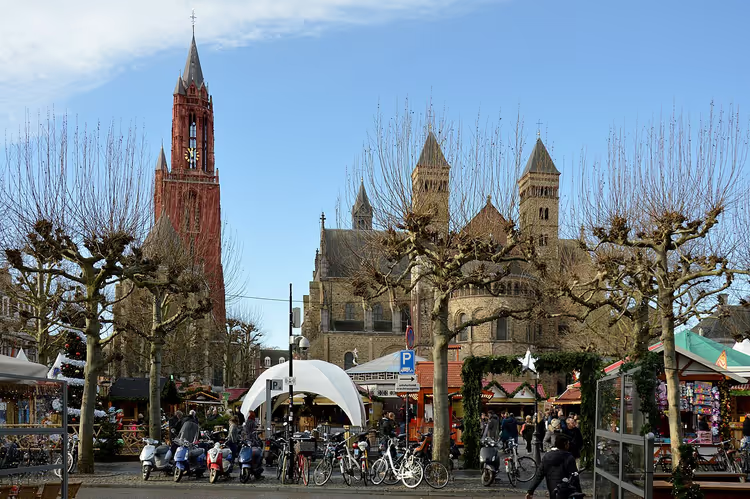
While walking through the center you immediately notice the 17th-century town hall. The Helpoort is the country's oldest city gate. It is also worth visiting the museums, for example the Bonnefantenmuseum, where classic and contemporary art are shown side by side.
- The catch: it is in the south of the country; from Amsterdam the train takes about 2.5 hours.
Rotterdam: a modern city by the sea
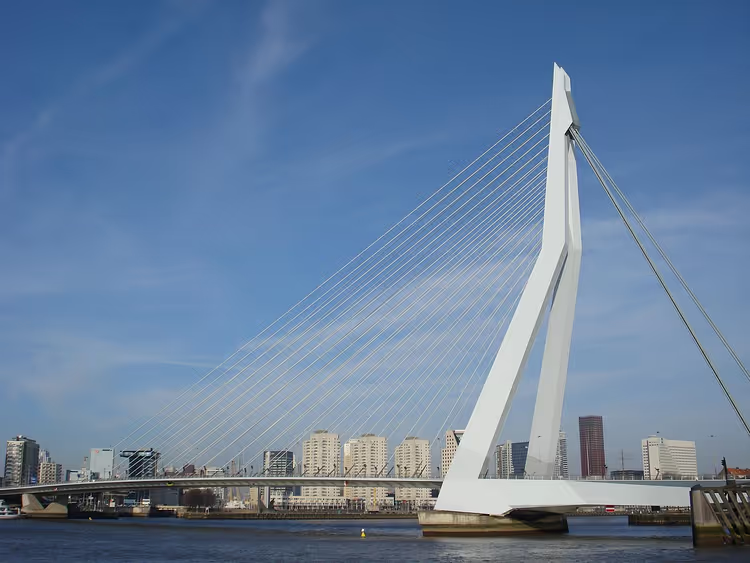
Rotterdam is the second-largest city in the Netherlands and one of Europe's most important ports: this is where gasoline and oil prices are set. Many buildings were destroyed in World War II, so today the city looks more modern than the rest.
 © F.Eveleens · CC BYPhoto: F.Eveleens, CC BY (https://creativecommons.org/licenses/by/3.0), Wikimedia Commons
The Laurenskerk and the town hall survived the bombing. In old Delfshaven stands the 18th-century ship "De Delft", which is open for viewing. From the Euromast you get a view over the city, and on a clear day you can even see Antwerp in Belgium. Rotterdam ranks among the country's leading cultural cities.
- The catch: the historic center was almost completely lost in the war, so there are few old streets here.
Eindhoven: pubs and futurism
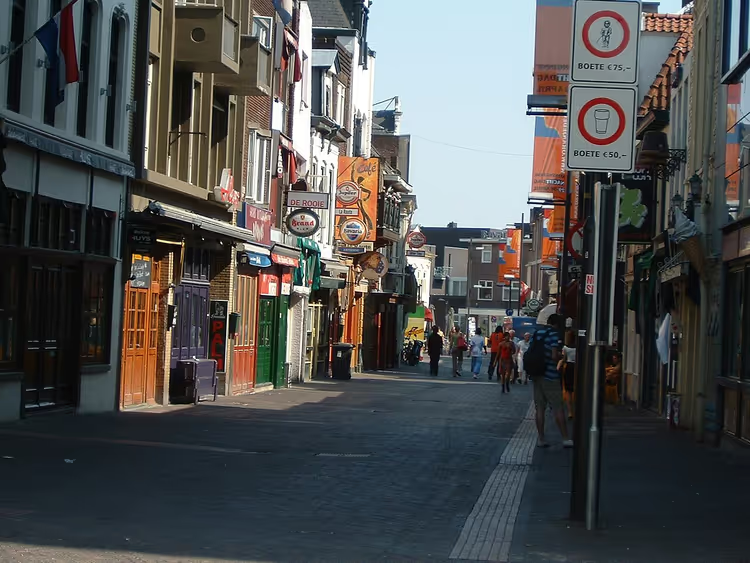
Eindhoven is known for its pubs. It is home to the country's longest bar street, where more than 50 bars and restaurants stand one after another. There are also museums here worth seeing.
 © Casimir at Dutch Wikipedia · CC BY-SAPhoto: Casimir at Dutch Wikipedia, CC BY-SA (http://creativecommons.org/licenses/by-sa/3.0/), Wikimedia Commons
A good place to start your walk is the Markt with its small cafes. It is easy to reach from Eindhoven Centraal station. From here trains reach Utrecht in under an hour and Amsterdam in about 1.5 hours.
Eindhoven differs from other cities in its abundance of new buildings. One of them, the futuristic Evoluon, was built for Philips' 75th anniversary and looks like a spaceship. Nearby stands the neo-Gothic Catharinakerk, a national monument of the Netherlands.
- The catch: there is less historic architecture here than in other cities.
Den Haag: the government city on the North Sea
The Hague is the seat of the Dutch government, but travelers often pass it by, hurrying to Amsterdam. That is a shame: the city lies right on the North Sea, so the beach is quick to reach. From the central station to the shore it is about seven kilometers; in summer it is easy to get there by bicycle.
Among the sights worth highlighting are the royal palace Paleis Noordeinde, the Kloosterkerk, and the Grote Kerk. The Kunstmuseum Den Haag tells more about the city's history. Children and adults alike are drawn to Madurodam, where the entire country, including its railways, is recreated in miniature.
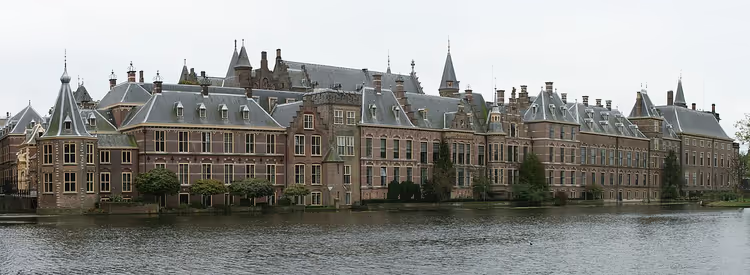 © Jesterhat84 · CC BY-SAPhoto: Jesterhat84, CC BY-SA (https://creativecommons.org/licenses/by-sa/3.0/nl/deed.en), Wikimedia Commons
Tip: tram number 10 runs from the station past almost all the main sights. They are all reachable on foot too, if you have time.
- The catch: the city is often skipped, but it is noticeably calmer here than in Amsterdam.
⁉️🤔 Frequently asked questions
How much does it cost to travel by train from Germany to the Netherlands?
A Sparpreis Europa Niederlande ticket starts at €24.99 in second class, and a Super Sparpreis Europa costs from €19.99 (as of 09/2026, Sparpreis Europa page). It is valid from any station in Germany to any station in the Netherlands. The number of tickets is limited, so it is better to buy in advance, one to two months before your trip.
Do night trains run to the Netherlands?
Yes, since 2024 the Berlin-Amsterdam route has been served by European Sleeper: evening departure, morning arrival, about 7.5 hours en route, tickets start at 49.99 € (as of 09/2026, European Sleeper night train). ÖBB Nightjet night trains from Vienna and Innsbruck also run along this same corridor. A night on the train saves a whole day and the cost of a hotel.
Do I still need an OV-chipkaart?
No, you no longer need it for new trips. Since July 1, 2026, the anonymous OV-chipkaart is no longer sold, and the full phase-out of the card is planned to be completed by the end of 2027 (as of 09/2026, transition to OVpay). OVpay replaces it: you tap a bank card or phone on the validator when entering and exiting, and the fare is charged automatically.
How long is the train from Amsterdam to Brussels?
Eurostar is the fastest option: 1 hour 52 minutes from Amsterdam to Brussels (as of 09/2026, Eurostar travel time). A regular Intercity takes about an hour longer, but requires no reservation and no surcharge. With an Interrail pass, a seat on Eurostar is booked separately and you pay a reservation fee, with the exact amount shown by the system at the time of booking.
What is the best value for travel within the country?
For one packed day, get the Holland Travel Ticket: it covers trains, metro, trams, and buses across the whole country (as of 09/2026, Holland Travel Ticket terms). For short trips, it is cheaper to pay contactless via OVpay. And if you are visiting several European countries, consider Interrail: one pass then covers the entire route.
In short: what to book
If you only have a weekend, get a Sparpreis Europa: it is the cheapest way to reach Amsterdam. If you are planning several cities in one trip, get a Holland Travel Ticket for the day, and add Interrail for Belgium and onward travel in Europe. If you want to stay in the center, book a hotel near Amsterdam Centraal in advance: prices rise quickly in summer.
You can compare schedules and prices for trains to the Netherlands compare prices on Trip.com.

A small editorial team writing guides for independent travel. We travel ourselves, but we haven’t been everywhere, so we check prices, opening hours and how to get there against official sources.