
















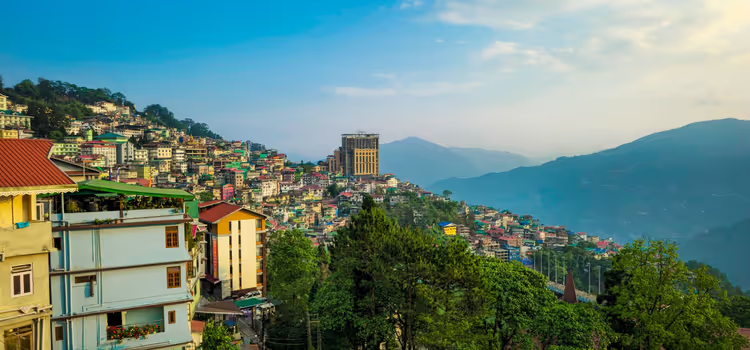
7 Hill stations of India where people escape the summer heat
In summer, standing outside on the Indian plains is impossible. In Delhi and Rajasthan, the heat lasts for months, and air conditioning only helps indoors. The only way out is to head to the mountains.
People started escaping to the mountains here back under the British. Officials moved to cool hill stations for the summer, and Shimla served as the colony's summer capital. Today these are ordinary tourist towns where people go for cool air and views of the Himalayas.
Below are seven hill stations in India: six in the Himalayas and one in the Western Ghats. We've put together the altitudes, the route from the plains, and what's worth seeing on the ground. You'll figure out where to go for views of eight-thousanders and where to simply wait out the heat.
Ad: this article contains affiliate links, we earn a commission if you book through them, at no extra cost to you.
💡 In short:
- Seven hill stations: from colonial Shimla to Tibetan McLeod Ganj.
- The best season for most of them is spring and fall; in summer, the altitude saves you.
1. Shimla: an English town in the Himalayas
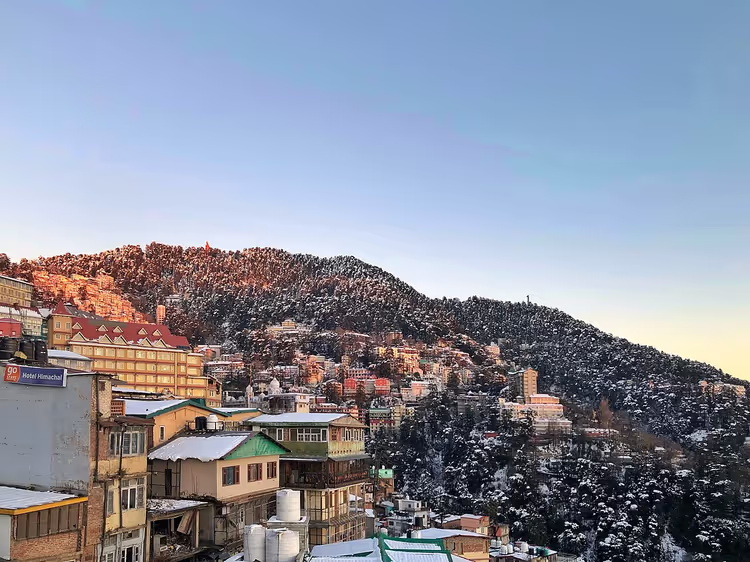
Shimla was the summer capital of British India. Officials came here from Delhi for the hottest months, when the plains became impossible to breathe in. Today it's the administrative center of Himachal Pradesh, and its colonial character has been preserved.
The town sits at an altitude of about 2,100 meters, so the air here is noticeably cooler than in Delhi (as of 09/2026, Wikipedia on Shimla). Shimla's central point is Mall Road. You'll walk past cafes, shops, and neo-Gothic buildings, with Himalayan ridges hanging on the horizon.
Among the architecture, look for Christ Church. It's one of the oldest churches in India and the second-oldest church in North India. A bit farther on is the post office, considered the oldest on the subcontinent. Don't miss the Viceregal Lodge. It was built in the late 19th century, and now houses a museum.
The Kalka-Shimla narrow-gauge railway leads to Shimla. The line opened in 1903 to carry officials and their families, and in 2008 UNESCO added it to its heritage list (UNESCO list). Locals call the train the Toy Train. The cars pass through pine forests and tunnels, and this ride alone is worth the trip.
There's plenty to see around Shimla too. Kufri is a village where Indians come to walk and have picnics. You can reach Solan on the same train. Jakhu Temple stands on a hill at 2,445 meters, and a cable car leads up to it (Shimla altitudes and attractions). A huge statue of Hanuman rises nearby.
One detail for those heading up to the temple. The hill is home to very brazen monkeys, and they snatch food right out of your hands. You can rent a protective stick for a small fee.
 © UnpetitproleX · CC BY-SAPhoto: UnpetitproleX, CC BY-SA (https://creativecommons.org/licenses/by-sa/4.0), Wikimedia Commons
- How to get there: from Delhi it's a full day by road, and a narrow-gauge railway runs from Kalka station. Stay in the center, near Mall Road.
- When to go: in spring and fall. During the monsoon season, it rains often here and landslides occur.
- Who it's for: those who want colonial architecture and city life without long treks.
2. Manali: mountains, hippies, and honeymoons
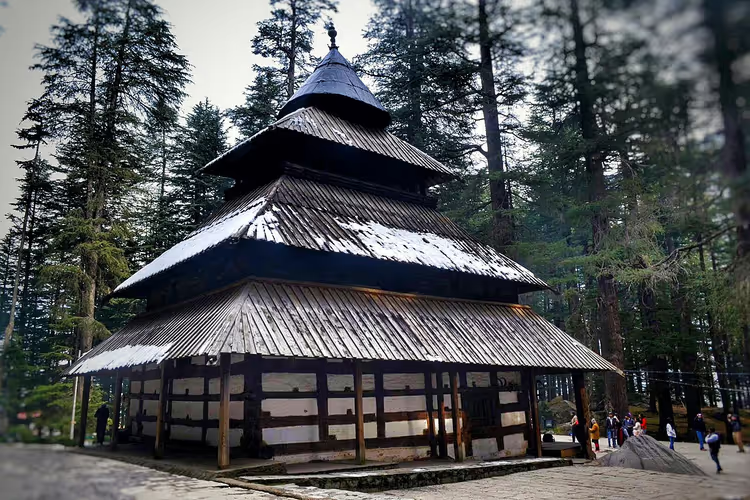
Manali is the country's most popular hill station. Two different groups of people come here. Indian couples spend their honeymoon here, and foreign hippies come for the atmosphere and nature.
The area around the town is considered one of the largest cannabis-growing regions in India. For centuries, traditional charas has been made here from the flowers of Indian hemp. The plant itself is banned in the country, but it plays an important role in Hindu tradition. The god Shiva is considered a big fan of charas.
With the influx of tourists, the town has changed a lot. Almost no village houses remain; new hotels have sprung up in their place, and shops sell cheap souvenirs. At the same time, the surrounding mountains impress in any season, and the locals remain friendly.
By car or bus you can reach Rohtang Pass. It lies 51 kilometers from Manali and opens the road to the Lahaul and Spiti valleys (as of 09/2026, Wikipedia on Manali). In winter the pass is closed due to snow, so plan your trip for summer.
Another nearby spot is the Parvati Valley. It lies two hours' drive to the southeast and has long been a gathering point for backpackers. In winter, snow falls in Manali, and many people come here to see it for the first time in their lives.
 © Rishabh gaur · CC BY-SAPhoto: Rishabh gaur, CC BY-SA (https://creativecommons.org/licenses/by-sa/4.0), Wikimedia Commons
- How to get there: from Delhi by bus or by plane to Kullu, then by taxi. The journey takes a day.
- When to go: from spring to fall for treks, in winter for snow.
- Who it's for: couples who want comfort and backpackers looking for cheap options.
- The catch: traditional buildings have almost disappeared, with many new hotels and cheap souvenirs.
- Hotels: hotels in Manali on Trip.com.
3. Kausani: the Switzerland of India and Himalayan views
Kausani is called the Switzerland of India. Mahatma Gandhi spent a few days here and compared the town to an Alpine village. The town itself is small and sits in the state of Uttarakhand, high in the mountains.
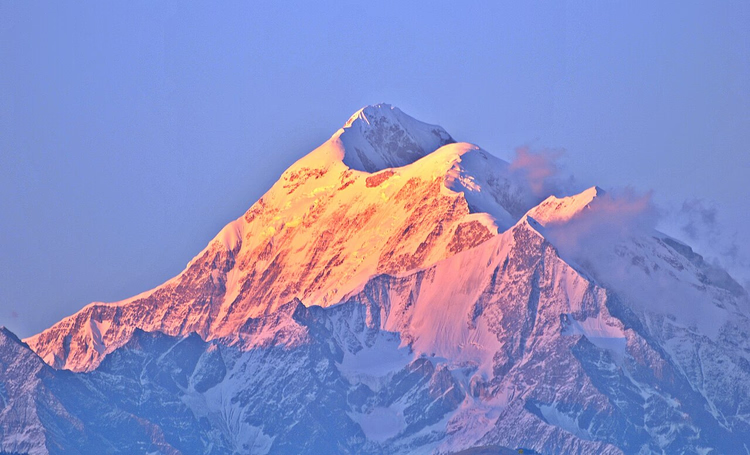
What people come here for: the Himalayan panorama on clear days. From Kausani's viewpoints, you can see the highest peaks, including Nanda Devi and Trishul. The sun rises over them in orange, and people travel from far away for this sight.
Spending time here is simple. You watch sunrises and sunsets, walk around the surroundings, and warm up with a cup of tea. This quiet is Kausani's main value. You also escape not just the heat but the noise of big cities.
The famous Baijnath temples stand a little apart. They are about 800 years old (as of 09/2026, Wikipedia on Kausani). Another important temple town, Bageshwar, lies an hour's drive to the east. For quiet days, pick up Gandhi's "Anashakti Yoga": he wrote it here in Kausani.
 © Dr. Satyabrata Ghosh · CC BY-SAPhoto: Dr. Satyabrata Ghosh, CC BY-SA (https://creativecommons.org/licenses/by-sa/4.0), Wikimedia Commons
- How to get there: from Delhi by train to Kathgodam, then by car. Book a room with a north-facing view.
- When to go: in spring and autumn, when the air is clearer and you can see the distant peaks.
- Who it's for: those who want silence and views, not museums and shopping.
- Hotels: hotels in Kausani on Trip.com.
4. Munnar: tea and cool air of South India
When people talk about the mountains of India, the Himalayas come to mind first. But the south also has beautiful hill stations, and the most famous of them is Munnar. It is called the Kashmir of South India, and it sits in the Western Ghats of the state of Kerala.
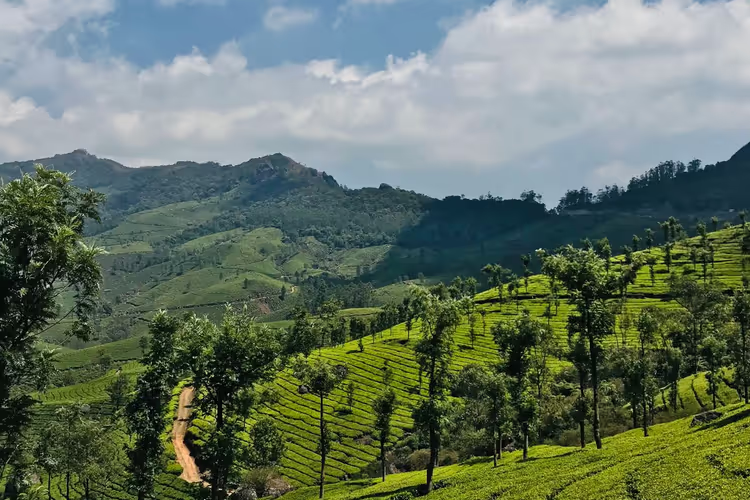
Munnar lies at an altitude of about 1,600 meters amid tea plantations (as of 09/2026, Kerala tourism office). The plantations stretch for kilometers, and the surrounding forests are home to elephants and other rare animals.
The town was opened up by British adventurers in the 19th century. They built several roads, bungalows, and a small church, and later took up tea. Unlike Shimla and Manali, Munnar has remained a village. There is almost nothing to see here except nature, and that is the whole point.
If you want some variety, take a trip to Marayur. It is about an hour's drive from Munnar and is known for its megaliths and rock paintings. People are believed to have lived in these places in ancient times.
And then come back to the tea. When the sun rises over the plantations, you hear the birds and breathe in the fresh air. That is exactly what people come here for in the morning.
- How to get there: the road from Kochi takes half a day; there are no direct trains.
- When to go: from autumn to spring; it's better to skip the monsoon months.
- Who it's for: tea lovers, fans of cool weather, and leisurely walks. Anyone coming for museums will be disappointed.
- Hotels: hotels in Munnar on Trip.com.
5. Darjeeling: tea, toy train and tiger hill
Every tea lover knows Darjeeling. The town sits at an altitude of about two thousand meters and roughly seven hundred kilometers from Kolkata. Tea has been grown here since the second half of the 19th century.
Thanks to the climate and new fermentation technologies, Darjeeling became one of the most famous teas in the world. The plantations produce millions of kilograms a year, and part of the harvest is exported. People come here from all over the world specifically for this tea.
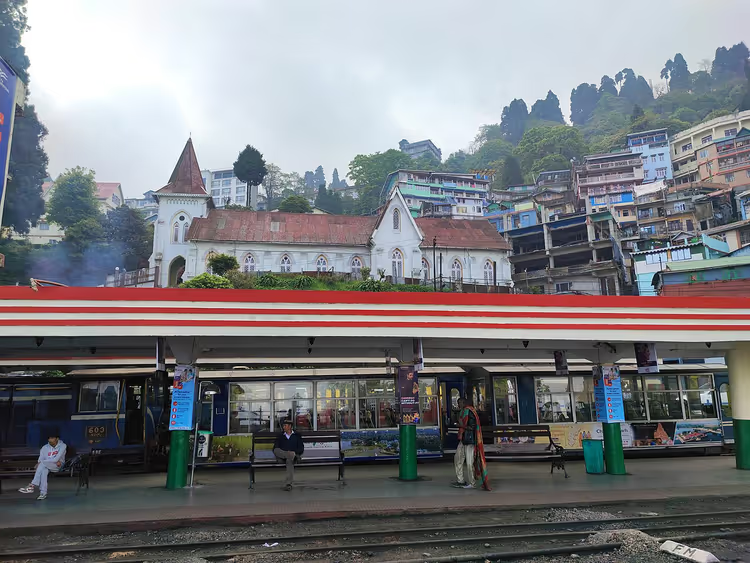
The Darjeeling Himalayan Railway leads into the town. It is part of the same heritage site as the railway to Shimla (Mountain Railways of India). The narrow-gauge Toy Train runs right through the streets. The carriage passes within a few centimeters of vegetable stalls, and that in itself is an attraction.
The third reason to come is Tiger Hill. It stands a few kilometers from the town at an altitude of 2,590 meters (as of 09/2026, Darjeeling guide). You can get there by jeep or on foot through the tea plantations.
The hill opens up the entire Himalayas. You will see the Kangchenjunga massif, the third highest peak in the world, and on clear days even Everest. Sunrises are especially beautiful, when the mountain ridges flare up orange. That view alone is worth the trip to Darjeeling. Add a ride on the Toy Train and a cup of fresh tea on the spot, and it becomes clear why the town is called the queen of the hills.
 © Sumitsurai · CC BY-SAPhoto: Sumitsurai, CC BY-SA (https://creativecommons.org/licenses/by-sa/4.0), Wikimedia Commons
- How to get there: by plane to Bagdogra or by train to Siliguri, then by jeep.
- When to go: in spring and autumn; bring warm clothes for sunrises.
- Who it's for: tea lovers and mountain view enthusiasts. Keep in mind that the town is steep, with lots of stairs and climbs.
- The catch: in season, crowds flock to Tiger Hill, and you watch the sunrise in the company of hundreds of people.
- Hotels: hotels in Darjeeling on Trip.com.
6. Mussoorie: mountains near Delhi
Delhi is at its most exhausting in summer. Crowds and traffic jams make the heat unbearable, so city dwellers flee to the mountains. Mussoorie is one of the capital's favorite refuges.
The town lies near Dehradun, the administrative center of Uttarakhand, so it is easy to reach. Those who can afford it fly to Dehradun. By bus the journey takes almost a whole day, but for India that is normal.
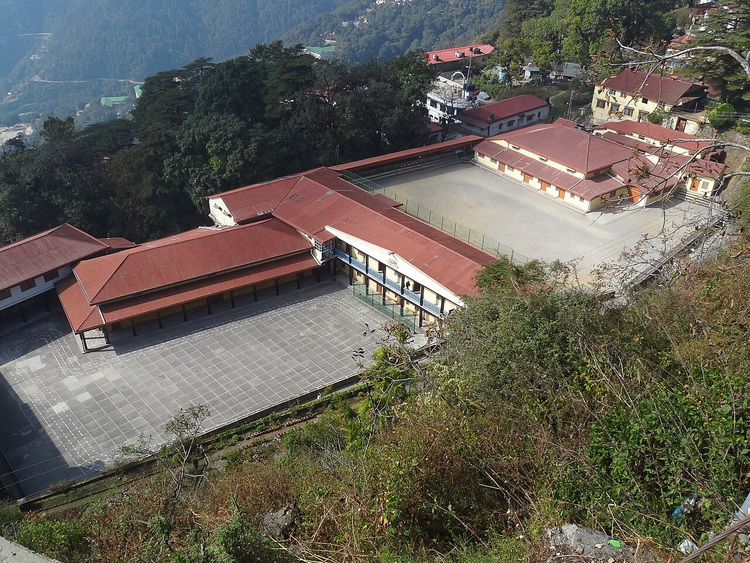
Mussoorie shares the nickname queen of the hills with Darjeeling. The town sits at an altitude of about two thousand meters (as of 09/2026, Wikipedia on Mussoorie). From here you get views of the Doon Valley and snowy ridges, and there is little traffic on the streets.
It is pleasant to stroll along the Mall. This is the local promenade, where you breathe in the mountain air, buy woolen clothes and drink tea. Colonial buildings here stand side by side with new hotels and temples.
Around Mussoorie there are many short outings: waterfalls, lakes and the quiet station of Dhanaulti half an hour away. Dehradun itself has little worth seeing, but nearby stands Haridwar. It is one of the holiest cities in India, where the Ganges first emerges onto the plain. Once every twelve years the Kumbh Mela takes place here, a festival for millions of pilgrims.
 © Harshanh · CC BY-SAPhoto: Harshanh, CC BY-SA (https://creativecommons.org/licenses/by-sa/3.0), Wikimedia Commons
- How to get there: from Delhi by plane to Dehradun or by bus; from Dehradun to Mussoorie it is half an hour.
- When to go: in spring and autumn; in summer it is always cool here, in winter it is chilly.
- Who it's for: families and those who want mountains without a long journey from Delhi.
- Hotels: hotels in Mussoorie on Trip.com.
7. McLeod Ganj: Tibetan India
McLeod Ganj is the center of the Tibetan community in India. After 1959 the Dalai Lama chose it as his place of exile, and tens of thousands of Tibetans moved here. New families still arrive every year, which is why the town is called little Lhasa.
Tsuglagkhang is a monastery and the residence of the Dalai Lama. Several times a year he gives public lectures here, and Buddhists from all over the world gather for them. Anyone can attend the teachings.
On the streets you will walk alongside monks in red robes, as well as hippies and young backpackers. Officially McLeod Ganj is a district of the town of Dharamshala, which lies lower in the valley.
If you climb higher, you reach Bhagsu Nag and Dharamkot. These were once ordinary farming villages, but today travelers have made them their own. Dharamkot has many Israelis, so locals call it little Israel. Instead of samosas, they sell falafel and hummus here, and there are also cafes, hostels and yoga studios.
Reasons to stay longer: the Tibet Museum, the Triund trek at an altitude of almost three kilometers, the large waterfall in Bhagsu Nag and the neo-Gothic church of St John in the Wilderness in the forest. Keep in mind that the climbs here are steep and the air is thin.
 © Adam Jones from Kelowna, BC, Canada · CC BY-SAPhoto: Adam Jones from Kelowna, BC, Canada, CC BY-SA (https://creativecommons.org/licenses/by-sa/2.0), Wikimedia Commons
- How to get there: fly to Gaggal Airport (Kangra) or take a train to Kangra, then continue by car to Dharamshala.
- When to go: from March to June and from September to November; summers here are comfortable.
- Who it's for: those who want Tibetan culture, Buddhist teachings, and treks.
- Hotels: hotels in McLeod Ganj on Trip.com.
Other hill stations in India
If seven isn't enough, add a few more to your list. In the north, there's Gangtok, Lansdowne, Almora, and Kasauli, and in the south, Kodaikanal and Coorg. They're set up similarly and suit the same purpose: escaping the heat and spending a few days in the mountains.
⁉️🤔 Frequently asked questions
Which hill station in India is best for a first trip?
For a first trip, go with Shimla or Mussoorie. Both are easy to reach from Delhi, have accommodation for any budget, and don't require long treks. Shimla showcases colonial architecture, while Mussoorie is great for views and its proximity to Haridwar.
When is the best time to visit hill stations in India?
The best time is spring and autumn. From March to June, the mountains are cool, and from September to November the air is clearest and you can see distant peaks. The monsoon season and the depths of winter aren't for everyone: rains can cause landslides, and in winter the northern stations get cold.
Where can you see eight-thousanders?
For eight-thousanders, head to Darjeeling: from Tiger Hill you can see Kangchenjunga, and on clear days even Everest. Kausani doesn't have eight-thousanders, but you can see Nanda Devi (7,816 m) and Trishul.
Can you get by without a car?
Yes. Historic narrow-gauge railways lead to Shimla and Darjeeling, and buses and trains run between towns. On the ground, people usually hire jeeps for trips to viewpoints. A car is only needed for distant passes like Rohtang.
How is McLeod Ganj different from other hill stations?
It's not a resort but a Tibetan community. The Dalai Lama lives here, the Tsuglagkhang monastery and the Tibet Museum are active, and monks walk the streets. Unlike Shimla or Mussoorie, people come here for culture, Buddhist teachings, and treks, not for colonial architecture.
In short: what's worth booking
If you're going for the first time and don't want treks, choose Shimla or Mussoorie: they're the easiest in terms of travel and accommodation. For views of eight-thousanders, head to Darjeeling. For tea and cool weather in the south, go to Munnar; for Tibetan culture, go to McLeod Ganj. It's best to book a hotel in Shimla or Manali in advance: during the season, good rooms in the center get snapped up quickly. See hotels in Shimla on Trip.com.

A small editorial team writing guides for independent travel. We travel ourselves, but we haven’t been everywhere, so we check prices, opening hours and how to get there against official sources.