








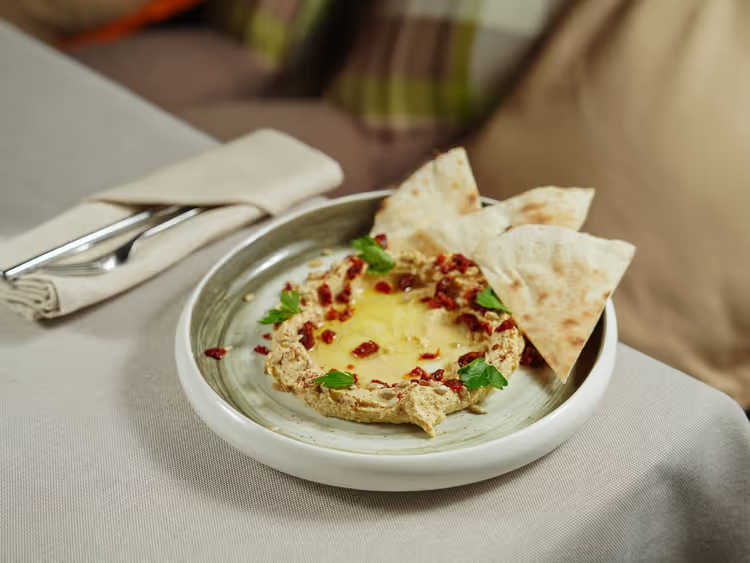
Israeli street food: prices, markets and what is open on Shabbat
Street food in Israel feeds you better and cheaper than restaurants. At a counter you pay several times less for a plate of hummus or a pita with falafel than for a meal with table service, and you almost always get it fresher. The simpler the spot, the better the food: that is the local logic, and it is worth adopting from day one.
We break down the dishes worth seeking out, how the Tel Aviv markets and Jerusalem markets work, and the rules by which kashrut and Shabbat operate here. Entry is also part of the plan: you need an advance ETA-IL, which airlines check before boarding (as of 09/2026, official website of the Population and Immigration Authority).
Ad: affiliate links in the text, this is our commission income, at no extra cost to you.
First things first: the situation and entry
Israel is formally in a state of war, and that is the first thing you check before any trip. As of September 2026, the Auswärtiges Amt warns against travel to the Gaza Strip and the West Bank except East Jerusalem, and also advises against going to the north of the country above Highway 85 and to East Jerusalem (as of 09/2026, Auswärtiges Amt). It separately notes an elevated risk of terrorist attacks in tourist areas and at transport hubs.
Then the practical side: your passport must be valid with a buffer beyond your return date. Check the latest guidance from the Auswärtiges Amt, the Austrian BMEIA, or the Swiss EDA, and find out in advance whether your insurance applies under an active travel warning. What follows is about the country's food and markets, not a recommendation to travel on specific dates.
💡 In short:
- Eat at counters and markets: cheaper than a restaurant and almost always fresher.
- Apply for ETA-IL in advance and check warnings before booking.
- On Shabbat, plan your food a day ahead, especially in Jerusalem.
- Dish prices are approximate as of 09/2026; Machane Yehuda opening hours verified on the market's official website.
Dishes worth seeking out
Israeli cuisine is assembled from the cuisines of Morocco, Yemen, Iraq, Iran, Poland, Ethiopia, Eastern Europe, and its Arab neighbors, and you can see it on the plate. The foundation is the same: chickpeas, tahini, eggplant, lemon, parsley, olive oil, and pita. The prices below are approximate ranges for street food spots as of 09/2026, converted to euros at a rate of about 3.5 ₪ per €; the overall price level in the country is visible in Numbeo data, and the current EUR/ILS rate is published by the ECB.
Dish | What it is | Price, ₪ |
|---|---|---|
Hummus | warm chickpea puree with tahini and olive oil, often with chickpeas, egg, or mushrooms | 25-45 |
Falafel in pita | fried chickpea balls with salad, tahini, and amba | 18-35 |
Sabich | pita with fried eggplant, hard-boiled egg, potato, amba, and tahini | from 29 |
Shakshuka | eggs simmered in a tomato-pepper sauce, served right in the pan | 38-55 |
Shawarma | meat from a spit in pita or laffa | 40-60 |
Meorav Yerushalmi | Jerusalem mix of fried offal and chicken | 45-65 |
Bourekas | flaky pastries with cheese, potato, or spinach | 8-18 |
Malawach and jachnun | Yemeni pastries, often with grated tomato and zhug | 25-45 |
Mezze | small plates of appetizers, usually brought free with grilled dishes almost everywhere | usually included with the main |
Knafeh | warm dessert made of shredded pastry threads, cheese, and sugar syrup | 15-30 |
Halva | sesame sweet, dozens of varieties at markets | by weight, from 10 per 100 g |
Limonana | lemonade with fresh mint, the national summer drink | 12-22 |
For reference: 25-45 ₪ is roughly 7-13 €, and a pita with shawarma at a counter usually comes in under 17 € (as of 09/2026, EUR/ILS rate).
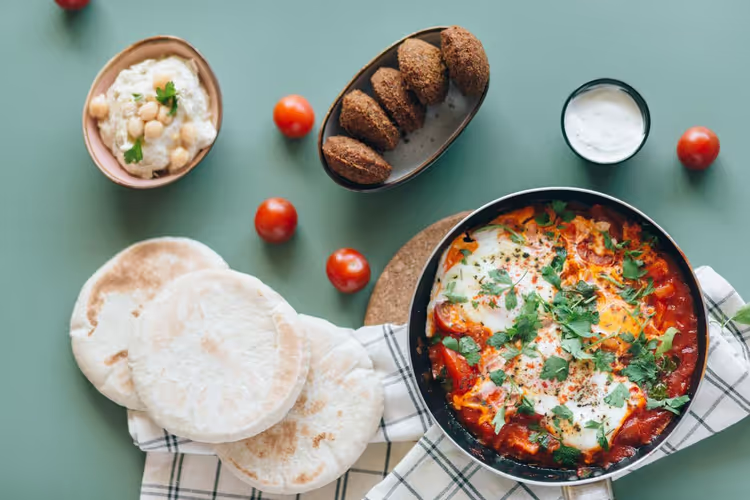
Three things about ordering that save you stress. Hummus here is a full meal, not an appetizer: you get a bowl, pita, onion, and pickles, and you eat it with bread, not a spoon. Amba, a pickled mango sauce, carries the flavor in sabich and falafel, so if you don't like it, say so when ordering. Zhug is genuinely spicy and is only added on request.
Markets: Shuk HaCarmel and Machane Yehuda
Shuk HaCarmel market in Tel Aviv is the city's largest shopping street: it runs from Allenby Street toward the sea. At the front you'll find fruit, spices, and fabrics, and further in the prepared food stalls begin. The side alleys of the Kerem HaTeimanim neighborhood are even more interesting for food than the market itself: there you'll find tiny kitchens cooking for just a few tables.
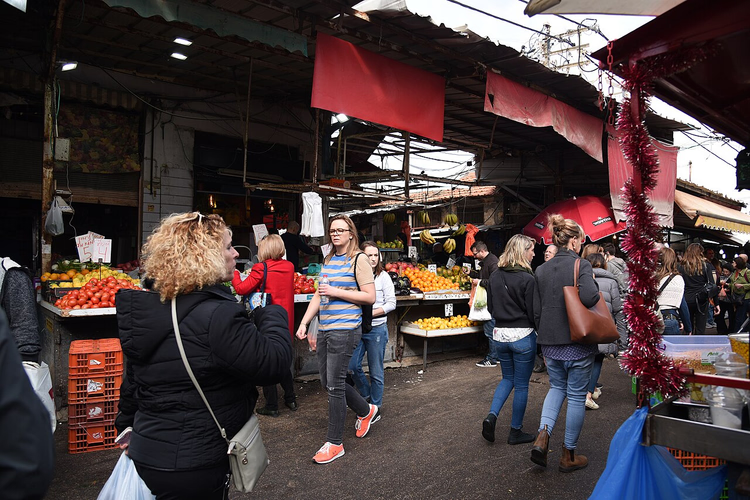
Machane Yehuda market in Jerusalem is denser and older. It operates roughly from 8:00 to 19:00 Sunday through Thursday, until 15:00 on Friday, and is closed on Saturday (as of 09/2026, official market website). In the evening after Shabbat ends, the market gets a second life: bars and restaurants open, the shutters are painted by street artists, and the produce market turns into a nightlife district.
The practical approach is the same for both markets: buy groceries in the morning, eat in the afternoon. The busiest time is Friday morning, when the whole city shops before Shabbat, but that's also when it's most crowded. If you want to tour the markets with a guide and tastings, there are food tours on GetYourGuide.
Tours and tickets in Tel Aviv
Guided tours, skip-the-line tickets and activities — most offers can be cancelled free of charge.
See offers on GetYourGuideThe widget loads once you give your consent.
Kashrut, Shabbat, and opening hours
It's important to separate two different concepts here, otherwise half the schedules will look random. Kashrut is a property of the establishment, not the place: a kosher cafe strictly separates dairy and meat, so after a steak you won't be offered a cappuccino, and a burger won't come with cheese. Establishments are divided into "basari" (meat), "chalavi" (dairy), and "parve" (neutral), but many spots in Tel Aviv have no certification at all and serve everything.
Shabbat is about time: it begins on Friday shortly before sunset and ends on Saturday after dark. During these hours, kosher restaurants close almost completely, as do supermarkets, museums, and most public transport. The difference between cities is significant, and it's worth factoring into your plan.
- Jerusalem: almost everything is closed. Warm food on Shabbat is available in hotels and at a few non-certified spots. Arab establishments in the Old City also operate, but the Auswärtiges Amt advises against traveling to East Jerusalem.
- Tel Aviv: much stays open, especially cafes, beach kiosks, and non-kosher restaurants. Buses run on a limited schedule, but sherut shared taxis operate almost normally.
- Haifa: sits between the two, and is relatively lively on Shabbat.
The planning takeaway is simple: stock up on Friday afternoon, use Saturday in Jerusalem for walks and the Old City, and don't build your return trip around a bus that doesn't run that day.
Regional differences you can taste
The country is small, but the cuisine is not uniform. Tel Aviv is the experimental part: modern bistros, lots of vegetables and fish, a very visible vegan scene. The share of people who eat vegan and vegetarian food here is unusually high, so even simple counters keep their own options. If you're coming from Germany, Austria, or Switzerland and don't eat meat, you'll have no problems: the heart of the local cuisine is hummus, falafel, salads, eggplant, and tahini, meaning meatless dishes.
Jerusalem is more conservative and more tied to the grill. Meorav Yerushalmi was born here, and the Arab cuisine of the Old City offers the best versions of knafeh, maqluba, and stuffed grape leaves. Haifa and Acre in the north combine Jewish, Arab, and Druze traditions: a Druze flatbread with labneh and za'atar from a roadside stand is one of the cheapest and most delicious dishes in the country. The south around Be'er Sheva was shaped by immigrants from North Africa, hence chraime, fish in a spicy tomato sauce.
Among drinks, wine is worth trying: vineyards are found in the Galilee, the Judean Hills, and the Negev, a bottle in a restaurant costs a wide range, and craft beer in a bar is cheaper than wine. Arak, an anise spirit, is drunk with water and ice, and it's the standard drink with grilled food (as of 09/2026, Numbeo).
Breakfast: the underrated meal
An Israeli breakfast is its own format and, for many guests, the best meal of the day. You get a finely chopped cucumber and tomato salad, cheeses, olives, tahini, spreads and sauces, bread, eggs cooked to order, and coffee. In a cafe, this breakfast costs noticeably more than street hummus, but it keeps you full until evening. The coffee is Mediterranean: "hafuch" is the local cappuccino, "cafe shahor" is brewed Turkish style, and "cafe kar" is iced coffee for summer.
What it costs, how to pay, and how much to leave
Israel is not a cheap country. Groceries, rent, and restaurants cost about the same as in Western Europe, and in Tel Aviv sometimes more. Eating cheaply is only possible at counter-service spots, and that is usually where the food is better.
- A realistic food budget depends on the format. At counters and markets, you can get by on a modest amount per day. With restaurants, spending rises noticeably.
- Cards are accepted almost everywhere, and contactless payment is standard. Cash is needed at small market stalls and for tips.
- Tips in restaurants are not included in the bill: they usually add about another tenth, and they are often requested in cash. At counters, tips are not expected.
- Tap water is safe to drink, and restaurants often bring you a carafe without being asked.
Practical tips for your trip
- Eat at counters and markets, and choose restaurants selectively. The difference in the bill is large. The quality at a hummus place is often higher than at a restaurant.
- Buy groceries on Friday afternoon and plan Friday evening and Saturday according to the rules of the specific city, in Jerusalem well in advance.
- Mention how you feel about amba and skhug when ordering if you do not like sour and spicy flavors.
- Budget for tips, in cash if possible.
- Before booking, check the guidance from Auswärtiges Amt, BMEIA, or EDA and confirm what your insurance covers: many policies do not provide protection when active warnings are in place. You can compare insurance options through a comparison service.
⁉️🤔 Frequently asked questions
How much money per day goes to food in Israel?
If you eat at markets and counters, figure 25-35 € per person per day: a portion of hummus or falafel, coffee, and dessert fit into that amount without difficulty. With restaurants, the picture changes, and lunch with wine easily runs over 50 €. The price level in the country is easy to check against a summary of average checks, which also has data on budget-friendly places.
What is open on Shabbat?
In Tel Aviv, cafes and non-kosher restaurants are open. In Jerusalem, almost everything is closed: warm food is available in hotels and at a few uncertified spots. In Haifa, Saturday is comparatively lively, and closures are less strict there.
Do I have to eat at kosher establishments?
No. Kashrut is a characteristic of a specific establishment, not a mandatory rule for guests. Most cafes and restaurants in Tel Aviv do not have certification and cook everything from one menu. If a kosher table matters to you, look for a sign in the window, and in Jerusalem ask on the spot.
Where do I find good hummus?
Go in the morning or around midday and stick to the neighborhoods near the Shuk HaCarmel market: the Kerem HaTeimanim quarter, Florentin, and the edges of Jaffa. Classic hummus places make one pot for the day and close when it is empty, so by evening there is nothing left. In Jerusalem, the same rules apply at the Machane Yehuda market.
Do I need cash, and how much should I leave as a tip?
Cards are accepted almost everywhere, and contactless payment is standard. You need only a small cash reserve: it comes in handy at small stalls and for tips. In restaurants, it is customary to leave a tip on top of the bill, and it is often requested in cash. At counters and street food spots, tips are not expected.
In short: what is worth booking
If you only have a couple of days, do not spread yourself thin: morning at the Shuk HaCarmel market, lunch at a hummus place, evening at the Machane Yehuda market after Shabbat. If you are traveling with children, bet on shakshuka and knafeh: these are mild dishes that almost everyone accepts. If you are vegetarian, the entire Israeli spread works for you without caveats, from hummus to eggplant. For a guided market tour with tastings, there are food tours in Tel Aviv. Before you fly, check the current warnings for the country.

A small editorial team writing guides for independent travel. We travel ourselves, but we haven’t been everywhere, so we check prices, opening hours and how to get there against official sources.