
















Seven wonders of the world: what remains of them and what you will see today
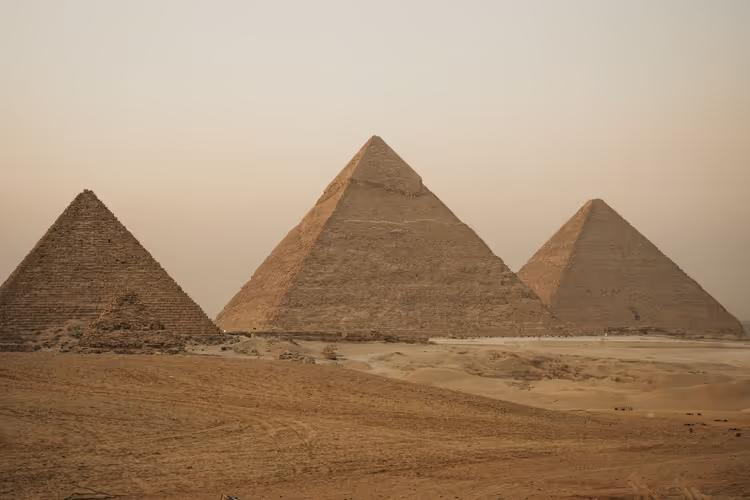
The Pyramid of Khufu has stood on the Giza Plateau for more than four and a half thousand years. Of the Seven Wonders of the World, it is the only one that has come down to us in recognizable form. The other six have disappeared: some burned, some were dismantled for stone, some were destroyed by earthquakes and the sea. But for most of the wonders, the place remains, and you can visit it today.
Below we will go through each wonder in order and tell you exactly what you will see at the site.
Ad: this article contains affiliate links, we earn a commission if you book through them, at no extra cost to you.
Seven Wonders of the World: what has survived
💡 In short:
- One wonder has come down to us fully intact. Four others have ruins and a site open to tourists.
- Only the Temple of Artemis in Selcuk is open freely and free of charge. The Giza Plateau, Olympia, Bodrum, and the Citadel of Qaitbay charge admission.
- Prices and opening hours: 09/2026, verified on the official Egyptian monuments portal.
Wonder of the World | What remains | Where it is today |
|---|---|---|
Pyramid of Khufu | Stands fully intact | Giza Plateau, Egypt |
Hanging Gardens of Babylon | No traces found | Babylon near Hillah, Iraq |
Statue of Zeus at Olympia | Temple foundation | Olympia, Greece |
Temple of Artemis at Ephesus | One column | Selcuk, Turkey |
Mausoleum at Halicarnassus | Ruins and foundation | Bodrum, Turkey |
Colossus of Rhodes | No traces found | Rhodes, Greece |
Lighthouse of Alexandria | Fortress foundation | Alexandria, Egypt |
1. Pyramid of Khufu
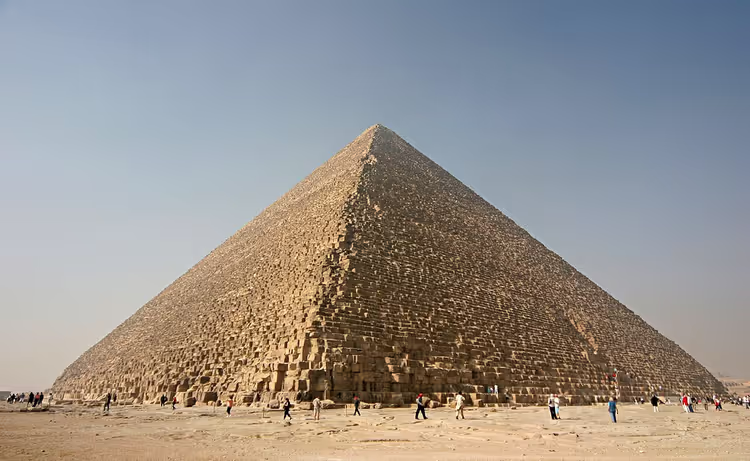
The Pyramid of Khufu was built around 2560 BC, and for nearly 3,800 years it remained the tallest structure on Earth (as of 09/2026, UNESCO). Construction took about 20 years.
Today its height is almost 139 meters, originally it was about 147. The base would cover several football fields, and the heaviest block weighs about 35 tons. How the Egyptians lifted such stones to the top is still debated by researchers.
 © Nina · CC BYPhoto: Nina, CC BY (https://creativecommons.org/licenses/by/2.5), Wikimedia Commons
The Giza Plateau near Cairo includes three large pyramids, several smaller ones, the Sphinx, and the Valley Temple. The best view opens from the panoramic point in the desert: there you will see all three pyramids at once.
- The catch: the plateau ticket does not include entry inside the Pyramid of Khufu, that is paid for separately (as of 09/2026, official price list).
For guided tours to the pyramids, see GetYourGuide.
2. Hanging Gardens of Babylon
The Hanging Gardens are known only from descriptions by ancient authors. There are no ruins or confirmed finds, so some historians doubt the gardens ever existed. The name Semiramis goes back to the Assyrian queen Shammuramat, who ruled in her own right.
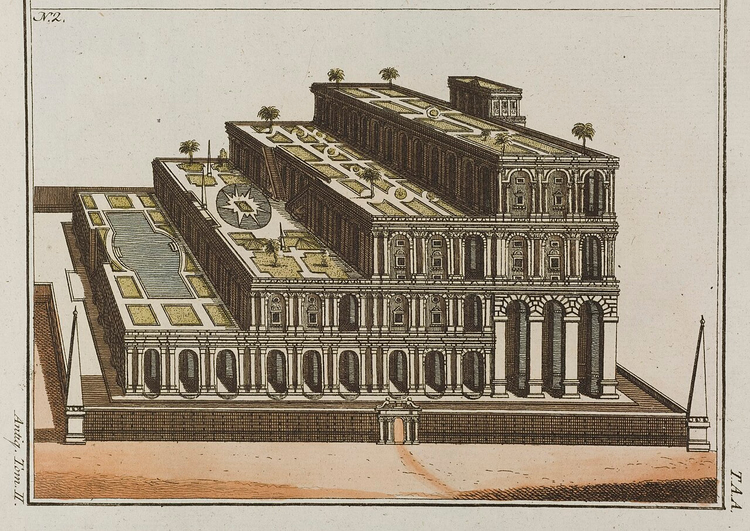
According to descriptions, the gardens looked like a stepped structure of four tiers. Plants stood on platforms raised on columns as tall as a nine-story building. Nothing actually hung: the word "hanging" describes the greenery that cascaded down the walls.
 © Unknown author · CC BYPhoto: Unknown author, CC BY (https://creativecommons.org/licenses/by/4.0), Wikimedia Commons
Water was delivered to the top by hand. A pipe ran inside the columns, and slaves turned a wheel with buckets around the perimeter. Moisture rose to the upper tier and flowed down through channels to the plants on the lower platforms.
Most researchers place the gardens near Babylon, on the Euphrates River (as of 09/2026, UNESCO). Today that site is the city of Hillah in central Iraq. If you go there, you will not find the gardens themselves.
- The catch: there is nothing to see. The gardens have not survived, only written evidence and general indications of the location remain.
3. Statue of Zeus at Olympia
The Statue of Zeus was erected in the religious center of Ancient Greece around 435 BC. The god sat on a throne with a wreath on his head, a scepter in one hand, and a statue of the goddess Nike in the other (as of 09/2026, Olympia page on the ministry website).
 © George E. Koronaios · CC BY-SAPhoto: George E. Koronaios, CC BY-SA (https://creativecommons.org/licenses/by-sa/4.0), Wikimedia Commons
The figure, about 12 meters tall, was assembled from ivory and gold on a wooden frame. It was created by the sculptor Phidias, who also worked on the decoration of the Parthenon (as of 09/2026, Greek Ministry of Culture).
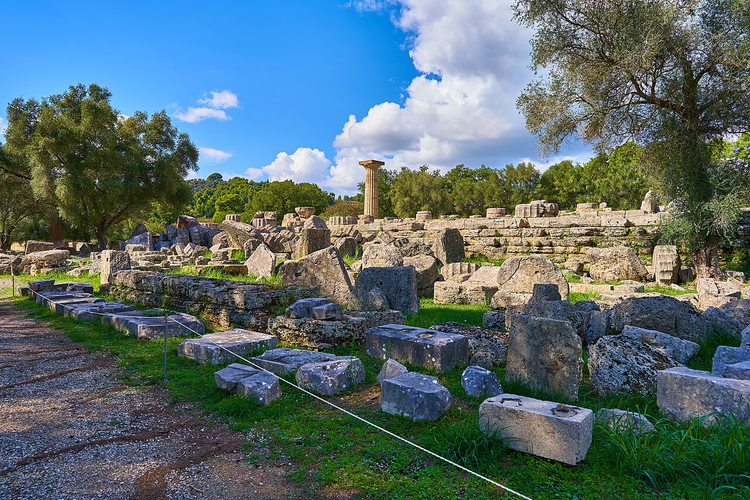
Historians still debate what happened to the wonder. According to the most common version, the statue burned along with the temple in 426 AD. In Olympia you will see the ruins of the Temple of Zeus, and the archaeological museum displays a reconstruction of the statue and finds from Phidias's workshop.
- The catch: the original no longer exists. The combined ticket for 20 € (as of 09/2026, Olympia tickets) gives access to both the museum and the temple site, but the statue itself is not among the exhibits.
4. Temple of Artemis at Ephesus
The Temple of Artemis was built in the 5th century BC in Ephesus, in honor of the goddess of hunting and fertility. Today the site is located 75 km from Izmir, near the Turkish town of Selçuk (as of 09/2026, UNESCO).
By size, the temple was one of the largest in the Greek world: 115 meters long, about 46 meters wide, with 127 columns 18 meters high along the facade (as of 09/2026, World Heritage list). Construction took more than 100 years.
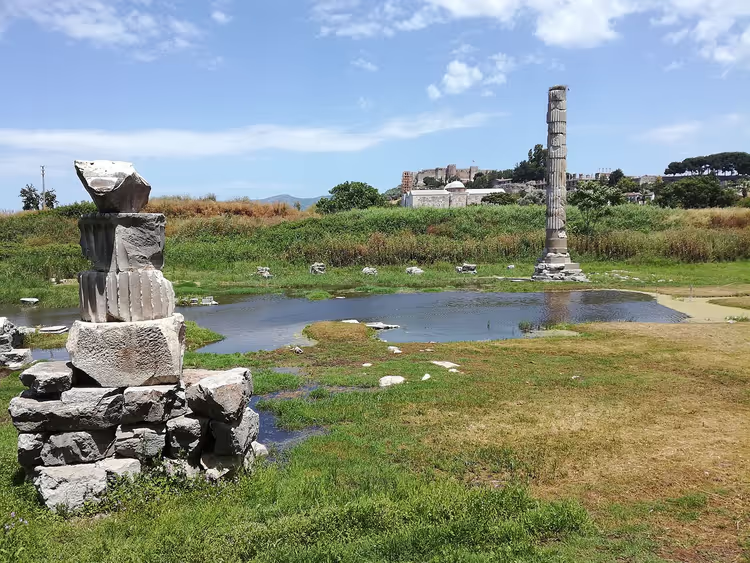 © Arkiyolok · CC BY-SAPhoto: Arkiyolok, CC BY-SA (https://creativecommons.org/licenses/by-sa/4.0), Wikimedia Commons
The temple survived arson, restoration, and looting. All that remains is a single column, reassembled from fragments. There is no entrance fee: the site is not guarded in any way, and there is no ticket booth at the entrance.
If you want to see the temple in its entirety, stop by the Miniaturk miniature park in Istanbul. There you will find a model of the temple among other landmarks of Turkey.
- The catch: all that remains of the temple is one column and the foundation.
5. Mausoleum at Halicarnassus
Bodrum is known as a resort town, but this is exactly where one of the seven wonders of the world once stood. The Mausoleum was built for the ruler Mausolus around 350 BC (as of 09/2026, muze.gov.tr). His name gave rise to the word "mausoleum," which you will encounter in every corner of the world.
The building, about 45 meters tall, consisted of several tiers. The walls were decorated with bas-reliefs depicting battle scenes, and on top stood a quadriga with statues of Mausolus and his wife Artemisia. In the 14th century, the mausoleum was destroyed by an earthquake.
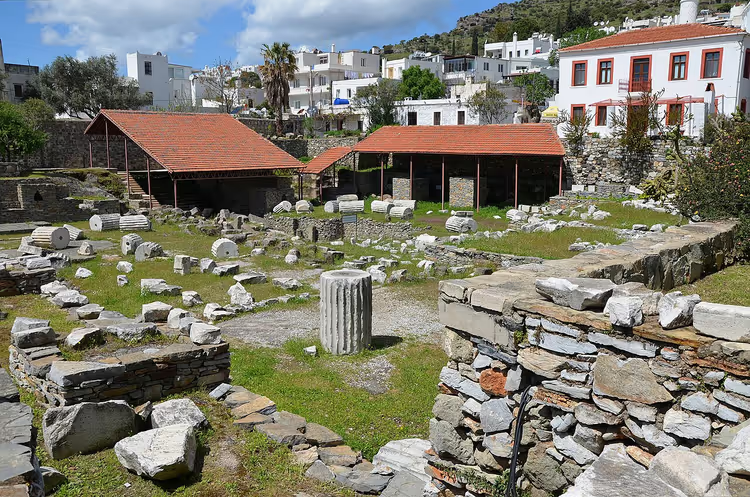 © FollowingHadrian · CC BY-SAPhoto: FollowingHadrian, CC BY-SA (https://creativecommons.org/licenses/by-sa/4.0), Wikimedia Commons
Today, an open-air museum operates at the site of the structure. You buy a ticket at the entrance; current prices and hours are available on the official website of the museum in Bodrum.
- The catch: you'll only be looking at a small area with a foundation and fragments; almost nothing remains of the building itself.
6. Colossus of Rhodes
The name "Colossus" means "huge" in Greek. The statue depicted the sun god Helios, the patron of Rhodes, and stood at the entrance to the harbor. Its height is estimated at 30-33 meters (as of 09/2026, Britannica).
It was built from 294 to 282 BC. The frame required about 8 tons of iron and 13 to 15 tons of copper (as of 09/2026, Britannica article on the Colossus of Rhodes). A few decades later, an earthquake toppled the statue, and the colossus could not be restored.
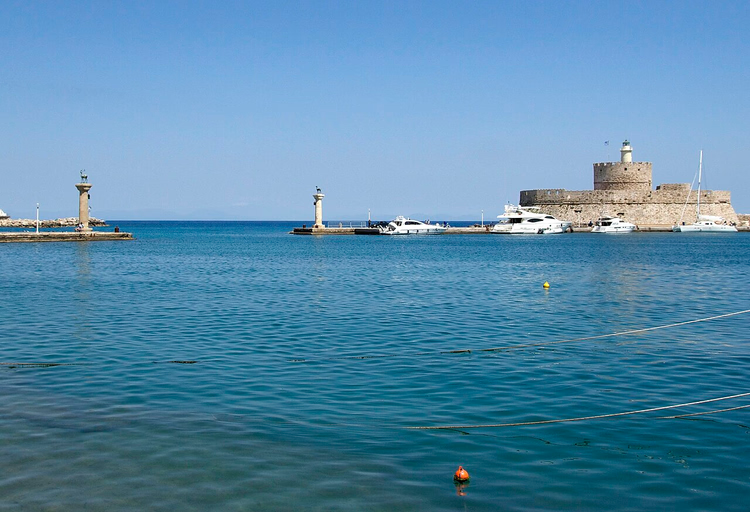
The fragments lay on the ground for several centuries until they were sold to merchants. Not a single fragment survived, so you won't see even a piece of it here. Two columns with deer stand in the harbor of Rhodes: they merely mark the spot where the wonder once stood.
- The catch: there's nothing to see except a symbolic location in the harbor.
7. Lighthouse of Alexandria
The Lighthouse of Alexandria was built in the 3rd century BC so ships could avoid the reefs at night. During the day, columns of smoke guided the way; at night, a fire on the upper tier did. According to descriptions, its height reached up to 100 meters, a record for its time (as of 09/2026, Britannica on the Pharos lighthouse).
The structure was considered advanced: three tiers, a spiral staircase inside, and a ramp for delivering fuel. The lighthouse stood for more than 1,500 years and was destroyed by a series of earthquakes (as of 09/2026, history of the lighthouse on Britannica).
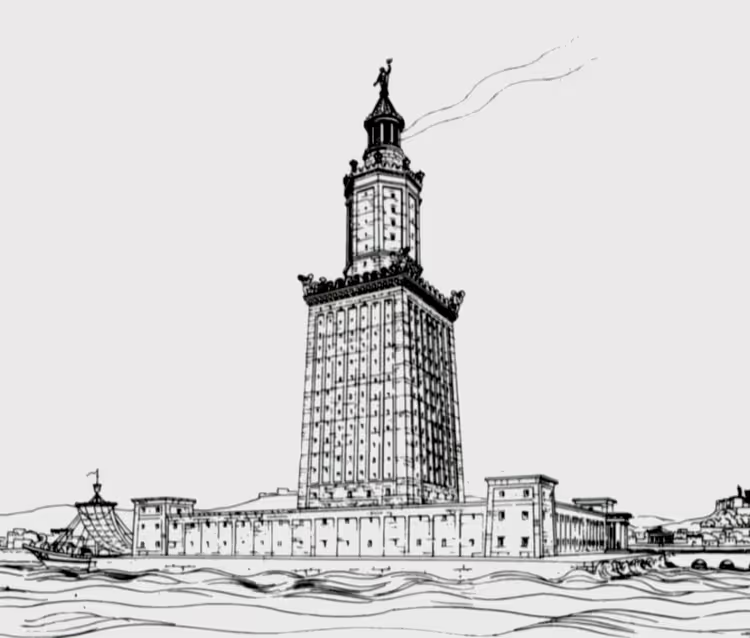
The Citadel of Qaitbay stands on the site of the lighthouse. It was built in 1480 to defend against the Ottoman fleet. Some of the stones for its walls were taken from the lighthouse ruins. You buy a ticket at the entrance; current prices and hours are worth checking before your trip.
To travel to Egypt, you'll need a visa. Before you leave, compare insurance options so medical treatment in a foreign country doesn't become a separate budget line.
- The catch: all that remains of the lighthouse are stones in the fortress walls; there is no separate lighthouse museum.
⁉️🤔 Frequently asked questions
Which sites are on the classic list of the Seven Wonders of the World?
The list included the Great Pyramid of Giza, the Hanging Gardens of Babylon, the Statue of Zeus at Olympia, the Temple of Artemis at Ephesus, the Mausoleum at Halicarnassus, the Colossus of Rhodes, and the Lighthouse of Alexandria. It was compiled in antiquity as a list of the most impressive structures of the then-known world, so modern buildings are not included.
Which of the Seven Wonders has survived to this day?
Only the Great Pyramid of Giza on the Giza Plateau has survived intact. The other six are destroyed: the Statue of Zeus and the Temple of Artemis burned and were looted, the Mausoleum at Halicarnassus and the Lighthouse of Alexandria were destroyed by earthquakes, and the Colossus of Rhodes was dismantled after it fell. Most of the wonders left only ruins or an empty site.
Did the Hanging Gardens of Babylon actually exist?
No reliable traces of the gardens have been found. Ancient authors describe them, but archaeologists have found neither a foundation nor an irrigation system. Some historians believe the gardens stood not in Babylon but in Nineveh and belonged to an Assyrian king. So the question of whether the gardens existed remains open.
Where can you see traces of the wonders today?
Five sites are open to tourists. The Giza Plateau and the Citadel of Qaitbay in Alexandria are open in Egypt, Olympia in Greece, the ruins of the mausoleum in Bodrum, and the lone column of the Temple of Artemis in Selçuk in Turkey. The Hanging Gardens and the Colossus of Rhodes left nothing but written mentions and an approximate location.
How much does it cost to see the wonders today?
Entry to the Giza Plateau for foreigners costs 700 Egyptian pounds, student tickets 350 (as of 09/2026, Giza Plateau price list). A combined ticket to Olympia costs €20 (as of 09/2026, official Olympia page). The Temple of Artemis in Selçuk is free to visit, and tickets in Bodrum and Alexandria are purchased at the entrance.
If you prefer watching to reading, here is a short breakdown of all seven wonders in one video.
In short: what to book
Of the Seven Wonders, only the Great Pyramid of Giza has survived to this day. Four more sites with ruins are open to visitors, three of them ticketed. Plan your trip so each site gets its own day: Giza and Alexandria are far apart, and Olympia deserves a separate stop in Greece.
- If you are going to Egypt: do the Giza Plateau in the morning and the Citadel of Qaitbay in Alexandria.
- If you are going to Turkey: do Ephesus near Selçuk and the mausoleum museum in Bodrum.
- If you are going to Greece: do Olympia with a combined ticket and leave time for the museum.
If you want a guide and a ready-made itinerary, check out Ephesus tours on GetYourGuide.

A small editorial team writing guides for independent travel. We travel ourselves, but we haven’t been everywhere, so we check prices, opening hours and how to get there against official sources.