
















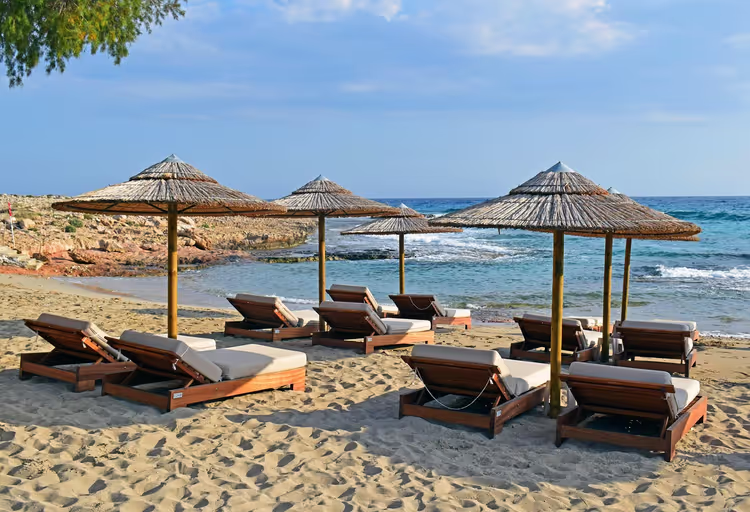
Five Cyprus resorts: which one to choose for beaches, clubs and antiquity
On Cyprus there are five resort areas, and choosing between them decides everything. Some come for the clubs, others for ancient mosaics and quiet.
The range here is wide. In autumn, Limassol hosts the Wine Festival; in 2026 it runs from September 26 to October 4 (as of 09/2026, Limassol tourist office). And Lady's Mile beach stretches for almost 5 km along Akrotiri Bay (as of 09/2026, Lady's Mile beach page).
Ad: this article contains affiliate links, we earn a commission if you book through them, at no extra cost to you.
Where to go in Cyprus: comparing the resorts
💡 In short:
- The five resorts of southern Cyprus divide up the beach, nightlife, and ancient history scene among themselves.
- Limassol is the biggest, Larnaca is cheaper, Paphos is quieter, Ayia Napa is louder, Protaras is calmer.
Resort | Who it suits | Beaches | Main highlight |
|---|---|---|---|
Limassol | young people, families, city lovers | sandy, with gray sand | promenade, castle, Kourion |
Paphos | couples, lovers of antiquity | rocks and pebbles at the water's edge | Tombs of the Kings, UNESCO |
Larnaca | families, divers, budget travelers | sand, gentle entry | Finikoudes, sunken ferry |
Ayia Napa | groups, nightlife | light fine sand | clubs, Nissi Beach |
Protaras | couples, families, foodies | gentle entry, bays | Fig Tree Bay, hill panorama |
Below we'll look at each resort separately: where exactly to swim, what to see, and who each place suits. You can easily build a trip around two bases, so you don't have to tie yourself to one town for all your days.
1. Limassol: the island's largest resort
Limassol sits on the southern coast between ancient Kourion and Amathus. Young people with bars and clubs, and couples who want spa centers, will both find their place here. It's also easy with kids: there's a large water park, a zoo, and an amusement park.
Take a walk along the promenade in the evening. Along it you'll find shops, cafes, fountains, and art installations, and from the pier you can see ships entering the port. The beaches in this part of the island are sandy, in places with gray volcanic sand.
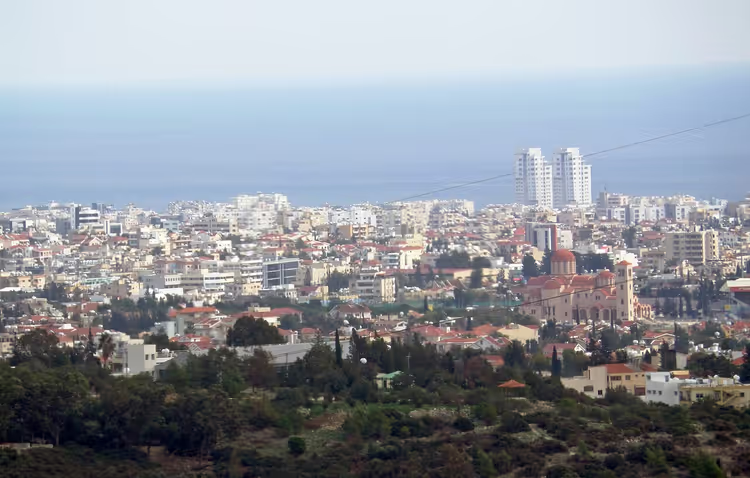 © Xaris333 · CC BY-SAPhoto: Xaris333, CC BY-SA (https://creativecommons.org/licenses/by-sa/3.0), Wikimedia Commons
Limassol's longest beach, Lady's Mile, occupies a spit stretching into the sea. There are both organized sections with sunbeds and lifeguards, and quiet wild stretches. For green shade, head to Dasoudi: the beach is surrounded by trees, and nearby grows a eucalyptus grove with a strong aroma.
History lovers should walk to the medieval castle: it houses a historical museum. It was in the castle chapel at the end of the 12th century that King Richard the Lionheart of England married Berengaria of Navarre. Nearby you'll find the city library and the Monument of Peace and Tolerance.
Every year before Lent, the city celebrates carnival for ten days. More than forty wineries operate in the Limassol area, and the main wine festival takes place in the municipal park.
Drive out of town to the Kourion archaeological park: it has preserved mosaics, an ancient theater, and the ruins of an early Christian basilica. At the site of Amathus, excavations are still ongoing; archaeologists have found the acropolis, the temple of Aphrodite, the market, and the port.
The first line is occupied by the five-star Amathus Beach Hotel Limassol and Four Seasons Hotel. Accommodation further from the water is cheaper, for example Old Port Hotel or Metropole Hotel.
- Who it's for: young people, families, and those who want to combine the beach with city life.
- Beaches: sandy, with a gentle entry; infrastructure is concentrated at Lady's Mile.
- The catch: first-line accommodation is expensive, budget hotels are further from the sea.
- Accommodation: Hotels in Limassol on Trip.com
2. Paphos: antiquity and the quiet south
Paphos is considered the birthplace of Aphrodite, and in ancient times it was the island's capital. Today it is the most expensive and respectable resort in Cyprus, chosen for its quiet: there are no night discos here.
With kids it's harder. There's only a park and an aquarium, and you'll hardly find playgrounds or entertainment programs for little ones. You come here for calm and history, not for animation.
 © Jules Verne Times Two · CC BY-SAPhoto: Jules Verne Times Two, CC BY-SA (https://creativecommons.org/licenses/by-sa/4.0), Wikimedia Commons
Old Paphos has been on the UNESCO World Heritage list since 1980 (as of 09/2026, Tombs of the Kings page). It has preserved monuments, some of which are more than two thousand years old. Paphos's main site: the rock-cut necropolis of the Tombs of the Kings.
Nearby you'll see the Byzantine churches of Panagia Theoskepasti (10th century) and Agia Kyriaki (13th century), linked to the tradition of the Apostle Paul. In the western part of the harbor stands Paphos Castle, founded by the Byzantines and later rebuilt by the Turks and Venetians.
The surroundings are also connected with Aphrodite. These include Petra tou Romiou beach (Aphrodite's Rock), where, according to myth, the goddess emerged from the sea foam, the temple of Aphrodite at Kouklia, the Baths of Aphrodite, and the Fountain of Love.
The beaches are picturesque but not the most convenient: entry into the sea is often rocky, with cliffs around. Sandy stretches with pebbles at the water's edge can be found at Coral Bay, Latchi, Geroskipou, and Corallia. Bring water shoes.
Hotels here are mostly five-star, including Annabelle and Elysium. Cheaper options also exist, for example Veronica Hotel and Casa Mespilea.
- Who it's for: couples and travelers interested in antiquity.
- Not for: partygoers and families with small children.
- The catch: there is almost no entertainment for young children, and there are no nightclubs.
- Accommodation: Hotels in Paphos on Trip.com
3. Larnaca: a budget option near the airport
Larnaca is usually cheaper than its neighbors, while the infrastructure and service remain on the same level. The airport is almost within the city limits, so you can get from the terminal to the seafront faster than in many capitals. It is also the most convenient base for trips to other parts of the island.
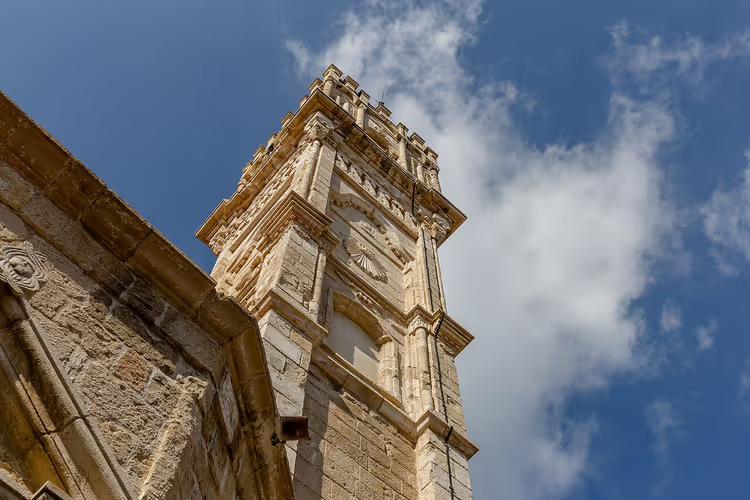 © Michal Klajban · CC BY-SAPhoto: Michal Klajban, CC BY-SA (https://creativecommons.org/licenses/by-sa/4.0), Wikimedia Commons
The entertainment is standard: shopping malls, bars, clubs, and souvenir shops. The main thing in Larnaca is the beaches. Mostly sandy, with a gentle slope into the water, they are suitable for swimming with small children. The most famous beach is Finikoudes with its palm-lined promenade, trendy cafes and restaurants line Mackenzie, and you will find peace and quiet at Faros: half a kilometer of fine sand and greenery on the Kiti peninsula.
Divers come here for the Zenobia ferry: the ship sank on June 7, 1980, during its maiden voyage and lies at a depth of about 42 meters (as of 09/2026, Larnaca tourist office). The hull is over 170 meters long, and you can go inside with a guide and equipment from local dive centers.
The city also has things to see. The Church of Saint Lazarus (9th century) stands in the center, with the archaeological museum and the 14th-century Larnaca Castle nearby. Accommodation varies: from the Radisson Blu Hotel on the first line to FlipFlop City Center apartments and budget rooms at Carisa Holiday.
- Who it's for: families, older couples, divers, and anyone on a budget.
- Beaches: sandy and safe, with a gentle slope into the water.
- Accommodation: Hotels in Larnaca on Trip.com
4. Ayia Napa: clubs and the best beaches
Ayia Napa is called the local Ibiza. During the day it is quiet and calm here, but at night the music in the Club Quarter thunders until dawn, and bars and discos stay open until morning.
If you come with children, there is entertainment too: a water park, rides, a dinosaur park, and a dolphinarium. However, there are few historical sights within the city limits; the only one really worth attention is the old Ayia Napa Monastery in the very center.
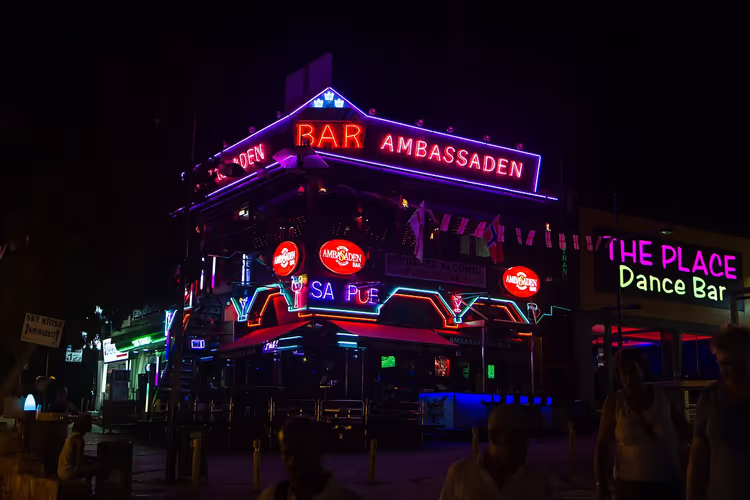 © Максим Улитин · CC BYPhoto: Максим Улитин, CC BY (https://creativecommons.org/licenses/by/3.0), Wikimedia Commons
The coastline here has soft light sand and a gentle entry into the water. You can easily find both a spot for a sunbed and an area for surfing, wakeboarding, or yachting. The most famous beach is Nissi Beach. For beautiful views, head to Konnos Bay: the bay is surrounded by rocks and lush greenery. For families with children, Makronissos is a good choice, with clear water and golden sand.
The first line is occupied by Grecian Bay and Grecian Sands Hotel, while Mon Repos Hotel and Christabelle Hotel Apartments sit further from the shore.
- Who it's for: young people, groups of friends, beach lovers.
- Not for: those looking for peace and history.
- The catch: there are few historical monuments within the city limits.
- Accommodation: Hotels in Ayia Napa on Trip.com
5. Protaras: peace and restaurants
Protaras lies ten kilometers from Ayia Napa, but the atmosphere here is different. There are no loud clubs or late-night discos, but it's easy to find scenic views and good restaurants. The local cuisine is considered one of the resort's strong points, and kids will enjoy the ocean aquarium and water park.
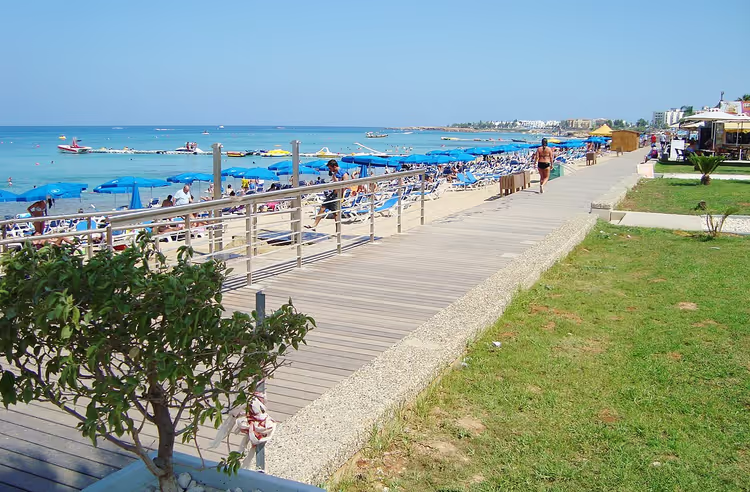 © AyianapaProtaras · CC BY-SAPhoto: AyianapaProtaras, CC BY-SA (https://creativecommons.org/licenses/by-sa/3.0), Wikimedia Commons
The town is small, but there's plenty to see. The stone church of Agios Elias stands on a hilltop: to climb one hundred meters, you'll need to tackle three hundred steps. The panorama opens up over the entire southeast of the island. Seven kilometers from here lies the island's extreme southeastern point, Cape Greco.
The most famous beach is in Fig Tree Bay. It got its name from a lone fig tree that has been growing here since the 17th century (as of 09/2026, Fig Tree Bay beach page). A gentle slope, clear water, and fine golden sand make it perfect for families with children. Adults come here for diving. Besides Fig Tree Bay, people swim at Sunrise, and for a wilder shoreline they head to Sirena Bay, an isolated cove with azure water and rocks.
On the first line you'll find Atlantica Sea Breeze, with Grecian Park and Atlantica Aqua Blue nearby. Further from the shore the options expand: villas and apartments like Flisvos Beach Apartments cost noticeably less.
- Who it's for: couples, families, and those who pick a hotel based on its food.
- Beaches: gentle entry, coves, and fine light sand.
- Where to stay: Hotels in Protaras on Trip.com
When to go and how many days to plan
The swimming season on the south of the island runs from May to October. July and August are hot, the water is at its warmest, but prices are higher too. The mildest months for sightseeing are May, June, and September.
For a short trip, one base and one ancient site is enough. With a week, you can easily add a second resort, and with ten days you'll have room for spots near Limassol, Paphos, and Larnaca. In the heat, don't plan more than two outings a day.
⁉️🤔 Frequently asked questions
When is the best time to visit Cyprus?
For sightseeing, the second half of September is the most comfortable. The island stays alive in winter too: museums and some hotels in Limassol and Paphos remain open.
Which resort should a family with kids choose?
Look for beaches with a gentle entry. Larnaca and Protaras work best: sand, calm water, and a water park and aquarium nearby. Paphos has few activities for little ones, and Ayia Napa is noisy at night. In Limassol you get both a beach and city infrastructure, but accommodation by the sea costs more.
Where are the island's best beaches?
Fig Tree Bay in Protaras holds a Blue Flag (as of 09/2026, Visit Cyprus tourism portal). In Ayia Napa, people swim at Nissi Beach and Konnos Bay; near Larnaca there are Finikoudes and Mackenzie beaches. For snorkeling, head to Coral Bay near Paphos; for diving, go to Larnaca and the Zenobia ferry wreck.
How to get from Larnaca airport?
The terminal sits almost within the city limits, so a taxi or bus gets you to the seafront in minutes. The drive to Limassol and Paphos is longer, so a transfer is more convenient there. Buses between cities run on a schedule, but there are fewer departures in the evening. Rent a car at the terminal if you plan to explore the island.
Do you need a rental car in Cyprus?
For the five southern resorts, a car isn't essential: buses run between Larnaca, Limassol, and Paphos, and tours pick up groups right from hotels. A car comes in handy if you want to drive yourself to Kourion, Cape Greco, Aphrodite's Rock, and remote beaches. Traffic drives on the left, so take it easy for the first few kilometers.
In short: what's worth booking
Cyprus is easy to build around two bases. Limassol or Larnaca give you beach and city, while Paphos and Protaras add ancient sites and quiet.
- If you're with a group and have nightlife plans: choose Ayia Napa.
- If you're a family with little kids: pick Protaras or Larnaca.
- If you're into ancient history: stay in Paphos.
- If you're on a short trip: base yourself in Larnaca near the airport.
It's convenient to compare accommodation in advance: Hotels in Cyprus on Trip.com.

A small editorial team writing guides for independent travel. We travel ourselves, but we haven’t been everywhere, so we check prices, opening hours and how to get there against official sources.