
















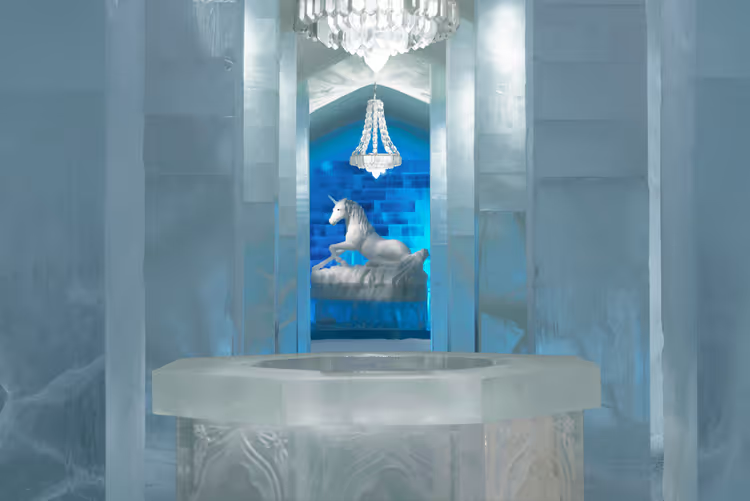
 © Lars Thulin · CC BY-SAPhoto: Lars Thulin, CC BY-SA (https://creativecommons.org/licenses/by-sa/4.0), Wikimedia Commons
A night in an Icehotel ice room: how it works and what to know
A night on an ice bed is something you will remember for a long time. Icehotel in the village of Jukkasjärvi has been operating since 1989 and is rebuilt every winter from ice from the Torne River (official website).
We have gathered everything you need to know before booking: how a night in an ice room works, what you get at the front desk, what to wear, and when a warm room makes more sense than an ice room. The guest experience here is almost always the same: total delight at the ice architecture and very little sleep.
Even if you do not plan to sleep on ice, come with a day ticket. Below are the room types, actual temperatures, the rules of the shared changing room, and the honest catches of an Arctic night.
Ad: this article contains affiliate links, we earn a commission if you book through them, at no extra cost to you.
Where Icehotel is located and how to get there from Kiruna
💡 In short:
- Icehotel is located in the village of Jukkasjärvi, about 200 km north of the Arctic Circle (official hotel website).
- The drive from Kiruna Airport (KRN) to the hotel takes 15-20 minutes; transfers are booked in advance (transfer page).
- In winter people come here for the northern lights, dog sledding, and reindeer, not only for the ice rooms.
- Prices and opening hours: as of 09/2026, verified on the tickets page.
The village of Jukkasjärvi sits on the Torne River, about 20 minutes from Kiruna. In winter there is deep snow, a short day, and very long nights, so the chances of seeing the northern lights are high.
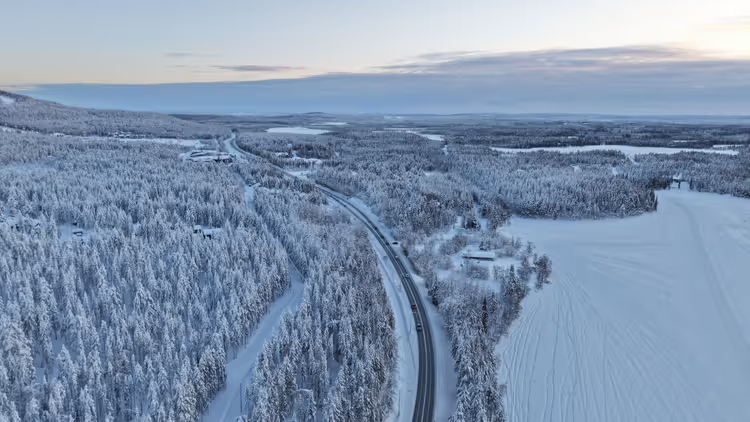
The drive from Kiruna Airport takes 15-20 minutes, and the transfer leaves directly from the arrivals terminal (transfer booking rules). You need to book a spot in advance, no later than 3:00 PM the day before, and provide your flight number, otherwise it is not guaranteed. The coldest months here are from December to March.
You can also get there by train to Kiruna, and from the station taxis and buses run to the hotel. The distance is short, so Icehotel is easy to combine in one itinerary with Kiruna and Abisko.
In summer the village looks different: the snow melts, the river opens up, and the cold section operates only as part of the Icehotel 365 complex. For a true Arctic winter, come between December and April.
What Icehotel is
Icehotel combines a hotel and an ice sculpture museum. According to the hotel, the seasonal section with 53 ice rooms is open in winter, while the Icehotel 365 complex with 18 rooms remains available in summer (hotel page). Both sections look like a gallery, except you're allowed to sleep in them.
The seasonal Icehotel is rebuilt from scratch every winter, so no two seasons are ever the same. It's connected to a warm changing room, so you can get to your room without going outside. There's also an ice chapel for weddings here.
Icehotel 365 is kept frozen year-round in a building with solar-powered cooling. That means an ice room is available even in July. The Icebar is in the same building, but you'll have to cross an inner courtyard to get there from the changing room.
The cost of a night in an ice room depends on the category and season. Check current prices for your dates on Trip.com, and below we've broken down the three room types.
Ice room types
Ice rooms are divided into three categories, and all of them stay at around -5 °C all night (room information). The difference isn't in temperature but in privacy and amenities.
Room type | What you get | Distinguishing feature |
|---|---|---|
Standard ice room | ice bed, mattress, reindeer hides, shared locker | most affordable, full experience |
Art suite | room as an art object, private changing cubicle | new design every season |
Deluxe art suite | warm bathroom with sauna in the room | maximum comfort, 365 building |
The standard ice room is the simplest option: an ice bed frame, mattress, reindeer hides, and a shared locker in the changing room. It suits those who want the full experience without extra spending.
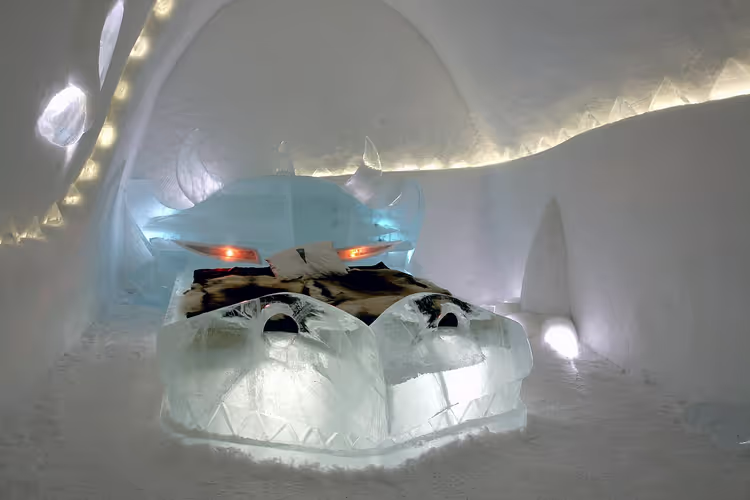 © Laplandish · CC BY-SAPhoto: Laplandish, CC BY-SA (http://creativecommons.org/licenses/by-sa/3.0/), Wikimedia Commons
An art suite is designed by a new artist every season, so it always has its own theme and its own carvings. Guests get a private changing cubicle with space for a suitcase.
The deluxe art suite is the easiest to handle: the room has an attached warm bathroom with a sauna, and your luggage stays with you. These suites are located in the 365 building, so you can warm up without stepping out into the cold.
The difference between categories really shows at night. In a standard room, you walk to a shared bathroom and changing room; in an art suite, you get a private cubicle; and in a deluxe, you don't leave your room at all to take a shower. A standard room is enough for your first ice night; for the second, guests more often choose a suite with a bathroom.
During the day, your room is shown to daytime visitors, so keep your belongings in a bag or in your cubicle. Check prices in advance: the most interesting suites get booked months before winter, and open dates fill up fast.
Warm rooms and chalets
If you don't want to sleep on ice, the hotel has 44 warm rooms and 28 chalets (accommodation details). They have heated floors, regular beds, and all the amenities, and you can see the ice section during the day.
Warm rooms are in separate buildings near the reception, and chalets are designed for groups and families. The entire ice gallery is open during the day, so a warm room doesn't take away the main experience.
Common areas, Icebar, and restaurant
The main warm base for guests in cold rooms is the changing room with lockers, showers, and a sauna. Nearby there's a separate building with a bar and lounge, a comfortable place to warm up after the cold (common areas).
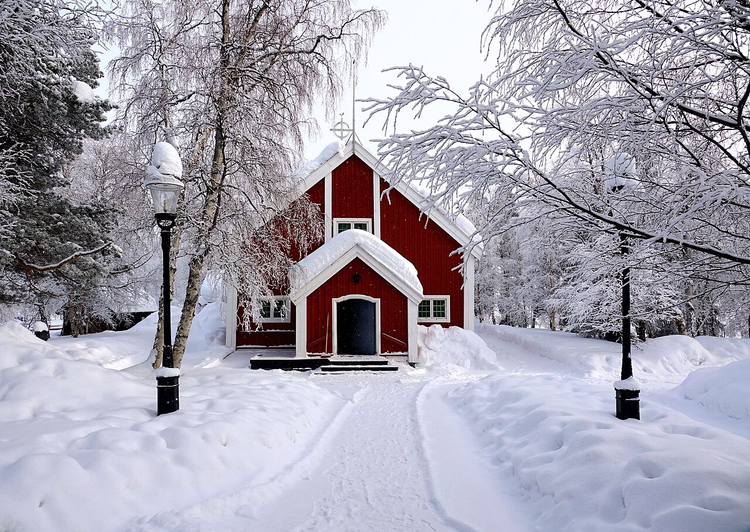 © Bjørn Christian Tørrissen · CC BY-SAPhoto: Bjørn Christian Tørrissen, CC BY-SA (https://creativecommons.org/licenses/by-sa/4.0), Wikimedia Commons
A separate attraction: the Icebar in the 365 building, where the counter, chandeliers, and champagne glasses are all made of ice. Drinks here are expensive, and an ice glass quickly chills your hands, but you don't get to try a cocktail in an ice bar every year.
The hotel's story began in 1989, when the first ice hall was built on the Torne River. Since then, the seasonal section has been redesigned every winter, with artists from different countries working on the suites (Icehotel history). That's why the hotel looks different every year, and no two seasons here are ever alike.
A separate part of the program: the ice chapel for weddings. The walls, arches, and altar are carved from ice, and ceremonies are usually scheduled for the evening. You can go inside without staying overnight, with a day ticket.
How Icehotel is built every winter
Icehotel has been almost entirely rebuilt from scratch since 1989. In early spring, ice blocks weighing about two tons are cut from the Torne River and stored in a freezer warehouse until the next winter (how the hotel works).
The seasonal section is assembled from this ice, which melts back into the river every spring. This cycle makes every season unique: the design and carvings are always new.
Almost everything here is made of ice and snow, but not everything. Doors and curtains, lighting, wiring, mattresses, bed frames, and smoke detectors remain ordinary components. Smoke detectors in an ice room are mandatory under Swedish regulations.
What a warm room looks like
Warm rooms are in separate large buildings a few minutes from the reception. For larger groups, there are chalets with several bedrooms and a small kitchen.
The furnishings are simple but well thought out: heated floors, comfortable beds, plenty of hot water, and a sense of home after an ice night. That's how guests recover before their next outing.
If you're traveling with children or aren't ready for the cold, book a warm room. You'll still see the ice rooms during the day, and you'll sleep in warmth.
Warm rooms are booked the same way as ice rooms: the earlier, the more choice you have. For a family with children, ask for a room in the building closest to the reception so you don't have to walk far with luggage.
The ice room: how it all works
An ice room looks like a sculpture, and you have to live in it by the rules. Inside there is an ice bed frame, a wooden platform in the center, a mattress on top, reindeer hides, and two pillows.
There are light switches by the door and by the bed. This is an important detail: climbing out of a sleeping bag at night to find the light in total darkness would be miserable. Smoke detectors are installed in every room in line with Swedish regulations.
The art suite gets new decor from a guest artist every season. One season it was styled as a spa: a bathrobe, towel, bench, and even a jacuzzi tub were carved out of ice. Admiring this carving is pleasant, but sleeping next to it is colder than it looks in photos.
Suites are available in both cold sections of the hotel, and each has its own design. So before booking, check the season catalog: the room theme helps you figure out which suite suits you best.
Every room here looks like an exhibit: carving runs along the walls and ceiling, and the lighting changes toward evening. The most popular photo angle is the corridor with rows of suites, where you can see several sculptures at once.
You can hear almost nothing in an ice room: ice muffles sound more than concrete. If you are used to falling asleep to music, take care of that before your phone goes into the bag.
Shared changing room, showers, and sauna
The changing room works as a warm base camp during your stay in a cold room. The men's and women's areas include cubicles with hooks, sinks, toilets, separate showers behind curtains, and a sauna (changing room and sauna).
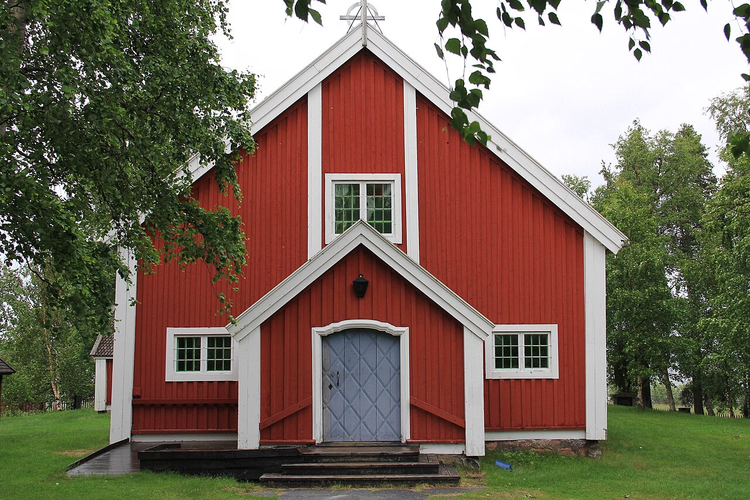 © Htm · CC BY-SAPhoto: Htm, CC BY-SA (https://creativecommons.org/licenses/by-sa/3.0), Wikimedia Commons
Underfloor heating keeps the whole space at a comfortable temperature, and after the cold this is the main pleasure. You take only the essentials into the cold room: sleeping bag, liner, and boots.
Guests in standard ice rooms get a locker. Art suites come with private cubicles with a lock and a bench, where it is convenient to lay out a suitcase. Deluxe suites have their own warm bathroom with a sauna right by the room, so they do not need the changing room.
A staff member is on duty at the changing room desk around the clock. This is where you get your sleeping bag and liner, and if needed you can rent arctic boots and a winter overall. There is a small lounge nearby, but it has few seats.
The supply of arctic boots and overalls is handed out here too, so you do not need to bring your own heavy clothing. If you forgot a hat or gloves, ask at the desk: a basic set is usually available.
There are not many sofas in the lounge, and in the evening it is hard to find a free spot. Many guests sit right in the changing room until it is time to go to the cold room.
A night in an ice room: six steps
Below we break down step by step how the night goes. These rules are the same for all cold rooms, and they make life noticeably easier.
1. Waiting for check-in
If you are moving from a warm room to a cold one, be ready for a 6 to 7 hour window without your own room. The hotel advises filling this time with activities, and that makes sense: have a walk or a museum ready.
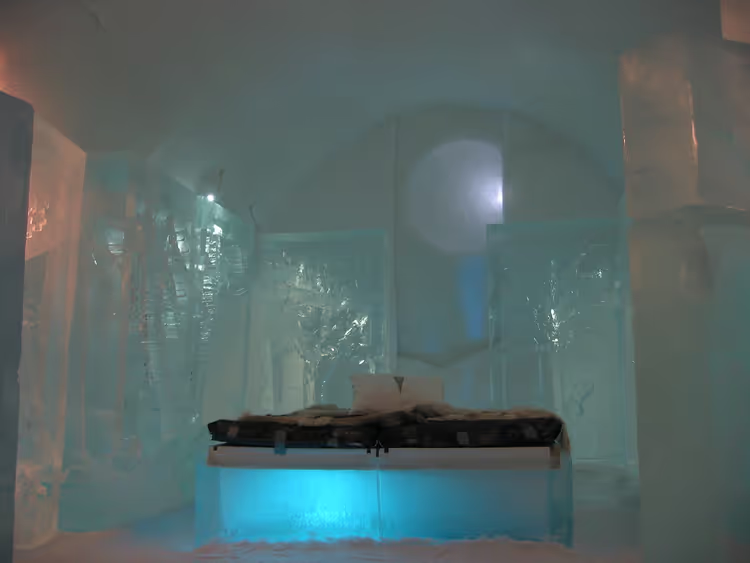 © Paul Mannix · CC BYPhoto: Paul Mannix, CC BY (https://creativecommons.org/licenses/by/2.0/), Flickr
Snowshoeing and a visit to the Sami museum fit well into the schedule, and after dinner there are still several hours left. It is in the evening that the lounge runs out of seats and space for belongings.
Plan dinner in advance so you are not looking for food in the dark. Read about the restaurant and its menu below, in the food section.
2. Getting ready for bed
Check-in to a cold room starts in the warm changing room. This is where you get the briefing: how to dress, how to use the sleeping bag, and how to survive the night. You also get your locker or private cubicle here.
At the desk you receive two items (stay rules):
- Thermal sleeping bag: expedition-grade, built for severe cold; single and double models are available.
- Cotton liner: a light layer inside the bag so you do not touch it directly and to add warmth.
The clothing advice sounds counterintuitive: wear only one layer of thermal underwear or light pajamas. Extra clothing traps air inside the bag and makes it harder to retain heat. Do not cover your face with the bag: your breath adds moisture, and by morning you will only be colder. Put the pillow under the bag, not inside it.
Put on warm socks in advance, while still in the changing room: changing footwear at -5 °C is awkward. Wet items do not dry in a cold room, so leave damp mittens or a scarf in the warm area.
If you need something at night, keep it inside the bag, close to your body. A charged phone is also better kept in the bag, otherwise the battery will be dead by morning.
You sleep on top of the reindeer hides. Reindeer fur is hollow inside, so the hide works as a layer between the bag and the ice mattress.
Take a minimum into the cold room: boots, sleeping bag, hat, and gloves. Jackets, electronics, and everything else will freeze overnight if not kept in the bag. And do not enter the room before you are ready to sleep: there are no chairs or cozy corners inside, just an ice bed.
3. Evening logistics
At 6:00 PM day visitors are asked to leave, and the ice rooms belong to the guests (hotel website). From the seasonal section you exit directly from the changing room, but from Icehotel 365 you have to cross the inner courtyard in the cold. This is the most unpleasant stretch of the night, so bring everything you need in one trip.
4. The sleeping bag
The bag is built like a cocoon: the zipper closes tightly, with no extra air inside. This keeps body heat in, but for someone with claustrophobia it is a serious test.
If a narrow bag scares you, ask for a double. Staff will warn you that a double is colder, and that is true. It is better to test your reaction in advance: zip yourself into the bag while still in the changing room and decide which option works for you.
5. How sleep goes
Ice absorbs sound, so the room is completely silent. After city noise this feels strange, and combined with the cold and novelty it makes it hard to fall asleep.
Your nose gets coldest of all: you cannot cover your face with the bag because of moisture, so you just have to endure it. You rarely manage more than two or three hours of sleep a night, and the next day is best planned with room for rest.
If silence keeps you awake, download calm music in advance and keep your phone in the bag so the battery does not freeze. Many people find an extra layer on the feet and steady breathing helpful.
6. Morning
Wake-up here is early, around six in the morning. Boots may freeze slightly to the floor overnight, so do not leave them far from the bed.
The 365 building has warm showers, and that is a lifesaver: in the morning you do not have to run across the courtyard to the changing room. The same area has lockers where you can put a spare layer of clothing in advance.
In the morning, head to the warm area first: a hot shower and sauna quickly bring back your ability to warm up. Breakfast starts at 6:30, so after a short sleep you can eat before your walk.
Hands and face take the longest to warm up, so do not rush outside. If snowshoeing is planned, take spare socks.
Tips for surviving a night on ice
If you have decided to go for a cold room, here is what you should know in advance.
- Clothing: one layer of thermal underwear is enough if you can tolerate the cocoon bag. An extra layer traps air and makes you colder.
- Spare layer: in the 365 building, put a second sweater in a locker in the warm bathroom so you do not have to cross the courtyard.
- Minimum belongings: take the bag, liner, boots, hat, and gloves. Everything else will freeze.
- Phone: the seasonal section has no outlets; in the 365 building there is an outlet by the door, but the charge drains quickly.
- Bag: if you are afraid of enclosed spaces, zip yourself into the bag in advance and ask for a double.
- Sleep: plan a quiet hour the next day; getting a full night's sleep here is hard.
It is easy to get lost among these tips, so keep the main rule in mind: you are not sleeping on ice, you are waiting out the night. Treat the experience as a short adventure, not as a regular hotel.
The second rule is about timing: do not enter the cold room before you are ready to sleep. There are no chairs or cozy corners inside, just an ice bed and hides.
The third rule: keep your things dry. Moisture in the bag or in your shoes turns into cold by morning, so dry everything in the changing room. Leave your boots by the bed so you do not have to look for them in the dark in the morning.
What to bring to Icehotel
For one cold night, thermal underwear and socks that you wear instead of pajamas are enough. The hotel provides the rest: a sleeping bag, liner, boots, and a snowsuit on loan.
The rest of your gear depends on the season and your plans. For walks, bring a hat, gloves, warm socks, and two layers of thermal underwear, and leave anything extra in the locker room.
If you are traveling with children, pack a separate dry set of clothes for the morning. After a cold night, changing into warm clothes matters more than looking neat.
Remember footwear separately: arctic boots are provided on loan, so you can leave your own for the flight. Bring waterproof gloves as a spare pair and a hat that covers your ears.
Merino wool thermal underwear is best: it wicks moisture and stays fresh longer. A synthetic layer also works, but leave cotton at home, because you will get cold quickly in it. For your camera, spare batteries are useful, and keep a power bank in a warm pocket.
Tickets, opening hours, and a daytime visit
Icehotel is open year-round, but schedules and prices change by season (tickets page). A daytime ticket for an adult costs 325 Swedish kronor, for a student or senior 225 kronor, for a child aged 4-12 39 kronor (as of 09/2026, tickets and prices).
What | Cost | Note |
|---|---|---|
Adult daytime ticket | 325 kronor | prices as of 09/2026, tickets and prices |
Student or senior | 225 kronor | concession ticket |
Child aged 4-12 | 39 kronor | children under 3 free |
Group of 10 or more | 275 kronor per person | group rate |
Tickets are bought on site, no advance purchase needed. Payment is by card only; the hotel does not accept cash. Guests staying overnight get admission and the ice exhibition for free.
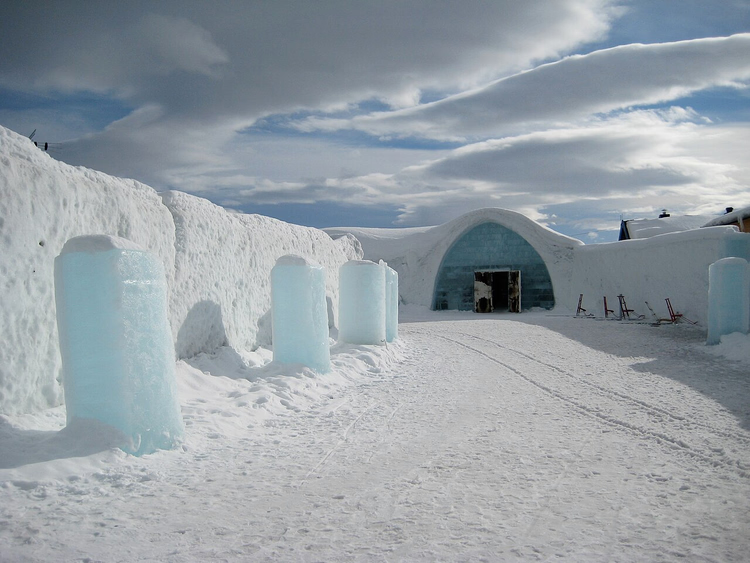 © Markus Bernet · CC BY-SAPhoto: Markus Bernet, CC BY-SA (https://creativecommons.org/licenses/by-sa/2.5), Wikimedia Commons
During the day, the ice exhibition is open, usually from 11:00 to 18:00 (as of 09/2026, exhibition schedule). Icebar operates during the same hours, with last orders at 17:30. From 18:00, daytime visitors are asked to leave, and overnight guests take over the ice rooms.
Check daytime hours and prices before your trip: verified on 15.09.2026 on the official website, but the seasonal schedule in winter differs from summer. If you are only coming to look around, two to three hours is enough.
Tours and activities around Kiruna are best chosen in advance, especially in winter.
Tours and tickets
Guided tours, skip-the-line tickets and activities — most offers can be cancelled free of charge.
See offers on GetYourGuideThe widget loads once you give your consent.
Pros and cons of a night on ice
This experience has strong sides and weak ones. Below is an honest breakdown so you can decide without illusions.
Pros
- Unforgettable setting: sleeping inside an ice art object is something you cannot do anywhere else. The ice corridors and lighting impress even without an overnight stay, and the view of the river adds scale.
- Unique experience: a night in the world's first ice hotel has long been a bucket-list item and a great story for friends.
- New design every season: suites are created by different artists, so the hotel looks fresh every year and you will not see last year's interior.
- Good food: the restaurant cooks with Arctic ingredients, and breakfast is served as a buffet from early morning.
- Activities nearby: snowshoeing, dog and reindeer sledding, the Sami museum, and northern lights hunting.
The catch
- It is genuinely cold: the room stays around -5 °C all night, and without the right gear you will be freezing by morning.
- Poor sleep: between the cold and the novelty, getting a good night's sleep is almost impossible, and an early wake-up makes the morning harder.
- High price: ice rooms cost more than warm ones, and the budget is better calculated in advance, including transfer and dinner.
- Logistics: between the 365 building and the warm changing room you have to walk through a cold courtyard, sometimes twice in an evening.
- Not for everyone: with claustrophobia or sensitivity to cold, the night becomes an ordeal rather than a rest.
Things to do nearby: activities
Icehotel serves as a good base for Arctic adventures and getting to know Sami culture. Two activities usually stand out: snowshoeing and the Sami museum.
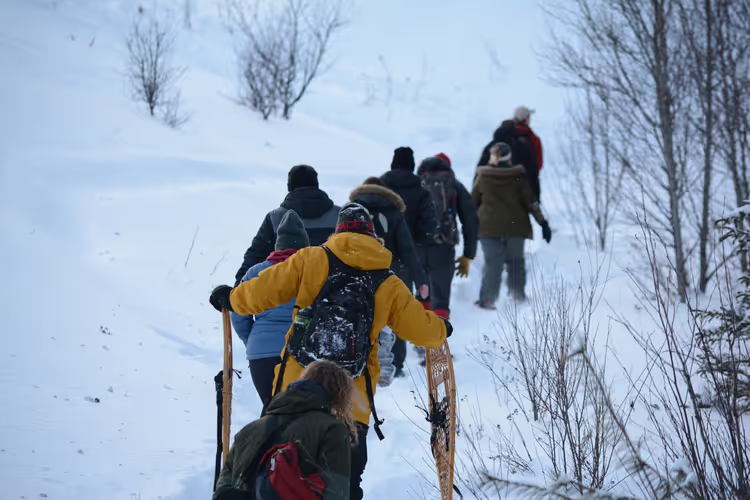
A snowshoe walk goes through a snow-covered pine forest. The guide builds a fire right on the snow and heats lingonberry juice, so it is better not to take your gloves off for long.
The Nutti Sámi Siida Sami museum is open-air and tells about the life of the indigenous people (official museum website). We recommend taking a guided tour: you will understand more, and you will also get to feed the reindeer.
In addition, snowmobiles, reindeer and dog sledding, ice sculpting, cross-country skiing, and northern lights hunting are available. You can even get to the airport by dog sled, but such a transfer must be booked in advance (Kiruna tours on GetYourGuide).
Northern lights here are chased with a guide on excursions, because lighting in the village itself gets in the way. Snowmobiles and reindeer sledding are booked in advance, while ice workshops run every day and suit beginners.
If you only have two days, split activities like this: a day for a forest walk, an evening for northern lights hunting. Leave the Sami museum for the morning, when it is still light.
A dog sled from the airport works as a transfer: you are met after landing and taken straight to the hotel. This arrival is booked separately and in advance, and in freezing weather the trip takes longer than by car.
Snowmobiles suit those who want to get farther from the village: routes go across frozen rivers and forests, and no license is needed when riding with a guide. Reindeer sledding is shorter and calmer, and is more often chosen with children.
Northern lights hunting depends on the weather, so allow several nights. On a clear, frosty night the chances are higher, and the guide will bring you to an open spot where the village lights do not interfere. Your eyes need about half an hour to adjust to the dark.
Cross-country skiing and ice sculpting suit a quiet day: trails start at the hotel, and workshops run daily. In winter, all of this is booked in advance, because groups are small and guides have limited availability.
If you are only here for two nights, do not try to cover everything. Take one long walk, one visit to the Sami museum, and one evening for the northern lights, and leave the rest for your next visit. Otherwise you will spend the whole day rushing between spots and come back exhausted.
The hotel is convenient to use as a base for several days: from Jukkasjärvi you leave for activities in the morning and return by evening. Kiruna is 20 minutes away, so some programs start right from the hotel, and some from the city.
If you are traveling by train, keep in mind that taxis and buses run from Kiruna to the hotel. Train tickets for Sweden are worth booking in advance, especially in December.
During the day the village is almost empty, but in the evening everything comes alive: guests return from excursions and head to the restaurant. So dinner is better planned after activities, not before them.
Food and the restaurant at Icehotel
The restaurant operates in a separate building across the road, and it is worth dressing warmly for dinner. The kitchen focuses on Arctic ingredients: reindeer, Arctic char, and cloudberry desserts (restaurant menu).
Breakfast is served as a buffet, and it is a lifesaver after a cold night: strong coffee, hearty pastries, and everything you need for a long day in the snow. In summer the restaurant operates on seasonal hours, so it is worth checking the schedule in advance.
If you are visiting for the day, allow time for lunch or at least a hot drink at the bar. It is a pleasant break between the ice gallery and the trip back.
During the day the restaurant has its own schedule, and in the evening a table is best booked in advance, especially in high season from December to March.
The menu also includes simple dishes in case reindeer and Arctic char are not to your taste. Vegetarian options are limited, so ask about them when booking a table.
In summer some dining rooms close, and the kitchen operates on reduced hours. In winter the restaurant is busy, so book a table for dinner on your first day.
⁉️🤔 Frequently asked questions
How much does a night in an Icehotel ice room cost?
Ice rooms are among the most expensive at the hotel, and the price depends on category and season: a deluxe suite with a bathroom and sauna costs noticeably more than a standard one. Check the current rate for your dates in the booking calendar on the booking page, where you can also see what is available.
How much does a warm room at Icehotel cost?
Warm rooms are several times cheaper than ice rooms, and they are a sensible option for a family. The price varies by season and occupancy, so check the exact amount in the date catalog before booking.
Does Icehotel melt?
Only the seasonal part melts, and not during your stay. In spring its ice returns to the Torne River, and the following winter the hotel is rebuilt (Icehotel 365). Icehotel 365 is kept frozen year-round.
Can you visit Icehotel without staying overnight?
Yes, the hotel and Icebar welcome day visitors, and you will see all the ice rooms. A day ticket for an adult costs 325 kronor, and you need to buy it on site; there is no advance sale (as of 09/2026, day visit rules). Card payment only.
Where are the toilets and showers at Icehotel?
In the seasonal part, the restrooms are located in the connected warm changing room. Icehotel 365 has its own warm showers, so in the morning you do not need to walk across the courtyard to the changing room. There are also toilets at reception, in the bar, and in the restaurant.
How much time do you need for a day visit?
Two to three hours is enough to walk through the ice gallery, stop by Icebar, and take photos in the suites. From 6:00 PM day visitors are asked to leave, so arrive after the exhibition opens at 11:00 AM.
Does Icehotel have food, and is the restaurant open year-round?
The restaurant is in a separate building across the road and focuses on Arctic cuisine: reindeer, Arctic char, and cloudberry desserts. Breakfast is served as a buffet from 6:30 AM. In winter the kitchen stays open longer, and in summer it runs on a reduced schedule.
In short: what is worth booking
A night on ice is worth trying once if you have the budget and time to rest afterwards. If you are unsure, book a warm room and see the ice gallery during the day: you will still get the experience without getting cold.
The choice is simple. If you have a couple of days in Lapland, book a warm room and a day visit to the ice part. If you have been saving for "that" ice suite, choose a deluxe one with a warm bath and sauna. Book the transfer from Kiruna Airport in advance.
If your budget is limited, consider warm rooms or hotels in Kiruna, and leave the ice gallery for a day ticket. You will see the same ice art without the overnight cold.
Choose a hotel for your dates on Trip.com and plan your trip with time for a quiet hour after the cold night.

A small editorial team writing guides for independent travel. We travel ourselves, but we haven’t been everywhere, so we check prices, opening hours and how to get there against official sources.