
















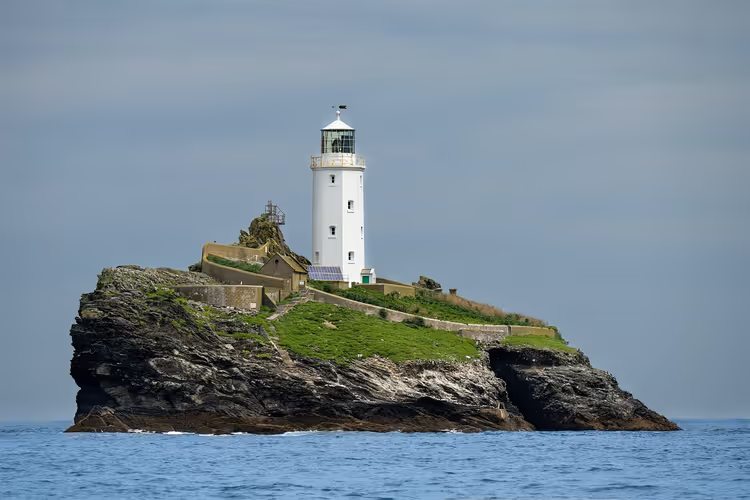
Spring route through southern England: from Dover to Cornwall
Spring arrives early in the south of England. By April, camellias and magnolias are already blooming in Cornwall, and the coast is still free of summer crowds. This is the best time to drive across the country from east to west.
Start in Dover, finish in Cornwall, return via Bath and Windsor. One way you will cover about 450 km (on the map).
Below are all the stops along the way: parks, festivals, badger watching, and the best spots for spring photos. At the end of the article, all stops are marked on a map, and we checked the festival dates against official websites in September 2026.
Route: from Dover west
💡 In short:
- Best time: April and May, before the swimming season opens.
- Route: Dover, Kent, Sussex, Dorset, Devon, Cornwall, back via Bath and Windsor.
- Spring program: chalk cliffs, blooming gardens, festivals in Brighton, badger watching.
- Minimum duration: 7 days, comfortable: 10 days.
- The route is based on the official VisitBritain guide, festival dates checked 09/2026.
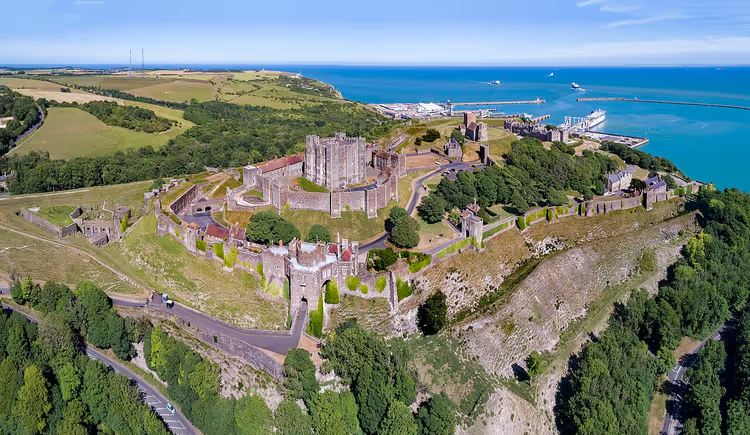
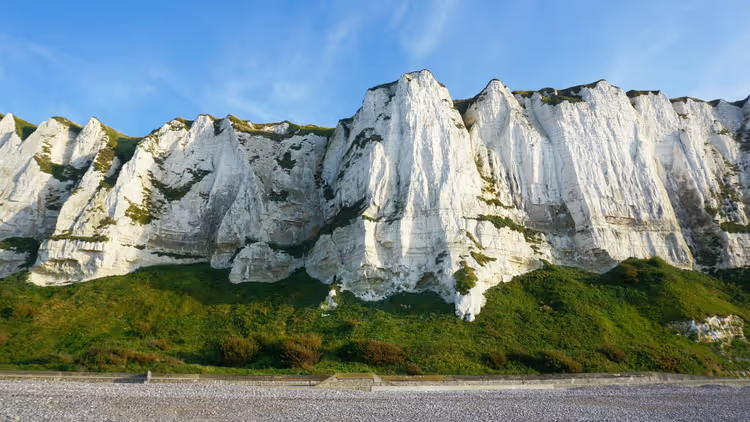
The route starts at the white cliffs of Dover. On clear days you can see the coast of France from them, and the climb to the viewpoints takes about an hour at a relaxed pace. It is almost always windy at the top, and the paths along the cliff edge have no barriers, so keep well away from the edge.
Dover Castle itself deserves at least half a day: knight tournaments, secret wartime tunnels, and a medieval palace. Entry is by English Heritage tickets.
 © Chensiyuan · CC BY-SAPhoto: Chensiyuan, CC BY-SA (https://creativecommons.org/licenses/by-sa/4.0), Wikimedia Commons
From Dover to Goodnestone Park Gardens it is only 25 minutes by car (on the map). This garden works well for the first hours after the ferry. The grounds cover more than five hectares of old trees, some of them already gnarled and leaning.
In spring, carpets of snowdrops, daffodils, and hellebores spread between the trees. Several paths run through the park, and the Woodland Gardens are open to visitors according to the British tourist office.
Jane Austen was a long-time guest at the Goodnestone estate. Right after her visit in 1796, she began writing her first novel, "Pride and Prejudice". The 18th-century Serpentine Walk, about two kilometers long (on the map), has recently been reopened here.
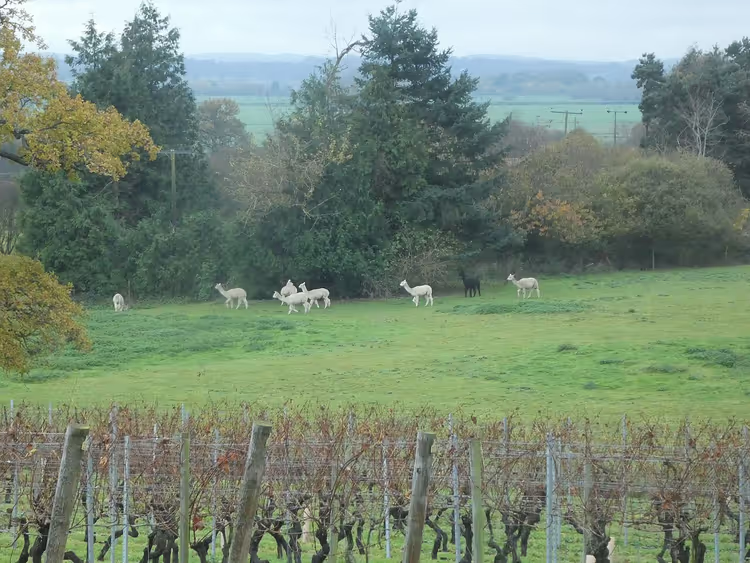
From there the road heads southwest through the hills of Kent. The mild climate and good soils have long made the county a wine region. At Chapel Down you will see the vineyards, the cellar, and taste several award-winning wines, and you can add a wine and cheese pairing to the tasting.
The tour lasts about two hours, and it is best to book ahead: weekend groups fill up quickly. A well-kept herb garden adjoins the estate, and entry there is free. For tickets and tour times, see the Chapel Down website.
 © Jeff Tomlinson · CC BY-SAPhoto: Jeff Tomlinson, CC BY-SA (https://creativecommons.org/licenses/by-sa/2.0), Wikimedia Commons
The catch: tasting tours run by prior booking, and spots run out quickly in season.
A convenient way to start the morning in Kent is with a garden, and end the day at a winery. That way you do not overload your first day and ease into the rhythm of the trip.
Kent and Sussex: Rye, gardens, and vineyards
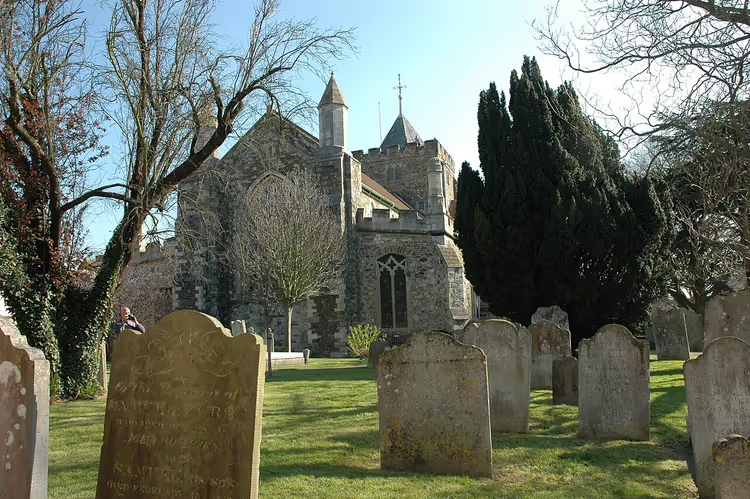
Another 20 minutes toward the coast, and you are in the medieval town of Rye. Here you should see Ypres Tower: a fortress from 1249 with a museum about the town's turbulent and conflict-ridden centuries.
 © Josep Renalias · CC BY-SAPhoto: Josep Renalias, CC BY-SA (https://creativecommons.org/licenses/by-sa/3.0), Wikimedia Commons
A separate stop is Lamb House, where the American writer Henry James spent his final years. The Parish Church of St. Mary holds a tower clock from 1561, one of the oldest in the country.
The bell tower is worth climbing. From the top you get a view over Rye Harbour Nature Reserve, where birdwatching is especially rewarding at the start of the nesting season.
Another garden with rare plantings lies 45 minutes northwest by car. Riverhill Himalayan Gardens is a carefully restored site made up of several zones.
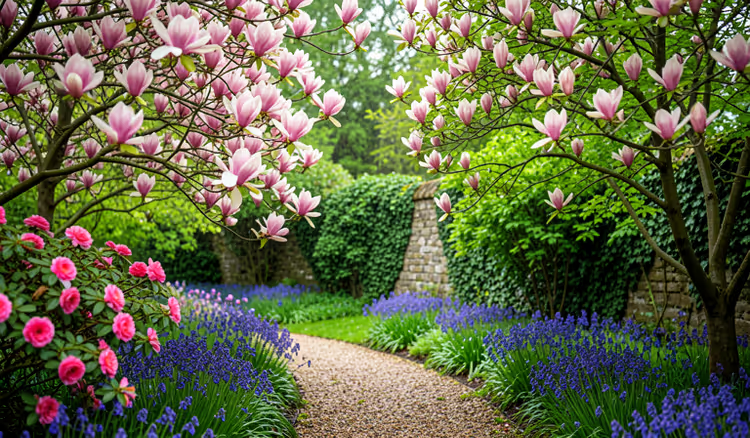
In spring, bright primulas, blue squills and yellow daffodils bloom here, and from May rhododendrons and azaleas join in. A separate path leads to a viewpoint overlooking the Kent hills.
The Ridgeview vineyard is open from May, an hour's drive southwest of Riverhill. On site you can buy a picnic basket with ham, bread, cheese and sparkling wine and have lunch right among the vines.
Ridgeview specializes in sparkling wines and runs tours. Check dates and prices on the Ridgeview website.
 AIIllustrative image: AI-generated
Another spring experience comes from Sheffield Park and Garden. This landscape park was laid out in the 18th century by the architect Lancelot Brown, and in the 20th century it was refined by its owner Arthur Soames.
From spring to early summer, a flower show of daffodils, squills, rhododendrons and azaleas unfolds here. In the center of the park lie four large lakes that reflect the trees, shrubs, waterfalls and sky. For opening hours and tickets, see the National Trust page.
On the way to the coast, it is worth turning off to Seven Sisters Country Park. The chalk-white cliffs of the Sussex Heritage Coast draw photographers, the trails run right along the clifftops, and the wind is strong on exposed sections, so bring a windbreaker.
 © Andrew Diack · CC BY-SAPhoto: Andrew Diack, CC BY-SA (https://creativecommons.org/licenses/by-sa/2.0), Wikimedia Commons
Festivals in Brighton
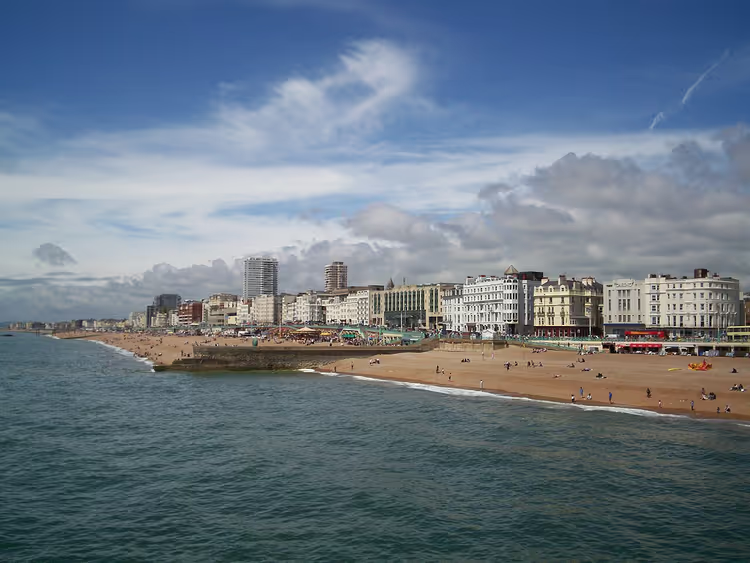
From here to seaside Brighton on the English Channel is about 20 minutes (on the map). The city is interesting at any time of year: the pier, the cosmopolitan atmosphere and the unusual Royal Pavilion.
 © Bojan Lazarevic, ZivojinMisic slike · CC BYPhoto: Bojan Lazarevic, ZivojinMisic slike, CC BY (https://creativecommons.org/licenses/by/3.0), Wikimedia Commons
But in spring the festival season kicks off here. Several major events take place in May: Brighton Fringe, Brighton Festival, The Great Escape and Artists Open Houses. The Brighton Festival showcases dance, theater and much more at dozens of venues across the city, and tickets for popular shows sell out weeks in advance.
Brighton Fringe 2027 runs from May 7 to June 6 (as of 09/2026, Brighton Fringe). It is the world's third-largest festival platform, where both stars and newcomers perform.
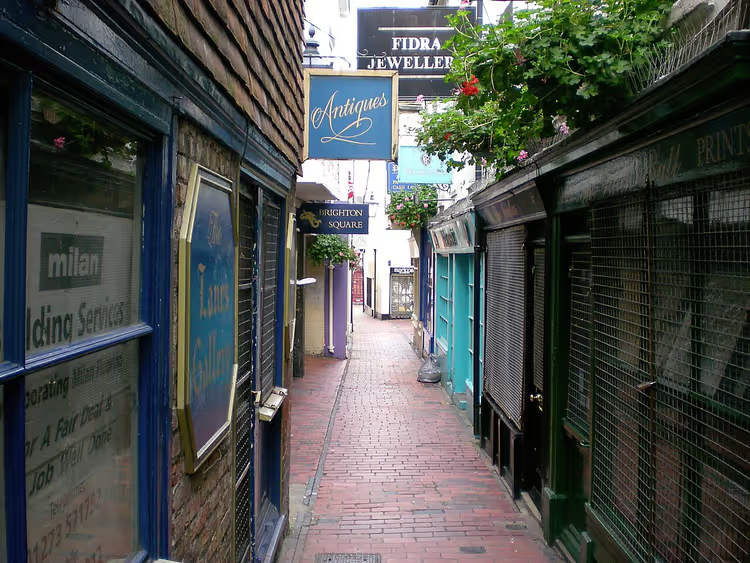
Between shows, drop into The Lanes: the narrow alleys with quirky shops and boutiques are easy to cover in a couple of hours, and it is just as easy to find a place for lunch here.
 © Frank Jepsen · CC BYPhoto: Frank Jepsen, CC BY (https://creativecommons.org/licenses/by/2.0), Wikimedia Commons
The catch: in May, accommodation prices in Brighton are noticeably higher, so book your hotel several months ahead.
Further west, the road passes through South Downs National Park. The country's youngest national park has many trails and viewpoints. The ancient South Downs Way runs along the ridge of the chalk hills and barely crosses any roads: it is easy to split into short sections, and the whole route takes four to five days with overnight stays in villages along the way.
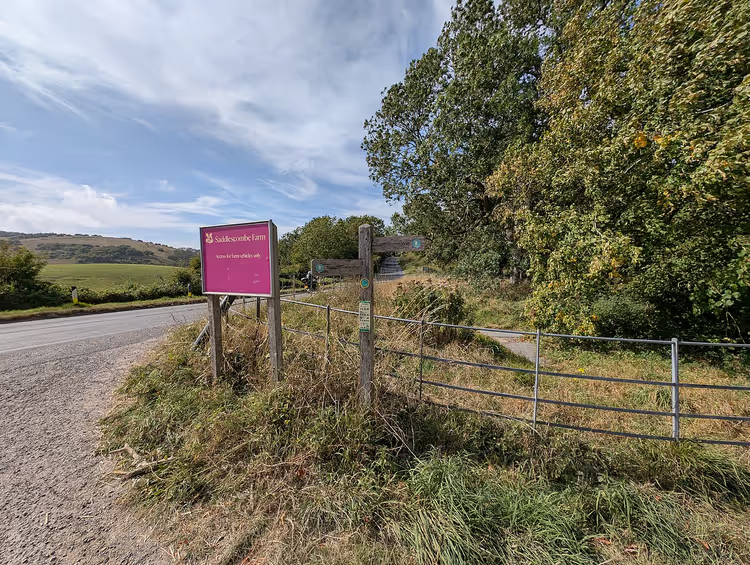
Craft beer lovers should turn off to Langham Brewery. The brewery makes several award-winning beers and runs tours with tastings; booking in advance is required.
In spring, sheep with lambs keep appearing in the green meadows. You can get to know the animals better at Godstone Farm and Bocketts Farm. And at Goodwood House, motorsport events run from spring to autumn, from rallies to hillclimbs, and tickets for the major ones are worth buying in advance.
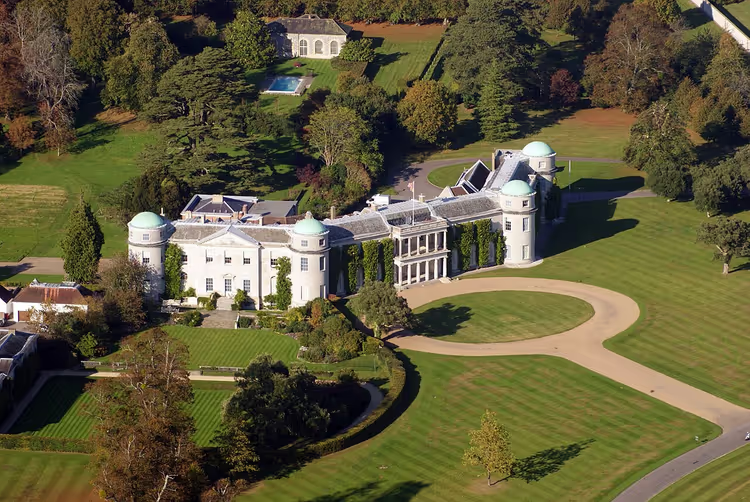 © Ian Stannard from Southsea, England · CC BY-SAPhoto: Ian Stannard from Southsea, England, CC BY-SA (https://creativecommons.org/licenses/by-sa/2.0), Wikimedia Commons
A day like this is best built around one theme: the sea, beer and a farm. You avoid wasting time on long drives and make it to the next town by evening.
Surrey and the Isle of Wight
In the hills of Surrey lies England's largest vineyard. The limestone soils and microclimate at Denbies Wine Estate produce good wines and sparkling wines.
Part of the North Downs Way trail runs right through the estate and offers beautiful views. Since 2019, England's first vineyard hotel has operated here.
Denbies welcomes guests with tastings and tours, according to Denbies Wine Estate. The exact schedule changes by season, so check the website.
Bright beaches and numerous walking routes make the Isle of Wight a popular destination. In May, the island becomes the center of attention.
This is when the Isle of Wight Walking Festival takes place, one of the country's largest walking festivals. You don't have to take part in the 24-hour walk around the island.
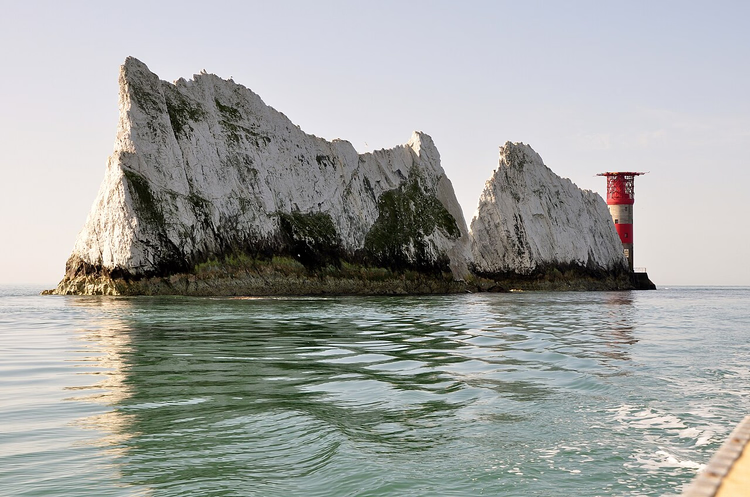 © Lewis Clarke · CC BY-SAPhoto: Lewis Clarke, CC BY-SA (https://creativecommons.org/licenses/by-sa/2.0), Wikimedia Commons
You can walk individual sections. Most of the island has Area of Outstanding Natural Beauty status, meaning it is a protected natural landscape. In summer, the island also draws garlic lovers to the Isle of Wight Garlic Festival, but that's not a spring story.
The island is easy to drive around in a day, but in spring it's worth staying two nights. That way you can comfortably walk two or three sections of the trail and see the coastline.
Daffodil meadows and Brownsea Island
Across from the Isle of Wight, on the mainland, lies one of the country's most beautiful gardens, Exbury Gardens. The 81-hectare site is divided into several different gardens.
 © Colin · CC BY-SAPhoto: Colin, CC BY-SA (https://creativecommons.org/licenses/by-sa/4.0), Wikimedia Commons
Exbury is known for its enormous variety of rhododendrons, azaleas, and camellias, which bloom in May in the "home wood" known as Home Wood. The garden is open from mid-March.
In spring, visitors gather at the daffodils on Daffodil Meadow and stroll through the formal Sundial Garden with hanging clusters of wisteria. A narrow-gauge steam train carries guests nearly 2.5 km through the gardens, some of which are inaccessible on foot. Tickets and opening hours are available on the Exbury Gardens website.
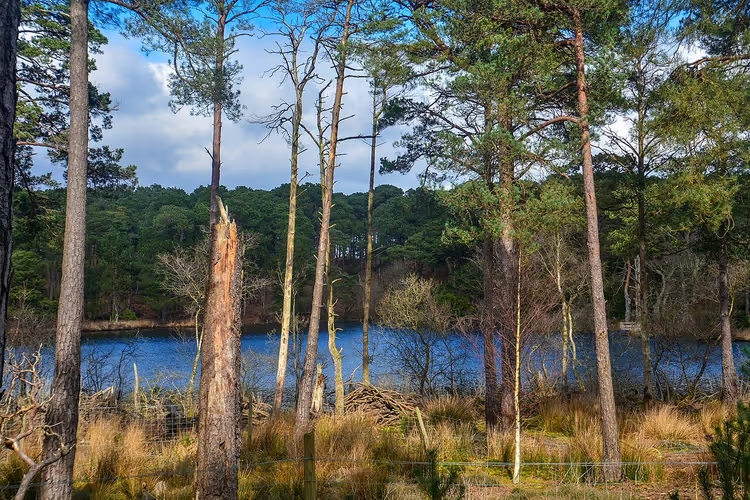 © Lewis Clarke · CC BY-SAPhoto: Lewis Clarke, CC BY-SA (https://creativecommons.org/licenses/by-sa/2.0), Wikimedia Commons
Further west lies the town of Poole, and across from it the uninhabited Brownsea Island. Birdwatching happens here year-round: waders, kingfishers, and herons.
Peacocks, pheasants, and red deer live on the island. It was here in 1907 that the Scout movement was born.
You can walk around Brownsea in about two hours (using a map). From March to October, ferries run to and from the island twice an hour, according to National Trust UK.
An hour's drive north, and you're at a garden worth seeing. Stourhead is considered a model of the English landscape garden, which gained fame in Europe from the late 18th century.
Henry Hoare the Younger commissioned the architect Henry Flitcroft, and from 1743 they created an ideal landscape here with an artificial lake and several temples. The lake remains the center of the garden today.
In spring, when the trees turn green and crocuses, daffodils, and bluebells carpet the ground, the park is especially beautiful. On May 1, when the rhododendrons along the paths to the lake are in full bloom, the Floralia festival takes place here. Check dates and tickets on the Stourhead page.
The catch: tickets to Stourhead are more expensive on Floralia days, and parking fills up from the morning on those dates.
Jurassic Coast: bays, cliffs, and jazz
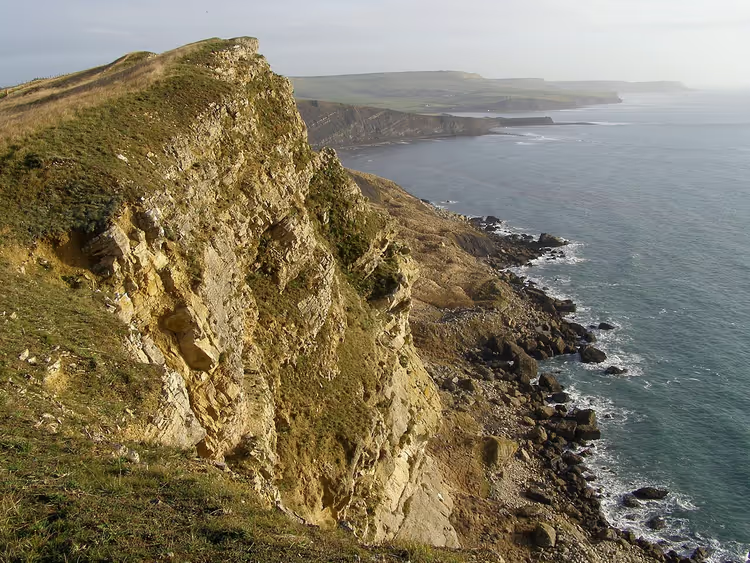
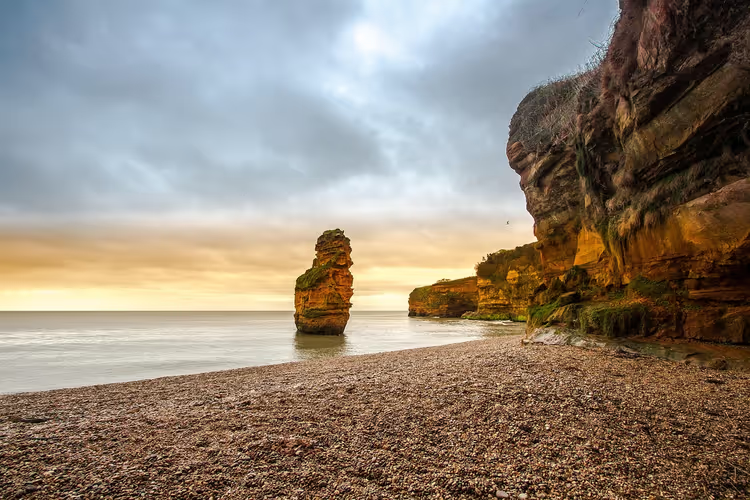
Further south lies the scenic Jurassic Coast, which stretches from Dorset to Devon and is a UNESCO World Natural Heritage Site. The first stop is Old Harry Rocks: chalk pillars rise straight out of the channel, and the best way to see them up close is from a kayak. Kayak tours depart from Studland Bay, with departures depending on weather and tides.
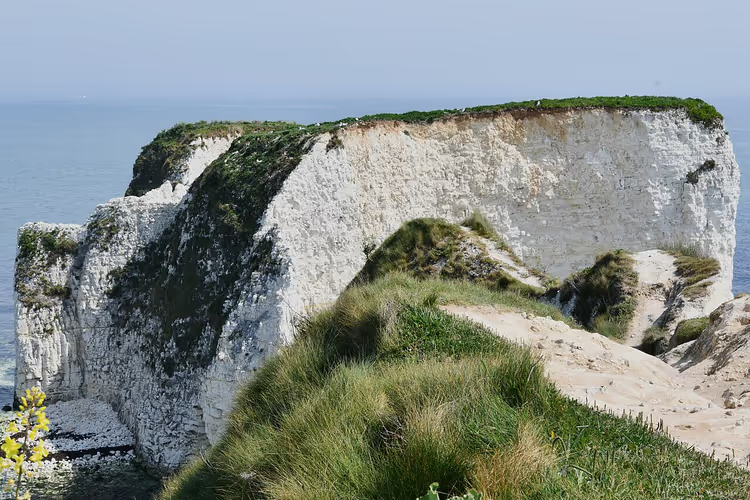 © Michael Garlick · CC BY-SAPhoto: Michael Garlick, CC BY-SA (https://creativecommons.org/licenses/by-sa/2.0), Wikimedia Commons
Nearby stand the ruins of the 1,000-year-old Corfe Castle with views over the Purbeck peninsula. The climb follows an uneven path, and the castle's spring and summer calendar features food festivals, live music, and open-air cinema.
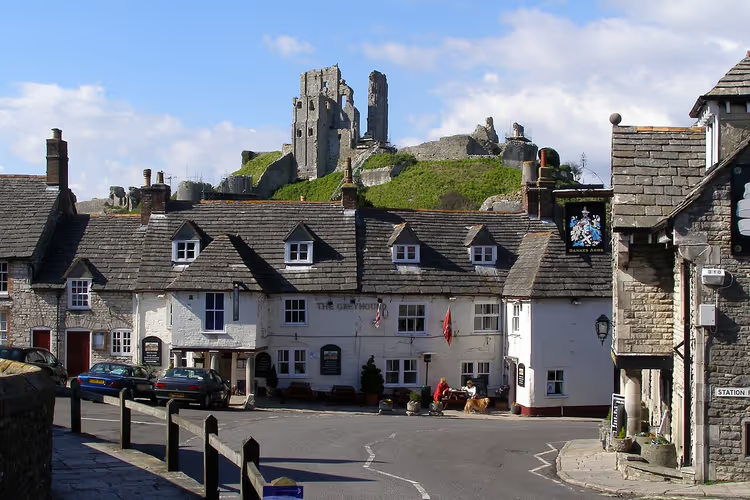 © JimChampion · CC BY-SAPhoto: JimChampion, CC BY-SA (https://creativecommons.org/licenses/by-sa/4.0), Wikimedia Commons
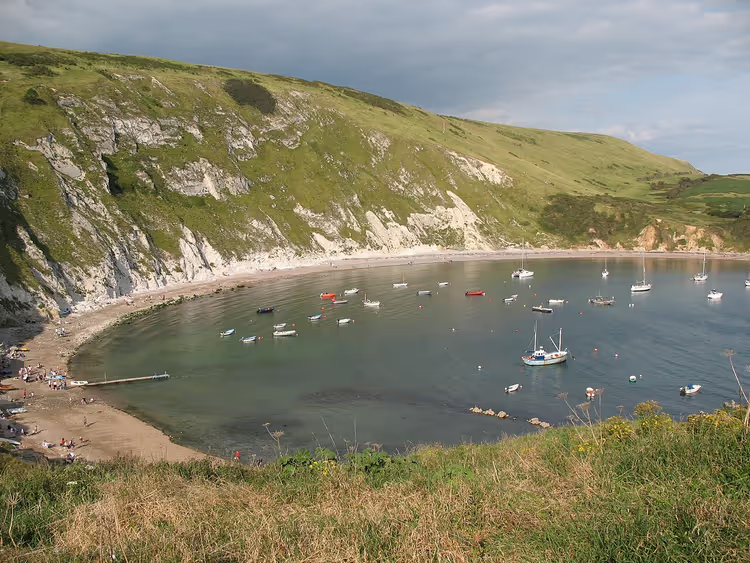
To the west lies Lulworth Cove with its clear water, reached by a trail from the village of West Lulworth. Come in the morning; by lunchtime the water's edge gets crowded.
For four days in May, the seaside town of Lyme Regis fills with rhythm and the sound of horns: Jazz Jurassica features both well-known musicians and local newcomers. You'll hear jazz, blues, and soul right by the water, and the spring resort atmosphere makes these concerts especially warm.
If you find yourself in Lyme Regis at Easter, don't miss the Easter Bonnet Parade. It's a festive procession whose participants wear spring bonnets of their own making.
 © JimChampion · CC BY-SAPhoto: JimChampion, CC BY-SA (https://creativecommons.org/licenses/by-sa/3.0), Wikimedia Commons
The catch: tickets for individual Jazz Jurassica concerts sell out in advance; the program is published in the spring.
A great evening on the coast can be combined with a seafood dinner. The sunset over the Jurassic Coast is long here, so you'll have time for both the concert and a walk.
Badgers in Devon and Exeter
From the Jurassic Coast, it's worth heading inland to Tiverton in Devon. Here you have a rare opportunity to see young badgers emerge from their sett for the first time in April and gain experience close to home.
Devon Badger Watch runs tours throughout the season. Guests observe the animals from a purpose-built hide in the early evening hours, and the chances of seeing badgers are always good. In spring, when the young are still small, it's especially interesting.
Tours are guided, and places are limited. Check dates and booking on the Devon Badger Watch website.
Just half an hour's drive and you're in Exeter, the county town of Devon. The city was founded by the Romans, and many impressive buildings survive here.
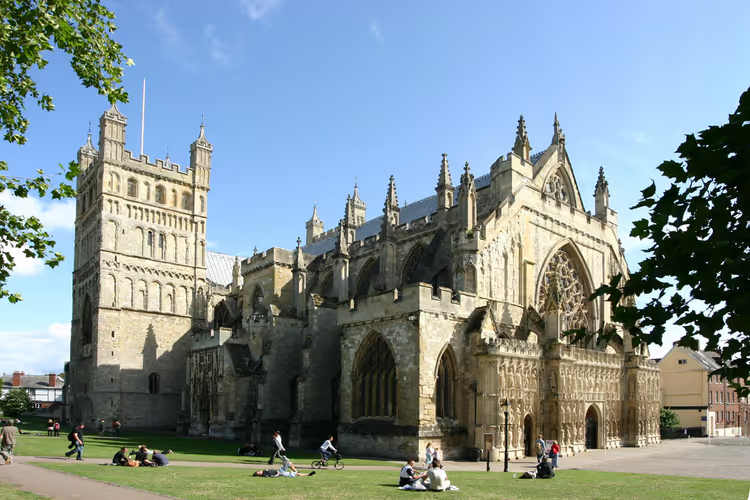 © Rüdiger Wölk This photo was taken by Rüdiger Wölk . Please credit this photo Rüdiger Wölk, Münster . View all photos (la · CC BY-SAPhoto: Rüdiger Wölk This photo was taken by Rüdiger Wölk . Please credit this photo Rüdiger Wölk, Münster . View all photos (la, CC BY-SA (https://creativecommons.org/licenses/by-sa/2.5), Wikimedia Commons
Exeter Cathedral, dedicated to St Peter, is particularly fine. Construction began in 1114 in the Norman style, and it was expanded over the following centuries. The stained glass and decorative stonework are best appreciated on a guided tour; hours vary by season, so check the schedule on the Exeter Cathedral website.
Parliament Street is short, just 50 meters. But it's very narrow: the width of the lane between High Street and Waterbeer Street ranges from 64 to 120 centimeters. The medieval Guildhall on High Street is considered the oldest public building in England still in use, including for city council meetings.
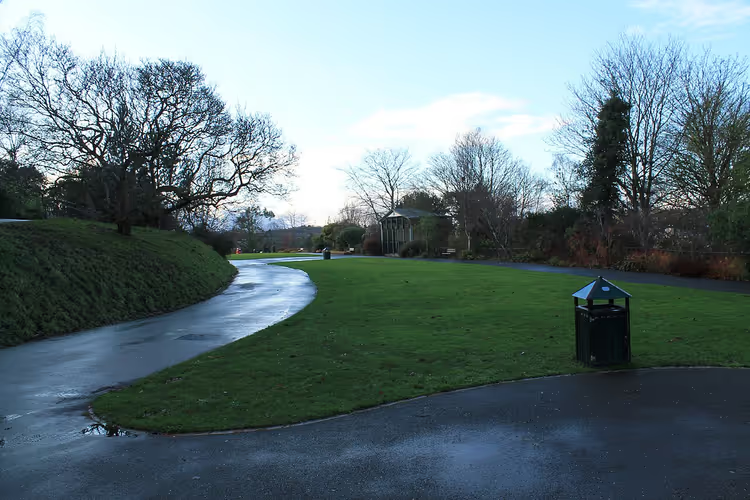
Five minutes from the center lie Northernhay Gardens, one of England's oldest public parks: plaques along the paths tell the city's history from the Romans and Anglo-Saxons. The Castle Quarter area around the lively Gandy Street, with its independent shops, cafes, and restaurants, is easy to explore on foot, and in the evening the pubs open up here.
For drinks enthusiasts, Exeter has three stops. Turk's Head Brewery Experience is a microbrewery right in the center: the tour takes about an hour, groups are small, and afterwards you get to try a fresh pint. At the historic Quayside Distillery on the waterfront, you'll blend your own gin over two hours and take it home in a bottle. And in Teignmouth, south of the city and reachable by train, Exeter Gin offers tastings of seven gins and Exeter Rum.
 © Andy Morffew from Itchen Abbas, Hampshire, UK · CC BYPhoto: Andy Morffew from Itchen Abbas, Hampshire, UK, CC BY (https://creativecommons.org/licenses/by/2.0), Wikimedia Commons
The catch: tastings and workshops in Exeter usually require booking; without a reservation there may be no spaces available.
A stone's throw from the city bustle lies Ludwell Valley Park, with a farm and trails of varying lengths; it's especially green here in spring. And for those who want to get behind the wheel of an iconic off-roader and tackle challenging terrain, Land Rover West Country fits the bill: the session lasts several hours, instructors accompany the group, and no experience is necessary.
Further south, in Plymouth, England's oldest working gin distillery operates: the historic Black Friars Distillery. Gin has been made here since the 18th century according to Plymouth Gin; the tour with tasting should be booked in advance.
From Plymouth, a ferry runs to the Rame Peninsula. There you'll reach the Mount Edgcumbe estate, where camellias bloom very early in the park. The garden's collection includes around 1,000 species and varieties and is recognized as a National Camellia Collection; guided tours are available, as is a Camellia Trail with information boards.
Beyond the gardens, Mount Edgcumbe boasts a stately mansion and more than ten themed gardens. Plan at least half a day for the estate.
Subtropical gardens of Cornwall
Cornwall is known for its gardens. Thanks to the Gulf Stream, Mediterranean and subtropical plants thrive here. One example is Glendurgan Garden.

In the three valleys of this garden you can, if you like, get lost in a maze. And in the lush subtropical thickets, everything spring has to offer is in bloom: magnolias, wildflowers, and fragrant woodland flora.
Another garden, The Lost Gardens of Heligan, was restored after many years of neglect. It is the largest garden restoration project in Europe: across more than 80 hectares, visitors are in for a real exploration, it takes half a day to cover the whole site, and some paths are muddy, so bring comfortable shoes.
Next to the jungle with bananas, giant hogweed, and bamboo lies the "Lost Valley" with ponds and hidden paths where bats find shelter. In spring the garden is carpeted with bluebells. For tickets and opening hours, see the Heligan website.
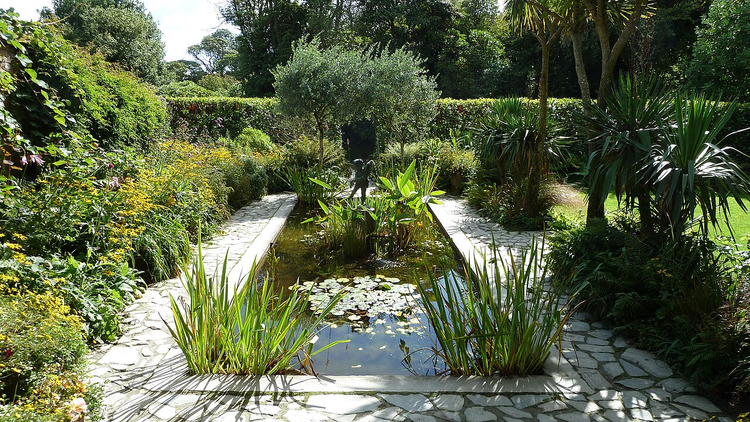 © Rob Young from United Kingdom · CC BYPhoto: Rob Young from United Kingdom, CC BY (https://creativecommons.org/licenses/by/2.0), Wikimedia Commons
Nearby is the Eden Project, a huge botanical garden with tropical plants under domes. Inside it is warm even on a rainy day, concerts and events run all year round, and it is convenient to book timed tickets on the Eden Project website.
 © Jürgen Matern · CC BY-SAPhoto: Jürgen Matern, CC BY-SA (https://creativecommons.org/licenses/by-sa/2.5), Wikimedia Commons
Another well-known garden, Trewithen, is famous for its magnolias, lush rhododendrons, and a handsome 1715 manor house.
On the way to Land's End, the westernmost point, the Cornish coast is dotted with small sandy beaches and fishing villages. They are well suited to leisurely walks, especially in spring, before large tour groups arrive. At Porthcurno cove, perched on a cliff, stands the Minack Theatre, an open-air theater: almost magical scenery for plays and concerts; for the program and tickets, see the Minack Theatre website.
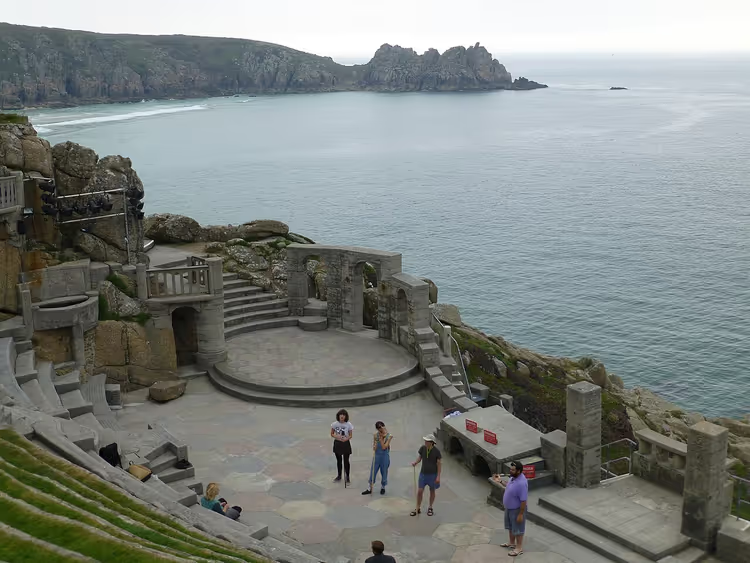 © Jürgen Regel, Marian… · CC BYPhoto: Jürgen Regel, Marian…, CC BY (https://creativecommons.org/licenses/by/3.0), Wikimedia Commons
The catch: performances at the Minack Theatre depend on the weather, evenings by the sea are chilly, so bring a warm layer, and tickets for summer productions sell out months in advance.
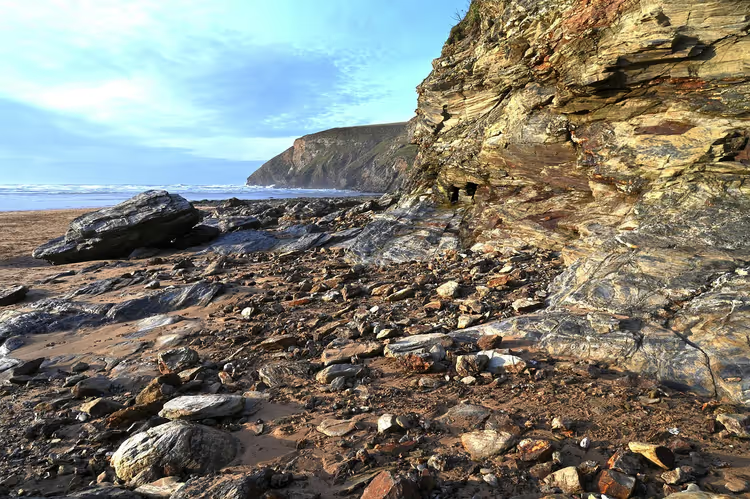
On the north coast of Cornwall, between St Ives and Newquay, near the village of St Agnes, there are several beautiful beaches. A special way to see the coast is a guided kayak tour.
Guides lead groups into quiet coves and mysterious caves that recall the area's former mines. Iron and copper veins here have surfaced and oxidized, so some rocks glow green, orange, or red. In May the water is still cold, so wear a wetsuit for kayaking and book your spot in advance.
Tea plantation in Cornwall
On the large Tregothnan estate near Truro, tea is actually grown, harvested, and sold. It is England's only tea plantation, and it is not open to the general public.

The private garden can be visited by prior arrangement on River Garden Tour excursions. The estate also runs Tea School workshops, tea tastings, and garden workshops, and once a year opens the garden for a charity weekend. Dates and prices are published on the Tregothnan website, and are worth checking before you travel.
The town of Truro is considered the southernmost city in England and is known for its neo-Gothic cathedral and the county's oldest museum, the Royal Cornwall Museum.
The oldest fallow deer herd and Padstow
A good base for water sports is the fishing town of Padstow on the River Camel. The Camel Cycle Trail also starts and ends here.
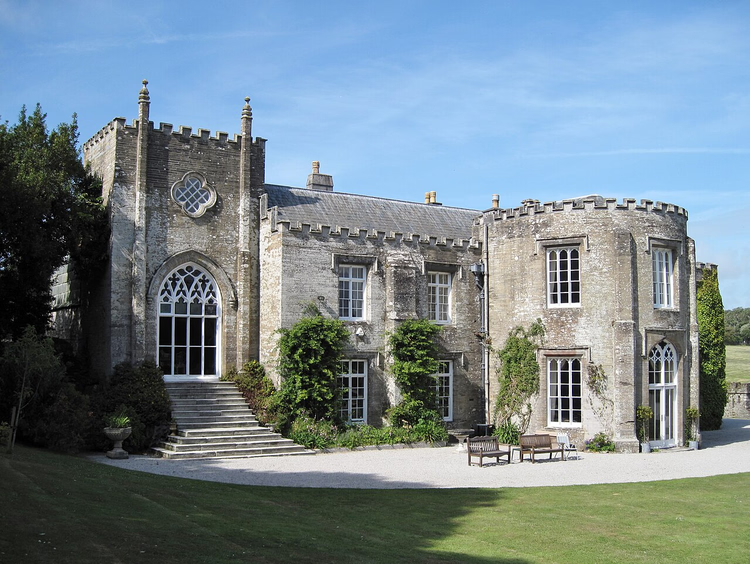
History lovers should stop by Prideaux Place. The house still belongs to the Prideaux-Brune family and impresses with its interiors, a library with old books, and a collection of teddy bears.
Walking the grounds is allowed. The 16-hectare estate is home to one of England's oldest fallow deer herds, and you can watch it comfortably from the tearoom terrace, where snacks and drinks are served. For opening times and tickets, see the Prideaux Place website.
Cornwall also makes wine. Fertile soil, sunny slopes, and the special microclimate of the Camel River valley create good conditions for vines. At Camel Valley you can relax on the terrace or take a tour with a tasting: the vineyards look out over the region's green hills, so the stop is both delicious and scenic.

On the way back, in Somerset, lies Holnicote Estate: more than 5,000 hectares managed by the National Trust inside Exmoor National Park. The landscape here is varied: moors, woods, and beaches, crossed by paths and tracks for walking and cycling. The stars are especially clear at night from Dunkery Beacon, the highest point in Somerset at 520 meters.
The smallest city in England is Wells. Medieval Wells has many beautiful historic buildings, and the main one is Wells Cathedral, more than 800 years old. Over 300 figures stand on the cathedral's west front. Separately worth seeing is Vicar's Close, the first street of attached houses in Britain, dating from the 14th century and still lived in today.
North of Wells, in Cheddar, is the birthplace of one of the world's most popular cheeses. Cheddar was made in Somerset as far back as 800 years ago, and by the late 12th century it was stored in the town's caves. The Cheddar Gorge Cheese Company still does this today and introduces visitors to the art of cheesemaking.
The city of Bath, east of Cheddar and Wells, is known for its Roman baths. Spring is an especially pleasant time here: you can have a picnic in Royal Victoria Park or take a boat trip on the River Avon.
 © Velvet · CC BY-SAPhoto: Velvet, CC BY-SA (https://creativecommons.org/licenses/by-sa/3.0), Wikimedia Commons
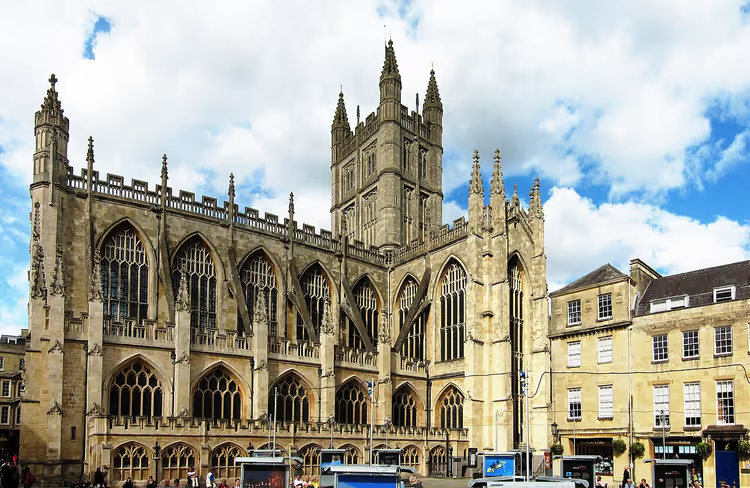
Bath is on the UNESCO World Heritage list. Bath Abbey and the Jane Austen Centre are considered must-sees for tourists: a narrow staircase leads up the abbey tower, the climb is guided, and inside you should take a close look at the fan-vaulted ceiling. The National Trust's circular Bath Skyline Trail takes about half a day of easy walking over the hills with views of the old city.
The Roman Baths museum gives a vivid picture of how the Romans bathed and relaxed here: entry is by timed slots, and in spring the queues are noticeably shorter than in summer (Roman Baths). And in the thermal water of Thermae Bath Spa you can swim and unwind, as of VisitBritain's tourist office. From London there are also Bridgerton filming location tours to Bath, which transport you back to the Regency era.
 © Olaf Tausch · CC BYPhoto: Olaf Tausch, CC BY (https://creativecommons.org/licenses/by/3.0), Wikimedia Commons
Lions, zebras, and castles
About 40 km south of Bath stands Longleat House. This imposing mansion is surrounded by a spacious landscape park laid out by Lancelot Brown in the mid-18th century.
Longleat House is considered one of the finest examples of Elizabethan architecture in the United Kingdom. The house serves as the residence of the Marquess of Bath and has belonged to one family for fifteen generations since 1567.
Besides the gardens, Longleat is known for its safari park, home to more than 500 animals from around the world, including zebras, wolves, and lions. For tickets and opening hours, see the Longleat website.

For those who prefer gentle walks, the winding Pleasure Walk between Horningsham Lodge and the house itself is a good choice. In spring, carpets of primroses spread out here.
Lacock Abbey in the village of Lacock dates back to the 13th century. It was founded then as a nunnery. Later, William Henry Fox Talbot, one of the inventors of the photographic negative, lived here, and the museum is devoted to his story.
Today the abbey belongs to the National Trust. The village of Lacock itself is a typical English corner with cozy cottages, a medieval barn, and a church. No surprise that the village and abbey appeared in "Harry Potter", "Downton Abbey", and "Pride and Prejudice".
On the way to Dover or London lies Windsor Castle, one of the royal residences. It is the largest and longest-inhabited castle in Europe.
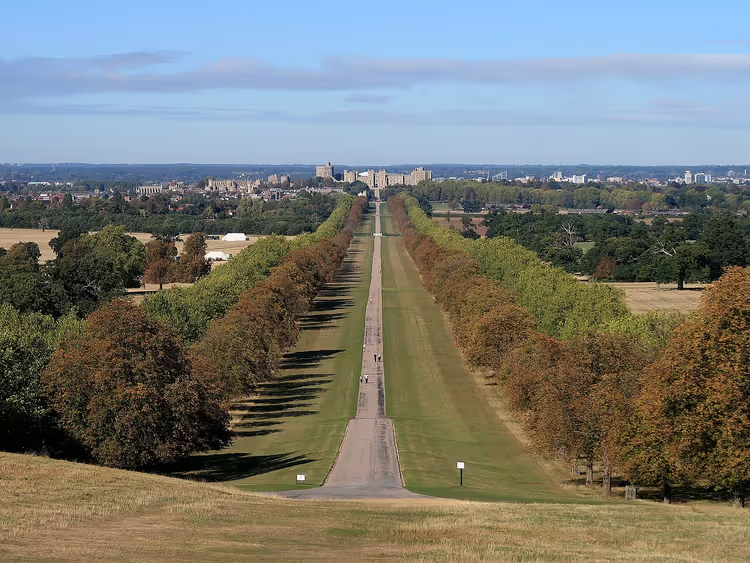 © Michael Coppins · CC BY-SAPhoto: Michael Coppins, CC BY-SA (https://creativecommons.org/licenses/by-sa/4.0), Wikimedia Commons
Inside, it is worth seeing the State Apartments, Queen Mary's Dolls' House, and St George's Chapel. Some rooms are occasionally closed according to the court schedule, so it is convenient to book timed tickets through Royal Collection Trust.
Do not miss the Savill Garden in the southeastern part of the royal Windsor Great Park. This natural woodland garden holds an enormous variety of plants.
There are around 700 varieties of rhododendrons alone, plus camellias and azaleas. In spring it is a true kaleidoscope of color. Find tickets and opening hours on the Windsor Great Park website.
English heritage and national trust passes
A useful detail for a packed trip. The English Heritage Overseas Visitor Pass gives you entry to more than 100 castles, estates and gardens in England, including Dover Castle.
The National Trust Explorer Pass gives access to more than 500 attractions, among them Sheffield Park, Stourhead, Brownsea Island and Lacock. For a trip around England, this option is worth considering in advance, according to National Trust data.
If you plan to visit three or four sites run by the same organization, a pass is usually cheaper than individual tickets. Compare prices before buying.
Route on the map
The map shows all the stops on the route in the order they appear in the article: from the white cliffs of Dover in the east to the Minack Theatre in the west, and back via Bath and Windsor.
Spring route across Southern England
Places on the map
- 1Dover Castle
- 2Goodnestone Park Gardens
- 3Chapel Down
- 4Rye
- 5Riverhill Himalayan Gardens
- 6Sheffield Park
- 7Ridgeview
- 8Brighton
- 9Denbies Wine Estate
- 10Isle of Wight
- 11Exbury Gardens
- 12Brownsea Island
- 13Stourhead
- 14Old Harry Rocks
- 15Corfe Castle
- 16Lulworth Cove
- 17Lyme Regis
- 18Devon Badger Watch
- 19Exeter
- 20Plymouth Gin
- 21Mount Edgcumbe
- 22Glendurgan Garden
- 23Heligan
- 24Eden Project
- 25Minack Theatre
- 26Tregothnan
- 27Truro
- 28Padstow
- 29Camel Valley
- 30Wells
- 31Cheddar
- 32Bath
- 33Longleat
- 34Lacock
- 35Windsor Castle
- 36Savill Garden
How to plan the route by day
The route from Dover to Cornwall and back is easy to split into ten stages. Between the stops you will mostly be driving on A roads and motorways, and the gardens have paid parking.
Stage | What to see | What to book in advance |
|---|---|---|
1 | Dover and Goodnestone Park Gardens | a tour of Chapel Down |
2 | Rye, Ypres Tower and Riverhill Himalayan Gardens | a picnic hamper at Ridgeview |
3 | Brighton and festival venues | Brighton Fringe tickets |
4 | South Downs, Langham Brewery and Denbies Wine Estate in Surrey | a brewery tasting tour |
5 | Isle of Wight and Exbury Gardens | Exbury Gardens tickets |
6 | Dorset: Lulworth Cove and Old Harry Rocks | a kayak tour from Studland |
7 | Devon: Devon Badger Watch and Exeter | booking for Devon Badger Watch |
8 | Cornwall: Eden Project, Heligan, Tregothnan and Truro | timed tickets and a visit to Tregothnan |
9 | Bath and Longleat | Roman Baths tickets |
10 | Windsor and Savill Garden | a Windsor Castle ticket |
You can change the order of the stages. Each one can easily be stretched to two days if you love gardens and museums.
By car or by train
By car you can reach all the gardens and estates on the route, including Goodnestone, Exbury Gardens and Brownsea Island. Trains run between the towns, but you cannot get to rural sites that way.
The return leg via Bath and Windsor works well if you have another two or three spare days. A week's car rental is usually cheaper than train tickets for a family.
Parking at popular sites is paid and fills up quickly in summer. Arrive for opening time, especially on festival days.
Budget and tickets
The main costs on a trip like this are accommodation, car rental and entry tickets. National Trust gardens and English Heritage sites charge for entry, while some parks and trails are free.
Festival tickets in Brighton and Minack Theatre performances are best bought in advance.
What to take with you
In spring the coast is windy and rain is possible. Take a waterproof jacket, comfortable shoes and a warm layer for evening open-air performances.
For garden walks, hiking shoes and spare socks will come in handy. Binoculars are useful for watching badgers and birds.
Keep tickets and bookings on your phone: many sites use timed entry slots. Cash is useful in rural tea rooms.
Seasonal calendar
April is the time for bluebells, daffodils and the first camellias. Many Cornish gardens open this month.
May adds rhododendrons, azaleas and the festival program. May brings Brighton Fringe, the Isle of Wight walking festival and the Floralia celebration at Stourhead.
June is the end of the rhododendron season and the start of beach season. If gardens matter to you, plan your trip for April and May.
Month | What is in bloom | Events |
|---|---|---|
April | bluebells, daffodils, camellias | Easter Bonnet Parade, Cornish gardens opening |
May | rhododendrons, azaleas | Brighton Fringe, Walking Festival, Floralia, Jazz Jurassica |
June | late rhododendrons | start of beach season |
If you are short on time
In three or four days you can realistically see Kent, Brighton and the Sussex coast. Pick one garden, one castle and one town, and do not try to do everything at once.
With a week, add Cornwall with the Eden Project and Heligan. That makes the route full but unhurried.
Want to see more? Leave some sites for your next visit. Once the King Charles III England Coast Path is completed, it will become the longest coastal route in the world and will cover about 4,300 km of the English coast (as of 09/2026, VisitBritain), and Devon and Cornwall can easily be turned into a separate film-themed trip to the locations of Rosamunde Pilcher, The Salt Path and House of the Dragon.
 AIIllustrative image: AI-generated
⁉️🤔 Frequently asked questions
When is the best time to visit the south of England?
The best months are April and May. Gardens and parks are already in bloom, and beach season has not started yet, so the coast is quiet. May adds festivals in Brighton and the Isle of Wight walking festival. In summer the crowds are noticeably bigger and accommodation prices are higher.
Do I need a car for this route?
Yes, it is inconvenient without a car: many gardens and estates are away from the railway. Trains run between the major towns, but you cannot get to Goodnestone, Exbury Gardens or Brownsea Island that way. Renting a car gives you freedom, and parking at most sites is paid.
How much time should I allow for the whole trip?
The route from Dover to Cornwall and back takes from 7 to 10 days. In 7 days you can see the main gardens, a couple of towns and the Dorset coast; with 10 days you can easily add Bath and Windsor.
What should I definitely see in Cornwall in spring?
In Cornwall it is worth visiting the Eden Project, The Lost Gardens of Heligan, Glendurgan Garden and the Minack Theatre. Camellias bloom earliest in Mount Edgcumbe Park. The private Tregothnan garden opens to everyone for only one weekend a year, so you need to check the dates in advance.
When do bluebells bloom in England?
Bluebells cover woods and meadows from April for a short period. The exact weeks depend on the region and the weather. To catch them, plan your trip for mid-spring and check flowering dates on garden websites in advance.
Do I need passes if I am only visiting two sites?
No, for one or two stops it is simpler to buy a regular ticket. English heritage and national trust passes pay off when you visit three or four sites run by the same organization. Before buying, compare the cost of the pass with the total of individual tickets.
In short: what to book
If you have 7 days: take in the Kent gardens, Brighton, the Dorset coast and Cornwall; that is enough for the main highlights.
If you have 10 days: add Bath and Windsor, and allow for two or three sites per day.
If you are traveling with children: choose farms with lambs, the Eden Project and Longleat safari park.
If you are interested in history: get English heritage and national trust passes and plan for Dover Castle, Corfe Castle and Windsor Castle.
Festival dates were checked in September 2026 on official websites. Book anything that depends on the season in advance: Tregothnan tours, Minack Theatre performances and Windsor Castle tickets sell out quickly.

A small editorial team writing guides for independent travel. We travel ourselves, but we haven’t been everywhere, so we check prices, opening hours and how to get there against official sources.