
















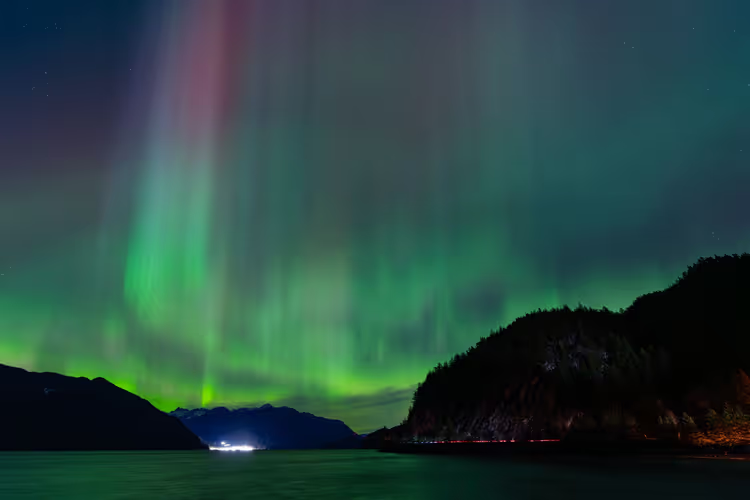
How to see the northern lights: season, regions and preparation
The Northern Lights look like a miracle, but they follow simple physics. Charged particles from the solar wind crash into the atmosphere near the magnetic poles and make it glow. At high latitudes this is visible far more often than at lower latitudes.
There are many dates, but the result is unpredictable: in Alta the lights are chased from October to mid-April, and on Svalbard the polar night helps (as of 09/2026, Visit Norway). Below are six regions where the odds are above average, and what you can plan in advance.
Ad: this article contains affiliate links, we earn a commission if you book through them, at no extra cost to you.
How the northern lights appear and when to look for them
💡 In short:
- Season in the Northern Hemisphere: dark nights from September to March.
- Best time of day: late evening and the first hours after midnight.
- Bet on a clear, frosty night, not on the calendar.
- Season and viewing conditions: 09/2026, according to the official website of the Norway tourist board.
The lights are born at an altitude of about one hundred kilometers. Earth's magnetic field deflects particles toward the poles, where they collide with oxygen and nitrogen. Green comes from oxygen, red appears higher up, and purple is linked to nitrogen.
The Sami, the indigenous people of the North, believe the lights can not only be seen but also heard. The sound is described as a quiet crackling. It is hard to verify, but the tradition is alive and is still passed on today.
You should look for the lights in the dark, away from city lights. A frosty, clear night gives you more than any activity forecast. Bring a thermos, warm boots, and plenty of time: hunting for the lights does not follow a schedule.
Region | Season | Why it's convenient |
|---|---|---|
Alta, Norway | October to mid-April (Alta tourist board) | airport, Borealis festival |
Longyearbyen, Svalbard | polar night from mid-November (Svalbard tourist board) | dome hotels, lights even during the day |
Lapland, Finland | dark nights from September to March (Finland tourist board) | family shows, Santa Claus |
South Iceland | September to March (hotel website) | hotel with a night wake-up call |
Abisko, Sweden | dark nights from September to March (Abisko tourist board) | clear skies, observation station |
Fairbanks, Alaska (USA) | August 21 to April 21 (Explore Fairbanks) | season starts as early as late summer |
If you want to compare options by season and infrastructure, the table above gives you a quick answer. Details on each region follow below.
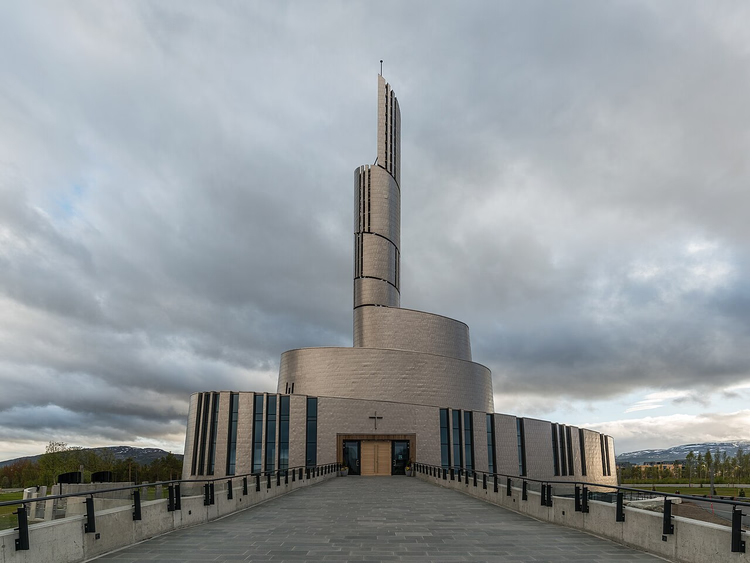
Norway: Alta and mount halde
 © DXR · CC BY-SAPhoto: DXR, CC BY-SA (https://creativecommons.org/licenses/by-sa/4.0), Wikimedia Commons
Finnmark lies in the far north of Norway. The region's main city is called Alta, and it has an airport and direct flights from Oslo. Near the city stands the Sorrisniva ice hotel on the Alta River.
The aurora in Alta is visible from October to mid-April (as of 09/2026, Visit Alta). During the day, hike up Mount Halde: the former observatory site at the top remains, offering a view of the entire fjord.
The ascent takes several hours, so go in the morning, and add March to your plan separately: that month Alta hosts the Borealis festival with music, lectures, and nighttime trips out of town to see the aurora.
How to get there: Alta airport is close to the city center.
Who it's for: those who want to combine nighttime aurora hunting with daytime hikes.
The catch: the hike up Halde takes time and effort.
Prices: Sorrisniva prices on Trip.com
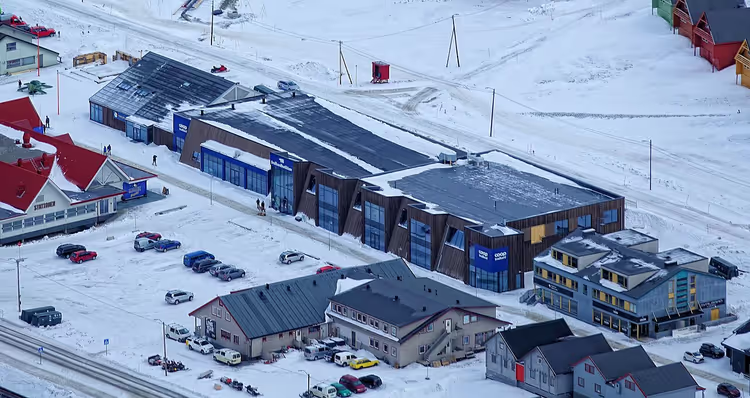
Svalbard: polar night in Longyearbyen
 © Bjørn Christian Tørrissen · CC BY-SAPhoto: Bjørn Christian Tørrissen, CC BY-SA (https://creativecommons.org/licenses/by-sa/4.0), Wikimedia Commons
Svalbard is part of Norway as the province of Svalbard. The archipelago's main town is called Longyearbyen, the northernmost town with regular flights. People come here for the polar night and complete peace.
The dark season lasts from late October to mid-February, and the polar night runs from mid-November to late January (as of 09/2026, Visit Svalbard). During these months, the aurora can be seen even during the day.
Hotels here are built with panoramic glass domes. You lie under a warm blanket and look up at the ceiling instead of out a window. For those who don't want to freeze, this is a convenient option, but also the most expensive one.
Who it's for: those who value comfort and aren't up for nighttime outings in the cold.
Not for: those who want long walks and a modest budget.
Safety: outside Longyearbyen it's safer to go with a guide, as polar bears live on the archipelago.
Hotels: Longyearbyen hotels on Trip.com
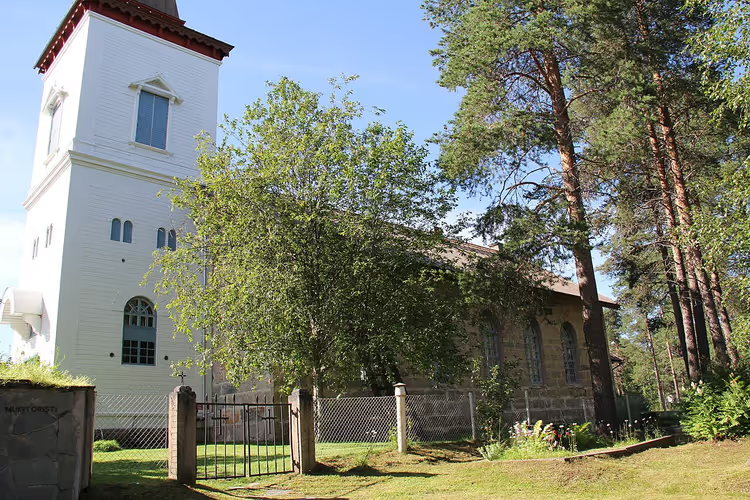
Finland: Lapland and Sodankylä
 © Htm · CC BY-SAPhoto: Htm, CC BY-SA (https://creativecommons.org/licenses/by-sa/3.0), Wikimedia Commons
Finnish Lapland suits beginners better than other regions. The aurora is seen here more often than the northern average, and hotels cater to families with children (as of 09/2026, Visit Finland).
Two areas are worth attention. Sodankylä is known for its quiet pace and its aurora research center, while Rovaniemi is home to the official Santa Claus residence, where families go in winter for the holiday experience.
In Sodankylä there is the "Crown of Light": a hall shaped like a lavvu, a traditional Sami tent, where an artificial aurora is displayed. Kids love it, and adults find it helps them understand what exactly to look for in the night sky.
In Rovaniemi in winter, Polarium, a show theater about the northern lights, is open. Stop by if you're visiting with kids for the winter holidays.
How to get there: Rovaniemi Airport, direct flights from Helsinki and some European cities.
The catch: in December and January there are few daylight hours, so daytime walks are almost impossible.
Hotels: hotels in Lapland on Trip.com
Iceland: Hotel Rangá in the south of the island
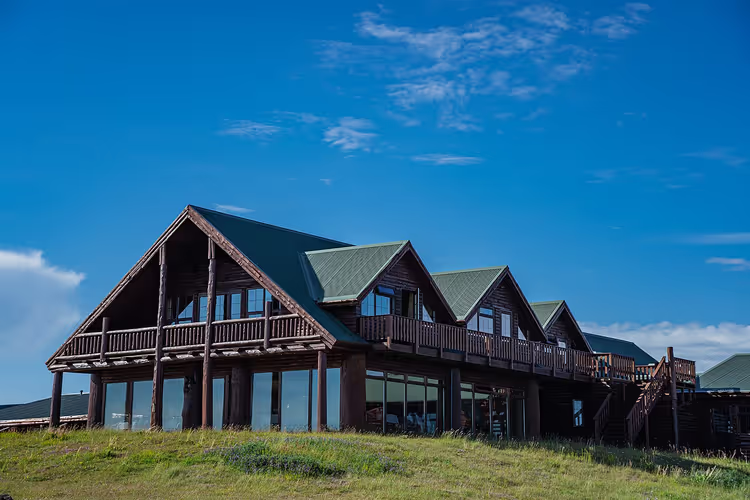
Iceland has no large landmass in the north, but it does have the warm Gulf Stream and a hotel that made the aurora part of its service. Hotel Rangá is located southeast of Reykjavik, about an hour and a half away by car.
If the aurora starts at night, they wake you up (as of 09/2026, Hotel Rangá). You can watch it right from the outdoor hot tub. Many people book this hotel specifically for that service.
Reykjavik is a convenient base: from Keflavik Airport to the city takes less than an hour. During the day, see the waterfalls and glaciers of the South Coast; at night, keep an eye on the sky.
Who it's for: couples who want romance without hiking and cold.
The catch: the weather changes every couple of hours, and there may be no clear nights at all.
Sweden: Abisko and Aurora Sky Station
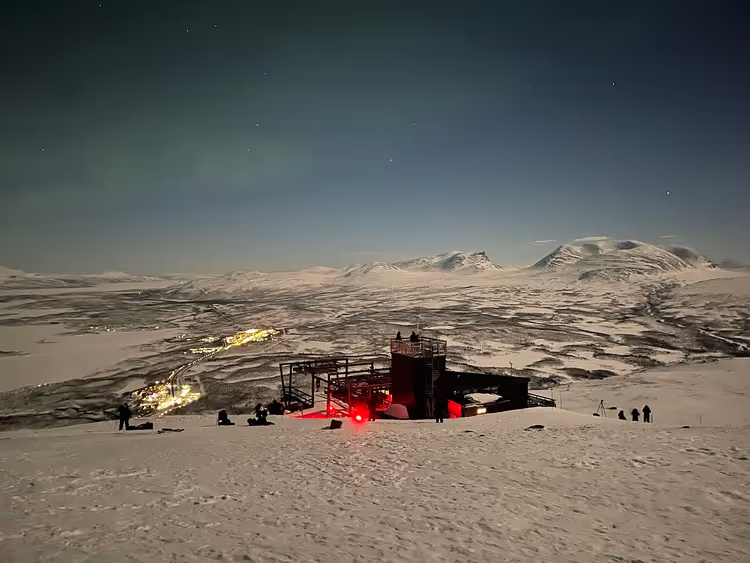 © Mohsen Ramezanimofrad · CC BY-SAPhoto: Mohsen Ramezanimofrad, CC BY-SA (https://creativecommons.org/licenses/by-sa/4.0), Wikimedia Commons
Abisko lies in Swedish Lapland, about 200 km beyond the Arctic Circle (as of 09/2026, Visit Abisko). The national park has its own microclimate: the mountain range holds back the clouds, so clear skies occur here more often than in the surrounding area.
Aurora Sky Station operates above the park. You ride an open chairlift two kilometers up and end up at an altitude of 900 meters (as of 09/2026, Aurora Sky Station). At the top there's an observation tower and a small restaurant.
Kiruna serves as the nearest major town and railway station. Feel free to book two or three nights: one clear night out of three is already considered lucky.
Who it's for: those willing to go up in freezing weather on an open chairlift.
The catch: the wind is stronger at the top, so dress warmer than you would below.
Hotels: hotels in Kiruna on Trip.com
Alaska: Fairbanks
Fairbanks lies in central Alaska, under what is known as the aurora oval. The season here officially runs from August 21 to April 21 (as of 09/2026, Explore Fairbanks).
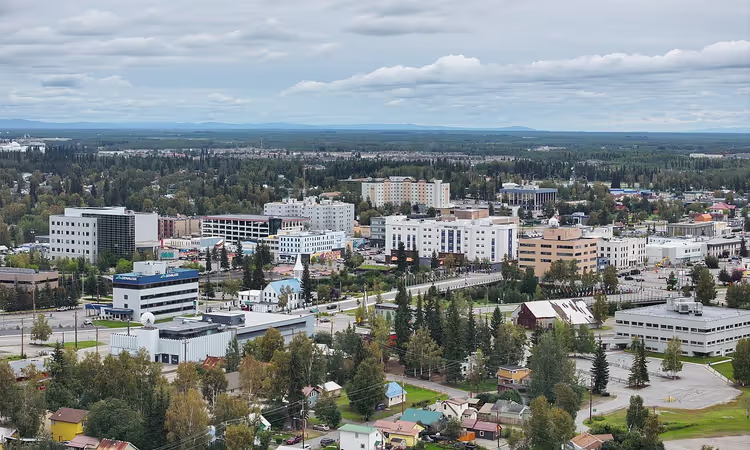 © Quintin Soloviev · CC BYPhoto: Quintin Soloviev, CC BY (https://creativecommons.org/licenses/by/4.0), Wikimedia Commons
According to the city tourism office, on a clear dark night the aurora is visible on average four nights out of five. If you spend at least three nights here and head out to look at the sky late in the evening, your chance of seeing the aurora exceeds 90% (as of 09/2026, Explore Fairbanks).
You can watch from heated cabins and domes, during dog sledding and snowmobile trips, or on sightseeing flights beyond the Arctic Circle.
Who it's for: those who want to see the aurora as early as late summer or combine it with winter activities.
The catch: a long flight from Europe and severe frosts in the middle of winter.
⁉️🤔 Frequently asked questions
When is the best time to go see the northern lights?
In the Northern Hemisphere, dark nights last from September through March. Aim for a new moon and clear nights, and don't be afraid of the cold: in a hard freeze the sky is usually clearer than around freezing.
Can you see the northern lights in a city?
In large cities, light pollution washes out faint displays. It's worth getting at least ten kilometers away from the center. In Longyearbyen and Abisko the towns are small, so a short trip to the edge is enough.
Do you need a tour or can you manage on your own?
Both work. A tour takes care of transport and warm clothing at night. On your own you save money, but you find the viewing spot yourself and track the forecast yourself. For a first winter trip, a tour is usually more convenient.
How many nights should you plan for?
Plan for at least three nights. The aurora depends on cloud cover, not on your schedule. Three nights give you noticeably better odds than one and let you wait out bad weather without extra stress.
Does the Moon affect viewing?
A full Moon brightens the sky, and faint auroras get lost against it. Plan your trip close to a new moon. Bright displays are visible even with the Moon, but the contrast is worse.
In short: what's worth booking
If you have a short trip, go for Alta or Abisko. If you're traveling with kids, look at Rovaniemi and Sodankylä. If you want comfort without the cold, choose Hotel Rangá. If you want to catch the aurora as early as late summer, look at Fairbanks, Alaska.
What's important to remember: accommodation in the North gets booked up early, and prices are higher in season. Compare options before your trip and leave some buffer for bad weather. Find hotels for an aurora trip on Trip.com.

A small editorial team writing guides for independent travel. We travel ourselves, but we haven’t been everywhere, so we check prices, opening hours and how to get there against official sources.