
















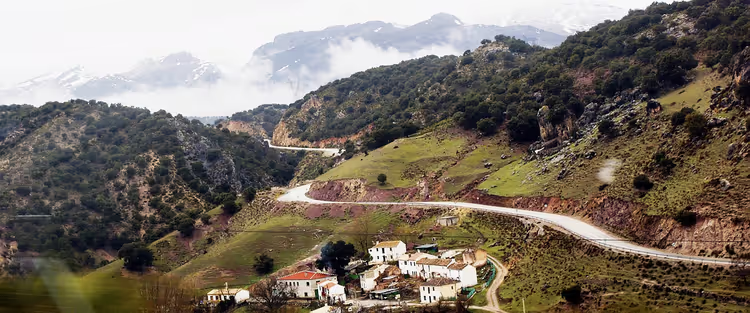
Andalusia in winter: 6-day route with tickets to the Alhambra and Mezquita
In December, the south of Spain is warm. We put together a six-day Andalusia itinerary: Seville, Cordoba, Granada, and Malaga. That's about 700 km on the map and four cities without rushing.
Two tickets shape the whole itinerary. The Alhambra entrance costs 22.27 € plus a service fee (as of 09/2026, official Patronato de la Alhambra website). A ticket to Seville Cathedral costs 13 € online or 14 € at the ticket office (as of 09/2026, official cathedral website). In winter the lines are shorter, but the days are short too. Book your tickets in advance.
Ad: this article contains affiliate links, we earn a commission if you book through them, at no extra cost to you.
How the 6-day itinerary works
💡 In short:
- The route is a loop: Seville, Cordoba, Granada, Malaga, and back to Seville.
- Between cities it's 1.5 to 2.5 hours on the map, with part of the route on highways.
- Prices and opening hours: 09/2026, verified on the official Alhambra website.
The logic is simple. You fly into Seville, drive to Cordoba from there, then to Granada and the coast. You return to Seville and fly out from the same city. That way you don't need a return ticket from another city, and you drop the car off where you picked it up.
Day | City | Main focus | Book tickets in advance |
|---|---|---|---|
1 | Seville | first evening and tapas bars | no |
2 | Seville | cathedral, Giralda, Plaza de España | cathedral and Giralda |
3 | Cordoba | Mezquita and Roman bridge | Mezquita |
4 | Granada | Alhambra and Generalife | Alhambra |
5 | Malaga | port and coast | no |
6 | Seville | return trip to the airport | no |
You either stay overnight in three cities in a row or return to Seville each time. The second option is more convenient if you don't want to pack your suitcase every day. The trade-off is that you spend extra hours on the road.
Day 1: Seville and the first evening
Seville is the capital of Andalusia and a convenient starting point for the route. The plane lands on the outskirts, and a bus or taxi gets you to the center. Give the evening to the old town.
Don't overplan your first evening. Tapas bars and dry sherry await you in the center. Portions are small, so over the course of an evening you get to try several dishes. The bar tab is written in chalk on a board, which is handy: you can see how much you've racked up.
There's a catch with the car. The historic center has many one-way streets, and the GPS gets as confused as you do. Leave the car in an underground parking garage and walk from there. On the map, you can cover the center in an evening.
You'll find guided city tours on GetYourGuide: Seville.
Day 2: Seville cathedral and the Giralda
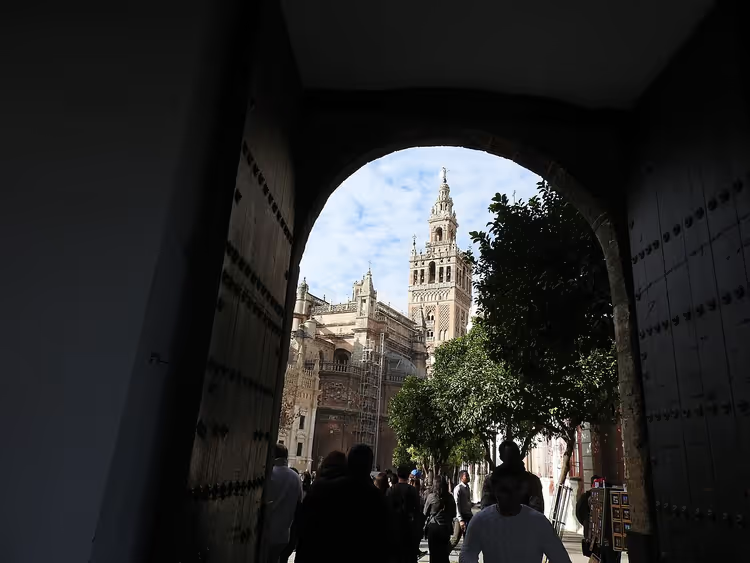
The cathedral stands on the site of an Almohad mosque, and its bell tower, the Giralda, grew out of the former minaret. Inside you'll see the largest altarpiece in the Christian world. Construction began in the early 15th century, and the cathedral surpasses all Gothic churches in Europe in size.
 © JoseGaRoa · CC BY-SAPhoto: JoseGaRoa, CC BY-SA (https://creativecommons.org/licenses/by-sa/4.0), Wikimedia Commons
Take a separate look at the Giralda from outside. The tower is made up of two eras: the lower part grew out of the minaret, and the upper part was added in Christian times. From the square you take in its height, and from the climb you see the tiled roofs of the old town and church domes. The Moorish heritage in Seville is exactly in details like these.
Opening hours and admission
Monday through Saturday the cathedral is open from 11:00 to 18:00, on Sunday from 14:30 to 19:00 (as of 09/2026, official website). A ticket costs 13 € online and 14 € at the ticket office, and the visit takes about 75 minutes (as of 09/2026, cathedral rates). On Sundays from 16:30 to 18:00 admission is free, but only with advance booking.
Book a morning slot. By midday the halls fill up, and the line for the Giralda grows. You climb via a ramp, with no steps, so the ascent is easy.
- The catch: access to the Giralda closes at 17:00, even when the cathedral is open until 18:00.
Next to the cathedral stands the city hall, and from there the pedestrian Avenida de la Constitución begins. This street takes you straight to the river.
Plaza de España and Torre del Oro
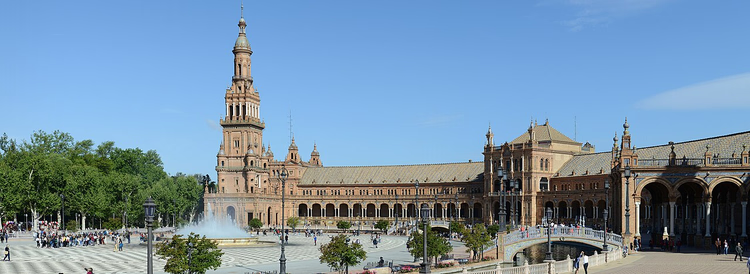
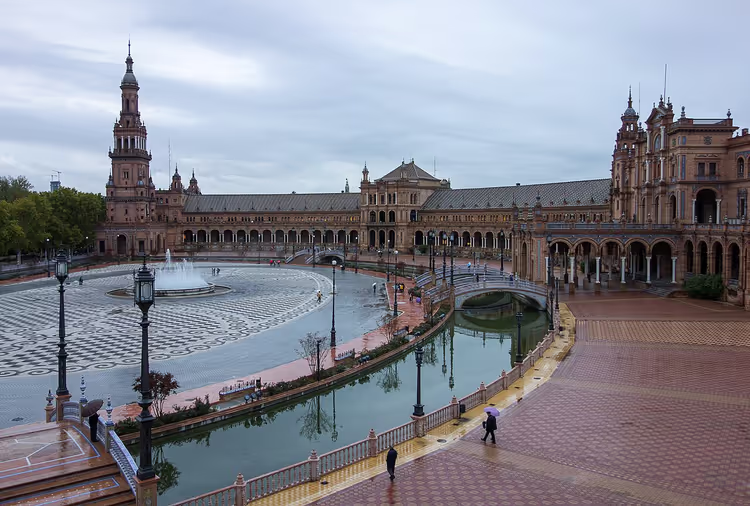
Plaza de España was built for the Ibero-American Exposition. It's a huge semicircle with ceramic panels representing the provinces of Spain and a canal where you can ride in boats. In the morning there are few people here; in the afternoon school groups arrive and it gets noisy.
 © Alvesgaspar · CC BY-SAPhoto: Alvesgaspar, CC BY-SA (https://creativecommons.org/licenses/by-sa/4.0), Wikimedia Commons
Then head to the Guadalquivir. On the bank stands the Torre del Oro, the Gold Tower and a former part of the city fortifications. From the opposite bank you'll see the buildings of the former World's Fair.
 © Sergey Ashmarin · CC BY-SAPhoto: Sergey Ashmarin, CC BY-SA (https://creativecommons.org/licenses/by-sa/3.0), Wikimedia Commons
If you want to see everything at once, take a one-hour bus tour with stops where you can get off. It takes you past the main sights, and you can decide later where to return.
Between the square and the tower there's a riverside promenade with shops and bars. Sit by the water, order tapas, and take your time.
Day 3: Cordoba and the Mezquita
The drive from Seville to Cordoba takes about 2 hours on the map. The city sits on the same Guadalquivir, so the scenery already looks familiar.
In the center, the Mezquita, the cathedral mosque, awaits you. Inside you see a forest of hundreds of columns and double arches striped in red and white. The bell tower was once a minaret, and the mihrab has survived to this day. Tickets cost €15 (as of 09/2026, official Mezquita website).
The building's history explains its appearance. Islam shaped the city's life for many centuries, and the mosque was considered the largest in the western Islamic world. After the Reconquista, a Catholic cathedral was built inside, so today you walk between Muslim arches while Christian vaults open up above you. You won't find this kind of hybrid anywhere else in Spain, and people come here for it even if they're indifferent to places of worship.
Free morning window
Monday through Saturday from 8:30 to 9:30, admission is free (as of 09/2026, official website). Arrive at opening time and walk in without a queue. At other times, buy your ticket online.
- The catch: the window is short, and tour groups aren't allowed in during that hour.
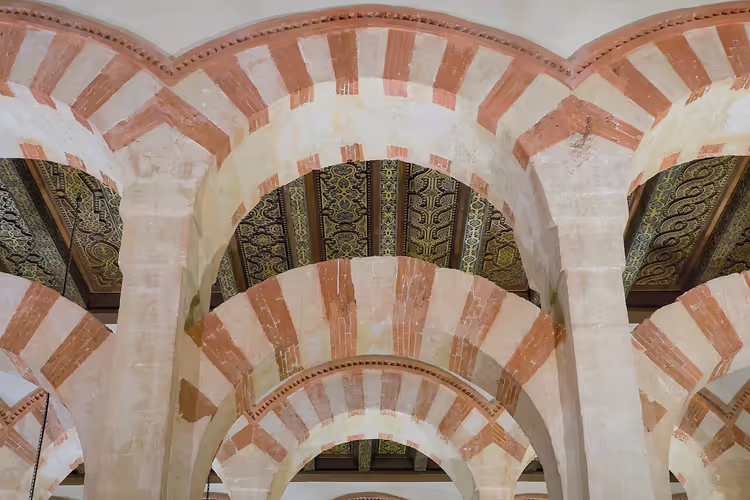 © Benjamin Smith · CC BY-SAPhoto: Benjamin Smith, CC BY-SA (https://creativecommons.org/licenses/by-sa/4.0), Wikimedia Commons
For Cordoba tours, check GetYourGuide: Cordoba.
Roman bridge and the alcazar of Cordoba
From the Mezquita, walk down to the river and out onto the Roman bridge. From there you get a view of the city and the Mezquita as a whole. On the map, the walk takes about ten minutes.
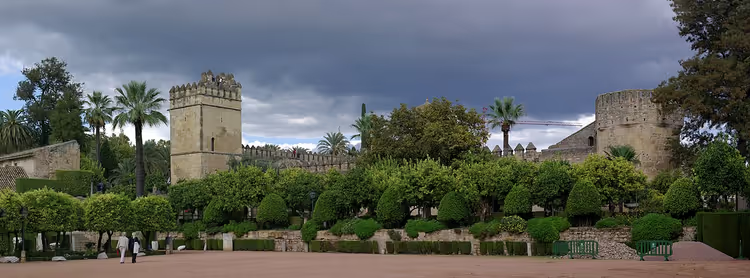 © Berthold Werner · CC BY-SAPhoto: Berthold Werner, CC BY-SA (https://creativecommons.org/licenses/by-sa/3.0), Wikimedia Commons
A little further upstream stands the Alcazar of the Christian Monarchs. Inside, you'll see Roman finds and gardens with fountains. Visit the fortress first, and save the bridge for sunset.
In the evening, it's warmer by the river than in the narrow streets. Grab a table by the water and watch the illuminated towers.
Day 4: Granada and the Alhambra
The drive from Cordoba takes about 2.5 hours on the map. Along the way, the mountains get higher.
The Alhambra remains the main stop on the route. The ticket gives you access to the Nasrid Palaces, the Alcazaba, and the Generalife gardens. Inside, you'll find the Court of the Myrtles with the arcade reflected in the water and the Court of the Lions with its fountains. Water works like air conditioning here, keeping the palaces cool.
The Generalife deserves its own time. The summer residence of the Granadan emirs stretches along the slope, and from its viewpoints you see the whole city and the red towers of the Alhambra. On the map, the climb from the main entrance takes about twenty minutes, but you'll be walking uphill. Wear comfortable shoes; the stone stairs get slippery after rain.
Tickets and opening hours
A general ticket costs €22.27 plus a service fee, and separate entry to the Generalife gardens costs €12.73 (as of 09/2026, Alhambra price page). From October 15 to March 31, the Alhambra is open from 8:30 AM to 6:00 PM, and from April 1 to October 14 from 8:30 AM to 8:00 PM (as of 09/2026, opening hours). Closed on December 25 and January 1.
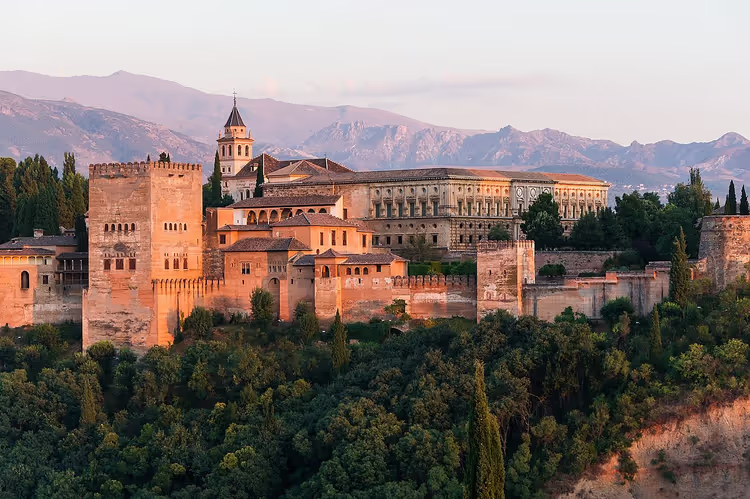
With the ticket, you check two things. The entry time for the Nasrid Palaces is set in advance and cannot be changed. Arrive at opening time, and you'll have enough time for the gardens.
- The catch: entry to the Nasrid Palaces is only during the hour printed on the ticket.
Tours and tickets in Alhambra
Guided tours, skip-the-line tickets and activities — most offers can be cancelled free of charge.
See offers on TiqetsThe widget loads once you give your consent.
Granada cathedral and Sierra Nevada
You'll find Granada Cathedral a stone's throw from Gran Vía de Colón. The building has been under construction since the 16th century, and it has no bell towers: the towers were never finished. On a Sunday morning the city is empty, only coffee shops are open.
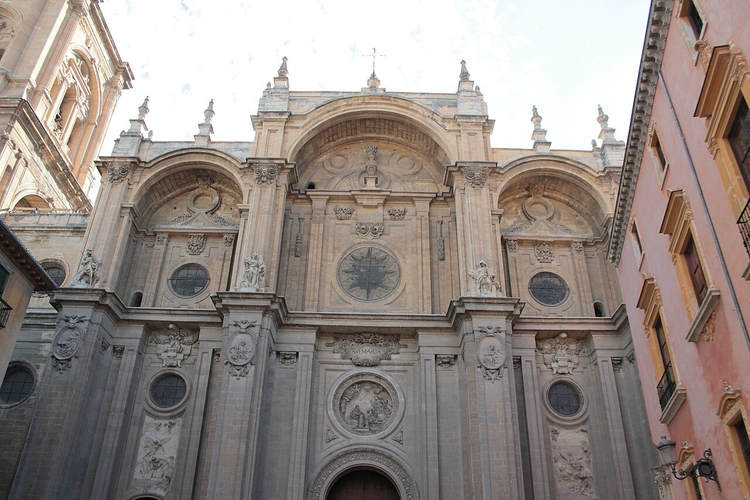 © John Samuel · CC BY-SAPhoto: John Samuel, CC BY-SA (https://creativecommons.org/licenses/by-sa/4.0), Wikimedia Commons
Next, the route leads to the viewpoints. From them you see the Alhambra in full and the snow on the Sierra Nevada behind it. You can dedicate part of the trip to skiing.
Don't leave Granada for just one evening. The city reveals itself slowly, so give it a full day.
Day 5: Malaga and the Costa del Sol coast
The drive from Granada takes about 2 hours on the map. You take the A44 toward Motril, then turn toward the sea. Along the way you pass Nerja and Vélez-Málaga, and this is where the fish restaurants are.
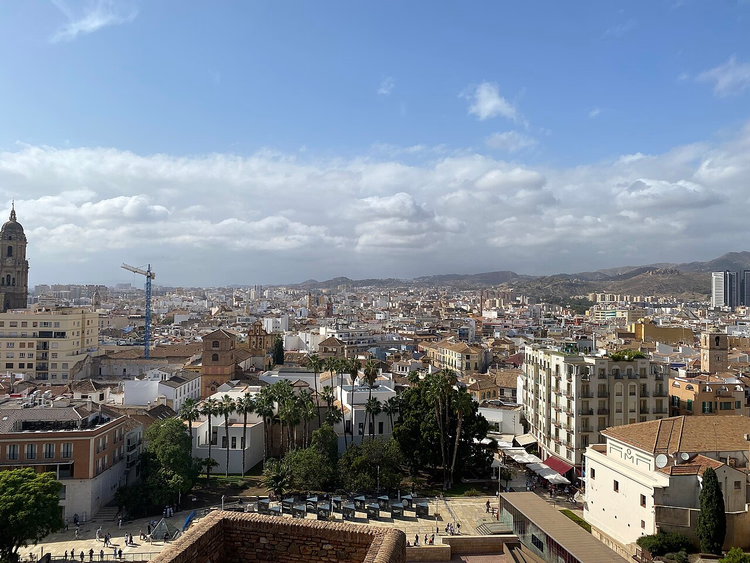
In Malaga you park near the port and walk into the center. Cruise ships dock at the piers, and the La Malagueta arena rises nearby. From the port it's easy to reach the main streets; the city is compact.
Further down the coast, the Costa del Sol begins. In winter the beaches are empty, the water is cool, but the sun does its job. Bring a jacket and walk along the sea.
For tours of Malaga and the surrounding area, see GetYourGuide: Malaga.
Day 6: the return trip to Seville
You spend the last day on the road. From Malaga to Seville you drive along the highway through Antequera. The weather changes along the way: warm on the coast, rain in the mountains.
In Seville you park in the center and walk around for another couple of hours. Then you return the car at the airport and fly out. Return the car at the same place where you picked it up, otherwise the rental will cost more.
Traveling between cities without stress
High-speed trains run between Seville, Cordoba, and Malaga. This is the most relaxed way to get around: you buy a ticket in advance and don't have to hunt for parking in the center. Check schedules on Trip.com: trains.
A car gives you freedom on the coast and in the mountains. Parking in Andalusia is reasonably priced, but finding a spot in the center takes a long time.
- The catch: the centers of Seville and Granada have many one-way streets, and you end up circling the same block twice.
Where to stay along the route
The same Center chain appears along the route: Sevilla Center, Córdoba Center, and Granada Center. All three hotels are four-star, and for a loop route this is a convenient setup.
- Who it's for: if you want to book hotels from one chain in all the cities on the route.
Compare prices by date on Trip.com: hotels.
What's important to know about winter in Andalusia
Winter changes southern Spain more than it seems. You see Moorish heritage at every turn, but the feel of the city itself depends on the weather: in Seville you walk around without a jacket during the day, and in the evening you pull out a warm sweater. Rain comes in waves and often ends as quickly as it started, so an umbrella stays in your backpack at all times and doesn't get in the way.
Daylight hours are short, and by evening many sights close earlier than in summer. Plan major viewpoints for the morning, and leave walks and dinner for the second half of the day.
A separate note about lines. In winter there are fewer tourists, and you get into Seville Cathedral almost immediately, but the Alhambra still needs to be booked in advance, because slots for the Nasrid Palaces go first. A useful habit: check the opening hours on the official website the day before your visit, since some sights change their schedule for holidays. Catholic holidays in December close cathedrals to tourists, and you only find out from a notice on the door.
⁉️🤔 Frequently asked questions
Do I need a car in Andalusia in winter?
For cities, you don't. Between Seville, Cordoba, and Granada it's more convenient to travel by train, and parking in the centers takes a long time to find. A car wins on the coast and in the mountains, where buses run infrequently. If you rent a car, leave it in an underground parking garage and walk.
When should I buy Alhambra tickets?
A ticket costs €22.27 plus a service fee, and the entry time for the Nasrid Palaces is fixed in advance (as of 09/2026, official Patronato website). In high season, tickets sell out weeks ahead. Buy on the official website as soon as you know your date, otherwise only evening visits will be left.
How much does the Mezquita cost and when is it free?
A regular ticket costs €15, a reduced ticket €12 (as of 09/2026, Mezquita prices and hours). Free entry is available Monday through Saturday from 8:30 to 9:30. The window is short, groups are not allowed in during it, so arrive at opening time and don't be late.
Is it cold in Seville in December?
During the day the city is warm, and you only need a jacket by evening. It rains every other day, so bring an umbrella. Granada is noticeably colder. Pack warm clothes in your suitcase ahead of time.
Is 6 days enough for four cities?
Yes, if you don't linger in one place. Seville deserves two days, Cordoba, Granada, and Malaga one each. The last day goes to the drive back to Seville. The route ends up full but not rushed. If you have an extra day, give it to Granada.
In short: what's worth booking
Put the trip together like this. If you have a short vacation, book the Alhambra in the morning, the Mezquita during the free window, and Seville Cathedral in the afternoon. If you're traveling with suitcases, stay overnight in one city and take the train. If your goal is the sea, add a day for the Costa del Sol.
Compare hotels along the route on Trip.com: hotels, and rent a car through DiscoverCars: car rental.
Check insurance terms in advance on EKTA.

A small editorial team writing guides for independent travel. We travel ourselves, but we haven’t been everywhere, so we check prices, opening hours and how to get there against official sources.