
















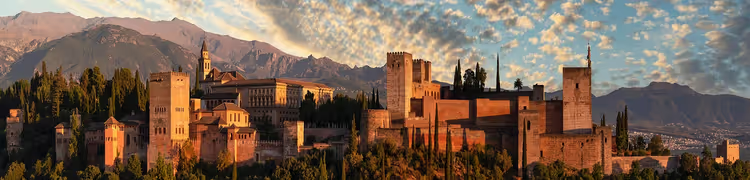
Alhambra and Albaicin: tickets, time slots and the best views of Granada
Granada sits on three hills at the foot of the Sierra Nevada. Moorish palaces stand side by side with a Renaissance cathedral, and the viewpoint by the Church of San Nicolás draws a crowd at sunset.
You can see the main sights in two days. But there is one condition: you need to book your Alhambra ticket in advance, with a time slot. The phone number for monument visitors: +34 958 027 971 (verified on 09/15/2026 on the official website of the Patronato de la Alhambra).
What to see, how much time to allow, and what is currently closed, read below.
Ad: this article contains affiliate links, we earn a commission if you book through them, at no extra cost to you.
Where to start your trip to Granada
💡 In short:
- Alhambra: get a ticket with a morning time slot, enter through the Puerta de la Justicia.
- The Nasrid Palaces and the Generalife are next to each other; the whole complex takes half a day. The Alcazaba is currently closed.
- Christian Granada: the Cathedral, the Royal Chapel, and the Monastery of San Jerónimo.
- A walk: the Albaicín, Carrera del Darro, and the San Nicolás viewpoint at sunset.
- Site status: 09/2026, verified on the official Patronato website.
Split your sightseeing into two blocks. In the morning you go to the Alhambra, in the evening you walk through the Albaicín and climb up to San Nicolás.
History of Granada: Moors, Jews, and Christians
Until the 5th century, a small settlement called Elibirg stood on this spot. It was ruled in turn by the Phoenicians, the Romans, and the Visigoths, and Christianity spread among the inhabitants under the Visigoths.
The Jewish community in one of the districts gave the growing city the name Garnata al-yahud. According to one version, the word "Granada" comes from it.
The last Muslim rulers, the Nasrids, held the city from the 13th to the 15th century (according to the history of the complex). Under them, crafts, science, and trade flourished.
Irrigation appeared in agriculture. Almonds, oranges, lemons, and sugar cane began to be grown here.
Muslims, Jews, and Christians lived side by side in Granada. You can still see traces of all three cultures in the city's architecture today, and new churches rose on the foundations of mosques.
Alhambra: palaces, fortress, and gardens
The Alhambra, the "red fortress," occupies an entire hill. It is a complex of palaces, walls, towers, and parks that was built over nearly six centuries.
The decoration of the Nasrid Palaces impresses even without a guide: warm-toned marble, lacy plaster carving, colored ceramics, perfect symmetry of patterns. Fountains and greenery turn the inner courtyards into a garden.
 © Tibor Kovacs · CC BYPhoto: Tibor Kovacs, CC BY (https://creativecommons.org/licenses/by/2.0), Wikimedia Commons
Buy your ticket in advance. You choose your entry time for the Nasrid Palaces when purchasing and must stick to it (according to the official monument portal). Without a time slot, you risk being turned away at the gate.
If you don't want to deal with time slots yourself, book a guided tour of the Alhambra.
Tours and tickets in Alhambra
Guided tours, skip-the-line tickets and activities — most offers can be cancelled free of charge.
See offers on TiqetsThe widget loads once you give your consent.
Alcazaba: the military part of the fortress
The Alcazaba served as the defensive part of the Alhambra, and construction began with it. From the watchtower there was a view of the entire city and the Sierra Nevada.
Further down the slope, the foundations of barracks, fortifications, and pits where prisoners were held have survived. They give an idea of the Moors' military skills.
Important: the Alcazaba is currently closed to visitors, and routes through the complex have been changed (checked on 09/15/2026 on the official Alhambra portal). Keep this in mind when planning your day.
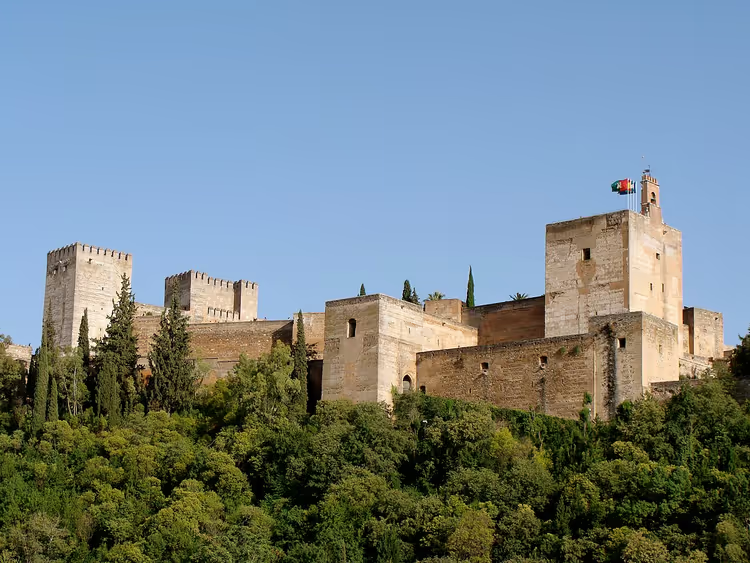 © Jebulon · CC BY-SAPhoto: Jebulon, CC BY-SA (https://creativecommons.org/licenses/by-sa/3.0), Wikimedia Commons
Generalife: the sultan's gardens
The Generalife served as the sultan's country residence. The gardens supplied their owners with vegetables and offered seclusion in the heat.
Walkways, water channels, columns, arches, and flower beds have survived to this day. In summer you can escape the heat here: shade and water do their job.
The Generalife is currently open and operating on its usual route (checked on 09/15/2026 on the Patronato page). Book a morning time slot.
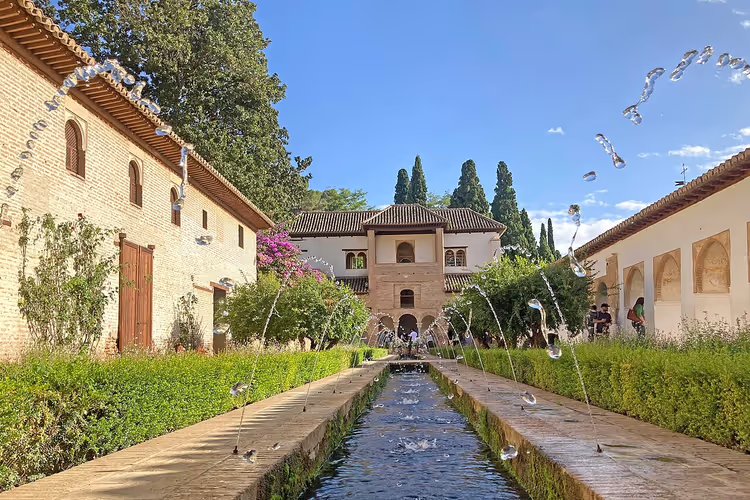 © Charles J. Sharp · CC BY-SAPhoto: Charles J. Sharp, CC BY-SA (https://creativecommons.org/licenses/by-sa/4.0), Wikimedia Commons
El Bañuelo Arab baths
El Bañuelo on Carrera del Darro dates back to the 11th century. It is one of the few surviving bath complexes in Andalusia (according to the monuments section on the Patronato website, 09/2026).
In Islam, ablution was considered part of etiquette. Over time, pools, perfumed baths, and massage rooms turned into centers of socializing and leisure.
The baths have reopened after a technical inspection (checked on 09/15/2026 on the Patronato portal). Stop by if your route takes you toward the Albaicín.
 © Martin Furtschegger · CC BYPhoto: Martin Furtschegger, CC BY (https://creativecommons.org/licenses/by/3.0), Wikimedia Commons
Cathedral and Royal Chapel
The cathedral was under construction until 1704, with the first stone laid in 1523 (according to the cathedral timeline). It is one of the peaks of the Spanish Renaissance.
Diego de Siloé and Alonso Cano worked on the cathedral. Inside you will see white columns, gilding, and paintings between them.
The cathedral is active. Masses are held almost the same way as five centuries ago.
Important: as of 09/15/2026, the cathedral is closed to tourist visits after earthquakes in the city. Address: Gran Vía de Colón 5, phone +34 958 222 959, purchased tickets are promised to be reissued or refunded (official website).
Nearby is the Royal Chapel, where Ferdinand of Aragon and Isabella of Castile are buried.
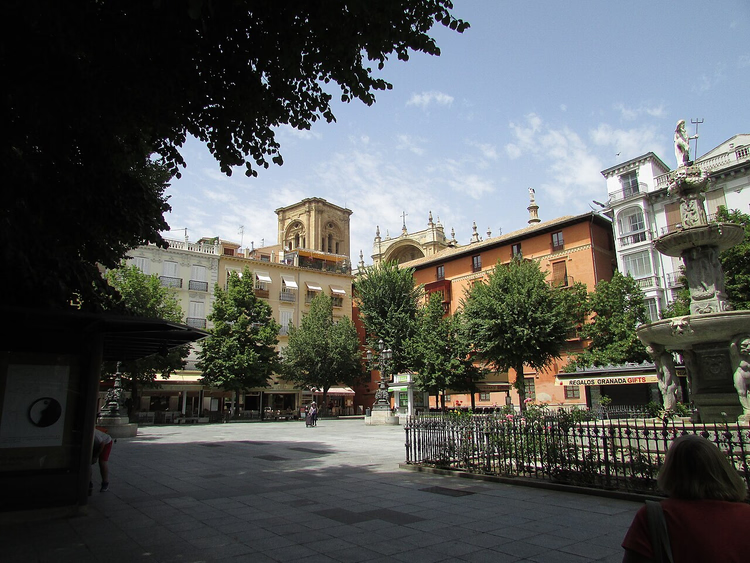 © Kolforn · CC BYPhoto: Kolforn, CC BY (https://creativecommons.org/licenses/by/3.0), Wikimedia Commons
Albaicín and its colorful streets
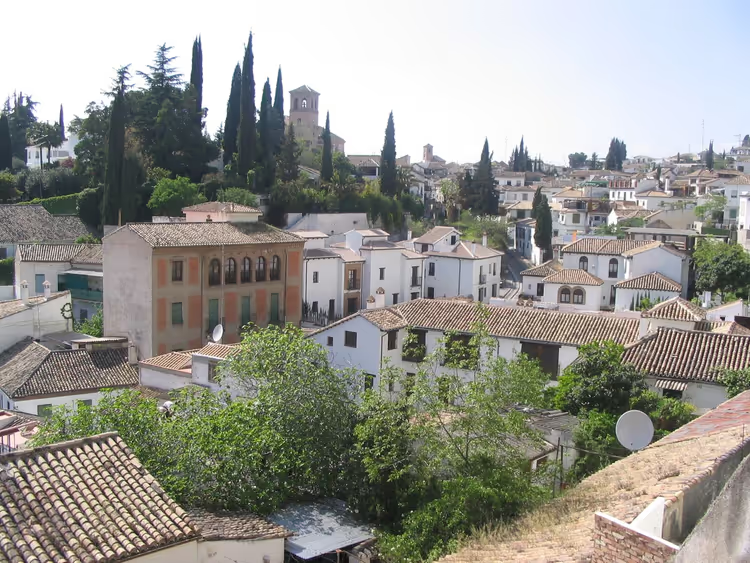
The Albaicín spreads across the hillside opposite the Alhambra. Walking here is a must: that is the only way to feel the rhythm of the city.
Markets with an Arab flavor operate on the narrow streets. Facades are often decorated with graffiti: from simple pictures to genuine works of art.
Carrera del Darro runs along the Darro River. Stone bridges connect the Alhambra and the Albaicín, and Paseo de los Tristes offers views of the red fortress.
 © Miguel303xm · CC BY-SAPhoto: Miguel303xm, CC BY-SA (https://creativecommons.org/licenses/by-sa/2.5), Wikimedia Commons
Calle Navas is famous for tapas. Drinks here often come with free cold appetizers, so dinner ends up cheaper.
Try the gazpacho, jamón, and tortilla. The food here is simple, but it is enough to understand Andalusia.
Sacromonte: caves and flamenco
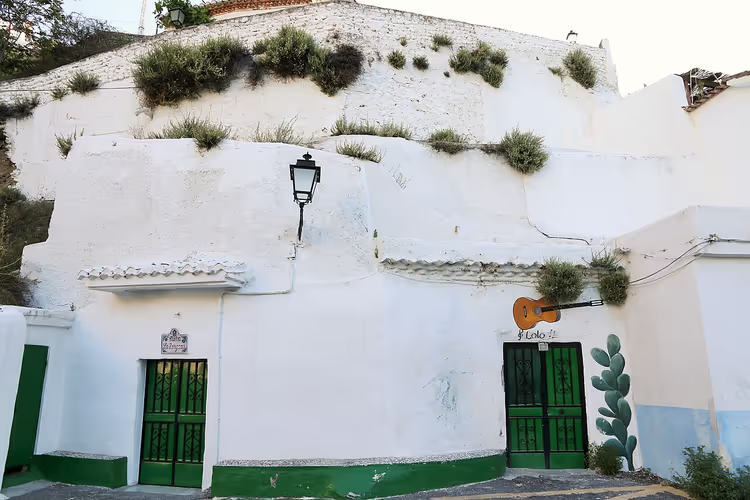
Sacromonte spreads across the hillside above the city. Spanish Roma, the "gitanos," settled in these caves as far back as the Moorish period and gave the world flamenco.
 © Øyvind Holmstad · CC BY-SAPhoto: Øyvind Holmstad, CC BY-SA (https://creativecommons.org/licenses/by-sa/4.0), Wikimedia Commons
Today tablaos operate in the caves. You can watch flamenco and even take a couple of lessons: the underground halls have all the amenities.
Higher up the hill stand white houses. Owners decorate their walls with dishes and household items, and it is worth seeing with your own eyes.
Sacromonte Abbey holds the relics of Saint Cecilio, the city's patron saint. The authenticity of the relics has not been proven, but every February a procession of believers makes its way here.
San Nicolás viewpoint
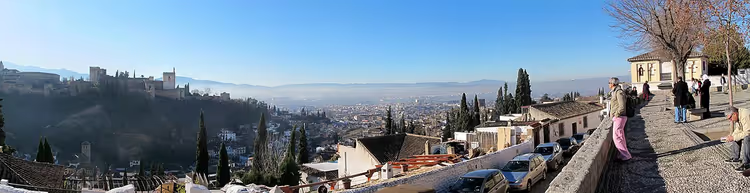
At the top, by the Church of San Nicolás, there is a small park with a viewpoint. It is the best spot for a panorama of the city.
Walk uphill from Plaza Nueva, about 15 minutes on foot (according to the map). Arrive an hour before sunset, otherwise you will be looking at the view through other people's phones.
At sunset the Alhambra glows red against the snow of the Sierra Nevada. Poets have sung of this view, and you will understand why.
 © Jmdigne · CC BY-SAPhoto: Jmdigne, CC BY-SA (https://creativecommons.org/licenses/by-sa/3.0), Wikimedia Commons
⁉️🤔 Frequently asked questions
How much time do you need for the Alhambra?
Set aside half a day. You go through the Nasrid Palaces according to your time slot, then explore the Generalife. The Alcazaba is currently closed, so the route is shorter than usual. Do not plan anything important after the Alhambra: the climb up the hill and the lines drain your energy.
Do you need to buy tickets in advance?
Yes. The entry time for the Nasrid Palaces is fixed at purchase, and in high season morning slots run out first (verified on 15.09.2026 on the Alhambra portal). Buy your ticket on the official website, not from resellers.
Is the Cathedral open?
As of 15.09.2026 tourist visits are suspended after the earthquakes in Granada. Purchased tickets are promised to be reissued or refunded through the cathedral's official website. Check the status before your trip, as the administration's plans change.
Where can you watch flamenco?
In the caves of Sacromonte, where tablaos operate. This is the most atmospheric option, because flamenco was born right here. Book an evening show and arrive early: seats at the tables go fast.
How many days do you need for Granada?
Two days is enough: one for the Alhambra, the second for the Albaicín, Sacromonte, and the viewpoint. If you love museums, add a third day for the Monastery of San Jerónimo.
In short: what to book
If you have one day: take a morning slot at the Alhambra and leave the evening for the Albaicín.
If you have two days: add the Generalife as a separate slot and evening flamenco in Sacromonte.
If you are traveling with kids: start with the Generalife, where there is shade and water, and only then head up to the fortress.
The main booking in Granada is the Alhambra ticket. Tickets with a time slot on Tiqets.

A small editorial team writing guides for independent travel. We travel ourselves, but we haven’t been everywhere, so we check prices, opening hours and how to get there against official sources.