














Backpack for hiking and camping: what to take and what to leave at home
Packing a backpack for an active trip is easier than it seems. But your gear decides whether you cruise through the route or fight with weight and damp. For a day hike, a 15-25 L backpack is enough (according to Tatonka, 10/2026), and an extra kilogram is noticeable by midday.
Good gear doesn't decorate a trip, it takes some of the effort off you. It keeps you warm in the rain, relieves your shoulders and saves your energy for the road. We'll go through which set of equipment covers most scenarios, what to look for when choosing, and where you can really save money.
It helps to plan the route in advance. That way you know whether you need a tent, a stove, or just a light daypack. Below are the basic principles that work both for a quick day hike and for a week of camping.
Why gear matters more than it seems
💡 In short:
- A basic set covers most trips: backpack, footwear, rain jacket, headlamp and first aid kit.
- Choose items by four criteria: weight, durability, packed size and versatility.
- Recommended backpack weight: 10/2026, according to the German Alpine Club (DAV).
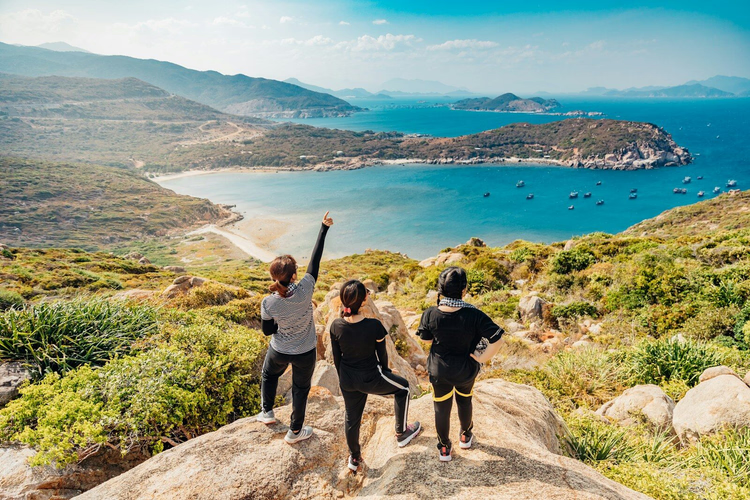
An active trip poses different challenges than a regular city break. On the trail, at a campsite or on a bike route, weight, weather protection, stability and an orderly pack matter more. The wrong backpack or boots without grip turn a good day into an exhausting slog.
The sweet spot between lightness and reliability is especially important. A daypack, layered clothing, a hydration system, a headlamp and a small first aid kit already cover most typical situations. An overloaded backpack tires you more than the occasional missing small item.
A basic kit for your first hike
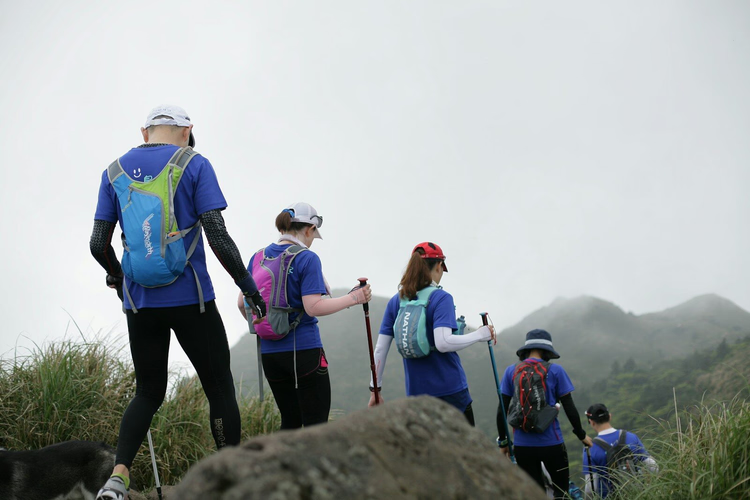
Beginners shouldn't buy everything at once. Start with a basic kit that works on different trips. Then each following purchase will add to your gear rather than replace it.
- A backpack with adjustable straps and a hip belt
- Trekking boots with a stiff sole and good grip
- A rain jacket that packs down small
- A warm mid-layer for cool mornings and evenings
- A headlamp, a water bottle and a small first aid kit
It's cheaper to build such a kit gradually. Large manufacturers like Decathlon have official sections for hiking, camping and cycling gear, with categories divided by type of activity.
Selection criteria: what to look for in the store
Before buying, check four points: weight, durability, packed size and versatility. A jacket that dries quickly, blocks the wind and takes up almost no space is more useful over time than an item made for a single situation.
Criterion | What to look at | Why it matters |
|---|---|---|
Weight | Material, hardware, pockets | A light item saves energy on a long route |
Durability | Seams, sole, zippers | Weak points are the first to put an item out of action |
Packed size | How compactly it folds | This determines how much your backpack can hold |
Versatility | Whether it suits several activities | One good item replaces two specialized ones |
Don't save money on boots and a backpack, save it on secondary small items. According to the German Alpine Club, a backpack should not weigh more than a quarter of your body weight, so for a day trip take the lightest suitable model.
Gear for different trip types
Not every trip needs the same list. A day hike calls first of all for lightness, camping adds a sleeping system, lighting and cookware, and on a bike tour weight distribution becomes almost more important than the total volume of luggage.
Trip type | Priority | What to take |
|---|---|---|
Day hike | Lightness and compactness | Daypack, water, rain jacket, snack, headlamp |
Weekend camping | Comfort and protection | Tent, sleeping bag, lamp, stove, warm layer |
Bike tour or bikepacking | Balance and access | Panniers, lights, repair kit, light clothing |
Trip with changing locations | Versatility | Quick-drying clothing, power bank, compact footwear |
Choose your kit by trip type, not out of habit. If you often change locations, it's better to take fewer specialized items and more of those that work in different conditions.
How to save when buying gear
Before a trip, small purchases quickly add up to a noticeable sum. When it comes to trekking clothing, camping equipment or cycling accessories, the German coupon service gutscheincodes.de can come in handy: it publishes a current Decathlon promo code on a separate page.
This approach is especially useful when you're missing several things at once: a new rain jacket, a bigger backpack and a tent cover. A targeted discount on a clear list is usually a better deal than a spontaneous purchase of the cheapest option. Check the expiry date and the terms before ordering.
Safety: what not to take out of your backpack
Even short routes demand respect. The US National Park Service lists water, food, shelter, and cooking and hygiene supplies as the basics for overnight stays (according to the National Park Service, 10/2026). Don't cross three things off your list:
- water plus a reserve
- a light source with spare power
- a small first aid kit
Beginners underestimate not the distance, but the sum of small problems. A blister, wet clothes or a dead headlamp turn an easy walk into a hard trip back. These are exactly the small things to check first.
What to prepare in advance besides gear
Ad: this article contains affiliate links. We earn a commission if you book through them, at no extra cost to you.
Beyond the backpack, there are two things that help on a trip. The first is connectivity and navigation. On the route, your phone often replaces both map and radio. Compare eSIM plans in advance so that maps and emergency calls work without hunting for a local SIM card.
The second is insurance. Not every policy covers trekking and trips with overnight stays, so check the terms ahead of time: compare the terms before you pay. That way you won't be arguing about coverage once you're already there.
Checklist and comparison of trip types
- Layered clothing instead of a few heavy items
- A headlamp with a spare battery or a charged power pack
- Enough water and a small food reserve
- A compact first aid kit focused on blisters, minor wounds and allergies
- A separate list of items that must be within easy reach
Indicator | Day hike | Weekend camping | Bike tour |
|---|---|---|---|
Luggage volume | Small | Medium and larger | Medium plus panniers |
Main priority | Freedom of movement | Sleeping comfort and rain protection | Weight distribution |
Common mistake | Too little water | No insulation | Poor organization |
Best purchase | Backpack and boots | Tent, lamp, sleeping bag | Panniers, lights, repair kit |
The more dynamic the trip, the more important versatile gear becomes. If you often change locations, take fewer specialized items and more of those that work in different conditions.
⁉️🤔 Frequently asked questions
What matters most for a short active trip?
A balance of light luggage, rain protection, water, navigation and a small safety kit. Don't pack extra, but don't leave the headlamp and first aid kit at home either: they're what saves you when plans change.
Is an ordinary city backpack enough for a hike?
For short walks, sometimes yes. On long routes you need a backpack with a hip belt and back ventilation: it shifts part of the weight to your hips, and you're less tired by the end of the day.
Do you need a headlamp if you set out in the morning?
Yes. The return often drags on, and a headlamp weighs little. Take a model with a spare battery or a charged power pack, so your light doesn't depend on a single source.
What do beginners forget most often?
A rain jacket, blister care, spare power and enough water. These small things are rarely noticed at home and remembered only on the route.
Can you wear new boots straight on a hike?
Better not: boots that aren't broken in quickly rub and cause blisters. Break them in on short walks before the trip, and the long trek will go more smoothly.
In short: how to pack a backpack for an active trip
Active trips succeed with gear that lightens your load instead of weighing you down. Think first about protection, comfort, weight and versatility, and only then about nice extras. Put together a basic kit in advance, then add details for the specific trip type.
- If you're on a day hike: a light backpack, water, a rain jacket and a headlamp.
- If you're camping: add a tent, sleeping bag, lamp and stove.
- If you're on a bike tour: take panniers and a repair kit, and watch your weight distribution.
Check your packed backpack the day before you leave and remove everything unnecessary: that way you won't forget anything important or carry anything you don't need.

A small editorial team writing guides for independent travel. We travel ourselves, but we haven’t been everywhere, so we check prices, opening hours and how to get there against official sources.