
















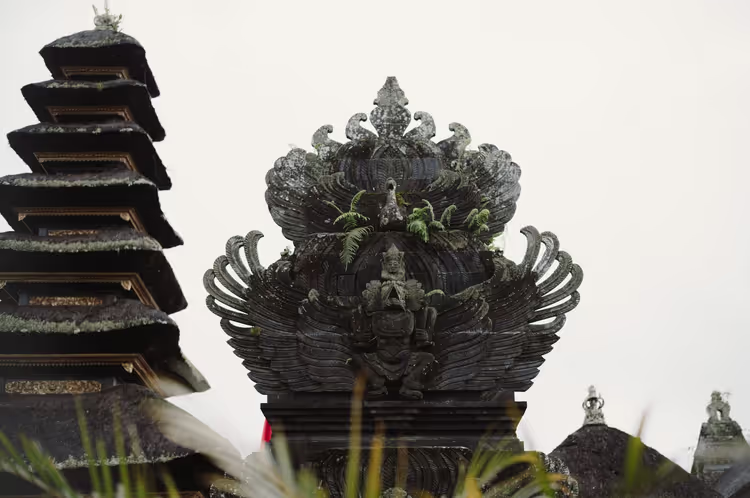
Bali for the first time: how many days you need, where to stay and what to see
A Bali vacation is easy to ruin. The island is large, the roads are slow, and the main sights are scattered across different ends.
Putting together a trip without rushing is realistic. First you choose the season and the area to stay, then a short list of sights. Below, all of this is gathered into one plan.
A first trip usually comes down to three decisions: the dry season, staying in Ubud or in the south, and morning trips to the sights.
Ad: this article contains affiliate links, we earn a commission if you book through them, at no extra cost to you.
A few facts about the island
💡 In short:
- Season: dry from May to September, October is cheaper.
- Base: the south for beaches, Ubud for jungles and the volcano.
- Prices and opening hours: 09/2026, source: Monkey Forest Ubud visit page.
Bali lies in the Malay Archipelago and is part of Indonesia. The island is covered with dense vegetation, volcanic areas, beaches, and rice fields all the way up to the hills. The population exceeds four million people, and tourism provides most of the island's income.
The foundation of the local economy is rice. Fields are everywhere, and the most photogenic ones lie in Tegallalang, where separate photo zones have been set up for visitors. Many families live in small villages and work the land the same way their grandfathers did.
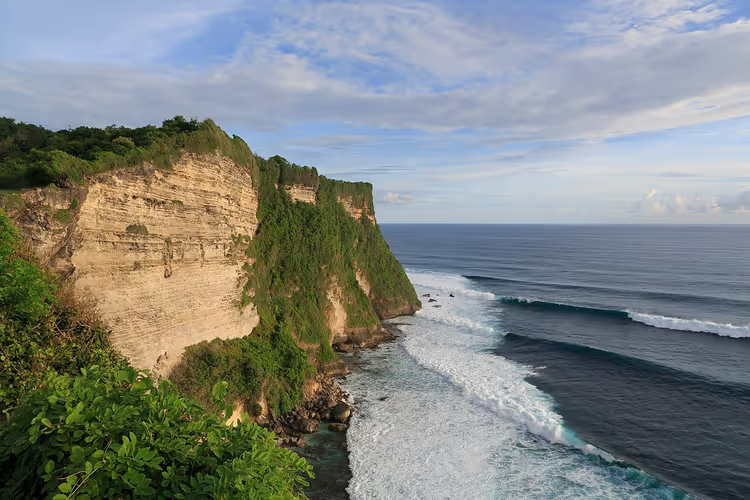 © CEphoto, Uwe Aranas · CC BY-SAPhoto: CEphoto, Uwe Aranas, CC BY-SA (https://creativecommons.org/licenses/by-sa/3.0), Wikimedia Commons
Swimming in Bali is not always about the beach. Waves can be high, currents strong, and there are rocks and reefs underwater. At the same time, the ocean is warm and clear, and in some areas the sand is black: that is the island's volcanic activity making itself known.
The best time to visit is the dry season from May to September. There is almost no rain during these months, and the ocean is calmer. October comes right after the peak, so budget-conscious travelers choose it.
The language is also worth preparing for. Learn a few phrases in Indonesian (Bahasa) or Balinese, and people will understand you faster: English here is basic, but locals are happy to help with gestures. The friendliness of the Balinese is attributed to their belief in karma.
Denpasar: the capital and Pura Jagatnatha temple
Denpasar at first seems like a cozy provincial town: orange roof tiles, an endless stream of motorcyclists. In reality, it is the island's largest city, with about 0.7 million residents. The capital grows calmly, without fanaticism.
Architects fit new projects into the historic look. Old buildings are preserved here, especially those connected with religion. Temples are almost never empty, and you can easily catch a morning ceremony.
The city's most architecturally interesting temple is Pura Jagatnatha. It is dedicated to the god Sanghyang Widi and occupies a small area, but it looks bright and festive.
The practical side is simple. Take a sarong and come at opening time: it is hot during the day, and there is little shade inside. The drive from the airport to the center takes about half an hour, but at rush hour the car sits in traffic much longer.
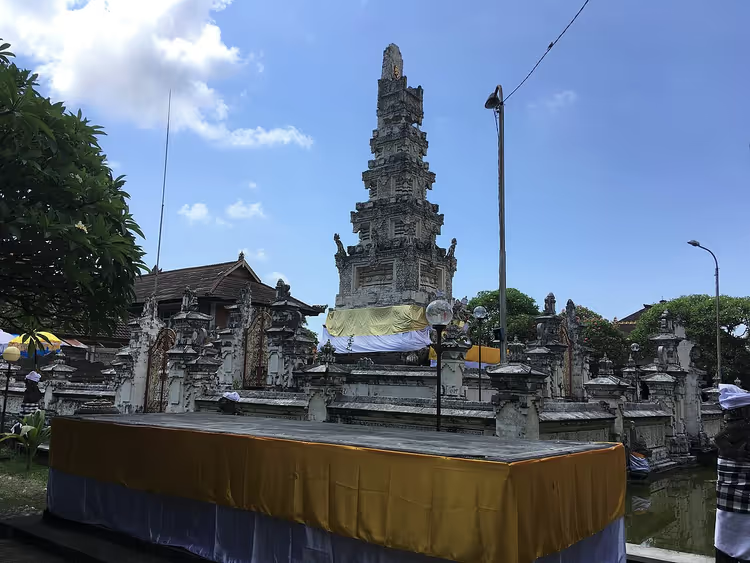 © Christophe95 · CC BY-SAPhoto: Christophe95, CC BY-SA (https://creativecommons.org/licenses/by-sa/4.0), Wikimedia Commons
Temples and artisan villages outside the capital
The main temples of Bali stand far from Denpasar. One of the most revered, the Tanah Lot temple, is located northwest of Kuta, right on the coast. The name translates as "land and sea." The structure is dated to the sixteenth century, and legend says the place was considered sacred two centuries before that.
The complex is open daily from 07:00 to 19:00 (as of 09/2026, Tanah Lot opening hours). An adult ticket costs from 75,000 IDR, payment at the entrance (as of 09/2026, tickets on the official website). Come at low tide, and you can get close to the rock. Before sunset, a crowd gathers at the viewing platforms, so arrive early.
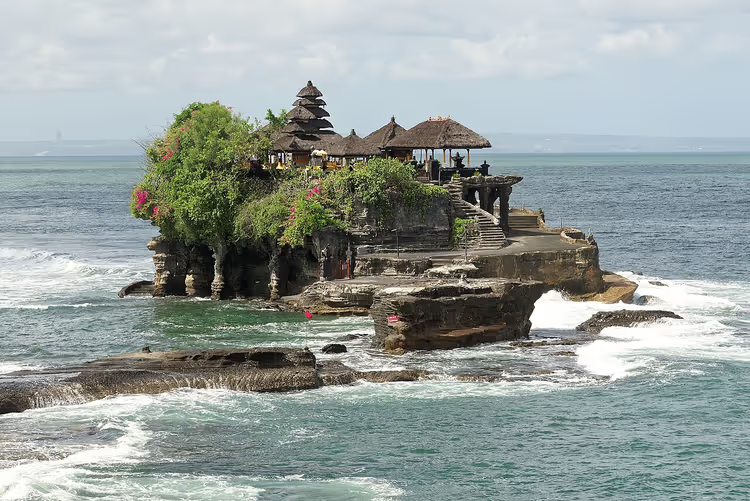 © Jakub Hałun · CC BY-SAPhoto: Jakub Hałun, CC BY-SA (https://creativecommons.org/licenses/by-sa/4.0), Wikimedia Commons
After the social media boom, people started coming to the island for food, drinks, and shopping. Art and culture remain in the shadows, even though Bali has artisan villages where crafts are passed down from generation to generation.
In the villages of Mas and Kemenuh, woodcarving workshops are at work. They make not only figurines but also furniture. In Batubulan you will see how stone statues are carved: they stand all over the island, guarding homes and temples, greeting guests at shops and on beaches. You can buy a piece on the spot, and bargaining is appropriate.
Balinese cuisine: nasi goreng, babi guling, and bubur injin
Balinese cuisine was shaped by the traditions of different peoples of Indonesia. Java and Lombok have similar dishes, but there is no exact equivalent. In Muslim areas, pork is not eaten, while Balinese Hindus do not observe such prohibitions.
 © Gunawan Kartapranata · CC BY-SAPhoto: Gunawan Kartapranata, CC BY-SA (https://creativecommons.org/licenses/by-sa/4.0), Wikimedia Commons
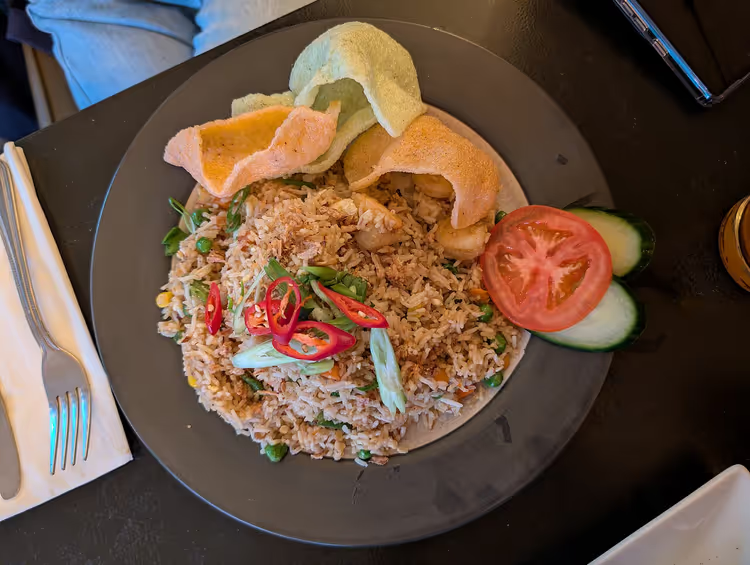
The base of most dishes is rice. The unofficial national dish, nasi goreng, literally translates as "fried rice." The set of ingredients varies by region: spices, vegetables, egg, chicken, or shrimp. The dish is hearty and filling.
Visitors are advised to try pepes: meat with spices is wrapped in a banana leaf and grilled. The second must-try item is babi guling, suckling pig with turmeric, ginger, and chili. The whole pig is roasted on a spit over low heat, and it is one of the most popular dishes on the island.
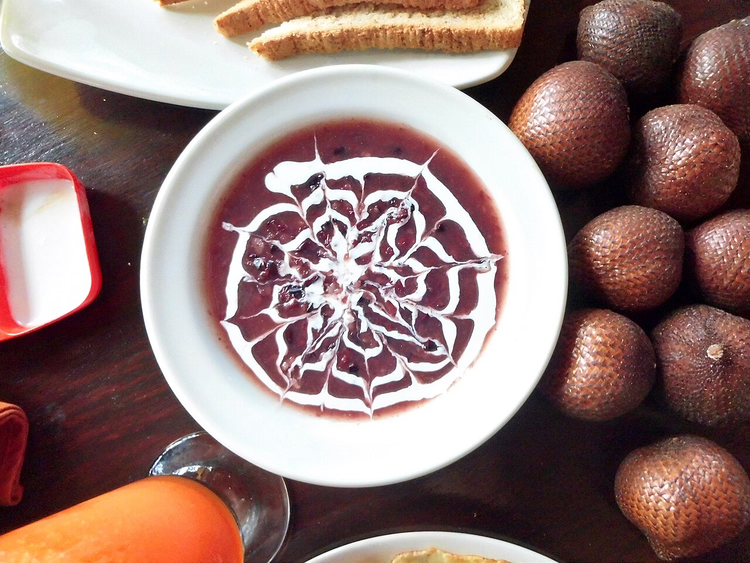
Desserts here are often very sweet, but bubur injin breaks the pattern. It contains black rice, pandan leaves, palm sugar, banana, and coconut milk. The flavor is balanced and unusual. On a hot day, order it as a refreshing snack.
Natural riches: monkeys, a volcano, and a cave
Monkey Forest Ubud
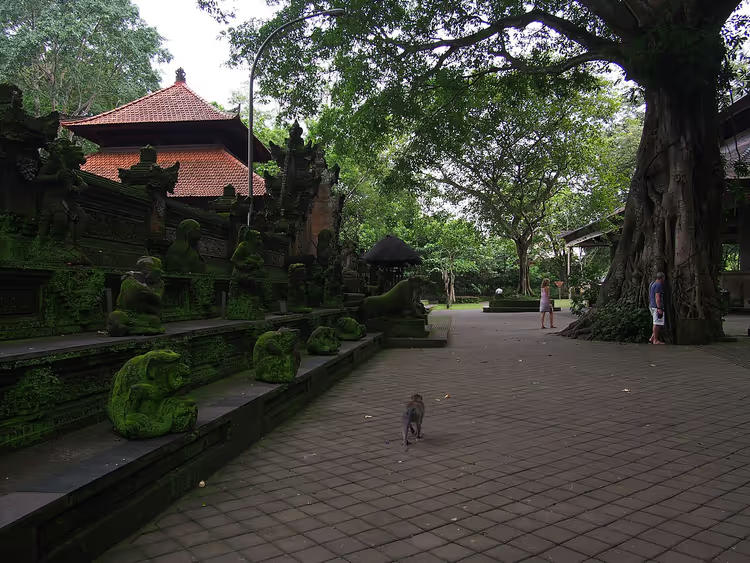
In the center of the island there is a sanctuary where monkeys live in their natural environment. Hundreds of Balinese long-tailed macaques roam freely around the grounds, leap through the branches, and are not afraid of people at all. The park is open daily from 9:00 AM to 6:00 PM (as of 09/2026, visiting schedule).
Their friendliness is deceptive. A macaque can bite, hit, or snatch your food and phone, then demand a treat. Watch your belongings, do not hand-feed the animals, and do not look them in the eye. Keep your bag closed, and you will save both your nerves and your devices.
 © rheins · CC BYPhoto: rheins, CC BY (https://creativecommons.org/licenses/by/3.0), Wikimedia Commons
Mount Batur
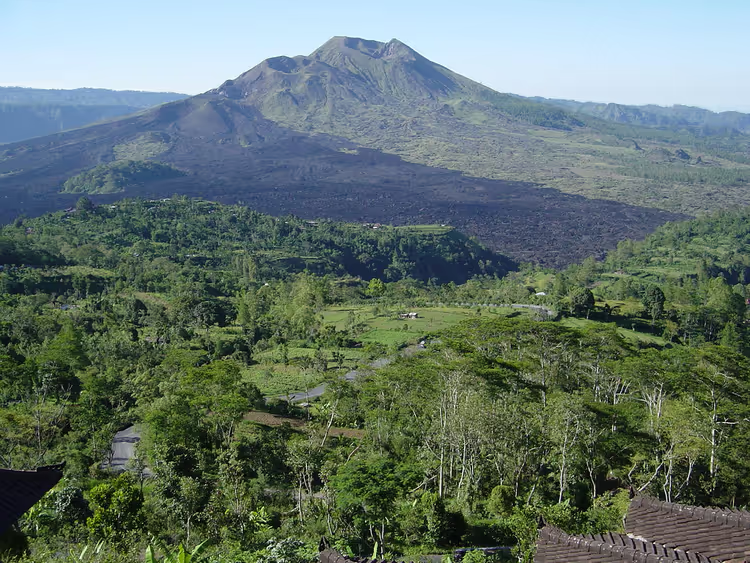
If just looking is not enough, try climbing Batur. It is an active volcano 1,717 meters high (as of 09/2026, Batur elevation data) about an hour's drive from Ubud. The climb starts at night so you can catch the sunrise at the crater rim. The hike takes about two hours, but the panorama of jungle and the lake in the caldera makes the early start worthwhile.
Bring a jacket, water, and a headlamp. It is windy and cool at the top, even though it is hot below. Batur tours on GetYourGuide include hotel transfer, so you will not have to find your way in the dark.
 © Jnpet · CC BY-SAPhoto: Jnpet, CC BY-SA (http://creativecommons.org/licenses/by-sa/3.0/), Wikimedia Commons
Goa Gajah
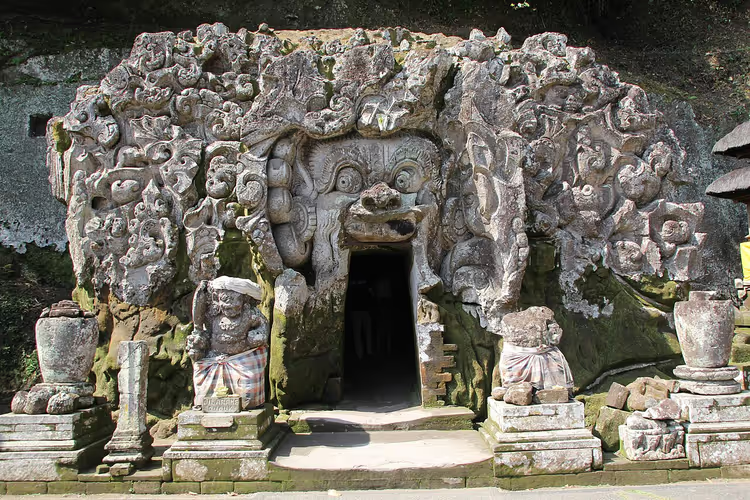
The Goa Gajah cave is known as the Elephant Cave. The path to it leads down a long staircase, and behind the limestone cliffs an entrance opens up with demons and animals carved from stone. Inside you will see meditation niches, ancient statues with offerings, and a sacred bathing pool for ritual cleansing. The complex is over a thousand years old, but it is still in use.
Opening hours: daily from 8:00 AM to 6:00 PM, adult ticket around 50,000 IDR, a sarong is usually included in the price (as of 09/2026, Goa Gajah). Come in the morning: by midday there are many tour groups here.
 © DerGenaue Allrounder · CC BY-SAPhoto: DerGenaue Allrounder, CC BY-SA (https://creativecommons.org/licenses/by-sa/3.0), Wikimedia Commons
From here the route usually heads toward the ocean: the southern beaches are one to two hours' drive from Ubud. Let's look at where exactly to swim.
Tours and tickets in Bali
Guided tours, skip-the-line tickets and activities — most offers can be cancelled free of charge.
See offers on GetYourGuideThe widget loads once you give your consent.
Kuta, Seminyak, and Jimbaran beaches
Kuta is known for surfing and parties; it is the island's social hub. The infrastructure is well developed, which is why the area has become the most densely populated on Bali. Young people choose it for the waves, bars, and the ability to walk to the water.
Nearby are Seminyak and Legian. The waves here are strong and consistent, but you can rent a lounger with an umbrella and head to a cafe. For a beginner, this is a good compromise between surfing and comfort.
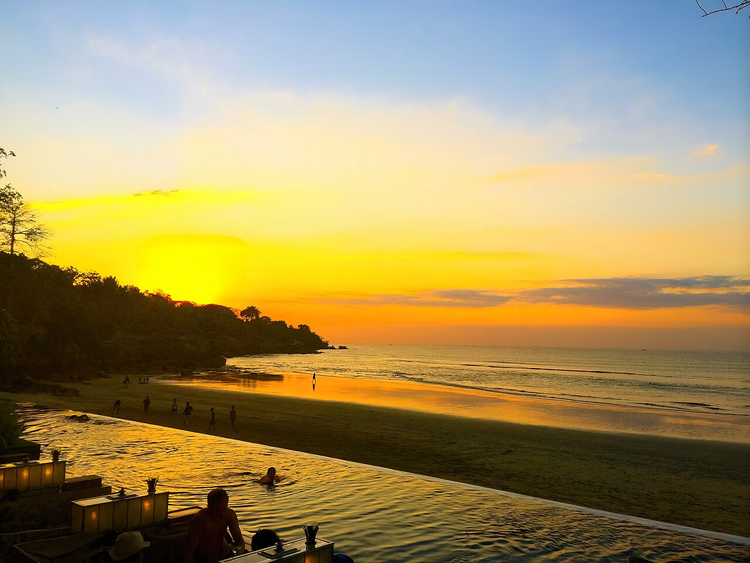
Jimbaran suits those who want a calm, warm ocean. White sand and clear blue water make it the most relaxed option in the south. The catch: it gets crowded here in the evenings because of the sunsets, so it is better to claim a spot on the sand in advance.
Swim where the lifeguard flags are posted. Currents along the southern shore can be strong, and the waves break sharply. Morning is calmer for the water: there is less wind, and a couple of hours before the heat will be enough for you.
 © Sarah Lou · CC BYPhoto: Sarah Lou, CC BY (https://creativecommons.org/licenses/by/2.0), Wikimedia Commons
Where to stay in Bali
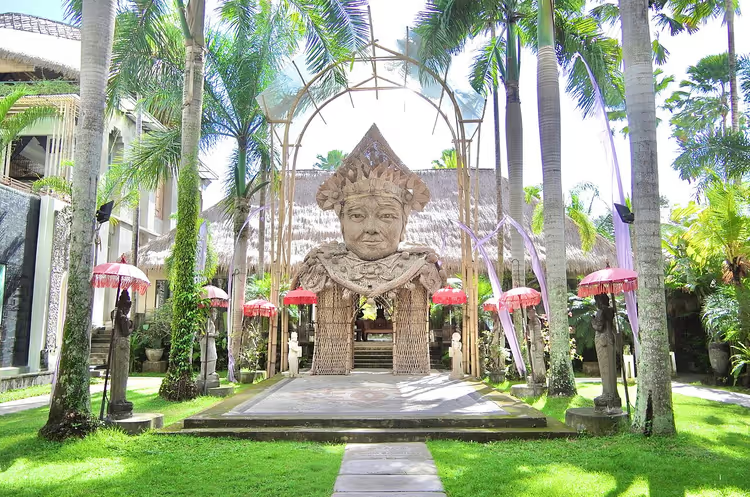
Bali offers several thousand hotels and villas for any budget. The view from your window here is almost always scenic, so focus on logistics rather than the photo on the website.
Around Ubud there are many villas and bungalows with their own atmosphere. The catch: not all properties boast quality service and amenities. But for an overnight stay before climbing Batur, this is the best area: in the morning a transfer picks you up right from your villa.
The south of the island is chosen for its beaches and restaurants. Kuta, Seminyak, and Jimbaran are close to each other, but traffic jams eat up time: plan your trips in advance. Bali hotel prices on Trip.com will help you compare areas by budget.
 © Kate Branch · CC BY-SAPhoto: Kate Branch, CC BY-SA (https://creativecommons.org/licenses/by-sa/4.0), Wikimedia Commons
⁉️🤔 Frequently asked questions
When is the best time to go to Bali?
The dry season lasts from May to September. July and August are the most expensive and crowded, so it is better to go in June or September. From November to March it rains, but prices drop.
How do I buy tickets to Monkey Forest and Tanah Lot?
At Monkey Forest Ubud, you buy a ticket at the entrance (as of 09/2026, park opening hours). The Tanah Lot temple ticket office accepts cash (as of 09/2026, Tanah Lot hours and tickets). Bring small bills.
How long does the Batur climb take?
The ascent starts at night, usually around three in the morning. The climb takes about two hours, and the descent is faster.
Are the monkeys in Monkey Forest dangerous?
The monkeys are used to people and are not afraid of them. Stealing food, glasses, or a phone is business as usual for a macaque. If a macaque grabs your item, do not pull: let go and call a park employee.
Which beach should I choose for calm swimming?
Jimbaran is good for calm water: the ocean is warm and the shore is sandy. Kuta and Legian are chosen by surfers, with strong waves and lots of people.
In short: what to book
For a first trip, a week is enough. Choose the south for beaches and two nights in Ubud. If your goal is the volcano and rice terraces, stay in Ubud and book the climb in advance. If you are traveling with children, choose Jimbaran: the water is calm and there is less noise.
Match your accommodation to your itinerary and do not mix areas in one day: the road eats up time. See Bali hotels on Trip.com.

A small editorial team writing guides for independent travel. We travel ourselves, but we haven’t been everywhere, so we check prices, opening hours and how to get there against official sources.