
















Borjomi and Bakuriani: a 3-4 day route with springs and skiing
Borjomi is known for its green bottle with a red label. You barely see the town itself if you pass through it in transit.
Borjomi sits in the Kura River gorge, at an elevation of about 800 meters and 150 kilometers from Tbilisi. Just past the outskirts, the national park begins, covering 104,933 hectares (as of 09/2026, Kutaisi Travel). Another 30 kilometers or so up the switchbacks, and you are in Bakuriani, at the ski resort.
Both places are easy to cover in a single 3-4 day trip. You have time to drink the water right at the spring, ride the cable car up, walk through the forest in the reserve, and get on skis. Entry to Central Park costs 5 lari (as of 09/2026, Tripadvisor), and a day ski pass in Bakuriani runs 55 lari (as of 09/2026, Bakuriani.ski).
Ad: this article contains affiliate links. We earn a commission if you book through them, at no extra cost to you.
Borjomi: a resort in the Kura gorge
💡 In short:
- Borjomi and Bakuriani are close to each other and easy to cover in one trip.
- In winter you ski in Bakuriani, in summer you hike through the gorges.
- Without a car, you can get there by train or marshrutka from Tbilisi.
- Prices and opening hours: 09/2026, verified on the national park website.
Borjomi is a small resort town in the Samtskhe-Javakheti region. The climate here is mild and humid: snow falls in winter, and summers are noticeably cooler than in Tbilisi. The town stretches along the gorge, houses climb the slopes, and you can see forest from almost anywhere.
Its fame came in the 19th century, when Russian officers described the local mineral springs and sent a report to Saint Petersburg. The Romanovs made Borjomi their Caucasian resort: they built dachas, laid out parks, and came here for treatment. Mikhail Romanov's summer residence still stands in the town today.
 © Marcin Konsek · CC BY-SAPhoto: Marcin Konsek, CC BY-SA (https://creativecommons.org/licenses/by-sa/4.0), Wikimedia Commons
Today Borjomi has two main draws. Central Park with its springs starts in the town center, and the national park borders it on the other side. Both can realistically be seen in one day, unless you are planning a multi-day hike.
Central Park and the mineral springs
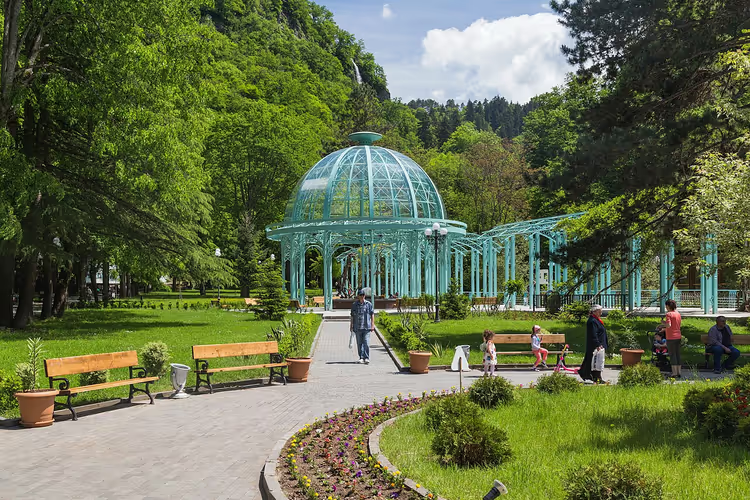
Central Park runs along the Borjomula River from the center deep into the gorge. This park is not just a green square but a historic resort area with alleys, benches, a small museum, and several pump rooms.
 © Marcin Konsek · CC BY-SAPhoto: Marcin Konsek, CC BY-SA (https://creativecommons.org/licenses/by-sa/4.0), Wikimedia Commons
The water rises from underground springs through volcanic rock and becomes saturated with carbon dioxide and mineral salts. It tastes salty-alkaline, with a distinct mineral aftertaste. At the Catherine Spring, the water is dispensed for free: you drink it right there or fill a bottle.
Entry to the park is paid, 5 lari (as of 09/2026, Tripadvisor reviews). It is best to bring your own cup or bottle. Allow an hour and a half to two hours for a walk with a stop at the spring and the ascent.
At the end of the main alley, a cable car operates. It takes you up to an observation deck high above the town, with a view over the gorge and forested ridges. The ride takes only a few minutes, but in season there can be a line at the ticket office.
The Romanov Palace and the historic center
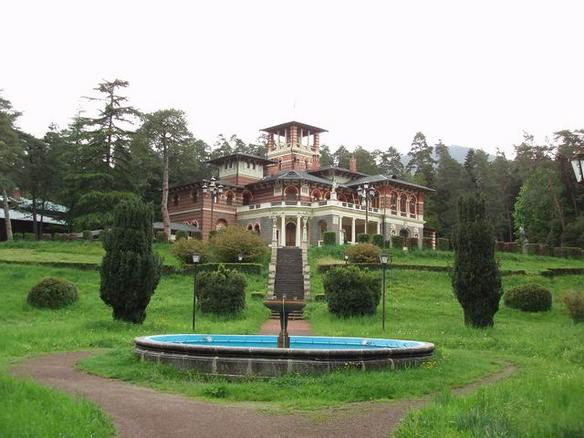
A ten-minute walk from the park entrance stands the wooden palace of Mikhail Romanov. This is the grand duke's summer residence, built in the late 19th century in Moorish style. Today a small museum operates inside, and around it lies an old park with century-old trees.
 © Nika, EXOTOUR · CC BY-SAPhoto: Nika, EXOTOUR, CC BY-SA (https://creativecommons.org/licenses/by-sa/1.0), Wikimedia Commons
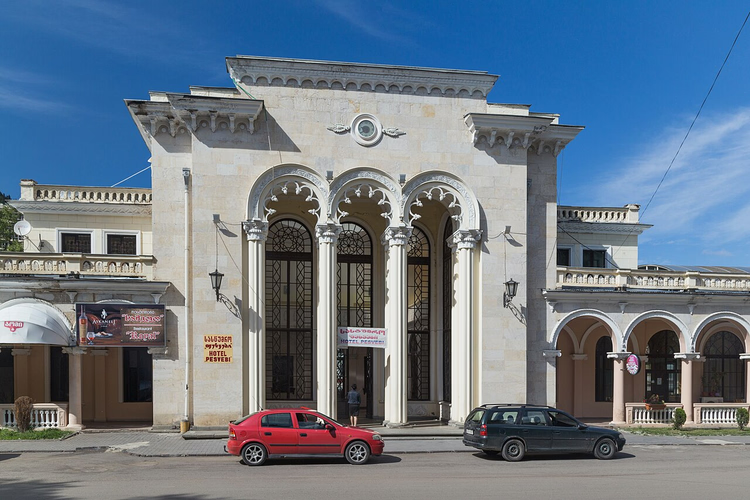
The historic center of Borjomi is small, but it shows what the pre-revolutionary resort looked like. Dachas with verandas, narrow streets, several churches, and remnants of 19th-century balneological infrastructure.
Entry to the palace museum costs a few lari, and the visit takes less than an hour. It is best to check the opening hours at the entrance: in the off-season the museum closes earlier.
Sulfur baths and balneology
Mineral water in Borjomi is used not only for drinking. Several balneological centers offer therapeutic baths with the same water.
This treatment is designed for guests who come for several days specifically for a course. If you have a packed itinerary, a walk through the park and water from the drinking fountain will be enough. But if you are staying for two or three nights and want the full resort experience, the baths are worth your attention.
Borjomi-Kharagauli National Park
Borjomi-Kharagauli National Park begins right outside the city. Its area exceeds 104,933 hectares, making it one of the largest protected areas in Europe (as of 09/2026, Kutaisi tourism portal). The park covers the ridges of the Lesser Caucasus: coniferous and deciduous forests, alpine meadows, rivers, and waterfalls.
Most tourists know Borjomi as a resort and do not realize that real mountain nature with a network of trekking routes begins right behind the houses. The park visitor center operates in the center, next to the entrance to Central Park. Here you get a map, pay the permit fee, and talk to the rangers.
Before heading out on a route, you need to register at the visitor center (as of 09/2026, National Parks of Georgia). The procedure is free and takes a few minutes.
Routes in the national park
Day routes are a good fit if you are not bringing a tent and sleeping bag.
To the waterfall: about 8-10 kilometers round trip, moderate elevation change, forest and river along the way. Allow 4-5 hours. A good first outing for those who are not planning multi-day hikes.
To the viewpoint on the ridge: 12-14 kilometers, a gradual climb, you come out onto open meadows with views of neighboring ridges. This takes 5-6 hours.
Distances and travel times are given according to the national park guide (09/2026).
Multi-day routes cross the entire park. They are completed in three to five days with overnight stays in ranger shelters or in a tent. The trails connect Borjomi with neighboring areas and lead to several mountain lakes. For a multi-day hike you need to register at the visitor center and have basic mountain experience.
The best season for the park runs from May to October. In winter, snow makes most routes impassable without special equipment.
How to get to Borjomi from Tbilisi
Borjomi works well for both a day trip and a two-day visit. Three routes lead to the city, and each suits a different scenario (as of 09/2026, Georgian Railway).
Option | Travel time | What to keep in mind |
|---|---|---|
Train | about three hours | arrives in the city center |
Marshrutka | slightly faster than the train | departs from Didube bus station |
Car | about two hours | convenient for stops along the way |
Train
A regional train runs from Tbilisi to Borjomi. The route goes through Gori and Khashuri, then along the Kura gorge. The journey takes about three hours; buy your ticket in advance (train tickets in Georgia). The train arrives in the center of Borjomi, a ten-minute walk from Central Park.
Marshrutka
Marshrutkas depart from Didube bus station several times a day, and the ride is slightly faster than the train. You pay the driver, the fare is small, but check the exact price on the spot.
By car
On the Tbilisi-Batumi highway the drive takes about two hours. The road surface is in good condition, any car can handle it. A car is more convenient if you are continuing on to Bakuriani or want to stop along the way in Gori and Uplistsikhe.
Bakuriani: a ski resort in a pine forest
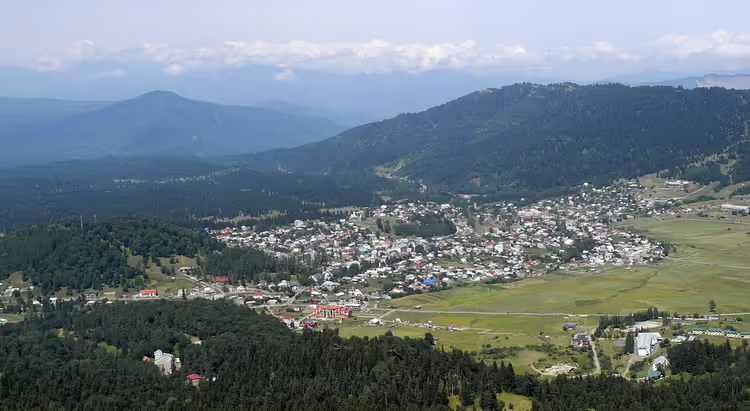
Bakuriani lies about half an hour's drive from Borjomi, higher up a winding road through a pine forest. The resort sits high in the mountains, at the upper edge of the forest. In winter there is snow here, lifts and slopes operate, and in summer biking and hiking routes and horseback riding are available.
This is not Gudauri. Bakuriani is smaller and quieter, geared toward family vacations and inexperienced skiers. There are fewer slopes here and almost no off-piste skiing, but the atmosphere of an old mountain resort that is gradually being modernized has been preserved.
 © Franzfoto · CC BY-SAPhoto: Franzfoto, CC BY-SA (https://creativecommons.org/licenses/by-sa/3.0), Wikimedia Commons
Ski season in Bakuriani
The season runs from December through March. The resort has 23 trails and 8 lifts (as of 09/2026, OnTheSnow). The highest point reaches about 2,200 meters, and the vertical drop on the slopes is up to 500 meters.
The runs are mostly green and blue, for beginners and intermediates. There are a few red runs for confident skiers. For expert terrain and off-piste skiing, Gudauri is the better choice.
The resort has chairlifts and surface lifts, and they are gradually being upgraded. Lift lines are rare even on weekends. A day ski pass costs 55 lari (as of 09/2026, Bakuriani resort website), and renting a full set of equipment costs less. Accommodation gets booked up quickly in season, so reserve your room in advance (Bakuriani hotels on Trip.com).
Bakuriani in summer
In summer, Bakuriani looks completely different. Pine forest, clean mountain air, temperatures several degrees lower than in Tbilisi. Some lifts also run in the warm season to take you up to the start of the walking trails.
What to do in summer:
- Walk the forest trails.
- Ride mountain bikes.
- Go horseback riding on equestrian routes.
- Take the lift up to the observation deck.
- Do day hikes to the nearby lakes.
In summer, Bakuriani is a quiet getaway without the ski crowds. It is a good option if you want mountain air and nature but not a demanding multi-day trek.
How to get from Borjomi to Bakuriani
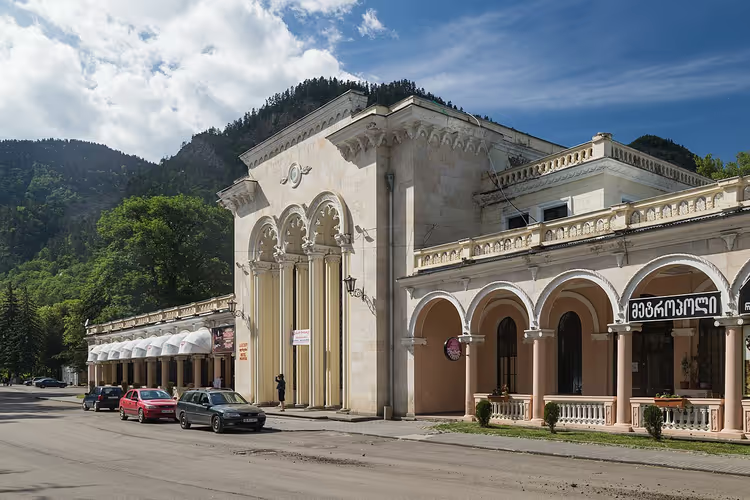
Borjomi to Bakuriani is about 30 kilometers up a winding mountain road. You choose between a car, a marshrutka, and the narrow-gauge railway. Below we break down each option.
 © Marcin Konsek · CC BY-SAPhoto: Marcin Konsek, CC BY-SA (https://creativecommons.org/licenses/by-sa/4.0), Wikimedia Commons
By car
The road follows a paved mountain switchback through the forest. In summer any car can handle it, but in winter during snowfall you need all-wheel drive or winter tires. If you do not have your own car, renting one works out cheaper than taxis over several days (car rental in Georgia).
Marshrutka
Marshrutkas from Borjomi to Bakuriani run several times a day. The fare is low. Check the schedule with the drivers or at the visitor center.
Narrow-gauge railway
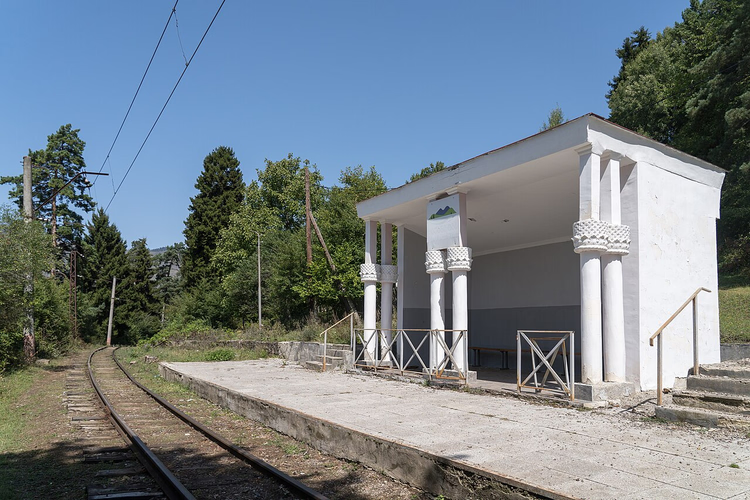
The narrow-gauge line has connected Borjomi and Bakuriani for over a hundred years, and it is one of the most unusual attractions on the route. The little train crawls through forest and gorges in almost twice the time a car takes, and that is the whole point of the trip.
 © Alexkom000 · CC BYPhoto: Alexkom000, CC BY (https://creativecommons.org/licenses/by/4.0), Wikimedia Commons
The line is currently being reconstructed: the government announced a full replacement of the rolling stock and infrastructure upgrades, with five stations being renovated (Georgia Today, 09/2026). So check the schedule in advance: some runs may be canceled during the work. The ticket costs a symbolic amount, and the ride itself is an experience in its own right: the carriage sways, the forest brushes the window, and gorge views follow one after another.
A 3-4 day itinerary
If you have three or four days, you can comfortably cover both towns without rushing. Below is a basic plan that you adjust to the season and weather.
Day 1: Borjomi
Arrive from Tbilisi by train or car. Walk through Central Park, drink the mineral water at the spring, take the cable car up. In the evening, stroll through the historic center and have dinner at one of the restaurants by the river.
Day 2: National park
Early in the morning, set out on a hike in the park. Choose the trail to the waterfall or the viewpoint based on your fitness level. In the evening, return to town, and if you did not get to it yesterday, visit the Romanov Palace.
Day 3: Transfer to Bakuriani
In the morning, take the narrow-gauge railway or a marshrutka to Bakuriani. Check into your hotel. In summer, ride the lift up to the observation deck; in winter, open your season with a first day on the slopes. In the evening, walk around the resort.
Day 4: Bakuriani and return
During the day, do whatever suits the season and your mood. After lunch, return to Borjomi, and from there take a train or marshrutka to Tbilisi.
Where to stay
Both towns have plenty of accommodation for any budget. The most options are near Central Park in Borjomi and near the lifts in Bakuriani.
In Borjomi
The choice is wide: from guesthouses to mid-range hotels. Many good options are within walking distance of Central Park. Guesthouses near the park are the standard format for most travelers, and breakfast is often included (Borjomi hotels on Trip.com).
Find hotels in Borjomi
Compare prices across booking sites and filter for rooms with free cancellation.
Compare prices on Trip.comThe widget loads once you give your consent.
In Bakuriani
The logic is similar: guesthouses with meals and small hotels. Prices are higher during ski season, so book in advance. If you are going in winter, choose accommodation near the lifts: in the morning you walk straight onto the slopes without a taxi.
What else to see along the way
The Tbilisi-Borjomi route passes several interesting stops. They are easy to fit into the journey, especially if you are driving.
Gori and the Stalin Museum
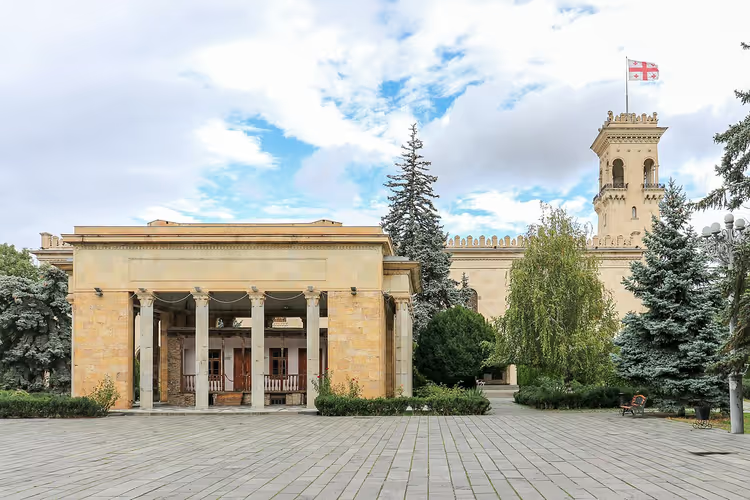
Gori lies halfway between Tbilisi and Borjomi and is known as Stalin's birthplace. The museum in the city center is one of the most controversial tourist sites in Georgia: Soviet architecture, the dictator's personal belongings, his armored train carriage. It is worth seeing regardless of your attitude toward Soviet history.
 © Stolbovsky · CC BY-SAPhoto: Stolbovsky, CC BY-SA (https://creativecommons.org/licenses/by-sa/3.0), Wikimedia Commons
Uplistsikhe: the cave town
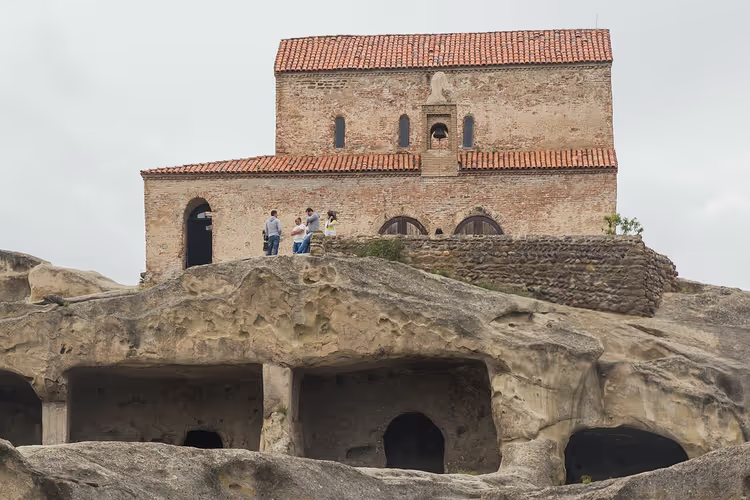
Uplistsikhe is a cave town from the first millennium BC on the bank of the Kura River, ten kilometers from Gori. More than seven hundred rooms carved into the rock: houses, halls, a theater, and a church, and all of it is quite well preserved. It is one of the most interesting yet little-known sites in Georgia for the general public.
 © Marcin Konsek · CC BY-SAPhoto: Marcin Konsek, CC BY-SA (https://creativecommons.org/licenses/by-sa/4.0), Wikimedia Commons
Entry to both sites is paid, tickets are sold on site, and students and schoolchildren get a discount. A tour of the region is easier to take with a guide if you do not have a car (tours in Georgia on GetYourGuide).
Tours and tickets in Tbilisi
Guided tours, skip-the-line tickets and activities — most offers can be cancelled free of charge.
See offers on GetYourGuideThe widget loads once you give your consent.
Sample trip budget
The range is wide: everything depends on the season and the type of accommodation. The round trip costs just a few dozen lari per person, and a night in a guesthouse is cheaper than a hotel. In winter the main expense is the ski pass, and two days of skiing will cost about 110 lari (as of 09/2026, Bakuriani.ski price list). In summer costs are lower because money goes mainly to accommodation and food.
For a group with a car, transport works out cheaper. If you are traveling as a couple or a group of three, a car rental pays for itself just on the trips between towns (compare car rental prices).
Best time to visit
May and June: the forest is green, the air is fresh, and there are few tourists. The national park opens fully, and this is a good time for trekking.
July and August: warm, but cooler than in Tbilisi. Bakuriani is in high season for summer holidays, and all activities are running.
September and October: autumn colors in the park's forests, an excellent time for photos and hikes. In October the upper routes close because of snow.
December to March: ski season in Bakuriani. Borjomi in winter is quiet and lightly snow-covered, but the park remains open for walks.
 © Marcin Konsek · CC BY-SAPhoto: Marcin Konsek, CC BY-SA (https://creativecommons.org/licenses/by-sa/4.0), Wikimedia Commons
⁉️🤔 Frequently asked questions
Can you drink water directly at the spring in Borjomi?
Yes, the water in the Central Park pump rooms is genuine mineral Borjomi from natural springs, and you drink it right on the spot or fill a bottle. The taste is noticeably different from the bottled version: it is more intense and has more carbonation. Park entry is paid, while the spring water is free.
Do you need special gear for trekking in the national park?
For day hikes, trekking boots, water, and a light jacket are enough. For a multi-day hike with an overnight stay, you need a sleeping bag, a mat, and additional gear. The visitor center in Borjomi can advise on each route and handle the registration you complete before heading onto the trail.
Is Bakuriani suitable for children?
Very much so. In winter there are gentle green slopes and learning areas, and in summer there are cycling routes, horseback rides, and walking trails. Many families with children choose Bakuriani precisely because of its calm atmosphere and short lift lines. There are almost no difficult expert descents here that intimidate beginners.
Can you combine Borjomi with Vardzia?
Yes. Vardzia is a cave monastery more than a hundred kilometers from Borjomi, on the road through Akhaltsikhe. It is convenient to go there for one day by car or taxi. The Borjomi, Akhaltsikhe, and Vardzia route is one of the popular options in the Samtskhe-Javakheti region.
How much time do you need for Borjomi on a short visit?
One full day covers the essentials: the park with its springs, the cable car, the Romanov Palace, and a walk through the center. Allow one more day for trekking in the national park. For a relaxed stay that includes Bakuriani, you need at least three to four days, otherwise you will be rushing the whole time.
Does the narrow-gauge railway run in winter?
The line operates year-round, but reconstruction is currently underway, so the schedule may change. Check current departures before your trip: there are usually fewer in winter. The ride itself is especially atmospheric in winter: a snow-covered forest, steam from the little locomotive's chimney, and nearly empty carriages.
In short: what to book
If you have a couple of days and no car, take the train from Tbilisi and a guesthouse near Central Park. If you are going in winter for skiing, book accommodation in Bakuriani in advance and keep a ski pass for your dates as a backup. For a flexible itinerary around the region, renting a car is more cost-effective.
One day here gives you a combination of mineral springs, mountain forest, and an old resort, all within a couple of hours from Tbilisi. Plan your overnight stays and tickets in advance, and the trip will go smoothly. You can check current rates on Trip.com.

A small editorial team writing guides for independent travel. We travel ourselves, but we haven’t been everywhere, so we check prices, opening hours and how to get there against official sources.