
















Bucharest in two days: from the Palace of Parliament to St. Joseph Cathedral
Most tourists go to Romania for Brașov and Sibiu. Bucharest usually gets left out. And that's a shame.
We put together a route through two Bucharests at once. The first was built by the communists, the second remains from royal Romania. You'll walk from the Palace of Parliament to St. Joseph's Cathedral and see for yourself how these two eras argue on a single street.
Everything that can be measured, we checked against official websites in September 2026. You'll find tour prices, museum admission, and addresses with the date checked and a link to the source.
Ad: this article contains affiliate links, we earn a commission if you book through them, at no extra cost to you.
Getting there
💡 In short:
- Romania has been fully in the Schengen Area since January 1, 2025, so no separate visa is needed to enter from the EU (according to the European Commission, 01/2025).
- Trains from Budapest arrive at București Nord station, and Flixbus buses connect Bucharest with Sofia, Budapest, and Chișinău.
- Entry and border rules: 09/2026, verified on the European Commission website.
Visa rules and the border
Romania became a full Schengen member on January 1, 2025. Checks at the land borders with Hungary and Bulgaria were removed (according to an EU press release, 01/2025). For you, that means one simple thing. With a Schengen visa or residence permit, you cross the border the same way you would anywhere inside the European Union.
A separate Romanian visa is only needed in one case. That's when you're traveling without a valid Schengen visa and without any other basis for entry. In that case, apply for a national visa in advance.
There is no longer permanent passport control at the border. Still, keep your passport or ID card with you, as random checks are possible.
Trains and buses
From Hungary, the train is the most convenient option. The overnight Budapest - Bucharest service arrives at București Nord station; check schedules and tickets on the Romanian railway website CFR Călători. The station greets you with its sheer size and late-socialist spirit.
For intercity routes from other Romanian cities, the Autogari aggregator collects departures. International buses to the capital are operated by Flixbus. Direct services run from Sofia in Bulgaria, Budapest in Hungary, and Chișinău in Moldova. From Warsaw in Poland, the journey takes over a day.
Within the city, you get around by bus, tram, and metro. A STB day pass is valid for 24 hours on surface transport, except for airport express lines. The metro is operated by Metrorex and requires a separate ticket. Buy it at kiosks near stations or from machines at stops.
Bucharest. General information
Bucharest is called the Paris of Romania. The title comes from Unirii Boulevard, which resembles the Champs-Élysées, and from the Triumphal Arch. The comparison is debatable, but there's some truth to it.
The city was founded as a fortress in 1459. Later, Bucharest became the most important center of Wallachia, one of Romania's three historical regions. In 1862, it was proclaimed the capital of the Kingdom of Romania (according to Wikipedia).
The city assembled its character from different eras. Eclecticism reaches its limit here: ancient churches stand right next to glass business centers. For this, Bucharest can easily be called a Frankenstein, charming and very strange at the same time.
This look was not created only by the communists. In 1989, the country's political system changed, but urban planners' taste remained the same. That's why shabby commuter-block neighborhoods in the center sit next to restored pseudo-classicism and the gloss of new business centers.
 © Diego Delso · CC BY-SAPhoto: Diego Delso, CC BY-SA (https://creativecommons.org/licenses/by-sa/4.0), Wikimedia Commons
The artistic mosaic of the Romanian capital does not come together into a single picture. In some places you can make out pieces of Paris, in others Budapest, and right next to it the Soviet scale of Stalinist Empire style. Putting together a coherent walk out of all this is difficult, and below we'll show you how to cover both routes in two days.
Communist Bucharest
This side of the city is what people come to Bucharest for. Socialism was not known for cultural refinement, but in the Romanian capital it left behind grandiose structures. Though at what cost.
In the 1970s and 1980s, the country was gripped by a brutal economic crisis. Heating was shut off, electricity and gas were available only a few hours a day, and store shelves stood empty. All the more surprising, then, that alongside these grim memories stand true architectural giants.
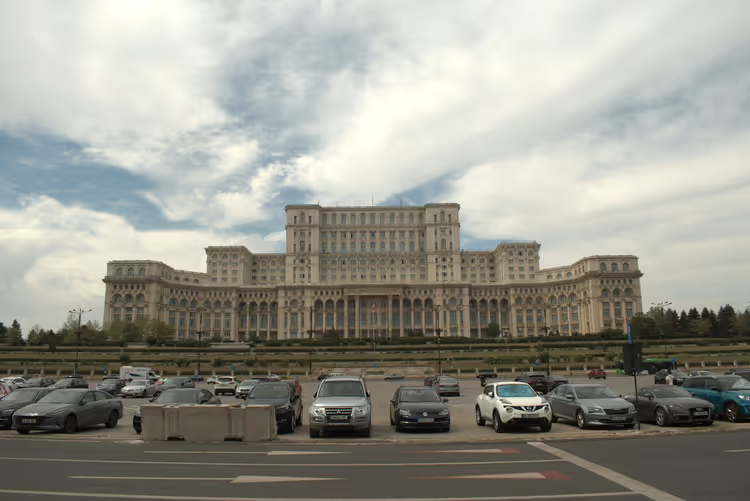
Palace of Parliament
Bucharest's main tourist attraction. It owes its existence to the 1977 earthquake, which claimed around 1,500 lives and turned part of the city into ruins. The authorities decided not to restore the old neighborhoods but to build a new structure in honor of the socialist system.
 © Ștefan Jurcă from Munich, Germany · CC BYPhoto: Ștefan Jurcă from Munich, Germany, CC BY (https://creativecommons.org/licenses/by/2.0), Wikimedia Commons
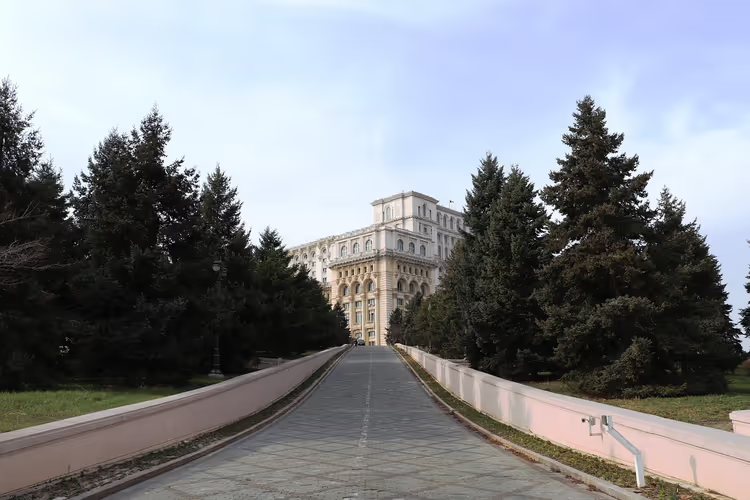
Construction began in 1984, but its initiators never saw it finished. The regime collapsed in 1989, and the parliament building was completed by 1997. Some rooms were boarded up at the time as unnecessary. The construction costs ultimately bankrupted the country's economy.
The scale is staggering. The building is 270 meters long, 240 meters wide, and 86 meters high. The underground section goes down 92 meters. Inside there are 1,100 rooms across 12 floors (according to Wikipedia). The finishing work used about one million cubic meters of marble and 3,500 tons of crystal. A single carpet in the Unirii Hall weighs 3 tons.
It is the heaviest civilian administrative building in the world. The project was led by architect Anca Petrescu. By area, the palace surpasses the Pyramid of Cheops.
You can only go inside with a guided tour. A standard tour starts at around 69 lei, about €14 (as of 09/2026, Ticketstore.ro). Be sure to bring your passport: without it, you will not be allowed in. If you want to skip the line, book a guide slot in advance through parliament palace tours on GetYourGuide.
Constitution square and unirii boulevard
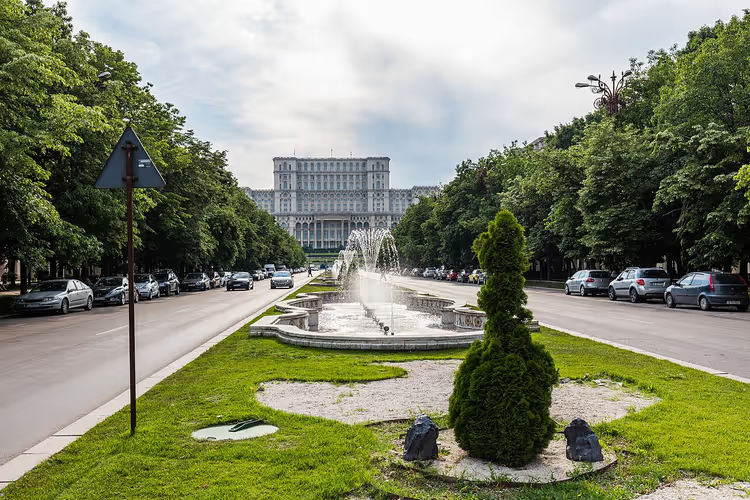
In front of the palace lies Constitution Square, just as grandiose as the parliament itself. Shakira, Elton John, Sting, and Lady Gaga have all performed here at different times.
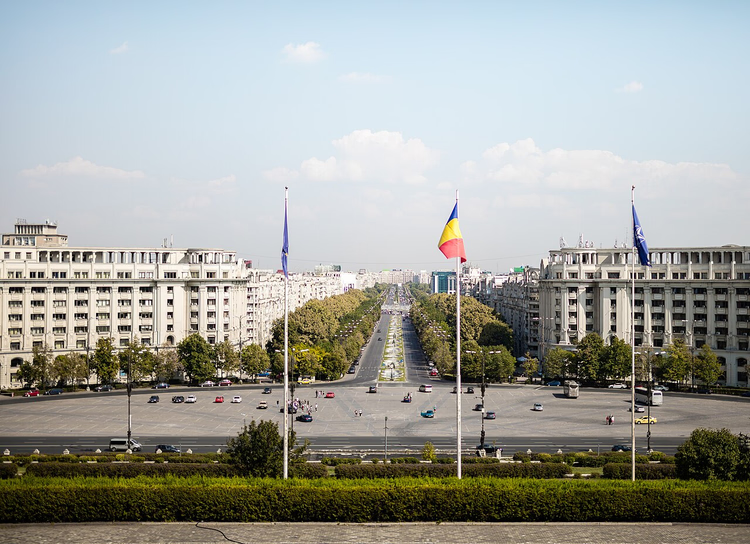 © Bricot Valentin · CC BY-SAPhoto: Bricot Valentin, CC BY-SA (https://creativecommons.org/licenses/by-sa/4.0), Wikimedia Commons
From the square, Unirii Boulevard, also known as Union Boulevard, stretches into the distance. It is about three kilometers long, and its width is comparable to the Champs-Élysées (according to Wikipedia). The avenue was formerly called "Victory of Socialism." In the evenings, the fountains are lit up, and the unrealized victory turns into a light show.
A walk along the boulevard takes about an hour. Come here after sunset, when the heat subsides and the lights come on.
Carol I Park
We continue our tour of gigantomania at Carol I Park. It opened in 1906 (according to Wikipedia). The park's main feature is the Tomb of the Unknown Soldier, a massive and solemn monument to the victims of World War I.
Romania fought on the side of the Entente and paid dearly for victory. The monument suffered from politics. In 1958, "communist heroes" were added to the tomb, and the symbol of the fallen was moved to another city (according to the history of Carol I Park). Only in 1991 was justice restored.
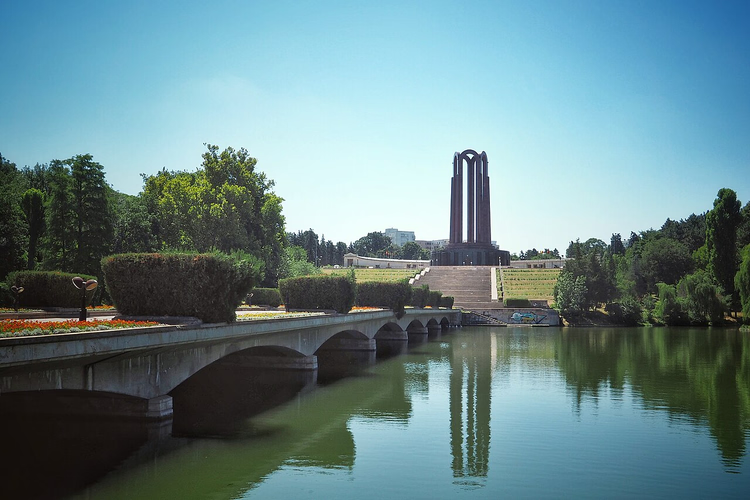 © Ștefan Jurcă from Munich, Germany · CC BYPhoto: Ștefan Jurcă from Munich, Germany, CC BY (https://creativecommons.org/licenses/by/2.0), Wikimedia Commons
This is the place to come for some quiet. In the morning the park is almost empty, and you can take your time looking at the mausoleum and the alleys.
Spring Quarter and King Michael I Park
Let's leave the district of architectural goliaths and head to one of the city's most prestigious areas. The Spring Quarter stretches along Primaverii Boulevard, home to diplomats and well-off Bucharest residents.
 © Chainwit. · CC BY-SAPhoto: Chainwit., CC BY-SA (https://creativecommons.org/licenses/by-sa/4.0), Wikimedia Commons
King Michael I Park, formerly Herastrau, is also located here. It was named after the last king of Romania, Michael I, who abdicated in 1947 (according to Wikipedia). The king died in Switzerland in 2017.
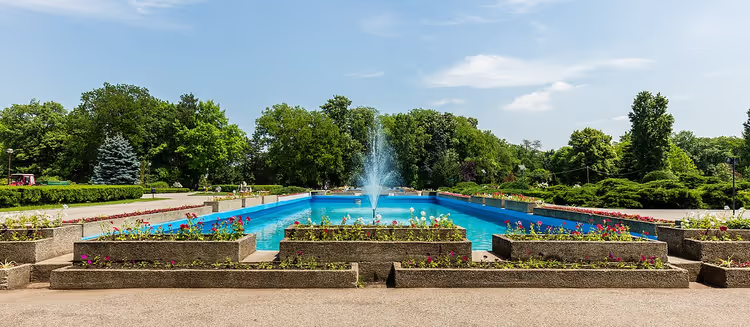 © Diego Delso · CC BY-SAPhoto: Diego Delso, CC BY-SA (https://creativecommons.org/licenses/by-sa/4.0), Wikimedia Commons
The park is large, with a lake and boat rentals. If a walk through Carol I Park isn't enough for you, you can easily spend half a day here.
Ceausescu House
Next to the park stands Nicolae Ceausescu's house at 50 Primaverii Boulevard. This was the home of the leader of socialist Romania, who was overthrown during the 1989 revolution. His admirers called him the "Genius of the Carpathians," his opponents "Draculescu."
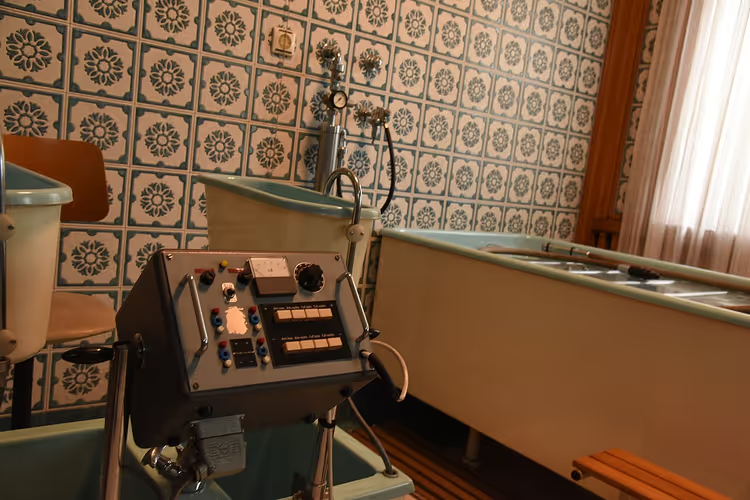
A ticket costs 65 lei without the film and 90 lei with the film, roughly 13 and 18 EUR (as of 09/2026, official website). An audio guide costs 27 lei (as of 09/2026, official website). You can't walk around the estate on your own; visits are guided only, and groups of ten or more need to book in advance.
The house served the dictator for 24 years. From 1965 to 1989 it was called the "Spring Palace." In its 80 rooms you'll find antique furniture, expensive paintings, porcelain, a private pool, and pheasants in the garden. The luxury sits uneasily with the impoverished country outside the window. If you want to see the entire communist era at once, book a themed communist Bucharest tour.
Royal Bucharest
Now let's look at the other side of the city.
Its long time in the spotlight left a mark. The city acquired palaces, arches, and cathedrals. The communists demolished some of them, while others were brought back to life only after 1989.
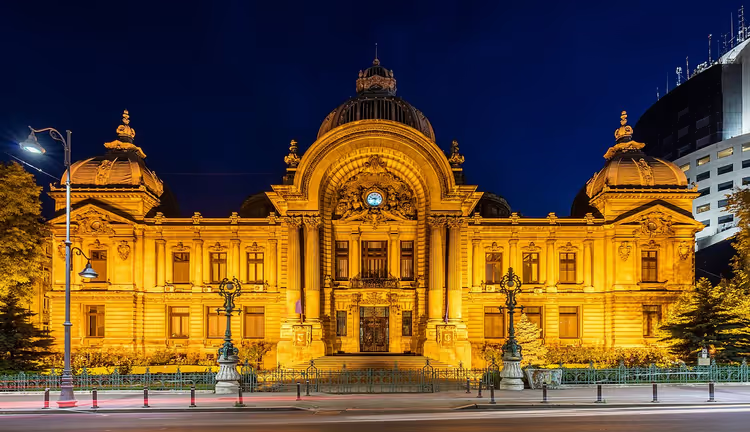 © Diego Delso · CC BY-SAPhoto: Diego Delso, CC BY-SA (https://creativecommons.org/licenses/by-sa/4.0), Wikimedia Commons
Triumphal Arch
Let's start with the Spring Boulevard area. A few minutes' walk from Ceaușescu's house stands Bucharest's Triumphal Arch. It once again ties the city to Paris.
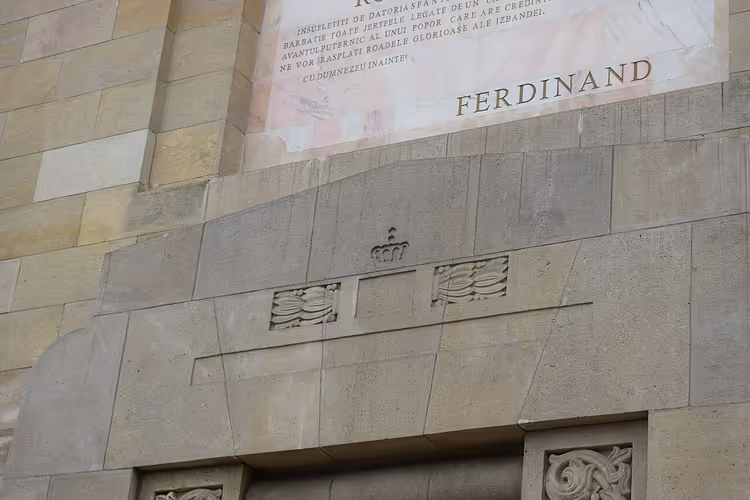
The first wooden arch was erected to mark the proclamation of independence in 1877. In 1936, a stone arch 27 meters high was unveiled in its place (according to Wikipedia). Today, military parades pass by the arch.
 © Rsandu · CC BY-SAPhoto: Rsandu, CC BY-SA (https://creativecommons.org/licenses/by-sa/4.0), Wikimedia Commons
Cașin Church
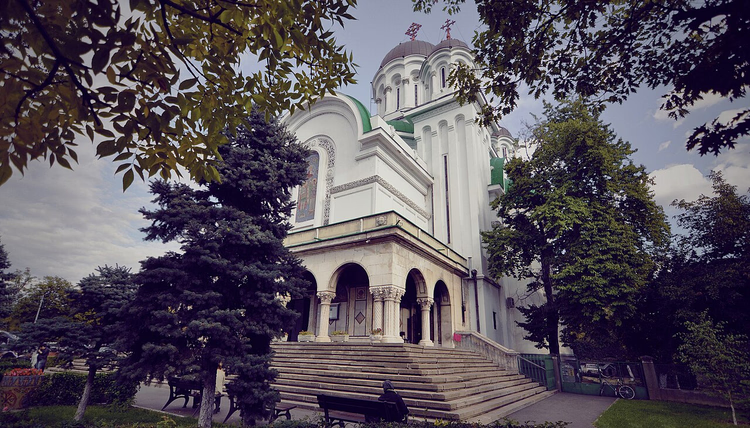
Next to the arch stands Cașin Church and Monastery, one of the tallest in the city. Despite its traditional appearance, the building is relatively young. Construction was completed in the 1950s (according to Wikipedia).
 © fusion-of-horizons · CC BYPhoto: fusion-of-horizons, CC BY (https://creativecommons.org/licenses/by/2.0), Wikimedia Commons
Step inside if you're passing by. A dedicated trip here isn't necessary, and it takes about half an hour on the route.
Elisabeta Palace
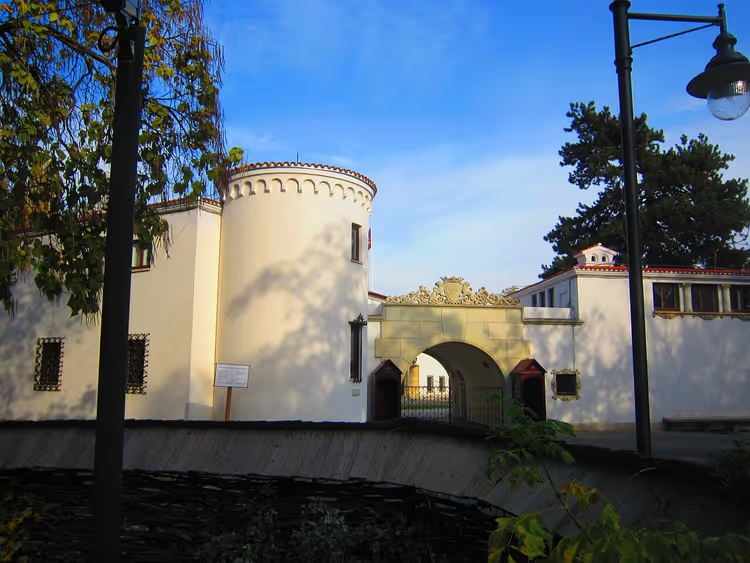
Elisabeta Palace is located in King Michael I Park. It was built in the 1930s, combining the local Brâncovenesc style with North African motifs (according to Wikipedia).
 © Casaregala · CC BY-SAPhoto: Casaregala, CC BY-SA (https://creativecommons.org/licenses/by-sa/4.0), Wikimedia Commons
This is where King Michael I signed his abdication in 1947. A year later, the palace was nationalized. It was returned to the royal family only in the 1990s. Today it is the country's only functioning royal residence.
You can't go inside; the palace is closed to tourists. View the facade from the park side and don't count on a tour.
Royal Palace
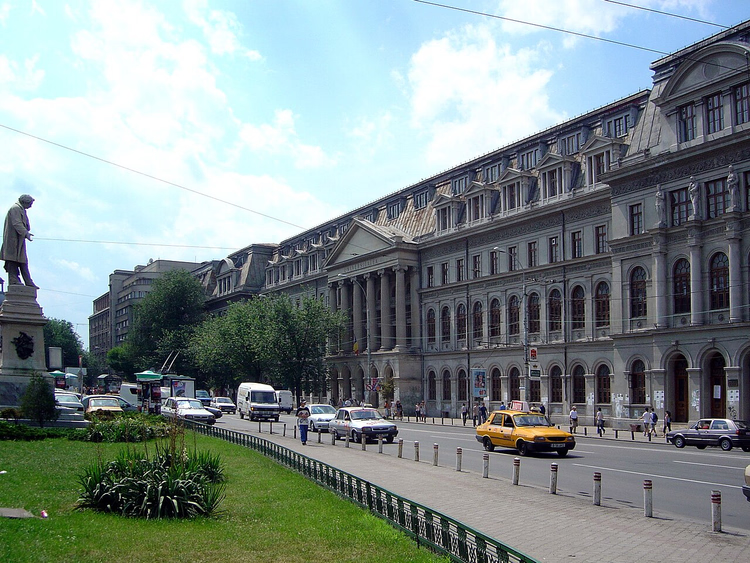
In the historic center, on Revolution Square, stands the Royal Palace, also known as the Palace of the Republic. Construction began in 1812, but a fire destroyed the first building in 1926 (according to Wikipedia).
Eleven years later, the Romanians built a new home for the monarchs, the country's largest royal residence. The monarchs lived here until 1947. Since 1950, the palace has housed the National Museum of Art of Romania.
 © Unknown author · CC BY-SAPhoto: Unknown author, CC BY-SA (http://creativecommons.org/licenses/by-sa/3.0/), Wikimedia Commons
The museum's collection brings together Romanian and European art. In the halls you'll see works by Bruegel, Rembrandt, and Grigorescu. A visit takes two or three hours, and there can be lines on Sundays.
Statue of Carol I and the University
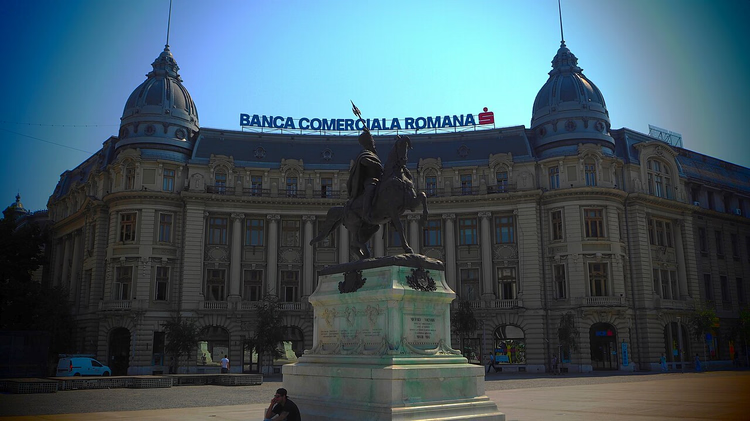
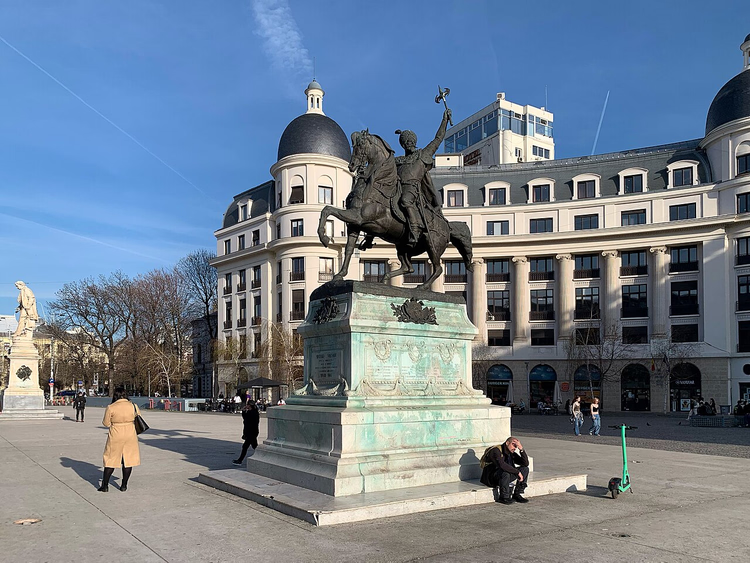
Opposite the palace, Carol I sits on horseback. He was the first king of united Romania, which freed itself from Ottoman rule in 1877. The first equestrian statue was destroyed under socialism and restored only in 2010 (according to the history of Revolution Square).
 © dronepicr · CC BYPhoto: dronepicr, CC BY (https://creativecommons.org/licenses/by/2.0), Wikimedia Commons
Behind the statue stands the University Library building.
Ateneul Român
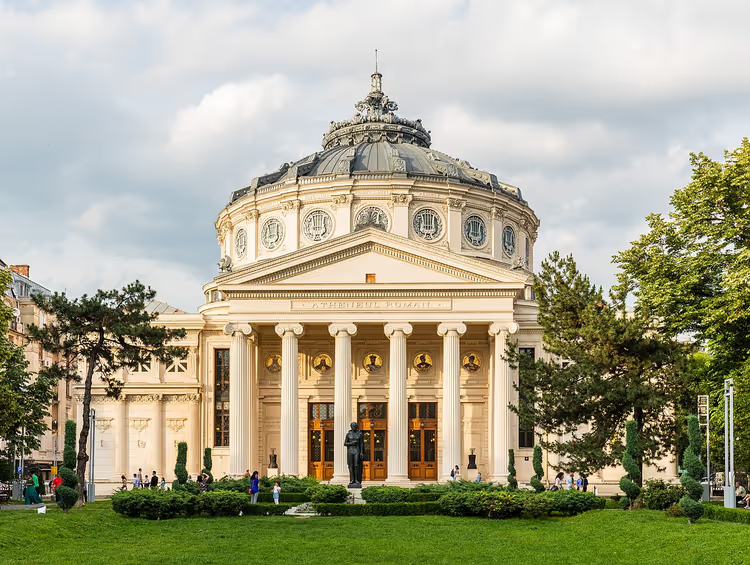
To the right of Carol I is the Romanian Athenaeum, the country's main concert hall. Since the late 19th century it has been the center of Romanian intellectual life. The domed neoclassical building is part of the European Heritage Label list (as of Wikipedia).
 © Diego Delso · CC BY-SAPhoto: Diego Delso, CC BY-SA (https://creativecommons.org/licenses/by-sa/4.0), Wikimedia Commons
Philharmonic concerts run year-round. If you want to hear a symphony orchestra or organ, buy tickets in advance on the philharmonic's website.
Kretzulescu Palace
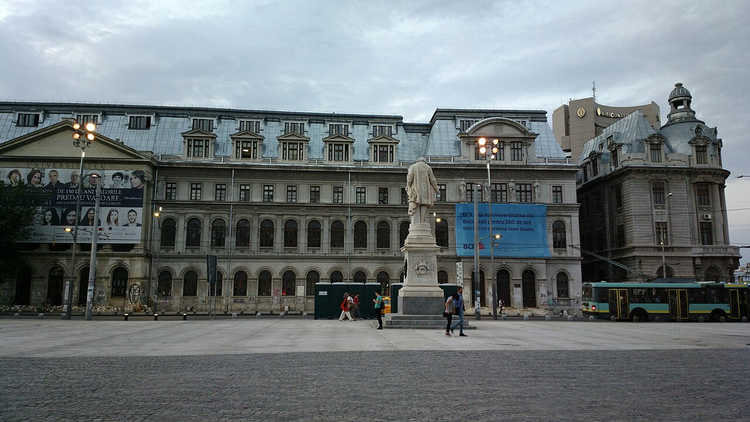
Walk through Cișmigiu Park and you will find Kretzulescu Palace. It stands apart from its "blue-blooded" neighbors. The building was constructed in the early 20th century in neo-Gothic style. For forty years it housed the UNESCO European Centre for Higher Education.
 © Korinna , uploaded by Utilizator:Korinna at ro.wikipedia · CC BY-SAPhoto: Korinna , uploaded by Utilizator:Korinna at ro.wikipedia, CC BY-SA (https://creativecommons.org/licenses/by-sa/3.0/ro/deed.en), Wikimedia Commons
You usually cannot go inside, the building is occupied. Look at the facade, it is worth the detour from the park.
Saint Joseph Cathedral
Kretzulescu Palace stands next to Saint Joseph Cathedral. The cathedral was built in 1873-1884 to a design by Viennese architect Friedrich Schmidt (as of Wikipedia). It combines neo-Romanticism and neo-Gothic. The church is easy to recognize by the large rose window above the main entrance.
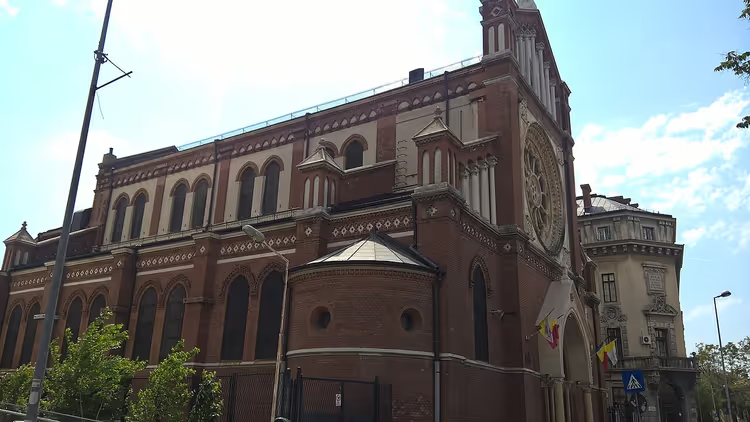 © Leontin l · CC BY-SAPhoto: Leontin l, CC BY-SA (https://creativecommons.org/licenses/by-sa/3.0/ro/deed.en), Wikimedia Commons
If you are lucky, inside you will hear one of the best organs in Romania. Admission is free, but it is better not to start your visit during a service, come between masses.
It was the cathedral's location that suggested our comparison of Bucharest to Frankenstein. The ancient-looking church is squeezed between business centers and luxury hotels. But if Bucharest is Frankenstein, it is the most charming one of all.
Both routes fit together conveniently over two days. It makes more sense to move along Primăverii Boulevard and Revolution Square so you do not have to backtrack. If you want to see the city with a guide, group tours of Bucharest work well.
Tours and tickets in Bucharest
Guided tours, skip-the-line tickets and activities — most offers can be cancelled free of charge.
See offers on GetYourGuideThe widget loads once you give your consent.
⁉️🤔 Frequently asked questions
How many days do you need for Bucharest?
Two full days are enough to cover both routes in this guide. Spend the first day on the communist center with the Palace of Parliament and Ceaușescu's house, and the second in royal Bucharest around Revolution Square. A third day is useful for a trip to Bran or Brașov.
How much does a tour of the Palace of Parliament cost?
A standard guided tour starts at 69 lei (as of 09/2026, Ticketstore.ro). Slots at popular times sell out in advance, so in summer buy your ticket online.
Can you visit Ceaușescu's house without a guide?
No, you are not allowed to walk around the estate on your own. Visits are guided in Romanian or English. The ticket costs 65 or 90 lei, depending on the film screening (as of 09/2026, Ceaușescu House website).
When is the best time to visit Bucharest?
The most comfortable months are May, June, and September. In summer, temperatures often exceed 30 degrees, and not everywhere has air conditioning. In winter, the city is damp and windy, but museums have no lines and hotels are cheaper. For sightseeing in any season, go in the morning.
How to get from the airport to the city center?
Henri Coandă Airport is outside the city, a half-hour drive from the center. An express bus runs to Unirii Square and București Nord station. Order a taxi through an app rather than at the terminal exit, so you do not overpay or end up with an unlicensed driver.
In short: what to book
If you have two days, start with the Palace of Parliament, and in the evening head out to Unirii Boulevard to see the fountains. If royal history is more your thing, plan your route around Revolution Square and St. Joseph's Cathedral. If you are traveling with children, set aside half a day for King Michael I Park with its lake and boat rentals.
Book hotels in the center near Revolution Square through Trip.com. That way you will be within walking distance of both routes and will not waste time getting around.

A small editorial team writing guides for independent travel. We travel ourselves, but we haven’t been everywhere, so we check prices, opening hours and how to get there against official sources.