














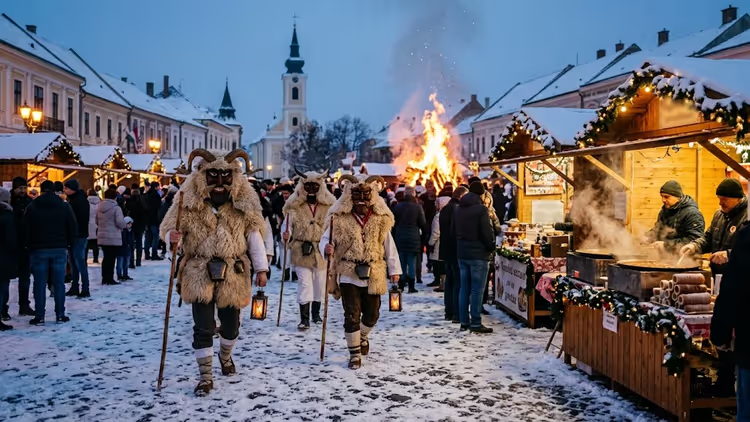
 AIIllustrative image: AI-generated
Busójárás in Mohács 2026: how Hungary's winter carnival takes place
Every February, people in wooden horned masks parade through the streets of Mohács. This is how Hungary says goodbye to winter, and the festival itself, Busójárás, is called the country's oldest and most popular carnival. In 2009 it was added to the UNESCO list (as of 09/2026, UNESCO).
In 2026, Busójárás runs for six days, from February 12 to 17 (as of 09/2026, 2026 festival program). The street program for visitors is free; you only pay for individual workshops. Below you'll find the history of the festival, the day-by-day schedule, how to get there, and accommodation options.
Ad: this article contains affiliate links, we earn a commission if you book through them, at no extra cost to you.
What Busójárás is and who the Busó are
💡 In short:
- Busójárás takes place in the town of Mohács in southern Hungary and is considered the country's main winter carnival.
- In 2026, the festival runs from February 12 to 17, six days.
- Street parades, the fair, and bonfires are free; you only pay for some workshops.
- Prices and opening hours: 09/2026, checked on 09/12/2026 on the official festival website.
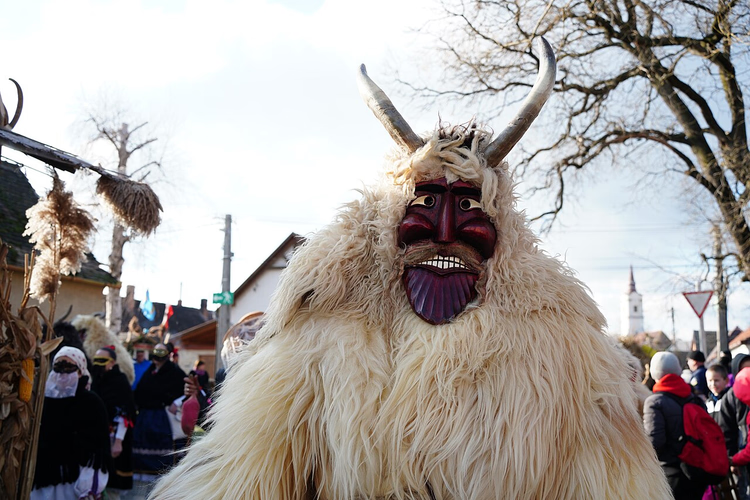 © AlpeolA photo Olga CM · CC BY-SAPhoto: AlpeolA photo Olga CM, CC BY-SA (https://creativecommons.org/licenses/by-sa/4.0), Wikimedia Commons
The Busójárás festival belongs to the Šokci who live in Mohács and is part of the European tradition of saying goodbye to winter. The tradition is more than three centuries old (as of 09/2026, Hungary's national tourism portal).
A legend from the Ottoman era is linked to the festival. The people of Mohács hid from the troops in the marshes and on a Danube island, then returned wearing masks, with rattles and noise, to frighten the invaders (Hungary's tourism portal). Some researchers trace the custom back to Slavic winter farewell rituals. Busójárás is often mentioned in the same breath as the carnivals of Venice and Rio.
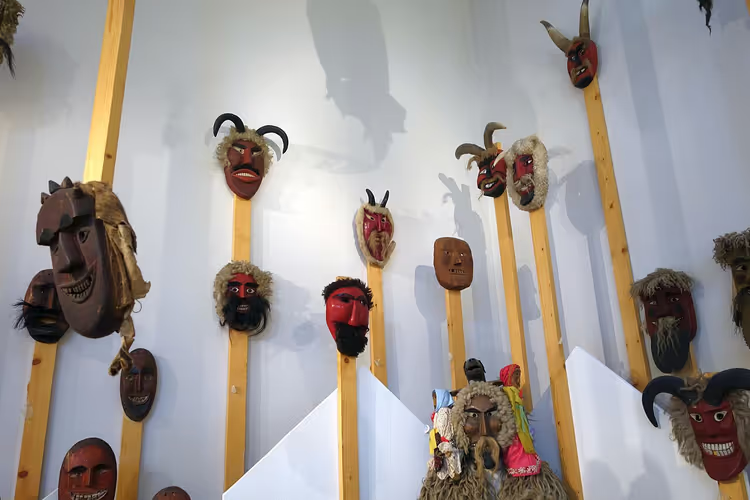
The Busó costume has barely changed: a carved wooden mask with horns, a sheepskin coat, loose trousers, and leather moccasins (as of 09/2026, Hungarikum). The mummers carry a rattle and a spear. The street procession itself is called busójárás, which translates as "the Busó walk."
Since 2012, the festival has also been part of the Hungarian Hungarikum list.
When Busójárás takes place in 2026
The date changes every year. The carnival ends on Shrove Tuesday, the day before Ash Wednesday, and that day is tied to Easter. The 2026 schedule is published by the organizers and the city (as of 09/2026, festival program; city of Mohács program).
Older announcements mention a different week in February, for example the 16th to the 21st. Those dates are outdated, so check the current year's program.
The main day of the carnival falls on Sunday, February 15, 2026 (as of 09/2026, 2026 schedule). You need to pay for individual workshops and children's activities at Busóudvar and the Kanizsai Dorottya Múzeum, but the amounts are symbolic.
If you are going for the first time, allow at least two days for Mohács. It is almost impossible to see the fair, the parade, and the evening bonfire in a single day.
Day-by-day program
The organizers publish an hour-by-hour schedule, and you can review it in advance (as of 09/2026, organizers' schedule).
- February 12, Kisfarsang. Opening of the carnival, crafts fair in the center, first children's parade and an evening dance house. Day one program
- February 13. Fair, mask carvers' exhibitions, brass band performances and an evening concert on Deák tér. Friday program
- February 14. Festive Saturday: stages on Széchenyi tér and Deák tér, "Mohácsi ízek" cooking demonstration in Busóudvar and Serbian cuisine in the courtyard of Szerb templom. Saturday program
- February 15, Carnival Sunday. Main day: around 12:30 the busós cross the Danube in boats, at 14:00 the big parade goes from Kóló tér to Széchenyi tér, at 17:30 a bonfire is lit on the square. Sunday program
- February 16. A quiet Monday with children's activities at Kanizsai Dorottya Múzeum. Monday program
- February 17, Húshagyókedd. Shrove Tuesday closes the festival: parade at 14:30, "carnival funeral" with a symbolic coffin and a big bonfire in the evening. Final day program
You'll see the biggest crowd on Sunday evening, so get your spot by the stage early. On Friday and Tuesday there are noticeably fewer people.
Masks, crafts and street food
The wooden masks are carved by hand, and at the festival you can see how it's done. Carvers work in the museum and at the fair, and at the Busó Iskola workshop you can paint your own mask (as of 09/2026, workshop program). Finished masks, ceramics and embroidery are sold at stalls in the center.
The food at the festival is simple and hearty. On the square they cook sokacbab, a Mohács-style bean dish, in the courtyard of Szerb templom they serve Serbian dishes, and in Busóudvar there's a "Mohácsi ízek" cooking demonstration (as of 09/2026, fair program). Prices are typical for a fair, but you'll want cash: not all stalls take cards.
If you want to bring home a souvenir, choose items made by local artisans rather than cheap souvenir products at the entrance.
How to get to Mohács
Mohács stands on the Danube in southern Hungary, not far from Pécs. Check train and bus schedules on the MÁV-Volán website and verify them for your dates (as of: 09/2026).
The trip from Pécs to Mohács takes less than an hour, and trains and buses run regularly. From Budapest the journey is longer and often requires a transfer. Train tickets within Hungary are worth buying in advance: during carnival weekends seats sell out quickly.
By car from Budapest, the drive takes about two and a half hours on the M6 motorway (route on the map). Parking in central Mohács is limited during the festival, so arrive by morning.
Where to stay for Busójárás
Mohács is a small town, and available rooms run out quickly during the festival. Book accommodation in advance, especially for the carnival weekend. If everything in Mohács is booked, look at Pécs: trains and buses run from there to the festival, and the hotel selection is wider (see hotels in Mohács and Pécs on Trip.com).
Guesthouses and campsites in the area also welcome visitors, but you should confirm availability by phone before your trip.
If you are traveling with family, look for accommodation in Pécs: there are more options with parking and breakfast.
⁉️🤔 Frequently asked questions
When will Busójárás take place in 2026?
The festival lasts six days in central Mohács. The dates change every year because the carnival ends on Shrove Tuesday. Check the exact schedule in the festival program (as of: 09/2026).
How much does admission to Busójárás cost?
You pay only for individual workshops, children's activities, and concerts in indoor venues. The amounts are small, and the full list of paid programs is in the list of paid programs (as of: 09/2026).
How do I get to Mohács from Budapest?
By train with a transfer or by bus, the trip takes several hours. From Pécs to Mohács it takes less than an hour. Check schedules on the MÁV-Volán website (as of: 09/2026), and buy tickets in advance: during carnival weekends there are few seats left.
Is Busójárás worth visiting with children?
Yes. During the day there are children's parades, workshops, and puppet programs, and the fair has food and sweets. Evening bonfires and noisy processions with rattles can frighten young children, so plan evening activities based on your child.
What should I wear to the festival?
February in southern Hungary is still a winter month: frost, wind from the Danube, and snow are possible. Bring warm shoes, a hat, and gloves, as well as cash for the stalls. You will spend most of your time outdoors.
In short: what to book
If you are going for the carnival weekend, book accommodation in advance: Mohács has few rooms, and Pécs has a wider selection (see hotels on Trip.com).
If you have two days, spend them like this: the fair and workshops on Saturday, the procession and bonfire on Sunday. If you don't like crowds, come on Friday or Tuesday, there are fewer people on those days.
Plan your trip for carnival Sunday and book accommodation in advance.

A small editorial team writing guides for independent travel. We travel ourselves, but we haven’t been everywhere, so we check prices, opening hours and how to get there against official sources.