
















How to rent a car in Georgia without a deposit and not overpay
Georgia combines the snow-capped Caucasus Mountains and a subtropical coastline. Public transport barely reaches many of these places: buses do not run to monasteries, canyons, and cave cities. Having your own car solves this problem, but many people are put off by the deposit. Below we will look at how to rent a car in Georgia without a deposit in 2026 and how much it costs. A compact car in Tbilisi starts at around 80 GEL per day (as of 05/2026, rental guide).
Ad: this article contains affiliate links. We earn a commission if you book through them, at no extra cost to you.
What you need to know about car rental
💡 In short:
- You pick up a car in Tbilisi, Batumi, or Kutaisi, and it is better to book it in advance through an online rental comparison service.
- You need your national driver's license, and often an International Driving Permit (IDP) as well.
- A deposit is not always blocked on your card: according to DepositIndex (08/2026), most offers in Tbilisi come with no deposit at all.
- In the mountains, choose a car with all-wheel drive, and in winter, confirm winter tires in advance.
Below we will look at two rental options, car classes, insurance, and road rules. We will also focus on the deposit and extra options that are easy to overpay for. All prices and rules were checked against open sources as of September 2026.
A car gives you freedom of route. You stop at a waterfall, change your plans, and head to the sea whenever you want. Public transport cannot do that: schedules are tied to fixed departures, and buses do not go to many places.
Where you can go
It is easy to build a circular route through Georgia and see mountains, caves, wineries, and the sea in one trip. Below are the places that are easiest to reach with a rental car.
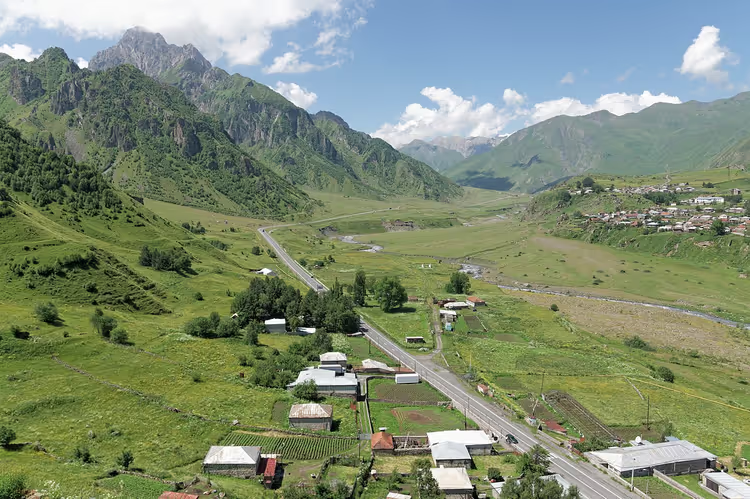
The Georgian Military Road is considered one of the most scenic highways in the region. It runs from Tbilisi through the Greater Caucasus to the border and passes ancient fortresses, towers, and churches. You drive along gorges and mountain passes, and you can stop almost anywhere.
 © Vyacheslav Argenberg · CC BYPhoto: Vyacheslav Argenberg, CC BY (https://creativecommons.org/licenses/by/4.0), Wikimedia Commons
The first major stop on this route is Mtskheta, the ancient capital of Georgia. The town stands at the confluence of the Aragvi and Kura rivers, and its stone streets are squeezed between the cliffs. It is home to the Jvari and Samtavro monasteries, as well as the Svetitskhoveli Cathedral.
Mtskheta was founded back in the 5th century BC. This is where the country was baptized, so shrines are everywhere. The Svetitskhoveli Cathedral houses the Robe of Christ, one of the main Christian relics. The Jvari Monastery rises on a hill above the confluence of the Aragvi and Kura, and its terrace offers a view of the entire town. You will need at least half a day to see Mtskheta and the surrounding monasteries, and the center is a good place for lunch, with many small cafes serving local cuisine. Arrive at opening time: by midday, tour groups start arriving and the shrines get crowded. Parking in the center is paid, so leave your car by the monastery.
The cave city of Vardzia is carved into a rock face about five hundred meters long. Inside there are churches, storerooms, stables, living quarters, and even baths. The walls of the Church of the Dormition are covered with 12th-century frescoes.
Vardzia is one of the largest cave cities in the region. The halls carved into the rock could hold several thousand people. The Church of the Dormition of the Mother of God stands in the middle of the gorge, so it is visible from afar. Stone staircases lead inside. In summer it is cool inside, so the heat will not spoil your walk. The road here passes through Akhaltsikhe, where the 13th-century Rabati Fortress stands, and the two can easily be combined into one trip. Bring water and comfortable shoes: there are many climbs and descents, and almost no shade.
Kutaisi stands on the Rioni River. Nearby is the Gelati Monastery, a UNESCO World Heritage Site. The monastery has preserved 13th-century churches and mosaics.
The Gelati Monastery was founded in the 12th century, and its walls are decorated with mosaics and frescoes. The Prometheus Caves are located near Kutaisi: inside, you walk along equipped paths among illuminated stalactites. Another option for a day trip is the Sataplia Nature Reserve with dinosaur figures and a glass observation deck. One day is enough for all three places if you leave in the morning. The roads to them are paved but narrow in places, so allow time for winding mountain roads.
Near Kutaisi is the Martvili Canyon with emerald water. The Abasha River has carved a narrow channel between high cliffs, with trees hanging overhead. Here you can rent a boat and sail through the canyon.
Further east lies the wine region of Kakheti. Here wine is aged in clay vessels buried in the ground, and this method gives the drink a special taste. The center of the region is the town of Telavi with medieval monasteries and fortresses.
Borjomi is known for its healing mineral water and national park. The resort sits in a mountain valley and stretches along one wide street with hotels and guesthouses. People come here for peace and walks in the park.
The resort sits at an altitude of about eight hundred meters above sea level, so it is cooler here in summer than in Tbilisi. A park and drinking galleries stretch along the main street. Bring a bottle to fill with mineral water from the spring, and check out the cable car over the park. From here it is convenient to head to Borjomi-Kharagauli National Park, where hiking trails of various lengths are laid out. The water contains hydrogen sulfide and has a distinctive taste, but that is exactly why people come here.
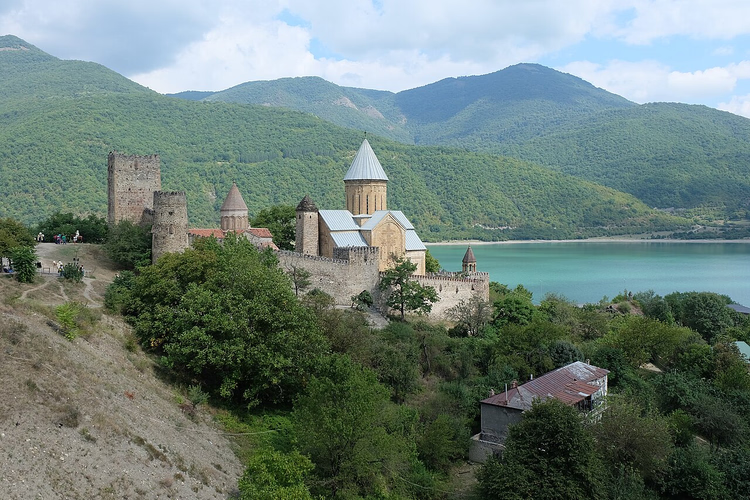
Stepantsminda lies at the foot of Mount Kazbek under eternal glaciers. The drive from Tbilisi takes several hours and follows the Georgian Military Road. Along the way you pass the Ananuri Fortress on the shore of the Zhinvali Reservoir and the Darial Gorge.
In summer, it is worth visiting Batumi on the Black Sea. The city is known for its wide palm-lined promenade and modern buildings with unusual shapes. The streets are full of sculptures, fountains, and cozy parks for walking.
Batumi is the capital of Adjara and the country's main seaside resort. It has a botanical garden on a hillside by the sea, a long promenade with a bike path, and dozens of cafes. The city's beaches are pebbly, and the sea is warm from mid-summer to early autumn. In the evening, take a walk through the square with the singing fountains. From Batumi it is easy to take a trip to mountainous Adjara to see waterfalls and green gorges. The drive from Tbilisi takes almost a full day, so it is better to leave early in the morning.
Why a car is more convenient
 © Alexkom000 · CC BYPhoto: Alexkom000, CC BY (https://creativecommons.org/licenses/by/4.0), Wikimedia Commons
With a car, you choose your own pace and route. You can stop at a waterfall that is not in any guidebook and stay there for an hour. Bus and train schedules do not offer that kind of flexibility.
Luggage stops being a problem. Suitcases stay in the trunk, and you walk around unencumbered. On buses and minibuses, you have to carry your things with you at every stop.
The railway connects major cities but does not take you to monasteries and canyons. Intercity trains are convenient for traveling between Tbilisi and Batumi, but they are not suitable for sightseeing.
Minibuses run on popular routes but depart only when full. You may stand at the station for an extra hour waiting for the van to fill up. They often do not run to shrines and nature parks at all.
Road trips or group tours
Before your trip, it is worth comparing two options: driving a rental car or taking group excursions. For your calculation, factor in distance, fuel consumption, and the daily rental rate. A liter of gasoline in Georgia costs about 1 € (as of 07/2026, fuel prices).
 © shankar s. from Dubai, united arab emirates · CC BYPhoto: shankar s. from Dubai, united arab emirates, CC BY (https://creativecommons.org/licenses/by/2.0), Wikimedia Commons
Mtskheta is about twenty kilometers from Tbilisi, and by car you can get there in half an hour. Minibuses also run there, but with a car you choose your own timing for the monasteries. With a group, you depend on the tour schedule.
For short distances, a compact class car is enough. Such a car uses little fuel, and parking in the center is not a problem. You can compare rental prices on the car search service.
The drive to Batumi is long, but there are many stops along the way. You can turn off to a winery, stop by the botanical garden, or simply rest at a waterfall. An excursion program for a family of four usually costs more than a two-day rental.
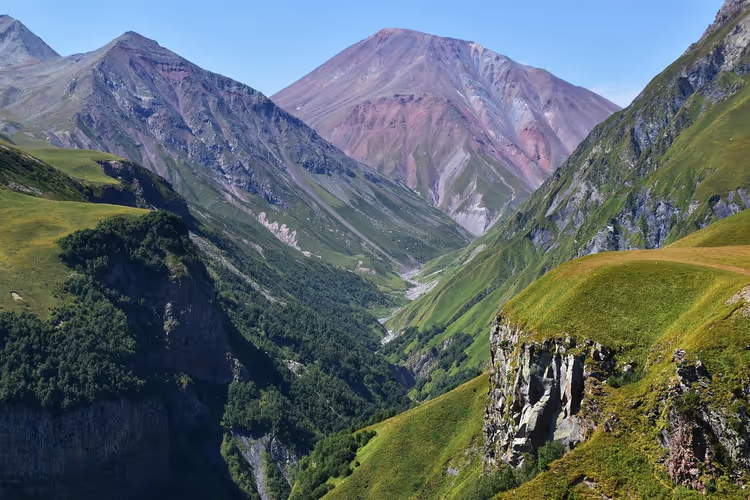
The trip to Stepantsminda goes through mountain switchbacks. With a car, you can stop at the Dariali Gorge and Gveleti Waterfall whenever you want. A group tour with a guide costs noticeably more, and its route is fixed.
Borjomi is convenient to reach without transfers, and you can stay overnight near the park. For a family of four, an independent trip works out cheaper than an organized one.
Vardzia stands away from the main highways, and you cannot get there without a car. A group tour limits you to the cave city only.
Kutaisi is convenient to use as a base for outings. An independent route is cheaper than an excursion and lets you linger where you like.
The conclusion is simple. If you are traveling with family or friends and want a flexible route, a car saves both money and time. Group tours are convenient only in one case: when you are not ready to drive in the mountains and want someone else to take you.
What to pay attention to
To rent a car, you will need a passport, a driver's license, and a bank card in the driver's name. Some rental companies additionally ask for an international driving permit (IDP). Arrange the documents in advance so you do not have to look for a translator on the spot.
The main question when booking is the deposit. The rental company needs a security deposit as a guarantee that you will return the car intact. The amount depends on the car class and company policy. They block from 0 to 2,000 € on your card, and the range here is very wide (as of 09/2026, about Werent deposits).
An important point: not all companies take a deposit. According to Tbilisi analytics (08/2026), about 79% of offers in Tbilisi come with no deposit at all. If a company asks for one, clarify whether they block the money on your card or accept cash.
Some companies offer a no-deposit option for an additional daily fee. This is convenient if you have a debit card or a limited credit limit. Calculate in advance: sometimes the surcharge for waiving the deposit costs more than the blocked funds themselves.
Before signing the contract, check what is included. Full coverage, a second driver, and a child seat often come at an extra cost. If you are traveling with a child, ask about seat availability in advance.
Add the second driver to the contract right away. If someone not listed in the document gets behind the wheel, the insurance may not apply. Adding a second driver costs little, and you can take turns driving on long stretches. Also check the age limit: some companies refuse young drivers or ask for a surcharge. Bring a card with a sufficient limit, otherwise the deposit will not be blocked. Keep copies of your documents on your phone in case you lose the paper versions.
Which car class to choose
Almost all of Georgia's main highways are paved, but some attractions are reached by dirt roads. The car class directly affects your trip comfort. Look not only at the price, but also at the engine, trunk, and additional equipment.
The compact class suits the city and short outings. A small car is easy to park in central Tbilisi, and its fuel consumption is low. The catch is that a weak engine struggles on mountain switchbacks, and the trunk fits two suitcases.
For a family, a seven-seat minivan works well. It has a powerful engine and a large trunk, so long stretches go smoothly. If you are traveling with five or six people, take a minivan, otherwise you will have to hold your belongings on your laps.
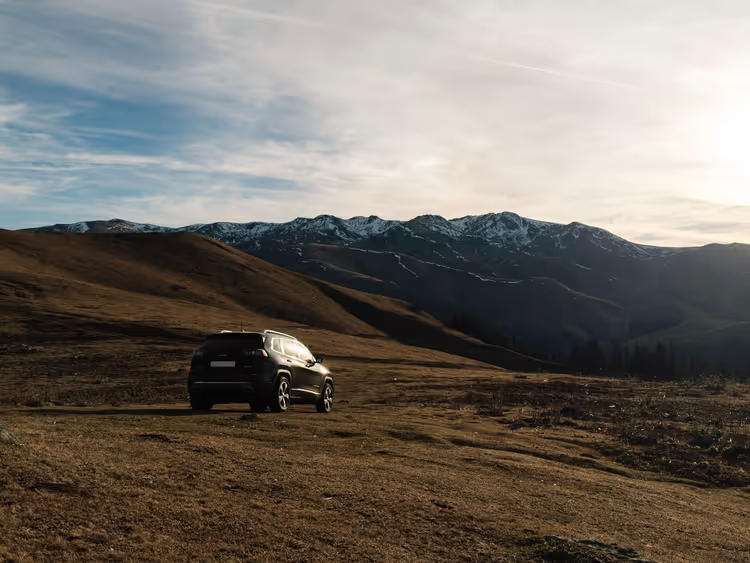
The all-around option for Georgia is an SUV. It handles dirt roads and performs confidently on climbs. All-wheel drive and high ground clearance come in handy in the mountains, although in city traffic such a car uses more fuel.
In winter, check whether the car has winter tires. On mountain roads, they matter more than class and power. In summer on the coast, regular tires and air conditioning are enough.
Car insurance
All rental cars are insured, but the level of coverage varies. Compare three basic options:
Coverage | What it compensates | What remains yours to pay |
|---|---|---|
Basic insurance | Third-party damage | Repairs to your own car |
Full coverage (Kasko) | Accidents, theft, natural events | Deductible and exclusions |
Zero deductible | Almost all cases | Only excluded parts |
Basic insurance is included in the rate and protects only the injured party. If you damage the car yourself, you pay for the repairs. Calm drivers often choose this option and save money.
Full coverage protects the car itself from accidents, theft, and falling trees. According to the deposit and insurance review, even full coverage almost always comes with a deductible. A deductible is the amount you pay yourself in case of damage, and it ranges from zero to several thousand euros.
Tires, the underbody, and mirrors are often excluded from coverage. Sometimes the interior and keys are added to the exclusion list. Read these points before signing so you do not argue with the rental company later.
The deductible can sometimes be reduced for a surcharge or eliminated entirely. Calculate what is more advantageous: the surcharge for a zero deductible or the one-time risk of damage. For a short trip on good roads, basic insurance with a deductible is often enough. Before driving off, photograph the car from all sides and save the pictures so that disputed damage does not surface when you return it. This protects both you and your money. If you are going to the mountains in winter, take full coverage: the risk is higher, and the deductible can be large.
There are areas you cannot enter even in an all-wheel-drive SUV. No insurance covers driving through them. The policy is also voided if alcohol is found in the driver's blood.
How to book a car
You can book a car online in advance or on the spot, but in season the on-site selection is worse. Online, you compare prices and conditions across dozens of companies at once. The daily price depends on the class, season, and rental period, so book ahead and take the car for the entire duration.
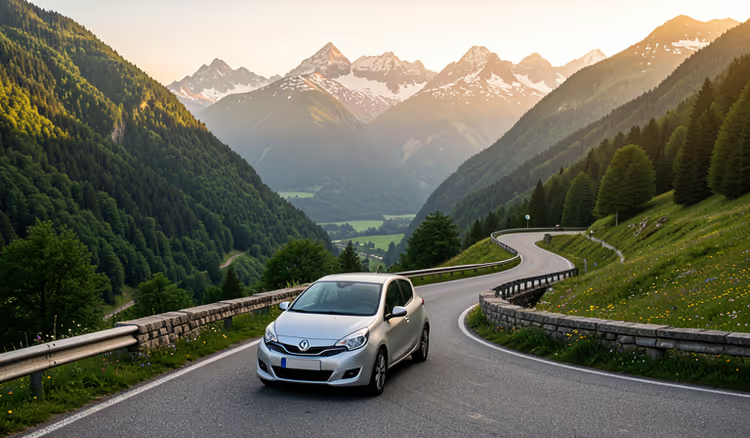 AIIllustrative image: AI-generated
Both international companies and local rental firms operate in Georgia. International brands offer new cars and a clear contract, but charge more for deposits and extras. Local firms are cheaper, though the fleet is simpler and there may be no office.
If you arrive at night, check whether the airport desk is open. Some local firms hand over the car right in the terminal, others bring it to your hotel. Agree on the place and time in advance so you don't end up waiting outside. Also ask what fuel level the tank should have on return, so you don't pay extra later. Good reviews and a clear contract matter more than the lowest price. In high season, book several weeks ahead, otherwise popular car classes run out.
When booking online, you set the country, city, dates, and transmission type. The system then shows available cars and sorts them by price. Advanced search lets you filter offers by engine size and fuel type.
The list is usually divided into four categories: economy subcompacts, mid-size compact cars, executive class, and all-wheel-drive SUVs. The longer the rental period, the lower the daily price.
Click on a car card to see the specifications and cost breakdown. There you can also see what is included in the price and what is paid separately. Compare the final total, not just the daily rate.
After choosing a car, you specify the pickup and return location and time. Then you enter your name, phone number, and email. A deposit is paid at booking, and the balance is paid when you pick up the car.
The booking is confirmed by email along with a voucher that lists all rental conditions. Cancellation policies vary between services, so read the rules before paying. You can often cancel without losing the deposit if there is enough time before the trip.
The main advice: book ahead and keep your confirmation. In high season, popular car classes sell out and prices rise. You can compare and book a car on the rental search service.
How to pick up and return the car
A company employee will bring the car to the agreed place and time. Show your passport, driver's license, and voucher, either printed or electronic. If your flight is delayed, let the rental company know in advance.
Inspect the car before signing the contract. Record any scratches, dents, and interior damage in the handover report. Take photos of the car from all sides so there are no disputes after return.
Read the contract in full, not just the amount. Pay attention to fuel, mileage limit, and the list of insurance exclusions. Then pay the agreed deposit and receive the keys, contract, and the rental company's contact details.
Return the car to the same place and with the same fuel level as at pickup. Otherwise, refueling or a fine will be deducted from the deposit. The return inspection takes a few minutes if everything is in order.
The deposit is returned in cash or the card hold is released. Banks sometimes delay the release, so ask for a receipt of the transaction. That way you have proof that the company returned the deposit.
What to keep in mind on the road
 © shankar s. from Dubai, united arab emirates · CC BYPhoto: shankar s. from Dubai, united arab emirates, CC BY (https://creativecommons.org/licenses/by/2.0), Wikimedia Commons
Georgia is beautiful, but the roads here demand attention. Before the trip, study the local rules, road conditions, and driving specifics. That way you avoid fines and unpleasant surprises.
Many interesting places are away from cities, and public transport doesn't go there. With a rental car, you can reach them on your own and return at a convenient time. Below is what you should know before heading out.
Roads and surfaces
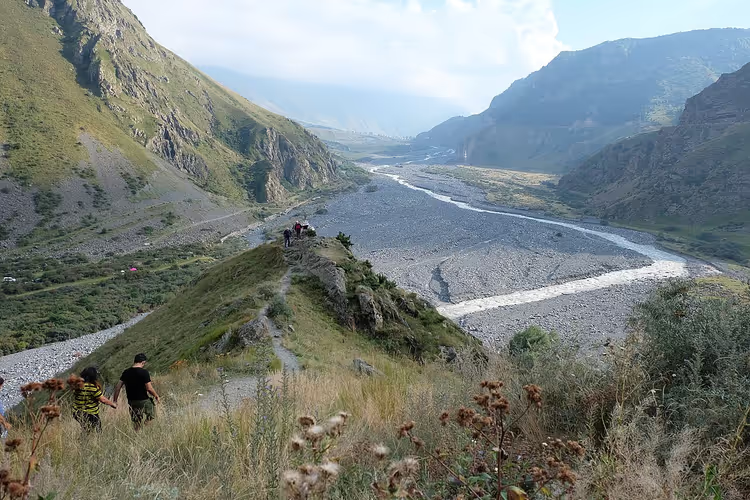
Most roads in Georgia run through mountainous areas, and the surface varies. Main highways are in good condition, but secondary roads have potholes and ruts. Slow down on unfamiliar sections, especially in the mountains.
There are no toll roads in Georgia, so you never pay for highway use. However, some local roads are unpaved dirt tracks. After rain they turn to mud, and it's better not to take a regular car there.
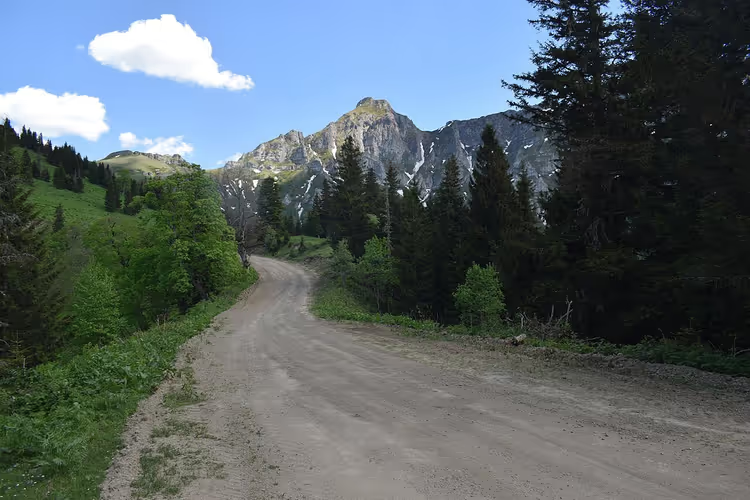 © Camptravel · CC BY-SAPhoto: Camptravel, CC BY-SA (https://creativecommons.org/licenses/by-sa/4.0), Wikimedia Commons
Be careful on mountain switchbacks: rockfalls and snow slides happen here. Some sections are reachable only with an all-wheel-drive SUV. Check the route in advance and don't rely solely on the navigator.
A distinct local feature: livestock on the roads. Cows and sheep wander onto the roadway and graze near highways. Drive carefully outside the city at night, as lighting is not available everywhere.
In winter, some mountain passes are closed due to snow. In summer, coastal roads are freer, but on weekends there are traffic jams near Batumi. Plan your route with extra time.
Parking and payment
You can park for free in any suitable spot without a prohibition sign. Small towns have more free parking than cities. But Tbilisi, Batumi, and Kutaisi have paid zones.
Paid spots are marked with a white dashed line and a "P" sign. Payment applies throughout the city, and the rate is hourly. You can pay at a street terminal or online on the parking company's website.
People in bright vests who point out where to park are not company employees. They are volunteers, and you are not required to pay them. Parking is monitored by police and the municipal service, so park only according to the rules (as of 09/2026, parking rules).
Police on the roads
After reforms, Georgia's traffic police became tourist-friendly. They don't stop cars without a serious reason and are happy to give directions. If you get lost, feel free to ask patrol officers.
Arguing, being rude, and especially offering a bribe is not allowed. That carries criminal liability, not just a fine. Better to follow the rules and keep your documents handy.
On highways, traffic is monitored from unmarked cars. These vehicles are equipped with cameras and radars, so speeding is recorded without you noticing. Keep to the speed limit and don't get distracted by your phone.
Traffic rules and fines
Traffic rules in Georgia are familiar to a European driver. Driving is on the right, and signs, markings, and traffic lights apply. An experienced motorist won't find anything unusual here.
On highways the limit is 110 km/h, and in built-up areas it is lower (as of 08/2026, traffic rules). The permissible blood alcohol level is low, around 0.3 promille, so it's better not to drive after wine (as of 08/2026, alcohol limit for drivers).
Children must be transported only in special seats, and leaving them unattended in the car is not allowed. Throwing trash out the window is also prohibited. Such violations result in a fine, so pay special attention to this.
A fine is issued with a report, and you must pay it through a bank within the set period. If you don't pay on time, the amount is deducted from the rental company's deposit. A points system also operates: points are deducted for violations, and when they reach zero, the license is suspended for a year (as of 09/2026, fines and points system).
Fuel prices
Gas stations in Georgia offer full service. You don't need to get out of the car: tell the attendant how much fuel to add, and they will do everything. When paying by card, a portable terminal is brought to the car.
Stick to branded gas stations and avoid stations without a logo. Travelers recommend Gulf, Wissol, Socar, and Rompetrol. At these, it's easier to control fuel quality and engine problems are less common.
Gas stations offer AI-92, AI-95, and AI-98 gasoline, diesel, and gas. A liter of gasoline costs about €1 (as of 07/2026, gasoline statistics), and diesel is usually slightly more expensive than gasoline (as of 03/2026, fuel types in Georgia). Gas fuel is cheaper but requires a suitable car.
Internet and connectivity
Roaming in Georgia is expensive, so get a local SIM card. The main operators are Cellfie (formerly Beeline Georgia), Silknet (formerly Geocell), and Magti, and they have good coverage across the country. SIM cards are sold at the airport, at operator stores, and at city kiosks.
Wi-Fi is available at almost all hotels and guesthouses, even in mountain villages. But for navigation and calling for help, it is better to have your own internet. Download offline maps of Georgia in advance so you do not depend on the network in the mountains.
If you do not want to look for a store on arrival, get an eSIM for Georgia before your trip. It activates as soon as you land, and you will not need to swap your SIM card.
Trips outside Georgia
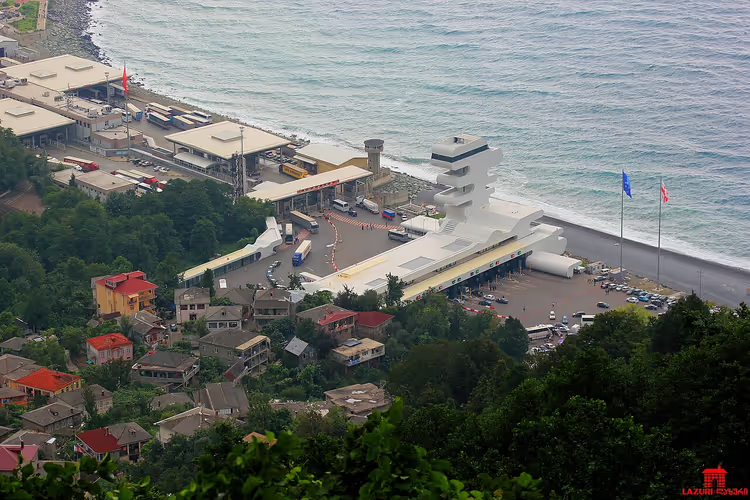 © Abkhazian1 · CC BY-SAPhoto: Abkhazian1, CC BY-SA (https://creativecommons.org/licenses/by-sa/2.0), Wikimedia Commons
From Georgia, it is easy to reach Armenia, Azerbaijan, and Turkey. But to leave the country in a rental car, you need written permission from the rental company. Without it, you will be turned back at the border.
The rental company issues a power of attorney for cross-border travel, and this paperwork is paid separately. Confirm this before booking, because not all companies allow crossing the border. Also check whether your insurance is valid outside the country.
By distance, Yerevan is the closest. Baku is roughly twice as far, and Ankara is even longer. Plan your route with overnight stops and check border crossing hours in advance.
⁉️🤔 Frequently asked questions
Do I need an international driving permit to rent a car in Georgia?
Not all companies ask for an International Driving Permit (IDP), but some firms refuse to rent without one. Bring an IDP if you have one: that way you will definitely not waste time on arrival. You still need your home country license, and both documents must be valid.
Can I rent a car in Georgia without a deposit?
Yes, most offers in Tbilisi come with no deposit. Some companies offer a deposit waiver for a small extra fee.
What are the roads like in Georgia, and do I need an SUV?
The main highways are paved and in good condition, but some places are reached by dirt roads. For Mtskheta, Batumi, and Borjomi, a compact car or minivan is enough. An SUV is useful in the mountains near Stepantsminda and on remote sections near Vardzia.
Can I take a rental car across the border?
Only with written permission from the rental company. The conditions for cross-border travel are covered above, in the section on trips outside Georgia.
What should I do in an accident?
Call the rental company and the police using the unified emergency number. Do not move the car from the accident scene, otherwise the insurer may refuse to pay. Photograph the damage and write down the other driver's details. Fines and damage will then be deducted from the deposit if you are at fault.
In short: what to book
Choose a car for your route, not for the lowest price. For the city and short trips to Mtskheta, a compact car is enough. For a family and the mountains, take a minivan or SUV, especially if you plan to visit Stepantsminda and Vardzia.
If you are on a tight budget, look for an offer with no deposit. If you are going to the mountains in winter, pay extra for full coverage and winter tires so you do not take risks. When traveling as a family, compare renting with group tours: for four people, a car is often cheaper.
Before your trip, compare rental and insurance options: find a car and compare insurance terms.

A small editorial team writing guides for independent travel. We travel ourselves, but we haven’t been everywhere, so we check prices, opening hours and how to get there against official sources.