
















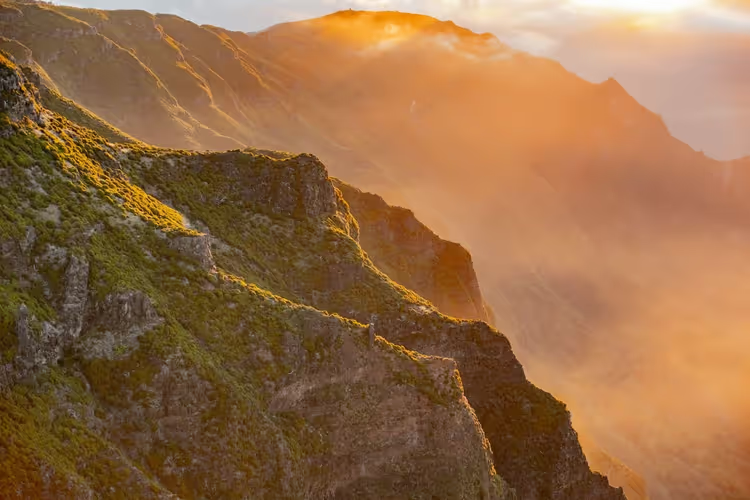
Car rental in Madeira: prices, insurance and the island's winding roads
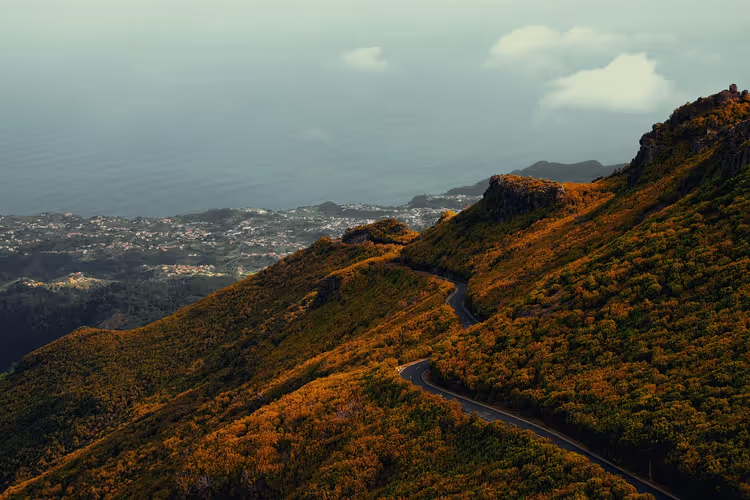
Madeira’s winding mountain roads scare people more than any other topic about the island. In other people’s stories, the roads are narrow, have no guardrails, and the climbs are steep. In practice, driving around the island is manageable if you sort out the car category, insurance, and parking in advance.
From June 1, 2026, a mandatory vehicle use fee was added to rentals: €2 for each day of the contract, up to a maximum of €20 (industry publication report, as of 09/2026). It appears as a separate line in the contract and on the invoice, so don’t confuse it with the rental company’s service fee.
Below, we look at where to book a car, what to check when you pick up the keys, how to handle the mountain roads, and how much parking costs at the main viewpoints.
Ad: this article contains affiliate links: we earn a commission if you book through them, at no extra cost to you.
Do you need a car on Madeira
💡 In short:
- A car solves the island’s main problem: buses don’t reach the trailheads of levada routes or remote viewpoints.
- A small car is enough for all the island’s roads.
- Full insurance with no deductible is essential, because scratches on a rental car are common here.
- A week’s rental of a small car with full insurance fits into an average trip budget.
- Prices, fees, and traffic rules: 09/2026, verified against ADAC auto club data and a regional government decision.
Three bus companies operate on the island, and their network is dense. The problem lies elsewhere: schedules are centered on Funchal, and the starting points of many levada routes are far from bus stops. Some viewpoints have no bus service at all, so you either lose half a day on transfers or give up on the route.
With a car, you choose your own schedule. Sunrise over the mountains, swimming on the other side of the island, and an evening in Funchal all fit into one day, with no waiting for transport and no dependence on the last bus.
The island’s road network is good, but distances are deceptive. Tunnels alternate with hairpin turns, climbs are long, and corners are tight. On mountain sections, average speed ends up lower than the navigation app shows, so allow extra time. The first few kilometers are the hardest; after that, you get used to the island’s rhythm.
You don’t need a car on every trip. If you’re staying for three days in Funchal, a bus, taxis, and walks around the center will be enough. You’ll see only part of the island, but you won’t have to hunt for parking or pay for a rental.
If driving doesn’t appeal to you, choose group tours with a guide: they cover the eastern and western parts of the island in one day without you having to drive.
How much does car rental cost on Madeira
The rental price depends on three things: vehicle category, season, and booking lead time. We deliberately don’t give exact rates: rental companies change them daily, and the spread between dates can be several times over. The relationship between categories looks like this.
Category | Example model | Daily rate | Weekly rental |
|---|---|---|---|
Small car | Fiat 500 or similar | the lowest on the island | baseline expense level |
Compact | Ford Focus or similar | slightly higher than a small car | slightly above baseline |
SUV | Peugeot 2008 or similar | the highest of the three | noticeably more than a small car |
Automatic costs more than manual, and in high season this difference grows noticeably. In the off-season, a week’s rental costs significantly less than in July and August, and prices spike around holidays.
Don’t look only at the number in search results. The rate should include full insurance with no deductible, unlimited mileage, and a full-to-full fuel policy. A cheap offer is often assembled from add-ons: a second driver, a child seat, tire and underbody coverage. Calculate the total for the whole trip, not the daily rate.
The difference between a booking portal and the airport counter is noticeable even on a short rental. At the terminal, you choose from what’s left for today and pay the counter rate. Book in advance and take terms with free cancellation, so a later trip won’t cost more.
Booking lead time affects the price more than it seems. According to a Stiftung Warentest study, prices on Madeira surge in the last four weeks before the trip; in one case the increase reached 50% (test, 09/2026). The best rates appeared four to six weeks before the trip start. So take a rate with free cancellation and watch the price after booking: if the rate drops, you simply rebook the car.
Environmental fee for car rental
The rental vehicle use fee has been in effect since June 1, 2026 and applies to every rental car, including electric vehicles. The rate is €2 per day, capped at €20 per contract, meaning the fee stops accruing after ten rental days (fvw publication, as of 09/2026). For electric vehicles, the rate is half: €1 per day with a maximum of €10 (regional government announcement).
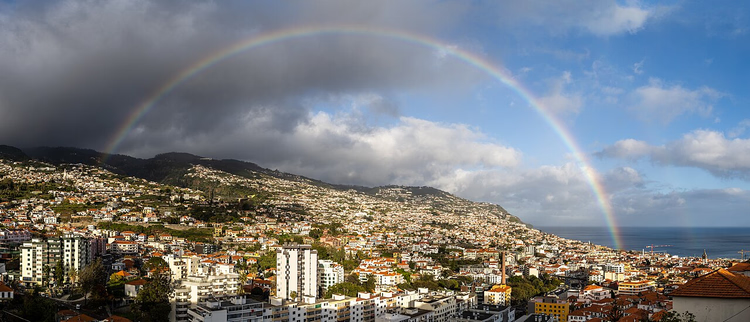 © Hans Põldoja from Estonia · CC BYPhoto: Hans Põldoja from Estonia, CC BY (https://creativecommons.org/licenses/by/2.0), Wikimedia Commons
The money goes not to the rental company but to the regional budget, and is split between the road and environmental agencies. In the contract and on the invoice, the fee is listed as a separate line item, so you won't be able to dispute it when returning the car.
Check the rate wording when booking. The phrase "all taxes and fees included" often means only the portal's local taxes, while you pay the environmental fee yourself.
The practical takeaway is simple: over a week, the fee adds a small amount to your budget, and after the tenth day of the contract it stops growing.
How to save on a rental
- Compare several portals; the difference is noticeable even between adjacent dates.
- In high season, automatics get booked up before manuals, so check availability in advance.
- Don't pay for a rental navigation system: download island maps ahead of time and keep your phone charged.
- Refuel yourself before returning the car; the "full tank from the rental company" service costs more.
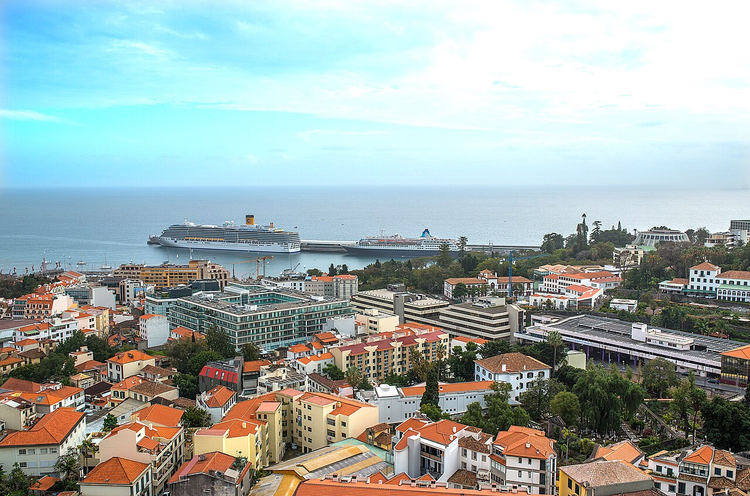 © Bengt Nyman · CC BYPhoto: Bengt Nyman, CC BY (https://creativecommons.org/licenses/by/3.0), Wikimedia Commons
Which car to rent on Madeira
A subcompact is enough for all the island's roads. You don't need a powerful engine or all-wheel drive: hills are handled in first gear, even with less than a hundred horsepower under the hood. In our rental experience on the island, a regular subcompact managed both the climb to Monte and the narrow village streets.
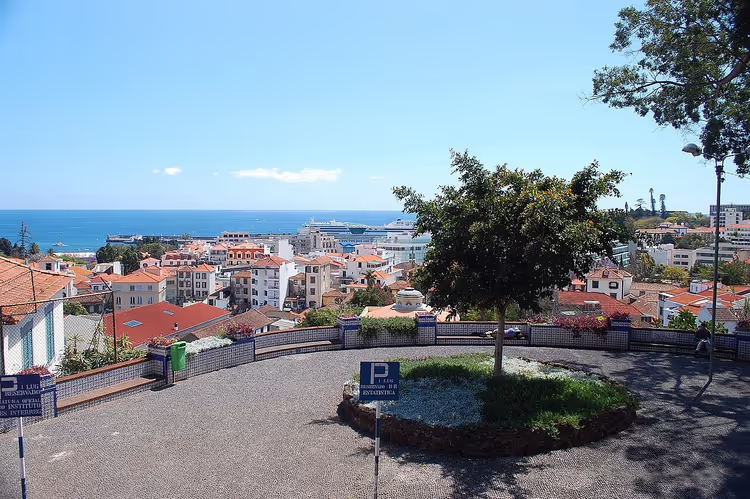 © Luke H. Gordon · CC BYPhoto: Luke H. Gordon, CC BY (https://creativecommons.org/licenses/by/2.0), Wikimedia Commons
Choose the category based on your group size. A couple will be fine with a subcompact or compact, but a family with suitcases needs an SUV or station wagon, otherwise the luggage won't fit.
Manual or automatic? With an automatic, you start off uphill more comfortably, but you pay noticeably more for each rental day. Go with a manual if you're confident using the handbrake on a slope.
The bodywork on a rental car is rarely perfect. Accept that a couple of scratches are normal here, and don't overpay for the most expensive category just for a flawless appearance. Photograph all damage at pickup, so you won't have disputed charges at drop-off.
Where to book a car in Madeira
The cheapest approach is to compare offers from several portals rather than going to the airport counter. Right in the terminal, rates are almost always higher, and the selection is limited to what is left for the day. For your dates, it is convenient to check rates if you compare car rental prices.
Portals sell insurance separately from the car, and this is the main difference from the terminal counter. Cheap rates work on a reimbursement model: the rental company blocks a deposit on your card, and you get the repair money back from the portal after the invoice. The model works, but it requires careful photos at pickup and return.
Also check the pickup location. If the car is handed over at Funchal Airport, you do not waste time driving into the city and back, and at return you can make your flight without rushing.
What to look for when booking
- Full insurance with no deductible. Do not skimp on this. Coverage should include theft, glass, roof, tires, and underbody, and third-party liability should be measured in millions of euros. A rate with a deductible is only a couple of euros cheaper, and you pay the bill for a scratch yourself.
- Full-to-full fuel policy. You receive the car with a full tank and return it full. This is the fairest arrangement, and it should be written into the contract.
- A credit card for the deposit. Without a card in the main driver's name, the car will not be released, because the deposit is blocked on that card. A debit card does not work for this.
- Look at the total, not the rate. A cheap rate often does not include a second driver, and the surcharge for one eats up all the savings.
Picking up the car at Funchal Airport
Most rental companies hand over cars right at Funchal Airport. Sometimes the counter is in the arrivals hall rather than a separate office, so look for your company's sign right by the exit. Counters operate almost around the clock, which also covers night flights.
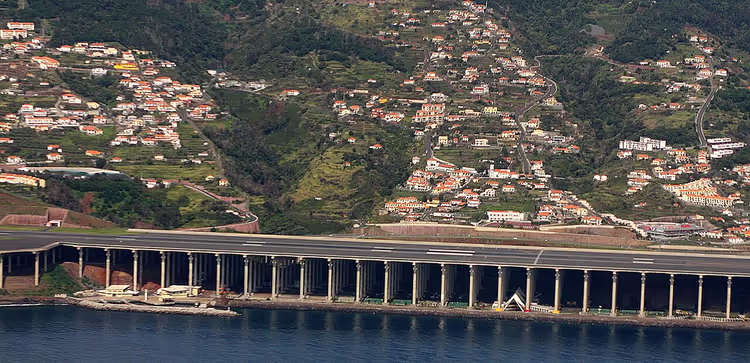 © Jarvin - Jarle Vines · CC BY-SAPhoto: Jarvin - Jarle Vines, CC BY-SA (https://creativecommons.org/licenses/by-sa/3.0), Wikimedia Commons
From our rental experience: one person stays at the baggage carousel, the other goes for the keys. When the whole flight heads to the counter at once, the line gets long, and you lose time before your first drive.
What to bring
- Passport or ID card.
- Your home country driver's license; an international one is not required in Madeira.
- A credit card in the main driver's name.
Without these three documents, the rental company has the right to refuse you the car.
What to check before driving off
- Fuel level, body, hood, and safety systems.
- Brakes, lights, seat belts, and hazard lights.
- Photograph scratches, dents, and the windshield, preferably with a timestamp.
- Tire tread and the presence of a spare tire.
- Record any damage found in the handover report together with the staff member.
This protects you if old defects are claimed against you at return.
Before returning the car
- Fill the tank if the contract has a full-to-full policy. Refueling through the rental company costs more than a regular gas station.
- Photograph the body, interior, and odometer at return, preferably with a timestamp.
- Wait for the car inspection together with the staff member rather than leaving the keys at the counter.
- Take a copy of the return report and confirmation regarding the deposit.
Allow extra time for the return. The inspection takes a few minutes, but in high season a line forms at the counter, and you risk rushing to the airport.
How to drive in Madeira: winding roads and tunnels
There are no toll roads on the island. Neither the Vias Rápidas expressways nor the tunnels charge for passage, so you will not need a transponder.
In villages and at viewpoints, roads are often single-lane. If a car is coming the other way, the one closer to a passing bay yields. Sometimes it is easier to back up a few meters than to squeeze past in a narrow spot. Do not honk: in Madeira this is a normal situation.
On long descents, use a lower gear instead of constant braking. This keeps the brakes from overheating and helps you keep control on wet asphalt. On coastal sections, there is sometimes no guardrail, so do not hug the edge.
There are few traffic lights on the island, but plenty of roundabouts. Priority goes to whoever is already in the circle. Allow more time for mountain sections than the navigator shows, and drive slower than usual for the first few days.
In tunnels, keep your distance and do not change lanes without need. After bright sun, your eyes need time to adjust to artificial light, and the lanes inside are narrow.
At levada trailheads, parking lots are small and fill up by morning. Arrive at the trailhead early, otherwise you will leave the car on the shoulder and walk an extra kilometer to the entrance.
Important: the road at the Cascata dos Anjos waterfall is closed. The authorities have banned access to the waterfall for safety reasons, and the old ER101 road is regularly closed due to rockfall (Visit Madeira, as of 09/2026).
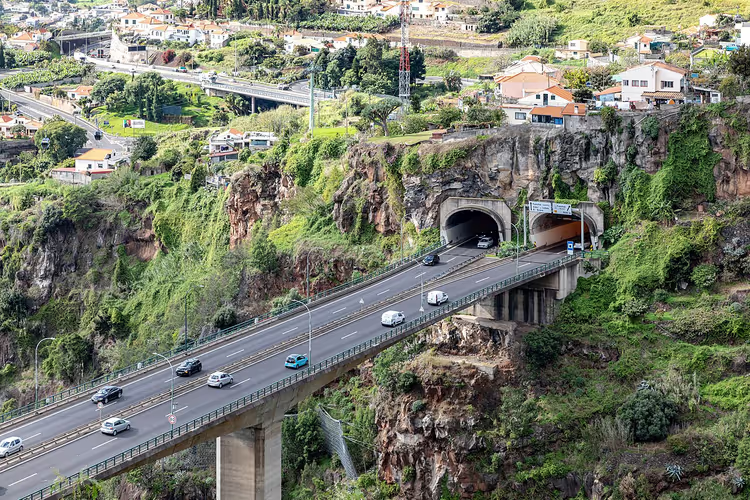 © Dietmar Rabich · CC BY-SAPhoto: Dietmar Rabich, CC BY-SA (https://creativecommons.org/licenses/by-sa/4.0), Wikimedia Commons
Speed limits and traffic rules
The limits in Madeira are the same as in mainland Portugal (Portugal traffic rules, as of 09/2026):
- in built-up areas 50 km/h;
- on rural roads 90 km/h;
- on Vias Rápidas expressways 100 km/h.
There are no real autobahns on the island, so you will not see a 120 km/h limit here. Verified on 12.09.2026 on the ADAC website.
The legal alcohol limit is 0.5 per mille, and for drivers with less than three years of experience 0.2 per mille (ADAC reference, as of 09/2026). On winding roads, alcohol definitely will not help you: reaction matters more here than on flat ground.
Parking and refueling in Madeira
In Funchal and larger towns, street parking spaces are marked with colors. White markings usually mean free parking, blue means paid, yellow prohibits parking.
You can pay for parking at a meter by card or coins, or through the city operator's app. Leave the ticket from the meter behind the windshield, otherwise you will get a fine.
Outside the city, parking at most viewpoints and trails is free. A well-known exception remains Pico do Arieiro: the lower lot costs a few euros per hour, the upper one is several times more expensive, and payment is by card only (as of 09/2026). Check in advance whether parking at a popular viewpoint has become paid: rules change quickly.
In central Funchal, finding a free spot is hardest of all, especially on weekends. Park in an underground garage and walk: this saves you nerves and time circling one-way streets.
Refueling. Gas stations are all over the island, even in small towns. Almost everywhere you can pay by card. Fill up before heading into the mountains and remote areas, because stations there are far apart, and on back roads you will be without phone signal.
Road safety in Madeira
With a calm driving style, the risk on the island's roads is low.
What to watch more closely:
- Theft from cars. Break-ins happen at popular spots near beaches and trails. Do not leave valuables in the cabin even for half an hour.
- Weather. Storms, downpours, and sudden weather changes happen year-round, especially in the mountains. On wet asphalt, stick to the limit.
- Wildfires. In a dry summer, the island burns just like the rest of Portugal. Before heading into remote areas, check the situation and closed routes.
If you rarely drive or live without a car, the first days on winding roads will require concentration. Plan short legs, have lunch in villages, and return before dark: night driving in the mountains tires you faster than it seems. If you do not want to drive yourself, book Madeira tours on GetYourGuide.
 © Bengt Nyman · CC BYPhoto: Bengt Nyman, CC BY (https://creativecommons.org/licenses/by/3.0), Wikimedia Commons
In the mountains, sun and rain replace each other within half an hour, so a jacket in the car will not go amiss.
Find hotels
Compare prices across booking sites and filter for rooms with free cancellation.
Compare prices on Discover CarsThe widget loads once you give your consent.
⁉️🤔 Frequently asked questions
Do you need a car on Madeira?
Yes, a car is necessary for almost anyone who wants to see the island, not just Funchal. Buses run on a schedule and don't reach the trailheads of levada routes. If your plan is limited to the hotel and the capital's waterfront, taxis and buses will be enough.
Where should you book a rental?
Through aggregator portals, not at the airport counter. Compare several offers and check what's included in the rate: insurance, second driver, fuel policy. Booking directly with a local rental company is usually more expensive, and the selection is limited to cars that are left for today.
Which rental company is the best?
There's no universal answer; it all comes down to the price for your dates and what the rate includes. In high season, the difference between portals becomes noticeable after just a couple of days of searching. Look not at the brand, but at the rating of the specific counter and the deductible terms.
Is a subcompact enough?
Yes, a subcompact handles all the island's roads. The category only matters for luggage: four people with suitcases are better off with a compact or SUV. A powerful engine gives no advantage on hairpin roads.
Automatic or manual?
An automatic is easier on hills, but costs more than a manual. You'll manage with a manual if you know how to start on a hill using the handbrake.
How much does a rental day cost?
There's no exact figure here: the rate depends on the season, category, and booking lead time, so calculate it in a search for your dates. Add the environmental fee for each day of the contract to the rate. A rate with free cancellation lets you rebook the car if the price drops before your trip.
In short: what's worth booking
A car turns Madeira from one city into an entire island. A subcompact is enough, and the final amount is determined by the category, season, and booking lead time.
- If it's your first time: get a subcompact or compact with full insurance and no deductible.
- If you're traveling as a family: get a compact or SUV and check the trunk capacity.
- If you don't want to drive yourself: look at guided tours and buses in Funchal.
It's convenient to compare rates for your dates on a car rental portal, and ready-made guided itineraries are available on GetYourGuide.

A small editorial team writing guides for independent travel. We travel ourselves, but we haven’t been everywhere, so we check prices, opening hours and how to get there against official sources.