
















Hurtigruten Coastal Express: what is included in a 12-day cruise along the coast of Norway
The Norwegian coast is best seen from the water. Hurtigruten ferries have been running along the shore since 1893 (route history and geography), and Lonely Planet calls this route "the world's most beautiful sea voyage."
Coastal Express is often confused with a regular cruise. In reality, it's a working ship. It carries mail, cargo, cars, and locals between dozens of settlements. You buy passage and a cabin, and as a bonus you get the northern lights, fjords, and dinner made from local ingredients.
Below we've put together what's included in the 12-day voyage from Bergen to Kirkenes and back. You'll understand how to choose the season, cabin, and excursions, and whether the route is worth the money.
Ad: this article contains affiliate links, we earn a commission if you book through them, at no extra cost to you.
What Hurtigruten Coastal Express is
💡 In short:
- Coastal Express is a regular shipping line along the entire coast of Norway, not an entertainment cruise.
- You can buy just the northbound or just the southbound leg.
- Route, ports, and schedule: 09/2026, verified on the official Hurtigruten website.
Coastal Express has been operating for over a century. The ships call at towns, villages, and fishing settlements all the way from Bergen to Kirkenes near the Russian border. The full voyage takes 12 days and includes 34 ports, and for some settlements the steamer still remains the primary means of transport (as of 09/2026, route and ports).
What sets this route apart from a regular cruise is its rhythm. Over 12 days you pass the same 34 ports twice, and stops often last only 10-30 minutes. The ship returns along the same path, so a port you passed at night on the northbound leg opens up during the day on the southbound leg.
This kind of trip suits those who want to see Norway, not a show program. There are no casinos, water slides, or Broadway musicals here. Instead, you get lectures, fjords, and shore time in almost every port.
Route history since 1893
Hurtigruten has been carrying people, mail, and cargo along the Norwegian coast since 1893. Back then, the line connected the south and north of the country, which otherwise communicated only by sea. Today the ships haven't lost their role as working transport: they call at ports on schedule and take cars and containers on board.
For you, this means Coastal Express isn't a stage set but part of the region's everyday life. Next to tourists on deck stand locals heading home or to their shift. This experience differs from a week-long Caribbean cruise.
Daily departures from Bergen
A Hurtigruten ship has left Bergen heading north every day since 1936. The only exception was the years of World War II. You have a choice of ship, season, and date, while the route itself barely changes (line schedule).
Minor deviations are possible due to season and weather. In winter, storms often shift the schedule and change the set of ports. Plan buffer time at the start and end of your trip, and a shift won't ruin your plans.
Hybrid ships and the environment
MS Richard With was built in 1993 and converted into a hybrid ship in 2022. Large batteries and new low-emission engines cut fuel consumption and CO2 emissions by roughly 25% (as of 09/2026, MS Richard With). Nitrogen oxide emissions on the ship dropped by at least 80%.
Onboard wastewater treatment was also upgraded. If the environmental footprint of your trip matters to you, this fleet is noticeably cleaner than old diesel ships. Hurtigruten calls the modernization program green and continues converting other ships on the line to batteries.
On the southbound leg in calm weather, the ship enters Trollfjord. This fjord is only two kilometers long and about a hundred meters wide, leaving almost no room to maneuver. At the end you'll see how quietly and precisely the ship turns back around.
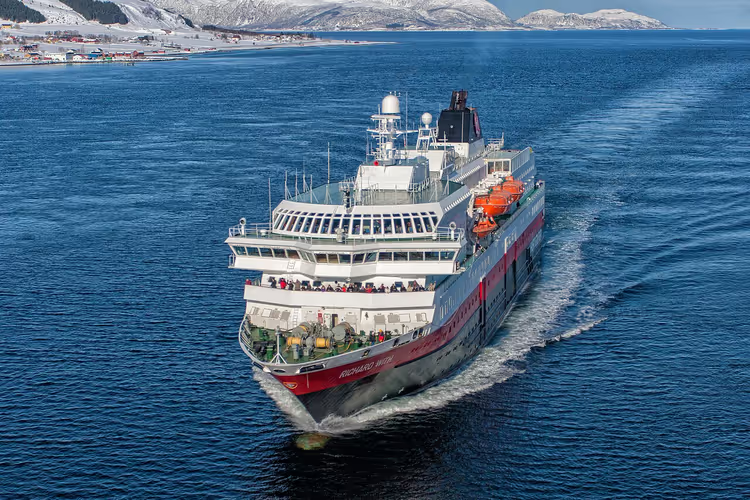 © Bruno Jargot from Lyon, France · CC BYPhoto: Bruno Jargot from Lyon, France, CC BY (https://creativecommons.org/licenses/by/2.0), Wikimedia Commons
Route from Bergen to Kirkenes
The full "BKB" voyage goes from Bergen to Kirkenes and back. Kirkenes sits at the Russian border, and the route calls at 34 ports twice, on the northbound and southbound legs. Passengers cross the Arctic Circle twice and cover about 2,500 nautical miles each way (as of 09/2026, line description).
In fall and winter, you get a double chance to see the northern lights: you pass the same latitudes again. The ship runs along the coast and barely goes into open sea, so the motion is gentler than on ocean liners.
About seven ships operate on the line, so vessels regularly meet. When MS Richard With entered Trondheim, it passed Kong Harald with horns sounding. Passengers on both ships waved Norwegian flags.
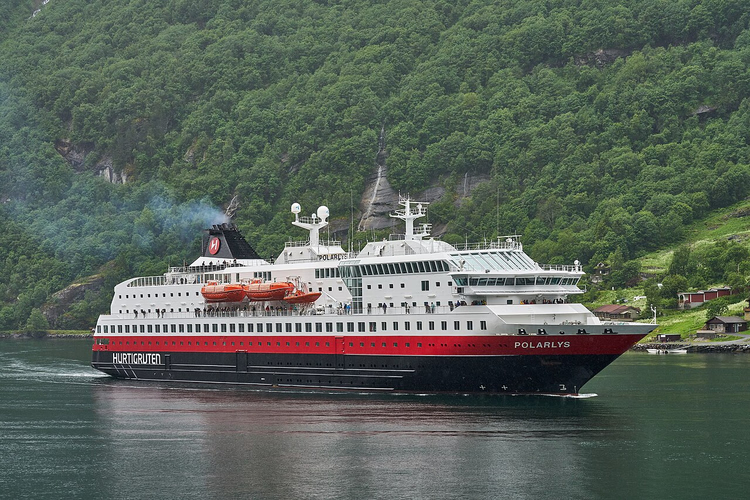 © Virtual-Pano · CC BY-SAPhoto: Virtual-Pano, CC BY-SA (https://creativecommons.org/licenses/by-sa/4.0), Wikimedia Commons
How to choose the voyage length
You decide the length of your trip yourself. Many people take only the northbound or only the southbound leg and start or end in Bergen or Kirkenes. Others choose short hops between neighboring ports.
If your journey lasts longer than a day, you'll have to book a cabin. Without a booking, boarding such a voyage is impossible. But a short hop between two ports can be done without a cabin.
Entering the fjord
In good weather, every ship leaves the direct route and enters one of the Norwegian fjords. From June through August, the northbound route includes Geirangerfjord. In September and October, the route goes into Hjørundfjord, and starting in 2025 this stop was also added in April and May (summer and winter schedules).
On the southbound route, with some luck, the ship also enters the tiny Trollfjord. These stops are the ones that most often end up in the best photos of the trip. They're worth going out on deck for, even in cool weather.
In Hjørundfjord, a tender takes you to the village of Urke. There you can join an excursion or simply walk around the village. From the water, you can see MS Richard With in full, and it's one of the best angles of the ship.
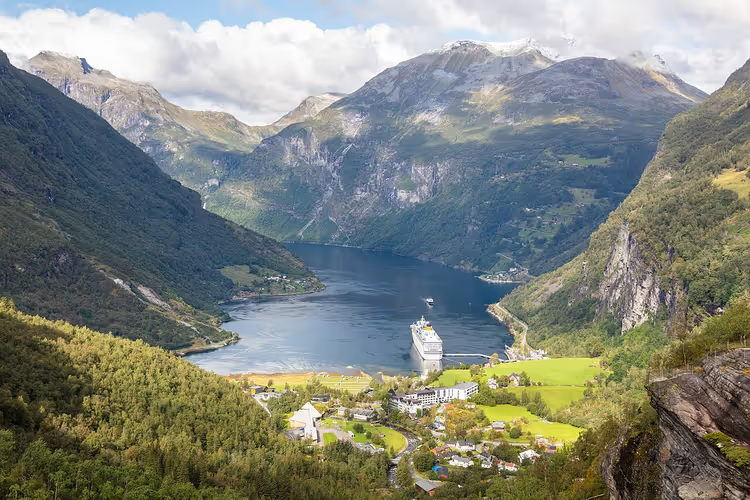 © Diego Delso · CC BY-SAPhoto: Diego Delso, CC BY-SA (https://creativecommons.org/licenses/by-sa/4.0), Wikimedia Commons
How many passengers are on board
Hurtigruten ships are smaller than typical cruise liners. So you get to know the other passengers and the crew more closely. MS Richard With is listed with 199 cabins and 590 passengers, but in many cabins the third berth is folded into the wall and rarely used (as of 09/2026, decks and cabins).
On September 28, 2024, the ship left Bergen with 287 passengers. In Kirkenes, 67 people disembarked and 24 came on board. On the southbound route, about 244 passengers remained on the ship.
This occupancy changes the atmosphere. There's always free space on deck, and the restaurant has almost no lines. You don't have to claim a lounger in the morning just to find a spot by the window later.
Passengers from different countries
Daily briefings are held in English and German. Announcements are made in Norwegian, English, German, and sometimes French. Most passengers come from Germany.
On the voyage you'll meet Scandinavians, Swiss, French, Americans, and Brits. Australian accents are common, while Canadians are almost nowhere to be found on board. It's easy to find company for an excursion based on language.
Scenery instead of a show program
On a classic cruise, the evening is filled with musicals, live music, and a casino. On the Coastal Express, it's different. The main entertainment here is the views outside, and they change every hour (as of 09/2026, seasonal highlights).
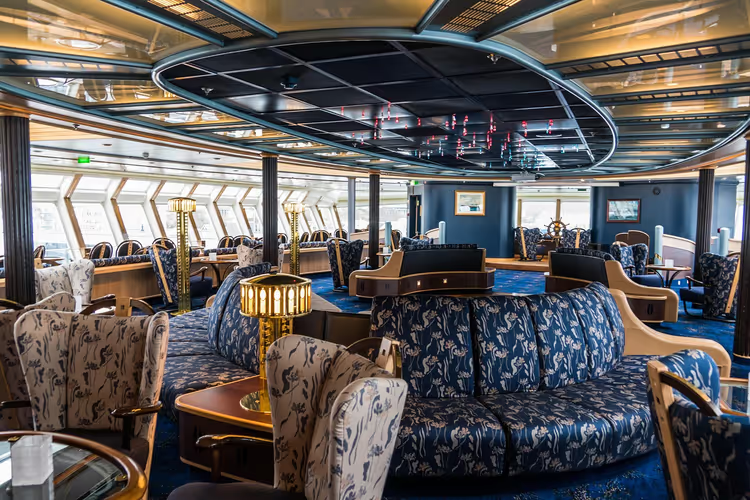
Outside the lounge window, fjords, mountains, lighthouses, and fishing villages drift by. You sit in a chair by the panoramic window and watch the shoreline change. Many passengers spend their days this way between lectures.
This format saves your energy. You don't have to choose between a show and sleep, and you get impressions around the clock.
In summer the sun barely sets, and in winter it's replaced by a long blue twilight.
Casual dress code
There's no dress code on board. Day and evening, almost everyone wears comfortable functional clothing. Layers matter more than outfits, because the difference between the warm lounge and the windy deck is noticeable.
Bring a waterproof and windproof jacket and shoes with good tread. Hand-wash light items so you can pack fewer clothes. Many passengers on long voyages do this.
Bring a fleece, a hooded jacket, a hat, and gloves.
Lectures and the expedition team
An expedition team works on board. Every day it holds briefings about ports of call, excursions, and the weather. Lecture topics cover Norway's nature, language, music, history, and culture.
You'll learn about the Sami, Norway's indigenous people, about whales, trolls, and Vikings. Separate sessions are devoted to the ship's layout and the Norwegian language. Norwegian has three extra letters æ, ø, å, and the name for blueberry jam contains all three at once.
 © wanghongliu · CC BY-SAPhoto: wanghongliu, CC BY-SA (https://creativecommons.org/licenses/by-sa/3.0), Wikimedia Commons
Some lectures take place on the open deck on deck seven. From there it's easy to listen while geographical and historical landmarks drift past. Separate presentations cover photography and the northern lights.
There are other events too. Guests can enjoy photo contests, sea shanty concerts, Arctic Circle crossing ceremonies, and tastings of local dishes. At the tasting you'll try specialties like fenalår, cured leg of lamb.
On some sailings there's an "astronomy" program. You get lectures from an astronomer, group accompaniment, and a visit to the northern lights planetarium in Tromsø. Sometimes the program also includes evening guided walks through ports.
Crew and work on the ship
The crew on board is friendly and composed. Everyone tries to make the voyage comfortable for you, and you can feel it in the small details. There are 70 people working on the ship, in shifts of 22 days (as of 09/2026, crew and service).
Crew cabins, the mess, the gym, and the lounge are on decks one and two. Many crew members are from Norway, and there are also Swedes. Norwegians start and end their shifts in the port closest to home.
Seafarers get a tax break. Those who spend at least 130 days a year at sea have their tax rate reduced to about 20% (as of 09/2026, working on board). That's why many work the route for years and know it by heart.
Some staff have lived on the ship for decades. For example, Multe, who works in the bakery, has served here for more than fifteen years, and her shift ends in her home town of Tromsø on the southbound leg. Stories like that add a human warmth to the trip.
 © Clemensfranz · CC BY-SAPhoto: Clemensfranz, CC BY-SA (https://creativecommons.org/licenses/by-sa/3.0), Wikimedia Commons
Norwegian cuisine on board
Norway's Coastal Kitchen is one of the main reasons to take this route. In 2024 the project won gold at the Magellan Awards as the best cruise cuisine (as of 09/2026, restaurants on board).
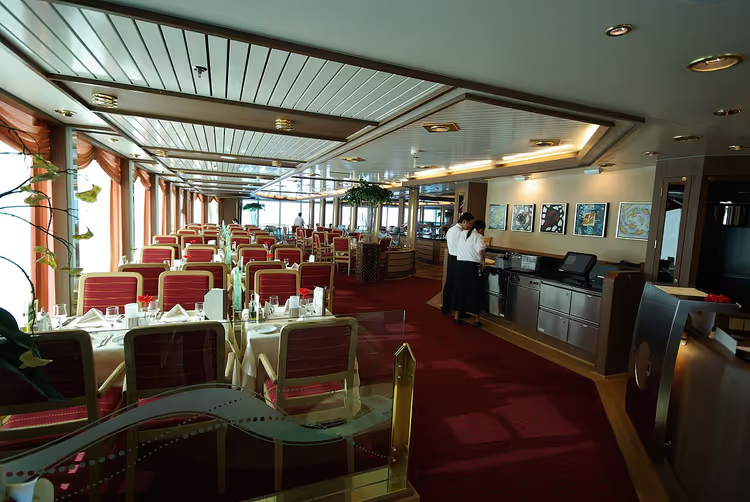
In the main restaurant, Torget, breakfast and lunch are served buffet style. For dinner, three courses are offered in several seatings. The menu includes meat, fish, and vegetarian options, and for guests with allergies a set of dishes is arranged in advance.
 © dokaspar · CC BY-SAPhoto: dokaspar, CC BY-SA (https://creativecommons.org/licenses/by-sa/3.0), Wikimedia Commons
Hurtigruten bets on local products. About 80% of the food and most of the drinks come from farms, bakeries, and producers along the coast. Since 2024 the company has promised to reduce food waste to zero and turn it into compost (as of 09/2026, onboard dining).
Northern lights
From October to March, the northern lights are regularly visible along the route. If the aurora does not appear within sight of the ship, Hurtigruten promises a free repeat voyage. The offer applies to sailings of 11 days or more from September 20 to March 31 and runs until March 31, 2027 (as of: 09/2026, Northern Lights Promise).
At briefings, the crew gives an honest assessment of the chances. The northbound route crosses the Arctic Circle, and from those latitudes the zone of steady aurora activity begins. The longer you stay in it, the better your chance of a good shot.
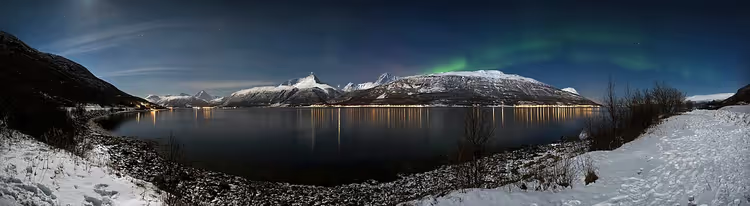
Your chance increases right after crossing the Arctic Circle. That is where the sky most often lights up with green flashes and bands. The ship also has a dedicated aurora "chaser" on board, who points out the best spots for photography and helps with camera settings.
Sometimes the aurora puts on a rare show. One evening on the southbound leg, a vivid display unfolded above the ship: green bands framed the Milky Way, and the shot included the funnel and a railing post on the upper deck.
 © Ximonic (Simo Räsänen) · CC BY-SAPhoto: Ximonic (Simo Räsänen), CC BY-SA (https://creativecommons.org/licenses/by-sa/3.0), Wikimedia Commons
Active or relaxed travel
The Hurtigruten app shows the full daily program. You can spend the whole day attending lectures and briefings, or simply sit by the window with a book. The choice is yours, and nobody pushes a schedule on you.
Some passengers knit, play cards, or do puzzles. Many return to this route every year. For them, the voyage is a way to rest and see familiar shores without rushing.
You set the pace of your day. In the morning you can listen to a lecture, in the afternoon step out on deck for the views, and in the evening sit in the bar until midnight. Passengers who sail regularly advise against trying to do everything at once.
When to go
The season you choose depends on what you want to see. From mid-May to early August, the Arctic Circle has polar day, and the sun does not set around the clock. From October to March, the route runs directly under the northern lights zone (as of: 09/2026, official schedule).
Season | What you will see | Pros | Cons |
|---|---|---|---|
May-July | Polar day and green fjords | Mild weather, bright nights | No northern lights |
September-October | Aurora and autumn colors | Double chance to see the lights | Cool, frequent rain |
November-March | Lights and snowy landscapes | Aurora almost every night | Storms, schedule changes |
April | Snowy mountains without crowds | Relaxed pace | Changeable weather |
In winter, the risk of storms and high waves is greater. Schedule changes and skipped port calls are possible then. In summer the weather is usually calmer, but you will not see the northern lights.
Hurtigruten prepares for changes in advance. The expedition team adds lectures and excursions if a port stay runs long. Passengers who were supposed to disembark at a skipped port get a car or bus arranged at the company's expense.
Your choice of dates changes the experience more than your choice of ship. Decide in advance what matters more to you: the aurora, polar day, or calm seas.
Boarding in Bergen
The voyage starts in Bergen, and it is best to arrive early. If you need a hotel near the terminal, Heimen Hotel is a good fit (prices at Heimen Hotel on Trip.com). You can walk to the terminal in about 20 minutes.
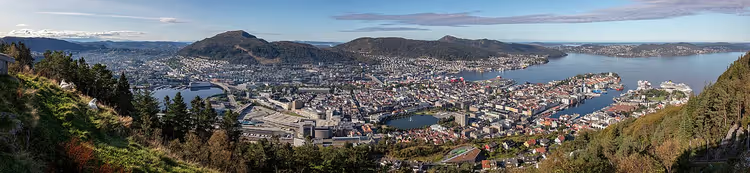 © Diego Delso · CC BY-SAPhoto: Diego Delso, CC BY-SA (https://creativecommons.org/licenses/by-sa/4.0), Wikimedia Commons
The terminal has luggage storage if you arrive early. The baggage drop opens after noon, and the lounge on the second floor welcomes guests with coffee, tea, and pastries. Check-in runs from midday to evening, and you link a bank card to your cabin key (as of: 09/2026, Hurtigruten).
Boarding starts around 4:00 PM, and cabins are ready by 6:00 PM. By that time your luggage is already waiting at the door. A short safety briefing takes place before boarding.
Tip: bring a lanyard for your key card. That way you will not lose it in port and can quickly pay for excursions and drinks on board.
The ship, decks and amenities
Hurtigruten ships are laid out similarly. MS Richard With is small: only seven decks, and you quickly learn your way around. Elevators are at opposite ends, with stairs and restrooms next to them (as of 09/2026, deck plan).
Deck seven has a spacious observation area at the stern. Lectures and celebrations take place there, and below it, on deck six, there are two open-air hot tubs. Nearby are two semi-enclosed seating areas, one of them for smokers.
Inside deck seven you will find soft armchairs by floor-to-ceiling windows. The Multe bakery with pastries and coffee, the Explorer bar and a small gym are also here. The activity center has books, board games and puzzles.
Deck | What is there |
|---|---|
Deck 7 | Observation area, Multe bakery, Explorer bar, gym |
Deck 5 | Open promenade deck, observation area at the bow |
Deck 4 | Lecture halls, shop, Torget and Kysten restaurants, Brygga bistro |
Deck 3 | Port exit, luggage room, laundry room |
Deck 2 | Car deck, tender area, sauna |
Deck five has an open promenade deck. Part of it is covered from rain, and at the bow there is a small observation area. There you stand right at the rail and listen to the ship moving along the coast.
Deck four is considered the busiest level. The lecture halls, shop and the questions and booking desk are here. The Torget and Kysten restaurants and the daytime Brygga bistro with hot snacks and sandwiches are also located here.
On deck three you go ashore in most ports. Nearby there is a luggage room and a laundry room with four washing machines and four dryers. Laundry tokens are purchased at the service desk, and detergent is dispensed automatically. Drying is free.
Deck two has the car deck, tender area and sauna. Wi-Fi on board is free and fast. Through it you open the app with the daily program and stay in touch with home.
Cabins and what is in them
Cabins and suites vary in price, size and amenities. Some views are blocked by lifeboats, while other cabins are located by the promenade deck. Every ship has at least one cabin for a passenger in a wheelchair (as of 09/2026, cabins and suites).
A couple of months before the voyage, Hurtigruten may offer a discounted upgrade. Sometimes this is cheaper than booking a higher category right away. If you are open to an unexpected deal, keep an eye on your email.
Cabin 320, Polar Outside category, on deck three has a large rectangular window. The ship docks on the port side, so the starboard side is quieter: there is no gangway or ramp under the windows. Midship, the motion is felt less than on the upper decks.
The cabin itself is small, but it is enough for two. You use it for sleeping and showering, and the window helps you check the weather in the morning. The bathroom is compact but comfortable, and the water on board is drinkable, so you can fill your own bottle from the tap.
The shower has dispensers with body and hair gel and with conditioner, and another dispenser is placed above the sink. A clothesline for washing small items is stretched across the shower stall. The gel works well for hand washing if you only have a few things.
The cabin has a small closet, shelves and hooks on the walls and on the bathroom door. Bring magnetic hooks with you: they hold better on the ceiling than on the wall, where they slide down. The outlets are European type with two round pins, and there are enough of them to charge several devices. A suitcase fits conveniently under the bed.
Breakfast, lunch and dinner
Breakfast and lunch are served buffet style. The selection is huge: cold and hot dishes, gluten-free options, fresh bread, cold cuts, pate, salads, fruit, several types of cheese and lightly salted salmon. Every day there is a new soup on the menu.
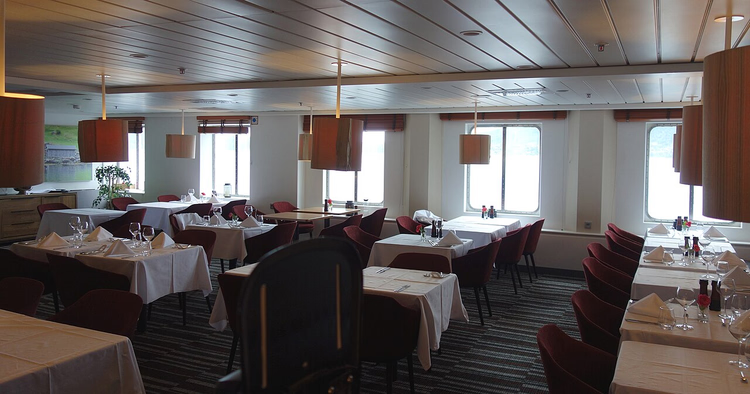 © Mabit1 · CC BY-SAPhoto: Mabit1, CC BY-SA (https://creativecommons.org/licenses/by-sa/4.0), Wikimedia Commons
For dinner, at least three options of starters, main courses and desserts are offered. Each dish is described in detail on the menu, and the presentation is also well thought out. Vegetarians and people with allergies will get a substitute if you let them know in advance.
The main Torget restaurant is included in the cruise fare. The second restaurant, Kysten, offers fine dining dinners for an extra charge. The menus of both are built around fish and seafood from the Norwegian coast.
Drinks and packages
Suites have a kettle and a tea and coffee set. Bringing your own heating appliances is not allowed, so a kettle is sometimes requested at the service desk.
Coffee and tea are included during meals. Separate coffee and tea packages are purchased if you want drinks between meals. Specialty coffee is made at the Multe bakery.
Alcohol on board is not cheap. A bottle is a better value than several glasses, and the waiter will store it for you until the next evening. Rules on bringing your own alcohol vary: some sources allow drinks in the cabin, others are against it. In Bergen, locals recommend the Vinmonopolet store as a place with reasonable prices.
Seating at dinner
Your table number and dinner time are indicated in the boarding documents. Look for them in the bottom right corner of the envelope. The first two evenings are usually buffet style, and for an earlier or later seating, ask the restaurant manager.
Seats are not assigned randomly. Hurtigruten, it seems, seats people with a common language together. Solo travelers are also grouped at one table, as people write in themed groups.
If you are not comfortable with your seat, say so right away. The restaurant manager almost always finds another table. That way you dine at a relaxed pace and without rushing.
Excursions
Hurtigruten offers many excursions in ports. The expedition team covers them in detail at briefings, and you can easily add new items to your list. Excursions are expensive, so choose carefully (as of 09/2026, Hurtigruten excursions).
Some popular tours sell out in advance. These include the snowmobile trip in the Arctic, the husky tour, and the North Cape. If you want to get on those specifically, book ahead, before you set sail.
In Kirkenes, the Kirkenes Snowhotel excursion is worth taking. It includes a visit to the husky kennel and reindeer enclosure, an ice bar with a cloudberry shot, and a walk through the snow hotel. On the way back, the bus stops at Mount Prestfjellet with a panoramic view of the city.
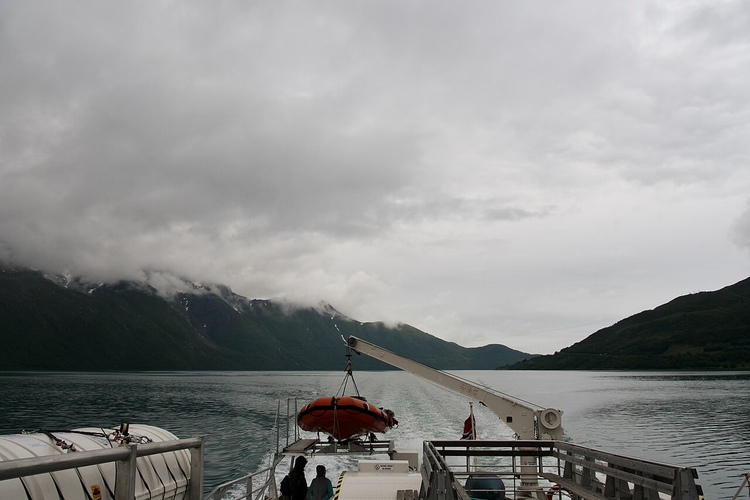 © Richard Mortel from Riyadh, Saudi Arabia · CC BYPhoto: Richard Mortel from Riyadh, Saudi Arabia, CC BY (https://creativecommons.org/licenses/by/2.0), Wikimedia Commons
Remember: the ship does not wait for latecomers. There is one exception: passengers who went on a Hurtigruten excursion. A cheap third-party tour carries the risk of not making it back before departure. So allow extra time if you book a tour on shore.
If your budget is tight, explore the ports on your own. Port calls usually give you enough time to see the main sights:
Port | Time ashore |
|---|---|
Ålesund | about two hours |
Trondheim | about three hours |
Bodø | just over two hours |
Tromsø | about four hours |
Honningsvåg | about three and a half hours |
Exact port calls depend on the schedule and weather (port call schedule). For independent walks, the Voice Map and WalknTours apps with ready-made routes come in handy. Sometimes it is cheaper to team up with other passengers and split a taxi.
In Ålesund, two hours is enough to walk through the center and down to the water. In Trondheim, three hours is enough for the center and the waterfront with its old warehouses. In Bodø, it is worth walking to the harbor and seeing the city from the quay.
In Tromsø, you have more time than in other ports. You can walk through the center and get back before departure without rushing. In Honningsvåg, the stop is longer, and it is enough to get to the North Cape.
If you love nature, keep binoculars handy. Whales, reindeer, and sea eagles appear right from the deck, and sometimes seals swim near the ship. These encounters cannot be planned, but they happen along the coast of Norway.
Photographers should pick their shooting spots in advance. The bow offers wide panoramas, while the stern works well for shots with the wake. During daylight hours, the shore is more visible, so plan your shooting around the polar day windows.
If a tour is canceled due to weather, the payment is refunded on board. Check the terms at the desk so you do not lose money. Hurtigruten usually gives honest warnings about risks at the briefing.
Port towns are easy to explore on foot, without a taxi. The centers are small, and signs in English help you find your way. Take a port map from the information sheet handed out the evening before each port call.
In fishing villages, it is worth stopping by a local café. They serve fresh fish and Norwegian buns, and prices are lower than on board. This way you support local business and try cuisine you will not find in the restaurant.
Compare excursions and tours on GetYourGuide with on-board prices in advance. That way you will understand what is worth taking from Hurtigruten and what is cheaper to find on shore.
Tours and tickets in Tromso
Guided tours, skip-the-line tickets and activities — most offers can be cancelled free of charge.
See offers on GetYourGuideThe widget loads once you give your consent.
Crossing the Arctic Circle
Crossing the Arctic Circle is celebrated as a holiday. You receive a certificate, a special postmark, and take part in a contest to guess the exact crossing time. The invisible line runs through Sweden, Finland, Russia, Alaska, Canada, Greenland, and Iceland, and splits Norway in two (as of 09/2026, borders and geography).
On the route, the marker is set on the tiny island of Vikingen. The circle's position slowly shifts over time, while the monument itself stays in place. It is at Vikingen that you take photos in front of the globe.
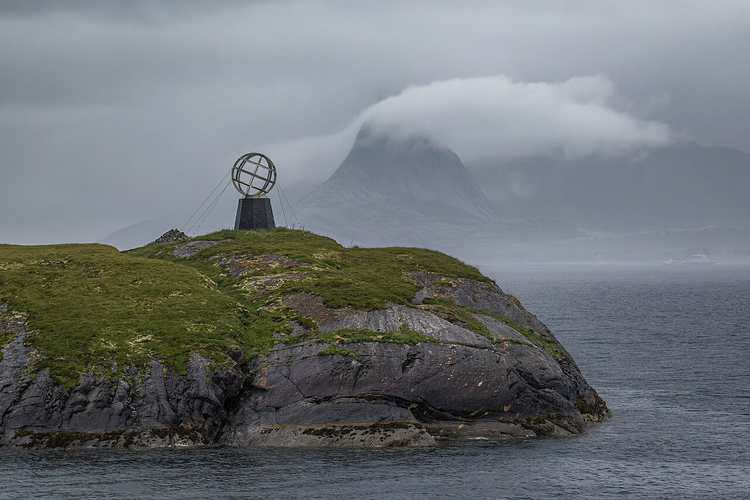 © th_norge · CC BYPhoto: th_norge, CC BY (https://creativecommons.org/licenses/by/4.0), Wikimedia Commons
On the northbound voyage, Njord, the Norse god of the sea and wind, takes part in the ceremony. He or the captain shoves a ladle of ice down the back of volunteers' collars. All participants are treated to a cloudberry shot.
At the southbound crossing, participants are given a spoonful of cod liver oil. You keep the special Hurtigruten spoon as a souvenir. The ceremony is short, but both adults and children love it.
How unloading works in ports
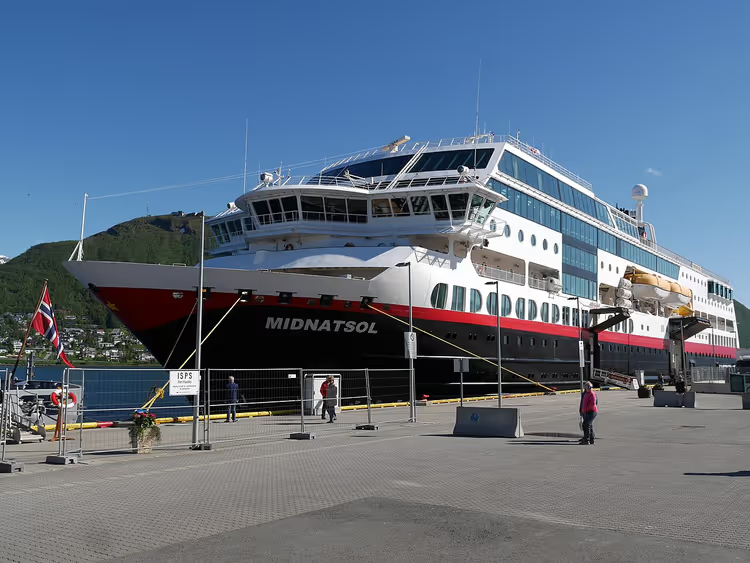
Port calls in most ports are short, but that is enough. You have time to take in the scenery and watch the mooring. The cargo unloading is mesmerizing: the cargo door opens on the port side, and ramps lower onto the quay.
 © Pmmy49 · CC BY-SAPhoto: Pmmy49, CC BY-SA (https://creativecommons.org/licenses/by-sa/4.0), Wikimedia Commons
The second deck serves as the car deck. Two ramps are used for vehicles, passengers in wheelchairs, and cargo. During longer stops, you disembark from the third deck and tap your key card so the system records your exit and return.
At the final port, cards are collected for recycling. This is how Hurtigruten reduces plastic on board. During a short stop, you can see both the port operations and its surroundings.
Ports of call
Some stops are very short. Ørnes sits among an archipelago of many islands, and the stop lasts only a few minutes. In that time, they manage to unload a pallet of cargo, a car, and a couple of passengers (as of 09/2026, port stops).
In Stokmarknes, the stop is long enough to visit the Coastal Express museum right by the quay. The exhibition tells the history of the line and the old ships that sailed here for more than a century.
Brønnøysund lies almost at the geographic center of Norway, on a narrow peninsula among islands. The town is small, and you can walk around the center in a short stroll.
Vardø is considered the easternmost town in Norway. Fishing and fish processing remain the backbone of the local economy. At dusk, the port looks especially stark, and you will feel it on deck.
Trondheim is the third-largest city in the country. Three hours in port is enough to walk through the center. Do not miss the colorful 18th-century wooden warehouses along the water.
Honningsvåg sits near the North Cape, the northernmost point of mainland Europe. Right from the quay you can see the cliffs and the Barents Sea, and in the port you can book an excursion to the cape (as of 09/2026, North Cape excursion).
Hammerfest is considered one of the northernmost towns in the world. Stops here are short, but the views of the town from the water open up at every turn.
Coastal scenery
Between ports, you are treated to ever-changing views. Snow-capped peaks, islands, lighthouses, fishing boats, and lonely houses follow one another without pause. Every hour, the shore looks different.
The Kjeungskjær lighthouse was built in the late 19th century and has long been automated. Its octagonal tower is painted red and guides ships into the Trondheim Fjord from the North Sea side.
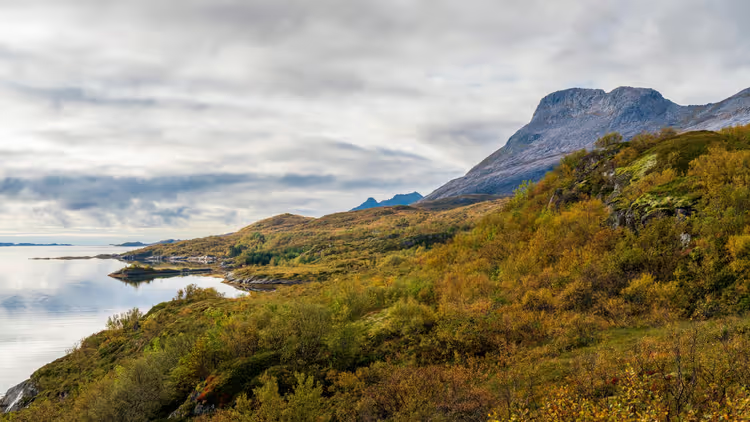
The houses along the shore are often used only seasonally. You can't help wondering how people live here, far from shops and services. In summer these homes fill with vacationers, and in winter they stand empty.
Closer to the North Cape the landscape turns harsh and bare. The Magerøysund strait between the island of Magerøya and the mainland remains a busy shipping lane. Here you are above the tree line, and reindeer search for lichen and grass.
Under Norwegian law, only the Sami are allowed to keep reindeer. In summer thousands of animals graze on the island. So you see a living part of northern culture, not just the scenery.
Approaching Harstad, dawn breaks through a gap in the clouds. It adds color to an already rich coastal palette. A shot like that is worth getting up early and stepping out on deck.
Waves and wind sculpt the rocky islands, while navigational markers guide ships through narrow passages. In the fog the shore seems very close, even though the ship is moving within a safe channel.
The Seven Sisters is a massif of seven peaks about a kilometer high on the island of Alsten. All seven summits are popular with hikers, and in summer marked trails run through the area.
Near Brønnøysund stands the mountain Torghatten, with a hole right through the rock. The opening, more than a hundred meters long, was carved by the sea. The trail through the opening is well maintained, and even an inexperienced traveler can manage the climb.
What to consider before the trip
A long voyage requires some preparation. Take care of these things in advance, and the trip will go more smoothly.
Tell Hurtigruten about allergies and dietary needs when booking. The chefs will arrange substitutes in advance, so you can eat safely from every menu. On a multi-day voyage, meals are tied to the ship, so agreed-upon restrictions matter (as of 09/2026, onboard dining).
Bring motion sickness remedies. The northern seas can get rough, and some passengers have a hard time with it. Sea sickness patches, tablets, and ginger lozenges help in the first hours.
The ship calls at ports at night too. If you are a light sleeper, bring earplugs and, if possible, book a cabin on the starboard side. Engine and mooring noise is audible on the lower decks.
In a storm, the crew may ask you to stay in your cabin. Download music, podcasts, or audiobooks in advance so you do not have to stare at a screen and can handle the rocking more easily.
Remember hygiene. There are dispensers at the restaurant entrance, and you should use them before and after the buffet. On long voyages, colds spread quickly, and an extra illness on vacation is the last thing you need.
For connectivity, arrange a Norway eSIM in advance. That way the internet works on shore too, away from the ship's Wi-Fi. You can book tickets and routes without rushing, and your loved ones stay in touch.
Build in extra time in Bergen. If you arrive the day before, you have a day or two for the city and for your connection. That way you do not risk missing departure if the train or flight is delayed.
Hurtigruten has a loyalty program called 1893 Ambassador. It gives you a welcome gift and a discount on excursions you book on board. If this is not your only trip, joining pays off (as of 09/2026, program terms).
Themed communities are also useful. In the Hurtigruten Insiders and Hurtigruten Norway groups, members post reports and photos and answer questions. People also find excursion companions and cabin advice there.
Be ready for changes. In winter, the route changes more often, and port calls sometimes shift. If you take it in stride, you will be less upset by cancellations and see more along the way.
For planning each day of the route, the external resource Coastal Ferry is handy. It lists ports, call times, and what you can see along the way. Check it when choosing excursions.
⁉️🤔 Frequently asked questions
How long is the Hurtigruten Coastal Express cruise?
The full route from Bergen to Kirkenes and back takes 12 days. During that time, the ship calls at 34 ports twice and crosses the Arctic Circle twice. You can take only the northbound or only the southbound leg and disembark at the final port. You choose the length of your trip when booking.
When is the best time to go for the northern lights?
The northern lights are visible on the route from October to March. The northbound leg runs directly under the aurora activity zone, and over 12 days you pass through those latitudes twice. If the lights do not appear on a voyage of 11 days or more between September 20 and March 31, Hurtigruten promises a free repeat trip.
Do I need a cabin, and how do I choose one?
On voyages longer than 24 hours, a cabin is mandatory. Take a cabin on the starboard side on a middle deck: the ship docks on the port side, so starboard is quieter, and the middle rocks less. A window is handy for checking the weather and ports in the morning.
How much does the cruise cost, and what is included?
The price depends on the season, route length, and cabin category. The fare includes cabin accommodation and full board in the Torget restaurant: breakfast, lunch, and dinner. Excursions, bar drinks, and dinners in the Kysten restaurant are paid separately.
Should I book excursions in advance?
The three most popular tours sell out before departure: Arctic snowmobiles, the husky trip, and the North Cape. Book those in advance. The rest of the excursions can be chosen on board, once you hear the weather forecast and details from the expedition team.
What should I bring on board?
Bring layers with a hood, a waterproof jacket, a hat, and shoes with good tread. Magnetic hooks and a lanyard for your key card come in handy. The lounges are warm, while the deck is cold and windy, so you will change clothes often. Saving weight matters more here than the number of items.
In short: what to book
Coastal Express suits those who want to see all of Norway from the water and do not like crowded cruise ships. The route has been operating for over a century, and the ships remain working vessels and small. If you choose a voyage based on your goal, a simple matrix helps.
Which voyage suits you:
- If you want the northern lights, take a voyage from October to March for 11 days or more.
- If you are going for the midnight sun, look at dates from mid-May to early August.
- If calm seas matter more to you, choose summer: the weather is usually calmer than in winter.
- If you are short on time, take only the northbound or only the southbound leg.
Before you start, compare Bergen hotels on Trip.com.
For ports, check excursions on GetYourGuide in advance.
And to stay connected along the way, arrange a Norway eSIM.

A small editorial team writing guides for independent travel. We travel ourselves, but we haven’t been everywhere, so we check prices, opening hours and how to get there against official sources.