

















Carnival in Cadiz: where to listen to coplas and when to go in 2027
You won't understand a single joke. And you'll still sit in the square until morning. The Carnival of Cadiz lives not on parades or costumes, but on songs that local groups write almost all year round.
The festival's status is high: since 1980 it has held the title Fiesta de Interés Turístico Internacional (as of 09/2026, official Cadiz tourism office). On the streets, everything looks more modest than on paper. Coplas are heard almost every evening in squares and at intersections, while officially the festival runs for eleven consecutive days (as of 09/2026, city hall page about the carnival).
Below we'll break it down in order: who performs at the carnival, how a chirigota differs from a comparsa, when to go in February 2027, and whether it's worth planning a trip around these days.
Ad: this article contains affiliate links. We earn a commission if you book through them, at no extra cost to you.
What makes the Carnival of Cadiz special
💡 In short:
- The heart of the carnival is not a parade with floats, but musical groups.
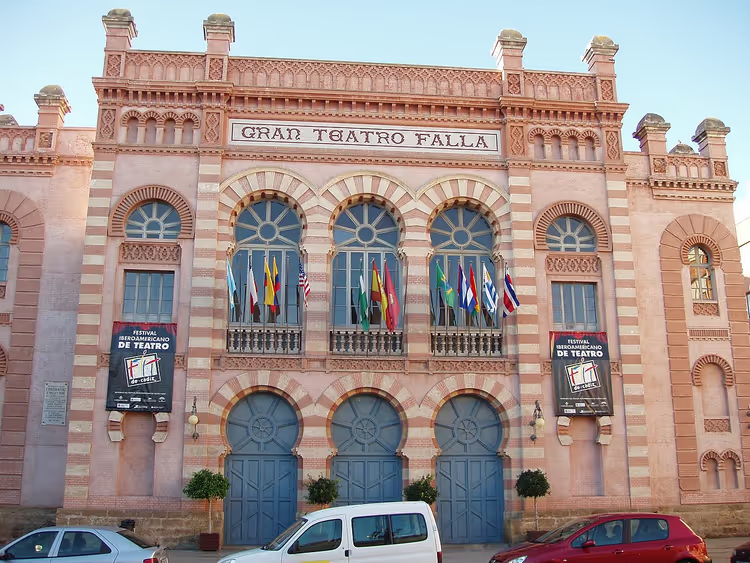
- The official COAC competition takes place at the Gran Teatro Falla, while the street portion starts in February.
- Festival dates and format: verified on 09/12/2026 on the official carnival page.
Groups prepare for the festival almost all year. They write lyrics, rehearse, and sew costumes so that in January and February they can take the stage and the streets.
The official part takes place at the Gran Teatro Falla. The carnival group competition (COAC) brings together dozens of ensembles, and its sessions are broadcast on television. 46 groups make it to the quarterfinals, 27 to the semifinals (as of 06/2026, COAC 2027 calendar).
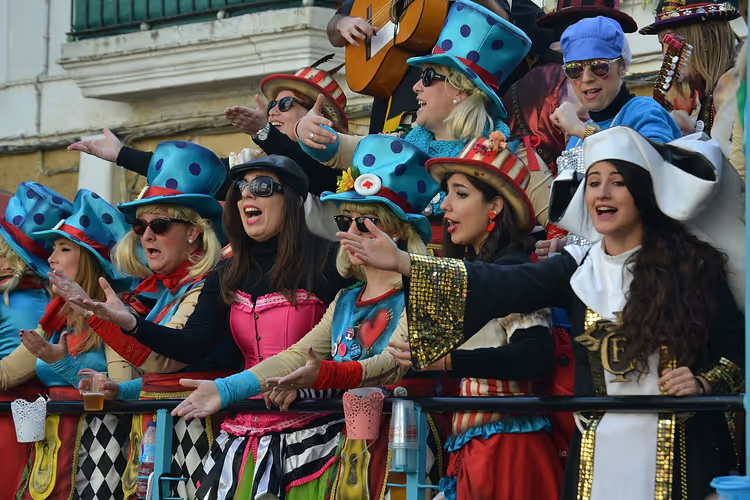 © Emilio J. Rodríguez Posada · CC BY-SAPhoto: Emilio J. Rodríguez Posada, CC BY-SA (https://creativecommons.org/licenses/by-sa/2.0), Wikimedia Commons
The second carnival happens on the streets, and the ban has nothing to do with it. "Illegal" here refers to ensembles that opted out of the competition and perform only on the streets. Many consider them the real carnival.
A street group gathers a circle of listeners right at an intersection. Their lyrics are sharper and funnier than the television ones, but also harder to understand.
Competition ensembles also take to the streets. Small stages are set up for them in squares, and sometimes you can hear them in courtyards and restaurants of the old town.
Five types of carnival groups
Five types of groups perform on the streets and in the theater. Three of them mostly sing. The cuarteto mostly talks, and the romancero recites in a spoken rhythm. Size, music, and mood all differ, so every evening comes together in its own way.
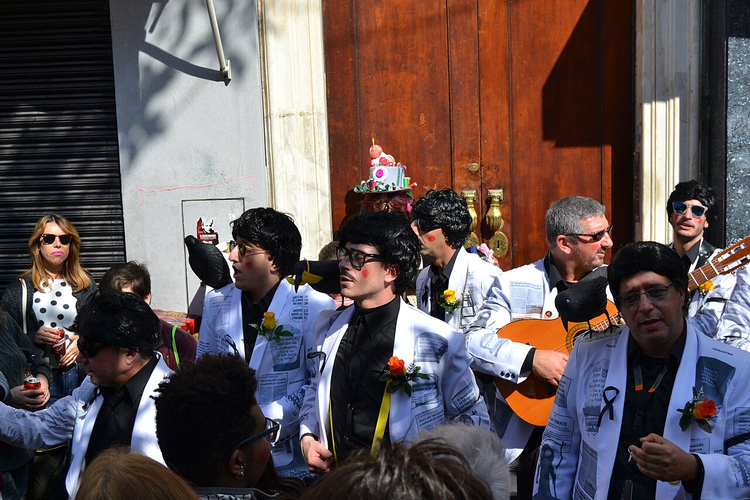 © Emilio J. Rodríguez Posada · CC BY-SAPhoto: Emilio J. Rodríguez Posada, CC BY-SA (https://creativecommons.org/licenses/by-sa/2.0), Wikimedia Commons
Group type | How it sounds | What to know |
|---|---|---|
Chirigota | choir with guitars and drums | the main comedic genre of the festival |
Comparsa | multi-voice singing | the musical side is stronger than in a chirigota |
Coro | large choir with strings | performs from carnival carts |
Cuarteto | short scenes and gestures | theatrical rather than a singing format |
Romancero | recitative with pictures | the hardest format for a tourist |
Chirigotas
The most popular carnival group is called a chirigota. It has about twelve people with guitars and drums (as of 09/2026, city hall data on group sizes).
The street scene looks like this. A small group stands against the wall of an old house, a crowd gathers around, and after every line the square erupts in laughter. A visitor at that moment understands nothing.
In a chirigota, the voices are not what matters, the lyrics are. They write them all year: sharp, biting, about politics, prices, and neighbors. They sing in the Cadiz dialect, with references to local news and puns that no dictionary can translate.
The favorite trick of local writers is simple: they take a familiar melody and put completely new lyrics under it. The costumes (tipos) set the theme of the act and hold all the jokes together.
How to watch a chirigota without Spanish? Like a short play. Watch the audience's reaction: locals start laughing a second before the joke.
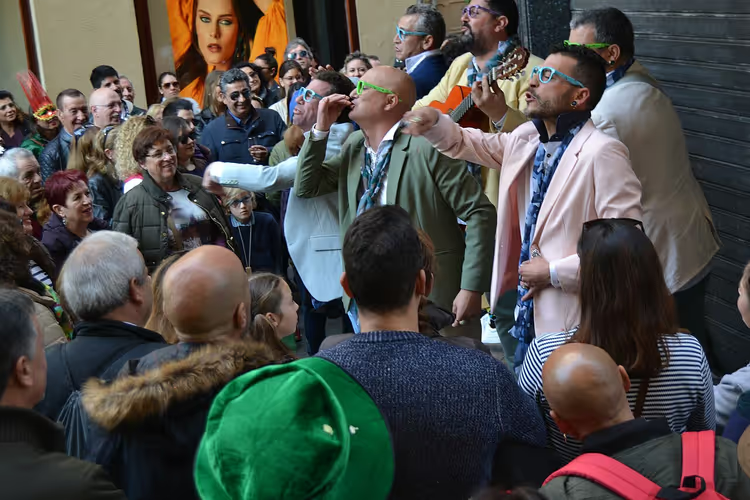 © Emilio J. Rodríguez Posada · CC BY-SAPhoto: Emilio J. Rodríguez Posada, CC BY-SA (https://creativecommons.org/licenses/by-sa/2.0), Wikimedia Commons
Comparsas
A comparsa usually has about fifteen people with guitars and drums (as of 09/2026, comparsa lineup according to city hall).
The subject matter here is serious. A comparsa sings lyrically and poetically: it condemns social problems, pays tribute to a person, or declares its love for its hometown.
Musically, this is the strongest genre of the carnival. The voices are trained, they sing in multiple parts, and the guitarists play long solos.
They have no microphones or amplifiers. The sound reflects off the walls of three- and four-story buildings in narrow alleys, producing a dense, full-bodied sound.
That's why complete silence surrounds a comparsa: any conversation kills the singing. Sometimes the singers themselves start crying during a performance.
If you don't know Spanish, start with comparsas: their music is understandable without words. One of the most famous groups in the festival's history is called Comparsa Los Piratas, and a recording of its finale is at the end of this text.
Coros
Coros gather twenty to forty voices accompanied by string instruments (as of 09/2026, city hall on carnival coros).
Anyone can sing here, even without a strong voice, and sometimes whole families perform together in one coro.
During carnival days, coros travel through the streets on large carnival floats. At certain squares they line up in a Carrusel de coros: for example, around the market hall or at Plaza Mentidero.
Visually, this is the brightest part of the festival. Coro costumes are colorful, each group has its own theme, and together they put on a real show.
To make out the words, you will have to get right up to the float. Coros are louder than street groups, there is never silence around them, and they often all sing together. Here it is better to just watch and listen to the overall sound.
 © Emilio J. Rodríguez Posada · CC BY-SAPhoto: Emilio J. Rodríguez Posada, CC BY-SA (https://creativecommons.org/licenses/by-sa/2.0), Wikimedia Commons
Cuartetos
Cuartetos work differently: the group has three to five people, and they sing little, the main part here is spoken (as of 09/2026, city hall on the cuarteto format).
In format, cuartetos are closer to folk theater. The performers act out a short play made up of separate scenes on one theme, their text is rhymed, and there is almost no music.
The humor here comes not only from the words, but also from the situation and gestures. For visitors, this is an opportunity: some of the jokes are understandable without knowing the language.
Romanceros
A romancero performs alone. He recites a funny rhymed text and shows pictures on boards, while the stick in his hands serves as both a pointer and a metronome.
This is a very old format of folk art, older than radio and television.
For a foreign visitor, this is the hardest genre: without Spanish, only the rhythm and the pictures remain.
Costumes at the Cadiz carnival
Unlike Venice or Tenerife, Cadiz has no lavish costumes that people watch in silence. The outfits here are funny and inventive: they are sewn from unexpected materials, and their only job is to make you smile (according to city hall on carnival costumes).
The city turns into a showcase during these days. At an intersection, a group dressed as bottles may appear with a giant beer crate instead of scenery. Such scenes stick in your memory better than any parade.
Locals usually do not mind being photographed. If you want to take a picture of a group, wait for a pause and do not stand between the listeners and the singers.
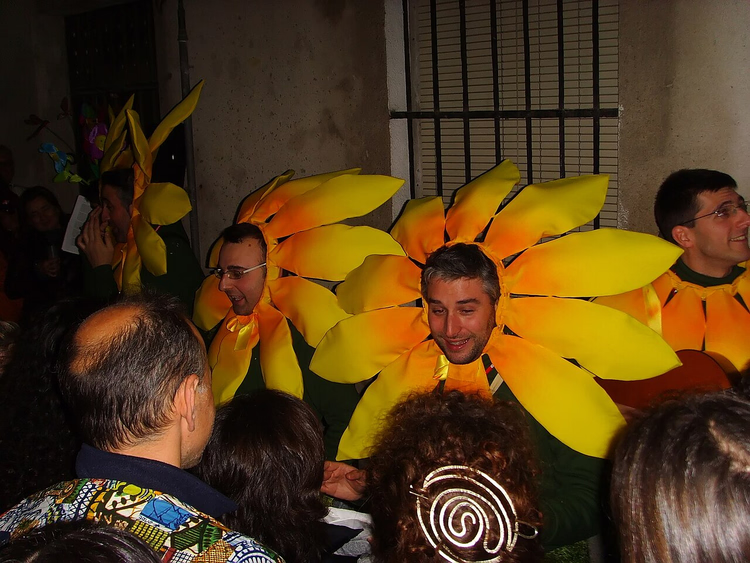 © Balbo · CC BY-SAPhoto: Balbo, CC BY-SA (http://creativecommons.org/licenses/by-sa/3.0/), Wikimedia Commons
Carnival calendar for 2027
The street carnival of 2027 runs from Thursday, February 4 through Sunday, February 14 (as of 09/2026, official date announcement). The COAC competition starts much earlier.
The preliminary sessions at Gran Teatro Falla take two weeks, from January 8 to 21. Then come the quarterfinals (January 24-29) and semifinals (February 1-3). The grand final of adult groups is scheduled for Friday, February 5, and the romancero final takes place on February 4, the opening day of the street carnival (as of 06/2026, official competition calendar).
Period | What happens | Is it worth going |
|---|---|---|
January 8-31 | COAC competition at Gran Teatro Falla | for fans of the genre and group supporters |
February 1-5 | semifinals and grand final | for those who want to see the competition final |
February 4-14 | street carnival | for everyone who wants to hear coplas live |
Which days to choose
The main carnival days have always been the first weekend and Carnival Monday. In Cadiz, that Monday is a public holiday.
 © Ymblanter · CC BY-SAPhoto: Ymblanter, CC BY-SA (https://creativecommons.org/licenses/by-sa/4.0), Wikimedia Commons
But because of its popularity, the first weekend has become too crowded. On the first Saturday, the center simply cannot fit everyone: the noise of the crowd drowns out both the chirigotas and the comparsas, and by evening the streets turn into one big party with alcohol. Locals call this time the "anti-carnival" and leave town.
Residents have shifted their carnival to weekdays and the second weekend. Monday remains a convenient day: locals are off work, and there are fewer visitors from other regions.
The Saturday of the second weekend, especially after sunset, fills La Viña with street groups. If you are coming specifically for live singing, plan your trip for this period.
Do not forget about the weather either. In February, Cadiz gets rain, and in the evening you need a jacket: the narrow streets of the old town can be cold.
Accommodation in the center for these dates gets booked well in advance, so hotels in Cadiz for the carnival weekend are worth looking at now.
When | What is on the streets | Who it suits |
|---|---|---|
First weekend | maximum people and noise | those who want a big public celebration |
Weekdays | stages and groups in the old town | those who want to listen to coplas |
Monday | a day off for locals, many groups | almost everyone |
Second weekend | final celebrations and closing | those who stay until the end |
Where to listen to coplas
The main carnival hub is in the La Viña quarter, which locals call the heart of the festival (as of 09/2026, city council page about the La Viña quarter). Here, groups perform on every other street corner.
 © Emilio J. Rodríguez Posada · CC BY-SAPhoto: Emilio J. Rodríguez Posada, CC BY-SA (https://creativecommons.org/licenses/by-sa/2.5), Wikimedia Commons
In the evening, stages operate in the squares: ensembles that performed earlier in the day at the Gran Teatro Falla appear there.
What might disappoint you at the carnival
If you expect a spectacle on the level of Venice or Tenerife, Cadiz will surprise you, and not in a good way. There are no lavish costumes here, and little dancing either: what is valued here is the lyrics and the voice.
Without Spanish, you will miss most of the jokes. The Cadiz dialect, local news, and puns make even simple numbers opaque to an outsider, and this applies above all to chirigotas and romanceros.
The first weekend is disappointing in its own way: the crowd and noise make it hard to hear the groups themselves.
Everything else, however, is in your hands. Pick a weekday, come in the evening, and stick to streets where groups are performing rather than bars.
Is it worth going: our verdict
It all depends on your expectations. If you have already seen the carnival in Santa Cruz de Tenerife and want to repeat that experience, Cadiz will seem more modest: there are no huge floats or mass dancing here.
What it does have is folk art you will not find anywhere else. For a folklore lover, the Cadiz carnival gives more than any show: the lyrics are written by neighbors and sung on the street, among the audience.
If you are in the city in February, the carnival is worth seeing even for half a day. And if you are traveling with a group and love folk festivals, it is easy to spend several evenings in a row here.
⁉️🤔 Frequently asked questions
Do you need to know Spanish to enjoy it?
Partly. The music and atmosphere are understandable without words: comparsas and coros sound beautiful in any language. But the main thing at the carnival is not the music, it is the lyrics, and they are sung in the Cadiz dialect with local jokes. A phone translator will not handle local puns, so start with comparsas.
When does the Cadiz carnival take place in 2027?
The street part runs from February 4 to 14, and the COAC competition starts on January 8 (as of 09/2026, 2027 carnival schedule). The grand final is scheduled for February 5 (as of 06/2026, COAC dates). If you are coming for the singing, choose weekdays or the second weekend.
How many days should you plan for?
Two or three days is enough. The center is compact: La Viña, the market hall, and the old town squares are all walkable, and in the evening groups perform on every other street corner. In half a day you can catch both a chirigota and a comparsa.
Why are street groups called illegal?
It is a historical name. Formally, they do not break any rules: groups of friends sing wherever an audience gathers.
How is the Cadiz carnival different from the Tenerife carnival?
In Cadiz, the song is the celebration; in Tenerife, people watch a spectacle and dance. Both have held the status of Fiesta de Interés Turístico Internacional since 1980 (as of 09/2026, tourist office page about the carnival), and both end not on Ash Wednesday but on Domingo de Piñata.
The full recording of the 1998 Comparsa Los Piratas final can be watched below.
In short: what to book
The main thing at the Cadiz carnival happens on the streets and in the squares. Watch the street groups, catch the competition final, and choose weekdays over the first weekend.
What to book in advance: accommodation and travel. For February 4-14, 2027, hotels in the center sell out months ahead, so it's worth checking hotels in Cadiz on Trip.com now. If you want to see the city beyond the carnival streets, Cadiz tours on GetYourGuide will come in handy.
The bottom line on dates is simple: pick a weekday or the second weekend, arrive by evening, and don't forget a jacket.

A small editorial team writing guides for independent travel. We travel ourselves, but we haven’t been everywhere, so we check prices, opening hours and how to get there against official sources.