
















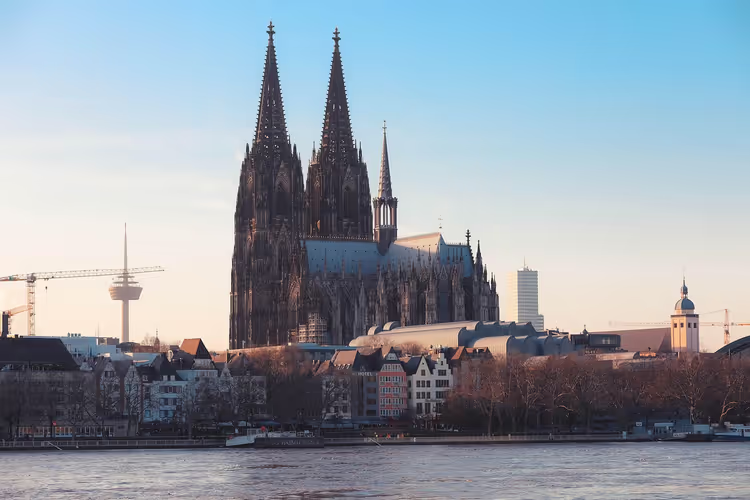
Carnival in Cologne 2026: dates, parades and where to party
Every year in February, central Cologne stops being an ordinary city for a week. Between Alter Markt and Neumarkt it smells of fried onions and beer, and brass bands play in the squares.
The 2026 street carnival runs from February 12 to 18 (as of 09/2026, 2026-2028 session schedule). You're coming for the first time and don't know which days to take off work, where to find parties, and what to wear on the street. We've put together practical information: session dates through 2028, a breakdown of the seven main days, party neighborhoods, and rules that will save you money and stress.
Almost everyone wears a costume at carnival. Without one, you stand out more than you would in a wig, so people prepare their outfit in advance rather than on the first evening.
Ad: this article contains affiliate links, we earn a commission if you book through them, at no extra cost to you.
What Cologne Carnival is and why people come here
💡 In short:
- The carnival session opens on November 11 at 11:11, but for a trip only the seven days of street carnival matter (as of 09/2026, carnival page on the city portal).
- The strongest days for atmosphere: Weiberfastnacht, Rosenmontag, and Tuesday with the burning of the Nubbel.
- Dates and program: 09/2026, checked against the city's official calendar.
Kölner Karneval is called the fifth season: the city lives by the carnival calendar for five months of the year. Formally, everything starts on November 11 at 11:11 (as of 09/2026, city portal on carnival), but the real street carnival (Straßenkarneval) comes in February, the week before Lent. That's when the center is closed to cars and the streets are handed over to pedestrians in costumes.
On these days you'll see everything at once: ticketed balls in halls, free street parties, parades with bands, and crowds of Jecken, as carnival participants are called here. The atmosphere is friendly. Strangers offer you Kölsch beer and pull you into a circle dance, even if you don't speak German.
For a first-timer, a simple rule works: go to the center rather than looking for events on the outskirts. Parades and street parties run between Alter Markt, Neumarkt, Heumarkt, and the ring of boulevards, and that's also where beer stands and food stalls are set up.

A separate note about money. The carnival itself is free; you only pay for food, drinks, and entry to some bars. The main expense is accommodation, because carnival dates in Cologne are considered high season.
Now let's look at how the week itself is structured, so you understand what awaits you on the streets.
The program isn't limited to the street. The city hosts ticketed masked balls, concerts on stages, and organized parties with tickets sold in advance. The atmosphere stays equally friendly in a hall and on a square; the only difference is the format of the evening.
Another detail that brings families here: during parades, sweets and flowers are handed out for free. Candy, chocolate, and small bouquets fly from the floats into the crowd, and children collect them in bags and pouches.
The season works like this: from November 11, life happens indoors, where club meetings, balls, and concerts take place, and the streets join the celebration only in February (as of 09/2026, session program on the city website). If you specifically want the street carnival, plan your trip for the days before Lent.
When time is short, pick the days that suit your taste. Thursday gives you the start and the first parties, Saturday shows the stage at Neumarkt, Monday brings the main parade, and Tuesday suits those who want to see the final ritual and leave calmly.
There is no single ticket or shared program for everyone here. The center works as a self-organizing venue where every bar and every group does its own thing, so planning your trip minute by minute is pointless. Pick two or three anchor events and leave time for improvisation.
If you're traveling with children, choose daytime events: they're shorter, calmer, and end before the evening crowds. Family-friendly options include neighborhood parades and stages on squares, where you can see the performance from the sidewalk without standing in a crush.
Check the schedule a couple of days before you leave. The times of individual parades and stages vary by year, and weather-related changes are announced in local news and on organizers' pages.
One last thing before the details: bring more clothes than you think you need. A costume is easy to get dirty on the very first evening, and doing laundry at a hotel is inconvenient and slow.
History: how carnival became the fifth season
The celebration in Cologne is older than the word "carnival" itself. Back in Roman times, city residents marked spring days with wine and feasting, and in the Middle Ages the holiday took on Christian meaning. It was the last chance to eat meat and have fun before Lent. The name is linked to a Latin phrase meaning "farewell, meat."
Carnival became organized in the early 19th century. That's when a committee appeared and turned spontaneous festivities into a celebration with the permanent figures of the prince, the peasant, and the maiden (Dreigestirn). These three roles lead the session to this day, and no major parade happens without them (as of 09/2026, official carnival portal).
Carnival has survived wars, occupations and epidemics, and every time it has returned to the city calendar. Today it is one of the biggest public festivals in Europe. Around 11,500 people take part in the 2026 Rosenmontagszug, including 74 Festwagen and 60 bands (according to Festkomitee Kölner Karneval).
The history here is not a museum piece, it is alive. Every session gets a new program, and old customs sit side by side with political satire on the floats. That is why Carnival in Cologne feels modern, despite a tradition going back two hundred years.
Where to stay in Cologne for Carnival
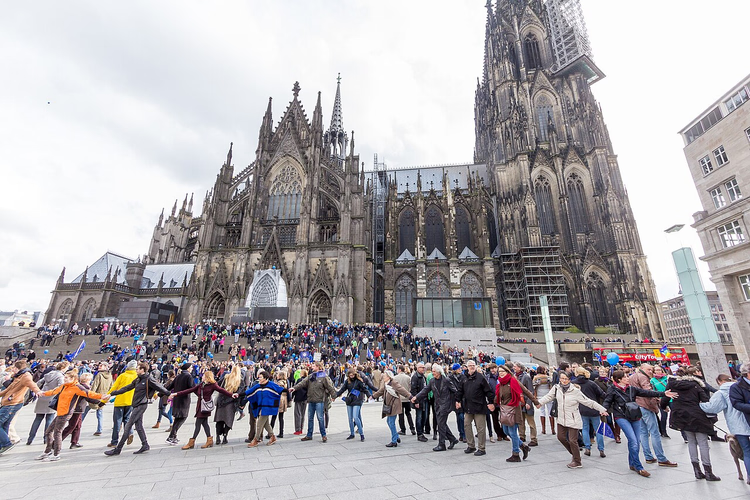
Book your accommodation early: a couple of weeks before Weiberfastnacht there are almost no rooms left in the center, and prices rise noticeably. There is one rule we strongly recommend following: do not book a hotel right in the Old Town. The party goes on there until morning, and windows will not save you.
The best compromise is in the neighborhoods around the center. The Belgian Quarter works for those who want restaurants and a relatively quiet room, but still want to walk to the parties. On the map it is a 15-25 minute walk to Alter Markt.
The options people mention most often:
- Motel One Köln Mediapark, near Mediapark. On the map it is about a 20 minute walk to the center, the format is budget and no-frills. Motel One Cologne prices on Trip.com
- Mercure Köln im Friesenviertel, between the center and the station. Convenient if you arrive by train.
- 25hours Hotel The Circle, a design hotel with a rooftop bar. Pricier than the others, but with a view over the city.
 © Raimond Spekking · CC BY-SAPhoto: Raimond Spekking, CC BY-SA (https://creativecommons.org/licenses/by-sa/4.0), Wikimedia Commons
If your budget is tight, look at hotels near Köln Messe/Deutz station or in Ehrenfeld. You can get to the center by S-Bahn in a few stops, and you will sleep in peace. Taxis for short distances do work on Carnival nights, but the lines at the stands are long.
Find hotels in Cologne
Compare prices across booking sites and filter for rooms with free cancellation.
Compare prices on Trip.comThe widget loads once you give your consent.
Booking a room the evening before you arrive is almost impossible, but moving to another neighborhood during your trip is doable: the center is compact, and the move takes half an hour.
Carnival dates: Crazy Days 2026, 2027 and 2028
The session opens on November 11 at 11:11, but a tourist only needs the week of street carnival. It's called Crazy Days or Straßenkarneval: it runs from Weiberfastnacht on Thursday to Aschermittwoch on Wednesday, and these are the days when the city center turns into one big party (as of 09/2026, Cologne Tourism website).
Session | Weiberfastnacht | Rosenmontag | Aschermittwoch |
|---|---|---|---|
2026 | February 12 | February 16 | February 18 |
2027 | February 4 | February 8 | February 10 |
2028 | February 24 | February 28 | March 1 |
Session dates: as of 09/2026, Cologne carnival calendar. The Rosenmontag parade starts at 10:00, so plan a quiet night before it (as of 09/2026, Rosenmontagszug page).
Now let's break down each day of the week: what happens, where to go and what to expect.
The week follows the same pattern, only the scale and participants change. During the day, parades move through the center, stages and food stalls operate, in the evening the crowd heads to the pubs, and at night the parties continue in squares and clubs. Each day is tied to its own event, so you'll inevitably miss something, and that's fine.
There are three anchor points of the week. On Thursday the session opens at Alter Markt, on Saturday Funkenbiwak takes place at Neumarkt, and on Monday the main parade rolls through. Everything else is built around them: neighborhood parades, club parties and late dinners in pubs.
One detail that rarely gets written about: at Funkenbiwak, the Rote Funken sell a special Kölsch glass that gets you unlimited refills. Look for the group's stand if you want to tap into a local tradition.
A costume works like a pass in this setup. Locals put on something bright in the morning and keep it on until night, while in a regular jacket you'll be the only one watching the party from the sidelines. On the plus side, the center is calmer during the day than in the evening: families with kids come out precisely in daylight hours.
About food, separately. The stalls sell fries, sausages and pea soup, and the pubs serve local dishes alongside Kölsch. Lines at the stalls grow toward evening, so eat early if you don't want to queue for a sausage.
And about the finale. Carnival ends on Ash Wednesday, the city returns to work, and the bars take down their decorations. Plan your departure for Wednesday morning or Tuesday evening, so you won't be hunting for a taxi at the last minute.
One more nuance: on Thursday evening the center fills up faster than on Friday. If you're on a short trip, choose the second half of the day for walking around, when the crowd has already spread across the squares and streets.
Day 1: Weiberfastnacht, or "women's Thursday"
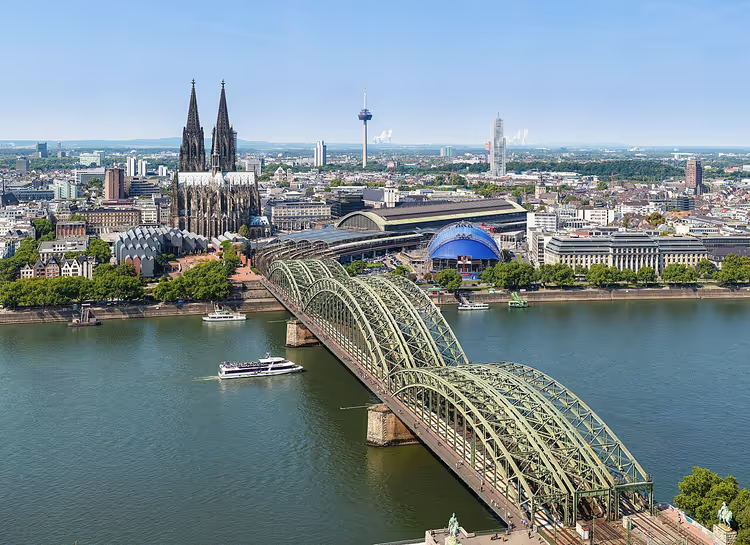
The official start of street carnival. At 11:11 the stage opens at Alter Markt, where the Dreigestirn appears, and crowds of Jecken in costumes fill the center (as of 09/2026, Weiberfastnacht program).
A local tradition is tied to this day. Women walk the streets and cut off men's ties, giving a Bützchen kiss in return. Ties get ruined from the morning on, so wear one you don't mind losing.
In the afternoon, the historical scene Jan und Griet is performed at Severinstorburg. It's a short play about a maid and a market trader, after which the participants walk through the city in a small procession (according to the city carnival portal).
 © Thomas Wolf , www.foto-tw.de · CC BY-SAPhoto: Thomas Wolf , www.foto-tw.de, CC BY-SA (https://creativecommons.org/licenses/by-sa/3.0/de/deed.en), Wikimedia Commons
Thursday evening is considered one of the best days for parties: fewer people than on the weekend, but the mood is already carnival. If you arrive on Wednesday, Thursday will be your recon before the weekend.
Day 2: Karnevalsfreitag, or carnival Friday
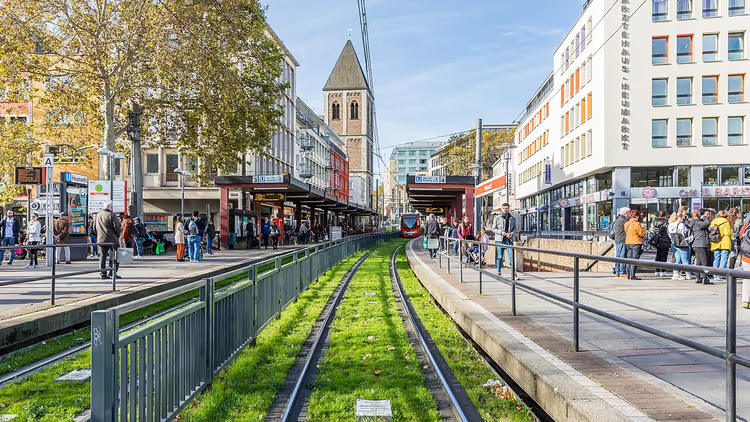
During the day on Friday the center is half-empty: locals are sleeping off Thursday. But in the evening Sternmarsch begins. Columns with sparklers march from Heumarkt, Laurenzplatz, Bollwerk and Eisenmarkt to Alter Markt, where a stage program awaits them (as of 09/2026, Sternmarsch description).
This is the most family-friendly evening of the week, so bring your kids if you have them. The procession starts closer to evening, and the exact time changes every year, so check the official Festkomitee program.
 © Raimond Spekking · CC BY-SAPhoto: Raimond Spekking, CC BY-SA (https://creativecommons.org/licenses/by-sa/4.0), Wikimedia Commons
After Sternmarsch, the crowd disperses to the pubs. Booking a table for Friday is almost impossible, but you'll find a spot quickly: beer is drunk standing here, and the waiters work at a fast pace.
Day 3: Karnevalssamstag, or carnival Saturday
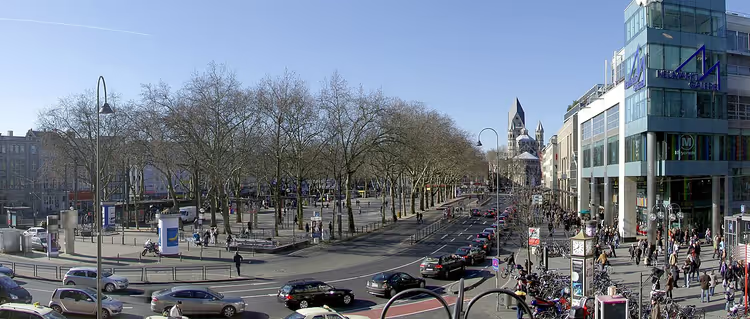
The main daytime event on Saturday takes place at Neumarkt: Funkenbiwak. It's hosted by the Rote Funken, the city's oldest carnival group. Ensembles perform on stage, between acts they dance the traditional Stippeföttche, and guests are treated to pea soup (according to the city carnival portal).
In parallel, Veedelszüge parades run through the neighborhoods. If you want a calm parade without the dense crowds of the center, pick a district and check the schedule on site. These parades usually start in the afternoon and last a couple of hours.
 © Raimond Spekking · CC BY-SAPhoto: Raimond Spekking, CC BY-SA (https://creativecommons.org/licenses/by-sa/4.0), Wikimedia Commons
In the evening, the Geisterzug, or "parade of ghosts," takes place. Its special feature is that anyone can take part: the procession moves at night, and the characters in it are the darkest ones, from vampires to witches (according to the Festkomitee page about the Geisterzug).
Day 4: Karnevalssonntag, or carnival sunday
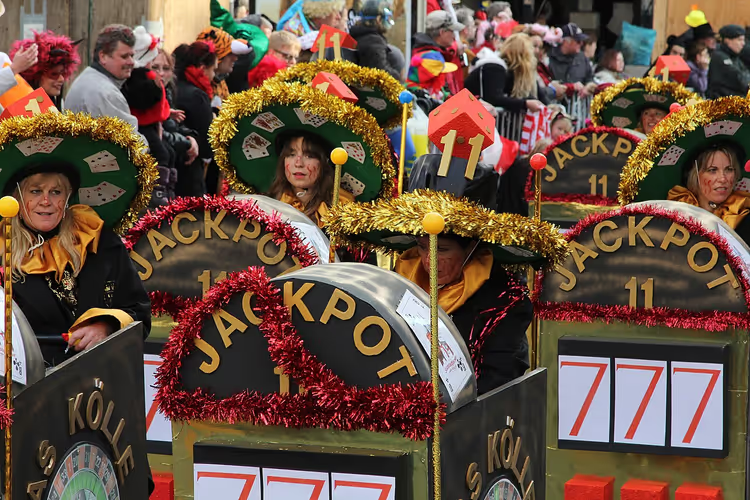
On Sunday, the Schull- un Veedelszöch takes place: a smaller version of Monday's parade, featuring school classes, clubs, and neighborhood groups (according to Festkomitee). The crowd here is mostly local, and no less candy flies at your head than on Monday.
 © Superbass · CC BY-SAPhoto: Superbass, CC BY-SA (https://creativecommons.org/licenses/by-sa/4.0), Wikimedia Commons
Sunday evening can feel quiet: some bars are closed, and the streets empty out earlier. If you want a loud party, plan to go out on Thursday, Friday, Saturday, or Monday.
Day 5: Rosenmontag, or rose monday
The main day of the week and the main parade of the year. In 2026, the Rosenmontagszug takes place on February 16 and starts at 10:00 from Chlodwigplatz (as of 09/2026, parade page). The route through the city stretches for 7.5 km, and the procession itself is longer than 8 km (according to the parade organizers).
The scale here is industrial: about 11,500 participants, 74 Festwagen, and 21 Persiflagewagen that mock politics and city news. Over the course of several hours, 300 tons of sweets, 700,000 chocolate bars, and 300,000 small bouquets of Strüßjer fly at spectators (as of 09/2026, Festkomitee summary in numbers).
To get something thrown your way, shout "Kamelle!" and "Strüßjer!" You need to shout loudly and toward the float, otherwise the sweets will go to your neighbor.
You can watch the parade for free from the sidewalk or from a grandstand with a ticket. Along the route, the organizers set up 94 grandstands, and about 2,000 police officers from different districts of the state keep order (according to Festkomitee).
The procession lasts about three hours, and the whole time candy, flowers, and chocolate fly through the air. Kids collect the loot in bags, adults hold upside-down umbrellas and dump their haul at home.
One more detail to understand the scale: participants buy the materials for their floats themselves. Building them takes kilometers of wooden slats, tons of paint and wire, and afterward everything is dismantled or sent to museums (according to the organizers' page about preparation).
Claim your spot early: by morning, families with folding chairs are already standing along the route. After the parade, the city keeps drinking and dancing, so decide in advance whether you're heading to the center or going back to your hotel.
Day 6: Veilchendienstag, or violet tuesday
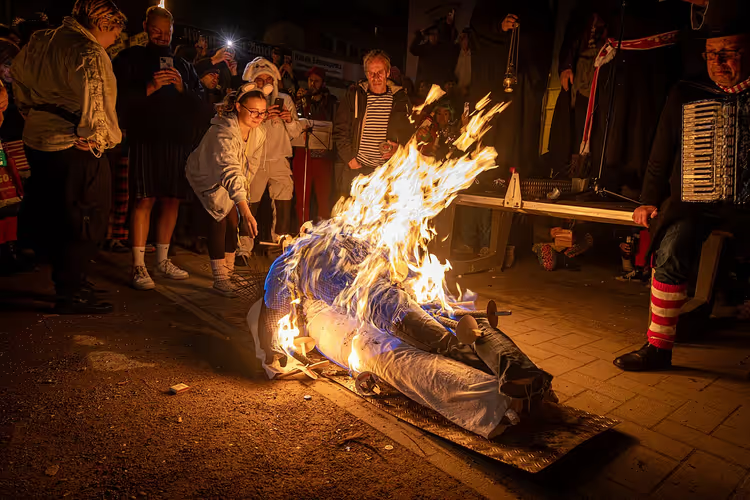
After Rosenmontag, the pace drops and some guests leave. But there is one ritual you won't find anywhere else: Nubbelverbrennung. All season long, straw Nubbel dolls hang at the entrances to pubs, and on Tuesday evening they are burned.
 © Superbass · CC BY-SAPhoto: Superbass, CC BY-SA (https://creativecommons.org/licenses/by-sa/4.0), Wikimedia Commons
The meaning is simple: the Nubbel takes on all the sins of the carnival days and departs with them. The crowd watches, sings, and finishes the last Kölsch. The exact burning time differs from pub to pub, so ask locally.
If you want to be at the busiest spot, come to the center early. Tuesday is noticeably quieter than Saturday, but the atmosphere remains carnival-like.
Day 7: Aschermittwoch, or ash wednesday
Carnival ends. Costumes go back into the closet, the city returns to work, and restaurants serve fish dishes. There are no parties on this day: Lent begins, and Wednesday evening is no longer part of the program but its finale.
If you have only one free day, choose Rosenmontag. If you have a week, arrive on Thursday and stay until Tuesday. That way you'll see the opening, the main parade, and the final ritual.
How many days to spend in Cologne for carnival
Every day of the week is different from the next, so you can't cover everything in one trip. The minimum for a first visit: two days, Saturday and Rosenmontag. You'll see the main parade but miss the carnival opening on Thursday.
The best option for a week-long trip: arrive on Wednesday evening, the night before Weiberfastnacht, and leave on Wednesday morning after Rosenmontag (as of 09/2026, carnival calendar on the city portal). That gives you enough time for balls, street parties, and a rest day in between.
Getting to Cologne by rail is convenient. Köln Hauptbahnhof station sits right under Cologne Cathedral, and the Old Town is a few minutes' walk away: train tickets to Cologne on Trip.com.
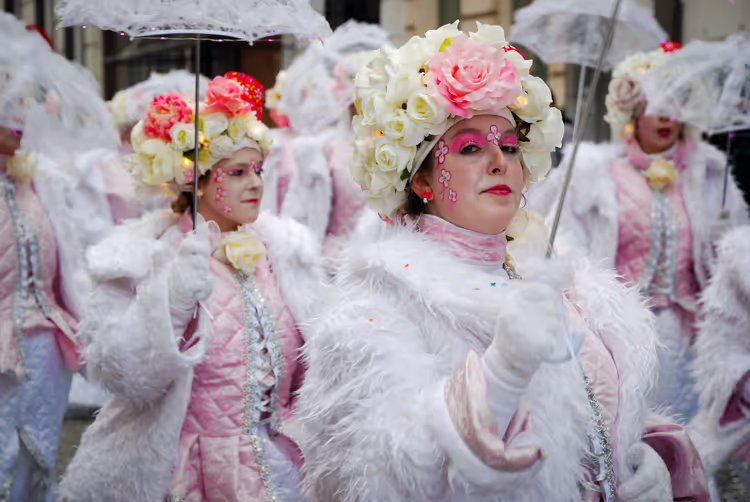
Book your hotel for carnival dates well in advance. If your trip is tied to a specific parade, check the dates first, then buy tickets: the season shifts every year along with Easter.
Where to party during Cologne Carnival
Official websites offer few details, and at first it seems like there are no parties at all. In practice it's simpler: head to the center and the party will find you. Pubs, street stands, and stages run from morning to night, and entry is usually free.
Below is a list of places worth keeping in mind. We didn't rank them; instead we put together a map of the city: each square or street offers its own type of party, from a loud crowd to a cozy pub.
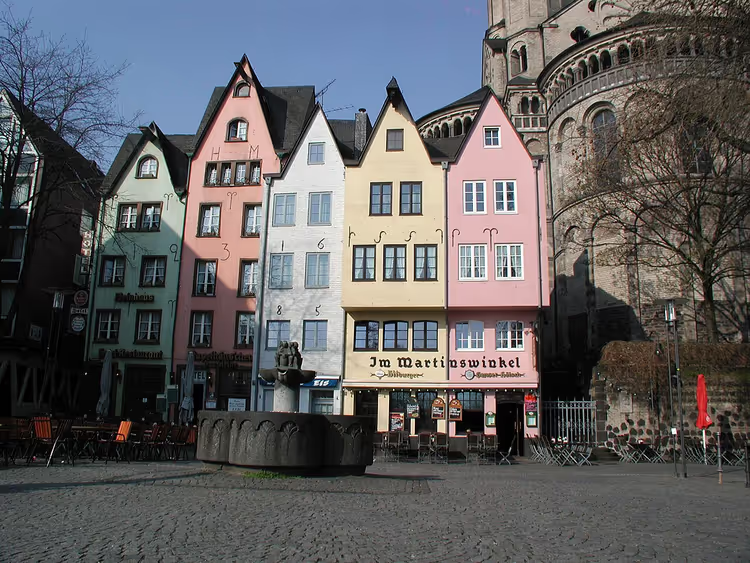
Fischmarkt
One of the most photographed squares in the city and one of the best outdoor carnival spots. It gets crowded, with bar stands and tents selling fries, and the main plus isn't obvious: there's a paid portable toilet with real paper and soap. The line for it is shorter than for the regular street cabins.
 © Horsch, Willy · CC BYPhoto: Horsch, Willy, CC BY (https://creativecommons.org/licenses/by/2.5), Wikimedia Commons
The catch: by evening it's almost impossible to move between the stands, and tables get taken as early as the afternoon.
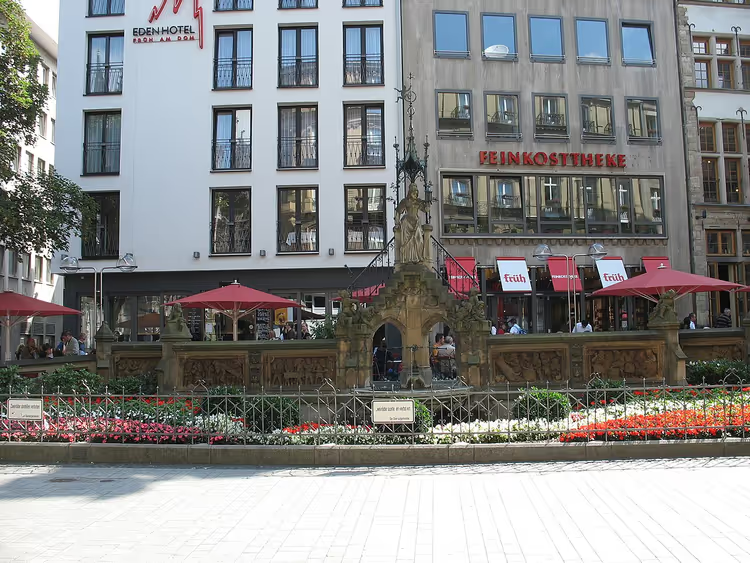
Früh am Dom and the square in front of it
A pub across from the cathedral and the square in front of it. During the day orchestras play here and a Kölsch stand operates, and inside you can warm up and eat. The nearby Stollwerckpassage arcade is used as shelter for musicians, so live music can be heard even in the rain.
 © Jammycaketin · CC BYPhoto: Jammycaketin, CC BY (https://creativecommons.org/licenses/by/3.0), Wikimedia Commons
Who it's for: if you want to drink Kölsch and dance without being crushed. The catch: the place is popular in the evening, and free tables inside run out quickly.
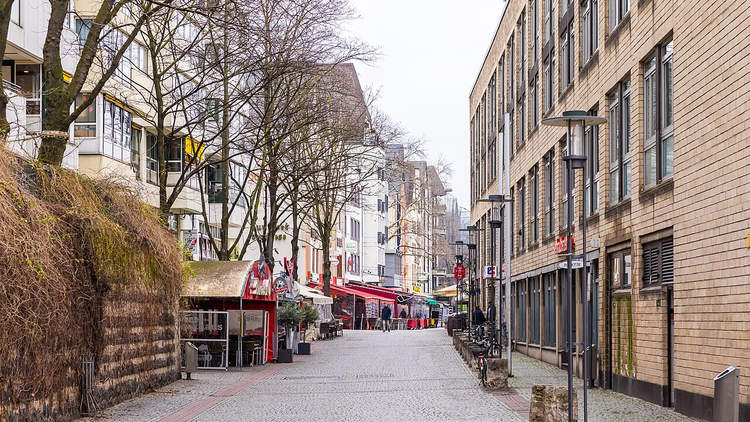
Mauthgasse
The main nightlife street of carnival. Restaurants turn into bars, chairs are moved out onto the sidewalk, and the crowd density here in the evening is the highest in the center. If you're short on action, a walk down this street solves that in five minutes.
 © Raimond Spekking · CC BY-SAPhoto: Raimond Spekking, CC BY-SA (https://creativecommons.org/licenses/by-sa/4.0), Wikimedia Commons
During the day it's calmer: you can eat at a restaurant and watch the area being set up for the evening. By night the street turns into one long open-air bar, and you move along with the flow of people.
Not for: those who dislike noise and crowds. The catch: turning around is hard, and finding your friends in the crowd is nearly impossible, so agree on a meeting point in advance.
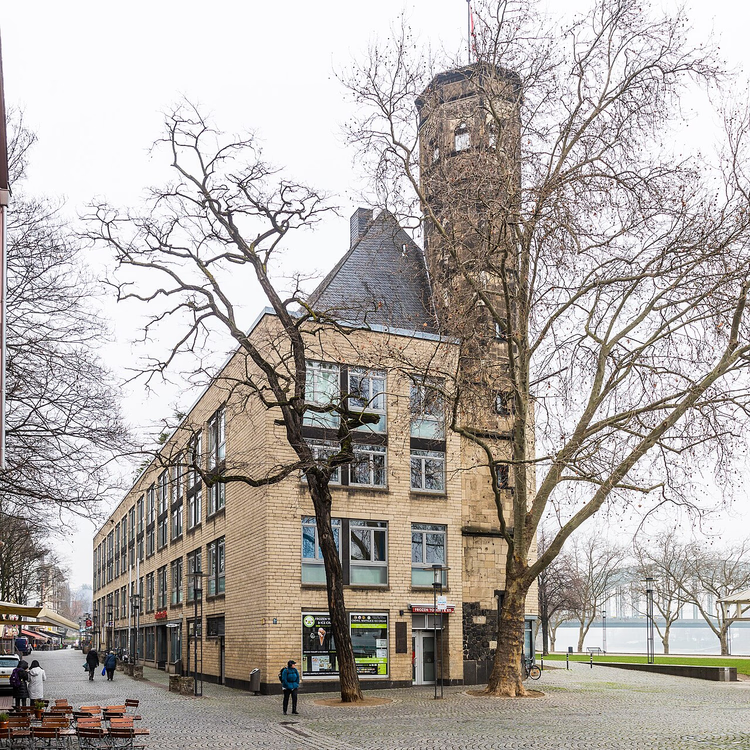
Dom im Stapelhaus
A small traditional pub in the center where waiters carry Kölsch around in rounds. Carnival clubs hold post-parade parties here, so it attracts people who celebrate the German way: no shouting or dancing on tables.
 © Raimond Spekking · CC BY-SAPhoto: Raimond Spekking, CC BY-SA (https://creativecommons.org/licenses/by-sa/4.0), Wikimedia Commons
The atmosphere is cozy rather than loud, and beer is served quickly. It's warmer inside than on the street, so on a rainy evening it's an easy way to wait out the crowd.
The catch: seating is limited, so come early. Who it's for: if after Mauthgasse you want a breather and a quiet conversation.
Salzgasse
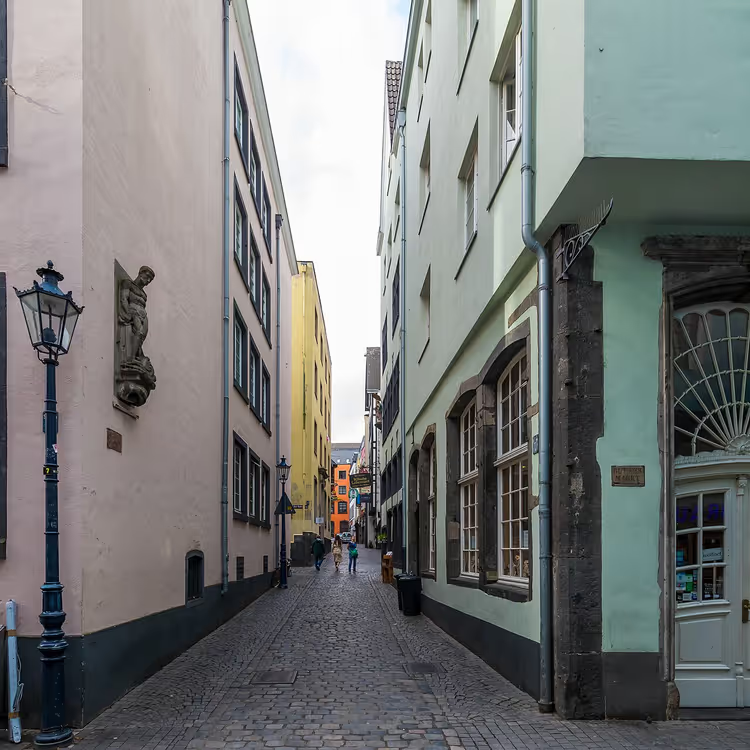
A narrow pedestrian alley in the Old Town, packed with bars and clubs. In the evening it's tight, noisy, and crowded, but you'll find a party spot right away. Many venues charge entry during carnival week, and music plays until morning.
 © Raimond Spekking · CC BY-SAPhoto: Raimond Spekking, CC BY-SA (https://creativecommons.org/licenses/by-sa/4.0), Wikimedia Commons
During the day the alley looks ordinary, so don't judge it by a morning stroll. Come back after sunset, when the lights go on and the second floors open up.
Not for: if you're looking for a quiet evening with dinner. The catch: the music is loud, conversation is hard, and it's easy to lose your friends in the crowd.
Pubs in neighborhoods outside the center
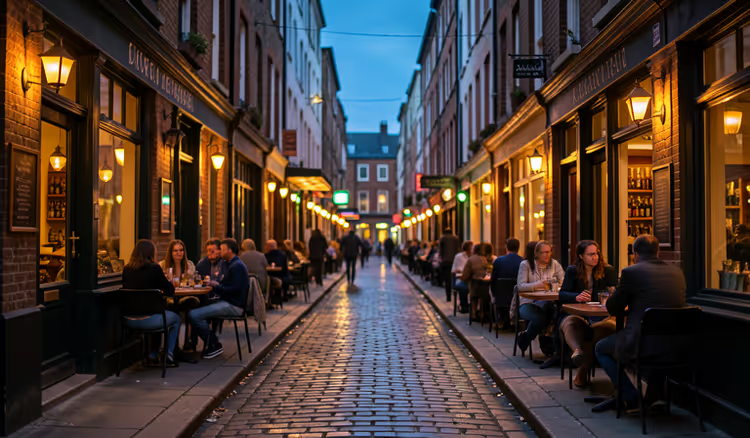
The most underrated option. The center is loud, but in neighborhoods like Ehrenfeld, Nippes, or the Belgian Quarter, bars also dress up and play carnival songs. There are more locals than tourists, prices are lower, and staff actually have time for you.
 AIIllustrative image: AI-generated
Tip: pick one pub near your hotel for the first evening. If you don't like it, spend the next evening in the center.
Ticketed balls and parties
Street parties are free, and carnival works perfectly well without them. But if you want an evening in a hall, with an orchestra and tables, buy tickets for balls and carnival shows in advance: they sell out months ahead, and the program is in German.
tours and carnival parties in Cologne on GetYourGuide
The catch: without German, a ball can feel awkward, because the jokes and songs are aimed at locals. Who it's for: if you want an organized evening and a seat at a table.
Carnival dictionary: what to shout and what's prohibited
Five words cover almost every situation on the street.
Kölle Alaaf! A greeting that replaces "hello" here. If you don't know what to say, say "Alaaf!" and people will understand you.
Kamelle! A shout during the parade. It works literally: people throw candy at you.
Strüßjer! The second useful shout. It's a request for flowers, meaning the small bouquets handed out from the parade floats.
Jeck. This is what carnival participants are called, literally "fool." During carnival, the word isn't offensive, it's more of a title.
Glasverbot. A ban on glass bottles and glasses in the city center. The rule applies during certain hours and in certain zones, so watch for signs (as of 09/2026, Glasverbot rules in Cologne).
The phrase Kölle Alaaf works as a regular greeting during carnival. Use it like a password: say "Alaaf" and the conversation has already started.
What to bring to carnival
The list is short, but each item saves you energy and money.
Costume. Without one, you'll stand out in the center. The rule is simple: the brighter, the better, and you don't need to portray a specific character. Costumes are sold in the city too, but before the holiday the selection is worse and prices are higher, so look for an outfit at home. Wigs, glitter, and gloves can be added to any basic set.
Waterproof shoes. You'll walk and dance a lot, and underfoot will be everything that was spilled before you. Bring shoes you won't mind throwing away after the trip. Leave your favorite sneakers in the room.
Hand sanitizer. Everything will be sticky: glasses, other people's hands, your clothes. Sanitizer comes in handy before eating on the street, especially since it runs out quickly in portable toilets. A small bottle fits in your pocket and doesn't get in the way of dancing.
Tissues and paper. In street toilets, paper runs out by evening, so carry a pack with you. It's a small thing that ruins the evening if you don't have it on hand, and there's nothing to replace it with on the street.
Rain poncho. February in Cologne is often wet and windy. A light poncho in your pocket works better than an umbrella, which will turn inside out at the first gust of wind. If the weather turns bad, you just put it on over your costume and stay in the game.
Foldable bag. Parades throw candy and flowers at you, and you have nothing to carry them in. Experienced spectators hold an umbrella upside down and collect candy in it. A bag folds into your pocket and unfolds in a second.
Cash. At stalls, kiosks, and small beer stands, payment is mostly cash, and not everywhere has a card terminal. Keep a small amount in your pocket so you don't have to look for an ATM in the crowd. Small bills are more convenient than large ones: you'll be served faster with them.
What not to bring: glass containers into the city center and a large backpack. The first is prohibited, the second gets in your way and everyone else's in a dense crowd. Leave heavy things at the hotel, because you'll come back late, and the taxi line on carnival night is long.
Think about luggage separately. You'll walk between the hotel and the center several times a day, so bring only what you need and keep the rest in your room.
Search for information in German
There are few English-language resources about the carnival, and that is the main reason many people arrive unprepared. Official programs, parade schedules, and party listings are published in German, and the English versions are almost always shorter.
So check dates, routes, and the program on the city carnival portal (as of 09/2026). If German is not your language, turn on page translation in your browser: that is enough to understand the schedule and the names of the squares.
Our editorial team checks dates, prices, and opening hours against official pages and puts the verification date next to the number. That way you can see how fresh the information is and avoid showing up at closed gates.
Also look for local news from the past week. Parade routes are sometimes changed due to weather or street repairs, and warnings are published only by local media.
Dress bright, not recognizable
Carnival in Cologne is about color, not about nailing a specific character. It is normal here to go out in a wig, a bright jumpsuit, and tinsel, with no explanation needed. The worst choice is a costume of a character locals do not know: that look will get no reaction.
On the streets you will see clowns, colorful wigs, jumpsuits, and simply unusual outfits with no storyline. Locals value color and mood over recognizability, so do not waste time precisely copying someone else's look.
The practical takeaway: bring what is comfortable to wear for several hours straight and easy to add to. Gloves, a hat, and glitter go with any outfit, while heavy masks get in the way of eating and drinking.
Listen to Schlager in advance
Carnival music is called Schlager: simple songs with choruses that you will hear every evening in every bar. If you recognize two or three melodies, the evening is more fun, and conversations with locals start on their own.
There are songs that play every evening and in almost every bar. One of them is dedicated to Cologne and is played so often that by the third day you will know the chorus even if you never intended to learn it.
You do not need to learn the lyrics. It is enough to listen to carnival playlists on the way so that by evening you can pick out the choruses and sing along with the crowd. The melodies repeat from bar to bar, so they stick quickly, and you will start recognizing them from the first chords.
Prepare for the crowd
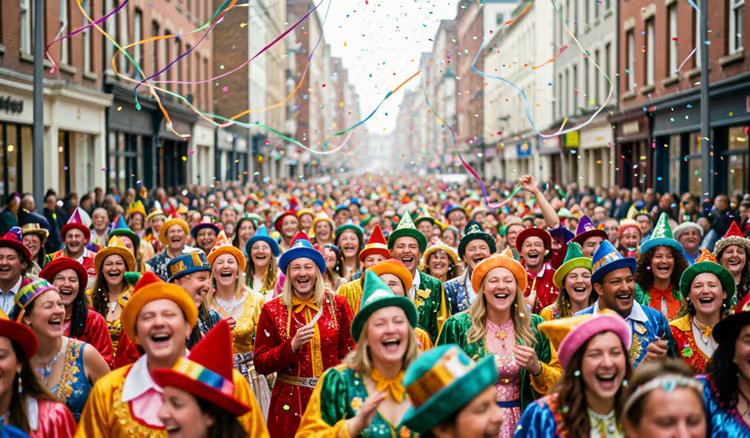
Personal space at carnival ends at the entrance to the center. People will bump into you, hug you, and pull you to dance, with no ill intent. That is how carnival week works, and there is no rudeness in it.
One recurring piece of advice found in all local texts: do not be alarmed if a stranger kisses you or pulls you into a dance. Boundaries work differently here than on an ordinary day, and taking offense is not the done thing.
 AIIllustrative image: AI-generated
If you struggle in dense crowds, choose parties in the neighborhoods. They are also crowded, but you can step back to arm's length and get home without overload. Visitors often underestimate this point and are exhausted by the first evening, so plan breaks during the day.
Plan your toilets
The combination of beer and the street produces a simple result: everyone needs a toilet at once. There are many portable toilets in the center, but the lines are long, and by evening the inside is unpleasant.
A working approach: alternate street time with a pub or restaurant. Order a drink and use the establishment's restroom; it is cheaper than any improvisation. Good spots like the portable toilet at Fischmarkt are worth remembering in advance so you are not hunting for them at the worst possible moment.
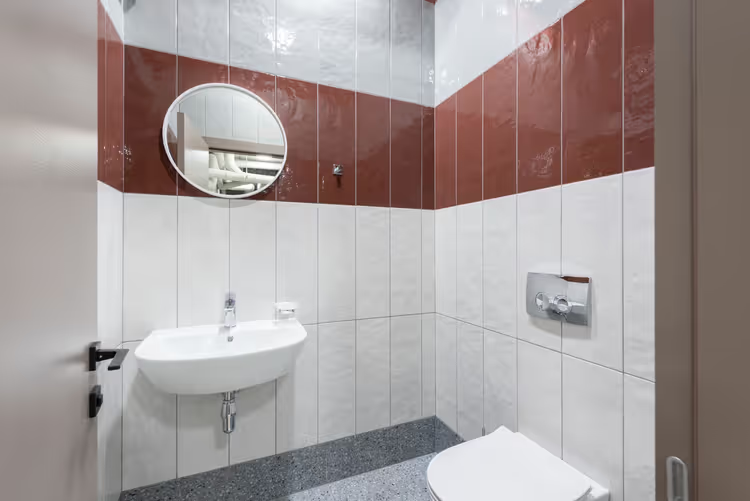
Another option: plan your route so that between squares you pass cafes and hotels with restrooms in the lobby. On carnival days this is a lifesaver.
Get the Kölsch rules straight
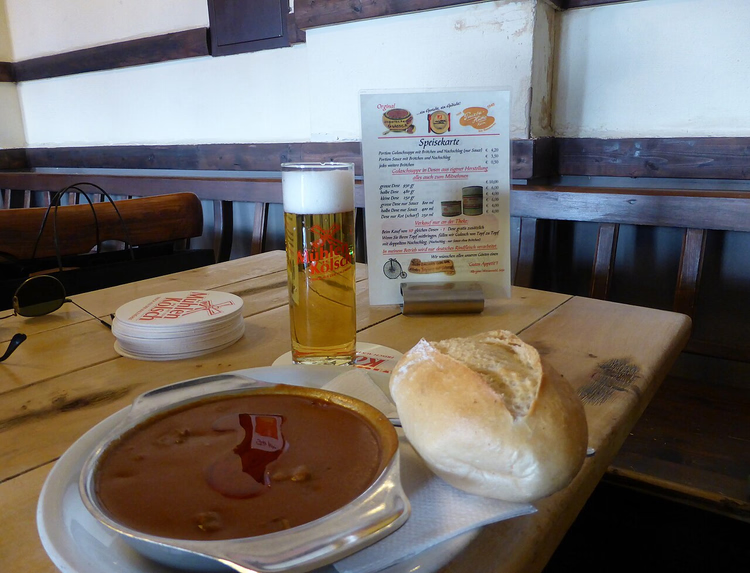
Kölsch is served in small narrow glasses called Stange. The waiters, called Köbe here, walk around with a round carrier called Kranz, and it holds several glasses at once.
The mechanics are simple. An empty glass is replaced with a new one without asking, and a mark is made on the cardboard coaster under the glass. The number of marks equals the amount you have drunk. To stop the flow, put the coaster on top of the glass: that is the signal for "enough."
 © © 1971markus · CC BY-SAPhoto: © 1971markus, CC BY-SA (https://creativecommons.org/licenses/by-sa/4.0), Wikimedia Commons
One beginner mistake: an empty glass on the table is taken as a request for another. If you want a pause, cover the glass with the coaster, otherwise the bill will grow faster than you planned.
Be careful with can collectors
People move through the crowd collecting cans for recycling, and they do it persistently. If you have a can in your hand, they will approach you, and the look will be eloquent.
The outcome depends on you: hand over the can right away or put it in your bag. Arguing is pointless, especially since everything around you is sticky anyway. For the city this cleanup is useful; for you it is simply a way to close the matter in a couple of seconds.
Buy drinks at a kiosk in advance
Glasverbot is in effect in the center: glass bottles and glasses are not allowed into the festival zones. The hours and boundaries of the zones are marked on signs, so look at them before opening your bag (as of 09/2026, Glasverbot zone reference).
Drinks in cans or plastic are cheaper to buy at a kiosk on the way to the center. The difference from the price near the stage is noticeable, and the drink inside is the same. That way you pay less for the party than the neighbor who walks into the center empty-handed.
Also check whether you have cash. Stalls and small kiosks rarely have a card terminal, and on carnival days an ATM is harder to find than a kiosk.
⁉️🤔 Frequently asked questions
When does carnival in Cologne start?
The session opens on November 11 at 11:11, but the street carnival only comes in February, the week before Lent. For a trip, the important week is from Weiberfastnacht on Thursday to Aschermittwoch on Wednesday, because that is when the city center is given over to the street party (as of 09/2026, session calendar).
Which days should I go if it is my first time in Cologne?
Take Saturday and Rosenmontag. On Saturday you will see Funkenbiwak and the evening Geisterzug; on Monday you will catch the main parade. If you can arrive earlier, add Weiberfastnacht: Thursday is considered one of the best days for parties, and there are fewer people in the center than on the weekend.
Is a costume mandatory?
Yes, in the center almost everyone is in costume, and without one you will stand out. The rules are simple: bright, comfortable, no recognizable character from another country. Find your outfit at home in advance: in the city before the festival the selection is worse and prices are higher than on ordinary days.
Is it expensive?
The carnival itself is free: street parties, parades, and the stage at Alter Markt cost nothing. Money goes on beer and food, and prices in the center are higher than at a kiosk. The main expense here is the hotel, so book a room for carnival dates months ahead.
Is it safe to go with children?
During the day the atmosphere is calm, and some events are designed specifically for families: Sternmarsch on Friday and the Sunday Schull- un Veedelszöch parade. In the evening the area around Mauthgasse and Salzgasse gets crowded and loud; it is better not to go there with children and to choose pubs in the neighborhoods instead.
In short: what to book
If you have one day, come to Rosenmontag by 9 a.m. and claim a spot along the route. If you have a week, arrive on Thursday and stay until Tuesday, alternating the noisy center with evenings in the neighborhoods.
Book accommodation in advance: hotels in Cologne on Trip.com. Look for the program and parties on German pages, and for an organized evening a selection of carnival tours on GetYourGuide works well.
Prepare your costume at home, bring waterproof shoes, and do not carry glass into the center. Parade dates and times were verified on 15.09.2026 on the official city and Festkomitee pages (city carnival portal), so check them before your trip.

A small editorial team writing guides for independent travel. We travel ourselves, but we haven’t been everywhere, so we check prices, opening hours and how to get there against official sources.