

















Carnival in Rio de Janeiro: where to watch the samba parade and street blocks
Once a year, Rio de Janeiro lives and breathes samba. Carnival turns the city into one giant stage, and there are several ways to get on it.
Tickets for the main nights at the Sambadrome sell out months in advance, hotels in Lapa and Copacabana get more expensive, and first-timers often spend an evening somewhere other than where the real parade is happening.
Here is everything in order: Carnival dates for 2027, four places to watch the parade and street blocos, ticket prices, and tips that will save you an evening.
Ad: this article contains affiliate links, we earn a commission if you book through them, at no extra cost to you.
Carnival in Rio de Janeiro: how it works
💡 In short:
- Carnival 2027 runs from February 5 to 13: samba school parades take place February 5-10, and the Champions Parade (Desfile das Campeãs) is on February 13 (as of 09/2026, riocarnaval.org).
- The parade is watched from Sambadrome stands, while street blocos in Lapa, Santa Teresa, Copacabana, and Ipanema are free.
- Buy Sambadrome tickets in advance: sectors differ in price and view, and the best seats are gone by fall.
- Dates, sectors, and tickets: 09/2026, verified on the official Carnival website.
Carnival in Rio is a samba school competition, not just a street party. A school is a community of an entire neighborhood: all year long it sews costumes, builds carros alegóricos floats, and rehearses its drum section to present its theme on the Sambadrome runway.
Themes change every year. Schools draw on historical subjects, social and political motifs, and pay homage to Brazilian musicians and writers. The costumes and floats tell the whole story, and the jury scores it across dozens of criteria.
Official parades run from Friday through Tuesday. Série Ouro schools perform on Friday and Saturday. Since 2025, the elite Grupo Especial has taken to the runway for three nights, from Sunday through Tuesday (as of 09/2026, Wikipedia). Results are announced on Ash Wednesday, when Lent begins.
On the final Saturday, the six best schools return to the runway. This is the Champions Parade (Desfile das Campeãs), and scores no longer matter here: just the show and a sea of spectators.
Beyond the parade, Carnival is built on street blocos. These are processions organized by residents themselves: some come out for tradition, others for costumes and music. The blocos are where you best feel how Rio celebrates Carnival without a stage or stands.
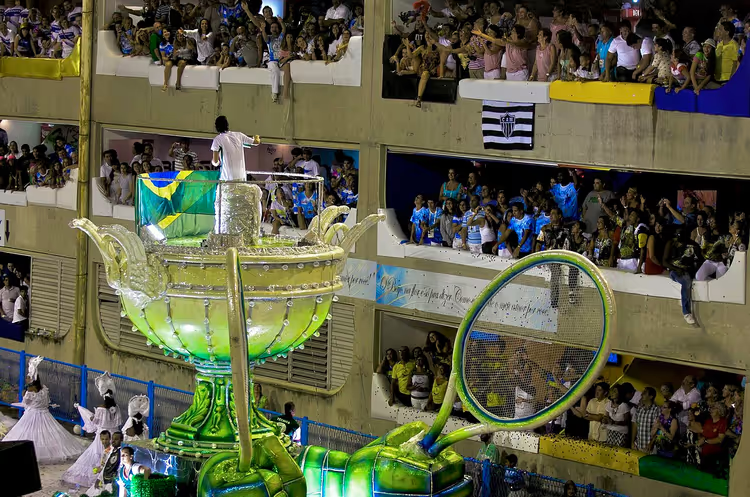 © Ian Gampon from NYC, USA · CC BYPhoto: Ian Gampon from NYC, USA, CC BY (https://creativecommons.org/licenses/by/2.0), Wikimedia Commons
When Carnival takes place and how long it lasts
Carnival dates depend on Ash Wednesday, which opens Lent. In 2027, Carnival runs from February 5 to 13 (as of 09/2026, riocarnaval.org).
The city has a two-part program. During the day and evening, you go to street blocos: free processions with music that start in different neighborhoods. At night, the official parade begins at the Sambadrome, and you need a ticket for that.
There are several hundred blocos, and they come out almost every day. Some march along the beaches during the day, others through the center at night. To avoid missing anything, check the program in advance: the schedule is updated before Carnival begins (as of 09/2026, riocarnaval.org).
Blocos do not have a single schedule. Each neighborhood and each group announces its own route and time, so it makes sense to pick two blocos per day and avoid rushing across the whole city.
If you are going for the first time, three days will be enough: one evening for the parade and two days for blocos. Wear comfortable shoes and plan your route in advance, because streets in the center are closed off.
Sambadrome: the main arena of the samba parade
The Sambadrome (Sambódromo Marquês de Sapucaí), also known as Passarela Professor Darcy Ribeiro, was built specifically for Carnival. The project was designed by Oscar Niemeyer, and the arena opened in 1984 (as of 09/2026, Wikipedia).
Before that, parades went straight through the city streets. The streets could not accommodate the growing samba school processions, and the festival needed a permanent venue. After the Sambadrome was built, the parade finally had a home of its own.
The arena serves the city year-round. It hosts concerts and samba school rehearsals, and during the 2016 Olympics, the venue held archery competitions and the marathon finish (as of 09/2026, Wikipedia). Before the Games, the stands were expanded by roughly 18,000 seats.
The stands run along a 700-meter parade route, and the arena seats about 90,000 spectators (as of 09/2026, Wikipedia). At the end of the route stands the Praça da Apoteose arch, 90 meters tall: that is where the parade ends and the collective celebration begins.
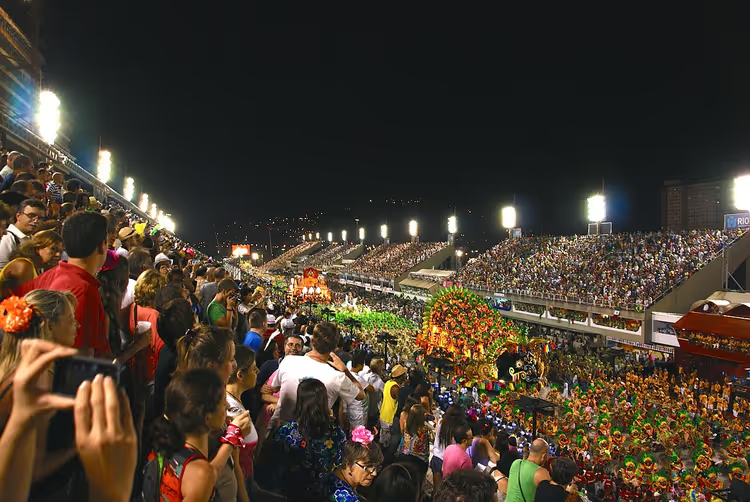 © Ben Tavener from Curitiba, Brazil · CC BYPhoto: Ben Tavener from Curitiba, Brazil, CC BY (https://creativecommons.org/licenses/by/2.0), Wikimedia Commons
At night, one samba school after another takes to the parade route. The entire school passes before you: costumes, multi-story floats, and a drum section made up of hundreds of musicians. Each school is given 75 minutes to make its way down the route.
Parades run from eight in the evening until morning. You sit in the stands and watch the themes, colors, and rhythms change: one school finishes, and the next is already lining up at the entrance to the route.
Tip: For the final nights, tickets sell out fastest. Get a seat in the central section: from there you can see both the dancers and the floats.
Lapa: street parties and nightlife
Lapa is the nightlife district in central Rio, and during Carnival it turns into an endless party on the cobblestones. Here you will hear samba, funk, and rock: each street party has its own character.
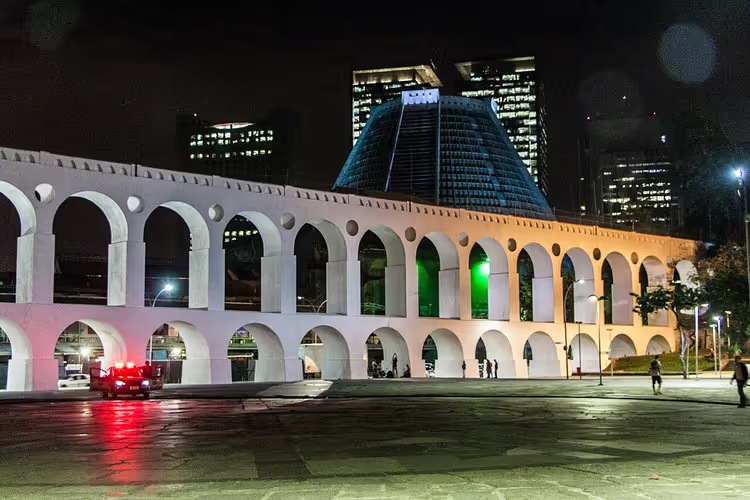 © Carlos Lucio · CC BY-SAPhoto: Carlos Lucio, CC BY-SA (https://creativecommons.org/licenses/by-sa/4.0), Wikimedia Commons
The Arcos da Lapa aqueduct, an old water conduit, now serves as a bridge for the tram. People gather near the arches starting in the evening to drink, listen to music, and meet locals.
Lapa has long been considered Rio's bohemian district. Old houses and cobblestone streets remain here, and live bands play in the evenings. During Carnival, the neighborhood steps away from the tourist routes and sounds local: the people dancing next to you are the ones who live here year-round.
Street parties in Lapa come in a continuous stream. Some stick to traditional samba, others come out with funk or electronic music. The streets are narrow, the crowd is dense, and music pours out of every alley.
The parties start in the evening and run until dawn. The biggest ones draw tens of thousands of people, and the streets get fully closed off. Arrive early if you want to get closer to the music.
One of Lapa's most famous street parties is called Céu na Terra. It sets off before dawn and moves from Santa Teresa to Lapa: drums, brass, and hundreds of dancers in costumes.
If you need a break, there are bars and snack spots all around. Grab coxinhas, pão de queijo, and a caipirinha: these are local classics, and in the crowd people eat them right on the street.
Tip: Lapa is hot and crowded, so bring water and a light layer for the night. Wear closed-toe shoes: the cobblestones are uneven and the crowd is all around you.
Copacabana and Ipanema: Carnival on the beach
Copacabana and Ipanema beaches are known far beyond Brazil. During Carnival, they become massive dance floors where tourists and locals come together.
Copacabana stretches along the waterfront for several kilometers, while Ipanema is more compact. Both are city beaches, and life on them never stops: sports, vendors, music. During Carnival days, thousands of visitors join the usual crowd.
Beach parties start closer to the morning and move along the shore. You can simply lie on the sand and the music will come to you: that is Carnival in its most relaxed form.
Ipanema has a calmer vibe than Copacabana. The parties here are smaller and cozier, and between processions you can swim and wait out the heat in the shade.
 © Dimitry B. from London · CC BYPhoto: Dimitry B. from London, CC BY (https://creativecommons.org/licenses/by/2.0), Wikimedia Commons
The format here is simple: sun, ocean, and samba. People dance barefoot, step into the water to cool off, and return to the music. The atmosphere is lighter than in the nighttime stands of the Sambadrome.
Tip: Beach parties draw big crowds, so bring as little as possible. Keep your phone and money in a waist bag, not in your pocket or a backpack on your back.
Santa Teresa: the alternative carnival
Santa Teresa sits on a hill above the city center. Narrow streets, colonial houses, and artists give the neighborhood its distinctive character, and carnival here unfolds differently than in Lapa.
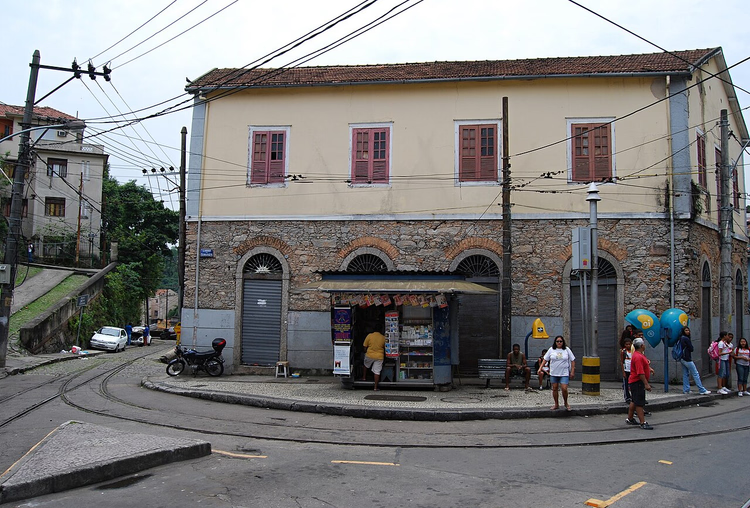 © Pavel Špindler · CC BYPhoto: Pavel Špindler, CC BY (https://creativecommons.org/licenses/by/3.0), Wikimedia Commons
The neighborhood grew up around old villas and winding streets on the hillside. Artists and musicians moved in, and now you will find workshops, galleries, and cafes with city views at every turn.
The blocos in Santa Teresa are small and intimate. Participants often show up in handmade costumes, and the music ranges from traditional samba to bossa nova. It feels more like a spontaneous street party than a big production.
During carnival, small fairs pop up around the neighborhood. Artists sell paintings, handmade souvenirs, and street food, so you can take a piece of the celebration home with you.
There is one more place worth seeing: Parque das Ruínas, a cultural center in the ruins of an old villa. Concerts are held there, and the viewing platform offers a view of all of Rio.
You can reach the neighborhood on the historic Bonde tram. The car runs along narrow, winding streets right above the rooftops, and the ride itself becomes part of the outing. For many visitors it is an attraction in its own right, so during carnival the boarding line is longer than usual.
Tip: The hill is steep, so wear flat shoes in Santa Teresa. In the evening, it is easier to take the tram down than to walk down the stairs.
Sambadrome tickets, sections, and prices
Sambadrome tickets are sold in advance, and they sell out fastest for the main nights. Buy them before your trip: by the time you arrive, only expensive boxes are left.
Sections are divided by view and service. Regular grandstands (arquibancadas) are the cheapest, but they are open concrete steps with no assigned seat. Numbered seats (frisas) are closer to the parade runway. Covered boxes (camarotes) cost more, but they come with a buffet, bar, and restroom.
Buy tickets from official sellers. On the street and on social media, resellers charge inflated prices, and verifying such a ticket is harder. If you buy online in advance, choose a reputable operator with order confirmation.
The most valuable nights are the finals. If you want to see the six best schools at once, get a ticket for the Champions Parade (Desfile das Campeãs).
Another factor to consider when choosing a section: the closer you are to the runway, the better you see the costumes and floats, but the louder the drums. The far grandstands are quieter, but you can no longer make out the details.
Prices depend on the section and the night, so check them on the official website before buying (as of 09/2026, riocarnaval.org). For ready-made packages with transfer and guide, look on GetYourGuide.
Tours and tickets in Rio de Janeiro
Guided tours, skip-the-line tickets and activities — most offers can be cancelled free of charge.
See offers on GetYourGuideThe widget loads once you give your consent.
Tips: safety, water, and costume
Bring only the essentials. Large amounts of cash, jewelry, and a second phone are better left at the hotel: in a crowd they get in the way and attract unwanted attention.
Drink water. In February, Rio is hot and humid, and blocos go on for hours. Alcohol in the heat worsens dehydration, so alternate it with water.
A costume is not required, but it makes things more fun. A bright T-shirt, a mask, or some glitter is enough: locals appreciate it when a visitor joins in the celebration.
Plan your evening in advance. Blocos and parades take place in different neighborhoods and at different times, so check the schedule in the morning.
Plan your route too. During carnival, the metro in the center runs later than usual, and it is the fastest way to get to the Sambadrome. Taxis in the center get more expensive, and streets are closed off, so decide in advance where you will get off and where you will meet your group.
And do not be afraid of the crowds. Cariocas, the people of Rio, are open and friendly, and at carnival the celebration belongs to everyone: sing, dance, and sing along, even if you do not know the words.
⁉️🤔 Frequently asked questions
When is the best time to go to carnival in Rio?
Carnival 2027 runs from February 5 to 13. If you want to catch both the parade and the blocos, arrive on February 4-5 and stay through the final Saturday. The first days are calmer, while the finale is the loudest and most expensive.
How much do Sambadrome tickets cost?
The price depends on the section and the night. Regular grandstands (arquibancadas) are the cheapest, boxes (camarotes) the most expensive. Check current prices on the official website: they change every year (as of 09/2026).
Can you watch carnival for free?
Yes. The street blocos in Lapa, Santa Teresa, Copacabana, and Ipanema are free. You only pay for Sambadrome grandstands, a ticket to the official parade, and transfer to the arena.
Is carnival in Rio dangerous?
Pickpocketing is possible in crowds at beach blocos and in Lapa. Bring minimal belongings, keep your phone in front of you, and do not show jewelry. During carnival, police patrol the main areas.
Do you need a costume for carnival?
No, a costume is not required; many people come in regular clothes. Bright accessories and a mask add to the mood. The only rule: comfortable shoes you can stand in for several hours.
How many days does carnival in Rio last?
The official parades run from Friday to Tuesday, and the full carnival with blocos runs from February 5 to 13, 2027. Many people come for the whole week to combine night parades at the Sambadrome with daytime blocos on the beaches.
In short: what to book
Carnival in Rio is easier to plan starting from the ticket, not the hotel. First buy your Sambadrome ticket, then pick a neighborhood for blocos, and only then book accommodation nearby.
- If you want to see the samba school parade: get a Sambadrome ticket and arrive early.
- If you love street parties: choose Lapa or Santa Teresa.
- If you want carnival by the ocean: stay near Copacabana or Ipanema.
Book accommodation close to the neighborhood where you plan to celebrate. Hotels get more expensive and sell out fastest during carnival, so it is better to lock in your hotel together with your ticket: hotels in Rio de Janeiro on Trip.com.

A small editorial team writing guides for independent travel. We travel ourselves, but we haven’t been everywhere, so we check prices, opening hours and how to get there against official sources.