
















Curonian Spit: dunes, dancing forest and fishing villages of Neringa
Curonian Spit is a narrow strip of sand between the Baltic Sea and the Curonian Lagoon. The pines here grow in zigzags, the dunes move with the wind, and in the mornings the only sound is the surf. People don't come here for nightclubs and busy boardwalks.
The Lithuanian part of the spit starts right after Klaipėda.
It has four villages, collectively known as Neringa: Nida, Juodkrantė, Preila, and Pervalka. If it's your first visit, decide in advance where to stay. Each village has its own character, and more on that below.
Ad: this article contains affiliate links, we earn a commission if you book through them, at no extra cost to you.
Curonian Spit: key things before you go
💡 In short:
- The Lithuanian part of the spit starts at Klaipėda and stretches to the border with Kaliningrad Oblast.
- A single-entry ticket to the national park costs €1, a monthly pass €5, an annual pass for all Lithuanian national parks €25 (as of 09/2026, park administration).
- Car entry to Neringa is paid separately, at the checkpoint near Alksnynė (as of 09/2026, Neringa tourism office).
- Prices and entry rules: 09/2026, verified on the official park administration website.
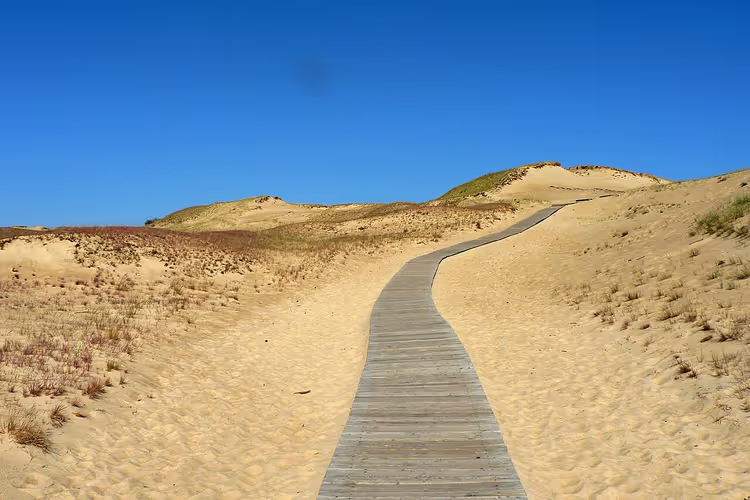
The Curonian Spit stretches for almost 100 kilometers along the Baltic coast. The Lithuanian side owns roughly half of it, the rest belongs to Kaliningrad Oblast (as of 09/2026, park administration). The dunes here are alive: the wind moves the sand, and from time to time it threatens roads and houses.
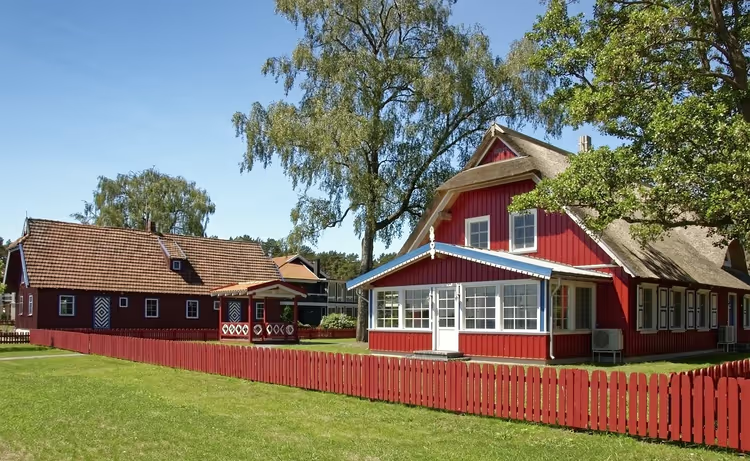
All four villages retain the look of fishing villages from past centuries. Wooden houses with carvings, gardens, greenery, and dunes right beyond the village edge. A bus runs between the villages, but the most convenient way to get around is by bicycle.
Where the spit got its name
The spit was named after the Curonians, a Baltic tribe that lived in these forests. In the early Middle Ages, Vikings arrived here, and later the lands passed to the Teutonic Order (as of 09/2026, official park reference).
The Order strictly protected the forest, so the sacred groves of the Curonians remained untouched for a long time. After the Order fell, trees began to be cut down almost everywhere.
The sand went on the offensive and swallowed more than a dozen fishing villages. Efforts to stop the migrating dunes began only in the 19th century and continue to this day (as of 09/2026, park administration website). That is why the forest on the spit was planted by hand, row after row.
 © Wojsyl · CC BY-SAPhoto: Wojsyl, CC BY-SA (http://creativecommons.org/licenses/by-sa/3.0/), Wikimedia Commons
What to see on the Lithuanian side
On the Russian part of the spit, in Kaliningrad Oblast, there is a coniferous forest with twisted trunks. It is called the "dancing" forest: the pines loop in zigzags, and scientists still haven't explained why. The forest is across the border, so it is not part of the Lithuanian route.
The beaches of Neringa are wide and well maintained. There is no litter or broken loungers here, but there are access ramps for people with reduced mobility. Some beaches hold the international Blue Flag certification.
The history of the region is covered by the Neringa History Museum in Nida and the ethnographic fisherman's homestead (as of 09/2026, Neringa museums). If you are staying for several days, base yourself in Nida or Juodkrantė: they have more hotels and restaurants. Instead of a classic hotel, you can rent a restored fisherman's cottage.
 © Aldis Dzenovskis · CC BY-SAPhoto: Aldis Dzenovskis, CC BY-SA (https://creativecommons.org/licenses/by-sa/3.0), Wikimedia Commons
In the evening, take a walk along the lagoon promenade. In summer, it smells of pine and smoked fish here, and the lagoon water is warmer than the open sea. Every village has bars and restaurants serving national cuisine.
Nida
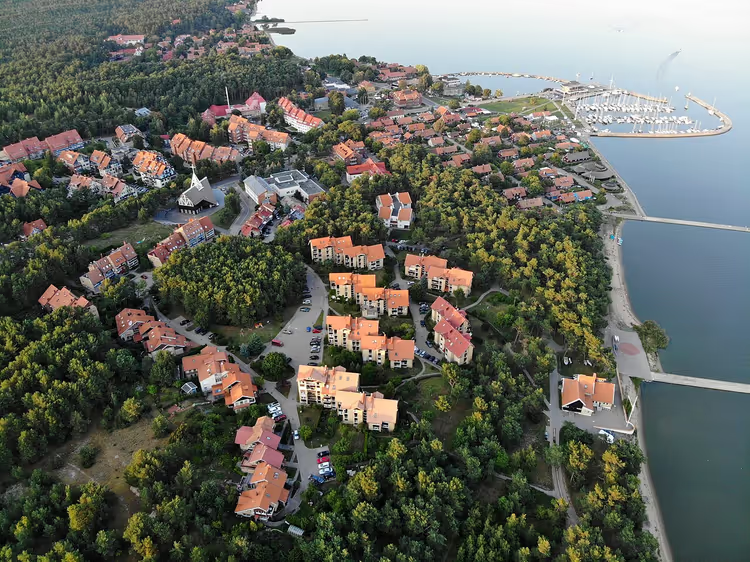
Nida is the largest village on the spit. In summer it draws the most visitors; in winter the village almost empties out. Nida has long attracted artists and writers.
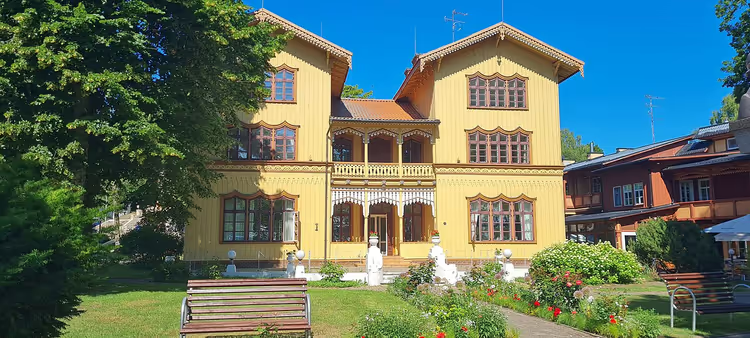
Thomas Mann spent three summers here and worked on the second part of his Joseph tetralogy, the novel "Young Joseph". The writer's house has become a museum: from May to September it is open daily from 10:00 to 18:00, and in the off-season from Tuesday to Saturday (as of 09/2026, verified on the official website).
The village's main attraction is the Parnidis Dune. It rises over 50 meters, and at the top stands a stone sundial (as of 09/2026, Curonian Spit).
Climb to the top: from there you can see both the sea and the lagoon. In places, the sand surface resembles a seabed, an unusual sight. The observation deck is open around the clock.
Nida has many bike rental points. Cycling among the pines and dunes is pleasant, but be prepared for wind. You can book a bike in advance; bike rental in Nida operates from May to September.
In good weather, gliders fly over the dunes. For water activities, there are yachts, kayaks, paddleboards, and windsurfing. The Baltic is known for amber, so stop by the local amber museum: it displays fossils with insects inside. The village has a shopping center, a market with fresh produce, and a fisherman's homestead with smoked fish (Pas Joną).
 © LinasD · CC BY-SAPhoto: LinasD, CC BY-SA (https://creativecommons.org/licenses/by-sa/4.0), Wikimedia Commons
Juodkrantė
Juodkrantė is the second-largest village on the spit. Near it lies the Hill of Witches (Raganų kalnas), a sacred pagan site.
In 1979, local craftsmen carved dozens of wooden sculptures here based on Lithuanian mythology (as of 09/2026, Hill of Witches website). Today it is an open-air gallery under the pines, a pleasant place for a walk.
The weathervane gallery tells the story of local weathervanes: their color, shape, and motifs are never chosen at random. At the entrance to the village, on a hill about a kilometer from the sea, stands the Juodkrantė lighthouse. The village is home to the country's only miniature museum, which hosts themed exhibitions in addition to its permanent collection (as of 09/2026, official museums website).
 © Derbrauni · CC BYPhoto: Derbrauni, CC BY (https://creativecommons.org/licenses/by/4.0), Wikimedia Commons
Preila and Pervalka
About half an hour's drive from Nida stand two more quiet villages: Preila and Pervalka. They were once settled by residents of villages that were buried by sand. Today, only a few hundred people live in each.
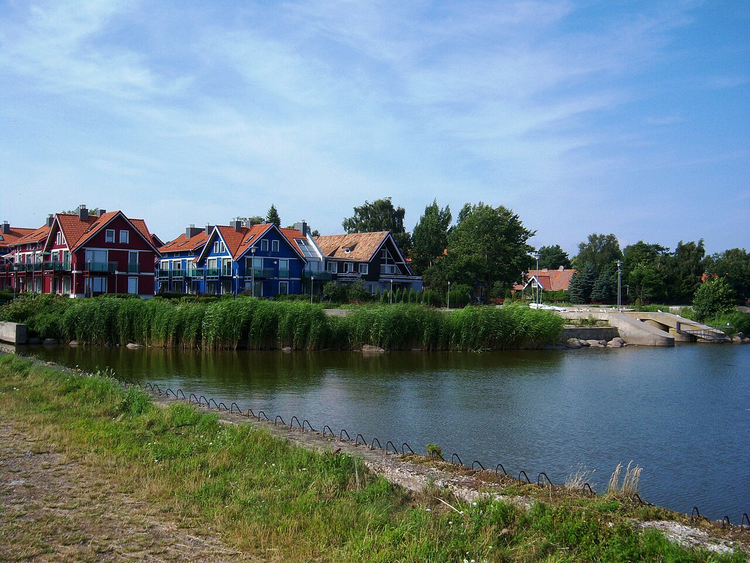 © Vilensija · CC BY-SAPhoto: Vilensija, CC BY-SA (https://creativecommons.org/licenses/by-sa/3.0), Wikimedia Commons
It has its own lighthouse and the very dunes that once swallowed villages. The choice of activities is more modest than in Nida, but you will find well-kept beaches, good fishing spots, walking and cycling paths, and forests full of mushrooms and berries.
The resort villages of the spit are not made for loud parties. For nightlife, people go to Palanga, about half an hour's drive from the spit. People come to Neringa to get away from the city and digital noise: the pine-scented air, the dunes, and the steady surf help relieve stress within a couple of days.
Tickets, ferry, and how to get there
The road to the spit starts with a ferry from Klaipėda to Smiltynė. The crossing takes only a few minutes, and it runs frequently, so you won't have to wait long. From Smiltynė to Nida, one long road runs along the spit, and it is easiest to travel by car or bicycle.
There is a local fee for driving into Neringa. It is collected at the checkpoint near Alksnynė; you can pay by card or cash, or in advance through the UNIPARK system (as of 09/2026, Neringa tourist office).
To explore the national park, you need a visitor ticket (as of 09/2026, park administration).
Book your accommodation in Neringa in advance: in summer there are almost no vacancies left. See hotels in Neringa on Trip.com.
Tours and tickets in Curonian Spit
Guided tours, skip-the-line tickets and activities — most offers can be cancelled free of charge.
See offers on GetYourGuideThe widget loads once you give your consent.
⁉️🤔 Frequently asked questions
Do I need a ticket just to walk along the spit?
Yes, the national park area requires a visitor ticket. A single entry costs €1, a monthly pass costs €5 (as of 09/2026, official national park ticket sales). You can buy it on site or in advance through the park administration. If you drive, there is a separate local fee for entering Neringa by car.
How many days do you need for the Lithuanian side of the spit?
Two to three days is enough to take your time through Nida and Juodkrantė. In one day you can realistically see only Nida and the Parnidis Dune, with no time left for Preila and Pervalka. With an overnight stay you can cover more.
Can you visit the spit by car?
Yes, the ferry from Klaipėda to Smiltynė carries cars. From there you drive along the only road running the length of the spit. Entering Neringa by car requires paying a local fee at the checkpoint near Alksnynė. Parking in the villages is paid.
Where should you stay on the Curonian Spit?
Nida and Juodkrantė are the most convenient: they have more hotels, guesthouses, and restaurants. Preila and Pervalka are quieter, but the choice of accommodation there is more limited.
When is the best time to visit the Curonian Spit?
From May to September the weather is warmest and all the cafés are open. In July and August the spit gets crowded, but the lagoon water warms up. In the off-season many places close, but the beaches and dunes remain accessible.
In short: what to book
If you have one day, go for Nida and the Parnidis Dune. If you have two to three days, add Juodkrantė with the Hill of Witches, and then the quiet Preila and Pervalka. For a relaxed stay in the pine forest, a couple of nights by the lagoon is enough.

A small editorial team writing guides for independent travel. We travel ourselves, but we haven’t been everywhere, so we check prices, opening hours and how to get there against official sources.