
















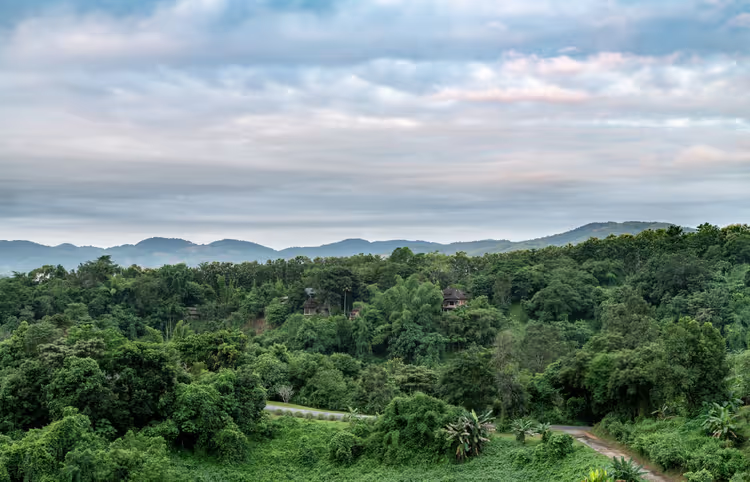
9 Places in Thailand worth leaving the beaches for
A conversation about Thailand usually starts with the beaches of Pattaya and Phuket. But the country is not limited to that. Palaces, mountain temples, and national parks are scattered across the entire territory, and many of them can be reached in a day from Bangkok or Chiang Mai.
We picked nine places that show Thailand from a different angle. These include the ruins of an ancient capital, royal residences, a snow-white temple, and waterfalls on the slopes of the country's highest mountain. Allow at least half a day for each place, and set aside a full day for the far northern spots.
If your route is short, start with Bangkok and Ayutthaya: it's easier to reach the other places from here. Then head north to Chiang Mai and Chiang Rai, where mountain monasteries and unusual temples stand nearby.
Ad: this article contains affiliate links, we earn a commission if you book through them, at no extra cost to you.
What to see in Thailand: the essentials
💡 In short:
- Keep the route in this order: Bangkok, Ayutthaya, Chiang Mai, Chiang Rai.
- Get tickets to the main temples for the morning, at opening time.
- Set aside a separate day and a driver for far-off places.
- Prices and opening hours: 09/2026, verified on the Grand Palace page.
Our picks
Place | Region | Why it's interesting | Tickets |
|---|---|---|---|
Ayutthaya Historical Park | Ayutthaya | ruins of the ancient capital | combined ticket for the complex |
Grand Palace | Bangkok | royal residence and the Emerald Buddha | paid ticket, strict dress code |
Wat Pho | Bangkok | reclining Buddha statue | paid ticket |
San Kamphaeng Hot Springs | Chiang Mai | geysers and mineral baths | paid entry |
White Temple | Chiang Rai | white walls and mirror mosaic | paid ticket |
Doi Inthanon National Park | Chiang Mai | the country's highest point and waterfalls | paid park entry |
Great Buddha | Ang Thong | huge gilded statue | free entry |
Sanctuary of Truth | Pattaya | carved teak temple without nails | paid ticket |
Wat Phra That Doi Suthep | Chiang Mai | golden stupa above the city | paid entry |
1. Ayutthaya Historical Park
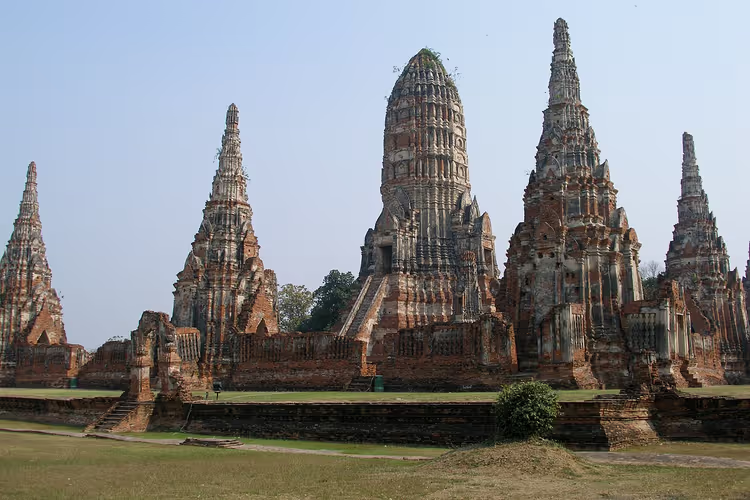
Ayutthaya was the capital of the kingdom of the same name for almost four centuries. King Ramathibodi I founded the city in 1350, and under him palaces, temples, and canals appeared here. In its best years, the city had three royal palaces, 375 temples, 29 forts, and 94 city gates, and the population reached one million (as of 09/2026, Wikipedia).
 © Vyacheslav Argenberg · CC BYPhoto: Vyacheslav Argenberg, CC BY (https://creativecommons.org/licenses/by/4.0), Wikimedia Commons
Today it is an open-air archaeological park. The ruins cover several square kilometers: brick stupas, palace foundations, headless Buddha statues. See Wat Phra Si Sanphet, Wat Mahathat with the famous Buddha head in tree roots, and Wat Ratchaburana.
Wat Phra Si Sanphet served as the royal temple, with three stupas holding the ashes of rulers. Nearby stands Wihan Phra Mongkhon Bophit with a large bronze statue.
- How to get there: from Bangkok by train or minivan, about an hour and a half.
- Cost: a combined ticket for six main temples costs 220 baht, individual temples charge 20-50 baht (as of 09/2026, Wikipedia).
- Who it's for: those who want to see the country's history before the resort era.
- The catch: the ruins are out in the open, and there is little shade at midday.
Plan half a day for Ayutthaya, or better yet a full day with a guide. Getting between temples is easier by bicycle or tuk-tuk. You can book an Ayutthaya tour on GetYourGuide in advance, so you don't waste time on the spot.
2. Grand Palace
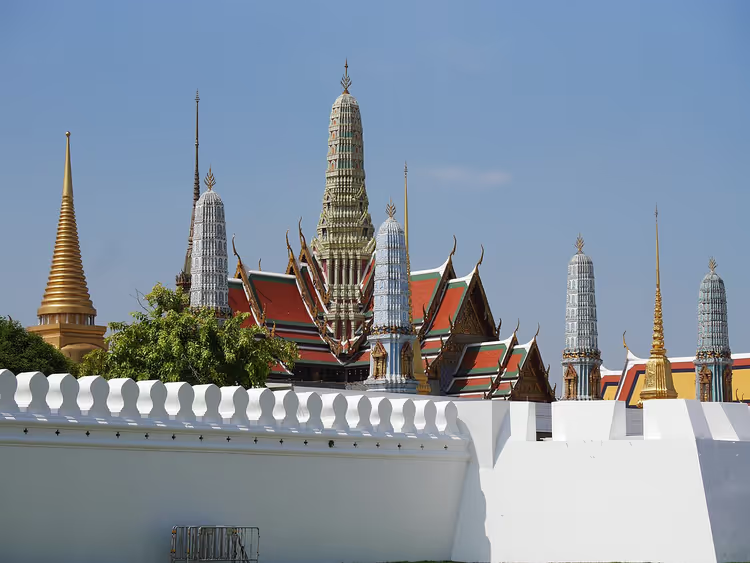
The Grand Palace in Bangkok was built in 1782 for King Rama I. The official Thai name is long and hard to pronounce, so in everyday use it is simply called the Grand Palace. The residence replicates the layout of the palace in Ayutthaya.
The Temple of the Emerald Buddha operates on the grounds. The Chakri Throne Hall, ceremonial halls, and the Siwalai Gardens also stand here. Some buildings are still used by the royal family and government institutions.
 © กสิณธร ราชโอรส · CC BY-SAPhoto: กสิณธร ราชโอรส, CC BY-SA (https://creativecommons.org/licenses/by-sa/4.0), Wikimedia Commons
The dress code is strict: you will not be allowed in wearing shorts, short skirts, or sleeveless tops. The ticket includes the Temple of the Emerald Buddha and the Queen Sirikit Museum of Textiles (as of 09/2026, Wikipedia). A wrap and a long skirt can be rented at the entrance.
- Location: central Bangkok, near Tha Chang pier and Sanam Chai metro station.
- Cost: 500 baht for foreigners, children below a certain height enter free (as of 09/2026, Wikipedia).
- The catch: strict dress code and large groups in high season.
Come at opening time: by midday the ticket line stretches along the wall. Get Grand Palace tickets on Tiqets in advance instead of standing in line.
3. Wat Pho
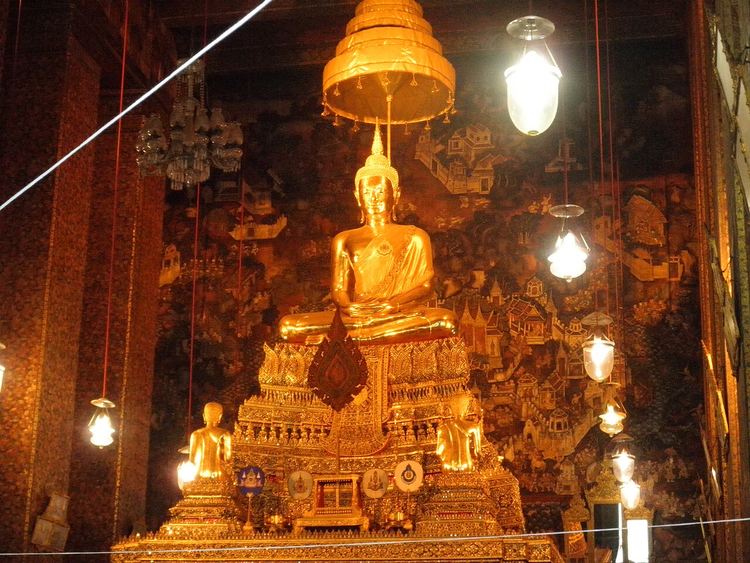
Wat Pho is one of the oldest and largest temples in Bangkok. King Rama I rebuilt it in 1782 and moved part of the royal relics here. The temple is known for its reclining Buddha statue, 46 meters long and 15 meters high (as of 09/2026, official Wat Pho website).
 © ekeidar · CC BY-SAPhoto: ekeidar, CC BY-SA (https://creativecommons.org/licenses/by-sa/3.0), Wikimedia Commons
The statue's feet are inlaid with 108 mother-of-pearl ornaments. The grounds hold 95 stupas and several hundred Buddha images. A traditional Thai massage school also operates here and is considered the birthplace of this practice.
- Getting there: next to the Grand Palace, a ten-minute walk or one metro stop to Sanam Chai.
- Cost: paid entry, around 300 baht for adults (as of 09/2026, Wat Pho temple website).
- Who it's for: those who want to see the country's largest reclining Buddha statue.
- The catch: the main hall is small, and at peak hours it gets crowded inside.
An hour is enough to see it, but there is a massage workshop nearby where you can stay longer.
4. San Kamphaeng hot springs
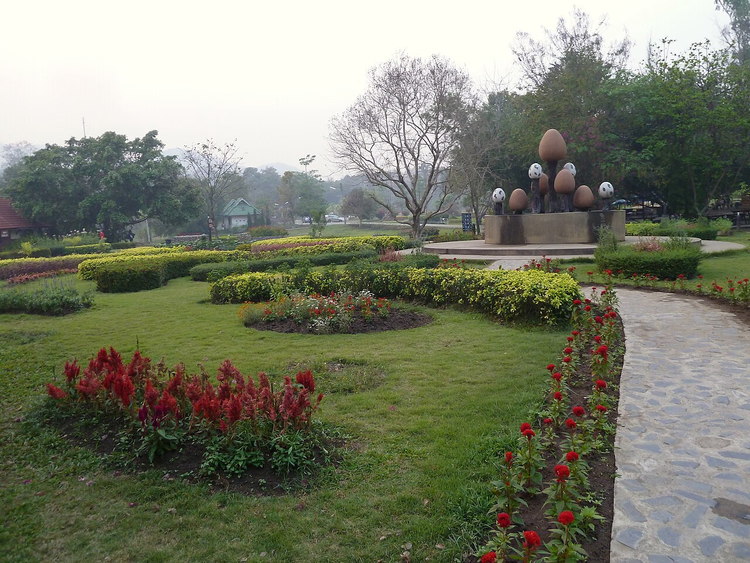
Thirty-six kilometers east of Chiang Mai lies San Kamphaeng Hot Springs park. The springs have been known for almost forty years, and both tourists and locals come here. The park covers sixteen hectares and is open daily.
 © Deror Avi · CC BY-SAPhoto: Deror Avi, CC BY-SA (https://creativecommons.org/licenses/by-sa/3.0), Wikimedia Commons
The main attraction is a geyser that shoots a jet of hot water upward. The temperature at the source is around 100 °C, so the bathing pools are fed with already cooled water (as of 09/2026, Wikipedia). You can soak in a shared pool or in separate baths for men and women.
- Getting there: about an hour by car or songthaew from central Chiang Mai.
- Cost: entry for foreigners around 100 baht, bathing pools cost extra (as of 09/2026, Wikipedia).
- Who it's for: those who want a break from temples and city bustle.
- The catch: the spring water is too hot for swimming, so you can only bathe in the cooled pools.
Don't forget a towel and swimsuit: renting them on site costs more.
5. White Temple
The White Temple in Chiang Rai, also known as Wat Rong Khun, was built by artist Chalermchai Kositpipat. Work began in 1997 and is still unfinished, so part of the site is covered in scaffolding. The temple is entirely white and decorated with mirror mosaics that catch the sunlight.
A bridge with the hands of sinners leads to the main entrance: by design, it represents the path out of earthly life. The walls inside were painted by the artist himself, blending Buddhist themes with images from modern culture. Allow at least an hour for your visit.
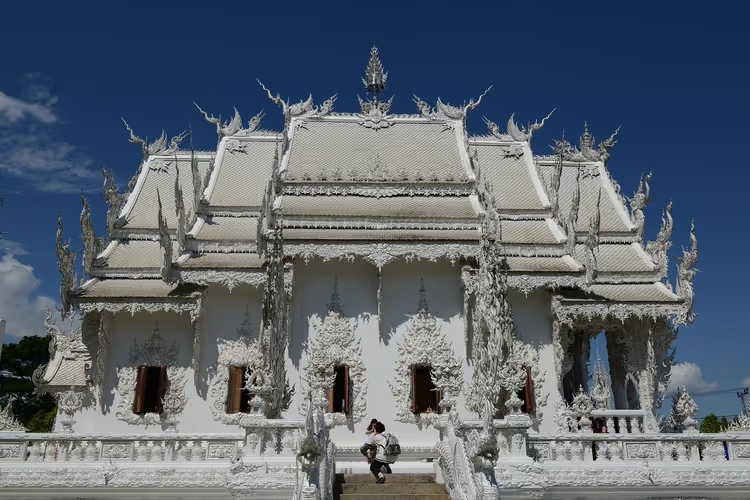
Tickets for foreigners have cost 200 baht since January 2026 (as of 09/2026, Wikipedia). The temple is open daily from morning to evening.
- Getting there: about thirteen kilometers from Chiang Rai, roughly twenty minutes by car or songthaew.
- Cost: 200 baht, Thai nationals enter free (as of 09/2026, Wikipedia).
- The catch: some of the structures are still covered in scaffolding, so the overall view looks incomplete.
Arrive at opening time: by midday, tour groups crowd the bridge.
6. Doi Inthanon national park
The summit of Doi Inthanon rises to 2,565 meters above sea level. It is the highest point in Thailand, and the park around it covers more than 400 square kilometers (as of 09/2026, Thailand Department of National Parks).
The slopes are covered in humid mountain forest, managed as a nature reserve. Near the very top stand two royal pagodas, built to mark the king's and queen's anniversaries. The Kew Mae Pan nature trail runs nearby, with views over the ridge.
Other stops on the route include the Wachirathan and Siriphum waterfalls, as well as Karen and Hmong villages. Seeing the park takes a full day, and it is best to get around by car or with a driver.
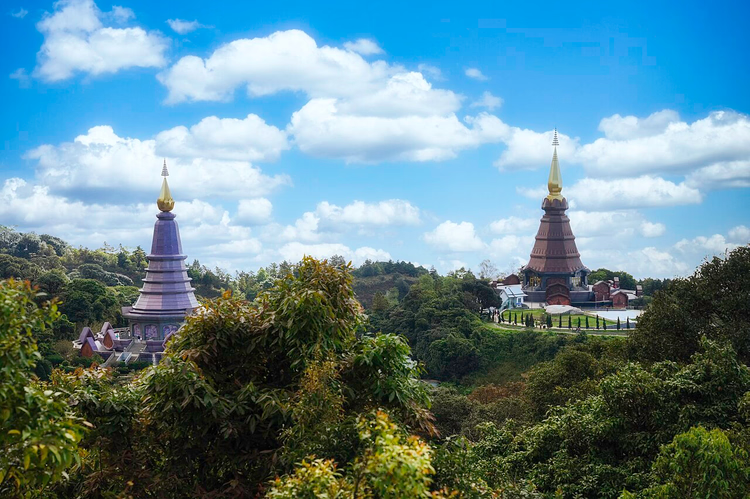 © Chaiyuth boy · CC BY-SAPhoto: Chaiyuth boy, CC BY-SA (https://creativecommons.org/licenses/by-sa/4.0), Wikimedia Commons
- Getting there: about an hour and a half by car from Chiang Mai, heading southwest on the highway.
- Cost: entry for foreign adults is 300 baht plus a vehicle fee (as of 09/2026, official Department of National Parks website).
- Who it's for: nature lovers who are fine with cool temperatures and mountain air.
- The catch: it is always colder at the summit, and in winter it can drop to around freezing, so bring warm clothes.
Fill up on fuel and take water with you in advance: there are no long stretches with shops along the route.
7. The Great Buddha
In Ang Thong province, at Wat Muang temple, stands the Great Buddha of Thailand. The statue is 92 meters tall and 63 meters wide, the second tallest in Southeast Asia (as of 09/2026, Wikipedia).
The statue took eighteen years to build from reinforced concrete and was then covered in gold paint. Besides the statue, the grounds include a temple, a park with figures of sinners, and lotus ponds.
 © Chainwit. · CC BYPhoto: Chainwit., CC BY (https://creativecommons.org/licenses/by/4.0), Wikimedia Commons
- Getting there: about two hours by car from Bangkok, around 110 km on the highway.
- Cost: entry to the grounds is free (as of 09/2026, Wikipedia).
- The catch: there is little shade, and getting here without a car is difficult.
Walk around the park with the figures in a loop and relax by the lotus ponds.
8. The Sanctuary of Truth
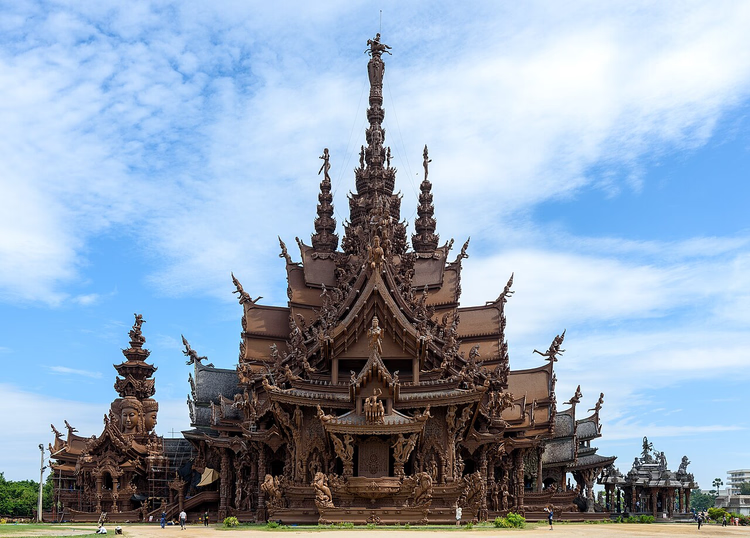
The Sanctuary of Truth stands on the shore in northern Pattaya. Construction began in 1981 and is still ongoing. The frame, about 105 meters tall, is made of teak, and the structure contains no nails (as of 09/2026, official Sanctuary of Truth website).
The walls and columns are covered with carved scenes from Indian and Thai mythology, worked on by dozens of craftsmen. Inside, you can climb the stairs and examine the carvings up close. An hour is enough for a visit.
- Location: Naklua district, about twenty minutes from central Pattaya by songthaew.
- Cost: entry is paid, around 500 baht (as of 09/2026, Sanctuary of Truth museum website).
- The catch: construction is still underway inside, so there is noise and scaffolding.
Come closer to sunset: that is when the wood is lit up and the carvings stand out more clearly.
9. Wat Phra That Doi Suthep
The monastery sits on Doi Suthep mountain at 1,073 meters above Chiang Mai. The viewing platform offers a panorama of the city and the valley. For Thais it is a sacred place, but it is also interesting for tourists.
The exact founding history is unknown: it is believed that the monastery appeared in the fourteenth century. According to legend, the Buddha relic was brought on a white elephant and left where the animal stopped. The road to the top was built only in 1935 (as of 09/2026, Wikipedia).
The temple is reached by 309 steps, which you can climb on foot, or by a small funicular. Inside there is a gilded stupa and numerous Buddha statues.
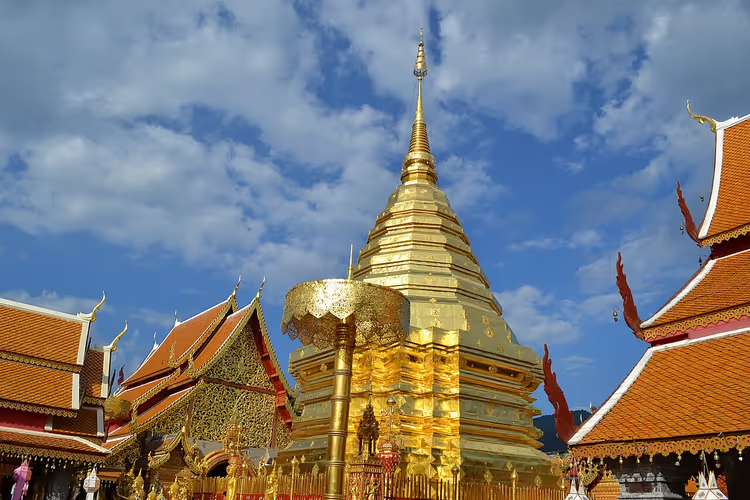 © ผู้สร้างสรรค์ผลงาน/ส่งข้อมูลเก็บในคลังข้อมูลเสรีวิกิมีเดียคอมมอนส์ - เทวประภาส มากคล้าย · CC BYPhoto: ผู้สร้างสรรค์ผลงาน/ส่งข้อมูลเก็บในคลังข้อมูลเสรีวิกิมีเดียคอมมอนส์ - เทวประภาส มากคล้าย, CC BY (https://creativecommons.org/licenses/by/3.0), Wikimedia Commons
- How to get there: about half an hour by red songthaew from Tha Phae Gate in Chiang Mai.
- Cost: entrance fee about 30 baht (as of 09/2026, Wikipedia).
- Who it's for: anyone who wants to see the city from above and the main monastery of the northern school.
- The catch: the climb up the long staircase is not for everyone, and there are many souvenir sellers at the entrance.
Go up in the cool morning or around sunset: at midday the staircase is hot.
If you want to combine the visit with a ready-made city itinerary, check out the options below. Putting together a program in advance is easier than looking for a guide on the spot.
Tours and tickets in Bangkok
Guided tours, skip-the-line tickets and activities — most offers can be cancelled free of charge.
See offers on GetYourGuideThe widget loads once you give your consent.
⁉️🤔 Frequently asked questions
How many days do you need for Thailand's main attractions?
Two days are enough for the central part of the country: the first for the Grand Palace and Wat Pho, the second for Ayutthaya. For the north, add another two or three days for Doi Inthanon and Doi Suthep. That way you can see everything without rushing and won't spend your whole vacation on the road.
What to see in Bangkok if you only have one day?
Start with the Grand Palace and the Temple of the Emerald Buddha, then walk over to Wat Pho with the reclining Buddha statue. The two sites are next to each other, about ten minutes on foot. In the evening, head down to the river and watch the sunset at Tha Chang pier. That way you'll see the city's two main symbols in one day.
When is the best time to visit temples and national parks?
In the north, the most comfortable time is from November to February: it's not so hot during the day, and it can be cool at the top of Doi Inthanon. From March to May the air is dry and dusty, but there's less rain. From June to October there are short downpours, nature turns green, but some trails may be closed.
Can you combine Ayutthaya and the Grand Palace in one day?
Technically you can, but it will be exhausting. The distance is about eighty kilometers one way, and the drive takes about an hour and a half. If you do both, leave the morning for the Grand Palace, then head to Ayutthaya after lunch and walk around until the park closes. If we were you, we'd split them into different days.
What clothing do you need for temples and monasteries?
Shoulders and knees must be covered, so bring a shirt with sleeves and long pants or a skirt. Shoes that are easy to take off are better, since many halls are entered barefoot. At the Grand Palace and Wat Pho they lend you cover-ups at the entrance, but your own clothing is still more reliable. Remove hats when entering.
In short: what's worth booking
If you only have one day in Bangkok, go for the Grand Palace and Wat Pho. If you love history, add Ayutthaya. If you're heading north, set aside separate days for Doi Inthanon, the White Temple, and Doi Suthep. For a relaxing evening, San Kamphaeng Hot Springs near Chiang Mai or the Sanctuary of Truth in Pattaya are good options.
It's easier to choose accommodation in advance: hotels in Bangkok on Trip.com will help you stay near the main temples and the pier, where boats and trains depart to the other points on the route.

A small editorial team writing guides for independent travel. We travel ourselves, but we haven’t been everywhere, so we check prices, opening hours and how to get there against official sources.