








Dalmatia road trip by car: 10 days from Zadar to Plitvice
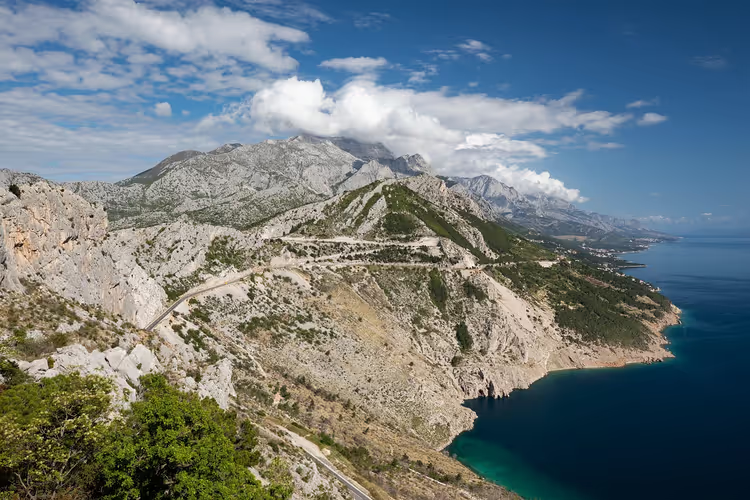
Ten days in Croatia are easiest to spend behind the wheel. Dalmatia gives you a ready-made set for this: old towns, waterfalls, islands, and mountains rising straight from the sea. The route below is built around Zadar, which is convenient to fly into and easy to return to at the end. You will get a day-by-day plan, current ticket prices, and tips on what to book from home. Ten days is comfortable for covering Dalmatia specifically, not the whole country.
Ad: this article contains affiliate links, we earn a commission if you book through them, at no extra cost to you.
Dalmatia route in 10 days at a glance
💡 In short:
- Stick to three or four bases: Zadar, Split, the Makarska Riviera, and Plitvice. This way you spend less time behind the wheel.
- Book park tickets and boat excursions online in advance. In summer, slots at Plitvice and Biokovo sell out.
- Park prices and opening hours: 09/2026, verified on the official websites of Plitvice and Krka.
The route logic is simple. For the first few days you stay in Zadar and make trips into nature. Then you head down through the Krka waterfalls to Split. After that comes the Makarska Riviera with Mount Biokovo. The finale is Plitvice Lakes in the north, and from there you return to Zadar. The drive between points is short, rarely more than three hours.
Day 0-1: Zadar and first sunsets
Fly into Zadar and check in right away. There is a large paid parking lot behind the city park, near the old town (open on map). The old town itself is pedestrian-only, you cannot drive inside.
 © Michael Gwyther-Jones · CC BYPhoto: Michael Gwyther-Jones, CC BY (https://creativecommons.org/licenses/by/2.0), Wikimedia Commons
The old town can be covered in half a day. Along the way, note People's Square (Narodni trg), the Roman Forum, and the Church of St. Donatus with its rare round shape. Climb the bell tower of the Cathedral of St. Anastasia for a view over the rooftops. Stop by the Square of Five Wells: it was built to keep a water reserve during sieges. The quietest spot is Petar Zoranic Square, where there are few tourists.
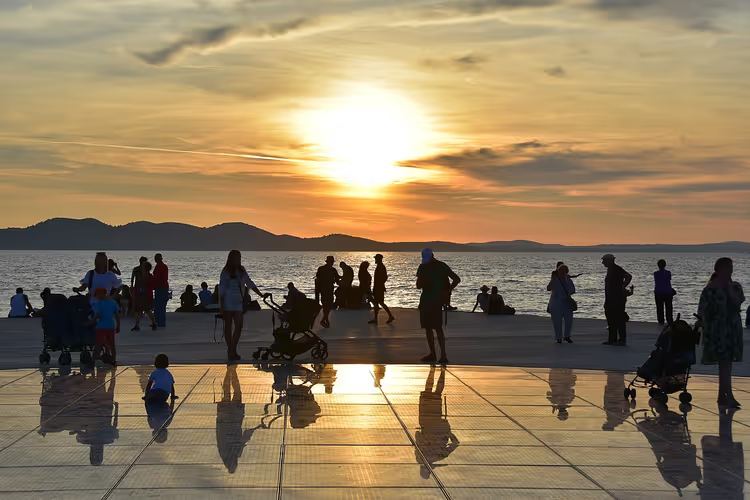
Leave the evening for the Riva waterfront. This is where the Sea Organ (Morske orgulje) stands: water pushes air through pipes, producing a living hum. Nearby, the solar-powered light installation "Greeting to the Sun" turns on a colorful display in the evening. Walk a bit farther to the statue of Spiro Brusina. For coffee or a cocktail before sunset, stop by Ledana Lounge at the edge of the park.
For dinner in Zadar there are reliable addresses, all within walking distance of the old town. For good coffee away from the crowds, go to Caffee Bar Doma in a quiet alley. A cocktail to start the evening is worth having at Muro Bar by the waterfront. For a more serious dinner with creative cuisine, book a table in advance at Corte Restaurant.
The catch: in high season, the waterfront near the Sea Organ is packed by sunset. Come an hour before sunset or find a spot slightly off to the side.
Day 2: Paklenica and the Kornati by boat
Give the morning to Paklenica National Park. It is known for deep canyons and sheer walls up to 400 meters in the Velika Paklenica gorge. On the way there, take the panoramic coastal road E65 between Starigrad-Paklenica and Karlobag. Those who like hiking take the 15-kilometer trail; everyone else will be fine with a short walk to the Parizevacka Glavica viewpoint near the "Winnetou canyon."
 © Ajnudelim · CC BY-SAPhoto: Ajnudelim, CC BY-SA (https://creativecommons.org/licenses/by-sa/4.0), Wikimedia Commons
After lunch, relax at the beach or by the pool. A full restaurant lunch is not necessary here: plan for a light snack with coffee, as half of the visitors do.
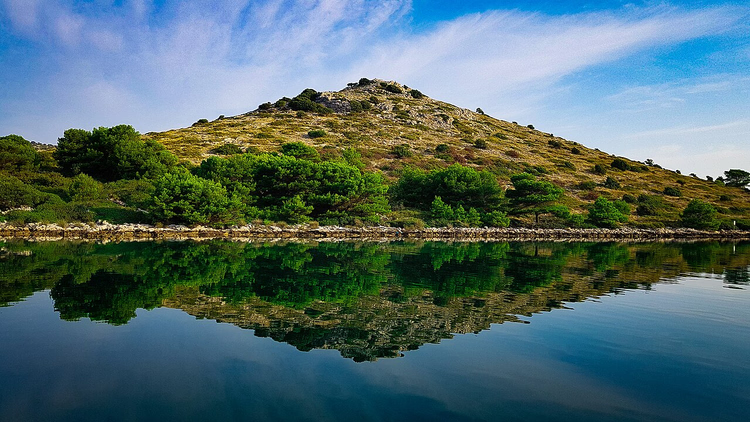
A separate day is needed for a boat excursion to the Kornati Islands. Boats leave from the Zadar waterfront, and a typical tour lasts about 4 hours. You swim and snorkel in a clear lagoon, and visit the islands of Ugljan and Osljak. From on board you get a view of the entire Zadar archipelago. Take this sailing tour to the Kornati on GetYourGuide.
The catch: on site they charge a separate docking fee of 10 € per person in cash, and there is no toilet on board. Bring small bills and water with you.
Day 3: Krka waterfalls and transfer to Split
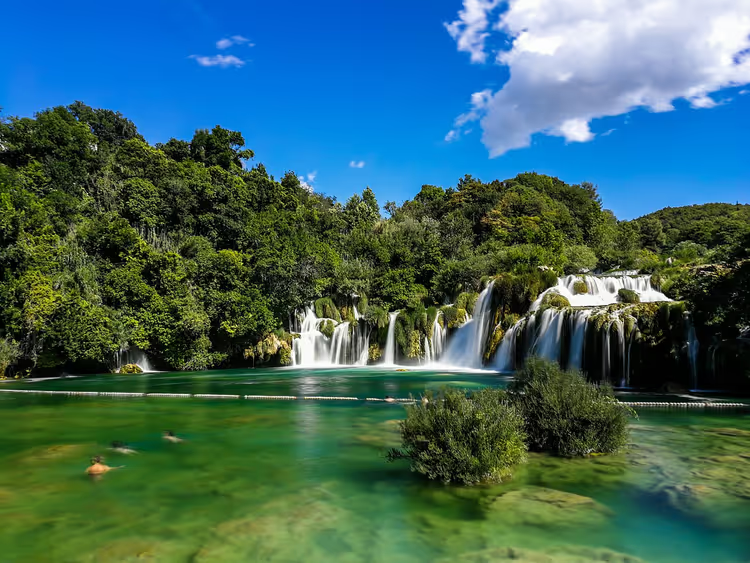
From Zadar to Krka National Park is about an hour's drive. Enter through Skradin or Lozovac: from both you reach the main waterfall, Skradinski Buk. The park is famous for its cascades along the Krka River, and the water here is turquoise because of the limestone. A ticket in peak season costs 40 €, in the off-season 20 €, in winter 7 € (as of 09/2026, official park website). Buy it online in advance; in summer, entry is time-slotted. From the Skradin entrance a boat goes to the waterfall, from Lozovac a bus goes down, both options are included in the ticket price.
 © ZovkoM · CC BY-SAPhoto: ZovkoM, CC BY-SA (https://creativecommons.org/licenses/by-sa/4.0), Wikimedia Commons
Two routes lead to Skradinski Buk. The long loop stretches 12 km with 150 meters of elevation gain, about 3.5 hours, starting at the Skradin entrance. The short option takes 2.5 km and 45 minutes right at the waterfall. If you have time left, drive to Roški Slap and Manojlovac waterfalls: the latter has a short 2 km walk from the parking lot. After that, head toward Split; the drive from Krka takes about an hour and a half.
The catch: swimming under Skradinski Buk itself has long been prohibited. Plan for a walk and photos, not a swim.
Day 4: Split and Diocletian's palace
Many call Split the most beautiful city in Croatia. If your accommodation is not in the center, park on the waterfront or just outside the city: the old town is pedestrian-only. The heart of the city remains Diocletian's Palace, the former residence of the Roman emperor. Inside, you will find the Peristyle courtyard, the Podrumi basements, the Cathedral of Saint Domnius, and the domed Vestibule hall with strong acoustics.
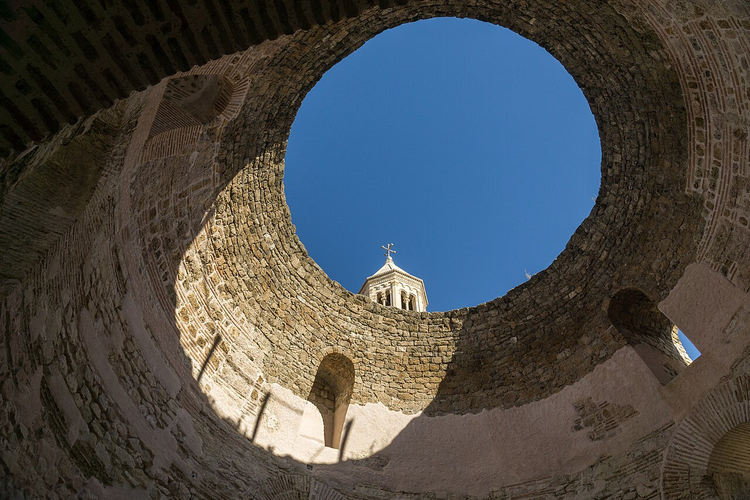 © Sumitsurai · CC BY-SAPhoto: Sumitsurai, CC BY-SA (https://creativecommons.org/licenses/by-sa/4.0), Wikimedia Commons
Stroll through Pjaca and Voćni trg squares, find the huge statue of Gregory of Nin: touching his big toe is said to bring good luck. Climb the cathedral bell tower for a 360-degree view. For the best panorama, walk to the Belvedere viewpoint in Marjan Forest Park, about 15 minutes. End the day at Kasjuni beach: you can walk down to it from Belvedere in 3-4 km or drive. It is convenient to take a walking tour of Split; a guide opens up the palace better than a map. Organized tours start at 10:30, 12:00, 13:30, and 16:30 and last about an hour.
You should also set aside time for food in Split; there are plenty of options for any budget. Tucked away from the crowds is MOKOSH restoran with a garden and a pleasant price-to-quality ratio. For fish and grilled octopus at fair prices, go to Downtown Grill. Stylish cocktails in the evenings, and with DJs on weekends, are served at Fabrique bar near the old town.
The catch: parking near Marjan Forest Park is almost nonexistent; in summer it is a nerve-wracking hunt for a spot. Plan to reach the viewpoint on foot.
Day 5: Blue cave and Vis island
From Split, it is worth getting out to sea for a full day. A speedboat heads to the Blue Cave on Biševo island, where the water glows blue. Along the way, stops are made for swimming and snorkeling: Stiniva bay, Vis and Budikovac islands, and the finale is usually the old town of Hvar. Lunch and swimming are included in most tour programs. Book a Blue Cave and islands tour from Split in advance: spots sell out.
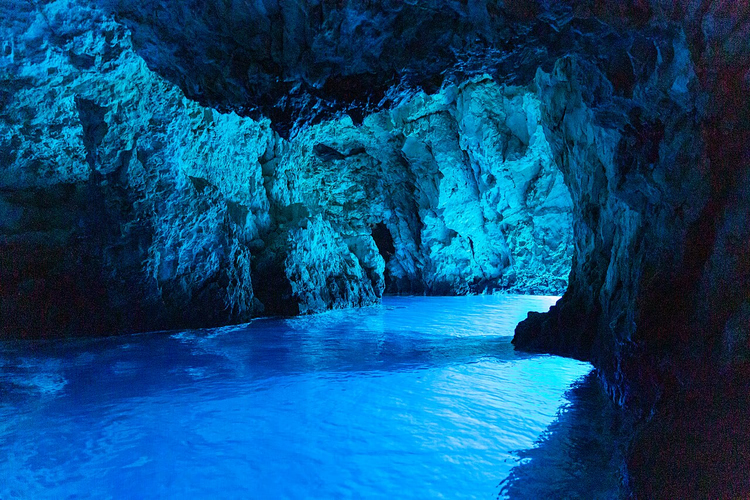 © dronepicr · CC BYPhoto: dronepicr, CC BY (https://creativecommons.org/licenses/by/2.0), Wikimedia Commons
If the southern wind is strong, the cave tour is canceled. Check the wind forecast the day before. In case of cancellation, keep a backup option: a sailing trip to the Pakleni Islands (Pakleni otoci) right from Hvar. In the evening, return to Split and get ready for the move to the Makarska Riviera.
The catch: when the sea is rough, entry to the Blue Cave itself is closed, and you will only see the outer stops. Flexible dates help here.
Days 6-7: Makarska riviera and Biokovo mountain
The Split-Makarska drive takes about an hour via the inland road. Along the way you can stop in Omiš: walk through the old town and hike up to Tvrđava Starigrad-Fortica fortress in 40 minutes for a view of the Cetina canyon. For adrenaline lovers, Omiš offers rafting on the Cetina: it's convenient to book rafting on the Cetina River from Omiš.
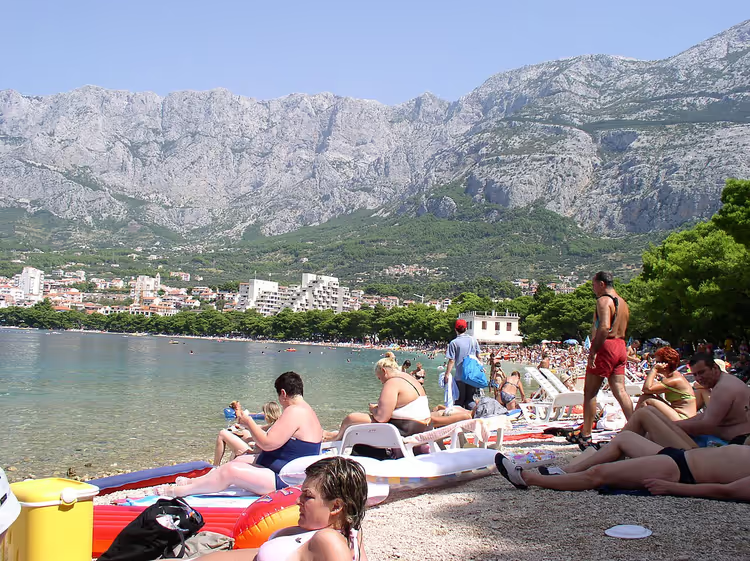 © a friend of mine, agreed on placing the photo in wikipedia under wiki license · CC BY-SAPhoto: a friend of mine, agreed on placing the photo in wikipedia under wiki license, CC BY-SA (http://creativecommons.org/licenses/by-sa/3.0/), Wikimedia Commons
On the riviera, base yourself near Brela. Walk from your hotel to the Punta Rata headland and the Brela rock: this is the most beautiful beach and the symbol of Makarska, a 25-40 minute walk. In Makarska itself, stroll along the waterfront and climb up to the statue of Saint Peter for a view of the city and mountains. Through the Osejava forest park there's a pleasant trail along the sea to the Nugal viewpoint and the wild beach of the same name. On your way back toward the sea, stop by Plaza Cvitacka beach and have a coffee at the Panorama restaurant for a view of the coastline. For those who love heights, Makarska offers parasailing with flights at altitudes from 100 to 700 meters, with the last takeoff around 3:00 PM.
Dedicate the second day on the riviera to Biokovo Mountain. Tickets are sold online only, with a date and time slot. Entry opens every full hour, and only for 20 cars, so arrive early (as of 09/2026, official Biokovo Park website). Entry costs 15 € per person in high season and 10 € in the off-season; there is no separate charge for the car.
At the top, the Biokovo Skywalk awaits you, a glass platform with a view of the coast, about 30 minutes from the park entrance. Even higher stands the Sveti Jure peak with a panorama of all of Biokovo and the sea. The road is mostly single-lane, and passing oncoming traffic sometimes requires backing up.
The catch: the climb to the Skywalk is the hardest part; after that the road gets easier. A novice driver will have to stay sharp here, but the view is worth it.
Days 8-9: Trogir and Plitvice lakes
The Makarska-Plitvice drive takes about 3 hours. Along the way, stop in Trogir: climb the bell tower of the Cathedral of St. Lawrence and wander through the narrow streets. The old town looks beautiful from the opposite bank. You can take a half-day tour to Trogir from Split if you don't want to drive yourself.
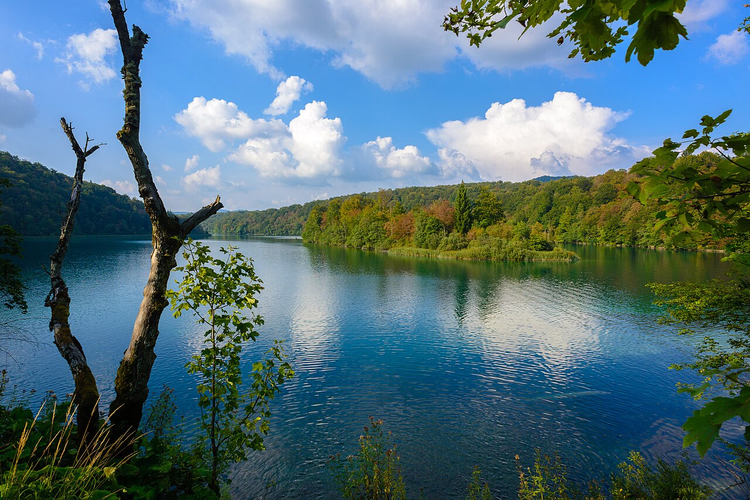 © Nick Savchenko from Kiev, Ukraine · CC BY-SAPhoto: Nick Savchenko from Kiev, Ukraine, CC BY-SA (https://creativecommons.org/licenses/by-sa/2.0), Wikimedia Commons
The finale of the route is Plitvice Lakes. A ticket in high season (June 1-September 30) costs 40 €, after 4:00 PM it's cheaper, 25 €; in the off-season it's 23 €, and in winter 10 € (as of 09/2026, official website). The price includes the boat and the panoramic train. To cover the entire park, plan for a 9 km route taking 5-6 hours. Enter through entrance 2, take the boat across Lake Kozjak, and follow the boardwalks up to the upper lakes, then descend to the lower lakes with the large waterfall. There's a noticeable elevation difference between the upper and lower lakes, so wear comfortable shoes. The boardwalks are narrow in places, and at peak hours there's a continuous stream of people, so extra time is not wasted here.
Tip: arrive right at opening time, before the tour buses show up. Tickets are limited and often sell out, so buy them online in advance. If you're traveling in September or October, put Plitvice at the beginning of your trip: the north is colder and rainier. At the end, return to Zadar; the drive takes about 2 hours.
The catch: in summer, by midday there's a dense line of tour groups on the boardwalks. Only an early entry saves you from the crowds.
How much a road trip through Croatia costs
Croatia has become noticeably more expensive in recent years and has caught up with EU prices. In restaurants, supermarkets, and at gas stations you pay roughly the same as in Germany. At the same time, the country remains slightly more affordable than Italy, Spain, and France. Below we've put together an estimated budget for two people for 10 days, so you can gauge expenses before the trip.
Item | For two | Per person |
|---|---|---|
Round trip travel | ~250 € | ~125 € |
Accommodation, 10 nights | ~1,300 € | ~650 € |
Fuel on site | ~100 € | ~50 € |
Tours, entry tickets, food | ~900 € | ~450 € |
Estimated total | ~2,550 € | ~1,275 € |
The amounts are approximate and depend on the season, accommodation class, and number of tours. In high season, book accommodation in advance: this way you avoid inflated prices and weak hotels. In the off-season, you can also look for a room spontaneously.
How to get to Dalmatia
There are several options, depending on where you live. By car, the drive from Munich to Zadar takes about 8 hours. By plane, it's convenient to fly into Zadar or Split airports. You can compare flights on a flight search.
Booking your car, tours, and park tickets early saves time and money on the ground. This is especially true for Plitvice, where the number of tickets is limited. Take care of these tasks calmly from home, and leave your vacation for experiences.
Car rental and roads in Croatia
Roads in Croatia are good, and highways are tolled. On highways the speed limit is 130 km/h, outside built-up areas 90-110, and in cities 50 (according to a review of toll roads in Croatia). There are fixed speed cameras, so watch your speed.
An economy or compact car is quite sufficient. There are parking lots at all major attractions, but city centers can be tight. It's convenient to compare prices from different rental companies through a car rental service: flexible rates let you cancel your booking in advance.
Important: to pick up the car you need a real credit card in the main driver's name. Debit cards are often not accepted. Check this before your flight so you don't end up without a car at the airport.
When to go, money, and connectivity
The best time to visit Dalmatia is in May, June, and September: 20-30°C and very little rain. April and October also work, but with weather caveats. July and August are best avoided: cities are too hot for walking, above 30°C, and there are a lot of tourists.
The country uses the euro: Croatia switched to it on January 1, 2023 (according to the Council of the EU). The official language is Croatian. Younger people usually speak decent English, while with the older generation you may sometimes get further faster in German.
Mobile service for EU subscribers works on your home plan through EU roaming, with calls and data included at no extra charge. In rural areas coverage is spotty in places, just like in Germany. EU residents don't need a separate eSIM for this trip.
Tours and tickets
Guided tours, skip-the-line tickets and activities — most offers can be cancelled free of charge.
See offers on GetYourGuideThe widget loads once you give your consent.
⁉️🤔 Frequently asked questions
How many days do you need for Croatia by car?
Dalmatia is doable in 10 days. That's enough to see Zadar, Krka waterfalls, Split, the islands, the Makarska Riviera with Biokovo, and Plitvice Lakes. You can't cover the whole country in that time, so it's better to focus the route on one region.
Do you need to book Plitvice and Krka tickets in advance?
Yes, especially in summer. At Plitvice the number of tickets is limited, entry is timed, and slots sell out. At Krka and Biokovo, entry is also by timed slots in summer. Buy tickets on the parks' official websites a few days before your visit.
When is the best time to go to Dalmatia?
May, June, and September are ideal: warm, 20-30°C, and little rain.
Is an economy car enough for Dalmatia's roads?
Yes, and it's often even more convenient. On the narrow streets of old towns and the single-lane road to Biokovo, a small car gets through more easily. A compact is cheaper to rent and on fuel. An SUV is overkill for this route.
Do you need cash in Croatia?
Yes, as a backup. In larger cities cards are accepted, but on Hvar, in Dubrovnik, and in the countryside people often ask for cash. Keep a small reserve of euros for mooring fees, parking, and small cafes where the terminal doesn't work.
In short: what's worth booking
The route is built around four bases and short drives. Book three things from home in advance: the car, park tickets, and boat excursions. This removes the main risks: sold-out slots at Plitvice and Biokovo, expensive accommodation in season, and a canceled trip to the Blue Cave due to wind.
- If you're going in July-August: take early slots for Plitvice and Biokovo and keep flexible dates for the sea.
- If you want less time behind the wheel: base yourself in Zadar, Split, and on the Makarska Riviera.
- If you like active travel: plan for rafting in Omiš and sailing tours to the islands.
The easiest way to put the trip together in advance: compare cars and find flights, and book excursions and park tickets online before you fly.

A small editorial team writing guides for independent travel. We travel ourselves, but we haven’t been everywhere, so we check prices, opening hours and how to get there against official sources.