










Plitvice Lakes and Krka in two days: routes, tickets and prices
Two of Croatia's national parks can realistically be done in two days from Split. Plitvice Lakes lie inland, while Krka National Park starts about an hour's drive from the city.
Croatia's oldest national park brings together sixteen lakes connected by waterfalls and cave systems. An adult ticket in high season costs €40, and after 4:00 PM the same entry drops to €25 (2026 price list, official park website). Below are routes through both reserves, prices, opening hours, and practical details that can easily ruin a trip.
Both parks are easier to visit by car. A good road leads from Split to Krka, while Plitvice Lakes require a nearly three-hour drive on a toll highway. In mid-October the weather is unpredictable, so keep your plan flexible: Plitvice first, then Krka.
Accommodation in Split and a rental car solve almost everything. Parking at entrances 1 and 2 costs €1.50-2.00 per hour depending on the season (2026 price list, park rates).
Ad: this article contains affiliate links, we earn a commission if you book through them, at no extra cost to you.
What to know before you go
💡 In short:
- Split the trip into two days: Plitvice Lakes from entrance 2, Krka National Park from the south entrance at Skradinski buk.
- Stay in Split or Skradin so you don't have to drive back on winding roads in the dark.
- The Plitvice Lakes ticket already includes the boat and panoramic train, no need to pay extra on site.
- Prices and opening hours: 09/2026, verified on the official park website.
The national parks are open year-round, but schedules change by season. In summer you can enter from early morning; in winter they close at dusk. Check the exact times on the opening hours page: they depend on weather and trail conditions.
Krka has its own schedule at each entrance. If you have only one free day, use the south entrance at Skradinski buk. That's where the main cascade, old mills, and the longest walking trail are.
Plitvice Lakes: Croatia's oldest park
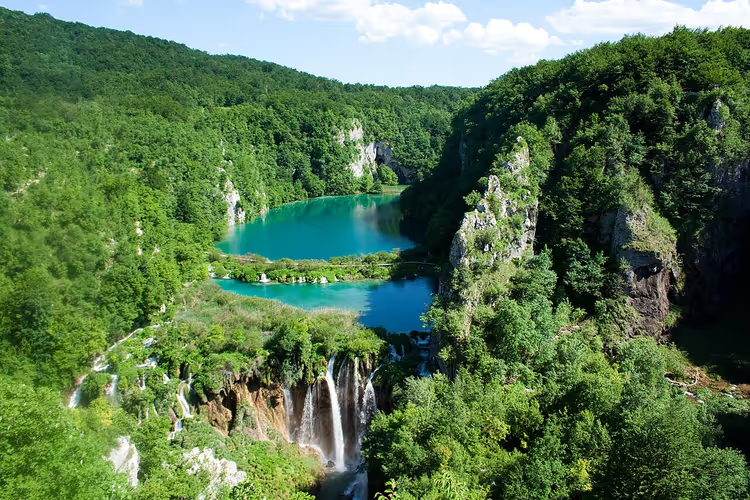
Plitvice Lakes is considered the country's oldest national park. The reserve is home to brown bears, wolves, and wild boars, so stay on the designated trails. In the 1960s the park served as a filming location for the Winnetou films based on Karl May's novels.
 © Pablo BM from London, England · CC BYPhoto: Pablo BM from London, England, CC BY (https://creativecommons.org/licenses/by/2.0), Wikimedia Commons
Filming also took place in Krka National Park, so both reserves share a cinematic history. But that's not why you should go. The main reason is the water: it shifts in color from turquoise to dark green, and aquatic plants grow between the cascades.
In autumn yellow and red foliage joins the greenery. The shots come out great on their own, even if you're shooting on a phone.
Plitvice Lakes route: from entrance 2 to Lake Kozjak
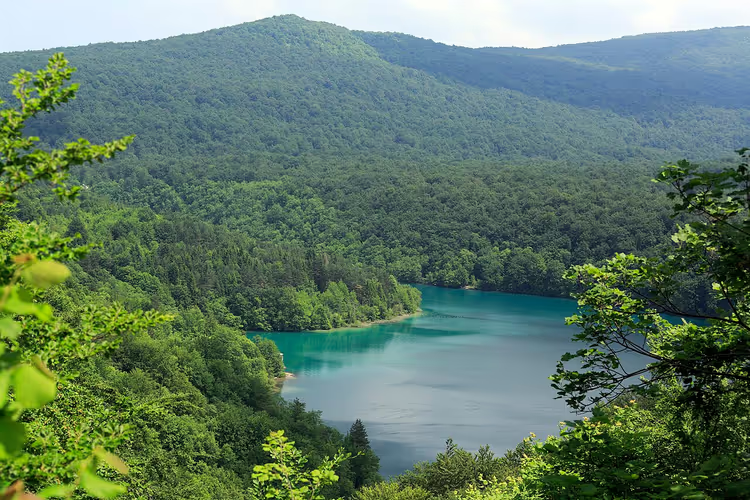
Start at south entrance 2. From the ticket office you descend to pier P1 and take an electric boat across to the start of the walking routes at pier P2. That way you walk through the park in one direction, without any uphill climbs.
 © Falk2 · CC BY-SAPhoto: Falk2, CC BY-SA (https://creativecommons.org/licenses/by-sa/4.0), Wikimedia Commons
Most visitors walk only part of the route and return by bus. We recommend doing the full loop around the lakes. At a relaxed pace it takes about two and a half hours, not counting the boat ride and stops.
After the walk from P2, you board the boat again and cross Lake Kozjak to the P3 dock. This is where the second half of the park begins, and it has a completely different character. In the southern part the lakes lie among forest; in the northern part they are squeezed between gray cliffs.
The ticket includes 22 km of paths around the lakes and 36 km of hiking trails (2026 price list, official website). Bring water and do not plan anything else for that day. You will walk at least ten kilometers through the park.
Veliki Slap waterfall: an eighty-meter cascade
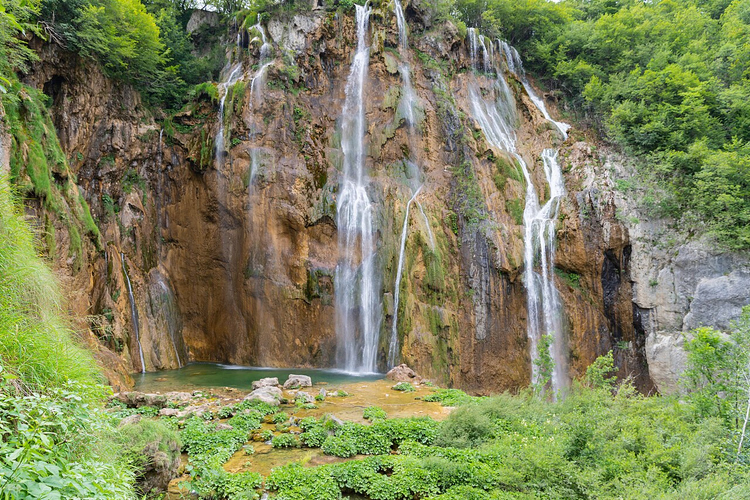
Veliki Slap is considered the tallest waterfall in Croatia. The Plitvica stream drops here from a height of about eighty meters and throws up a cloud of spray. You can get close, but the droplets fly far.
 © dronepicr · CC BYPhoto: dronepicr, CC BY (https://creativecommons.org/licenses/by/2.0), Wikimedia Commons
The best view is not right at the water, but at the last turn of the path before the waterfall. From there you see a green gorge with a turquoise river and yellow-orange trees on the slopes. This shot is worth waiting for a free spot at the railing.
Supljara cave: bats and the Winnetou viewpoint
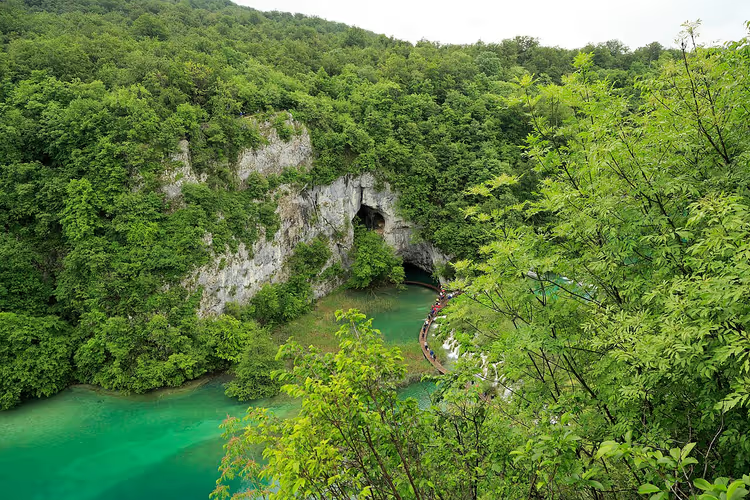
Supljara cave lies between Lakes Gavanovac and Kaluđerovac. You climb stone steps into the cave and enter a cool chamber where bats live. Be quiet: the animals here are not an exhibit.
 © Falk2 · CC BY-SAPhoto: Falk2, CC BY-SA (https://creativecommons.org/licenses/by-sa/4.0), Wikimedia Commons
In the 1960s, a scene for the film "The Treasure of Silver Lake" was shot in the cave. If you climb higher up the stairs, you come out onto a panoramic trail. It offers a wide view of the lakes and waterfalls below.
Plitvice Lakes: tickets and opening hours
Season | Adult, 1 day | Child 7-18 | Adult, 2 days |
|---|---|---|---|
November-March | 10 € | 4 € | 15 € |
April-May, October | 23 € | 6 € | 39 € |
June-September | 40 € | 15 € | 60 € |
Prices for an adult, a child, and a two-day ticket are taken from the 2026 price list. In high season from June 1 to September 30, a ticket for 25 € is valid after 4:00 PM, and for a child aged 7-18 it costs 9 € at that time. A two-day ticket is valid for two consecutive days from the date of purchase.
The price includes the boat, panoramic train, insurance, and toilets at the stops. The park is open every day, but opening time depends on the season (opening hours). Arrive at opening time: by midday there is a line at Entrance 2.
If you want to explore the park with a guide, see the options and prices on GetYourGuide.
Tours and tickets in Plitvice Lakes
Guided tours, skip-the-line tickets and activities — most offers can be cancelled free of charge.
See offers on GetYourGuideThe widget loads once you give your consent.
Krka National Park: river and waterfalls
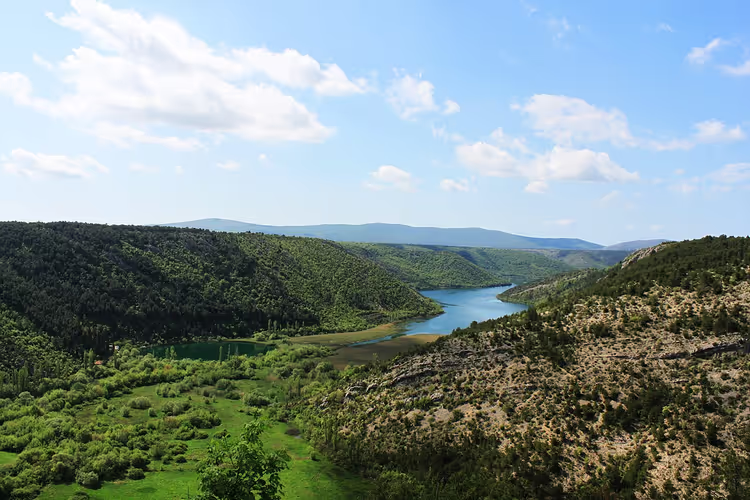
The Krka River is over 70 km long and remains the longest river in central Dalmatia. The park covers 109 km² and has seven waterfalls, 47 km of hiking trails, and ten entrances (as of 09/2026, official Krka National Park website).
 © Matea Bolčević · CC BY-SAPhoto: Matea Bolčević, CC BY-SA (https://creativecommons.org/licenses/by-sa/4.0), Wikimedia Commons
Between the towns of Knin and Skradin, the river is protected by law. Migratory birds use the valley as a stopover on their spring and autumn routes, which is why the park is considered one of the most valuable biotopes in Europe.
Skradinski buk: the main cascade of Krka
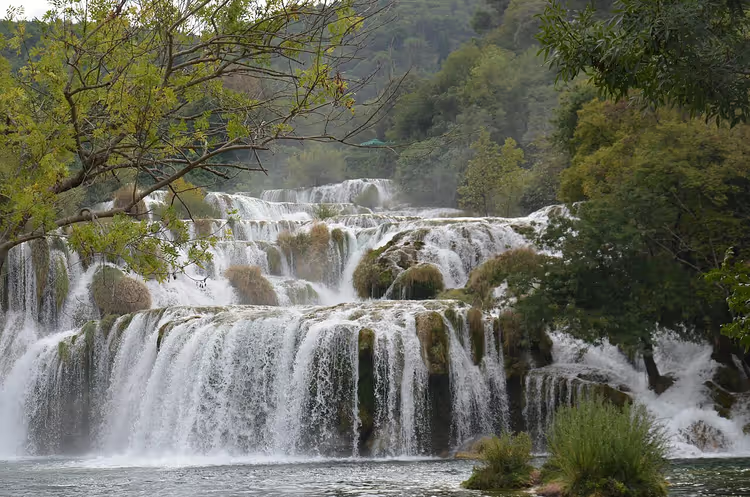
Skradinski buk is considered the longest and most famous waterfall on the Krka. The water falls here in seventeen steps from a total height of about forty-five meters. The southern park entrance lies near Lozovac, about an hour's drive from Split.
 © Bengt Oberger · CC BY-SAPhoto: Bengt Oberger, CC BY-SA (https://creativecommons.org/licenses/by-sa/4.0), Wikimedia Commons
On the large park lot, there is space even in the middle of the day. From the parking lot, a shuttle takes you down a winding road to the start of the circular route. From there you walk along wooden walkways and bridges between waterfalls, backwaters, small islands, and green marshes.
The water is clear to the bottom and has a turquoise tint. Toward the end of the circle, a large lake begins, with a swimming area and a view of a wide waterfall. A long pedestrian bridge spans the lake.
Across from the bridge stand old stone houses, former water mills. Near the mills there are several more viewpoints, and then the path leads back to the bus.
In summer, bus groups are brought here, so take the first shuttle. In the off-season, the cascades are almost empty, and you can take photos without strangers in the frame.
Skradin, Visovac Island, and the monastery
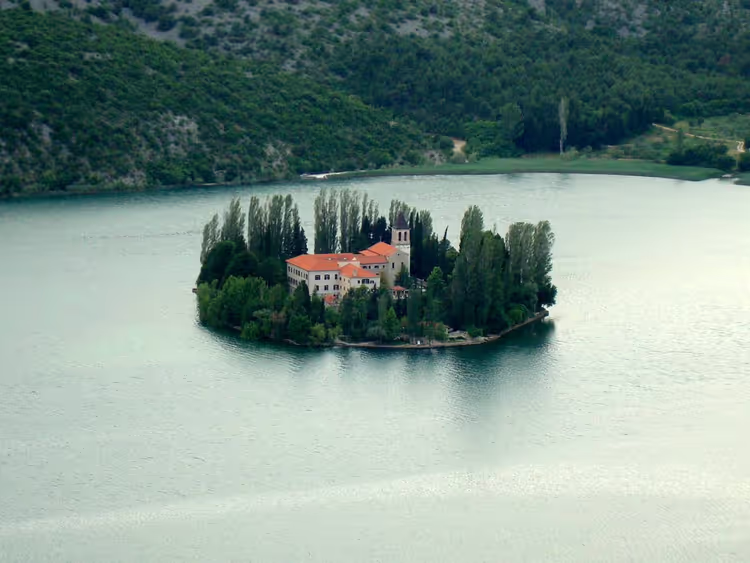
Further on, the road goes through Skradin toward Remetić along a scenic route inside the park. From there, a boat takes you to the small island of Visovac. On the island stands a Franciscan monastery founded in the fifteenth century, and it is open to visitors.
 © Nerijp · CC BY-SAPhoto: Nerijp, CC BY-SA (https://creativecommons.org/licenses/by-sa/3.0), Wikimedia Commons
The boat runs on a schedule, so check the return time on shore.
If you don't want to drive from Split every day, stay overnight in Skradin. The town sits at the park entrance, it is quiet here in the evening, and in the morning you are the first to reach the waterfalls.
Roški slap: canyon, mills and viewing platform
The next stop on the day route is Roški slap. A single-lane bridge winds over the river and marshy floodplain, so slow down on the bends. A car may come the other way, and you will have to reverse to pass.
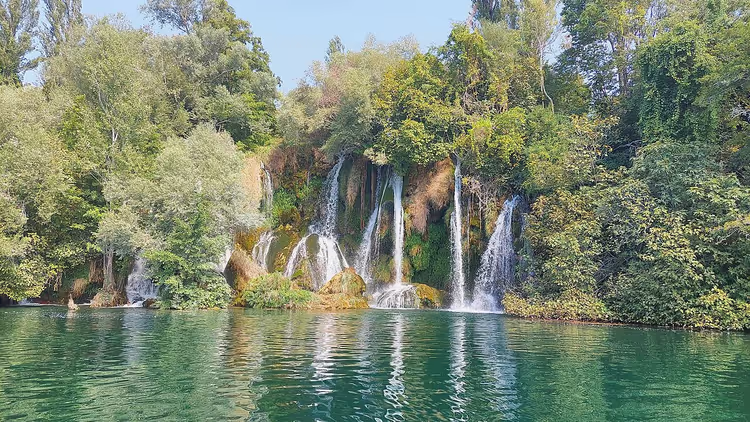
Several trails branch off from the parking lot: a circular one, a panoramic one and a path to an old cave. Take the circular one, it goes past springs and small cascades.
Here the Krka flows through a narrow gorge with steep cliffs on both banks. On the other side of the bridge, the water drops fifteen meters over a ledge into Lake Visovac. From the viewing platform you can see the whole waterfall and the mills on the bank.
Manojlovac waterfall, Krka monastery and Burnum
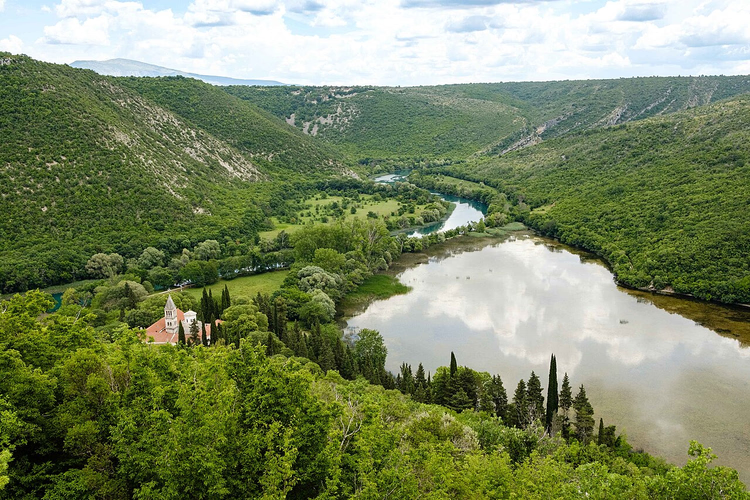
Manojlovac is considered the highest of the seven Krka waterfalls. A short trail leads to it and brings you out at a good viewpoint. In the evening the sun sets behind the ridge and the valley falls into shadow, so come during the day.
 © Alexander Rumpel · CC BY-SAPhoto: Alexander Rumpel, CC BY-SA (https://creativecommons.org/licenses/by-sa/4.0), Wikimedia Commons
On the way to the northern waterfall, make two short detours. The first leads to Krka monastery, the second to the Burnum archaeological site. Remains of Roman arches of the praetorium and an amphitheater survive there.
Your day in Krka National Park ends here. It is best to head back to Split before dark: the road is narrow and has plenty of switchbacks.
Krka: tickets and opening hours
Season | Full park ticket | Roški slap and Manojlovac only |
|---|---|---|
June-September | 40 € | cheaper than the full ticket |
April-May, October | 20 € | cheaper than the full ticket |
November-March | 7 € | check at the entrance |
Prices are for an adult, according to the Krka National Park price list for 2026 (as of 09/2026). The winter rate from November 1 to March 31 is 7 € for an adult and 4 € for a child. A separate ticket for one part of the park costs noticeably less than the full ticket; check the exact amount in the price list before your trip.
Opening hours differ at each entrance and change by season. The park is open year-round, but in winter some paths are closed and boat routes do not run. Check the schedule in advance, before leaving Split.
If you want to see the Krka from the water and without a car, look at excursion options.
Where to stay in Split
Split remains a convenient base for the whole trip. From the city you can reach Krka in an hour, and you set off for Plitvice Lakes in the morning along the highway. You do not need a hotel in the center: with a car, an apartment outside the old town is more convenient.
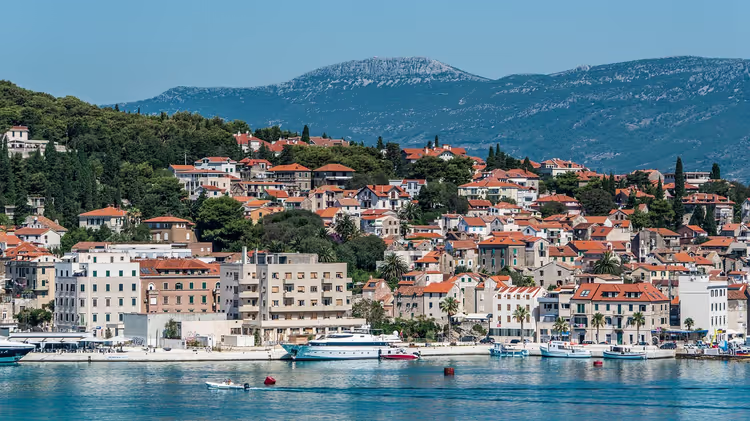
An apartment with a balcony and sea view costs less than a hotel in the center. Parking at the property is not always included in the price, so check this when booking. You can compare options and prices on Trip.com.
A place to stay in Split also comes in handy on rainy days: Trogir, Šibenik and Omiš are nearby.
Car rental in Croatia
You need a car here: there is no convenient public transport between Split, Plitvice and Krka. Driving in Croatia is easy, and gas prices are close to German ones. In the off-season, renting a compact car costs noticeably less than in August.
 AIIllustrative image: AI-generated
Book your car in advance and take full insurance. Mountain roads have no lighting, and small scratches on the bodywork happen often. You can compare rental offers on DiscoverCars.
What to see near Split
There are plenty of short half-day trips around Split. Trogir and Šibenik have preserved old stone quarters. Omiš was once a pirate stronghold, and Klis Fortress still stands above the road.
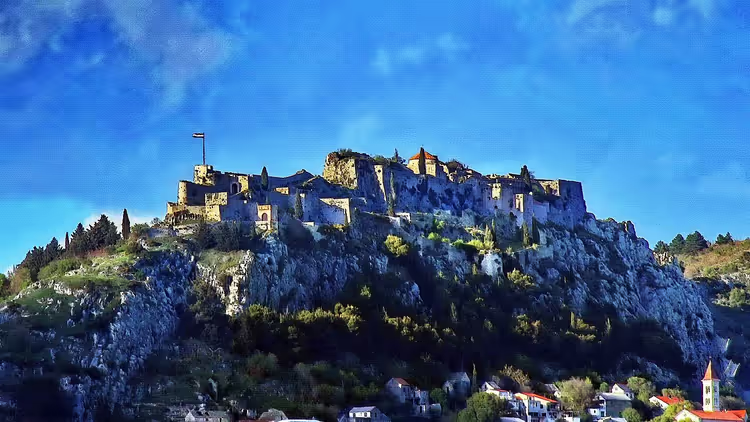 © Ivan T. · CC BYPhoto: Ivan T., CC BY (https://creativecommons.org/licenses/by/3.0), Wikimedia Commons
These towns are a good fallback on rainy days, when trails in the parks are slippery. Each of them is less than an hour away by car.
⁉️🤔 Frequently asked questions
How many days do you need for Plitvice Lakes and Krka?
Two days are enough for both parks. You give the first day to Plitvice: the full loop around the lakes takes about two and a half hours, plus the drive from Split and back. The second day goes to Krka, where you see Skradinski buk, Roški slap and Manojlovac waterfall. It is impossible to cover both reserves in one day.
Do you need a car for a trip to these parks?
A car makes the trip much easier. You can reach the southern entrance to Krka at Skradinski buk in an hour, and entrance 2 of Plitvice Lakes in three hours along the highway. Without a car, organized tours from Split remain, but they are tied to the group schedule and leave little freedom with time.
How much does it cost to enter the parks?
An adult ticket in summer costs €40 for both Plitvice Lakes and Krka. In the shoulder season and winter, entry is noticeably cheaper; seasonal rates are in the tables above (as of 09/2026, Plitvice Lakes, Krka price list). Prices are revised every year, so check the price lists shortly before your trip.
When should you go to avoid the crowds?
The best time for these parks is September and October. The weather is still warm, the foliage turns yellow and red, and the bus tour groups taper off. In June, July, and August, arrive at opening time, otherwise you will stand in line at Entrance 2 of Plitvice Lakes and at the shuttle to Skradinski buk.
Where should you stay, and do you need your own car?
The most convenient bases are Split or Skradin. From Split, you are close to the airport and restaurants; from Skradin, you are the first to reach the Krka waterfalls. You do need your own car, and confirm parking at your accommodation when booking.
In short: what is worth booking
If you have two free days and your own car, book accommodation in Split and park tickets in advance. If you are traveling without a car, choose a tour from Split: it covers both parks and the transport. On a rainy day, keep Trogir and Šibenik as backup options.
Book accommodation in Split or Skradin: on-site parking is essential. view accommodation in Split
Plan your transport in advance: you will need a compact car for all days of the trip. compare rental prices
Buy tickets and guided tours for both parks online so you do not have to wait at the ticket office. tour options
Check prices on the official websites shortly before your trip: seasonal rates change.

A small editorial team writing guides for independent travel. We travel ourselves, but we haven’t been everywhere, so we check prices, opening hours and how to get there against official sources.