
















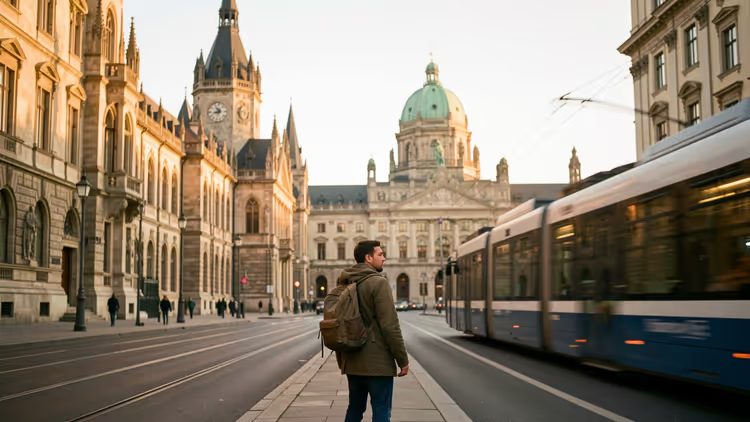
 AIIllustrative image: AI-generated
Vienna in one day from Prague: what to see and how to get there
Between Prague and Vienna, it's only four hours by rail. In one day you can see the Habsburg palaces, St. Stephen's Cathedral, and have coffee with a slice of Sacher torte. Vienna is compact, and the main sights stand on and around the Ringstrasse.
We've put together an itinerary for an independent day trip. You'll learn how to get there cheaply, what to see in a day, and how much tickets cost. The Railjet train takes 4 hours 15 minutes, and a ticket booked early costs less than €20 (as of 09/2026, ÖBB train schedules).
Ad: this article contains affiliate links. We earn a commission if you book through them, at no extra cost to you.
How to get from Prague to Vienna
💡 In short:
- Railjet or RegioJet train: 4-4.5 hours, from €15 if bought in advance.
- FlixBus or RegioJet bus: 4-5 hours, the most budget-friendly option.
- Car: about 330 km, 3.5-4 hours via the D1 and A5 highways.
- Prices and schedules: 09/2026, checked on the official ÖBB website.
The distance between the cities along the route is about 330 km (as the map shows). The real choice here is train or bus, since both options run from city center to city center. Flying on this route doesn't pay off: getting to and from the airports eats up all the time savings.
Transport | Time | Price | Source |
|---|---|---|---|
Train | about 4 h 15 min | from €15 | |
Bus | 4-5 h | from €10 | |
Car | 3.5-4 h | 10-day vignette €12.80 |
Bus
 © Elekes Andor · CC BY-SAPhoto: Elekes Andor, CC BY-SA (https://creativecommons.org/licenses/by-sa/4.0), Wikimedia Commons
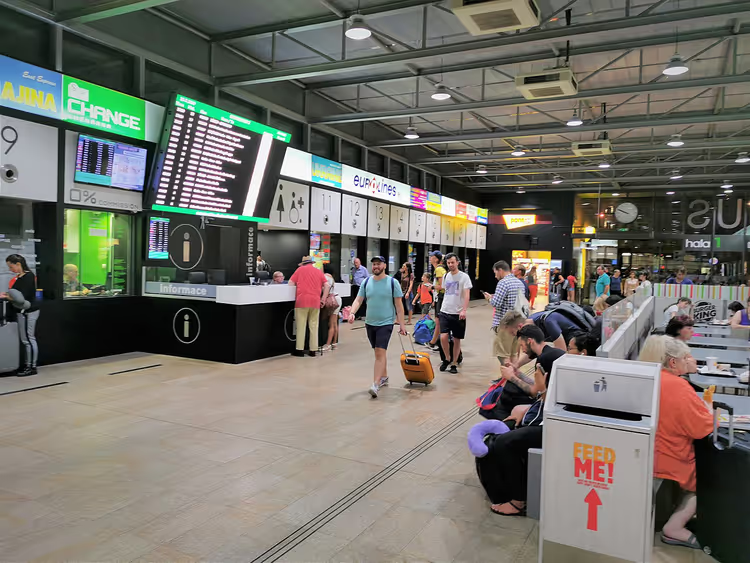
The bus remains the most budget-friendly way to get there. FlixBus, RegioJet, and BlaBlaCar Bus operate on this route. Departures leave from Florenc bus station every 30-40 minutes, and you'll spend 4-5 hours on the road (according to the official RegioJet website, 09/2026). A ticket booked early costs noticeably less than on the day of travel. Arrive at the platform 15 minutes before departure: luggage is checked in at the counter with your ticket. The bus has Wi-Fi, a toilet, and power outlets at every seat.
Train
 © Eweht · CC BY-SAPhoto: Eweht, CC BY-SA (https://creativecommons.org/licenses/by-sa/4.0), Wikimedia Commons
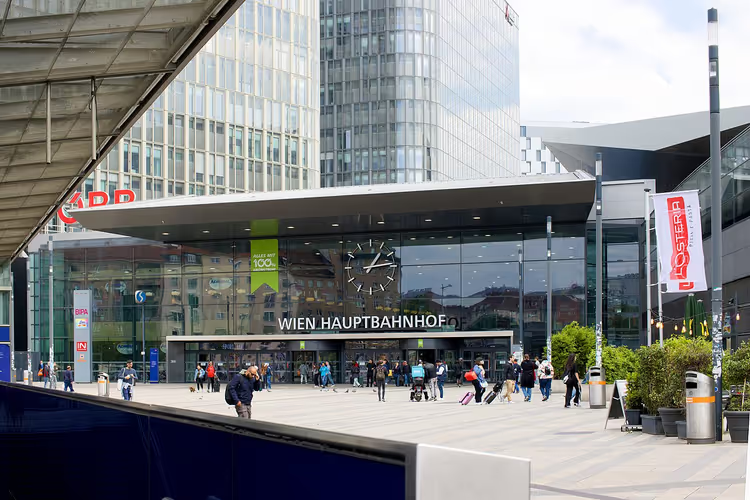
The train takes 4 hours 15 minutes and brings you right into the center of Vienna, to Wien Hauptbahnhof station. Fast Railjet (ÖBB) trains depart roughly every two hours, and the Czech RegioJet also runs nearby (according to European train data from ÖBB, 09/2026). If you book early, a ticket costs under 20 €, and on the day of travel the price is higher. Take window seats on the right side: the route passes through Brno and the vineyards of Moravia.
Car
 © I would appreciate being notified if you use my work outside Wikimedia. More of my work can be found in my personal gall · CC BYPhoto: I would appreciate being notified if you use my work outside Wikimedia. More of my work can be found in my personal gall, CC BY (https://creativecommons.org/licenses/by/3.0), Wikimedia Commons
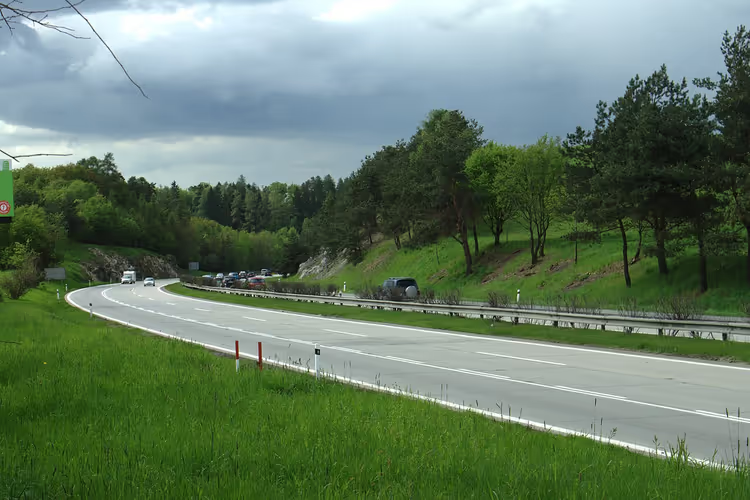
By car, the trip takes 3.5-4 hours. From Prague you take the D1 highway, then switch to the Austrian A5. Austrian autobahns require a vignette: a 10-day digital version costs 12.80 € (as of 09/2026, ASFINAG rates). Parking in central Vienna is expensive and paid by the hour. Leave your car at a metro station on the outskirts: Park & Ride lots are available there.
Plane
 © Stephen Johnes · CC BYPhoto: Stephen Johnes, CC BY (https://creativecommons.org/licenses/by/2.0), Wikimedia Commons
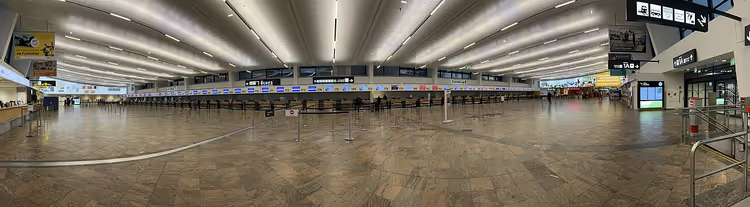
Flying on the Prague-Vienna route makes almost no sense. There are few direct flights, and getting to and from the airport takes longer than the flight itself (according to Vienna Airport, 09/2026). Spend that money on the train or on museum tickets instead.
What to see in Vienna in one day
 © Linie29 · CC BY-SAPhoto: Linie29, CC BY-SA (https://creativecommons.org/licenses/by-sa/4.0), Wikimedia Commons
Vienna fits into one day if you stick to the center. Hofburg, St. Stephen's Cathedral, and the Ringstrasse are all within a two-kilometer radius, with trams and the metro running between them (according to the official Vienna guide, 09/2026). Museums take time, so in one day you'll manage one or two, but not five. Buy tickets for popular museums online with a time slot, otherwise you'll just stand in line.
Place | Admission | Hours | Closed | Source |
|---|---|---|---|---|
Ringstrasse | free | 24/7 | no | |
Belvedere Palace | Upper 23 €, Lower about 20 € | daily 9-18 | no | |
St. Stephen's Cathedral | cathedral free | daily 6-22 | no | |
St. Charles Church | paid admission | daily | no | |
Hofburg Palace | about 20 € | daily 9-17:30 | no | |
Kunsthistorisches Museum | 22 € online, 24 € at the ticket office | Tue-Sun 10-18, Thu until 21, daily in summer | Monday (September-May) | |
Natural History Museum | 18 €, reduced 14 € | Wed-Mon 9-18, Wed until 20 | Tuesday |
A walk along the Ringstrasse
 © Andrew Nash from Vienna, Austria · CC BY-SAPhoto: Andrew Nash from Vienna, Austria, CC BY-SA (https://creativecommons.org/licenses/by-sa/2.0), Wikimedia Commons
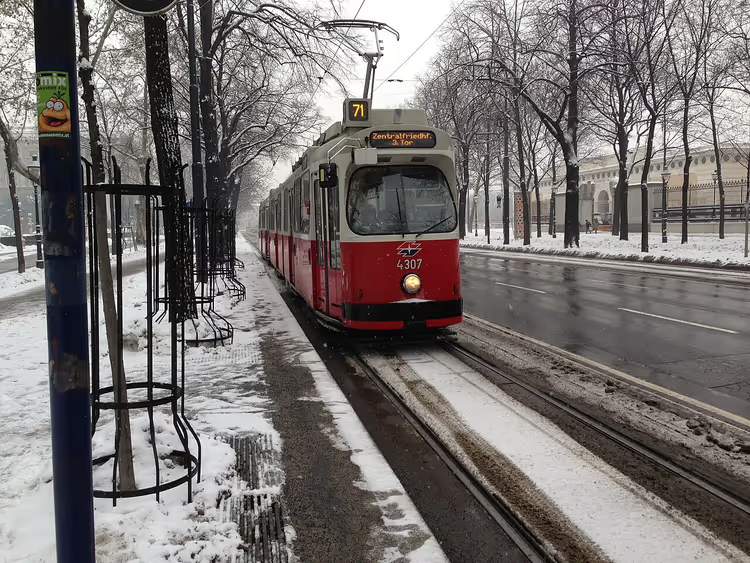
This 5.3 km ring boulevard (according to the City of Vienna website, 09/2026) encircles the old town. The State Opera, parliament, city hall, Burgtheater, and Kunsthistorisches Museum stand one after another here. The buildings were constructed in the historicist style: 19th-century architects imitated Gothic, Renaissance, and Baroque. Walk the stretch from the Opera to the parliament, and the Hofburg opens up beyond it.
Getting there: trams 1, 2, D, and 71 run along the ring.
The catch: in summer, the area near the Opera is crowded during the day.
Belvedere Palace and the Klimt museum
 © C.Stadler/Bwag · CC BY-SAPhoto: C.Stadler/Bwag, CC BY-SA (https://creativecommons.org/licenses/by-sa/4.0), Wikimedia Commons
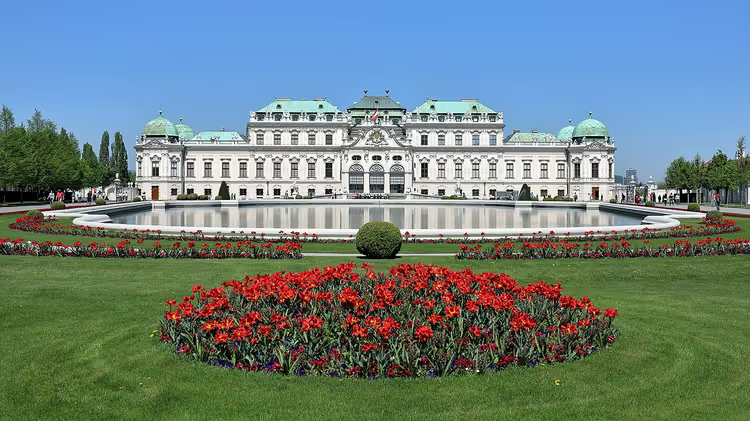
Belvedere was the summer residence of Prince Eugene of Savoy. The complex consists of two palaces and a large park. The halls of the Upper and Lower palaces house collections of European art from the Middle Ages to the present day. Upper Belvedere serves as the main museum of the complex, and it is the reason most tourists come here.
The core of the collection is the works of Gustav Klimt. The Kiss and Judith are kept here, with Waldmüller, Makart and Amerling hanging nearby. A ticket to Upper Belvedere costs €23, the reduced price for students under 26 and visitors over 65 is €19, children under 19 enter free; a ticket to Lower Belvedere costs about €20 (as of 09/2026, official Belvedere website). The palaces are open daily from 9 to 6.
How to get there: tram D to the Schloss Belvedere stop, then a 300 m walk.
Who it's for: lovers of Klimt and baroque gardens.
The catch: the Lower palace is smaller and its collection is not as strong as the Upper one.
St. Stephen's Cathedral
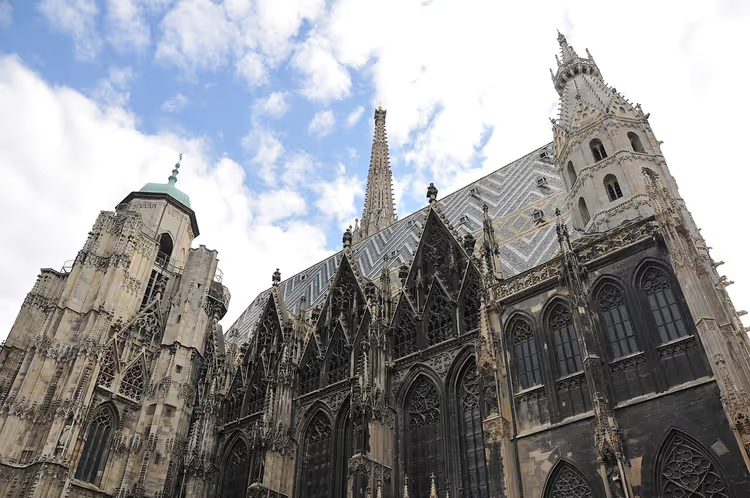
 © Dguendel · CC BYPhoto: Dguendel, CC BY (https://creativecommons.org/licenses/by/4.0), Wikimedia Commons
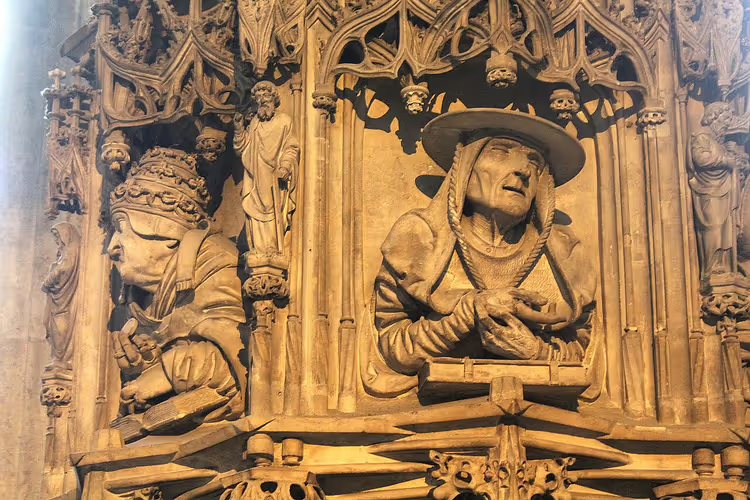
St. Stephen's Cathedral stands in the very center, on Stephansplatz. Entry to the cathedral is free. The paid parts here are the South Tower with 343 steps, the North Tower with an elevator, and the guided catacombs. The All-Inclusive combined ticket covers the cathedral with an audio guide, both towers, the catacombs, and the Dom Museum Wien (according to the cathedral parish, 09/2026). Tickets at the ticket office are cash only, so bring euros in advance.
Tickets and tours of the cathedral on GetYourGuide
How to get there: metro U1 and U3 to Stephansplatz station.
The catch: during the day there are many groups at the entrance, go in the morning.
St. Charles Church (Karlskirche)
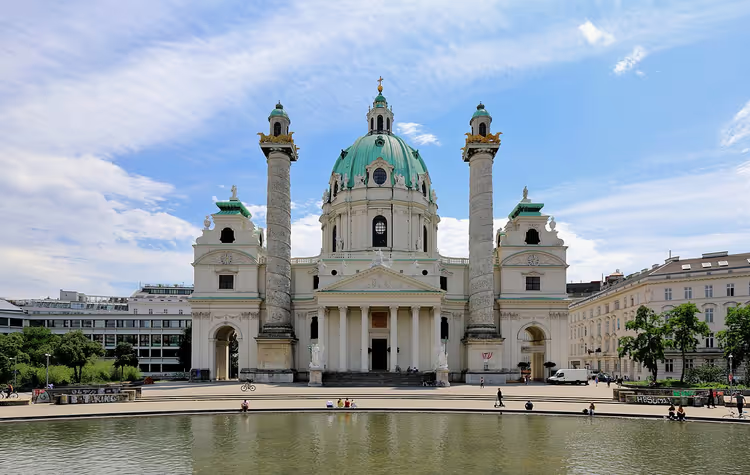 © C.Stadler/Bwag · CC BY-SAPhoto: C.Stadler/Bwag, CC BY-SA (https://creativecommons.org/licenses/by-sa/4.0), Wikimedia Commons
St. Charles Church is one of the striking examples of Viennese baroque. It was built by the architect Johann Bernhard Fischer von Erlach, and the church was consecrated in 1737. Charles VI vowed to build the church in gratitude to his patron saint for delivering the city from the plague. In front of the facade stand two triumphal columns, and inside there is a huge dome with frescoes. Entry is paid, and with a ticket you can take an elevator up to the dome paintings (according to the Karlskirche parish, 09/2026).
- How to get there: metro U1, U2 or U4 to Karlsplatz station.
Hofburg Palace and the Sisi Museum
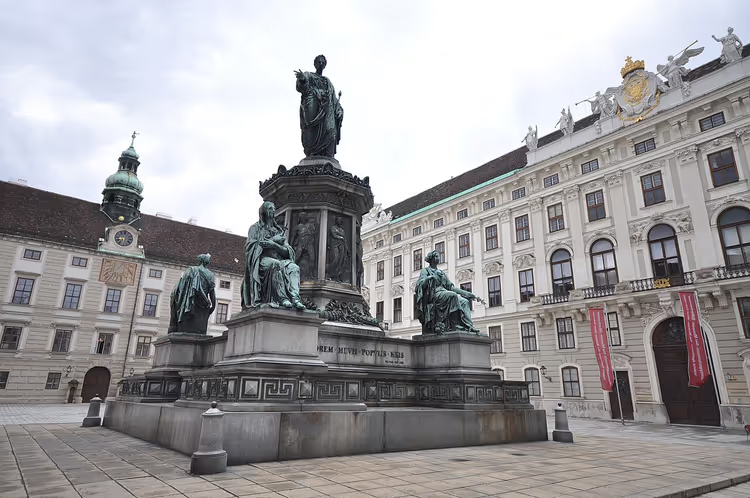 © Jorge Láscar from Australia · CC BYPhoto: Jorge Láscar from Australia, CC BY (https://creativecommons.org/licenses/by/2.0), Wikimedia Commons
Hofburg was the winter residence of the Habsburgs, and today it houses the office of the President of Austria. The complex has about 2,600 rooms and halls. The imperial apartments have survived almost unchanged, and their furnishings show how the court lived in the 19th century. The Sisi Museum, dedicated to Empress Elisabeth, is also located here.
A single ticket gives access to the imperial apartments, the Sisi Museum, and the Silver Chamber with its collection of silver and tableware. A ticket costs about €20 (as of 09/2026, official website). The palace is open daily, usually from 9 to 5:30, and until 6 in July and August. From October 6 to November 18, hours are reduced to 4:30 due to renovations, and the ticket office closes at 4:00.
How to get there: metro U3 to Herrengasse station, then through the Michaelertor gate.
The catch: the ticket office closes an hour before the palace itself.
Museum of Art History
 © Manuel Velazquez · CC BYPhoto: Manuel Velazquez, CC BY (https://creativecommons.org/licenses/by/3.0), Wikimedia Commons
The Museum of Art History opened in 1891 and has remained one of the city's main museums ever since. Its halls display Raphael, Titian, Rembrandt, Velázquez, Rubens, and Bruegel. An adult ticket costs €22 online and €24 at the ticket office (as of 09/2026, KHM ticket page). The museum is open Tuesday through Sunday from 10 to 6, and until 9 on Thursdays. It is closed on Mondays from September to May, and open daily in June, July, and August. Admission is free for visitors under 19.
Getting there: U2 metro to Museumsquartier or trams 1, 2, D to Burgring.
The catch: the Bruegel halls and the Egyptian collection take half a day, so plan your time.
Natural History Museum with dinosaurs
 © C.Stadler/Bwag · CC BY-SAPhoto: C.Stadler/Bwag, CC BY-SA (https://creativecommons.org/licenses/by-sa/4.0), Wikimedia Commons
The Natural History Museum stands opposite the Museum of Art History on the same Ringstrasse. Its collection holds about 25 million objects (according to the museum's official website, 09/2026). The exhibition is spread across 39 themed halls: dinosaurs, minerals, meteorites, and the Venus of Willendorf. It's easy to get lost here, so grab a map at the entrance and pick two or three halls.
An adult ticket costs €18, a reduced ticket €14, and admission is free for visitors under 19 (as of 09/2026, NHM ticket page). The museum is open on Thursdays, Fridays, Saturdays, Sundays, and Mondays from 9 to 6, until 8 on Wednesdays, and closed on Tuesdays. Halls 29 through 32 are closed for renovation, so check the list on the website before your visit.
Getting there: U2 and U3 metro to Volkstheater, then a 5-minute walk.
The catch: Tuesday is a day off, so don't plan your visit for that day.
Tours and tickets in Vienna
Guided tours, skip-the-line tickets and activities — most offers can be cancelled free of charge.
See offers on TiqetsThe widget loads once you give your consent.
⁉️🤔 Frequently asked questions
How long does it take to get from Prague to Vienna?
The train takes about 4 hours 15 minutes, the bus 4 to 5 hours, and driving takes 3.5 to 4 hours (according to Austrian railways, 09/2026). A morning train from Prague gets you to Vienna by lunchtime, and an evening one brings you back.
Is one day enough for Vienna?
Yes, if you focus on the center. After arriving, start with the Hofburg and the Sisi Museum. Then walk along the Ringstrasse to St. Stephen's Cathedral, and save one museum for the evening (according to the Vienna tourist office, 09/2026). Two museums in one day is more than enough.
How much does admission to Vienna's museums cost?
Upper Belvedere €23 (as of 09/2026, Belvedere ticket page), Museum of Art History €22 online, Natural History Museum €18, Hofburg about €20. Admission to St. Stephen's Cathedral is free; you only pay for the towers and catacombs. Many museums are free for young people under 19.
Do I need to buy tickets in advance?
Yes, in high season, time slots at the Belvedere and Hofburg sell out quickly. An online ticket with a fixed entry time lets you skip the line and sometimes costs less than at the ticket office (as of 09/2026, Belvedere online tickets). At St. Stephen's Cathedral they only accept cash, so bring euros.
How to get around Vienna?
The center is walkable: from the Hofburg to St. Stephen's Cathedral it's about 1 km. For longer distances, trams along the Ringstrasse and the U1-U4 metro lines help (as of 09/2026, wien.info guide). A single ticket is valid on all types of transport, including transfers.
In short: what's worth booking
Vienna in one day is doable if you decide two things in advance: how to get there and what to see. Start with transport, then pick one or two museums with timed entry.
If you only have one day: book a round-trip train and two museums.
If you're driving: leave your car at a metro station on the outskirts.
If you love the classics: start with the Belvedere and Klimt.
If you're traveling with kids: choose the Natural History Museum.
Spend the rest of your time on the Ringstrasse and St. Stephen's Cathedral. For Prague-Vienna train tickets, check Trip.com, and for city tours check GetYourGuide.

A small editorial team writing guides for independent travel. We travel ourselves, but we haven’t been everywhere, so we check prices, opening hours and how to get there against official sources.