
















Where to go in Vienna: 25 museums with tickets and opening hours in 2026
Vienna has more than a hundred museums packed into a compact center. In three days you can realistically see five or six. We've broken down 25 of Vienna's top museums by opening hours, prices, and closed days so you don't waste a morning standing in front of a locked door. A ticket to the Albertina costs around 20 € (as of 09/2026, Albertina tickets), and the Kunsthistorisches Museum charges about the same. Below you'll find combo tickets, a breakdown of Monday closures, and a route through the neighborhoods.
Ad: this article contains affiliate links, we earn a commission if you book through them, at no extra cost to you.
1. Albertina Art Museum
 © C.Stadler/Bwag · CC BY-SAPhoto: C.Stadler/Bwag, CC BY-SA (https://creativecommons.org/licenses/by-sa/4.0), Wikimedia Commons
💡 In short:
- Get a combo ticket: it pays for itself by the third museum.
- Almost all Vienna museums are closed on Mondays, so check the day in advance.
- Prices and opening hours: 09/2026, verified on the official website.
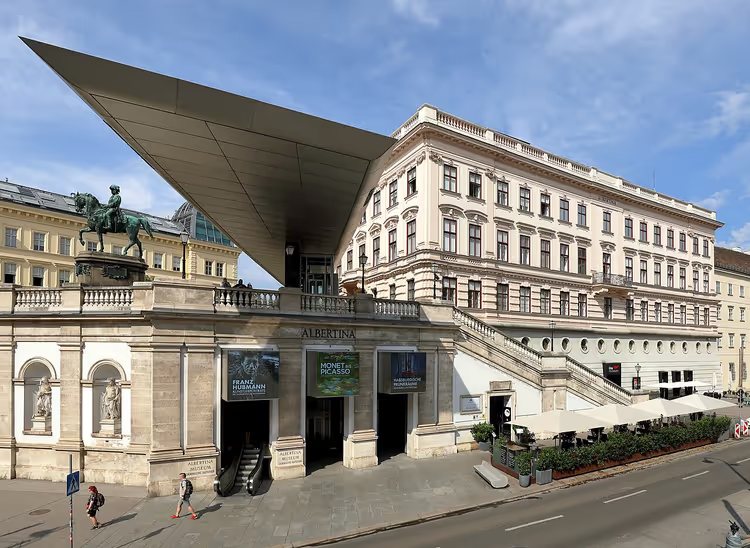
The Albertina grew out of the private collection of Duke Albert (1738-1822). He collected graphic art his entire life, and today the holdings include more than 900,000 sheets and about 50,000 watercolors, including drawings by Dürer, Rembrandt, Rubens, and Picasso (as of 09/2026, Albertina website). After the 2003 renovation, a 64-meter titanium slab was installed above the entrance. Today it's a recognizable symbol of the museum.
The museum is open daily from 10:00 to 18:00, and until 21:00 on Wednesdays and Fridays. Arrive at opening time: by noon a line forms at the ticket desk. Audio guides are available in many languages, including Russian. The permanent collection features Monet, Picasso, and Renoir, and some rooms are given over to temporary exhibitions. Plan for two to three hours. The catch: there are a lot of rooms, and without a plan you'll run out of steam halfway through.
2. Schönbrunn Palace
 © Tournasol7 · CC BY-SAPhoto: Tournasol7, CC BY-SA (https://creativecommons.org/licenses/by-sa/4.0), Wikimedia Commons
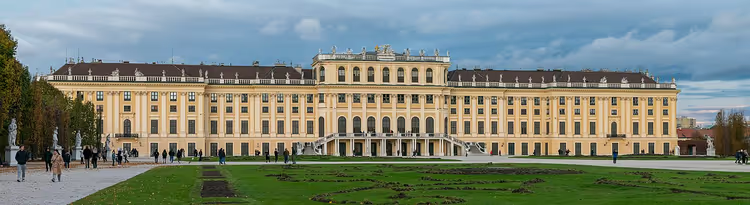
The former summer residence of the Habsburgs occupies a site 1.2 km long and about 1 km wide. The palace with its 1,441 rooms was built by Johann von Erlach in the Austrian Baroque style, modeled on Versailles (as of 09/2026, Schönbrunn website). Of all the rooms, only 40 belong to the museum today, while another 190 are rented out. Tickets are sold in timed slots, and in summer the available windows run out a couple of days ahead: skip-the-line Schönbrunn tickets.
The park is no less impressive than the palace. It includes the Palm House, the Henrietta Pavilion, a labyrinth in the style of Roman ruins, and the oldest zoo in Europe. The Botanical Garden, dating to 1753, deserves special attention with its rare trees and shrubs. The rooms show how Franz I and Maria Theresa lived, and several halls once housed Napoleon's headquarters. Since 1992 the complex has been under UNESCO protection. Set aside at least half a day for the park and palace, otherwise you'll miss half of it. The catch: in summer the main entrance gets very crowded, so book a morning slot.
3. Belvedere Palace Complex
 © Chris Koerner from St. Louis, USA · CC BY-SAPhoto: Chris Koerner from St. Louis, USA, CC BY-SA (https://creativecommons.org/licenses/by-sa/2.0), Wikimedia Commons
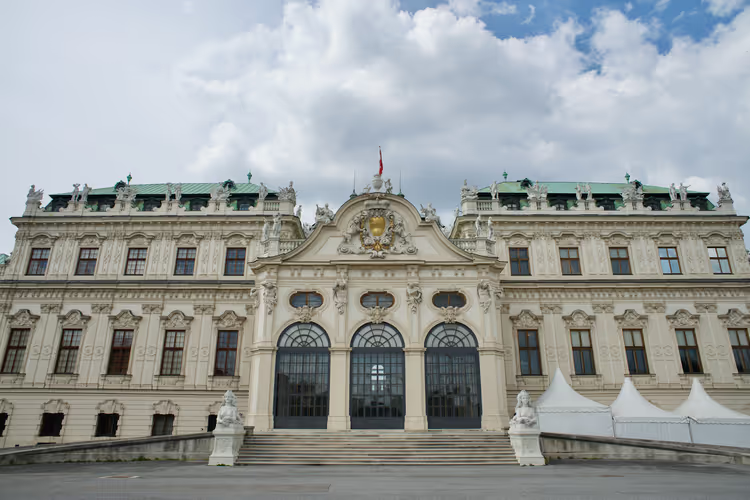
Belvedere is two palaces and a large park between them. The Lower Palace was built in 1714-1716, the Upper Palace in 1722, commissioned by Prince Eugene of Savoy. The park was laid out by landscape designer Girard. The Lower Palace houses a museum of Baroque and medieval art with the Marble, Mirror, and Grotesque Halls and the Gold Cabinet. The Upper Palace is home to a gallery with paintings by Klimt, Schiele, and Kokoschka (as of 09/2026, official website).
The palace was built as the summer residence of the military commander Eugene of Savoy, and even then it was considered a model Baroque ensemble. The Lower Belvedere served as the residential wing, while the former stables and orangery were converted into exhibition halls. The original layout of the lawns and fountains is still considered a marvel of landscape design.
Upper Belvedere is open daily from 10:00 to 18:00, the Lower from 10:00 to 18:00, on Wednesdays until 21:00. The park between the palaces is free, and it's a comfortable spot for a leisurely stroll. The white sculptures, fountains, and the view of the city center from here will stay with you for a long time. It's convenient to get tickets in advance with one click: Belvedere entrance tickets on GetYourGuide. The catch: there's a steep climb from the Lower Palace to the Upper, so plan your energy accordingly.
4. Belvedere Gallery
 © C.Stadler/Bwag · CC BY-SAPhoto: C.Stadler/Bwag, CC BY-SA (https://creativecommons.org/licenses/by-sa/4.0), Wikimedia Commons
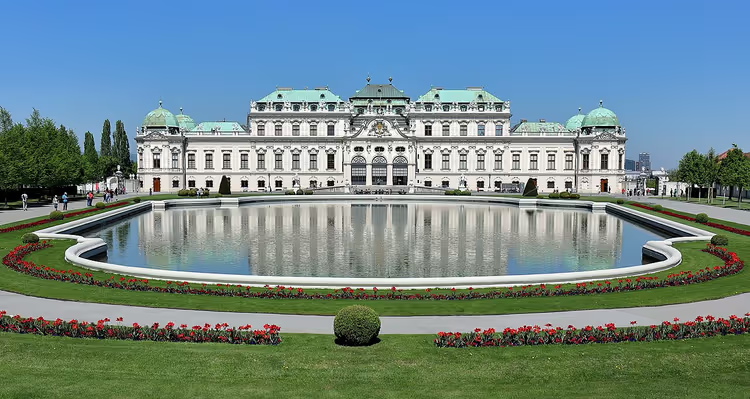
This is a national gallery in the halls of the Upper and Lower Palaces. The collection spans 19th and 20th century painting: Van Gogh, Monet, Schiele, and Kokoschka. There are also sculptures in plaster, marble, and wood. The interiors of the Gold, Marble, and Mirror Halls of the Lower Belvedere with their frescoes and bas-reliefs are of particular interest.
The main pride is the works of Gustav Klimt. People come from all over the world for "The Kiss," "Adam and Eve," and "Judith with the Head of Holofernes." Klimt used real gold leaf, hence the glowing effect on the canvases. A combined ticket to all Belvedere locations costs about 22 € (as of 09/2026, gallery tickets). The catch: you can't get near the Klimt paintings on weekends, go on a Tuesday morning.
5. Liechtenstein Museum
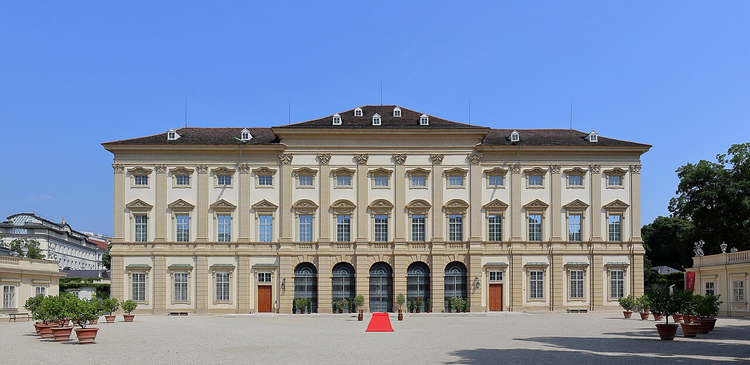
The Baroque palace was built in 1700 for the princely House of Liechtenstein. The collection was started by Charles I, a lover of expensive furniture and jewelry made of gold, silver, and precious stones. His descendants collected art for four centuries, and from 1805 the collection began to be shown to the public.
 © C.Stadler/Bwag · CC BY-SAPhoto: C.Stadler/Bwag, CC BY-SA (https://creativecommons.org/licenses/by-sa/4.0), Wikimedia Commons
Today it displays Italian, Flemish, Dutch, and Austrian masters: Rubens, Rembrandt, Raphael, Ricci. Separate rooms are dedicated to antique furniture, hunting weapons, and ivory pieces. The museum's pride is the Golden Carriage, made for the outings of Prince Joseph Wenzel. Every Friday they offer tours with an audio guide, on other days entry is by arrangement. Check opening days and tickets on the Liechtenstein Collection website. The catch: there is almost no free entry without a tour, so you'll have to plan your visit around Friday.
6. Hofburg
 © C.Stadler/Bwag · CC BY-SAPhoto: C.Stadler/Bwag, CC BY-SA (https://creativecommons.org/licenses/by-sa/3.0/at/deed.en), Wikimedia Commons
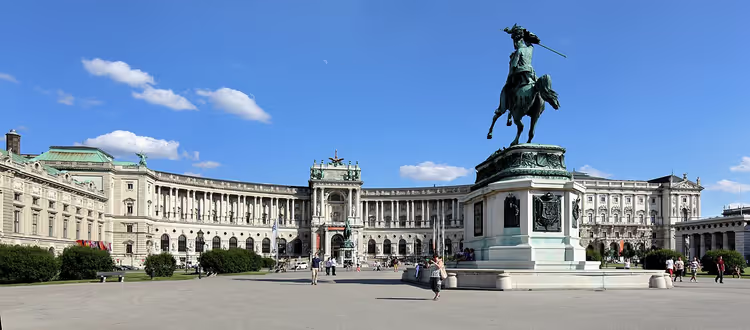
The Hofburg is an entire city of palaces: 19 palaces, 18 buildings, 2,600 rooms and halls across roughly 2.6 million square feet. Gothic, Baroque, Empire and Renaissance styles stand side by side here. The first palace welcomed residents back in 1279, and the complex became the Habsburg winter residence in 1533 (as of 09/2026, tourist office website about the Hofburg).
The imperial apartments have been turned into a museum that draws thousands of visitors. The decor of the 19 halls recreates the authentic setting of the Habsburg era. Look not only at the private rooms, but also at the silverware, tableware and antique furniture. The busiest corner is the apartments of Empress Elisabeth, whom Austrians call Sisi: her dresses, stoles and gymnastic equipment are on display there. The "Swiss Wing" remains the oldest part: guards once served here.
Besides the museums, the grounds also house a chapel, a congress center and the "Butterfly House". The entrance is from Michaelerplatz, about a five-minute walk from St. Stephen's Cathedral. A separate draw is Café Demel with its Sachertorte, candied violets and chocolate "cat's tongues". Book a sightseeing tour of the complex in advance: Hofburg tours. The Hofburg alone easily takes half a day. The catch: in high season, the line for the Sisi apartments is longer than for the other museums.
7. Weltmuseum Wien
 © Thomas Ledl · CC BYPhoto: Thomas Ledl, CC BY (https://creativecommons.org/licenses/by/4.0), Wikimedia Commons
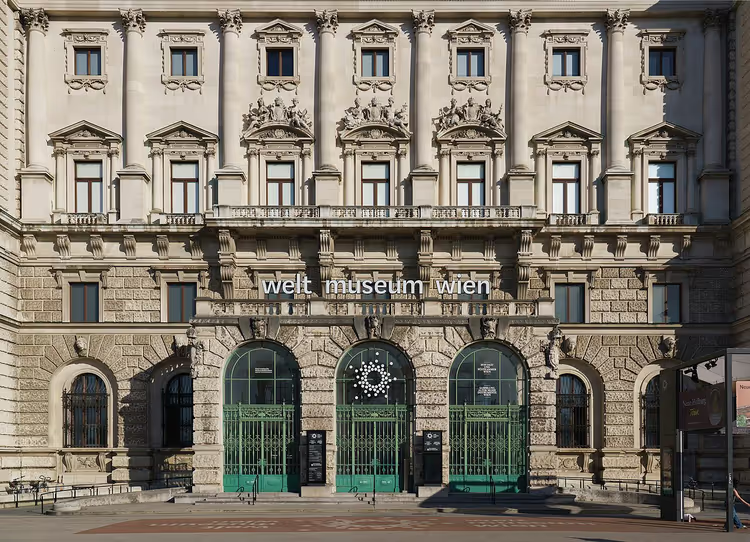
The south wing of the Hofburg houses the ethnological and anthropological museums. More than 250,000 artifacts are on display for the public, telling the story of the cultures of Asia, Africa, the Americas, Australia and Oceania. The core of the collection was established by the holdings of explorer James Cook (as of 09/2026, Weltmuseum Wien website). The 14 halls display jewelry, weapons, armor, coins, tableware, clothing and figurines.
A particular source of pride is the world's only surviving Aztec chief's headdress. It is made from quetzal feathers and leather and decorated with gold. The museum is open daily except Wednesday from 10:00 to 18:00, and until 21:00 on Fridays. Tickets cost about €12 (as of 09/2026, Weltmuseum Wien tickets). The catch: the halls on ritual objects quickly bore children under 10.
8. The Tower of Fools
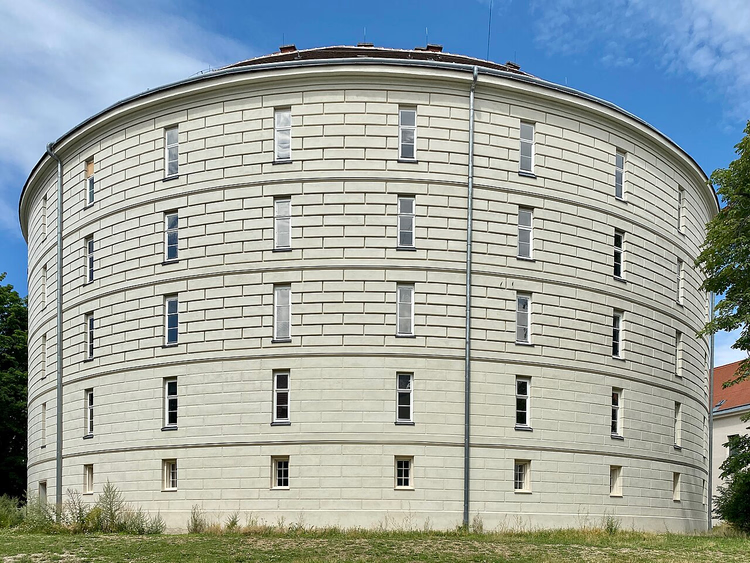 © Funke · CC BY-SAPhoto: Funke, CC BY-SA (https://creativecommons.org/licenses/by-sa/4.0), Wikimedia Commons
A pathology museum is tucked inside a round tower with thick walls. The exhibits here are not for the faint of heart: preserved specimens in alcohol, smokers' lungs, amputated limbs, and organs ravaged by disease. There are about 4,000 items in total (as of 09/2026, Vienna tourist office website).
The museum got its name from the tower's previous life. Five floors once held people with mental disorders, a history still visible in the massive doors and iron chains in 139 rooms. The head of Lucheni, the assassin of Empress Sisi, was kept here for a long time. It was buried in 2000. Address: Spitalgasse 2, on the university campus. Check opening hours and admission on the Vienna tourist office website. The catch: the subject matter is heavy, so it's only worth visiting if you're interested in medicine and history.
9. Street Art Gallery
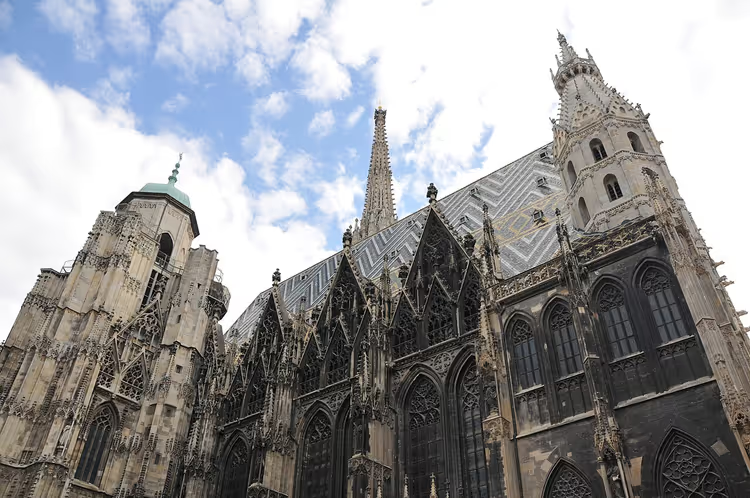 © Manuel Velazquez · CC BYPhoto: Manuel Velazquez, CC BY (https://creativecommons.org/licenses/by/3.0), Wikimedia Commons
Street art has long since moved beyond graffiti. In Vienna, murals cover entire facades, building end walls, and stretches of road. The Street Art Gallery opened in 2006 as a venue for this kind of work. Artists from around the world show large-scale pieces here and run workshops.
The gallery recently moved to the ground floor of a historic building, and its space grew to 170 square meters. It's open Tuesday through Friday from 12:00 to 18:00, Saturday from 12:00 to 16:00, and closed Sunday and Monday (as of 09/2026, gallery schedule). Address: Stiegengasse 2/3. It's best to check admission and current exhibitions in advance. Stop by on your way to the MuseumsQuartier. The catch: the space is small, so the gallery doesn't justify a dedicated trip.
10. Hundertwasser House
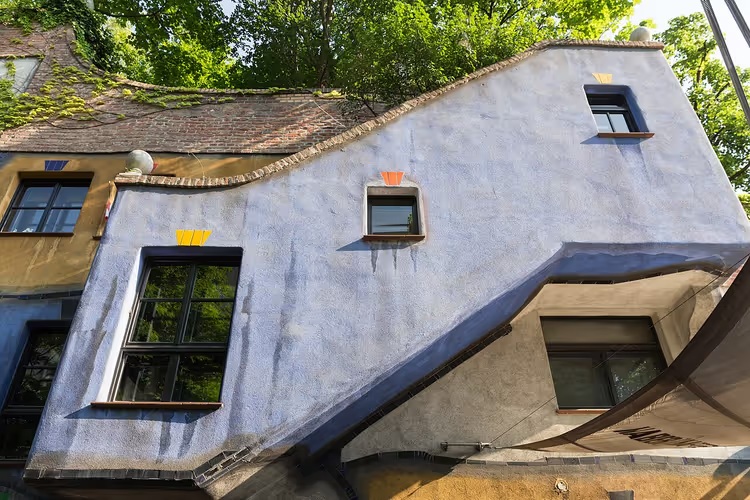 © Pymouss · CC BY-SAPhoto: Pymouss, CC BY-SA (https://creativecommons.org/licenses/by-sa/4.0), Wikimedia Commons
Hundertwasser House is a residential building with facades you can't mistake for anything else. Austrian architect Friedensreich Hundertwasser rejected straight lines and corners, and his building looks like something out of a fairy tale. Different roof levels, round balconies with ornate railings, and each apartment's facade painted in its own color. Trees grow out of windows and from the roof in places (as of 09/2026, Vienna tourist office website).
In front of the entrance there's an elaborate fountain set into wavy mosaic paving. Fifty families live in the building, and not all of them take the stream of tourists under their windows in stride. You can't go inside; the building can only be viewed from the outside. Nearby is Kunst Haus Wien, which has Hundertwasser's work inside. A visit takes 15 minutes, then continue on foot to the embankment. The catch: it's a residential building and a busy thoroughfare, so people come here from the center just for a photo.
11. Sigmund Freud Museum
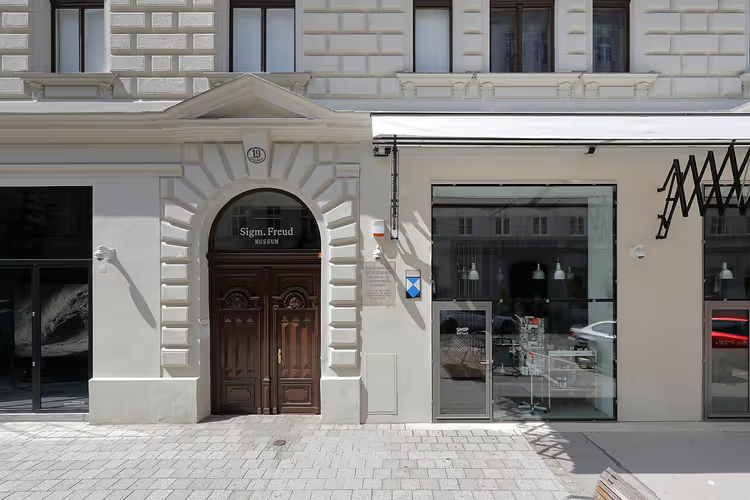 © C.Stadler/Bwag · CC BY-SAPhoto: C.Stadler/Bwag, CC BY-SA (https://creativecommons.org/licenses/by-sa/4.0), Wikimedia Commons
The museum is located in the house where the founder of psychoanalysis lived with his family for 47 years. The exhibition shows Freud's daily life and medical practice. It displays his personal belongings, his study, a psychology library, and a collection of antiquities. The waiting room and reception area have been recreated based on documents.
Address: Berggasse 19, a ten-minute walk from St. Stephen's Cathedral. The museum is open daily; check exact hours and tickets on the Freud Museum website. A visit takes about an hour. Who it's for: people who have read Freud and want to see his entire apartment.
12. Kunsthistorisches Museum
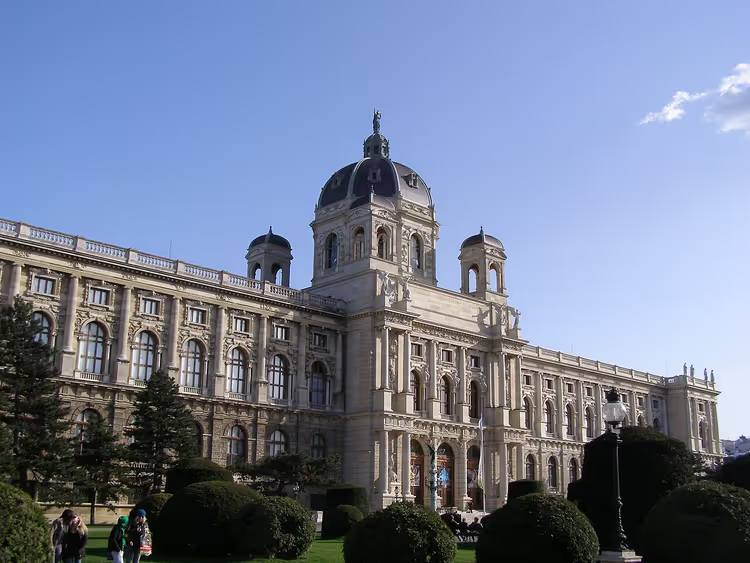 © Andrzej Otrębski · CC BY-SAPhoto: Andrzej Otrębski, CC BY-SA (https://creativecommons.org/licenses/by-sa/3.0), Wikimedia Commons
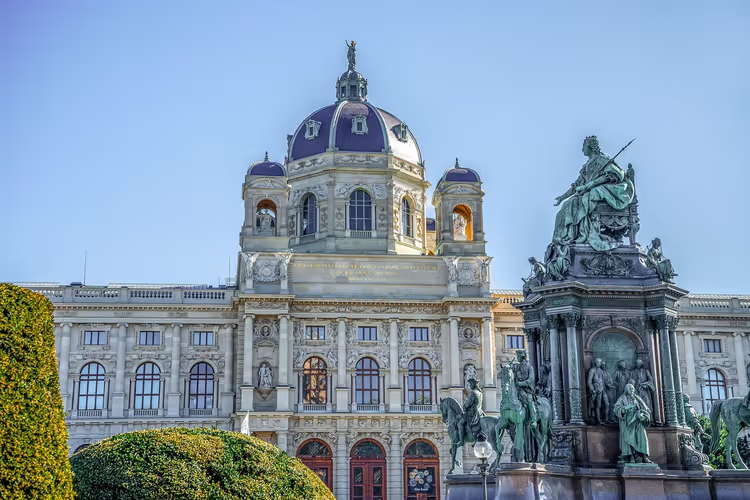
The building with carved sandstone tiles and a 60-meter dome houses one of Europe's major collections. It includes a picture gallery with Bruegel, Dürer, Titian, Rubens, and Veronese, as well as antiquities, archaeology, and numismatics. The collection was assembled over centuries by the Habsburgs. The building was heavily damaged during World War II and reopened only in 1959, while the most valuable pieces had been hidden in time (as of 09/2026, Kunsthistorisches Museum website).
In summer the museum is open daily from 10:00 to 18:00, on Thursdays until 21:00. In winter the schedule shifts to Tuesday through Sunday with the same hours. It's worth walking up the staircase under the dome: the paintings and stucco work here are as impressive as in the galleries themselves. It's convenient to buy tickets online in advance: Kunsthistorisches Museum ticket. The catch: the collection is enormous, and in one visit you'll cover at most a third of it.
13. Leopold Museum
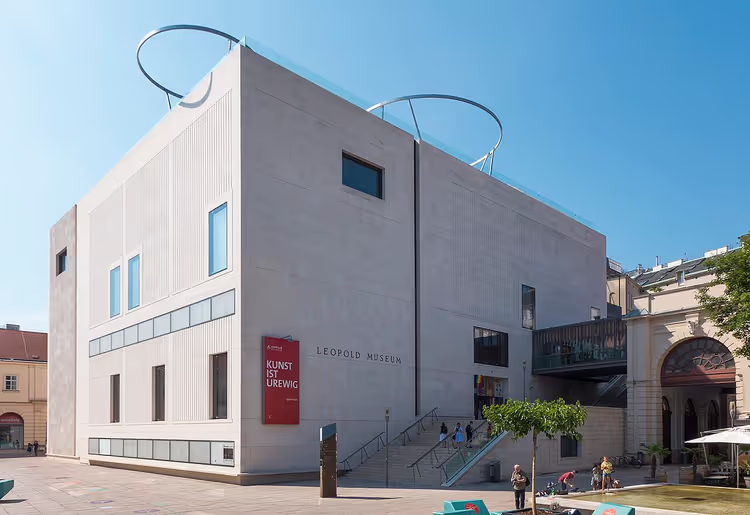
In the MuseumsQuartier stands a snow-white rectangular building. It houses Austrian Expressionists from the late 19th and early 20th centuries. Oak parquet floors and metal details give the rooms a restrained look. The core of the collection came from the private holdings of ophthalmologist Rudolf Leopold (as of 09/2026, Leopold Museum website).
Fans of modernism will see Egon Schiele, Gustav Klimt, and Oskar Kokoschka. Benches are placed in the galleries so you can take your time with the provocative and explicit canvases. The museum is closed on Tuesdays; on other days it's open from 10:00 to 18:00, on Thursdays until 21:00. Admission is around 13 € (as of 09/2026, Leopold Museum tickets). Leopold Museum tickets. The catch: Tuesday is a day off, and Monday is usually the busiest day.
14. Natural History Museum
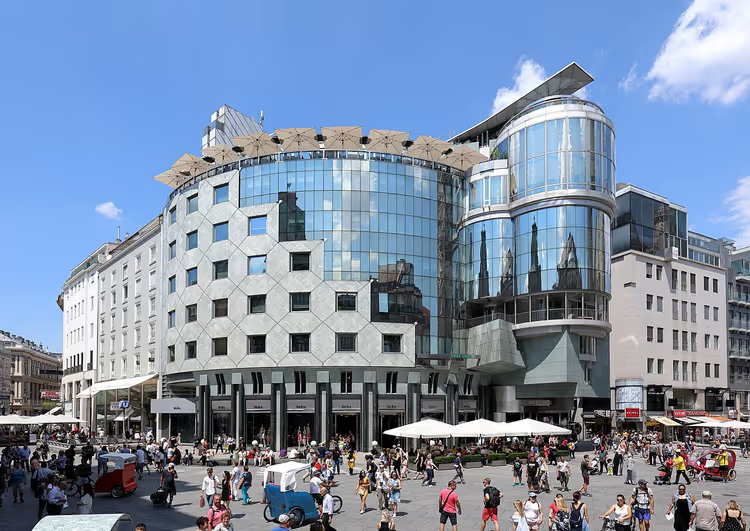 © C.Stadler/Bwag · CC BY-SAPhoto: C.Stadler/Bwag, CC BY-SA (https://creativecommons.org/licenses/by-sa/4.0), Wikimedia Commons
This is one of the best science museums in Europe. The collection includes more than 20 million objects across 39 galleries. The exhibition is divided into mineralogy, paleontology, and zoology. The collection's history began in 1750, when Maria Theresa's husband developed an interest in rare minerals, shells, and fossils (as of 09/2026, Natural History Museum website).
He started with a few thousand stones and shells, and over the years amassed around 30,000 natural objects. The palace on Maria-Theresien-Platz was built specifically for the collection and opened in the late 19th century. Its twin, the Kunsthistorisches Museum, stands opposite, and the two buildings were designed as a single ensemble.
On the first floor you'll find insects, birds, fish, reptiles, and dinosaur skeletons. The second floor is devoted to minerals, precious stones, and meteorite fragments. The wall and ceiling frescoes here rival those in art museums. The total gallery area is about 8,700 square meters. The museum is open from 9:00 to 18:30, on Wednesdays until 21:00, closed on Tuesdays. An adult ticket costs about 12 €, and admission is free for children and teenagers up to age 19 (as of 09/2026, Natural History Museum prices). The catch: the galleries are large, and covering them all in one day without a break is tough.
15. Museum of Military History
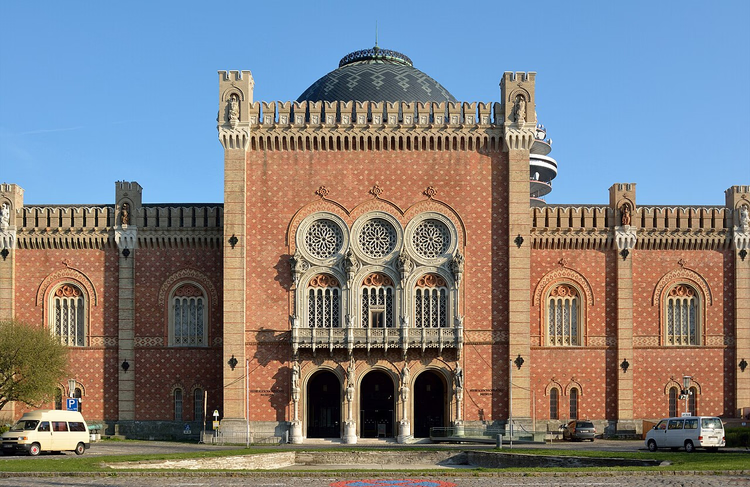 © P e z i · CC BY-SAPhoto: P e z i, CC BY-SA (https://creativecommons.org/licenses/by-sa/3.0/at/deed.en), Wikimedia Commons
The museum occupies an old complex of barracks and weapons workshops in the south of Vienna. The red-brick buildings form a square and blend Byzantine, Moorish, and medieval styles. There are Gothic rose windows, filigree arches, an oriental dome, and crenellated walls (as of 09/2026, Museum of Military History website). The collection is spread across five thematic halls and covers the period from the 16th to the 20th century.
You'll see small arms and edged weapons, uniforms, helmets, armor, artillery, and models of ships and submarines. The most powerful exhibit is the car in which Archduke Franz Ferdinand was shot in Sarajevo. Next to it are his bloodstained uniform and the weapons of the assassination conspirators, as well as the documents that marked the beginning of World War I. The museum is open daily from 9:00 to 17:00, and a ticket costs about €6. On the first Sunday of every month, admission is free (as of 09/2026, Museum of Military History tickets). The catch: it's far from the center, and the trip with a transfer takes about half an hour.
16. Technical Museum
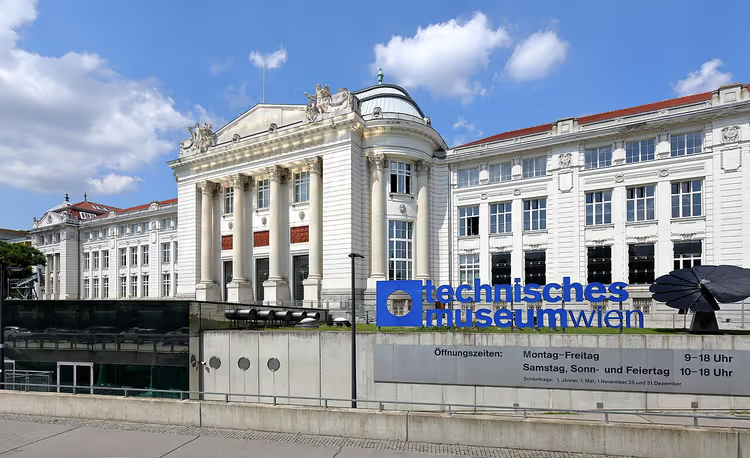 © C.Stadler/Bwag · CC BY-SAPhoto: C.Stadler/Bwag, CC BY-SA (https://creativecommons.org/licenses/by-sa/4.0), Wikimedia Commons
The exhibition consists of 80,000 exhibits on the history of technology. The core of the collection is equipment from energy, mining, industry, mechanical engineering, and communications. Many machines are displayed at full size, so the museum is interesting for both adults and children (as of 09/2026, Technical Museum website).
In the halls you'll find cars, airplanes, industrial machine tools, steam engines, and locomotives. A separate section is devoted to household appliances of the last century: refrigerators, stoves, vacuum cleaners, and washing machines. On weekdays the museum is open from 9:00 to 18:00, and on Saturday and Sunday from 10:00 to 18:00. An adult ticket costs about €13, and for seniors and students aged 19 to 27 it's about €11 (as of 09/2026, Technical Museum prices). The catch: the machine tools and steam locomotives are in separate pavilions, and you have to walk outside to get to them from the main building.
17. Haus der Musik
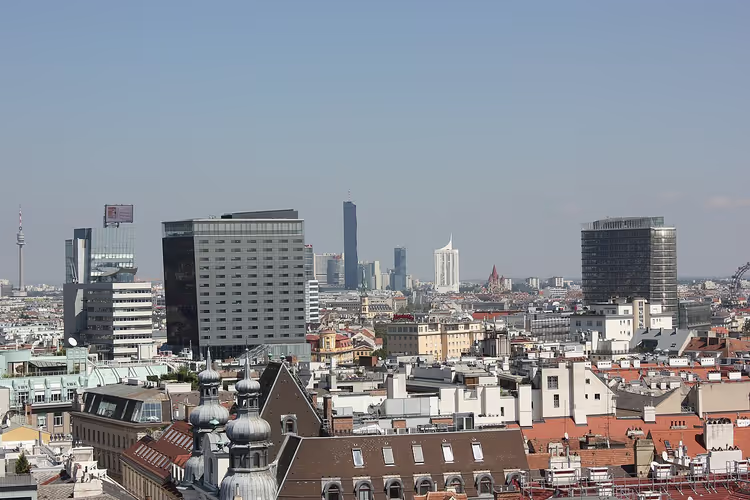 © Andrzej Otrębski · CC BY-SAPhoto: Andrzej Otrębski, CC BY-SA (https://creativecommons.org/licenses/by-sa/4.0), Wikimedia Commons
The Haus der Musik is housed in the building where Otto Nicolai, founder of the Vienna Philharmonic, once lived. The exhibits relate to his work: awards, conductor's batons, records, and concert attire. Further on, there is a multimedia section with visual and sound effects (as of 09/2026, Haus der Musik website).
One of the rooms brings together all the sounds of the world: rustling leaves, city noise, the roar of a rocket launch, and even the heartbeat of a fetus in the womb. On interactive screens, you can try out different shades of your own voice and conduct an orchestra with a baton. Separate exhibitions are dedicated to Mozart, Beethoven, Strauss, and Haydn. The museum is open daily from 10:00 to 22:00. An adult ticket costs about €13, a child ticket from €6 (as of 09/2026, Haus der Musik tickets). For music lovers, we would add a Mozart concert at the Golden Hall of the Vienna Philharmonic. The catch: some of the rooms are geared toward children, and it gets noisy here on weekends.
18. MUMOK Museum of Modern Art
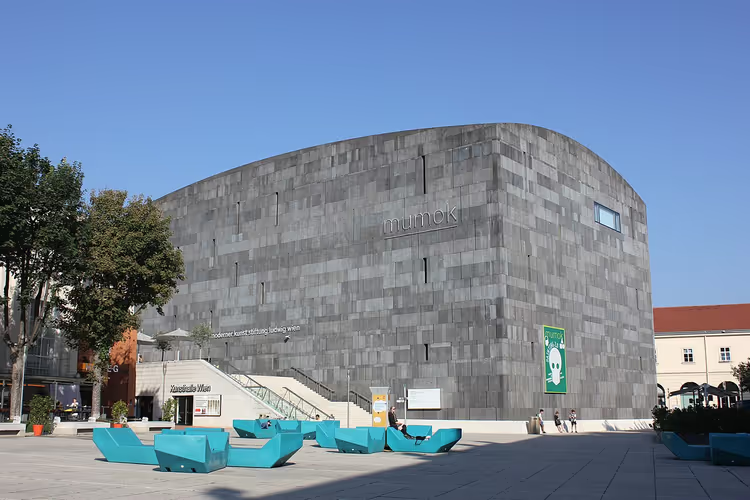 © Andrzej Otrębski · CC BY-SAPhoto: Andrzej Otrębski, CC BY-SA (https://creativecommons.org/licenses/by-sa/4.0), Wikimedia Commons
In the MuseumsQuartier, next to the old stables, stands a gray building with a curved roof and narrow slits instead of windows. This is MUMOK, the museum of modern art. The collection numbers around 9,000 exhibits. Inside are spacious white halls with paintings, sculptures, audio and video installations, performances, and abstract graphic art (as of 09/2026, MUMOK website).
Many of the works are provocative and challenge conventional taste. This is not a classical museum but a platform for debate about politics and society. Opening hours are flexible: Tuesday through Friday from 10:00 to 19:00, Monday from 14:00 to 19:00, and until 21:00 on Thursdays. A ticket costs about €12 (as of 09/2026, MUMOK tickets). Go here after the classics at the Belvedere to feel the contrast. Not for those looking for straightforward painting and a traditional hanging style.
19. Museum of Applied Arts
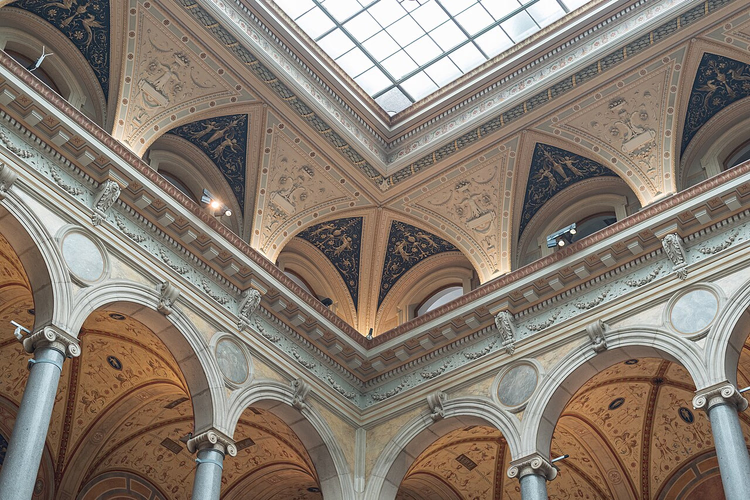 © Flocci Nivis · CC BY-SAPhoto: Flocci Nivis, CC BY-SA (https://creativecommons.org/licenses/by-sa/4.0), Wikimedia Commons
This is one of the most substantial collections of applied arts in Europe. The exhibits span from the Middle Ages to the present day, featuring designer objects for beauty and everyday life. The museum welcomed its first visitors in 1872, and a school was opened alongside it where Klimt and Kokoschka studied (as of 09/2026, MAK website).
The exhibition space of about 2,700 sq m displays objects made of glass, porcelain, silver, and textiles. A separate collection features Persian carpets, wrought metal tableware, and oriental figurines. The museum is closed on Mondays, open on Tuesdays from 10:00 to 22:00, and Wednesday through Sunday from 10:00 to 18:00. A standard ticket costs about €12, and on Tuesdays from 18:00 to 22:00 admission is cheaper (as of 09/2026, MAK tickets). Tickets to the Museum of Applied Arts. The catch: some rooms are closed between exhibitions, so the full collection is not always on view.
20. Clock and Watch Museum
 © C.Stadler/Bwag · CC BY-SAPhoto: C.Stadler/Bwag, CC BY-SA (https://creativecommons.org/licenses/by-sa/4.0), Wikimedia Commons
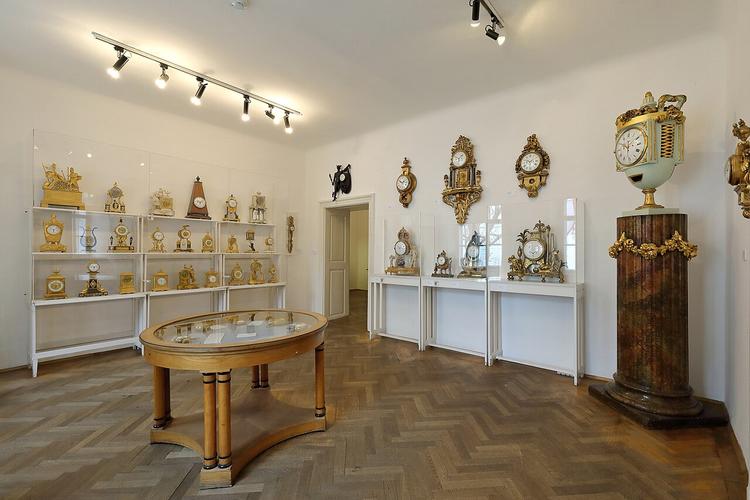
A clock and watch museum operates in an old three-story building. The collection consists of about three thousand pieces that trace the history of clockmaking from the 15th century onward. It includes pocket watches, wristwatches, mantel clocks, table clocks, sundials, longcase clocks, and street clocks (as of 09/2026, Clock Museum website). The dials are decorated with paintings, vases, figurines, and caskets.
The 18th-century astronomical clock "Cajetano" deserves special attention. It shows the length of the day, the movement of planets along their orbits, and solar and lunar eclipses. The museum welcomes visitors Tuesday through Sunday from 10:00 to 18:00. Tickets cost about €7 for adults and about €5 for seniors and students up to age 27 (as of 09/2026, Clock Museum prices). Address: Schulhof 2. The catch: it is an intimate space, and an hour is enough to see it.
21. Museum of Criminology
A small museum of criminology is housed in a former 17th-century soap factory. It tells the story of notorious crimes and the judicial system of the Austro-Hungarian Empire. The exhibits include authentic police reports, case files, murder weapons, photographs of victims, and physical evidence (as of 09/2026, Museum of Criminology website).
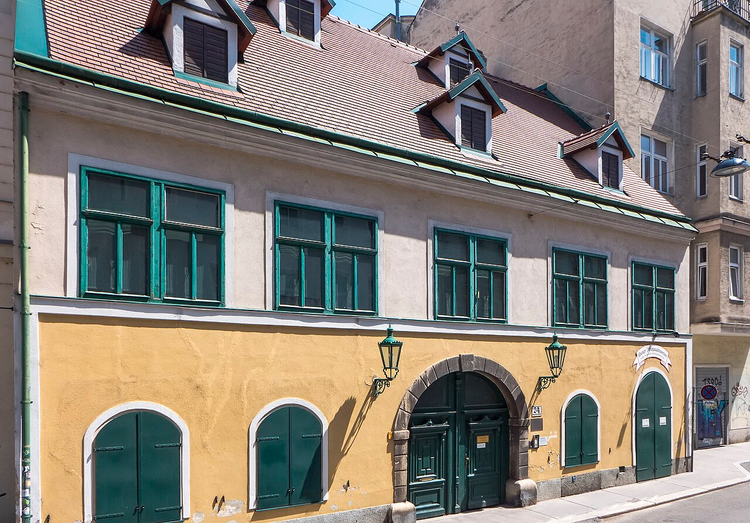
On display are police uniforms from different eras, skulls of criminals, and embalmed body parts. One room recreates the interior of an interrogation chamber with torture instruments. The museum is open Wednesday through Sunday from 10:00 to 17:00, and admission costs about €6 (as of 09/2026, Museum of Criminology tickets). The atmosphere is grim, and this is not a place for children. Stop by if you enjoy criminal history. The catch: some exhibits are just as gruesome as those in the Tower of Fools.
22. Secession
 © C.Stadler/Bwag · CC BY-SAPhoto: C.Stadler/Bwag, CC BY-SA (https://creativecommons.org/licenses/by-sa/4.0), Wikimedia Commons
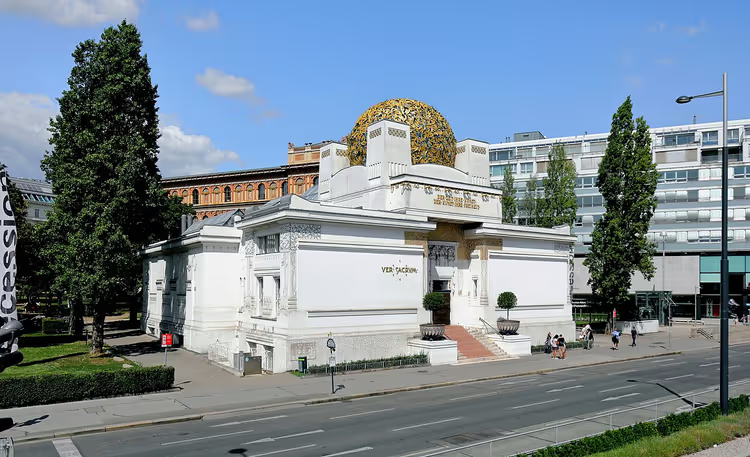
Not far from the Ringstrasse stands a cube-shaped building with a gilded dome made of openwork laurel branches. This is the Secession gallery, where contemporary art is exhibited. In the late 19th century, the Vienna modernist movement was led by Gustav Klimt, and the artists' main goal was to break away from the conservative academy (as of 09/2026, Secession website).
The first exhibition took place in 1898 and introduced Vienna to works by Van Gogh, Manet, Renoir, and Degas. The museum's main exhibit is Klimt's "Beethoven Frieze," a cycle of wall paintings based on the Ninth Symphony. The gallery is open daily except Monday from 10:00 to 18:00. A ticket costs about €9.50 (as of 09/2026, Secession tickets). The catch: the upper hall with the frieze is small, and a visit takes less than an hour.
23. ZOOM Children's Museum
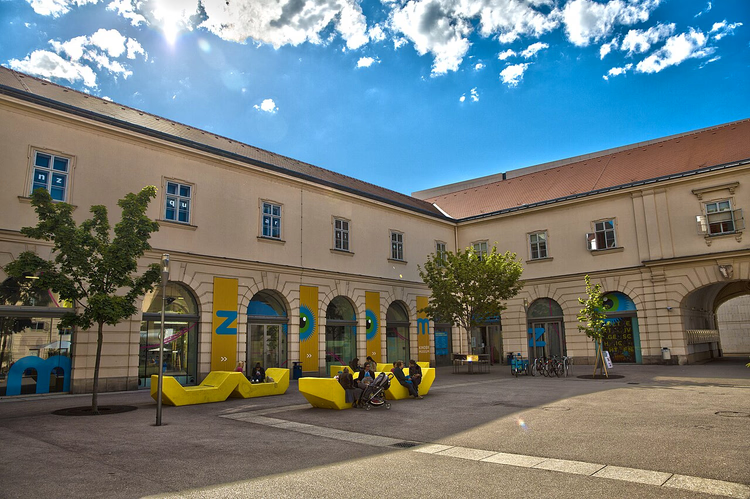
ZOOM is an entertainment complex with interactive halls for children of different ages. The exhibitions are divided into zones, each developing vision, hearing, coordination, attention, and motor skills through play. Children make cartoons, installations, and musical experiments here (as of 09/2026, tourism office website about ZOOM).
 © Max Wittmann · CC BY-SAPhoto: Max Wittmann, CC BY-SA (https://creativecommons.org/licenses/by-sa/3.0), Wikimedia Commons
A child can try on the profession of a doctor, shop assistant, or builder. The halls are designed for different ages, so younger and older children don't get in each other's way. The museum is open daily except Monday: on weekdays from 9:00 to 15:30, on Saturday and Sunday from 10:00 to 16:00. Tickets start at €5 and depend on the chosen studio (as of 09/2026, ZOOM schedule). Who it's for: families traveling to Vienna with children aged three to twelve.
24. Mozart House
 © Joseolgon · CC BY-SAPhoto: Joseolgon, CC BY-SA (https://creativecommons.org/licenses/by-sa/4.0), Wikimedia Commons
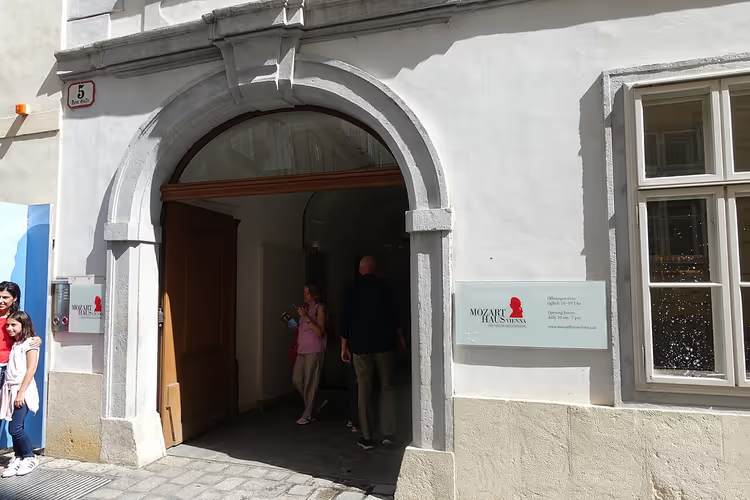
In the center of Vienna, next to St. Stephen's Cathedral, stands an old residential building. Wolfgang Amadeus Mozart lived on the second floor from 1784 to 1787. This is the composer's only surviving apartment, and it was here that he wrote the opera "The Marriage of Figaro" (as of 09/2026, Mozart House website).
Today it is a museum where the atmosphere of that time has been recreated. Furniture, musical instruments, scores, manuscripts, costumes, and the composer's personal belongings are on display here. Video installations tell facts from his biography. The museum is open daily from 10:00 to 19:00. An adult ticket costs about €11, for seniors and students about €9 (as of 09/2026, Mozart House tickets). Tickets to Mozart House. The catch: the apartment is small, and it gets crowded when a group is inside.
25. Jewish Museum
 © C.Stadler/Bwag · CC BY-SAPhoto: C.Stadler/Bwag, CC BY-SA (https://creativecommons.org/licenses/by-sa/4.0), Wikimedia Commons
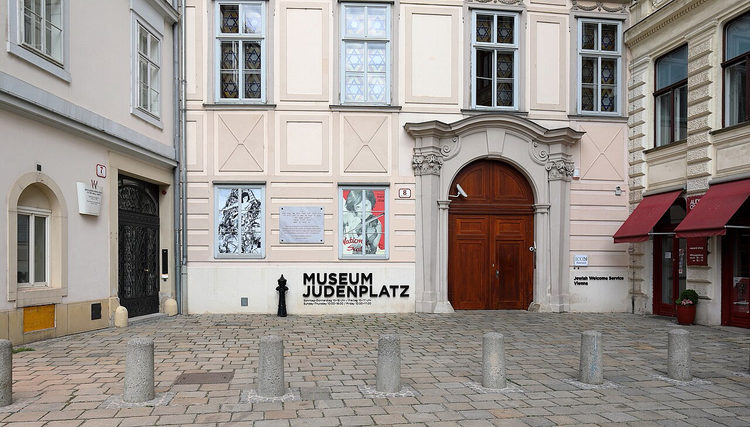
The exhibition is dedicated to the history of Vienna's Jewish community. Much of the collection tells the story of Sigmund Freud, writer Stefan Zweig, politician Theodor Herzl, and composer Gustav Mahler. It houses paintings, jewelry, tableware, printed publications, and ancient manuscripts (as of 09/2026, Jewish Museum website).
With the help of animation, visitors can see what Vienna's destroyed synagogues looked like. The museum welcomes guests from Sunday to Friday, with hours usually from 10:00 to 18:00. A ticket costs about 12 € (as of 09/2026, Jewish Museum tickets). The museum is a stone's throw from the Mozart House, so both sites are easy to combine in one day. Not for: those planning only a short walk through the center without going inside.
Vienna museums on the map
The map below shows all 25 places from the list. The center is compact, and you can walk to half of the museums in a day.
Museums of Vienna
Places on the map
- 1Albertina Graphic works by Dürer, Rembrandt and Picasso, tickets around 20 euros, open until 21:00 on Wednesdays and Fridays
- 2Schönbrunn Palace The Habsburgs' summer residence with 1,441 rooms, a park with a zoo, tickets by time slot
- 3Belvedere Two palaces of Prince Eugene of Savoy and a park between them, the park is free
- 4Liechtenstein Museum A Baroque palace from 1700 with Rubens and Rembrandt, guided tours on Fridays
- 5Hofburg The Habsburgs' winter residence: 19 palaces and 2,600 rooms, Sisi's apartments
- 6Weltmuseum Over 250,000 artifacts in the south wing of the Hofburg, closed Wednesdays, tickets around 12 euros
- 7Narrenturm A pathological anatomy museum at Spitalgasse 2, around 4,000 specimens, a heavy subject
- 8Street Art Gallery A street art venue since 2006, 170 square meters, closed Sundays and Mondays
- 9Hundertwasser House A residential building without straight lines, no entry inside, viewing from outside takes 15 minutes
- 10Sigmund Freud Museum An apartment at Berggasse 19 where the founder of psychoanalysis lived for 47 years, a visit takes about an hour
- 11Kunsthistorisches Museum Bruegel, Dürer, Titian and Rubens under a 60-meter dome, tickets around 20 euros
- 12Leopold Museum Austrian Expressionists in the MuseumsQuartier, closed Tuesdays, entry around 13 euros
- 13Natural History Museum Over 20 million items in 39 halls, free for children under 19, closed Tuesdays
- 14Museum of Military History Franz Ferdinand's car and weapons from the 16th-20th centuries, tickets around 6 euros
- 15Technical Museum 80,000 exhibits: cars, planes, machine tools and locomotives, tickets around 13 euros
- 16House of Music A multimedia exhibit about sound and the Viennese classics, open daily until 22:00
- 17MUMOK Museum of Modern Art About 9,000 exhibits in the grey building of the MuseumsQuartier, tickets around 12 euros
- 18Museum of Applied Arts (MAK) Glass, porcelain, silver and Persian carpets, open until 22:00 on Tuesdays
- 19Clock Museum About three thousand clocks from the 15th century and the astronomical Cajetano, an hour is enough for a visit
- 20Museum of Crime A 17th-century soap factory building, Austro-Hungarian case files and evidence, not for children
- 21Secession A gilded dome on the Ringstraße and Klimt's Beethoven Frieze, tickets around 9.50 euros
- 22ZOOM Children's Museum Interactive studios for children aged three to twelve, tickets from 5 euros
- 23Mozart House The composer's only surviving apartment, where The Marriage of Figaro was written
- 24Jewish Museum The history of Vienna's Jewish community, just steps from Mozart House, tickets around 12 euros
If you don't want to walk in circles, take the Vienna hop-on hop-off bus: it runs along the Ringstrasse loop and stops at the main museums and palaces.
Tours and tickets in Vienna
Guided tours, skip-the-line tickets and activities — most offers can be cancelled free of charge.
See offers on TiqetsThe widget loads once you give your consent.
⁉️🤔 Frequently asked questions
On which days are Vienna museums closed?
Most museums are closed on Mondays, including the MAK, the Secession, and ZOOM. Some venues have a different day off: the Leopold Museum and the Natural History Museum are closed on Tuesdays, the Weltmuseum on Wednesdays. Always check the day on the official website before visiting, as seasonal exhibitions change their schedules.
How much does admission to Vienna's main museums cost?
A standard ticket to a major museum ranges from 10 to 22 €. The Albertina and the Kunsthistorisches Museum charge around 20 €, the Belvedere around 22 €, the Leopold Museum and the Technical Museum around 13 €. Children's tickets are cheaper, and admission to the Natural History Museum is free for visitors under 19 (as of 09/2026).
Is there a combined ticket for Vienna museums?
There is no single combined ticket covering all museums. Instead, city passes and combo tickets are available. The Vienna Pass and Vienna Card offer discounts or free admission to dozens of museums and usually include public transport, so they pay for themselves by the third venue in a day.
Which museum should I choose with kids?
With kids, start with the ZOOM Children's Museum, where the exhibits are designed for ages three and up. After that, the Technical Museum with its steam locomotives and airplanes, the House of Music with interactive screens, and the Natural History Museum with dinosaur skeletons are all good options.
How much time should I allow for one museum?
An hour and a half to two hours is enough for a typical museum. For major collections like the Kunsthistorisches Museum or the Natural History Museum, plan at least three hours. In one day, you can realistically cover two large museums or three smaller ones if they are close together.
In short: what's worth booking
Vienna is convenient because half of its museums are within walking distance in the center. If you have two days, visit one major art museum in the morning and save the second for an evening with extended hours. If you have kids, put ZOOM and the Technical Museum on your itinerary. If you're going for a week, combo tickets and passes will pay off faster than individual admissions.
You only need to decide two things in advance: where to stay and how to get from the airport. Vienna hotels on Trip.com are easy to filter by district, and the Vienna Pass covers admissions and transport for your entire trip.

A small editorial team writing guides for independent travel. We travel ourselves, but we haven’t been everywhere, so we check prices, opening hours and how to get there against official sources.