













Edinburgh Fringe: how to choose a show, buy tickets and where to stay in August
August in Edinburgh is like nothing else. In just three weeks the city turns into one enormous stage hosting more than three thousand shows. The Edinburgh Festival Fringe in 2026 runs from 7 to 31 August (as of 09/2026, festival website).
Making sense of this chaos on your first visit is almost impossible. Tickets have gone digital, venues are scattered all over the centre, and seats for the best shows are snapped up before the festival even opens. You arrive in a city where someone is singing, juggling or touting their show on every corner. By day two you have lost your bearings in the Fringe.
The tourism.com.de editorial team put this guide together so that you have a plan instead of panic. We will look at how the festival works, where to buy tickets, how to read the posters and where to sleep in a city that is packed to the rafters in August.
In short, the essentials. Tickets are now electronic: after you buy, an email with a QR code lands in your inbox, and there is no need to collect a paper ticket from the box office. The quality of the performances varies wildly, so alternate paid shows with free ones.
Ad: this text contains affiliate links, we earn a commission from them, and the price for you does not change.
The festival goes by several names: Edinburgh Festival Fringe, the Edinburgh Fringe or simply the Fringe. Some people say "the Edinburgh Festival", but that is inaccurate, because the city hosts eleven official festivals every year. There is only one official name: Edinburgh Festival Fringe.
The Fringe festival: history and principles
💡 In short:
- The festival runs for three weeks in August, and in 2026 that means 7-31 August.
- Any artist can perform without being selected, so the quality of shows varies wildly.
- Tickets are electronic, and accommodation for August is worth booking six months ahead.
- Dates and ticket sales: 09/2026, checked on the festival website.
 © Quejaytee · CC BYPhoto: Quejaytee, CC BY (https://creativecommons.org/licenses/by/4.0), Wikimedia Commons
The Fringe is the world's largest arts festival. Every August Edinburgh hosts several thousand shows at hundreds of venues, from theatre auditoriums to pub basements. In number of performances, the Fringe long ago overtook all the other Edinburgh festivals combined.
The story began in 1947. Back then the Edinburgh International Festival took only invited artists, and the only way into the programme was to be selected. In response, several companies came to the city and staged their productions on the edge of the main programme, on the "fringe". By 1958 the movement had grown, and the Festival Fringe Society was founded.
The main principle of the Fringe has survived to this day. It is an open-access festival: anyone can perform anything, with no selection and no censorship. That is why a polished stand-up show and a student experiment that may flop in front of the audience sit side by side on the same street.
The quality is very uneven as a result, and that is part of the point too. An open-access festival is a lottery where you might catch a future star or a weak performance. Historically there was a rivalry between the Fringe and the International Festival, but it has almost disappeared: both programmes run on the same dates, and it makes sense to see productions from both.

Fringe 2026 dates and duration
The Edinburgh Festival Fringe 2026 runs from Friday 7 August to Monday 31 August (as of 09/2026, schedule on the festival website). That is a little over three weeks, taking in four weekends.
The dates shift every year, but the logic stays the same. The festival starts on the first Friday of August and ends on the Monday after the fourth weekend. If you are planning a trip for a future year, go by this rule.
The first days of the Fringe are quieter than the middle of the month. If you want to see the city without the biggest crowds, come in the first week: tickets for many shows are still available and the streets are emptier. The last week, by contrast, is the busiest, because it also draws the tourists who come only for the finale.
Mid-August is the peak across the whole city. Hotels are at their most expensive, restaurants have long queues, and on the popular streets it is hard to walk at a brisk pace. On these days, plan fewer transfers than seems reasonable to you.
The scale of the festival and its genres
The scale is easier to grasp in numbers. In 2025 the Fringe hosted 3,893 shows, which is 53,942 performances at 301 venues, and more than 2.6 million tickets were issued in total; artists came from 62 countries (as of 09/2026, festival statistics). The figures change every year, but the order of magnitude stays the same.
Both world stars and complete unknowns take to the stage. The reason is the same as ever: the festival is open, there is no selection, so first-timers perform alongside seasoned comedians. In this setup the Fringe Society is responsible for the infrastructure: venues, printed programmes, ticket sales and information for artists and audiences.
Comedy is the biggest genre at the Fringe. Roughly a third of all performances are stand-up and comedy shows, which is why the festival is associated with them first and foremost. But there are no restrictions on genre: the programme includes theatre, classical music, circus, cabaret and opera.
The genres are not evenly spread. Comedy mostly plays at the big venues and in city-centre pubs, theatre and experimental work tend to live on the edges of the programme, and music can be heard both on stage and right out on the streets. So if you are after one particular genre, filter the programme by it in advance.
The streets have a life of their own during these weeks. On and around the Royal Mile you will find street performers: acrobats, magicians, musicians. It is a free way to experience the Fringe between paid shows, and it is the street programme that gives the city its atmosphere.
How to perform at the Fringe yourself
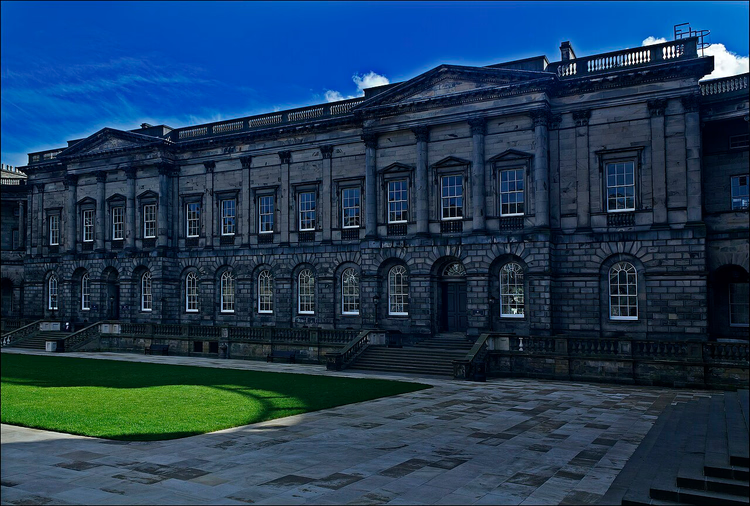
Yes, anyone can perform at the Fringe. There are no specific experience requirements, because the festival is open. If you want to put on your own show, you need to register: find a venue, choose a format and decide whether the performance will be paid or free. The detailed sequence of steps is set out in the artists' section on the festival page.
 © dun_deagh · CC BY-SAPhoto: dun_deagh, CC BY-SA (https://creativecommons.org/licenses/by-sa/2.0), Wikimedia Commons
Registration begins long before August. You need to reserve a slot at a venue, pay the fee and get into the printed programme, otherwise audiences simply will not find your show among thousands of others. The sooner you settle on a venue and a format, the better your chances of getting a convenient time.
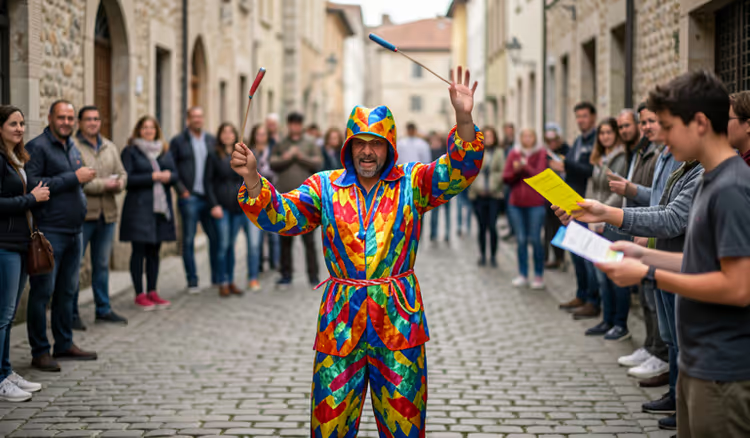
If you do not fancy the hassle of staging your own production, there is an easier way. Many shows are built on audience participation, and you can get involved straight from your seat. That way you end up inside the Fringe without preparing a programme or hunting for a stage.
 AIIllustrative image: AI-generated
Festival venues and districts
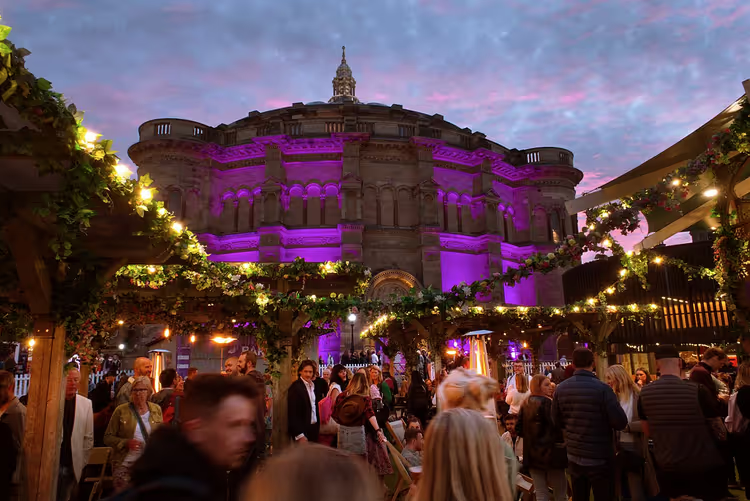
The festival is not tied to a single palace or park. There are more than three hundred official venues, and they are scattered across the whole city: from street corners and pubs to large halls with theatre seating. A single venue often runs several stages, so the total number of places where you can watch a show is over a thousand.
History has seen some truly unexpected venues as well. Performances have taken place on the back of a motorbike, in portable toilets and in a taxi. But in most cases they are ordinary halls and bars after all. Artists apply to each venue separately, and those closer to the centre are always more popular with performers.
Some venues specialise in a particular genre. Some host mainly comedy, others theatre or experimental productions. Some venues operate only during the Fringe, opening for three weeks in converted halls, bars and courtyards and then vanishing until the following year.
There is a practical difference between venues too. The big halls are closer to transport and built to handle a steady flow of audiences, while the small ones hide down alleyways and take time to find. If you are going to several shows in a row, choose venues in the same area, otherwise your day will be spent crossing the city.
When you come for the first time, the venues blur into one mass. To make things easier, we have split the main groups by type of experience.
Venue or operator | Where it is | What you will find | Tickets |
|---|---|---|---|
Assembly, Gilded Balloon, The Pleasance, Underbelly (known as the "Big Four") | The area around George Square, Bristo Square and The Pleasance, south of the Royal Mile | The biggest names and polished productions, plus bars and food | Paid, popular slots sell out in advance |
Summerhall, theSpaceUK, C venues | Summerhall in the Newington area, the rest in the centre | More experimental work and theatre, lots of new names | Mostly paid, usually cheaper than the "Big Four" |
The Free Festival and PBH’s Free Fringe | Pubs and back rooms around Cowgate and Grassmarket | Free entry, with a voluntary contribution collected at the end | Free, pay what you think it was worth |
Street performers | The Royal Mile and The Mound area, some streets are closed to cars | Circus, magic, music and physical comedy in the open air | Free, you can leave a coin |
It is worth remembering the districts, not just the venue names. Most of the action is concentrated between the Royal Mile, George Square, Bristo Square and Grassmarket: the bulk of the evening shows are within walking distance here. If you are staying in this belt, you can reach most performances on foot.
In August, taking a walk without the Fringe is almost impossible. The centre is so densely packed with venues that you will not go a couple of minutes without a poster or a tout. It is inspiring and slightly overwhelming at the same time, so next it is worth working out how to choose the shows themselves.
 © Basil Jean · CC BY-SAPhoto: Basil Jean, CC BY-SA (https://creativecommons.org/licenses/by-sa/4.0), Wikimedia Commons
How to find the best shows at the Fringe
This is the big question for everyone heading to Edinburgh in August. Which Fringe show is really worth your money and time?
The honest answer: there is no universal method. Everyone wants to see a future star or the best show of the festival, and you have to choose from thousands of titles. But there are eight tried and tested tricks that narrow the search considerably and help you avoid wasting days.
Tip 1: use the official Fringe resources
The first place to look is the official Fringe website. Shows appear there earlier than anywhere else, usually long before August.
The site has a handy catalogue. You can filter shows by date, genre and venue, view free performances separately, save the ones you like to your favourites and build your own Fringe calendar. It is convenient to keep the calendar open on your phone, so you can see your slots and do not mix up venues. Tickets are sold there too, which we will cover below.
It is worth adding the printed programme to the catalogue. It is handed out around the city at the start of the festival, and it lets you browse shows without a screen, marking whatever catches your eye.
If you want members-only news and offers, take a look at the Fringe Friends membership. An annual subscription costs around 50 £ (as of 09/2026, Fringe Friends) and gives you a dedicated box office, early access to tickets and special offers. With a busy schedule, the membership pays for itself within a few purchases. If you are coming for a week and planning lots of shows, it makes sense, but for a day or two probably not.
Tip 2: read local news sites
Edinburgh newspapers and arts websites write about the Fringe long before it starts. Months ahead of the festival they publish reviews and round-ups of shows not to miss.
Useful local sources include Edinburgh Live, The Scotsman, the Edinburgh Festival section of The List, The Edinburgh Reporter and the theatre news on WhatsOnStage. The big shows are also covered by national outlets such as The Guardian and the Times, as well as comedy sites like Beyond the Joke. Each source has its own taste, so compare two or three lists instead of trusting just one.
Bear in mind a simple pattern: as soon as a show makes the national press, tickets go fast. If you like the description and tickets are still available, grab them straight away, because the slot may be gone a day later. Last season's reviews are useful too: they show how the artist performed last year and whether they are worth your evening.
Tip 3: go to previews
Many of the big venues, and the "Big Four" in particular, put on previews of their programmes. These are short mixed-bill performances before the festival or right at its start.
A preview is a cheap way to get a feel for what is happening at the Fringe in a single evening. Venues usually put their best artists forward for these nights, and tickets for the full shows are then sold right at the box office on site. If you do not know where to begin, begin with a preview.
Here is how it works: over the course of the evening you watch several short excerpts and note who you want to see in full. This saves time and lowers the risk of ending up at a weak show, because previews are hand-picked.
Tip 4: look for returning shows
Some artists come to the Fringe once, but many return for a second year and beyond. Those performances have already been tested on an audience.
If an artist is coming to the Fringe for a second year running, it is usually a sign that things went well last time. Last season's reviews are often freely available, and they show whether the show is right for you. Artists who come back year after year tend to be well known and consistent, so this is a relatively safe bet.
The downside is that tickets for popular returning names cost more and go sooner. But for a first trip it is the simplest way to pick a quality evening and not be disappointed.
Tip 5: keep an eye on social media
During the festival, social media gives you the most up-to-date picture. If people have seen a strong show, they post about it, and if it was weak, they post even more eagerly.
The easiest place to start is X: follow the hashtag #edfringe and the general #Edinburgh. It is worth following the official Edinburgh Festival Fringe account and the city account This is Edinburgh. Instagram and Facebook work too, but their posts are not always public, so X is handier for live reactions.
Following the artists themselves also works well. Many comedians and companies run accounts and announce extra shows and spare seats during the festival. If you enjoyed a show, follow that artist: they often have another night at a different venue.
Tip 6: check the "Big Four"
The four big venue operators are popular with artists. As a result, selection there is stricter and your chances of catching a quality performance are higher.
These venues spend a lot on advertising, so it matters to them to recoup the investment with shows that audiences will actually go to. That is no guarantee: a free show in a pub basement may turn out to be more memorable than a paid one. But as a starting point the "Big Four" is reliable, especially in the first few days while you are still finding your feet in the city.
On top of that, these venues have several rooms close together, so you can see two shows in one evening without long walks. For a first evening at the Fringe it is a convenient option: straightforward logistics and a predictable standard.
Tip 7: walk the Royal Mile
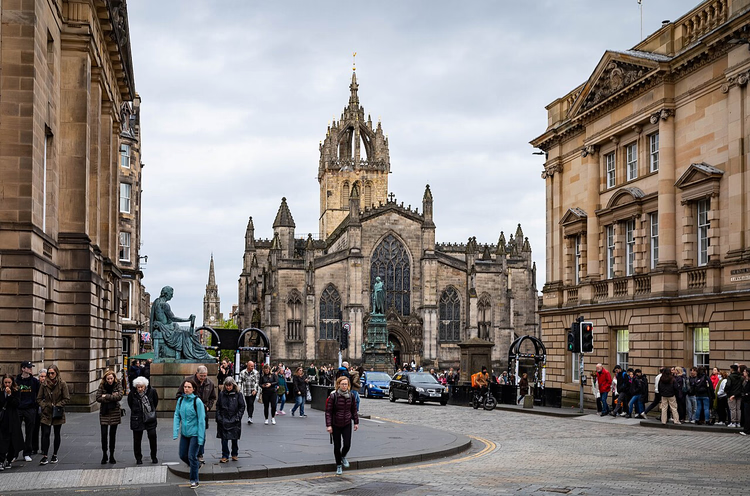
During the Fringe the streets fill with artists talking up their shows. The main flow runs along the Royal Mile and around Cowgate and Bristo Square, but in the centre someone will hand you a flyer at almost every step.
 © rboed* · CC BYPhoto: rboed*, CC BY (https://creativecommons.org/licenses/by/2.0), Wikimedia Commons
It is easy to get carried away with flyers. You take the first one calmly, and after that you become a magnet for the other artists, and your pockets quickly fill with paper for shows you will never make it to anyway. So be selective: if a show feels like your kind of thing, chat to the person with the flyer and find out the details, and it is better to photograph the flyer itself.
Posters are everywhere, and you can use them to get your bearings too. A poster will not tell you whether the show is good, but it will give you a hint about the genre and about what is on nearby. Write down the titles that caught your attention: by evening only some of them will still be in your head, and a notebook or a note on your phone will keep the rest.
Tip 8: don't try to chase everything at once
Fear of missing out in August Edinburgh is a problem in its own right. Dealing with it in advance is more useful than running between venues.
Do not try to see everything. Go for variety: paid and free, famous and unfamiliar, comedy and theatre. The most memorable shows often turn out to be the ones you knew nothing about, and those are the ones you end up telling your friends about.
Comparing shows with one another is pointless. Each has its own room, its own time slot and its own audience mood, so the same performance feels different in the evening and in the afternoon. Just accept that covering three thousand shows is impossible, and enjoy what you did manage to see.
Do you need tickets for Fringe shows
The answer depends on the show and the venue, but on the whole you do need tickets. Three main models operate at the Fringe.
The first is the familiar one: shows are sold at a fixed price, and you buy a ticket in advance for a specific date and time.
The second group is free shows. Some are ticketed and others are not, but audiences are almost always invited to leave a donation at the end, most often in a bucket or a hat passed around the room. Most of the free programme is put on by two organisations, The Free Festival and PBH’s Free Fringe, and their websites are a handy place to look for such performances.
The third model is a hybrid. You can buy a ticket in advance to guarantee you get in, and still pay extra if you wish once the show is over. This is useful when you are worried about not getting in under the free scheme but do not want to pay full price for an unfamiliar act.
Street performances are a separate story. You usually do not need a ticket for them: it works on a "pay what you want" basis, and the money is collected after the act. Leaving a donation at a free show is considered the norm, and there is no minimum amount.
A practical tip: decide in advance how many evenings you are willing to fill with paid tickets. If your budget is tight, you can easily build half your schedule from free shows and street performances, and spend the money on two or three headline evenings.
Where to buy Fringe tickets
There are several options, and the choice depends on which show and which venue you are going to.
For buying in advance, the first port of call is the official Fringe box office. Tickets for shows start going on sale from January, and the closer the date, the more performances become available. That said, not all artists offer early sales, so do not be surprised if some shows only appear in June.
If you have become a Fringe Friend, you will have access to a dedicated box office, as well as early-access and discounted tickets.
The full Fringe programme usually comes out in early June. From that point tickets for all shows go on sale, and you can buy them:
on the Edinburgh Fringe box office website;
by phone on +44 (0)131 226 0000;
in person at the Fringe box office at 180 High Street, Edinburgh.
These contact details and the address are published on the box office page (as of 09/2026, Fringe Box Office). Under the festival rules, an artist must sell at least a quarter of their tickets for each performance through the Fringe box office. For in-demand shows this is the best channel, although not everyone supports early ticket releases.
During the festival the Edinburgh Fringe app comes in handy: it is available for iOS and Android, and you can use it to search for and buy tickets on the go. Bear in mind that in August mobile internet in the centre is overloaded and the connection can be slow. So buy ahead somewhere with a stable connection, not in a crowd on the street.
For cheap tickets, the Half Price Hut operates close to the venues. It sells discounted tickets for the same day, and its exact location changes, so check the Fringe website. Discounts and two-for-one offers also appear on the official channels.
Besides the Fringe box office, many venues run their own sales: online, at the on-site box office or right at the door. If you know that the artist you want is performing at a particular venue, it is worth checking its website, because it may have its own ticket release schedule.
Tickets often come from different pools. If a show is marked as sold out at the Fringe box office, the venue may still have tickets, and vice versa. Some seats are occasionally held back for people who turn up at the door, so before you give up, call the venue.
If you want to round out the Fringe with tours of the city, take a look at tours and tickets on GetYourGuide.
Tours and tickets in Edinburgh
Guided tours, skip-the-line tickets and activities — most offers can be cancelled free of charge.
See offers on GetYourGuideThe widget loads once you give your consent.
Buy your tickets in two rounds. First lock in the shows you are travelling for, then keep some budget for spontaneous tickets during the festival. That way you will not miss out on your big evening or overpay for everything else.
How to get your Fringe tickets
Here is the good news: the system is fully digital, and you no longer need to collect tickets in person.
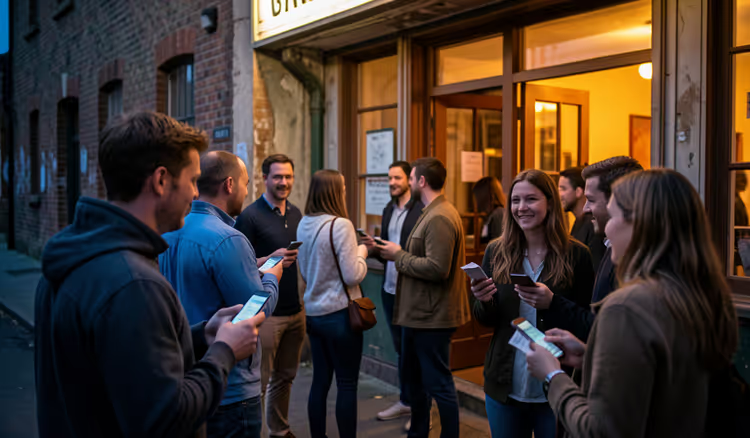
When you buy through the official box office, you receive an e-ticket with a QR code by email. You can add it to Apple Wallet or Google Wallet, open it in the Fringe app under "My Tickets" or simply print it at home. At the venue a member of staff scans the QR code from your phone or printout, and you go in. Queues at the collection point and waiting for paper tickets are a thing of the past.
If you booked directly with the venue, the ticket is usually electronic too, but the system may differ. So keep the confirmation email to hand: sometimes that is exactly what you are asked to show at the door.
There is one practical point. In August, phone signal and mobile data in central Edinburgh work poorly, and the streets are overcrowded. Download your ticket or take a screenshot in advance so you are not trying to load it at the door. If you are going to several shows a day, put the tickets in a single album on your phone, and you will not be scrolling through your email in the queue.
If there are several of you in your group, check that the tickets are all in one place. That way you will not be hunting for the right QR code across different phones at the door when seating begins.
 AIIllustrative image: AI-generated
Fringe accessibility for disabled visitors
In recent years the Fringe has become noticeably more accessible. Wheelchair access has been improved, and closed captions and sign language interpretation have been added.
But there is no universal accessibility, because there are hundreds of venues and they are all laid out differently. Each venue decides for itself, and the level of provision varies greatly from one room to the next. Old buildings in the centre often have not been adapted, and temporary venues depend on what the organisers managed to build.
The best tool is the Fringe box office website: there you can filter shows by accessibility, for example to show venues with wheelchair access, or performances with captions or sign language interpretation. The festival has a dedicated accessibility section and staff who help with specific requests, from arranging assistance to tickets for a personal assistant. Contact details for requests are published on the Fringe box office page.
Plan accessible shows in advance. If you have specific requirements, write to the venue before buying a ticket and check the entrance, the lift and the seating in the room. That way you will not find yourself in front of a broken lift on the day of the show.
Other Edinburgh festivals in August
The Fringe is not the only thing on in Edinburgh in August. Many people are surprised, but the city hosts five festivals at once, and their dates partly overlap.
Besides the Fringe, four more are scheduled for 2026:
Edinburgh International Festival (7-30 August). The original performing arts festival, with shows at six main venues and on smaller stages across the city. The programme features opera, dance, classical theatre and music.
Royal Edinburgh Military Tattoo (7-29 August). The most popular of the Edinburgh festivals, with a TV audience in the millions. Military bands perform against the backdrop of a floodlit Edinburgh Castle.
Edinburgh Art Festival (14-30 August). The festival takes over museums, galleries and temporary spaces. Exhibitions, performances and installations, with most of them free to enter.
Edinburgh International Book Festival (15-30 August). If you want a breather from the bustle of the Fringe, head here. Since 2024 the festival has been held at the Edinburgh Futures Institute on Lauriston Place: a place to buy a book, listen to an author and slow down.
If you plan to take in several events, check the dates beforehand, because they partly coincide. Tickets for the Tattoo and the book festival are also worth buying in advance: they are popular with locals, not only with tourists.
Where to stay during the Fringe
The good news is that Edinburgh has a wide choice of accommodation: from hostels to five-star hotels and short-let apartments.
There is bad news too. Even with that much choice the city fills up in August, and for the whole month Edinburgh runs at close to full capacity.
So book as early as you can if you want a say in the area and the type of room. Prices in August are also higher than usual because of demand, and this applies to every category, from a hostel bunk to a city-centre suite.
There is some practical logic to choosing an area as well. Accommodation closer to the Royal Mile and Grassmarket is more convenient for evening shows, because you can walk to the venues. Options near the station win on transport, but in the evening you will have a longer walk or a ride. If you are booking ahead, choose according to how you plan to end your evenings.
Below are options in ascending order of budget. We have arranged them from the most basic to the most expensive.
Castle Rock Hostel. A large castle-themed hostel with beds in dorms and private rooms. Adults only, and the view of the castle is one of the best among local places to stay. The main Fringe venues are within walking distance.
Royal Mile Backpackers. A hostel right on the Royal Mile, with dorm rooms. You step straight out into the heart of the action without wasting time on travel.
Stay Central Hotel. A small budget hotel with rooms for 2-9 people. It suits a group that wants to save money and stay together.
Elder York Guest House. A budget to mid-range B&B. The rooms are small but comfortable, and the breakfast is good. Important: there are lots of stairs and no lift, so it is not one for heavy suitcases.
Travelodge Edinburgh Central. Chain accommodation with predictable quality and prices, a central option with no surprises.
Holiday Inn Express. A three-star hotel in the Old Town, close to the Royal Mile. Rooms at a reasonable price for August.
The Grassmarket Hotel. A three-star hotel in the Grassmarket area, within walking distance of several Fringe venues.
Leonardo Royal Hotel. A four-star business-style hotel in the Haymarket area, about a twenty-minute walk from the Royal Mile.
The Balmoral. One of the city's most recognisable buildings, right by Edinburgh Waverley station. A five-star hotel with spacious suites; in one of them, as the widely told story goes, J.K. Rowling finished the Harry Potter series.
The Witchery. A boutique hotel and restaurant next to Edinburgh Castle. There are only a few suites, each decorated differently, and the hotel restaurant is regarded as one of the best in the city.
These are just some of the options. Prices and available dates for Edinburgh hotels are easy to compare on Trip.com, which lists both hotels and apartments.
Apartments deserve a separate look: they are let short-term, and for a family or a group this sometimes works out cheaper than a hotel. An apartment also comes with a kitchen, which saves money on breakfasts and dinners in August.
If nothing turns up in the centre, look at towns half an hour to an hour away by bus: there is accommodation there too. Another option is Glasgow, which has a direct train taking under an hour. For a short trip this is inconvenient, but if you are coming for a week, the price difference can make the journey worthwhile.
Practical tips for the Fringe
There are a few things we worked out while getting to grips with the festival over several visits. Below is what really helps when planning your days.
What to wear to the Fringe
The weather in Edinburgh is changeable even in August. We have seen both hot days close to thirty degrees and cool ones when the temperature barely reaches thirteen.
Rain is possible in any month, and August is no exception. The good news is that the weather rarely stays the same for long: if it is pouring in the morning, the sun may be out by lunchtime. So it is best to carry an umbrella even if the sky is clear in the morning.
Bring light layers that are easy to take off and carry, and something warm in case it turns cold. A light waterproof or a compact umbrella will come in useful. And footwear: you will be walking a lot between venues, and Edinburgh is a very walkable city, so trainers matter more than smart shoes.
Give the evening some separate thought. It can be hot during the day, but the temperature drops towards night, and a thin T-shirt is no longer enough outside. A light jacket or jumper in your backpack covers that difference without extra weight.
Don't try to see everything
Edinburgh is incredibly busy in August. The streets are full, the pavements are slow, and getting around takes longer than you expect.
The advice is simple: accept it and build in extra time for getting between venues. Leave half an hour between two shows, not fifteen minutes, otherwise the very first bottleneck will turn your evening into an obstacle race.
The second step is harder, but it matters. Book one or two shows in advance so that you have something guaranteed. Leave the rest free for discoveries on the spot.
Plan food and breaks separately. In August the popular cafes in the centre are packed, so either book a table or walk a couple of blocks away from the Royal Mile, where the queues are shorter. Between shows, leave time not only for getting there but also for a short break: three performances back to back without a pause wear you out faster than you would think.
Arrive at the venue early. There can be a queue at the door, and some rooms have unreserved seating, so it is better to turn up fifteen minutes ahead and find a seat without rushing. Leave one evening of your trip completely free: it is a buffer for tiredness, for the weather and for a discovery you had not planned.
Photography and video
At most shows you are not allowed to film or take photos. Photos and video are usually permitted only at street performances, and inside venues they are almost always banned.
If the rules do not allow filming, do not film: you may be asked to leave the room. If you are shooting professionally, ask the venue for permission in advance and check whether you can publish the material.
Outdoors the rules are more relaxed, but even there do not get in the way of performers and audiences. Do not block the way through, and do not take close-ups of people without their consent: the centre is crowded in August, and your filming can easily ruin someone else's shot or performance.
Leave time for Edinburgh and Scotland
In the bustle of the Fringe it is easy to forget that you are in one of the most beautiful cities in Europe. Edinburgh is on the UNESCO World Heritage List, and there is plenty to see between shows.
It is worth building a quiet day into your trip. After an intense Fringe and the crowds at the sights, a day trip around Scotland helps you reset. From Edinburgh people head to the Scottish Borders, to distilleries for whisky tastings and to the filming locations of the series Outlander.
Small group tours work well for outings like these: a minivan instead of a big coach, a driver-guide and a clear timetable. You can compare day tours from Edinburgh in a single catalogue. Schedule the outing for the middle of your trip, when you are already tired of the city: a change of scene restores your energy for the second half of the Fringe.
 © Stephencdickson · CC BY-SAPhoto: Stephencdickson, CC BY-SA (https://creativecommons.org/licenses/by-sa/4.0), Wikimedia Commons
What else to see in Edinburgh and Scotland
Edinburgh ranks first for the number of World Heritage sites you can cover on foot. Between shows you will have time for the historic centre, quiet alleyways and viewpoints.
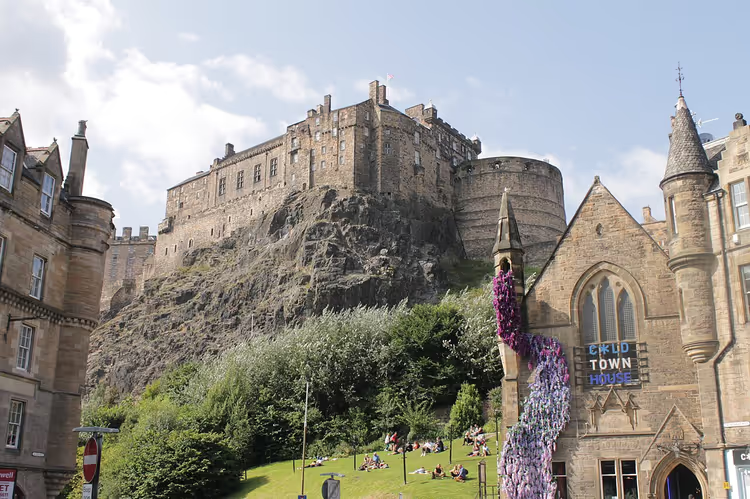
First-timers should start with the classics: the Old Town, Edinburgh Castle and the panorama from Arthur’s Seat. If you want some peace, pick the less obvious neighbourhoods away from the Royal Mile, where the crowds are noticeably thinner and you can take in the city without the rush.
A separate theme for book fans is the places linked to Harry Potter. Several spots in the city are traditionally associated with the story of the boy wizard, and they are well suited to a quiet walk away from the Fringe.
Beyond that lies the rest of Scotland, and that is one more reason to stay a few extra days.
If you want to see more of the country, look at Aberdeen, Glasgow, the Black Isle peninsula and day routes from Inverness. Each of these places has its own character, and they offer a break from the August crowds in the capital.
Glasgow is a big city with a strong music and museum scene, and it differs from Edinburgh in both look and mood. Aberdeen sits by the sea and is known for the grey granite its streets are built from. The Black Isle peninsula will suit those who want nature and quiet, while Inverness is a convenient base for trips into the Highlands.
For independent routes, download maps in advance, because signal is patchy in the mountains, and a paper guidebook comes to the rescue when your phone has died.
For road trip lovers there are two scenic driving loops: the North Coast 500 and the North East 250. Both are easier to do by car, so compare rental terms in advance on a car hire service. If you are hiring a car, book it early: demand for rentals in Scotland is high in August.
If a car is not for you, the train is the easier way to travel between cities. Tickets in Scotland are cheaper when bought in advance, and direct services link Edinburgh with Glasgow, Aberdeen and Inverness. Buses take longer but cost less, so for short hops they are a workable option. In August the popular services fill up, so it is best to check seats and timetables in advance, especially if you are travelling at the weekend. The last train is a convenient way back to Edinburgh in the evening, but bear in mind that during the festival the carriages are packed.
For budgeting, it helps to estimate the cost of travelling around the country in advance. Prices for accommodation, transport and tickets are higher in summer, and in August the Fringe premium comes on top, so plan your spending with a margin. Transport between cities is a line item of its own: trains in Scotland are not cheap, while buses are cheaper but take longer.
⁉️🤔 Frequently asked questions
When is the Fringe in 2026?
The Edinburgh Festival Fringe 2026 runs from 7 to 31 August. The dates shift slightly every year, but the festival always takes place in August, for a little over three weeks, from the first Friday to the last Monday. The full programme is usually published in early June, and that is also when tickets for most shows go on sale.
How much does it cost to go to the Fringe?
Walking around the city and watching street performances is free. Paid shows start from a few pounds, and well-known artists cost more, sometimes tens of pounds. It makes sense to set yourself a daily budget and alternate paid performances with free ones, leaving room for spontaneous same-day tickets.
Do you need to buy tickets in advance?
For well-known and popular shows it is better to get tickets in advance, because the best slots sell out. For the rest, tickets are usually available during the festival too, and free shows do not require a purchase at all. The best approach is to book one or two shows you definitely want to see and keep your schedule flexible.
Can you buy tickets on the day of the show?
Yes, tickets for many shows are available on the day of the performance. They are sold at the Fringe box office, through the app, at the venues and right at the door. During the festival the Half Price Hut also operates, selling discounted tickets for the same day. It is a good way to fill a gap in your schedule cheaply.
What clothes should you bring?
Light layers that you can take off and carry, a light waterproof or a compact umbrella, and comfortable trainers. The weather in Edinburgh is unpredictable even in August, and you will be on foot between venues for most of the day. A warm layer will come in handy in the evening, when the temperature drops.
How do you find the best shows at the Fringe?
Start with the official Fringe website and programme, then add reviews from the local and national press and live reactions on social media under the hashtag #edfringe. A walk along the Royal Mile pays off too: flyers are handed out there and street performers play. Returning shows are a reliable bet, but leave room for unfamiliar names as well.
How far ahead should you book accommodation for August?
As early as possible. In August Edinburgh fills up almost completely and prices rise above the usual level, so accommodation is the first thing to lock in. If there is nothing available in the centre, look at towns half an hour to an hour away by bus, or at Glasgow: it is under an hour by train.
In brief: what to book
If you are going to the Fringe for the first time, the order of things is simple. Sort out your accommodation first. Then pick one or two shows in advance and leave half your days free for discoveries on the spot.
A budget matrix: on a tight budget, go for hostels and free shows in pubs; on a mid-range budget, add a couple of paid premieres at the "Big Four"; on a big budget, look at boutique hotels in the centre and the best seats in the large halls.
What to book in advance: accommodation, tickets for well-known shows and, if you are planning outings, day tours around Scotland. You can compare Edinburgh hotels for your dates on Trip.com.

A small editorial team writing guides for independent travel. We travel ourselves, but we haven’t been everywhere, so we check prices, opening hours and how to get there against official sources.