
















Turkey or Egypt in 2026: comparing season, sea and beaches
A seaside vacation starts with one question: Turkey or Egypt. Both countries offer a warm sea, all-inclusive hotels, and a short flight from Europe. They differ in season, sea, excursions, and how you spend your evenings.
In 2025, Turkey welcomed 63.9 million visitors and earned $65.2 billion (as of 09/2026, official TurkStat statistics). Egypt reached 19 million tourists for the first time, a 21% increase year over year (as of 09/2026, Egypt tourism report). Both countries live on tourism and compete for your vacation budget.
Ad: this article contains affiliate links, we earn a commission if you book through them, at no extra cost to you.
Turkey or Egypt: what to choose
💡 In short:
- Turkey: swimming season from May to October, sandy and pebble beaches, ancient cities, and Istanbul a couple of hours away by plane.
- Egypt: you can swim year-round, coral reefs sit right at the shore, the pyramids and Luxor are part of the excursion program.
- Traveling with kids is easier in Turkey, while divers and ancient history lovers will find Egypt more interesting.
- Visa and entry rules: 09/2026, verified on the Auswärtiges Amt website.
The full picture across key criteria is in the table. It will help you compare the destinations in a minute.
Criterion | Turkey | Egypt |
|---|---|---|
Swimming season | May-October | year-round |
Sea | Mediterranean and Aegean | Red Sea |
Beaches | sand, pebbles, mixed | sandy, coral, pontoon |
Diving | basic options | reefs and coral walls |
Excursions | ancient cities, Istanbul | pyramids of Giza, Cairo, Luxor |
In winter | cool, rainy | warm, swimming |
Vacation with kids | kids' clubs and water parks | kids' clubs in hotels |
Choose based on your travel month. From June to September both countries work well, but in summer Egypt is hotter and drier. From November to April Turkey cools down and some coastal hotels close, while Egypt stays warm.
Territory and regions
Turkey lies mostly on the Anatolian Peninsula in Asia, with a smaller part of the country in the Balkans. Resort life happens in the southwest, where it is washed by the Mediterranean and Aegean Seas. Egypt occupies northern Africa and the Sinai Peninsula, and tourists are hosted mainly on the Red Sea coast.
Before your trip, check official travel advisories. For Egypt, a partial warning applies to certain areas of Sinai and border zones (as of 09/2026, Auswärtiges Amt, Ägypten). For Turkey, the agency advises against travel to areas near the Syrian and Iraqi borders (as of 09/2026, Auswärtiges Amt, Türkei). The resorts of Antalya, Kemer, Hurghada, and Sharm el-Sheikh are not in these zones, so they do not affect your beach vacation.
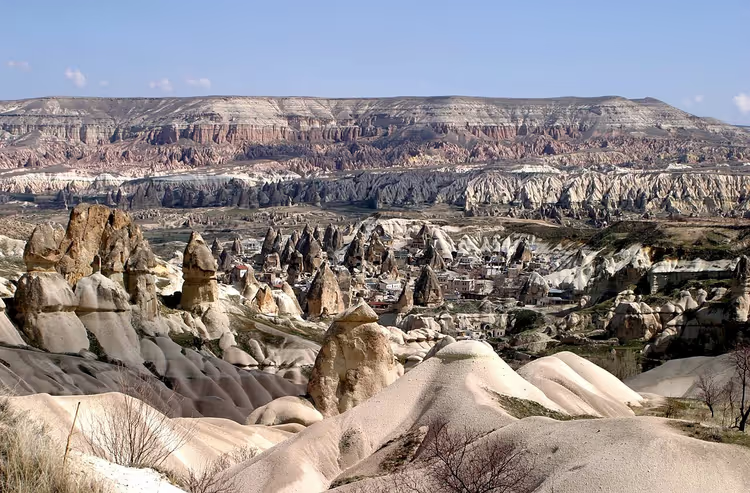 © Brocken Inaglory Edit by CillanXC · CC BY-SAPhoto: Brocken Inaglory Edit by CillanXC, CC BY-SA (http://creativecommons.org/licenses/by-sa/3.0/), Wikimedia Commons
Resorts
Turkish resorts are concentrated in the southwest along two seas. There are several dozen resort areas here, and the top five by popularity are Kemer, Alanya, Side, Belek, and Antalya. Each area has its own character: Kemer sits at the foot of mountains, Alanya stretches along a long beach, and Side adds ancient ruins within walking distance.
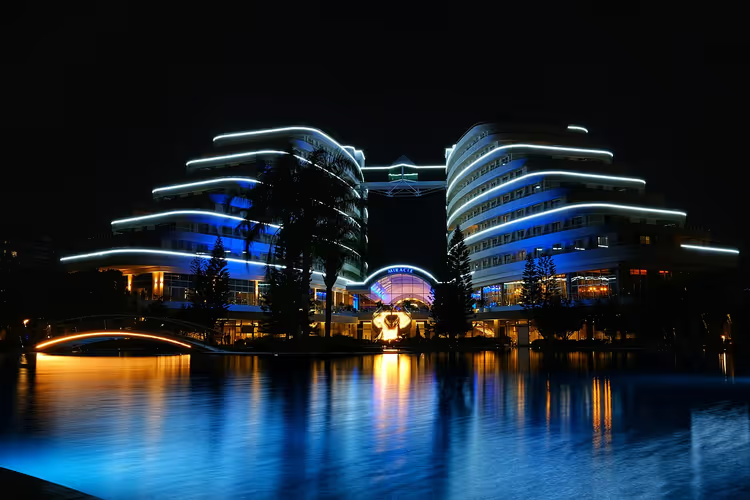 © Jörg Fuhrmann (Intermerker) · CC BY-SAPhoto: Jörg Fuhrmann (Intermerker), CC BY-SA (https://creativecommons.org/licenses/by-sa/4.0), Wikimedia Commons
Hotel prices depend on the season and meal plan, so it is better to compare them for specific dates. Compare hotel prices in Turkey on Trip.com in advance, 2-3 months before departure: by July there are fewer available rooms by the sea and rates are higher.
Egypt's main resorts are on the Red Sea: Sharm El Sheikh, Hurghada, Makadi Bay, and Marsa Alam. Mediterranean resorts are mostly chosen by affluent locals. The weather allows the country to welcome guests year-round.
Hurghada suits those who want a sandy entry into the water and city infrastructure nearby. Sharm El Sheikh is more interesting for divers because reefs start right at the shore. Marsa Alam is chosen for its calm atmosphere and long coral walls.
Climate and season
Turkey has a Mediterranean climate: hot, dry summers and mild, rainy winters. The swimming season opens in May and closes in October, and in November coastal hotels begin preparing for the winter pause. In winter the air cools down, and swimming without a wetsuit becomes uncomfortable.
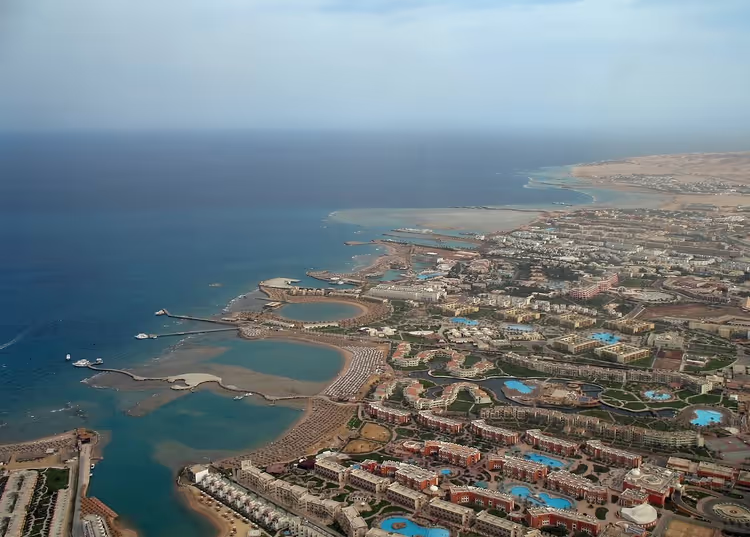
In Egypt the season is noticeably longer. In Hurghada you can swim year-round, and from May to November the water temperature is 25-29 °C (as of 09/2026, wohinwann.de). In July and August the air rises to 38 °C, so with small children it is better to go in March-May or from mid-September to November.
Egypt is most comfortable in the shoulder season: the heat subsides, the water stays warm, and prices are lower than in summer. Turkey has a similarly mild period in May-June and September-October. If you cannot stand the heat, plan your trip for these months.
 © Marc Ryckaert · CC BYPhoto: Marc Ryckaert, CC BY (https://creativecommons.org/licenses/by/3.0), Wikimedia Commons
Nature
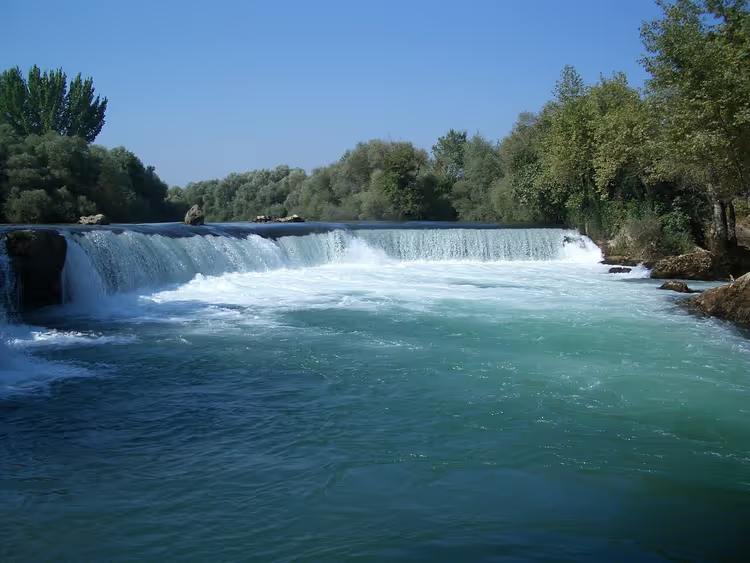
The terrain of the Turkish coast changes from area to area. In Kemer mountains rise up, pine trees grow, and the beaches are pebbly. In Antalya the landscape is hilly and green, and the shore is covered with fine sand. In the Manavgat area, lakes and a waterfall join the mountains.
 © Thomas Gensler · CC BY-SAPhoto: Thomas Gensler, CC BY-SA (https://creativecommons.org/licenses/by-sa/2.0/de/deed.en), Wikimedia Commons
In Egypt there is little greenery outside hotels: beyond the resort gates the desert begins. Palm trees, flowers, and well-kept lawns are concentrated on hotel grounds. The country's main green oasis lies in the Nile Valley, where fields and plantations stretch for kilometers along the banks.
Sea and beaches
The Mediterranean Sea is larger than the Red Sea, but it falls behind in salinity and underwater life. The Red Sea receives no water from land, so it stays clear, and coral reefs provide a home for thousands of fish species.
The Turkish coast offers sandy, pebbly, and mixed beaches. Thanks to the pebbles, the water in Kemer stays clear, while the sand in Antalya is more convenient for children.
 © dronepicr · CC BYPhoto: dronepicr, CC BY (https://creativecommons.org/licenses/by/2.0), Wikimedia Commons
In Egypt beaches can be sandy, coral, or pontoon. Sharm El Sheikh has many coral beaches, and getting into the water without special footwear is difficult. Hurghada more often has sand. Pontoon beaches exist at all resorts, and in the north of the country along the Mediterranean there is white sand.
Bring coral shoes with you if you are going to Sharm El Sheikh: they cost less than local ones and will definitely fit.
Sports, spa, and entertainment
The sports program at hotels in both countries is similar: gyms, tennis courts, volleyball courts, and pools. Morning exercise sessions are held, and aqua aerobics starts closer to lunch. Massage is offered at almost every hotel.
In Turkey a hammam is added to this set, while in Egypt the focus is on diving. Active entertainment overlaps: water parks, quad biking, horseback riding, windsurfing, parasailing, yacht trips, and fishing. Turkey is stronger in rafting, and it has ski resorts for winter holidays.
Shopping and cuisine
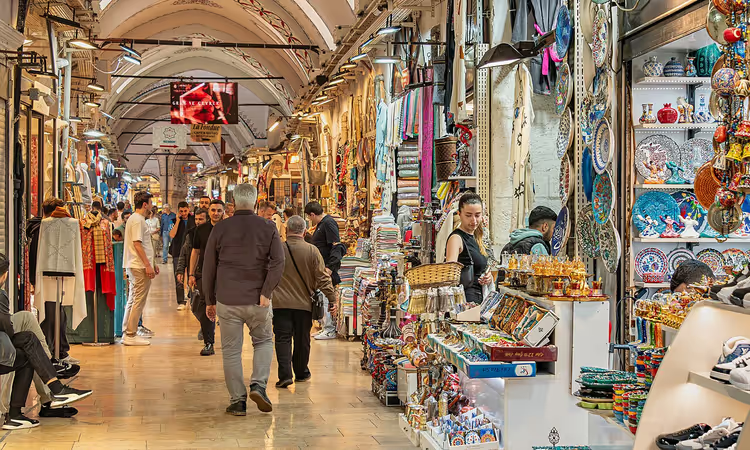
Shopping is considered a strong point of Turkish vacations. People buy textiles, leather and fur, jewelry, and oriental sweets here. Bargaining at markets is possible and expected.
 © Jorge Franganillo · CC BYPhoto: Jorge Franganillo, CC BY (https://creativecommons.org/licenses/by/4.0), Wikimedia Commons
Egyptian shopping falls behind Turkish shopping. Local goods often require checking for defects, and jewelry at a low price sometimes turns out to be fake. Good-quality items are imported and cost as much as in Europe.
The evening program in both countries is arranged similarly: clubs operate in hotels and resort towns, and restaurants serve European, Turkish, and Arab cuisine. In Egypt venues with Arab menus are more common, while in Turkey there are more restaurants with local cuisine and seafood.
Attractions
In Turkey it is easy to add history to a beach vacation. The great Roman bridge in Adana, the Museum of Anatolian Civilizations in Ankara, Hagia Sophia in Istanbul, and the sarcophagus of Saint Nicholas in Demre are on many travelers' lists. Travel between cities takes hours, but the roads are comfortable.
In Egypt, excursions are built around the legacy of the pharaohs: the Pyramids of Giza, the Egyptian Museum in Cairo, Luxor, Mount Sinai, and the Abu Simbel temples. Slots for the pyramids and Luxor sell out quickly, so book excursions in advance. See excursions in Egypt and Turkey on GetYourGuide.
Vacationing with kids
Hotels in both countries are family-oriented. Kids get animation programs, a children's menu in the restaurant, and a separate heated pool. If parents need to go on an excursion, the child can be left at the hotel's mini club.
In Marmaris, Julian Club Hotel 4* is a good pick for a family vacation. Check current prices and the list of children's services when booking: Julian Club Hotel in Marmaris on Trip.com.
⁉️🤔 Frequently asked questions
When is the best time to go to Egypt, and when to Turkey?
Turkey works well from May through October: the sea is warm and hotels operate at full capacity. Egypt welcomes guests year-round, but the most comfortable months here are March through May and September through November. In summer, Hurghada is too hot for long walks.
Where is the sea warm in winter?
In winter, comfortable swimming is only possible in Egypt. The Red Sea stays warm even in January, while the Mediterranean off the Turkish coast cools down and some coastal hotels close until spring. That's why winter beach packages are more often booked to Hurghada or Sharm El Sheikh.
Where should I go with a child?
Both countries work well for family vacations: hotels have kids' clubs, animation programs, children's menus, and a separate pool. Turkey has more hotels with water parks, while Egypt has a longer swimming season. With small children, it's better to go to Egypt from March through May or from mid-September through November.
Where is diving better?
Diving is stronger in Egypt. The Red Sea receives no water from land, so it stays clear, and coral reefs start almost right at the shore. Sharm El Sheikh and Marsa Alam have dive centers, while in Turkey you usually need to take a boat out to reach good dive sites.
Do I need a visa for the trip?
For Egypt, a tourist visa is usually issued on arrival, costs about 25 US$, and is payable in cash only (as of 09/2026, visa rules overview). Check Turkey's and Egypt's requirements before your flight on the Auswärtiges Amt website, because conditions change.
In short: what to book
If your vacation falls in winter, choose Egypt: Hurghada and Sharm El Sheikh are warm year-round. If you're traveling with small children and want a short flight, choose Turkey: it has more hotels with water parks and kids' clubs. If you want diving, choose the Red Sea and Marsa Alam.
It's easier to compare hotel prices in both countries in advance. You can find a hotel on Trip.com for your specific vacation dates rather than for an abstract season.
Both countries remain strong options for a beach vacation. The difference comes down to the month you travel and what you want to see by the sea: ancient cities or coral reefs.

A small editorial team writing guides for independent travel. We travel ourselves, but we haven’t been everywhere, so we check prices, opening hours and how to get there against official sources.