
















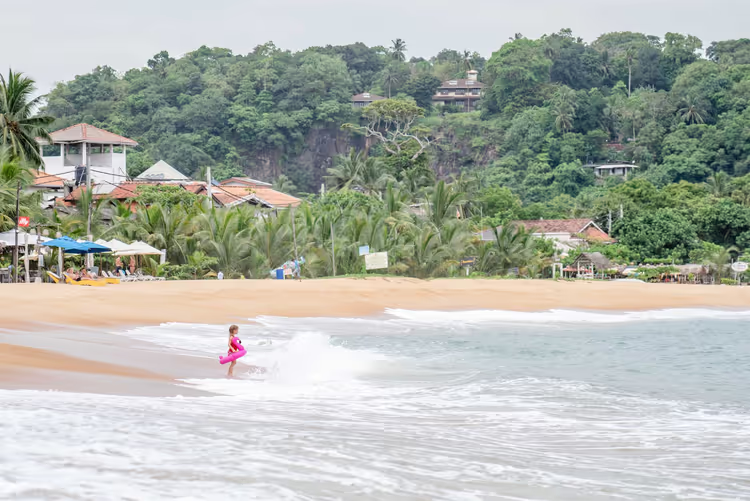
When to go to Sri Lanka: seasons of the south, east and highlands
The season in Sri Lanka is determined by two monsoons, and they operate on opposite halves of the island. While the west and south get rain, the east coast stays sunny, and vice versa. So the question "when to go" here always means "where exactly to go."
In fall 2026, some sites are operating with restrictions. Plan your dates in advance and check the status before you fly.
Ad: this article contains affiliate links, we earn a commission if you book through them, at no extra cost to you.
Sri Lanka's monsoons: two seasons on one island
💡 In short:
- West and south: dry from December to March, surf season from November to March.
- East and Arugam Bay: dry with waves from May to September.
- Highlands: Nuwara Eliya, Ella, and Kandy are accessible year-round, the rainiest months are October and November.
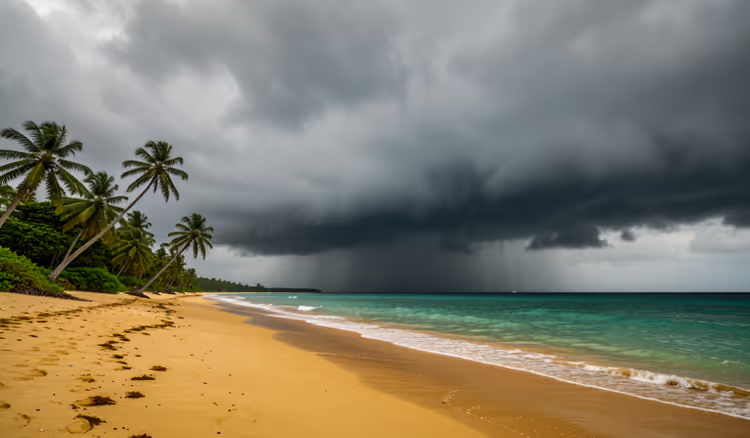 AIIllustrative image: AI-generated
The southwest monsoon runs from May to September and covers the west and south coasts along with the highlands. The northeast monsoon runs from December to March and flips the weather 180 degrees: the east gets wet while the south takes a break.
For you, this means one simple thing: there is almost always a dry coast on the island. The exceptions are the transitional months: April, October, and November. During these times, rain falls on both the west and the east.
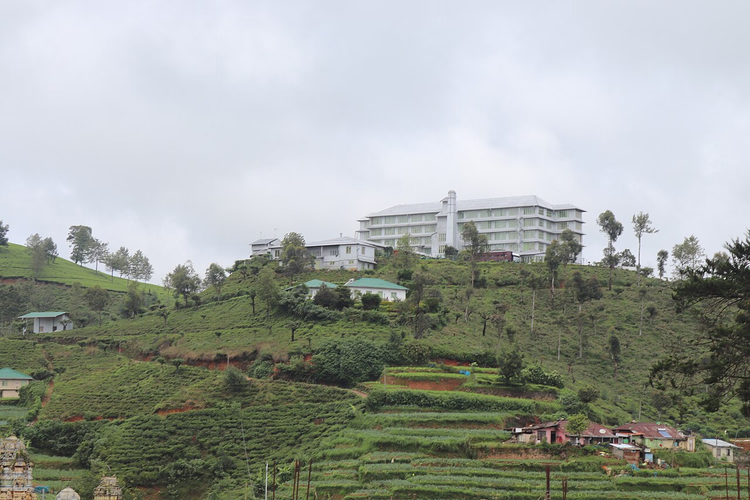
The highlands around Ella, Nuwara Eliya, and Kandy are less affected by the monsoons than the coasts. Short downpours happen there almost year-round, but prolonged walls of rain do not. It is the humidity that keeps the tea plantations green in any month.
 © Manisha abey · CC BY-SAPhoto: Manisha abey, CC BY-SA (https://creativecommons.org/licenses/by-sa/4.0), Wikimedia Commons
When to go to the west and south coasts
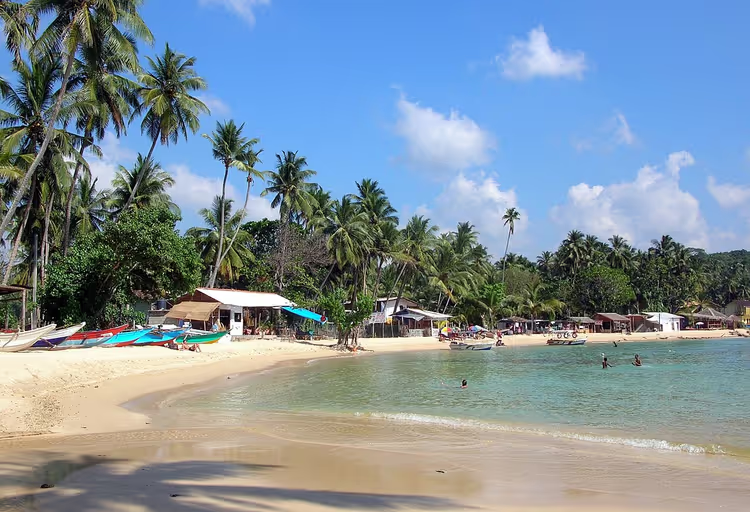
The south and west coasts live in the dry season from December to March. In Galle, Unawatuna, Mirissa, and Weligama, these months bring little rain, warm water, and sun almost every day.
Surfers come here from November to March. The waves in Mirissa and Weligama suit both beginners and experienced surfers, so surf schools run at full capacity.
November is a transitional month: the big swell has already arrived, but the rains have not yet left. If you want both waves and sun, go for December.
From April, the wind shifts, the southwest monsoon kicks in, and the coast becomes noticeably wetter. A trip is possible, but there will be less beach time and more gray skies. If you are heading south in winter, hotels on Sri Lanka's south coast on Trip.com are worth looking at in advance.
- The catch: December and January are high season. Accommodation is more expensive, and popular beaches get crowded.
 © Bernard Gagnon · CC BY-SAPhoto: Bernard Gagnon, CC BY-SA (https://creativecommons.org/licenses/by-sa/3.0), Wikimedia Commons
East coast and Arugam Bay: the reverse season
The east coast flips the logic. The season here starts exactly when the west gets rain: from May to September, Arugam Bay has its surf season, and the swell arrives consistently and often.
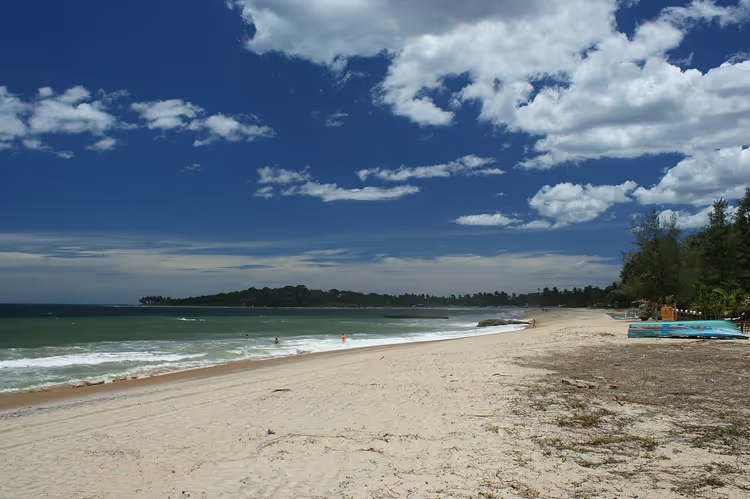 © Kondephy · CC BY-SAPhoto: Kondephy, CC BY-SA (https://creativecommons.org/licenses/by-sa/4.0), Wikimedia Commons
Outside these months, the east coast loses its appeal. The water goes flat or choppy, the rains return, and coastal villages empty out.
If you want to both surf and sunbathe, build your route around the east from May to September. In July and August it is dry and windy there, and Arugam Bay fills with surfers from around the world.
Getting from the west to the east takes many hours, so the east coast makes more sense as a separate block of your trip. Do not split it into short excursions from Colombo, or you will spend more time on the road than on the beach.
- The catch: infrastructure here is simpler than in the south, and the choice of hotels is thinner.
Nuwara Eliya, Ella, and Kandy: highlands year-round
Nuwara Eliya, Ella, and Kandy sit in the mountains, and the monsoons affect them less than the coast. Technically, a trip here is possible in any month of the year.
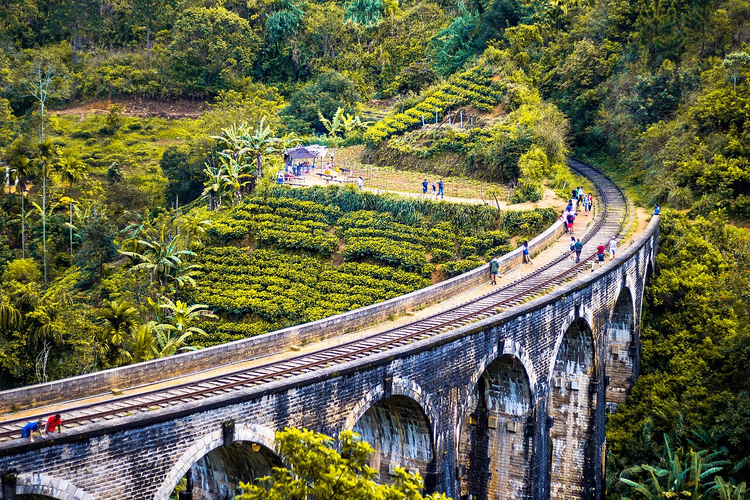 © Janith Pramuditha · CC BY-SAPhoto: Janith Pramuditha, CC BY-SA (https://creativecommons.org/licenses/by-sa/4.0), Wikimedia Commons
Evenings in the mountains are cool even in the dry season, so you will need a jacket. But the tea fields stay green, and the air after rain is fresh and clear.
October and November in the mountains are the wettest and the worst for photography: there is little light, and clouds hang low. December, January, and February bring dry and clear weather, and that is when the views over the tea valleys come out clean.
The famous highland train ride is not fully operational in 2026. After cyclone Ditwah, the Kandy to Nanu Oya section is closed for repairs, while the scenic Nanu Oya to Ella stretch is open again (as of 09/2026, route status). Check the schedule before your trip: tickets for this stretch sell out in advance.
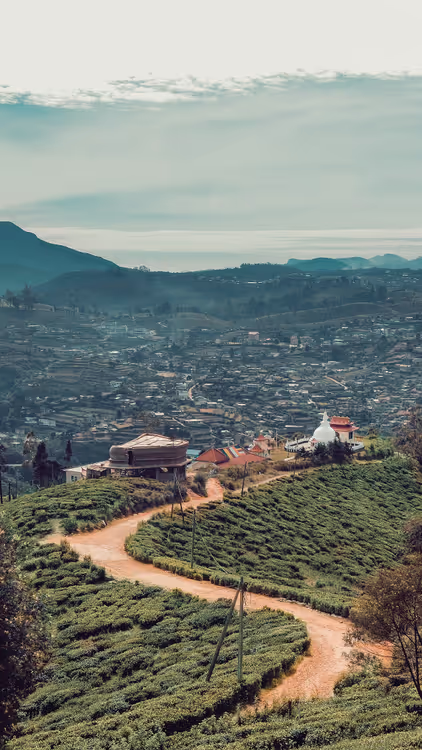 © Shenal Sadurshan · CC BY-SAPhoto: Shenal Sadurshan, CC BY-SA (https://creativecommons.org/licenses/by-sa/4.0), Wikimedia Commons
Whales, elephants, and leopards: wildlife seasons
Whales come close to the south coast from November to April. From Mirissa, boats head out to deep water, where blue whales are most often spotted, fin whales less often, and orcas very rarely.
The tour takes half a day and starts early in the morning, often before dawn. The price depends on the operator and boat size and runs into tens of euros per person. Think about motion sickness pills in advance: the swell on the way out to open sea is significant.

For safaris, the main spots are Yala and Udawalawe national parks. Both are open year-round, but the best sightings happen in the dry season from December to March: vegetation is thinner, and animals stay near water.
Yala has one of the highest leopard densities in the world, according to the park administration (as of 09/2026, official website). The park is open from 6:00 AM to 6:00 PM, and it is about 260 km from Colombo.
Important: blocks 1 and 2 in Yala are closed from September 14 to October 15, while the other sectors continue to receive visitors. Check this before booking a safari (as of 09/2026, park administration closure notice). Whale watching and safari tours on GetYourGuide should be chosen based on your travel dates.
Monsoon table at a glance
Month | West and south | East and Arugam Bay | Highlands |
|---|---|---|---|
Jan - Mar | dry, high season | rain | dry and cool |
April | transition, wetter | transition | acceptable |
May - September | southwest monsoon | surf season, dry | cloudy, downpours |
Oct - November | transition, rainy | transition | rainy, better to skip |
December | start of dry season | rain | dry and cool |
The table helps you figure out where to look in under a minute. If you already have dates, pick the coast to match them, not the other way around.
When not to go to Sri Lanka
There is no universally bad month: somewhere on the island it is always dry. But if you are heading to the south coast, the worst months for you are May through September. The southwest monsoon hits this region directly, and you will get more rain than sea. In the highlands, the rainiest months are October and November.
For the east coast, the bad months are different: from December to March it rains there, and the swell disappears. If your route is built around Arugam Bay, those dates are not worth taking.
December and January: when it is worth paying more
If you are going to Sri Lanka for the first time, take December or January. In these months the south coast is dry, whales are in season, and the parks run at full capacity. You get a route that covers beach, wildlife, and highlands.
You pay for it with lines and prices: high season drives up accommodation costs in the south, and popular hotels get booked months in advance. For a budget trip, May on the east coast or the off-season in the highlands works better, where you will find the same views for less.
Frequently asked questions
When is the dry season in Sri Lanka?
There is no single dry season for the whole island. The south and west coasts stay dry from December to March, while the east coast along with Arugam Bay is dry from May to September. Between them are transitional months, April, October, and November, when rain falls almost everywhere. Pick the coast that matches your dates, and the weather will work out.
Can you swim on the east coast in December?
In December, the east is in the middle of the northeast monsoon. The sea is rough, the water is murky, and the beaches are nearly empty. Swimming on such days is dangerous due to currents, and lifeguards are not stationed everywhere. If you want a warm ocean and sun in December, plan for the south coast or the west, and save the east for May and summer.
When is the best time to see whales in Mirissa?
Whales stay near the south coast from November to April, and the best months are January, February, and March. Boats leave Mirissa harbor early in the morning and head to deep water, where they encounter blue whales and fin whales. Take a trip with a small group and confirm that the operator keeps a proper distance.
Is there a month when it rains across the whole island?
There are no fully wet months, but two transitional periods come close. April, between the two monsoons, brings humid air to both the south and the east. October and November work the same way, only in the opposite direction. During these weeks you can still find a dry window if you move around the island following the forecast.
Is September a good time to go to Sri Lanka?
For the east coast, September is the end of the season: the swell is still there, but the rains are already close. In the south, the southwest monsoon is active at this time, so the south coast is not worth taking in September.
In short: what to book
The summary is short: first dates, then coast, and only then the hotel.
- If you want beach and dry weather: south and west from December to March.
- If you surf: Arugam Bay from May to September.
- If you are going for the highlands: any month except October and November.
- If you want whales: Mirissa from November to April.
For a May trip to the east, accommodation in Arugam Bay on Trip.com is best booked in advance: by the start of the season, few available options remain.

A small editorial team writing guides for independent travel. We travel ourselves, but we haven’t been everywhere, so we check prices, opening hours and how to get there against official sources.